





Abstract
Abstract
Introduction:
When thyroidectomy is in need, the first golden standard of thyroid surgery is to remove the appropriate extent of thyroid according to the disease status. 1 Second, is to reduce the surgical complications and safely preserve the recurrent laryngeal nerves and parathyroid glands, 2 and parathyroid gland preservation is still a challenge to many endocrine surgeons. 3 This video is to present the best surgical tips for parathyroid preservation in thyroid surgery.
Materials and Methods:
There is no formulaic technique for parathyroid preservation. However, to improve such surgical skill, the surgeons must learn by themselves about the actual anatomy of the parathyroid glands, focus on the micro-looking branches of parathyroid supplying vessels that originate from the main vessel trunk, and explore every possible location that might bear the parathyroid glands. To increase the chance of preserving the final vessel branches that supply the parathyroid, one must not ligate the vessels at the root of the trunk. Instead, approach from the distal end of the branches and forward proximally.
Results:
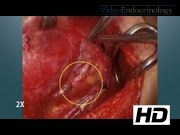
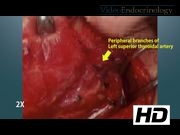
The surgeon must clearly see the pulse of the peripheral vessel branches originating from either superior thyroidal artery or inferior thyroidal artery that supply the preserved parathyroid gland with no color change at the end of the procedure as presented in this video.
Conclusion:
Endocrine surgeons are to perform functionally safe thyroidectomy and reduce the surgical complications related to parathyroid injury. And to do so, the best surgical tips for parathyroid preservation is to take time, keep trying, never give-up, and do the surgeon's best, despite the low success rate of parathyroid preservation in the beginning of thyroid surgery.
No competing financial interests exist.
Runtime of video: 6 mins 50 secs

Get full access to this article
View all access options for this article.
References
Supplementary Material
Please find the following supplemental material available below.
For Open Access articles published under a Creative Commons License, all supplemental material carries the same license as the article it is associated with.
For non-Open Access articles published, all supplemental material carries a non-exclusive license, and permission requests for re-use of supplemental material or any part of supplemental material shall be sent directly to the copyright owner as specified in the copyright notice associated with the article.
