





Abstract
Abstract
Introduction:
Vocal cord immobility after thyroidectomy is not uncommon, with an incidence ranging from 0.5% to 3%. Patients may complain of dysphonia, which can include a weak or breathy voice, hoarseness, or an inability to project. Other symptoms may also include a weak cough or aspiration to thin liquids. One treatment option available to these patients is injection laryngoplasty.
Materials and Methods:
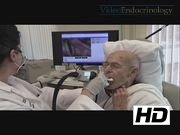
Video and audio consents to document office-based injection laryngoplasty were obtained from patients seen at the Center for Laryngeal Surgery and Voice Rehabilitation at the Massachusetts General Hospital. These patients were seen postoperatively after thyroidectomy and had vocal cord immobility.
Results:
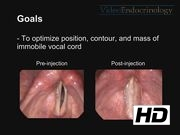
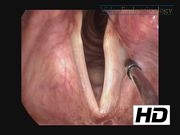
We were able to video document the injection laryngoplasty procedure with pre- and postinjection voice quality results and laryngoscopic examinations.
Conclusions:
Although vocal cord immobility after thyroid surgery is not frequent, patients who do have this complication do not have to live with the symptoms of hoarseness and poor voice quality while awaiting return of neurolaryngological function. Injection laryngoplasty is one option for patients and consideration should be given to refer them to an experienced laryngologist who may be able to provide this procedure in an office-based setting.
No competing financial interests exist.
Runtime of video: 9 mins 42 secs
Get full access to this article
View all access options for this article.
Supplementary Material
Please find the following supplemental material available below.
For Open Access articles published under a Creative Commons License, all supplemental material carries the same license as the article it is associated with.
For non-Open Access articles published, all supplemental material carries a non-exclusive license, and permission requests for re-use of supplemental material or any part of supplemental material shall be sent directly to the copyright owner as specified in the copyright notice associated with the article.
