





Abstract
Abstract
Introduction:
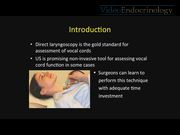
Assessing vocal cord function is important for pre- and postoperative evaluation of patients before or after surgical procedures involving manipulation adjacent to the recurrent laryngeal nerve.1,2 While direct laryngoscopy (DL) remains the gold standard for assessing vocal cord function, translaryngeal ultrasound (TLUS) can be a noninvasive, simple, and available tool for office practice. 3
Materials and Methods:
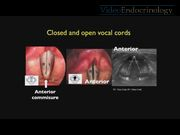
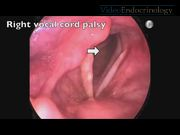
Ultrasound of the larynx to visualize movement of the vocal cords is introduced to clinicians familiar with head and neck ultrasound. Topics reviewed include patient selection, proper positioning, adjustments of the ultrasound machine, and probe placement, tricks to visualize the anatomical and US landmarks of the larynx.4,5 Included are side by side video comparisons of TLUS and DL demonstrating normal vocal cord motion and paresis.
Results:
The new technique of vocal cord ultrasound is introduced in this comprehensive video.
Conclusions:
Clinicians familiar with head and neck ultrasound will find this video useful to learn the steps to visualize the vocal cords.
The authors declare no competing financial interests or obligations resulting from it.
Runtime of video: 7 mins 46 secs
Keywords
Get full access to this article
View all access options for this article.
References
Supplementary Material
Please find the following supplemental material available below.
For Open Access articles published under a Creative Commons License, all supplemental material carries the same license as the article it is associated with.
For non-Open Access articles published, all supplemental material carries a non-exclusive license, and permission requests for re-use of supplemental material or any part of supplemental material shall be sent directly to the copyright owner as specified in the copyright notice associated with the article.
