






Abstract
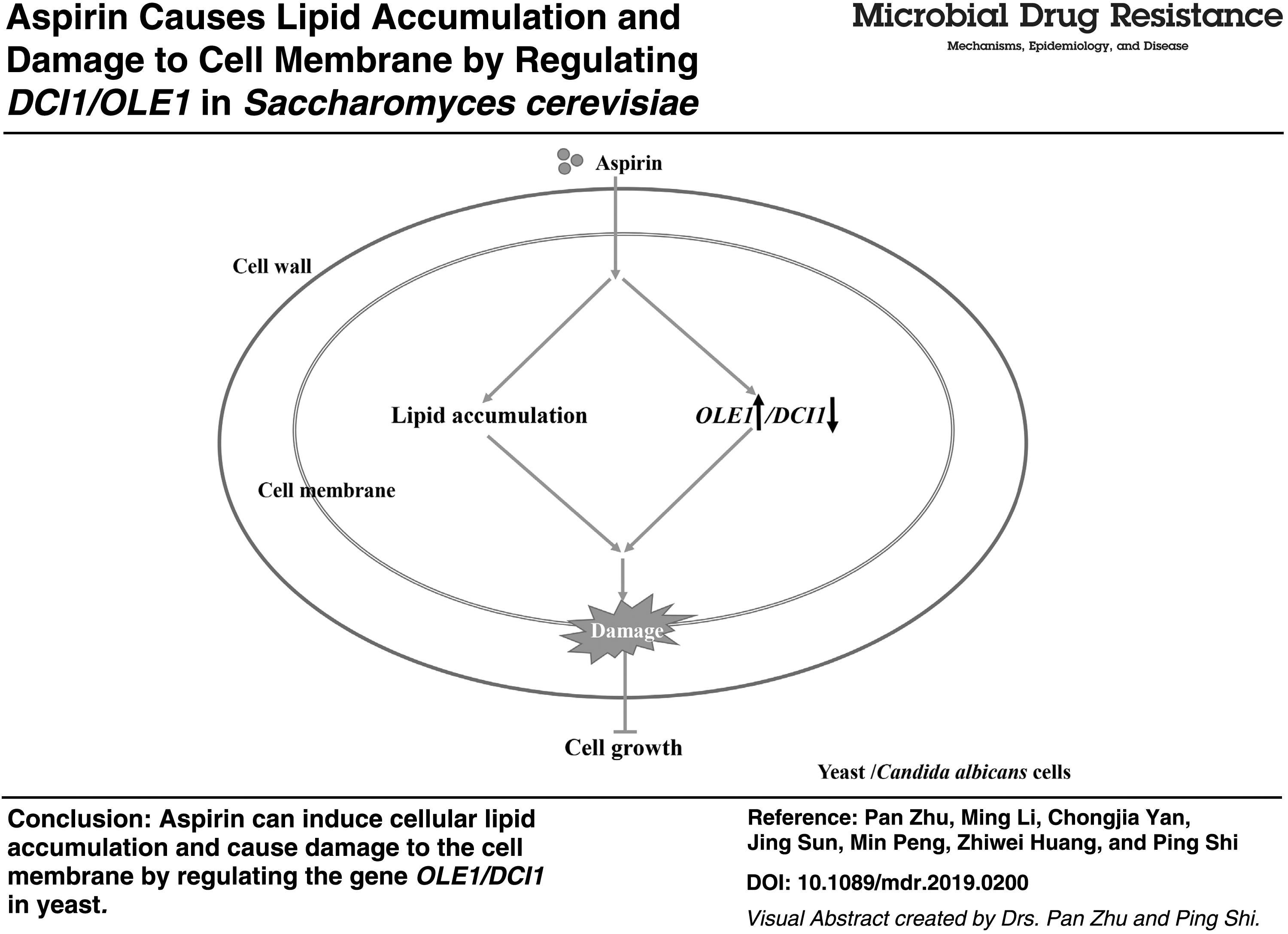
Aspirin is one of the most commonly used nonsteroidal anti-inflammatory drugs. Various potential pharmacological effects of aspirin, such as anticancer, antibacterial activity, and prolonging life expectancy have been discovered. However, the mechanism of aspirin is not fully elucidated. Herein, the effects of aspirin on fatty acid metabolism in yeast cell model Saccharomyces cerevisiae were studied. The results showed that aspirin can induce lipid accumulation and reduce the unsaturated fat index in cells. The assessment of cell membrane integrity demonstrated that aspirin caused damage to the cell membrane. These effects of aspirin were attributed to the alterations of the expression of DCI1 and OLE1. Similarly, aspirin was able to cause lipid accumulation and damage to the cell membrane by interfering with the expression of OLE1 in Candida albicans. These findings are expected to improve current understanding of the mode of action of aspirin and provide a novel strategy for antifungal drug design.
Graphical abstract
Get full access to this article
View all access options for this article.
References
Supplementary Material
Please find the following supplemental material available below.
For Open Access articles published under a Creative Commons License, all supplemental material carries the same license as the article it is associated with.
For non-Open Access articles published, all supplemental material carries a non-exclusive license, and permission requests for re-use of supplemental material or any part of supplemental material shall be sent directly to the copyright owner as specified in the copyright notice associated with the article.
