





Abstract
Exposure to violent events can result in severe psychiatric and psychosomatic disorders [1–3]. Several authors have reported a high prevalence, between 10 and 70%, of posttraumatic stress disorder (PTSD) among refugees and asylum-seekers from various parts of the world [2–7], and a prevalence of depression between 4 and 73% [8]. A cross-sectional survey conducted in 1999 among a large sample of Kosovar Albanians living in Kosovo showed a total prevalence of PTSD of 17% [9]. Screening of traumatized populations is therefore important in order to provide support and treatment aimed at reducing long-term posttraumatic psychosocial disability, and this can be done with structured or semistructured interviews [10–12].
During interviews, language and communication barriers may result in imprecise diagnostic assessment and delays in referral to adequate treatment [13]. These problems are obvious when the health professional and patient do not share a common language, but problems may also arise when using a patient's second or third language [14]. Numerous studies have addressed the topic of bilingual consultations and use of interpreters, both in psychiatric and primary care settings. It is generally accepted that the best solution in most cases would be to have access to bilingual and bicultural health professionals. When such professionals are not available, some authors recommend working with trained interpreters in order to minimize communication distortions [15]. However, the intervention of an interpreter may increase the risks of imprecision or errors in clinical judgement. One study of Spanish-speaking depressed patients who were evaluated and treated by Englishspeaking psychiatrists using a translator indicated that the severity of affective symptoms may be underestimated [16]. Another study with Spanish-speaking depressed patients showed that interpreters may induce an exaggeration of symptoms [15]. The bilingualinterpreter-mediated interview may lead to misinterpretation of the patient's mental status through under- or overestimation of severity of symptoms [17]. Using a person close to the patient (friend or relative) as a translator creates other problems, notably because of the emotional considerations which can influence both patient and interpreter [18]. Ultimately, in the context of screening of mental disorders among asylum-seekers or refugees, little is known about whether and how interpreters may bias answers to health professionals’ demands. In order to determine how the use of trained and ad hoc interpreters affects referral to medical and psychiatric care, we reviewed structured interviews conducted with asylum-seekers from Kosovo during a systematic medical screening at time of entry, comparing those with trained, ad hoc or no interpreters.
Materials and methods
Background and study population
Because of favourable economical and working conditions, Switzerland has been a land of immigration for people from the Balkans since the 1960s, with more than 200 000 persons settled in this country. Altogether, former Yugoslavians make up the second largest foreign community of Switzerland, next to Italian citizens. This large and already acculturated community attracted relatives and compatriots fleeing the Kosovo conflict. The province of Kosovo has been involved in the Balkan crisis for the last decade. By 1998, the conflict turned into a guerrilla war resulting in over one million displaced civilians. About 200 000 left their homes before the beginning of NATO bombings in March 1999 and 800 000 migrated thereafter. These people became refugees, either in neighbouring countries (mainly Albania, Montenegro and Macedonia) or in secondary countries of asylum. During the two year period of 1998 and 1999, more than 46 000 asylum-seekers from former Yugoslavia arrived in Switzerland. Two thousand of them were assigned to the Geneva area.
Medical screening interview
We reviewed all structured screening interviews conducted with asylum-seekers from Kosovo between June and December 1998. Interviews were conducted by a team of nurses as part of a systematic medical screening applied to all asylum-seekers assigned to the Geneva area. The interview consisted of questions about health conditions, presence of symptoms and previous exposure to trauma. If nurse and asylum-seeker did not share a common language (e.g. French, German, Italian, Spanish, Portuguese or English), trained interpreters were called upon if available. If no trained interpreter was available, relatives were asked to translate. When neither of these were available, nurses used a lexicon specifically designed for the Albanese language of Kosovo. They also communicated through drawings and gestures. The pattern of interpreter use changed between the beginning and the end of the study: with time, more and more trained interpreters became operational and relatives were less often called upon to translate. There was never systematic attribution of trained interpreters to specific individuals and the nurses had no prior knowledge of asylum seeker's personal stories or symptoms. Social and demographic characteristics (age, sex, marital status, profession), physical and psychological symptoms experienced during the last week, exposure to violent events before arrival in Switzerland, use of interpreters, nurses rating of quality of communication (good, fair, poor) and referral to medical and psychiatric care were recorded. These items were part of a questionnaire used on a regular basis with asylum-seekers at our centre [19]. The questionnaire was designed to facilitate the interview and referral to medical and psychiatric care by nurses. Headache, backache, dyspnoea, abdominal pain, loss of appetite, dysuria and palpitation were classified as physical symptoms, while insomnia, nervousness, sadness, nightmares and loss of memory were considered as psychological symptoms. Only symptoms experienced during the previous week were considered as relevant.
Statistical analysis
Frequencies and cross-tabulations were used to describe the frequency of the different items and proportions of interviews with interpreters and of refugees referred to medical and psychiatric care. Logistic regression was used to study the effect of interpreters in referring to medical or psychiatric care, adjusted for other significant factors. All tests were two-tailed, with a significance level of 0.05.
Results
During the study period, 319 interviews with asylum-seekers from Kosovo were recorded. Most of the interviews took place less than two months after their arrival (m = 41 days ± 31; quartiles: 27-34-45). The majority (72%) were male and the median age was 24 years (m = 26 ± 9; range: 15–63; quartiles: 20-24-30). Forty-nine percent were married and 55% declared having relatives already living in Switzerland. Relatives served as ad hoc interpreters in 18% of the interviews, trained interpreters in 16%, and no interpreters in the remaining two-thirds. Relatives served more frequently as interpreters for women (34% vs 13% for men, p < 0.001) and for people who had family members living in Switzerland (29% vs 6% for those without family members living in Switzerland, p < 0.001). These results reflect that relatives were not always available, because they were working or living in another part of the country. The use of trained interpreters was similar for men and women, across age groups and for people with or without family members living in Switzerland.
Quality of communication
Overall, the subjective rating of communication was poorest when no interpreter was used, better when relatives were used and best when trained interpreters were used (trend test, p < 0.001). When no interpreter was used, 63% of the interviews were rated as poor, 21% as fair and 16% as good. When relatives served as interpreters, 19% of interviews were rated as poor, 53% as fair, and 28% as good. Finally, when a trained interpreter was used, only 2% of interviews were rated as poor, 4% as fair, and 94% as good.
Exposure to traumatic events and report of severe symptoms
A majority of asylum-seekers (57%) reported exposure to at least one traumatic event. The most frequently reported events were situation of war, personal violence, imprisonment, and the violent death of a relative (see Table 1). One or more severe physical or psychological symptoms were found in 27% of the asylum seekers. Physical complaints were reported by 18%, the most frequently reported being headache, backache, and dyspnoea. Psychological complaints were reported by 16%, the most frequently reported being insomnia and nervousness. The use of relatives and trained interpreters significantly influenced the proportion of persons reporting traumatic events and psychological symptoms. Past exposure to a situation of war, the violent death of a relative, and missing relatives were significantly more frequently reported when trained interpreters were present. This was not the case with physical symptoms, except for loss of appetite. However, psychological symptoms, sadness and nightmares were more frequently found when trained interpreters were present.
Reported traumatic events and physical and psychological symptoms during medical screening interviews in 319 asylum-seekers from Kosovo
Referral to medical and psychological care
Following the screening interview, 36% of asylum-seekers were referred to medical care and 6% to a psychiatrist. The rate of referral to medical care increased with age (33% for 15–24 years old, 35% for 24–34 years old, and 53% for people over 34, p = 0.06) and was higher for married people than for single people (40% and 29%, respectively, p = 0.04). The use of both types of interpreters was associated with increased referral to medical care (no interpreter 31%, relative as interpreter 48%, trained interpreter 42%, p = 0.03) and the use of a trained interpreter with referral to psychological care (no interpreter 4%, relative as interpreter 3%, trained interpreter 15%, p = 0.007). Referral to psychological care was significantly higher for married people (single, divorced or widowed 3%, married 10%, p = 0.03).
In logistic regression analysis, taking into account the effects of age, sex, severity of symptoms and past exposure to traumatic events, the use of relatives as interpreters was still associated with more frequent referral to medical care, but with borderline statistical significance (OR: 1.9, 95% CI: 1.0–3.6), while the use of trained interpreters was not (OR: 1.3, 95% CI: 0.6–2.6). However, for referral to a psychiatrist, the use of any type of interpreter was not associated with referral (trained interpreters OR: 2.3, 95% CI: 0.7–7.0; relatives OR: 0.9, 95% CI: 0.2–4.5).
When interpreters are used to translate the complaints of patients in primary care settings, little is known about whether they have a tendency to minimize or exaggerate what the patient wants to say to the physician. Reproduced by permission of Henri Schuber, ‘A mots ouverts’, Geneva University Hospital.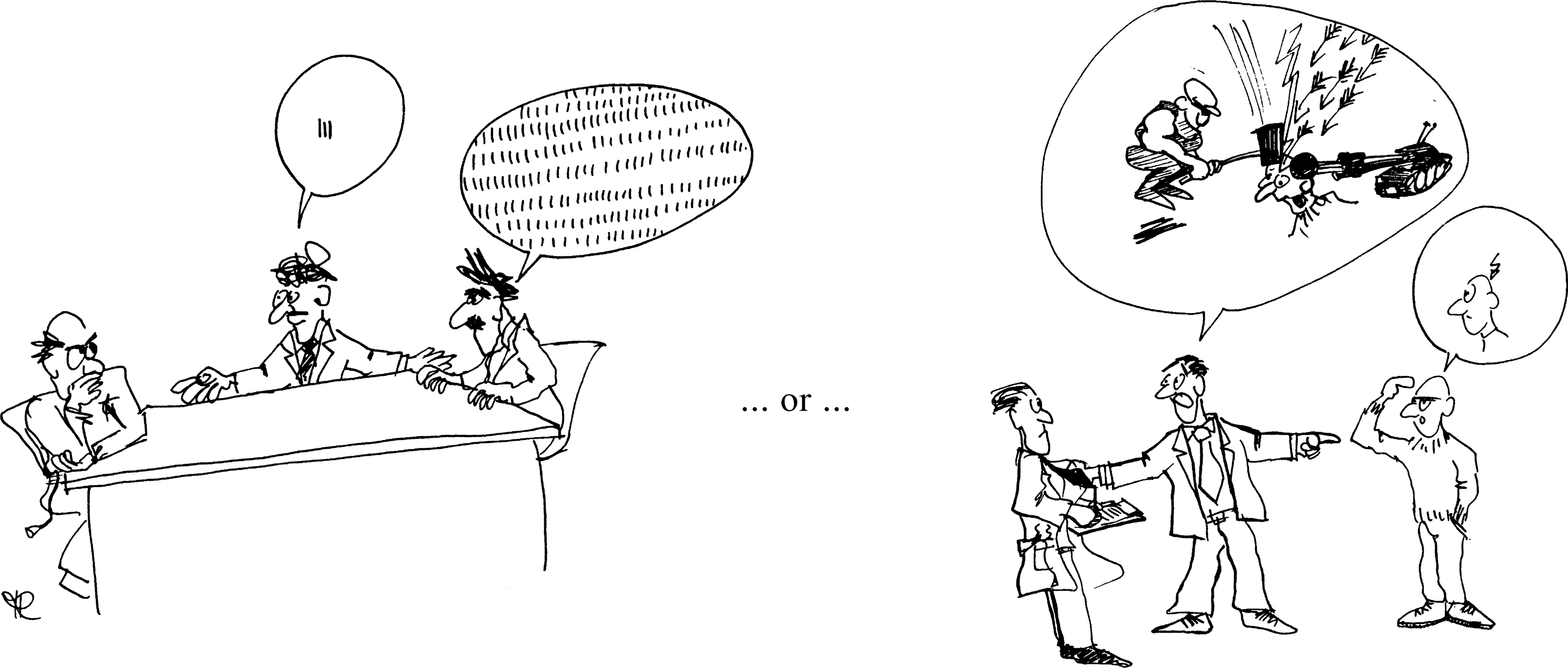
Discussion
In this group of asylum-seekers from Kosovo, the rate of reported symptoms was much higher during interviews conducted with trained interpreters, in particular for psychological symptoms. Trained interpreters were important for eliciting reports of psychological symptoms, such as sadness and nightmares, and also improved the ability of health professionals to detect and refer traumatized refugees to a psychiatrist. The use of family members as interpreters was moderately associated with more frequent referral to medical care, even after adjustment for the severity of symptoms, suggesting that ad hoc interpreters may influence the decision of health professionals.
We hypothesize three mechanisms for these findings. First, verbal communication, dialogue and cultural information provided by a trained interpreter becomes increasingly important as we move from the identification of physical symptoms to the expression of psychological and emotional suffering with symptoms like nervousness or sadness. Second, interpreters are also cultural mediators, thus increasing the sensitivity of detection of psychic distress. Third, regarding the use of relatives as interpreters, asylum-seekers might be more reluctant to acknowledge psychological suffering when family members are present, either to protect them from painful narratives or to avoid stigmatization. The same mechanisms might explain why the presence of a trained interpreter is important to elicit stories of traumatic events such as having witnessed the violent death of a relative.
Referral to psychological care was significantly higher for married people. We do not have a definite explanation for this finding and it might encompass two different situations: the spouse may be present and express concern for his or her partner; or, on the other hand the patient may arrive alone without recent news from the spouse and show anxiety and worry for this reason.
Among the strengths of this paper, our study population was quite homogeneous, as all of the individuals had gone through comparable traumatic events and were interviewed soon after their arrival. Their recent personal and migratory histories were quite similar and so were their living conditions in the host country (asylumseekers have access to health and welfare services and they are accommodated in homes of the same style). Some of them had relatives in Switzerland, but very often they lived in another part of the country (rather in the German-speaking region than in the French-speaking region of Switzerland). Regarding the evaluation, the team (nurses and interpreters) in charge of the medical screening was stable over the time of the study. The team had no previous knowledge of the asylum seeker's stories and interpreters were called upon according to their availability.
There are also a number of limitations. First, this study was retrospective and the interviews with asylumseekers had not been initially designed to assess the impact of the different type of interpreter used. The limited availability of competent mental health professionals may have artificially reduced the rate of referral for psychiatric care. Thus, the choice to refer someone to a general practitioner rather than to a mental health professional may have been dictated more by practical than by medical reasons. The structured interview we used has not been validated as a diagnostic instrument for specific physical or mental health disorders. However, screening for psychological symptoms rather than for specific disorders seemed appropriate, as the validity of the PTSD diagnostic category for refugees and victims of war is currently challenged by some authors [20, 21]. Finally, whether referral was adequate could not be assessed in this study.
Conclusion
These results stress the importance of providing access to trained interpreters in primary care centres in order to detect severely traumatized asylum-seekers and not delay access to treatment and adequate support. The observed tendencies should encourage further prospective studies on communication, screening and referral to mental health services among asylum-seekers and refugees. In this study, we examined the process of screening and referral. A future study should address the outcome of this process, particularly the appropriateness of referral to mental health services. Such data is needed in order to make recommendations for improving health services organization and quality of care to refugees and asylum-seekers.
Acknowledgements
Our thanks to the nurses working in the Travel and Migration Medicine Unit, Mrs Gariazzo, Mrs Kanappa, Mrs Lacour, Mrs Le Gall, Mrs Titus. Jacques Moser and Patricia Hudelson.