




Abstract
The impact of the recovery environment has always been stated as a critical issue among Vietnam veterans, in particular the lack of understanding of their war stress and the hostile reception they received on their homecoming. Also, there was a lack of cohesive structures to support them, as had been the case with World War II veterans. The environment following disasters and, in particular, the nature and organisation of the reconstruction effort and the associated stresses have also been found to be critical determinants of ongoing posttraumatic stress symptomatology in the victims [1]. The study of the victims of trauma who experienced the event in the same environment, but finished up living in different settings, provides a natural experiment that allows the investigation of this question. One such example is to examine the rates of chronic posttraumatic morbidity among the citizens of a country where some stayed in their country of origin, close to the environment of reconstruction and the environment in which the traumatisation occurred, which could be a potential source of triggers, as against a group who emigrated to another country. The immigrants will be subjected to a different type of stress. They will be in an environment where there is less support from extended families and the broader culture. They will tend to be seen as outsiders who will at times have to struggle with the barriers of language. Clearly, such natural experiments are subject to other biases such as the factors that might influence the decision to migrate. With this caveat, this study aimed to compare the rates of posttraumatic stress disorder (PTSD) among Dutch immigrants to Australia who experienced war trauma in World War II with a sample who remained in their homeland.
During the first decades after World War II about 454 000 Dutch citizens, among them many war victims, emigrated [2]. Many of them settled in Australia. It seems important to understand their reasons for breaking with their Dutch past and starting a new life in a foreign environment. It might be expected that traumatic experiences during World War II are related to the motives for migration.
In this paper, a global overview of emigration of Dutch citizens in the post-war years is given. Next, the various categories of Dutch victims of World War II are described. Dutch survivors of World War II, living in Holland and Australia, are being compared regarding: (i) the nature of stressful war experiences in both groups; (ii) the reasons given for migration and their correlation with war-experiences; and (iii) the extent of PTSD in both groups, and the relationship with motives for emigration.
Dutch emigration
In the immediate post-war years in the Netherlands poor economic circumstances, overpopulation, housing problems, restricting government regulations and high income taxes were often arguments for migration. However, many motives were positive, such as desire for independence, freedom, better economic prospects for themselves and children, a more pleasant climate and a rural way of life. Some had strictly personal motives, such as disappointment with achievement, a broken relationship or marriage or escape from family conflicts [3,4].
Many war victims felt disappointed with the sociopolitical developments in the Netherlands after the liberation [3,4]. For some this was a motive to emigrate in the belief that they could lead a life which would be more directly linked to their own actions. Others emigrated because they feared revival of fascism or the threat of Communist expansion in Europe. In a study of Dutch veterans of the civilian resistance during World War II, 50% stated that they at one time or another had seriously considered emigration [5,6].
The categories of Dutch war victims
In the Netherlands, the largest group of individuals with chronic posttraumatic stress pathology consists of now mostly elderly victims of World War II. Various groups of war victims can be distinguished, based on the types of war stress they had been exposed to. Individual circumstances and experiences, however, were quite different. These groups are described below.
Civilian victims of warfare and occupation
Civilians were at risk of being wounded or killed during bombardments and battles. Rotterdam, the second largest city of the Netherlands, was heavily bombarded, and other cities suffered under air bombardments. Several times the Allied Forces, aiming for military targets, hit populated areas instead. The eastern and southern parts of the Netherlands were severely affected by the battles that finally liberated the country. In May 1940 alone, more than 2500 civilians died through acts of war. Furthermore, many witnessed cruelties of the occupying force, such as maltreatment and deportation of Jews [7–11].
Military veterans 1940–1945: European theatre
In May 1940 the Netherlands was invaded by Hitler's army. The badly equipped Dutch army offered stubborn resistance, but was forced to capitulate 5 days later. Of the 300 000 Dutch soldiers, 2200 died and 2700 were severely wounded [10,12]. Several Dutch men joined the Allied Forces and contributed to the liberation of Europe. Many sailors of the merchant and Royal Navy served at sea for years during the war.
Persecuted people of Jewish origin
One of the intentions of the Nazis was to exterminate all persons of Jewish origin. Of the Dutch Jewish community, some 140 000 persons in 1940, about 25% survived the occupation. Many of these survivors had lived in hiding for years. Of the Jews deported to the extermination and concentration camps, only an estimated 5% returned. Those who survived were confronted with the death of many relatives [7,10].
Forced labourers
A total of 600 000–700 000 citizens from the Netherlands were involuntarily employed in German factories. Most forced labourers lived in camps where, particularly toward the end of the war, conditions and treatment worsened. They often had to work near strategic targets and were exposed to heavy allied bombardments. More than 8000 lost their lives and many returned undernourished or ill [7–10].
Veterans of the civilian resistance
Resistance work took on a variety of forms, among them aid to those in hiding, Jews, young men unwilling to do forced labour in Germany, wanted resistance workers and members of the Allied Airforces who had been downed over Dutch territory. Such aid included finding safe houses in towns and the countryside, the provision of food and the fabrication of forged identity cards. Another important resistance activity was the gathering and circulation of information, as the press was heavily censored. In fact, most resistance workers never carried arms. These were only used on special assignments, such as attacks on prisons to set free imprisoned resistance comrades and sabotage actions.
Numerous members of the resistance were captured and often cruelly interrogated, tortured and either executed or incarcerated in prisons or concentration camps, where a large proportion of them died [5–11].
Europeans from the Netherlands East Indies: prisoners-of-war of the Japanese
The former Dutch colony, Netherlands East Indies (now the Republic of Indonesia) was occupied by Japan from February 1942 to August 1945. About 42 000 Dutch military were made prisoner-of-war (POW) and detained in labour camps, such as the notorious Burma railway camps. About 20% of these POWs did not survive [7,8,10,12].
Europeans from the Netherlands East Indies: internees of the civilian camps
Around 100 000 European and Indo-European (people of mixed parentage) civilians, including many children, were imprisoned in camps, men and women separated. In the internment camps they were exposed to maltreatment, undernourishment, forced labour and diseases. The mortality was 20% for males, 10% for women and 5% for children. After the defeat of the Japanese, the native Indonesian population revolted against the Dutch colonial domination. During the War of Independence many civilians were again exposed to warfare and persecution [7,8,10].
Military veterans 1945–1949
Between 1945 and 1949, 135 000 Dutch soldiers were deployed to restore control over the native Indonesian population. More than 3000 died, 150 were missing in action and many were wounded [12].
Method
Participants
Male and female Dutch-Australian immigrants, born before 1930 in the Netherlands or the Netherlands East Indies who emigrated to Australia after 1945 were studied. A sample of 506 names was recruited, 257 gave a positive response. Six responses could not be used because of missing data. Thus, the final sample consisted of 251 respondents.
The method of recruitment was to advertise in the media likely to be read by Dutch immigrants. Those who responded to these advertisements were then asked to provide the names of other people who they knew who had experienced similar stresses in World War II. The two papers in which the advertisements were published were the Dutch Weekly and the Dutch Courier. Sixty-two persons responded to the announcements and 189 were recruited through word-of-mouth.
A total of 250 persons either did not respond or refused cooperation. Due to the sensitivity of the subject and the possible distress some people were bound to experience, no reminders were sent. Specific reasons for refraining from participation were given by 50 contacted immigrants: ‘no interest’ (30%); ‘had no shocking war experiences’ (6%); ‘no after-effect of the war’ (4%); ‘would arouse too much emotion’ or ‘bygones should be bygones’ (16%); ‘poor health’ (16%); and other reasons (28%).
Instruments
Two bilingual self-rating questionnaires were used, one for former resistance participants, one for other immigrants. These questionnaires were designed in a way that allowed comparisons with previously collected data on war victims living in the Netherlands [6–8].
Both questionnaires included:
Questions on biographical data such as gender, age, marital status, education and religion;
A choice of 10 motives for emigration as reflected in the literature;
Questions relating to war experiences and military service [7];
The Self-Rating Inventory for current PTSD (SRIP). This instrument measures current PTSD with 22 items, scored on a four-point Likert scale. A score of 52 and higher is indicative of PTSD [13,14].
The data on the Australian immigrants were compared with those from a study of a random sample of the Dutch population born between 1920 and 1930 [7,8].
Results
Sociodemographic characteristics
In order to compare the Australian respondents with a random sample from the Dutch population, the characteristics of the cohort born between 1920 and 1930 is separately listed (Table 1).
Some sociodemographic variables of the respondents
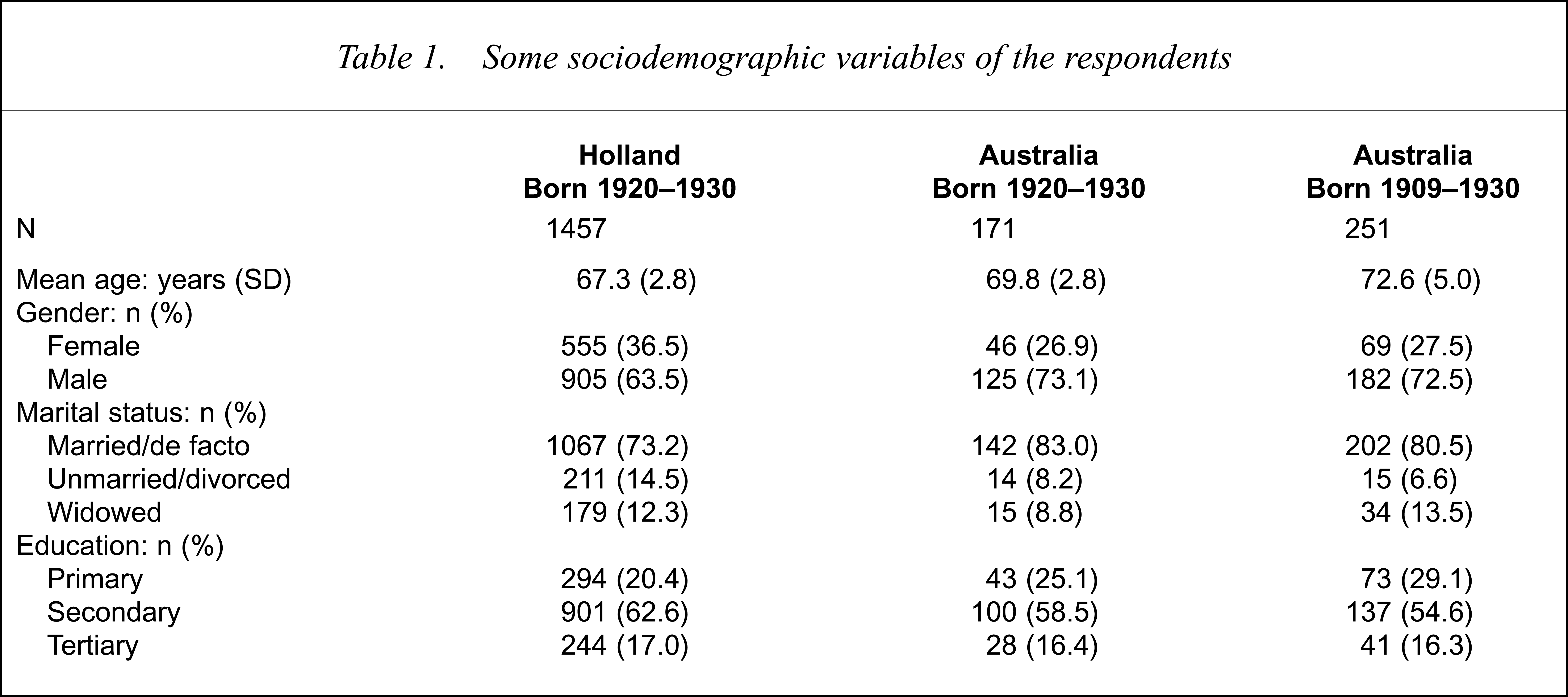
The mean age of the immigrants was about 2 years higher (t = 10.18, df = 1620, p < 0.001). Furthermore, males were overrepresented in the Australian sample (χ2 = 8.1, df = 1, p = 0.004), immigrants were more often married or in a de facto marriage (χ2 = 78.0, df = 2, p = 0.002), while level of education showed no significant difference (χ2 = 2.07, df = 2, p = 0.35).
Stressful war experiences
The war experiences reported by the respondents are given in Table 2. Only nine of the 251 immigrants reported no special war experiences at all. They all belonged to the younger cohort.
The war experiences reported by the respondents born between 1920 and 1930. Several of them are included in more than one category
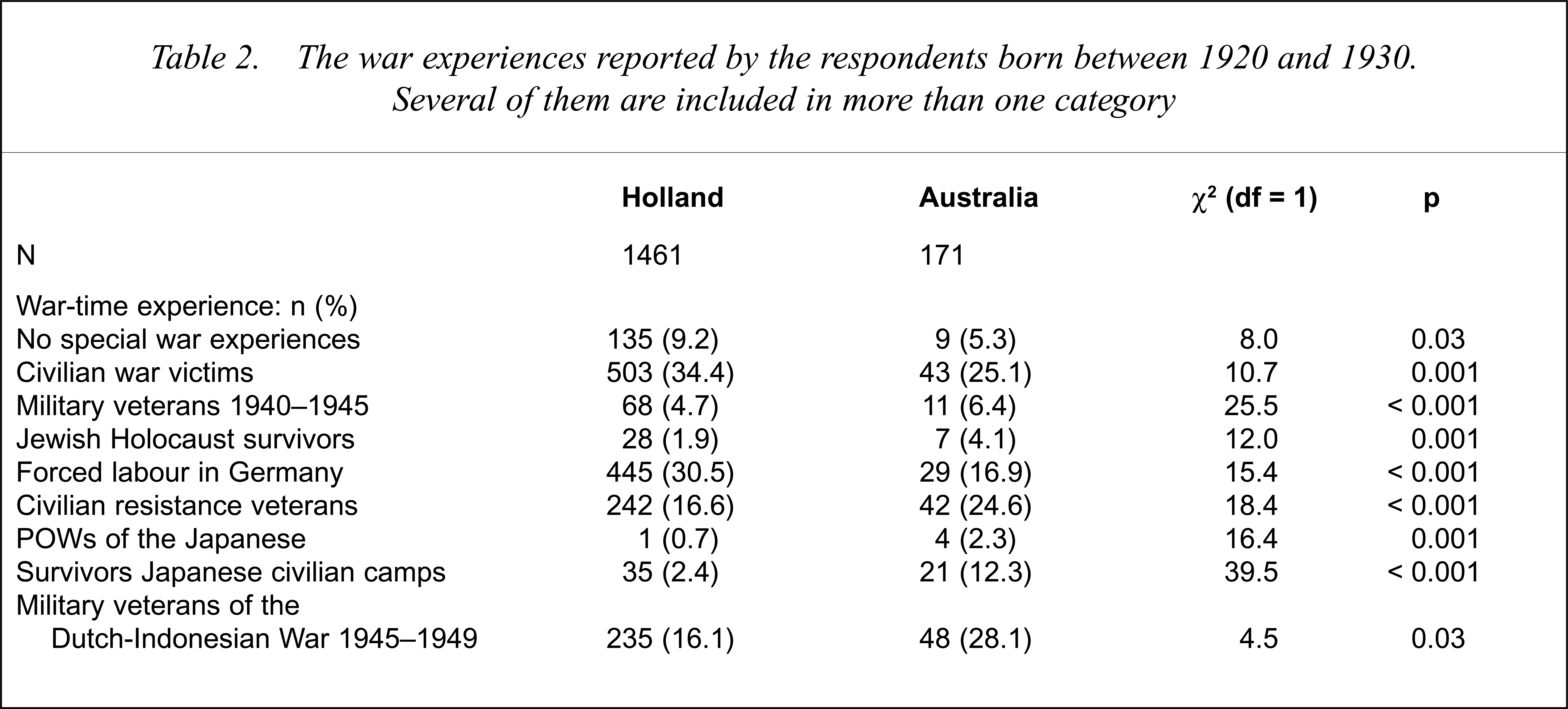
Interestingly, all comparisons showed statistically significant differences. First, it appeared that Australian immigrants belonged more often to the categories of military veterans from World War II, Jewish Holocaust survivors, civilian resistance veterans, POWs of the Japanese, and survivors of the Japanese civilian internment camps. On the other hand, civilian war victims and respondents with forced labour experiences in Germany belonged more often to the respondents still living in the Netherlands.
Motives for migration
In the questionnaires, 10 possible motives for emigration, extracted from the literature, were given [2–4]. These were only investigated in the Australian immigrants and are listed in Table 3. Age had some influence on the reasons given for emigration. Older immigrants (born before 1919) more often mentioned disappointment with Dutch society than those born between 1920 and 1931 (χ2 = 7.06, df = 2, p = 0.029). Also, older immigrants more often mentioned the threat of a third world war (χ2 = 19.47, df = 2, p < 0.001). Younger immigrants stated need for adventure and challenge as more important than did older immigrants (χ2 = 14.93, df = 2, p = 0.0006). This motive of adventure and challenge, also differentiated between men and women. It was less important for women (χ2 = 11.93, df = 2, p = 0.002).
Reasons given for emigration by the Dutch-Australian immigrants and their relation to post-traumatic stress disorder (Pearson-product moment correlations) (N = 251)
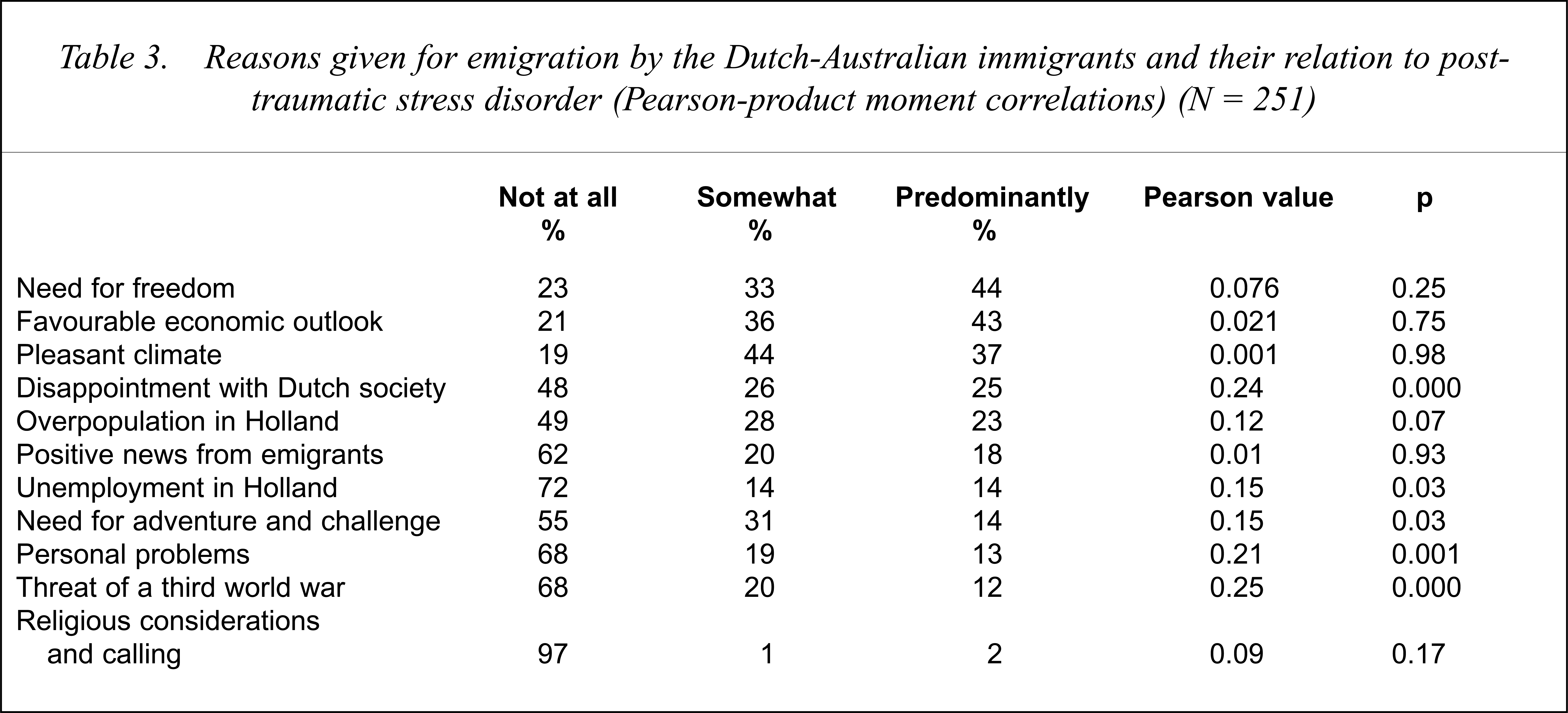
The war experiences of the subjects had, in general, little effect on the motives for emigration. However, Jewish Holocaust survivors more often indicated threat of a third world war as important (χ2 = 18.3, df = 2, p = 0.0001). For those who had survived the Japanese internment camps in the East Indies, a pleasant climate was frequently mentioned (χ2 = 12.8, df = 2, p = 0.002).
The extent of posttraumatic stress disorder
In the Dutch sample, 76 (5.2%) had a SRIP score, using a cut-off score of 52, indicative of current PTSD, and in the entire Australian sample (n = 251) this occurred with 29 respondents (11.6%). In earlier publications of these data [5,6] following Hovens [13] a cut-off score of 53 was used resulting in slightly different percentages of PTSD.
Again, in order to compare same-aged groups, the Dutch cohort was compared with the cohort of Australian immigrants born between 1920 and 1930. In this latter sample, 18 respondents (10.5%) had a SRIP score indicating current PTSD. Thus, the proportion of respondents suffering from PTSD was significantly higher among the immigrants (χ2 = 7.7, df = 1, p = 0.005). Therefore, it appeared interesting to compare the scores on the SRIP with regard to the various war stressors (Table 4). It should be noted that several subjects are included in more than one category.
Mean PTSD scores of the various war stress groups.
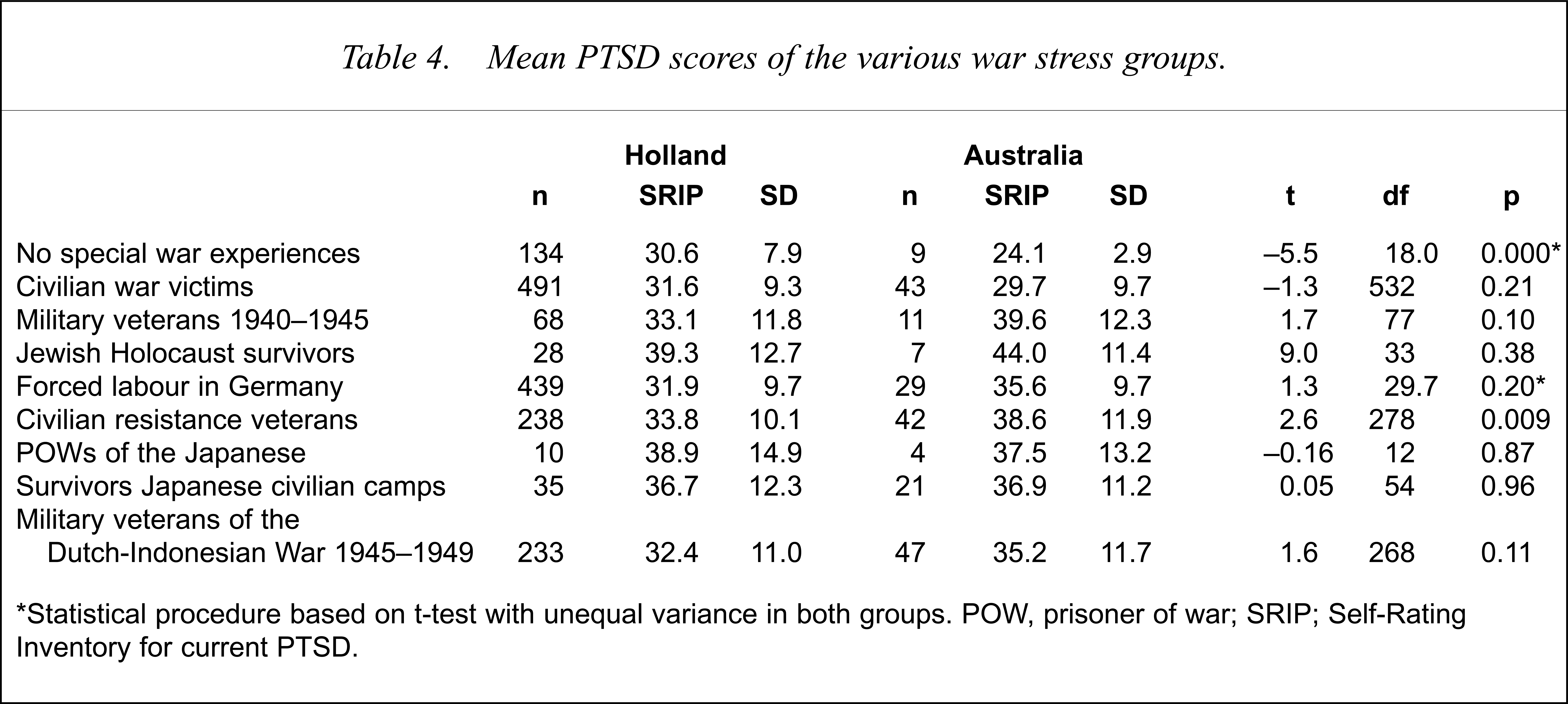
Statistical procedure based on t-test with unequal variance in both groups. POW, prisoner of war; SRIP; Self-Rating Inventory for current PTSD.
Civilian resistance veterans who emigrated to Australia had a significantly higher mean score on the SRIP. Also, respondents reporting no special war experiences and who did not emigrate had a higher SRIP score than immigrants who reported no special war experiences. These scores were the lowest of all war stress groups. For the other groups, no differences were found.
In the immigrants group (p = 251) the risk of PTSD was 21.4% for Holocaust survivors, 20.0% for resistance veterans, 18.8% for military veterans of World War II, 11.0% for POWs of the Japanese and 7.7% for survivors of the Japanese internment camps in the Dutch East Indies.
Next, the relationship between SRIP scores and the motives for emigration were investigated in the Australian sample and given in Table 3. Disappointment with Dutch society, personal problems and threat of a third world war correlated significantly (p < 0.01) with PTSD.
Discussion
The role of cultural influence is often stated to be an important factor in the nature and course of post-traumatic reactions. There are a range of descriptive accounts in refugee populations focusing on issues such as somatisation and cultural alienation [15]. However, most of the objective studies have found relatively small differences. The majority of these studies have looked at ethnic minorities who had served in armed services and their long-term adjustments to coming home and found that issues such as rank and differential levels of combat exposure accounted for many of the differences observed.
An alternate method for examining this question is to look at the impact of migration on the long-term adjustment of war-affected populations. This allows comparison of people who choose to stay in their current origin with the group who migrated. Particularly after World War II, with the devastation of the infrastructure of much of Europe, there were many families who chose to leave for the more isolated shores of the USA, Canada and Australia. This study compared the outcomes of experiencing World War II in Europe for those who stayed in their culture and a group who moved to Australia, which had a strong British cultural heritage at that time.
Impact of stressful war experiences
The proportions of persons who experienced considerable to extreme stress during World War II were not equal for the study groups living in Australia and the Netherlands (Table 2). The percentage without special war experiences was smaller in the Australian sample. In this sample, there were more civilian resistance veterans and more military veterans, in particular veterans who served in the Dutch East Indies in the years 1945–1949 than in the Dutch sample. Also, POWs of the Japanese and survivors of Japanese civilian camps were more strongly represented in the Australian group. However, the actual number of these POWs was very small so that we must be very careful with generalisations to the total populations.
These results have to be interpreted with caution, because the age and gender distribution and the response rate in the two studies was not equal, and the methods of sampling differed. In the study of long-term psychological adjustment of war survivors in the Netherlands, a large random sample of names and addresses was drawn from municipal population registers [7,8]. These persons received by mail a four-page questionnaire and a cover letter with the request to participate in a study on the long-term consequences of war experiences. In the smaller study of Dutch-Australian emigrants respondents were primarily contacted by advertisement and by snowball sampling and word-of-mouth. Given the different methods of recruitment and the fact that traumatisation was a factor which excluded the participation of many subjects, it is possible that the real rates of chronic PTSD in this sample, is in fact higher.
The high number of civilian war victims and forced labourers in the Dutch sample may be due to the fact that this study used population registers of several large Dutch cities including Rotterdam that was heavily bombarded. Men living in larger communities ran a higher risk of being picked up from the streets during razzia (raids) to be forcibly employed in Germany. In the Dutch study, the cover letter stressed that also persons without important war experiences or with no after-effects should participate. This may explain the higher number of people ‘without special war experiences’ in the Dutch group. In the study of Dutch-Australian immigrants, the advertisements and the snowball sampling were directed at individuals exposed to wartime stress. In particular, the high number of military veterans and resistance veterans may be due to the method of sampling, because one of the advertisements was primarily directed to military veterans, while the snowball sampling started out with members of the former resistance, known in the Netherlands. Therefore, the respondents may have known, and contacted relatively more often, other members of the resistance. Furthermore, there was a large group of resistance participants who subsequently served as soldiers in the former Dutch East Indies. Thus, the higher presence of military and civilian resistance veterans among the Australian immigrants may be due to differences in sampling method. However, it may be that veterans had a greater sense of alienation and were more likely to emigrate. As well, involvement in these activities in war may not have been random. Risk takers and novelty seekers may be more motivated to seek combat roles and similarly to migrate at times of hardship.
The higher number of Dutch survivors of the Japanese internment camps in the Australian sample is not easily explained by the differences in sampling method, and therefore it seems that this may be generalised to the total population of immigrants. Many individuals with the Dutch nationality who were born and raised in the Dutch East Indies, and were forced to leave that country after sovereign rights were transferred, preferred settlement in Australia instead of in Holland because of the pleasant climate, which is, in general, much warmer and less wet. This is also supported by our findings concerning the motives for emigration.
In sum, we may conclude that the differences in study method may have been responsible for some of the differences in war exposure. Other differences, in particular the higher representation of survivors of the Japanese internment camps and Jewish Holocaust survivors, are likely to be ‘true’ differences. This may be considered an expression of the avoidance tendency of traumatised individuals.
Reasons for migration
In the post-war years, around 130 000 people from the Netherlands settled in Australia. Reasons most frequently given by the respondents for their emigration were need for freedom (44%), a favourable economic outlook (43%) and a pleasant climate (37%) (Table 3). The war experiences had, in general, little effect on the motives for emigration, although Jewish Holocaust survivors more often mentioned threat of another world war as a motive. The immigrants with current PTSD more often stated that motives for their decision to leave the native country were threat of a third world war, disappointment in Dutch post-war society and personal problems (Table 3).
The extent of posttraumatic stress disorder
In the Dutch-Australian war victims under study, elevated PTSD scores more than 50 years after the end of World War II were found in several exposure groups. We have no information on the beginning and the course of PTSD in these respondents. It is dangerous to generalise about the long-term course of PTSD as there appears to be significant variation among individuals, traumatic events, and the contexts in which events occur [16]. However, a late onset or reappearance of PTSD at old age was observed among a substantial number of Dutch resistance participants [5,6]. Comparable observations in Australian World War II veterans, with the masking of intrusive symptoms in mid-life, were published [17]. An age-related decline of coping skills is not a valid explanation for this delayed exacerbation, but a specific interference of the developmental conflicts of ageing and trauma responses may clarify this phenomenon [18]. However, there is contradictory evidence for an ongoing increase of posttraumatic symptoms with advancing age. In a controlled follow-up study with former Australian servicemen who were interned in Japanese POW camps, Tennant et al. [19] found a significant increase of psychiatric morbidity over a younger age group of ex-servicemen when the target group was between 46.5 and 66.5 years of age. Further, Tennant et al. [20] examined the same POWs in 1982–1983 and 9 years later. The prevalence of both anxiety and depression had declined in the intervening period. A negative relation between age and PTSD was also found in military veterans [21].
For Dutch-Australians, the risk of PTSD was highest among Jewish survivors of the Holocaust (21.4%), acknowledged civilian resistance participants (20.0%) and military veterans (18.8%). For survivors of the Japanese internment camps in the Netherlands East Indies the risk was 7.7%, for POWs of the Japanese, 11.0%. These groups had all been exposed to severe and long-lasting war stress. After the war, the majority of Jewish survivors were confronted with the death of many, and sometimes all, of their family members and friends. This causes additional and ceaseless suffering, and this may have contributed to the relatively high risk for chronic PTSD in this group. Post-war, both Holocaust survivors and resistance veterans experienced a very disappointing lack of societal interest in their fate [11]. This ‘conspiracy of silence’ may have hindered coming to terms with their war past. Most Dutch resistance veterans were able to function quite well professionally, despite posttraumatic complaints [5].
The different risks of PTSD of resistance fighters in the Dutch and the Australian sample may have arisen for methodological reasons. The inclusion criterion for the Australian study was registration as a resistance veteran entitled to a special pension or having received the ‘Verzetsherdenkingskruis’, a special award cross for resistance participation granted in 1980 [6,11]. This means that there is impartial evidence of resistance participation which makes it also likely that these veterans all meet the stressor criterion for PTSD. The resistance participants of the Dutch studies by Bramsen, and Bramsen and Van der Ploeg [7,8] may also include individuals who have been exposed to a lower amount of war stress. On the other hand, in samples of veterans receiving a special disability pension or a decoration, war-related disabilities (including PTSD) may be overrepresented. Of the 70 resistance veterans living in Australia 17 had applied for and were granted a special Dutch war pension; their mean PTSD score was 44.1. For resistance veterans living in Holland granted the same war pension (n = 223) this was (recounted using the procedure used in the current study) 44.2, and for 26 Dutch veterans living in the USA (recounted) 39.9 [6].
The relatively low PTSD prevalence in Dutch former prisoners of the Japanese, civilians as well as military veterans, who immigrated to Australia, poses a dilemma. After the end of the Japanese occupation many of these Dutch nationals were exposed to further stress, related to the struggle for independence by the native Indonesians. They were ultimately forced to leave the country where most of them were born and had lived for decades. Those who settled in Holland also met a ‘conspiracy of silence’ and, besides ignorance, sometimes even hostile rejection by Dutch society [22]. Potts [23] studied 129 civilian internees of the Japanese during World War II. Current PTSD (symptoms within the most recent 6 months) was noted in 15%. In a Dutch study a similar percentage of 13% was found [8]. These percentages are higher than the 8% found in this study. In the study by Potts higher levels of post-traumatic stress were associated with poorer physical health. Studies of former south-east Asian POWs revealed high rates of PTSD: current PTSD 56% [24], 59% [25], 70% [26] and 85% [27]; lifetime PTSD 67% [28], 78% [26] and almost 80% [29]. This is much higher than the 11% found in this investigation. However, our group of POWs was small, only nine individuals, and our result may therefore have been due to chance and sampling bias.
Post-war adjustment
It was expected that Dutch victims of World War II who had emigrated would show, in general, a pattern of better post-war adjustment and a lower incidence of PTSD, despite the additional stress of emigration. This would be the case, since, contrary to those remaining in the Netherlands, the Dutch-Australian immigrants live in a society that lacks a recent legacy of foreign occupation and persecution. In Holland, war victims are constantly reminded of their traumatic experiences, especially when they still live in their wartime neighbourhoods. Their proximity to Germany is also an issue. It was hypothesised that those who emigrated, and thus would live in a more neutral environment with respect to these constant reminders, would have had better opportunities for posttraumatic readjustment and integration. The PTSD scores, in more or less comparable groups in Holland and Australia, however, showed no gross or systematic differences (Table 4). It must be realised that the immigrants studied are in several respects a selective group. They had the courage to cut the ties with their mother country and, in most instances, their parents and other relatives. About 30% of Dutch immigrants returned to Holland in the first 5 years after their departure [30]. Thus the people studied are the successful immigrants. Both factors may be related to personality characteristics that also can have a positive influence on coping with chronic stress.
Furthermore, the idea that Australia is a country where the legacy of World War II is minimal may be far too simple. Most immigrants have close ties with countrymen, among them many war victims. Australian forces were heavily engaged in Italy, Greece and the North African western desert. During the Japanese attack Australia lost 22 000 POWs in Malaya and Indonesia. Australian troops halted the Japanese advance in New Guinea. At the end of World War II the Australian Forces had suffered 40 000 deaths. In World War I 60 000 lives were lost [31]. Nearly a million people were in the armed services at the time of the World War II in Australia when the population was only in the order of nine million. The Japanese occupation and the Burma Railway camps in particular were matters of constant discussion and cultural focus. In recent times there have been war criminal trials in Australia of Nazis who emigrated to escape prosecution. In the immediate post-war years, Australian society was somewhat xenophobic considering the threats of invasion and the influx of migrants.
In conclusion, more than 50 years after the end of World War II, many war victims still suffer from chronic posttraumatic complaints. We have been unable to demonstrate specific effects of emigration on the prevalence of posttraumatic complaints in a group of elderly Dutch-Australian immigrants. This supports the notion that extreme war stress may be considered the primary determining factor in the development of PTSD, and that actual post-war living circumstances may, in the long term, be of subordinate importance.
Acknowledgements
M. Staalenhoef handled the mailing of questionnaires and the administrative tasks of this study. We also thank the Australian psychiatrists of Dutch origin, who were willing to assist and support respondents in case of serious problems. We are greatly indebted to J. Beumont, Sydney, H. M. Hecht, Melbourne, H. W. M. Lendering, Indooroopilly, Queensland, R. G. Pols, Bedford Park South Australia, and J. M. Westerink, Carlingford, New South Wales for their willingness to assist and support respondents in case of serious problems. Henk J. Op den Velde prepared the questionnaire data for statistical analyses, which were carried out by P. A. J. Timmermans.