






Abstract

Millipedes and Centipedes
Millipedes and centipedes were among the first animals to inhabit the earth. Their fossil record dates from the late Silurian period 430 million years ago. Their common names, derived from Latin, mean 1000 feet and 100 feet, respectively. Until 2021, when a new species of millipedes with 1306 legs was discovered, no millipede had 1000 legs. 1 Millipedes have 2 pairs of legs per body segment (Figure 1). Centipedes have 1 pair of legs per body segment, and many centipedes have >100 legs (Figure 2). All centipedes also have modified legs on both ends. The first pair of centipede legs serves as claws or pincers (forcipules) for restraining victims and injecting venom, and the terminal pair (mating claspers or genital forceps) serves in reproduction.
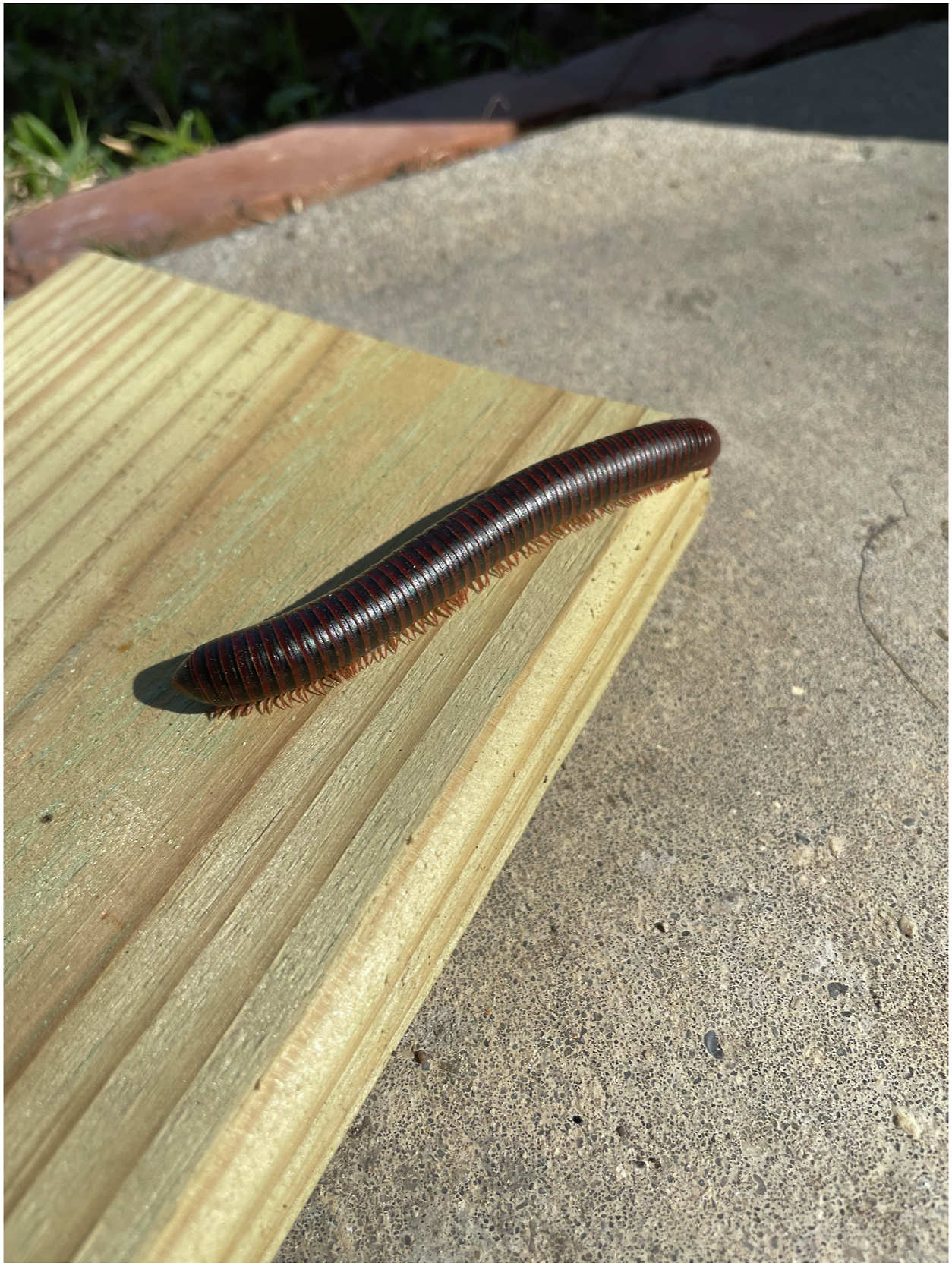
The giant American millipede, Narceus americanus, has a wide geographic distribution range from western states bordering the Mississippi River east to the Atlantic Coast, south to the Gulf Coast, and north to Quebec and Ontario in Canada. Photographed and released by the author in Harrison County, Mississippi, 2023.
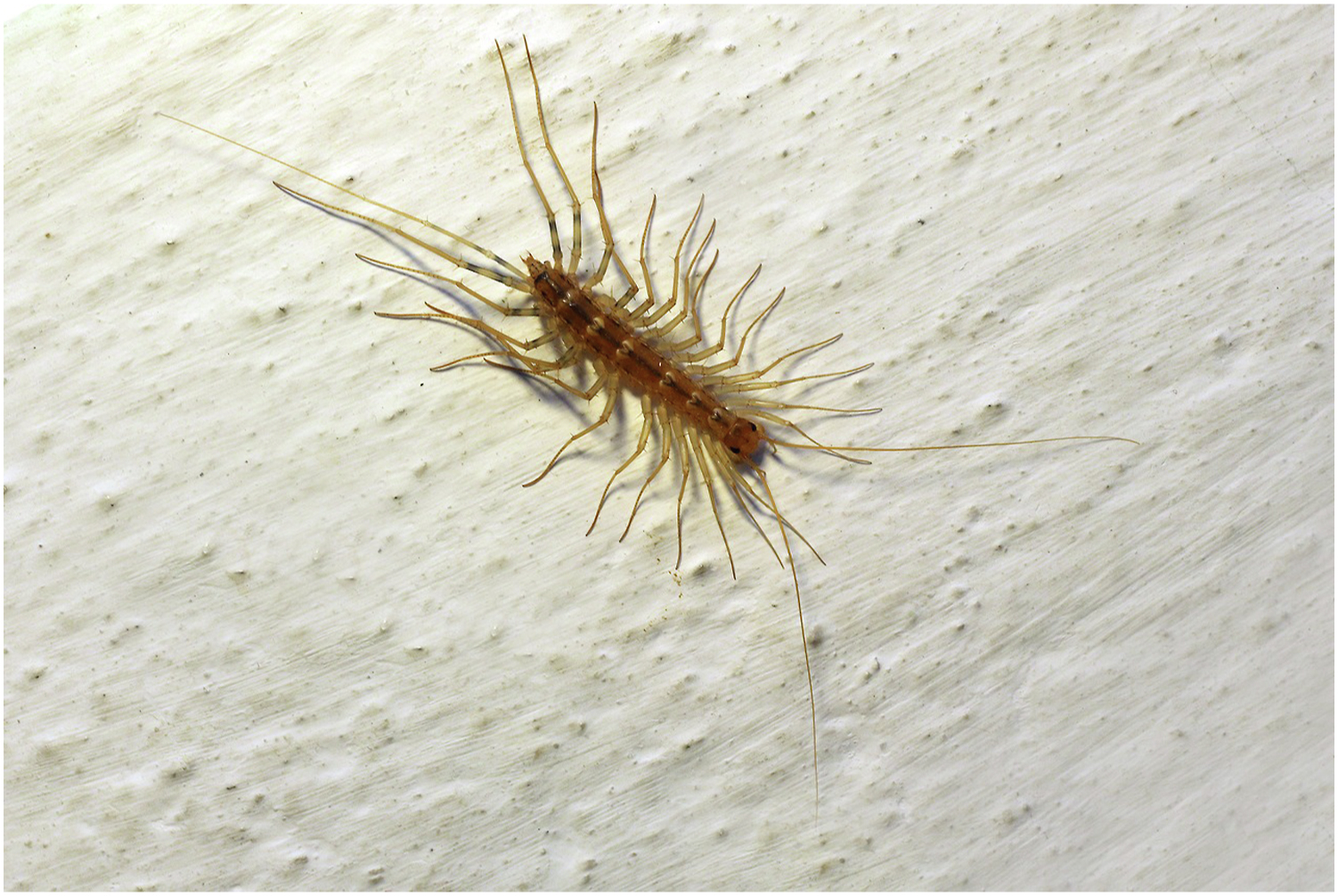
The house centipede Scutigera coleoptrata has 15 pairs of long, delicate legs, which enable it to speed across floors, walls, and ceilings. Source: Wikimedia Commons. Photographer: Filip Vidinovski. Public domain, no copyright permission required. Available at:
Millipedes are slow moving, nonaggressive, and cannot bite or sting. They rely on defensive postures and poisonous secretions to repel predators. 2 Centipedes are aggressive, fast moving, and can ambush and attack prey. Since centipede mouthparts are not involved in inflicting injuries, they cannot bite and only sting by injecting venom into victims with their forcipules.
Taxonomy
Millipedes and centipedes belong to the phylum Arthropoda, subphylum Myriapoda. 3 They are collectively referred to as myriapods. Millipedes or diplopods belong to the class Diplopoda and centipedes or chilopods to the class Chilopoda. 3 There are >13,000 species of millipedes and >8000 species of centipedes worldwide.3,4 Table 1 compares the North American species of millipedes and centipedes.
Millipedes vs centipedes: comparison of taxonomy, distribution, habitat, lifestyle, behavior, morphology, defense, toxicology, and human interaction
Shared Characteristics
All myriapods are elongated, segmented arthropods with many legs and are found worldwide, except in Antarctica. They all have 5- to 6-segmented heads, a single pair of antennae, unbranched limbs, and elongated trunks. They are primarily nocturnal creatures, with millipedes preferring subterranean habitats, while centipedes adapt to several habitats. Centipedes may be found outdoors under rocks, compost, and wood piles and within decaying wood. Some centipedes found in human dwellings, like the house centipede Scutigera coleoptrata (Figure 2), can spend their entire lifespans of 5 to 7 y indoors in basements and closets. There are desert and semiarid region species of both millipedes and centipedes as well as blind, cave species of myriapods.
There are brightly colored species of both millipedes and centipedes, but most millipedes have solid, darker colors. Centipedes often have lighter, brighter warning coloration to ward off predators, like the giant desert centipede Scolopendra heros, which ranges from the arid desert Southwest to the rocky woodlands of the Ozarks (Figure 3). It is the largest centipede in the United States, with an average length of 17 cm, and has a brightly colored head and lighter-colored body and tail to deter predators.
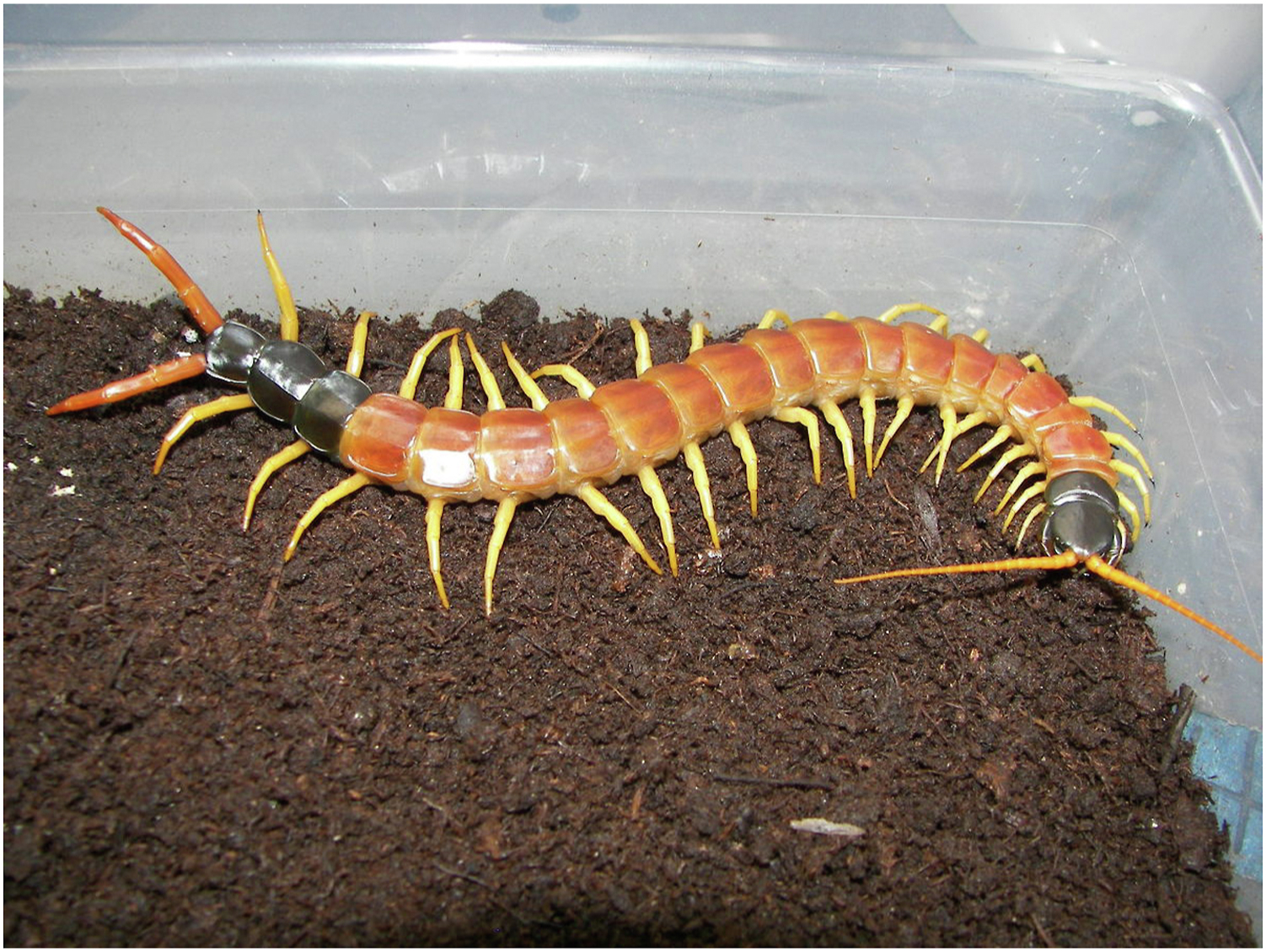
The giant desert centipede Scolopendra heros ranges from the arid desert Southwest to the woodlands of the Ozarks. It is the largest centipede in the United States, with an average length of 170 mm and a bright-red head, light-green body, and tail to deter predators. Source: Wikimedia Commons. Photographer: John. Public domain, no copyright permission required. Available at:
Important Differences
In addition to the number of legs per body segment, other important differences between millipedes and centipedes include their movements, dietary habits, breathing capabilities, and reproductive and defensive behaviors. Millipedes are slow-moving, subsurface soil movers, and centipedes are fast surface runners. The house centipede, S coleoptrata, has 15 pairs of long, delicate legs that enable it to race across floors, walls, and ceilings at speeds of 0.4 m/s (Figure 2).
Millipedes are detrivores and herbivores. Detrivores consume decaying leaves and plant matter. Millipedes also consume fungi and plant juices. Millipedes live for 1 to 7 y and centipedes for 5 to 10 y.2,3 Centipedes are carnivores that primarily consume arthropods and earthworms. Indoor house centipedes feed nightly on common household arthropods, including ants, bed bugs, cockroaches, silverfish, spiders, and termites. Envenomation facilitates immobilization and subsequent consumption of larger prey by giant centipedes.5,6
Respiration in millipedes and centipedes is through a series of breathing holes or spiracles in each segment. There are 2 pairs of spiracles located on the ventral surfaces of each segment near the base of each leg in millipedes. There is a single pair of spiracles located on the dorsal or lateral surfaces of each segment in centipedes.
Millipedes and centipedes display wide diversity in their reproductive structures and mating rituals. The genital openings (gonopores) in both sexes of millipedes are located on the ventral surface of the third body segment near the second pair of legs. Males pick up sperm packets (spermatophores) from gonopores and deposit them into female gonopores using specialized legs or mating claspers during copulation. Gravid females will lay from 10 to 300 eggs every spring or summer.
Centipede mating behavior does not involve copulation because males leave spermatophores for females after mating rituals to self-deposit in their gonopores. Gravid females will lay from 10 to 60 eggs every spring or summer.
Millipedes and centipedes also display wide diversity in their defensive behaviors and associated anatomical structures. Millipedes do not bite or sting. Their primary defense mechanism is to curl up into a tight coil protecting their delicate legs and other vital ventral structures inside an armored exoskeleton composed of 4 chitinous plates (Figure 4). 2 Millipedes can also release or squirt noxious, caustic substances through microscopic holes (ozopores) connected to secretory glands (odiferous or repugnatorial glands) as a secondary means of defense. 2 These secretions can damage the exoskeletons of predatory arthropods and cause inflammatory lesions on the skin and eyes of larger predators, including humans. 2
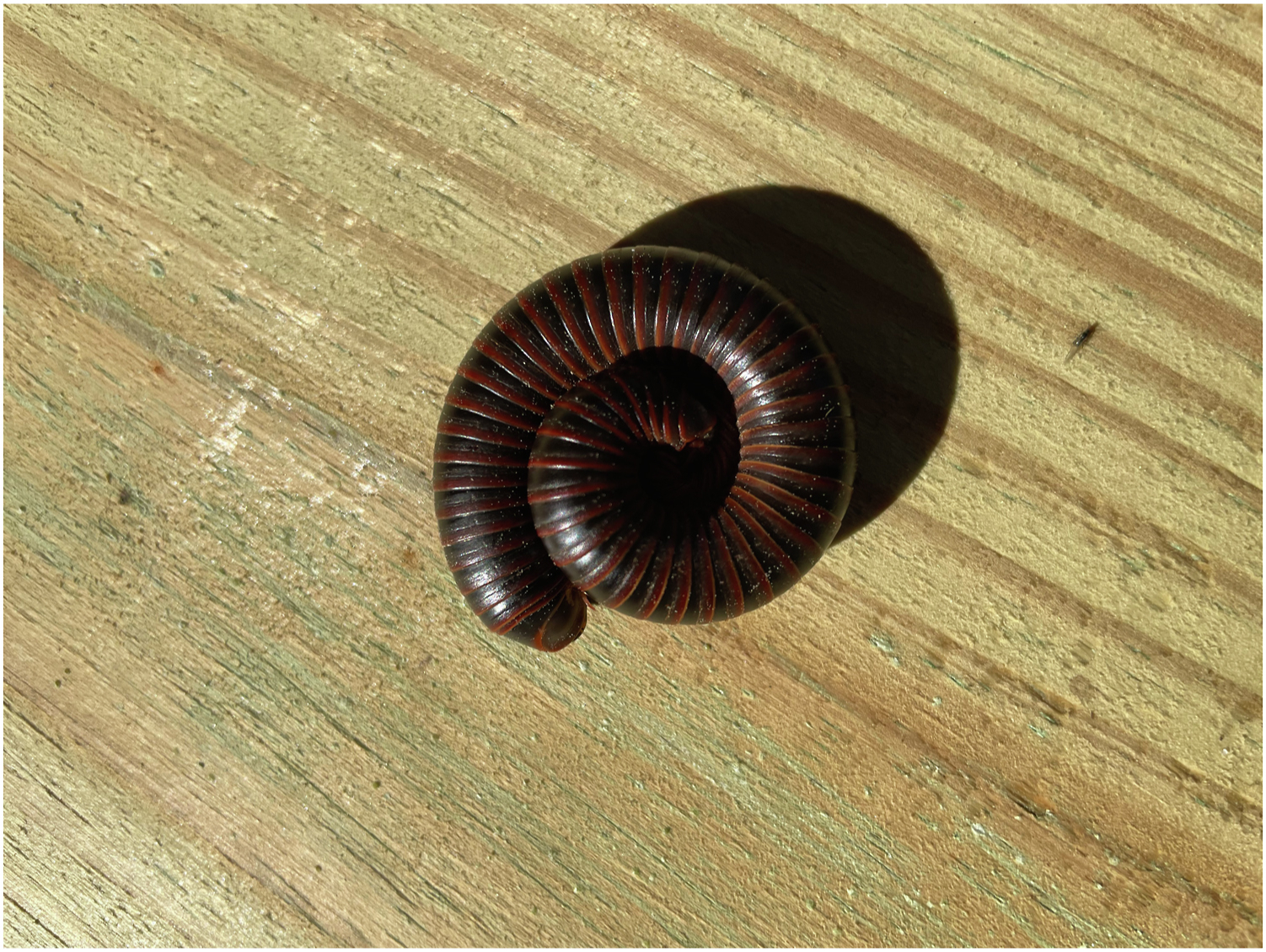
The giant American millipede Narceus americanus has assumed its defensive posture in a tight coil, presenting its exoskeletal chitinous armor and protecting its vulnerable legs, genital opening, and soft ventral surfaces. Photographed and released by the author in Harrison County, Mississippi, 2023.
Unlike passive millipedes, centipedes are aggressive defenders and predators. They are the only arthropods equipped with a pair of pincer-like forcipules located just behind the head and connected through hollow venom tubes to venom glands located in the head or celomic cavity. 6 The forcipules can grab and restrain prey to inject venom.
Toxicology
The toxic defensive body fluids released or squirted from the repugnatorial glands in millipedes contain chemicals, including quinones (p-benzoquinones and toluquinone), phenols, terpenoids, hydrochloric acid, and hydrogen cyanide. 2 Centipede venom is even more pharmacologically diverse and contains >500 peptide sequences from 61 phylogenetically distinct peptide families.5,6
Recent advances in transcriptome analysis have provided new insight into the protein components of centipede venom.5,6 The proteins/peptides in centipede venom have now been stratified into enzymes, nonenzymatic proteins, ion-channel modulators, and anticoagulants. Centipede venom enzymes have been further categorized as serine proteases, metalloproteases, esterases, γ-glutamyl transpeptidases, glycoside hydrolases, and phospholipase A2.5,6 Centipede venoms most likely function in a 2-step mechanism in which ion-channel–modulating peptides initially cause rapid, transient neuromuscular paralysis, followed by lethal actions of myotoxic and neurotoxic peptides. 5
A mouse model demonstrated that another peptide toxin in centipede venom, SsTx, blocks KCNQ potassium channels to exert toxicity and allows centipedes to subdue larger prey. 7 The KCNQ potassium channels are a family of multifunctional potassium channels serving many critical physiological functions, including cardiac action potential repolarization, coronary circulation, respiratory rate, and cerebral neuronal excitation. 7 Novel KCNQ potassium channel modulators, such as retigabine (ezogabine, Potiga), approved by the Food and Drug Administration as an antiepileptic in 2011, can neutralize the toxic effects of centipede envenomation in mouse models. 7
Human Interactions and Injuries
Millipedes may be accidentally encountered when digging soil, stepping into shoes, or donning clothes. When cornered or crushed, millipedes can release or squirt their poisonous secretions. The phenols, terpenoids, hydrochloric acid, and hydrogen cyanide in millipede secretions can cause chemical lesions on the skin and cornea.2,8-11 The quinone constituents can cause painful discoloration of the skin and pigment changes, with dark tones of red, blue, and black (Figure 5).2,8 The color changes resemble similar discolorations caused by purple toe syndrome or acute arterial occlusion.8,9 They resolve spontaneously over days to weeks.8,9 The most common site of discoloration is on the foot, followed by other uncovered areas of the body, including the eyelids, face, hands, and arms.2,8,9 Covered parts of the body are less commonly affected by discoloration.2,8,9 Investigators have cautioned that millipede-inflicted discolorations can be mistaken for bruising from child abuse, especially if covered areas of the body are involved (Figure 5).8,9
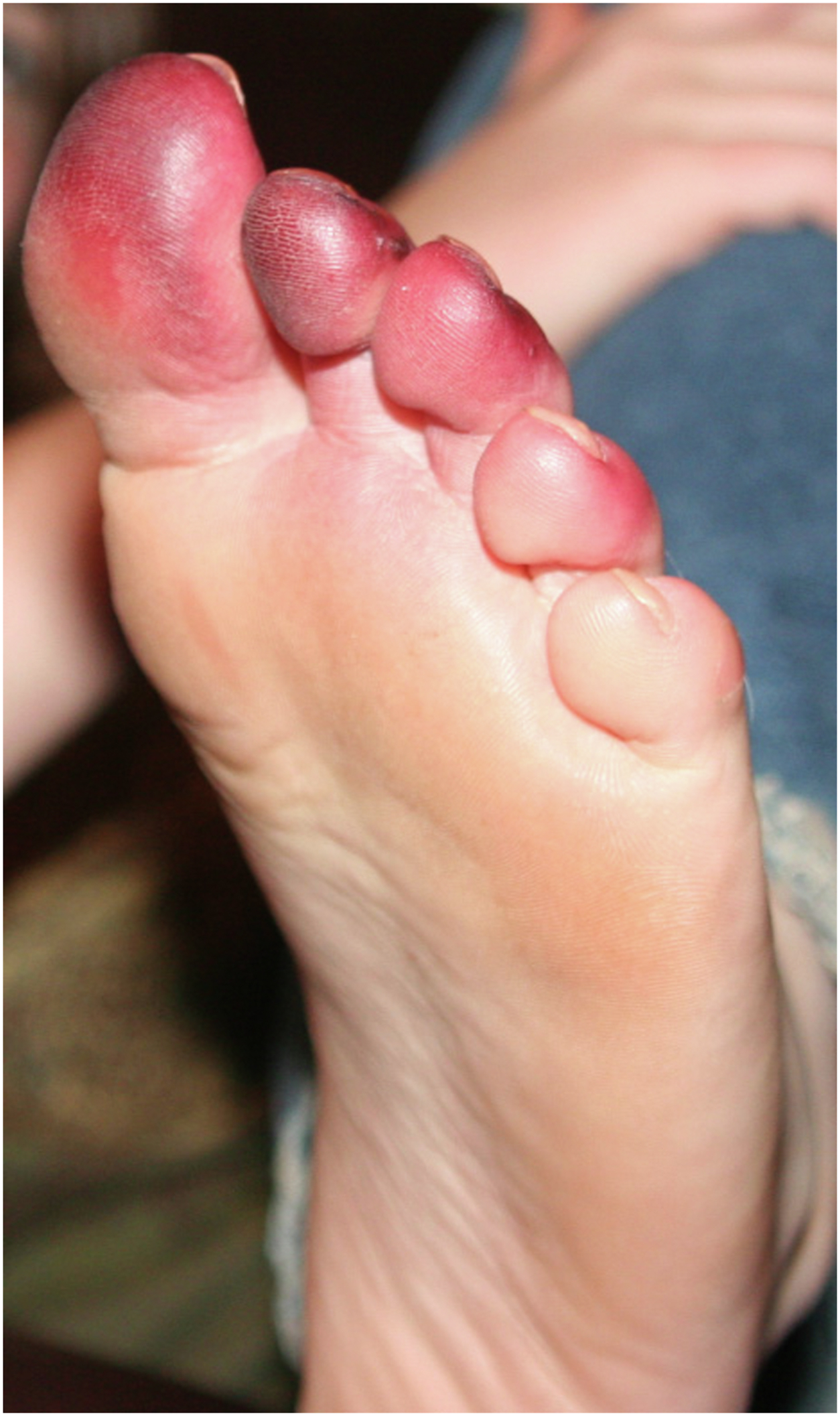
Initially painful and burning skin discoloration on the plantar surface of the left foot of a child who put her shoe on and crushed a millipede that had crawled into her shoe the night before. Source: Wikimedia Commons. Photographer: Aria Belli. Public domain, no copyright permission required. Available at:
Centipedes may be encountered accidentally indoors or outdoors in leaf litter, decaying wood, or compost piles or when trying to exterminate them indoors. Centipede stings cause burning pain that can last from 30 min to 3 d. Most sting sites will have 2 puncture wounds made by paired forcipules. However, wounds may range from 1 to 2 punctures to necrotizing lesions. Other localized effects of centipede stings can include erythema, bleeding, bruising, swelling, and regional lymphadenopathy. Systemic effects are much less common, attributed to the SsTx toxin containing KCNQ potassium channel openers, and include palpitations, chest pain, hypertension, tachyarrhythmias, tachypnea, agitation, and seizures.6,7 Anaphylactic reactions to myriapod venoms are very rare but more common following centipede stings than following millipede injuries. 6
Treatment
The treatment of millipede and centipede wounds is nonspecific, supportive, and symptomatic, including topical application of local anesthetics, antiseptics, antipruritics, antihistamines, cooling counterirritants, and corticosteroids. Wound sites should be cleaned with soap and water to reduce skin contaminants, and tetanus vaccination status should be checked. Some investigators have recommended initially wiping all millipede-inflicted wounds, including discolorations, with topical alcohols to remove or dissolve any remaining toxic chemicals on the skin. 2 However, this treatment strategy has not been confirmed as effective in randomized controlled trials. Topical placement of insulated ice packs over wound sites may reduce edema following millipede burns and centipede stings.
Effective topical anesthetics applied in ointments, creams, and foams or incorporated into or placed under plastic patches include lidocaine, prilocaine, benzocaine, and pramocaine. Effective topical antibiotic ointments for low-grade skin infections, such as impetigo, include 2% mupirocin and bacitracin. Effective antipruritics include oral and parenteral antihistamines, such as diphenhydramine and hydroxyzine, and cooling topical counterirritants, such as calamine, camphor, and menthol. Topical antihistamines should be avoided because they can cause sensitization, with subsequent allergic reactions to oral or intravenous antihistamines.
Analgesics are not usually required for millipede-induced discoloration without skin wounds but are usually required for deep millipede caustic lesions and centipede stings. Anaphylaxis should be managed with intramuscular epinephrine. Ocular exposures and injuries are exceedingly rare and require urgent and aggressive irrigation with clean tap water, sterile water, or normal saline solutions and referral to ophthalmologists for slit-lamp examinations to rule out corneal injuries.10,11
Prevention
Millipedes and centipedes play important roles in the ecosystem. Millipedes are responsible for recycling much of the annual leaf litter and aerating and improving soil. Centipedes provide an important food source for reptiles, birds, and small mammals. Millipedes and centipedes should not be provoked or handled. Most millipede injuries result from crushing the diplopod when donning clothes or putting on shoes. Centipede injuries are either accidental or provoked on handling. Before donning any apparel, especially after prolonged storage, each garment should be carefully inspected for hidden millipedes and centipedes.
Footnotes
Acknowledgment
As sole author, I contributed 100% to this manuscript. No other authors were consulted or involved.
Financial/Material Support: This work was supported by institutional and departmental sources and a grant titled “Safe Oyster,” supported jointly by the Louisiana Board of Regents and NASA.