






Abstract
The jaguar, Panthera onca (Linnaeus, 1758), is the biggest felid in the Americas. Its range extends from the southwestern United States to northern Argentina. Herein, we present 5 nonfatal jaguar attacks that occurred in Brazil between March 2010 and November 2021. Most of the cases occurred when the victim encountered a jaguar guarding its food or cubs or devouring prey; none appeared to be the result of predatory behavior.
Introduction
The jaguar, Panthera onca (Linnaeus, 1758) is the biggest felid in the Americas, having a body weight of 60 to 115 kg (132–253 lb) and length up to 190 cm (75 in). Its range extends from the southwestern United States to northern Argentina around the Iguaçu Falls border region between Brazil and Paraguay (Figure 1). It is an endangered animal, and there are imprecise data about the size of its remaining populations. 1 –3
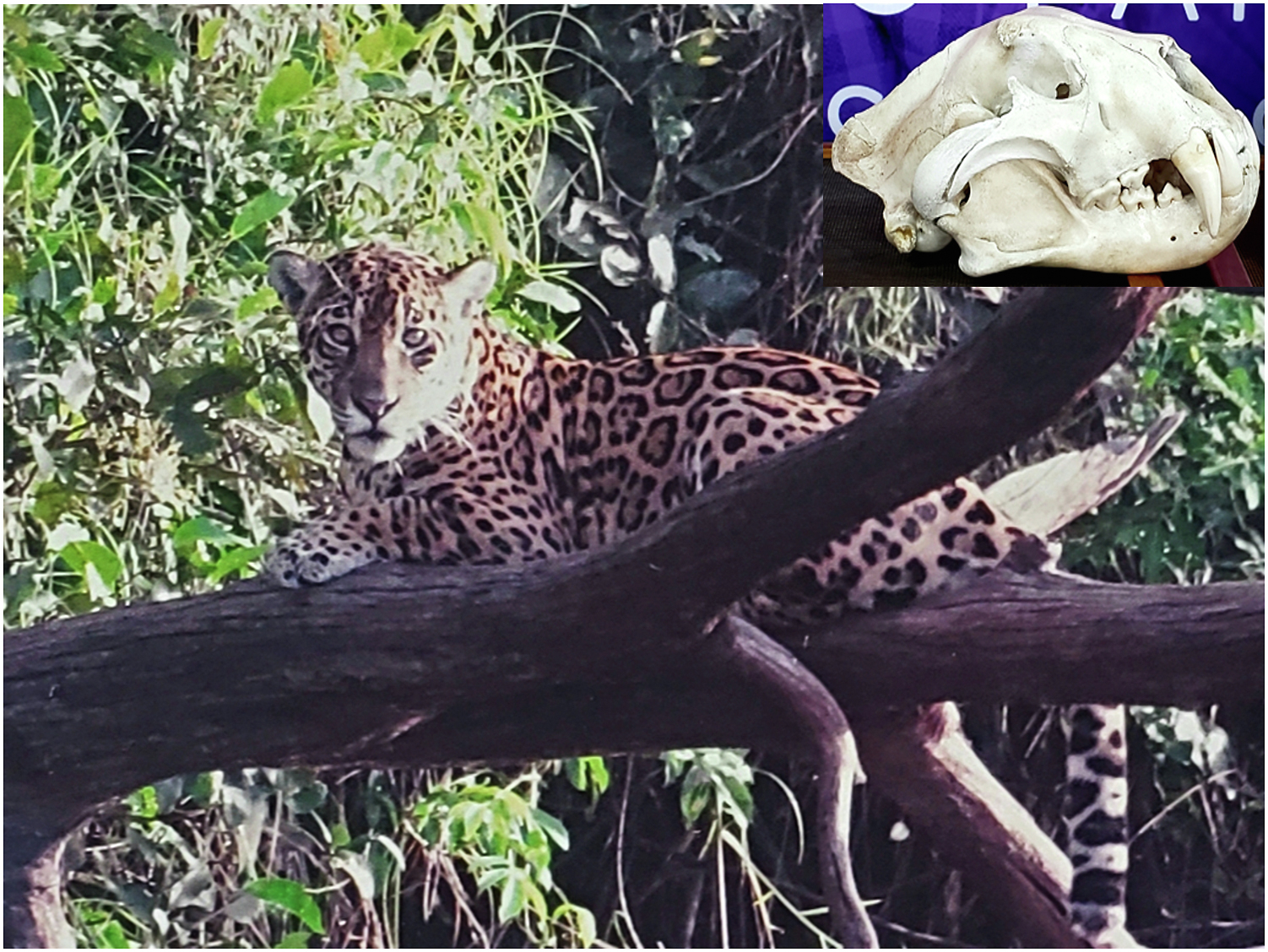
Jaguar (Panthera onca). Upper right: Jaguar skull showing teeth used for predation. Photos: Kleber José Barbosa and Vidal Haddad Junior.
Jaguar attacks on humans seem to have increased in recent years in the Pantanal region of Brazil. 1 –3 We present 5 cases of nonfatal jaguar attacks occurring in Brazil between March 2010 and November 2021. All cases happened when the victim surprised a jaguar that was eating or with cubs; none of the attacks seems to have resulted from predatory behavior. The attacks occurred in rural areas in the states of Mato Grosso, 3 Mato Grosso do Sul, 1 and Amazonas. 1
Case presentations
CASE 1
Upon investigating a disturbance on his rural farm, a 28-y-old man found a jaguar attacking his dogs. When he attempted to rescue the dogs, the jaguar pounced upon him. Fellow workers rescued him and took him to the nearest hospital where he was found to have multiple lacerations (defensive wounds), primarily on his arms (Figure 2). His wounds were irrigated and debrided and closed primarily. He was prescribed antibiotics (not specified). No secondary infection is known to have occurred.
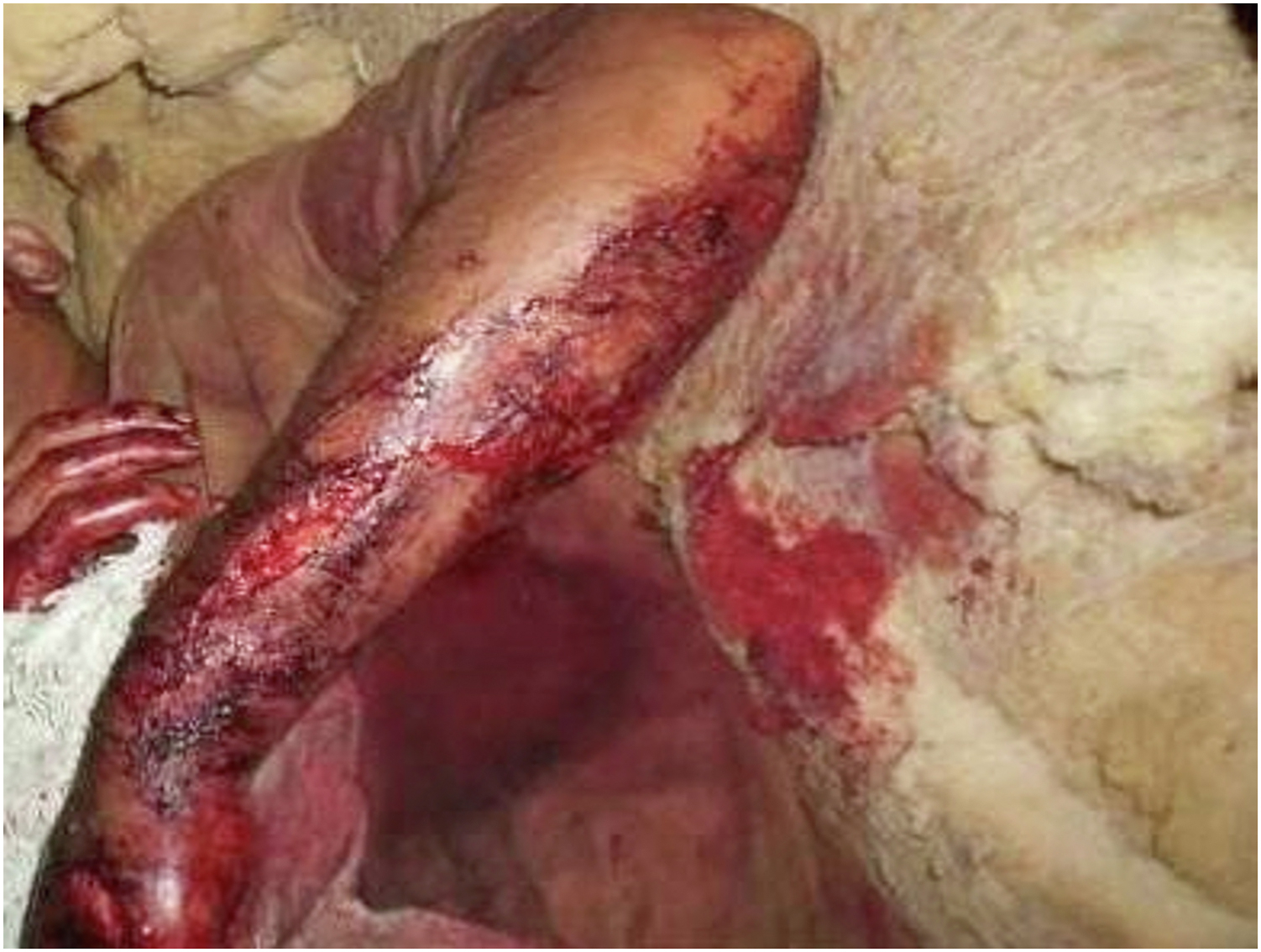
Incised and lacerated wounds on the victim’s arm caused by the jaguar’s claws. Photo: Public domain.
CASE 2
A 33-y-old man was attacked in the downtown area of a small village by a jaguar that had previously been observed to be accompanied by 2 cubs. He sustained numerous lacerations and contusions of his face and arms, including full-thickness 35 cm and 20 cm long wounds of the left and right arms, respectively (Figure 3). Radiographs revealed no fractures. He was prescribed oral ciprofloxacin, 500 mg BID and clindamycin, 300 mg every 6 h, for 1 wk, and was administered a rabies vaccination. No follow-up information was available.
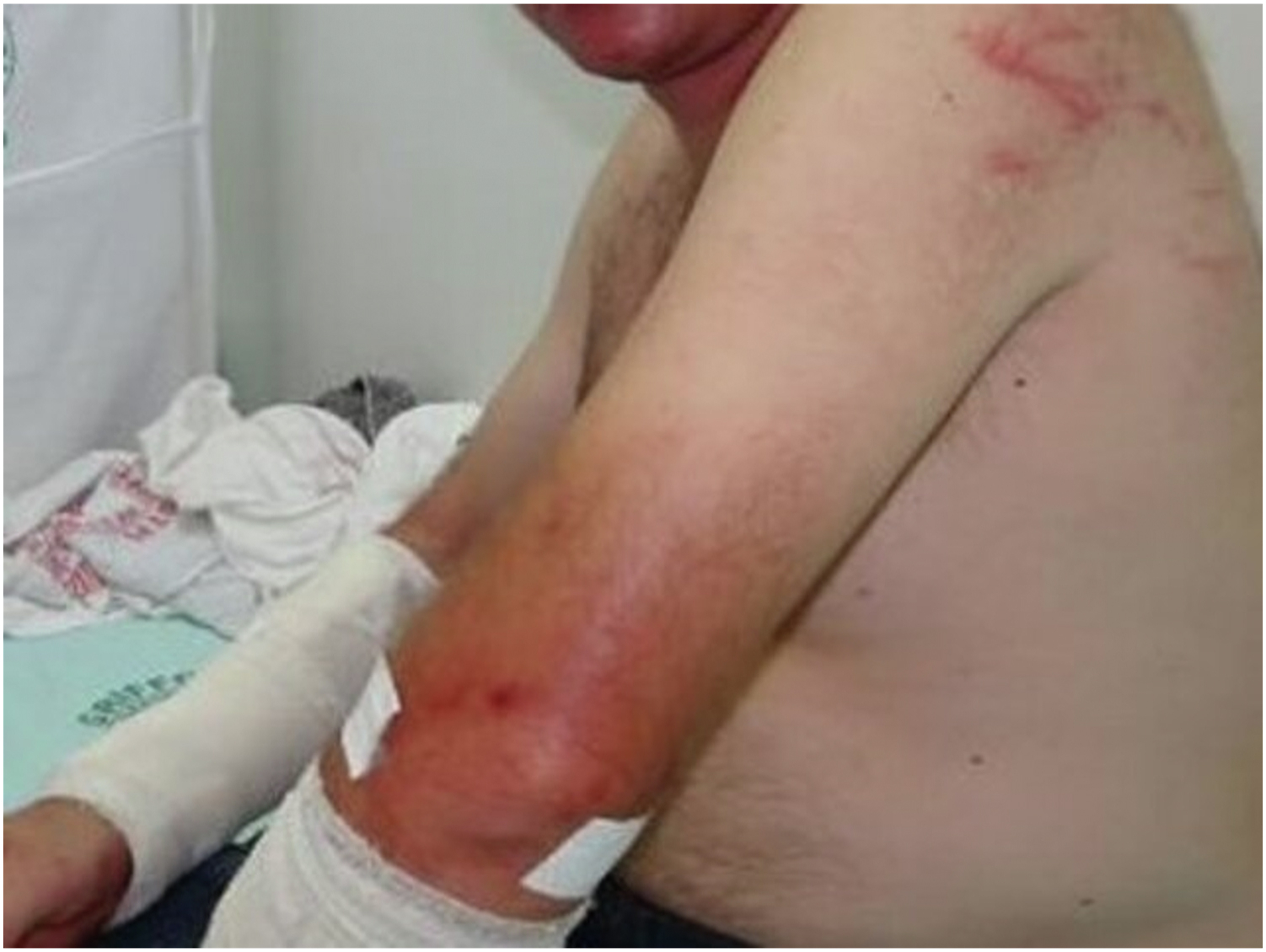
Wounds caused by the jaguar’s claws on the victim’s arms and face after initial care. Photos: Dr. Renato Mazzaro Ferrari, Sorriso town, Mato Grosso State, Brazil.
CASE 3
When looking for a missing horse, a 46-y-old man was attacked by a jaguar that was devouring the carcass of an alligator. He sustained deep lacerations and open fractures of his left forearm (Figure 4). His wounds were surgically treated at a regional hospital with irrigation, debridement, primary closure with drains, and other measures. The fractures were reduced and internally fixed with rods. Antibiotic treatment included cephalothin, 1.0 g IV every 6 h, and gentamicin, 60 mg IV every 8 h. An anti-tetanus serum, 5000 units, was administered intramuscularly, and he was vaccinated against rabies and given rabies immunoglobulin (20 international units per kg). He was discharged with a prescription for oral antibiotics (unspecified) for 7 d, along with wound care and follow-up instructions.
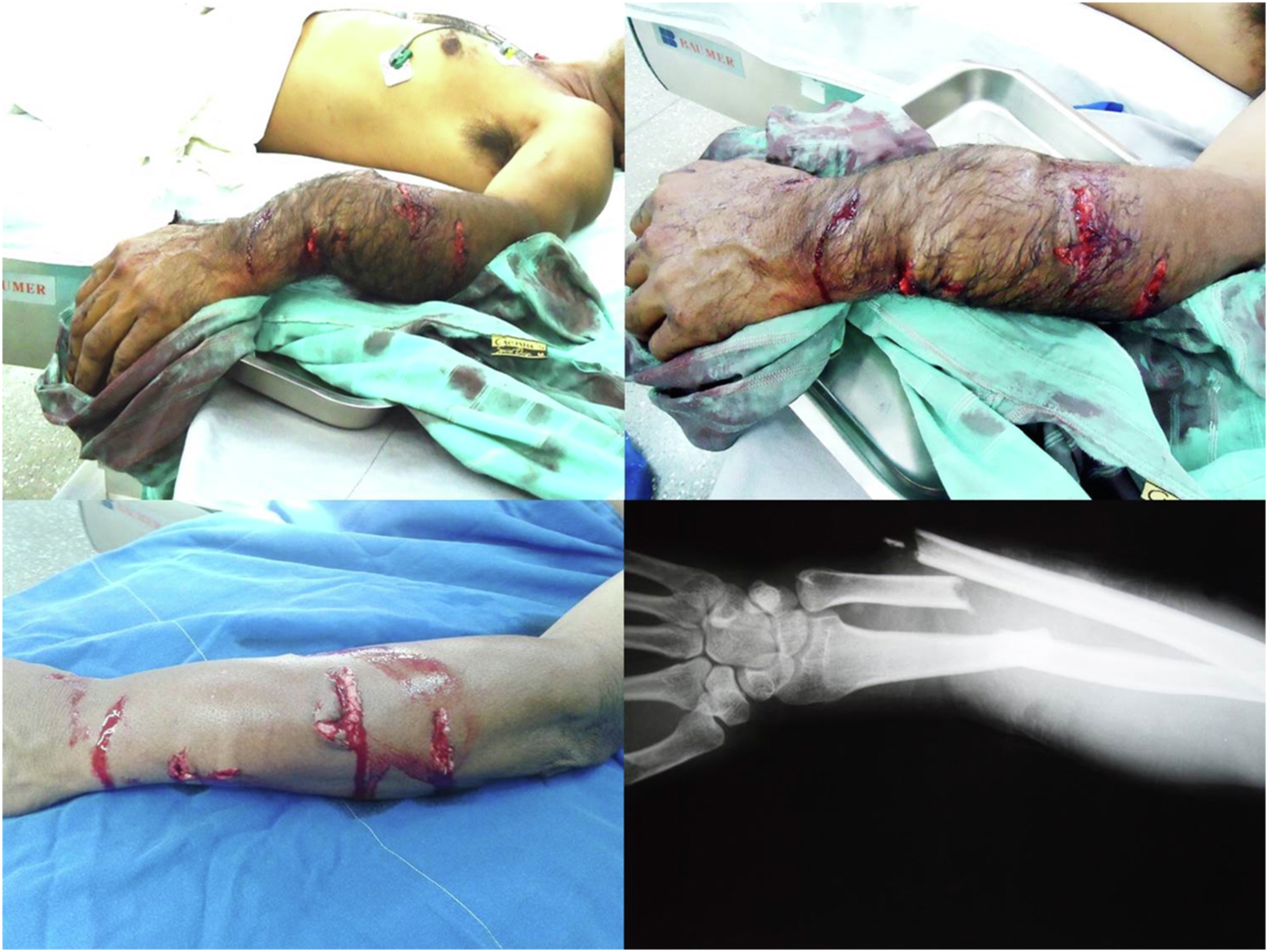
Patient who suffered an attack on the left arm from a jaguar bite. Top: Admission of the patient to the hospital and detail of the arm with the bite. Bottom: Clean trauma area and radiography showing a double radius and ulna fracture. Photos: Manoel de Campos Neto, Cáceres town, Mato Grosso State, Brazil.
CASE 4
When going into the bush with his 5 dogs to investigate a “bad smell,” a 58-y-old male farmer was attacked by a jaguar, suffering bite and claw scratch wounds to his back (Figure 5). The jaguar was feeding on a dead animal. His dogs chased the jaguar away. The local fire department transported the man to the nearest hospital, but no treatment details were provided.
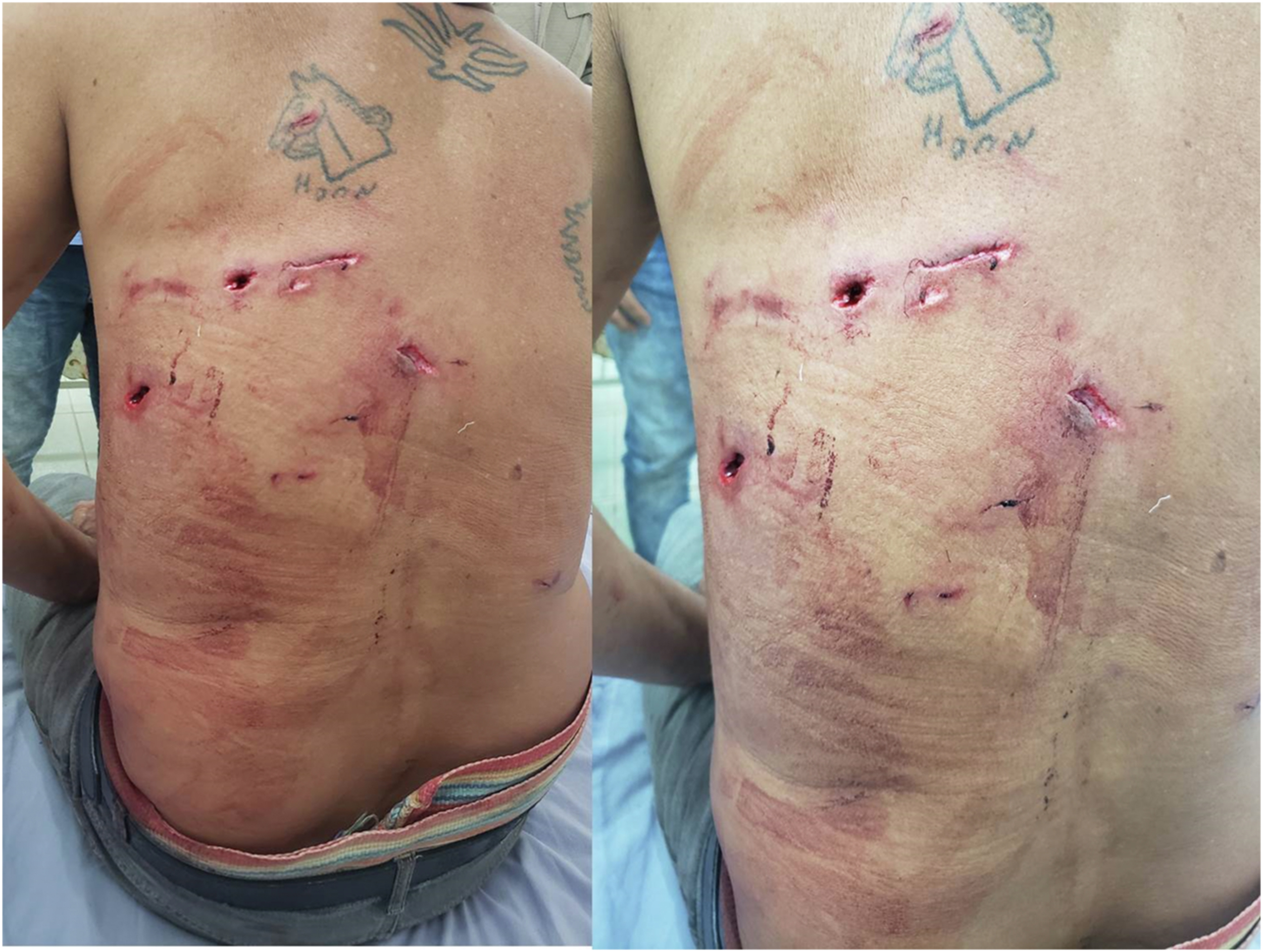
Injuries caused by the jaguar’s claws on the dorsum of the patient after the jaguar was surprised when feeding. Photos: Dr Diego Ruiz, Porto Murtinho town, Mato Grosso do Sul State, Brazil.
CASE 5
A 36-y-old man was attacked by a jaguar while tending to his cattle. The jaguar rushed out of a den, where it was with 2 cubs. It knocked the man off his horse and inflicted deep bite and claw scratch wounds to his head, face, and right arm. On examination at a metropolitan hospital, he was found to have multiple deep contused lacerations of the head extending through to the bone. The largest of these measured 20 cm and extended from the medial canthus of left upper eyelid to the middle third of the left eyebrow (Figure 6). One of the bites punctured his skull. A deep linear laceration was present on his upper right arm. He was prescribed oral cephalexin (2.0 g·d-1) and the wounds and lacerations were loosely closed after cleaning to control bleedings. The perforation of the skull was evaluated and treated by a neurosurgeon, details of which were not available.
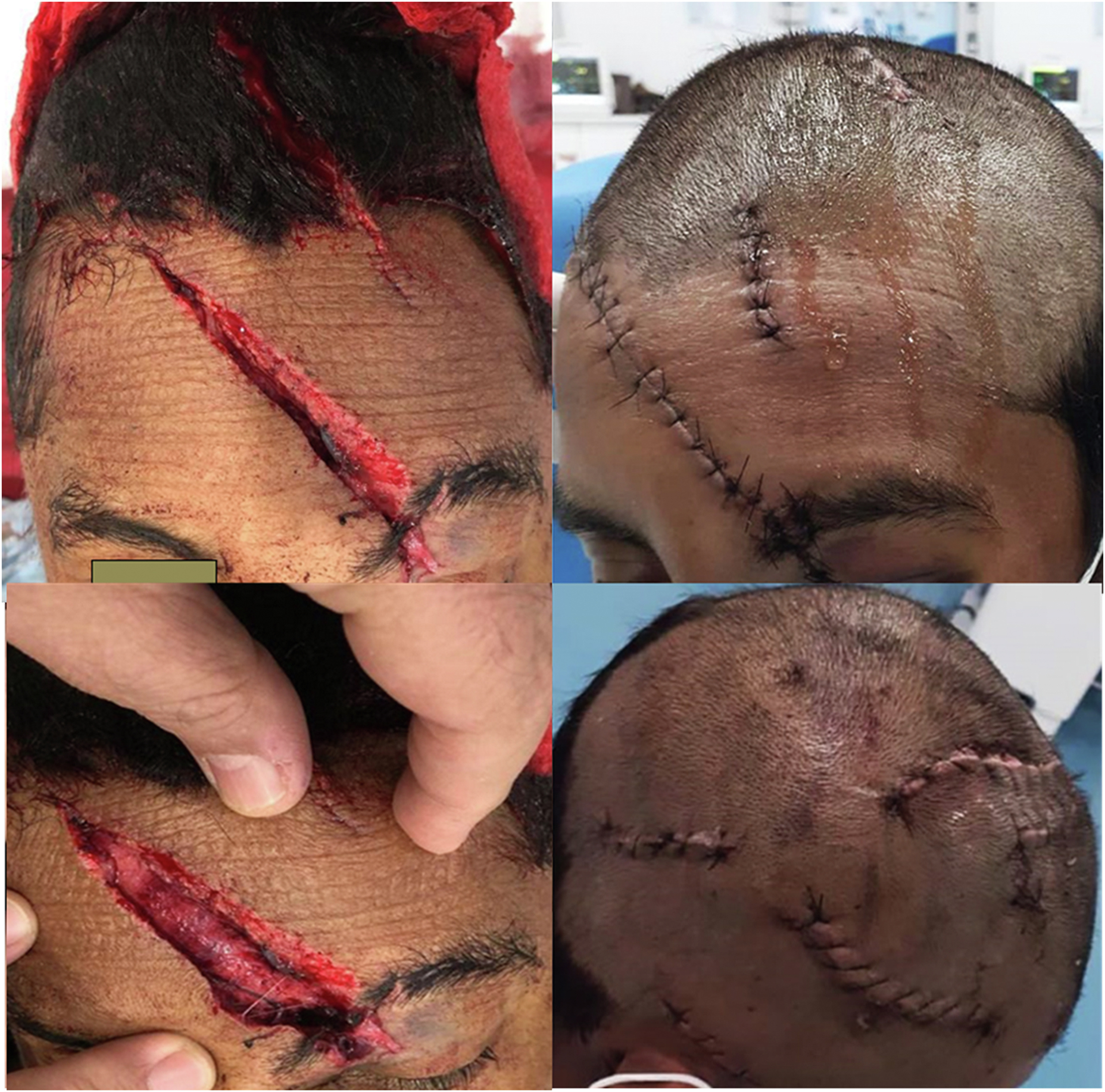
Extensive cuts and scratches on the head of the victim caused by the claws and bites. Photos: Dr Fabrício Rodrigues do Amaral, Várzea Grande town, Mato Grosso State, Brazil.
Discussion
These 5 attacks illustrate the types of injuries that may result from jaguars defending their prey or cubs.1,2 Four of the cases occurred in or near the Pantanal ecoregion where farms and cattle fields are close to forest and swamps within ecologically protected areas. An increase in ecotourism in these protected areas may have led to the normally very secretive and reclusive jaguars becoming familiarized with humans.1,2 Ecotourism has been well-developed in Pantanal, and jaguars are intentionally attracted to certain spots by food baits to increase the chances of tourist sightings. This behavior may also increase the likelihood of human-jaguar interactions among agricultural workers or local sportsmen. 3 These reasons seem to have been the major causes of cases 1, 3, and 4. Cases 2 and 5 seem to have been a mother jaguar protecting her cubs.
Big cats of all kinds (eg, lions, tigers, leopards, cougars, and jaguars) usually kill their prey through bites to the skull and cervical spine (neck). 4 Such attacks are compatible with predatory attacks. The injuries observed in this case series mostly appeared to be defensive wounds, indicative of nonpredatory behavior of the animals. 4
Nonpredatory jaguar attacks, such as described here, are usually not fatal but may involve extensive injury from claw scratch lacerations and deep puncture wounds. Bite injuries may also occur but are less common than in predatory attacks. Most nonpredatory attack injuries occur on the arms (defensive attitude of the victims) but may involve other body parts, including the face. Internal injuries are rare in these attacks.1,2 Victims of nonpredatory attacks are at risk of major hemorrhage, as well as infections and other complications.
Medical management of these injuries primarily includes control of hemorrhage, wound irrigation and debridement, primary closure (depending on the wound), and antibiotic prophylaxis. These wounds have a high rate of bacterial infections can be a problem, mainly by streptococci, staphylococci, and Pasteurella multocida. 5 Wounds that are sutured must be thoroughly cleaned, (possibly including irrigatione with water under pressure). The risk of infection is greater in wounds located in areas of poor vascularization, in deep wounds, or in wounds with crushed tissues, as well in elderly or immunocompromised persons.1,2,5 Four of the 5 cases presented here were treated with prophylactic antibiotics, although variable amounts of information was available about the antibiotics used and whether secondary infection occurred. Appropriate antibiotics include penicillin, amoxicillin, a first- or second-generation cephalosporin or clindamycin, and a fluoroquinolone.1,2,5 Tetanus prophylaxis is necessary and rabies postexposure prophylaxis should be considered. 5
Footnotes
Acknowledgments
To Dr Diego Ruiz, Dr Renato Mazzaro Ferrari, and Dr Fabrício Rodrigues do Amaral, who were responsible for the attendance of 3 patients of this study, image assignment, and testimony of the attacks. To Mrs Eliane Miguelina de Oliveira, for the testimony of the attack in the case 5.
Author Contributions: All authors contributed equally to data collection, preparation of the manuscript, and approval the final version submitted to the journal.
Financial/Material Support: None.
Disclosures: This is a scientific report describing 5 accidents with jaguars in Brazil and is intended for research purposes only.