






Abstract
Allium tricoccum (commonly known as “ramps”) is an edible plant known for its strong garlic-like odor and onion flavor. Unfortunately, A tricoccum mimics such as Lily of the Valley (Convallaria majalis) and False Hellebore (Veratrum viride) can lead to foraging errors and subsequent patient harm/toxicity. We describe 3 adults who foraged and ate what they believed were A tricoccum and then subsequently became symptomatic with detectable digoxin concentrations. A 41-y-old woman, 41-y-old man, and a 31-y-old man presented to the emergency department after ingesting an unknown plant that was believed to be A tricoccum. On arrival to the emergency department, the patients were hypotensive and bradycardic. They had detectable digoxin concentrations ranging from 0.08 ng·mL-1 to 0.13 ng·mL-1. One patient received 20 vials of digoxin antibody fragments. All 3 patients recovered without complication. Laboratory analysis of plant specimen was positive for cyclopamine, a teratogenic alkaloid found in Veratrum californicum. A tricoccum foraging errors can be a source of morbidity given their similarity in appearance to plants like C majalis and V viride. C majalis causes a detectable digoxin concentration via its cardiac steroid compound (convallatoxin) that is similar to digoxin. V viride contains alkaloid compounds (such as veratridine) that can cross react with digoxin assays and lead to a falsely elevated digoxin concentration. Clinicians should be prompted to think about ingestion of C majalis or Veratrum spp. when patients present with bradycardia, gastrointestinal symptoms, and detectable digoxin concentrations after plant ingestion and/or foraging for A tricoccum.
Introduction
Allium tricoccum (family Amaryllidaceae), commonly known as “ramps” or “wild leeks” is an edible plant known for its strong garlic-like odor and onion flavor (Figure 1). It is a perennial plant that exists as a cluster of bulbs with flat, green leaves. Ramps are a highly coveted item by plant foragers for their culinary roles, their versatility allowing the plant to be consumed in many ways—fried, pickled, in soups, or raw. Some cultures used ramps as a remedy to treat ailments such as colds and earaches, and others have festivals (
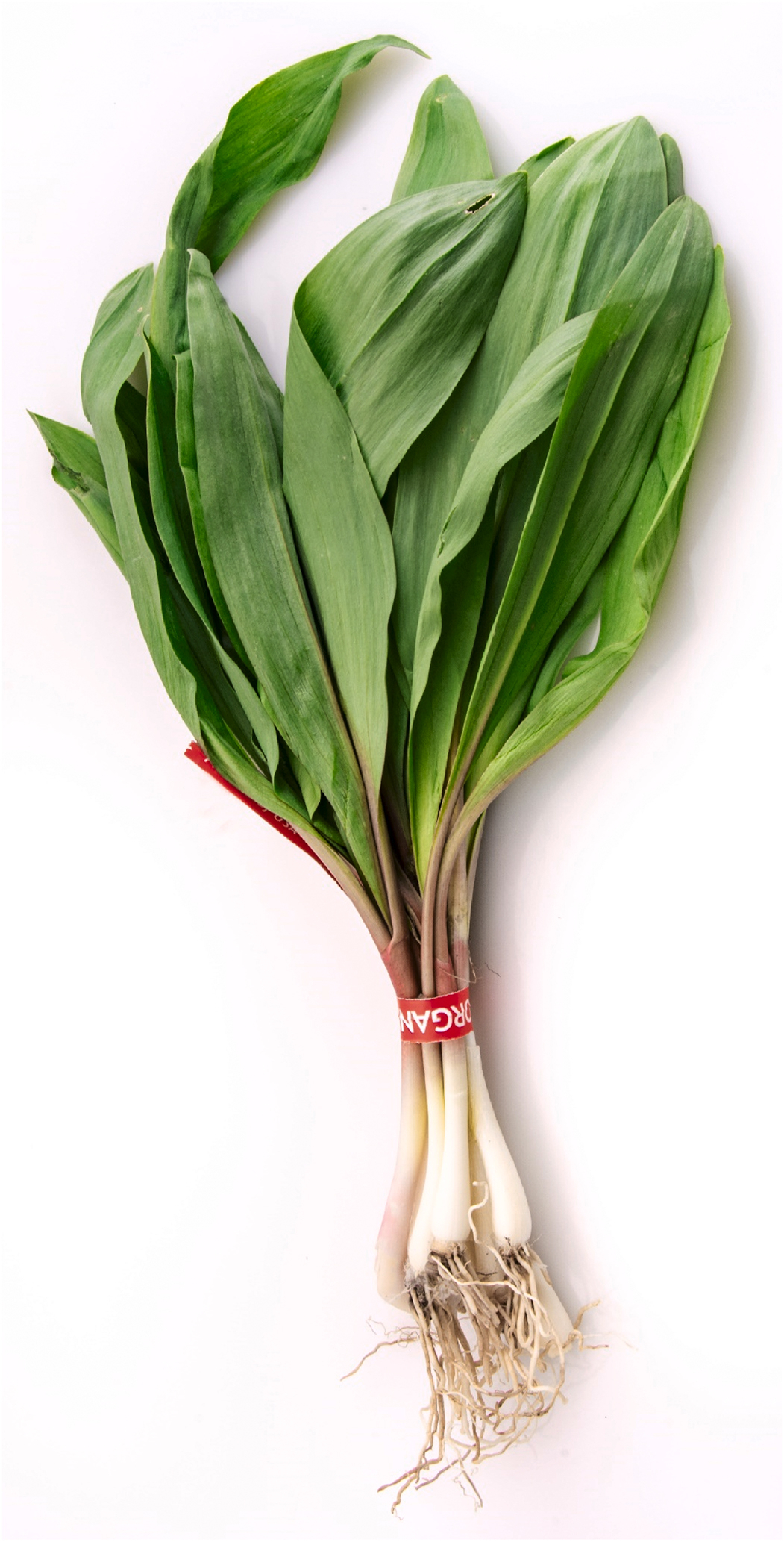
Allium tricoccum. (Public domain image.)
C majalis is a perennial flowering plant that contains convallatoxin, a cardioactive steroid that has similar effects as digoxin. As a result, inadvertent consumption of this plant can mimic digoxin toxicity. C autumnale is a perennial flowering plant that contains colchicine, a xenobiotic that is extremely concerning in overdose given its potential to cause morbidity and mortality and no available antidote. V viride is a perennial herbaceous plant that contains alkaloids (such as veratridine) that cause nausea, vomiting, diarrhea, and bradycardia.
We describe 3 adults who foraged and ate what they believed were ramps and then subsequently became symptomatic with detectable digoxin concentrations.
Case Report
A 41-y-old woman, a 41-y-old man, and a 31-y-old man, each with no significant medical history, presented to an emergency department 1.5 h after ingesting an unknown plant. Earlier that day, the youngest in the group went into their backyard and identified what he believed to be A tricoccum. The plant was harvested and included as an ingredient in tacos. Thirty minutes after ingesting the tacos, all 3 patients began complaining of an abnormal sensation in their throat, and 2 patients began vomiting. On arrival to the emergency department, all 3 patients were hypotensive and bradycardic, the lowest being the 41-y-old woman who had a blood pressure of 81/43 mm Hg, with a heart rate of 44 beats·min-1 (Table 1). Initial laboratory studies are shown in Table 1.
Patient characteristics and laboratory values
All 3 patients received intravenous fluids in addition to oral activated charcoal. One patient (41-y-old female) received 20 vials (800 mg) of digoxin specific antibody fragments for hypotension and bradycardia with subsequent improvement in her HR and BP. Aside from sinus bradycardia, no electrocardiographic changes were observed. All 3 patients were admitted overnight and recovered the next day without complication. Approximately 12 h after ingestion, repeat blood testing was negative for digoxin in 2 patients and 1.3 ng·mL-1 in the patient treated with digoxin specific Fab.
In the case of the 3 patients above, pictures of the plant were only able to be obtained after discharge (Figures 2 and 3). Because of the appearance of the plant suggesting V viride but the positive digoxin concentrations suggesting C majalis, we obtained laboratory testing of the plant.
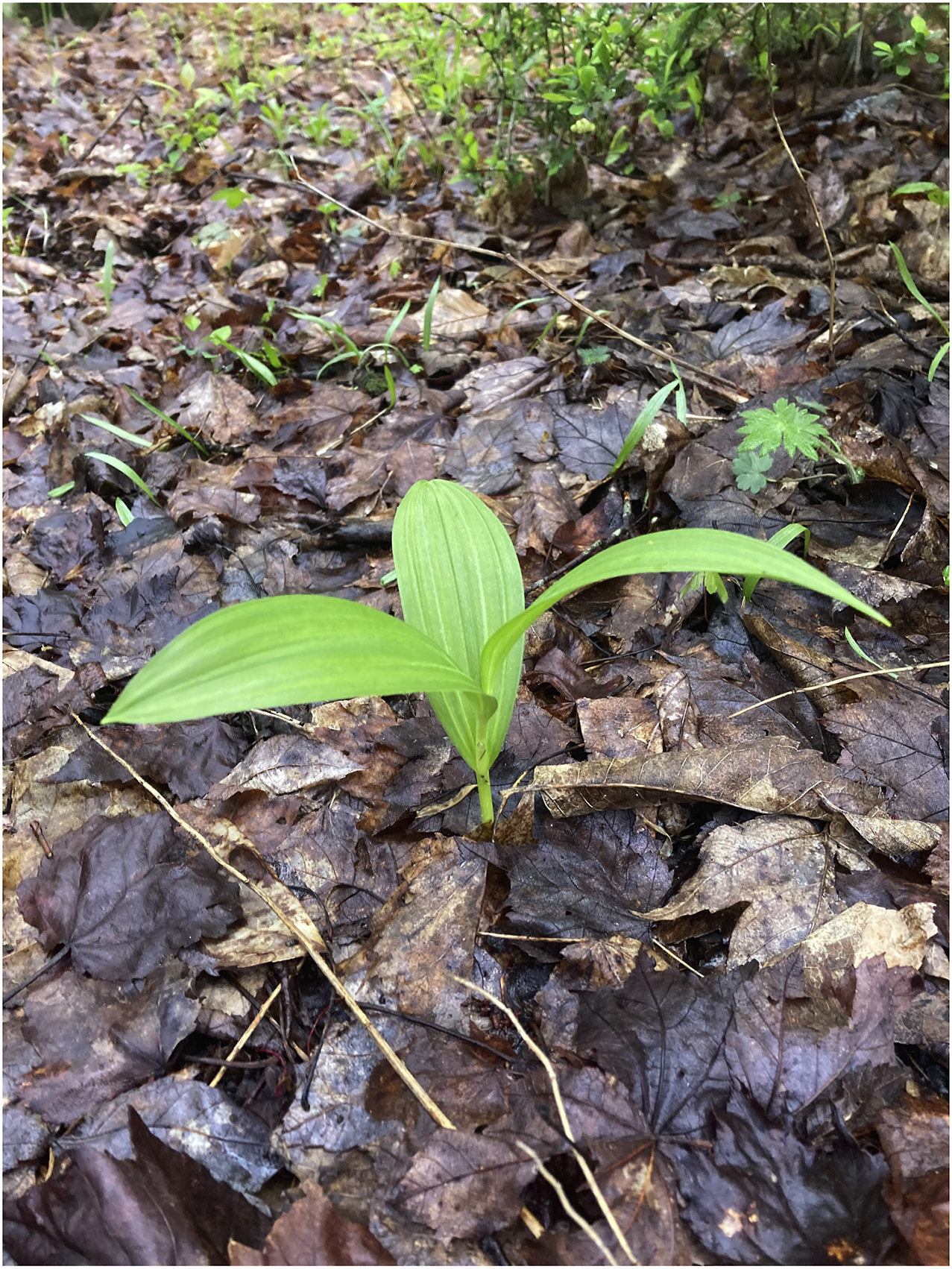
Potential Convallaria majalis vs Veratrum viride vs Allium tricoccum identified by patient in same location as original plant.
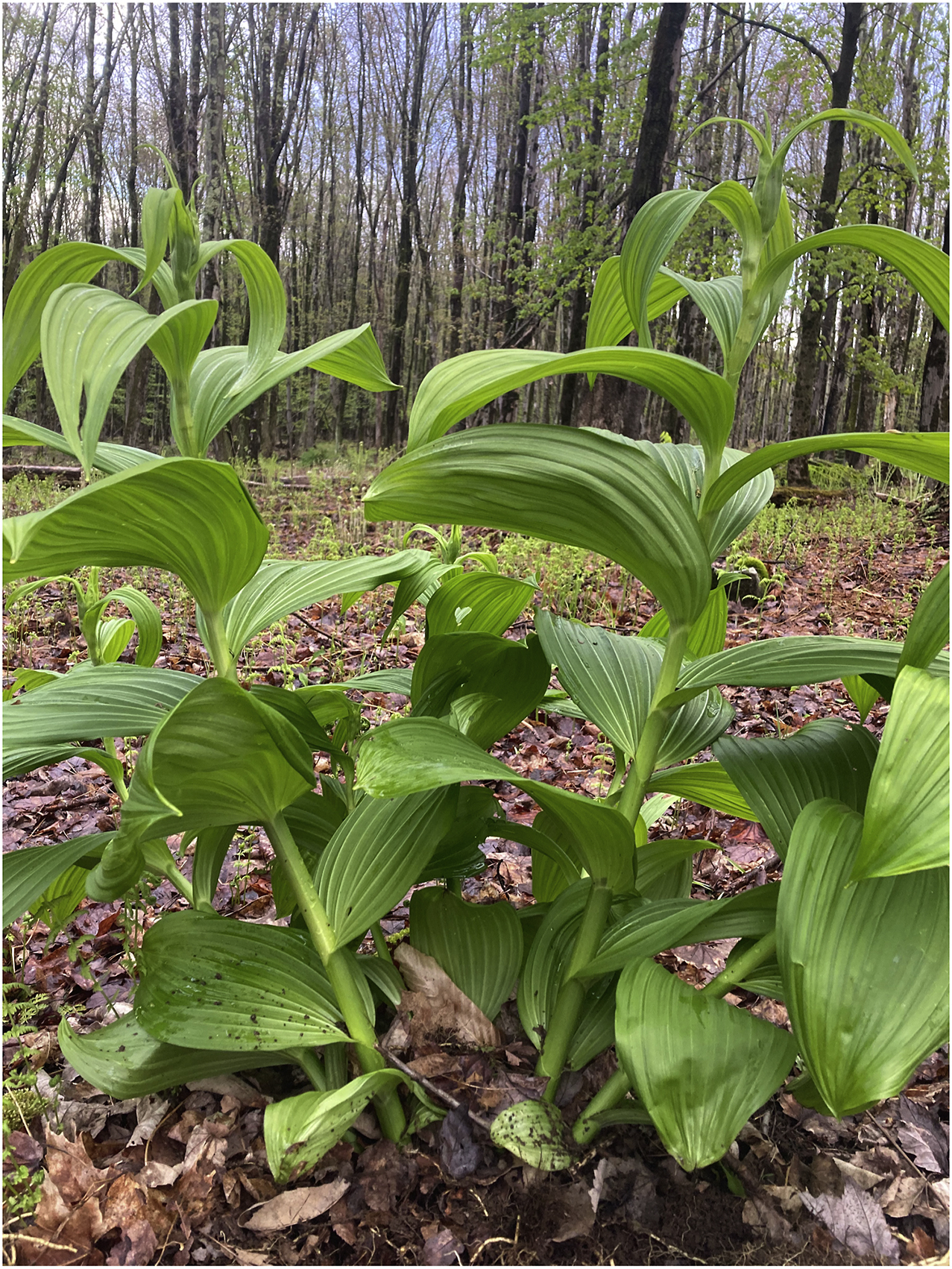
Likely Veratrum spp plant nearby original plant foraged.
A sample of plant material, including roots, stem, leaves, and flowers was ground in a Stein mill with liquid nitrogen. A 1.0 g sample of ground plant material was next extracted with 10.0 mL of methanol by shaking for 5 min with a GenoGrinder at 750 rpm with 2 steel ball bearings. The suspension was centrifuged at 1295 × g for 5 min. The resulting supernatant was diluted by 1/10 in methanol and filtered through a 0.22 micron Millipore Millex filter (PES) for analysis. Analysis was performed by high-performance liquid chromatography (Thermo Scientific Ultimate 3000) combined with high resolution mass spectrometry (Thermo Scientific Q Exactive Orbitrap, Waltham, MA). The chromatographic separation was done at 35°C using an Agilent Eclipse Plus C18 RRHD column (2.1 × 100 mm, 1.8 micron). The flow rate was 0.35 mL/min with 0.1% formic acid in water (mobile phase A) and 0.1% formic acid in acetonitrile (mobile phase B). Gradient elution was done with 1% mobile phase B for the first 1.5 min, followed by ramping up to 98% B at 9.5 min, holding at 98% B for an additional 4 min, and then re-equilibrating at 1% B for 4 min. Electrospray ionization was done in positive ion mode recording across 75 to 1125 m/z for full ms (50,000 resolution) and across 50 to 750 m/z for ms2 (25,000 resolution). Reference standards of convallatoxin, cyclopamine, and veratridine were run for comparison and confirmation. Qualitative analysis was negative for both convallatoxin and veratridine, but was positive for cyclopamine. Cyclopamine is a teratogenic alkaloid found in Veratrum californicum.
Discussion
Misadventures with ramps are an unfortunate consequence of foraging without proper training on plant identification. When these misadventures result in emergency department visits, patients do not always bring the plant with them for clinicians to see. Furthermore, even if they do, identification of the plant is not easily done.
Based on the appearance and laboratory testing of the plant, it seems extremely unlikely that this plant was lily of the valley. As a result, the detectable digoxin concentrations in all 3 patients were likely false positives. A previous study had identified that steroidal alkaloid compounds in V viride cross reacts with a clinical digoxin immunoassay, but this study did not include V californicum or cyclopamine. 3 Like any case report claiming an association, there are areas of uncertainty, the greatest of which in this case is that the actual plant ingested was not the one tested. The plant sent for testing was acquired by one of the patients who went back to the yard and location where the original plant was obtained, but this is not without potential for error.
Our patients all experienced bradycardia and hypotension, which is reported with V viride and Veratrum parviflorum. 3 -5 In the case of V parviflorum, the authors found the plant contained not just verazine, veratramine, and veratridine, but also cyclopamine. It is possible that the many steroidal alkaloids present in Veratrum species contribute to bradycardia and hypotension when ingested.
The patient who received digoxin antibody fragments in this report reportedly had a good response, with immediate improvement in heart rate and blood pressure. Although prior research has demonstrated that digoxin antibody fragments do not bind steroidal alkaloid extracts (jervine, ribigirvine, solanidine, veratraman) from V viride, we do not know how this applies to other steroidal alkaloids or even cyclopamine. 3 Further research is needed to understand the role of digoxin antibody fragments in Veratrum spp testing.
Limitations
There are a few notable limitations here—first, it is unclear if the sample sent for testing was the same as the plant the patients had ingested. Furthermore, it is possible that the sensitivity of the laboratory testing was not high enough to detect other alkaloids that were present. Lastly, although it is tempting to suggest that cyclopamine caused a false positive digoxin concentration, this has never been reported. In light of this, we caution healthcare providers about attributing false positive digoxin concentrations to only V viride and to instead be cautious of all Veratrum species.
Conclusions
Clinicians should be prompted to think about ingestion of Convallaria majalis and Veratrum spp when patients present with bradycardia, gastrointestinal symptoms, and detectable digoxin concentrations after plant ingestion and/or ramp foraging.
Footnotes
Acknowledgements
Author Contributions: Patient care (JT, VC, SA, RSH); laboratory analysis of plant specimen (JL, MF); manuscript development/review (all authors); final approval of the version to be published (all authors); agreement to be accountable for all aspects of the work in ensuring that questions related to the accuracy or integrity of any part of the work are appropriately investigated and resolved (all authors).
Financial/Material Support: None.
Disclosures: None.