






Abstract
Introduction
While avalanche fatalities have remained relatively steady per year, data suggest a possible increase in sidecountry use and snowmobile fatalities. Limited information is known regarding the accident details and preparedness among different groups of backcountry users including snowmobiles, sidecountry, and backcountry skiers, and what specific factors could contribute to their fatalities.
Methods
Avalanche fatality reports covering all US states posted by the Colorado Avalanche Information Center available online for 10 seasons (2009–2010 through 2018–2019 seasons) were analyzed for group size, specific equipment carried, burial depth, burial time, and other details. Only reports in the 3 following categories were included in the analysis: backcountry ski/snowboard, sidecountry ski/snowboard, and snowmobile/snowbike. These aspects were compared among the 3 tourer types using statistical analyses (ANOVA).
Results
Two hundred and five fatalities were analyzed (n=32 sidecountry, n=91 skier/snowboard, n=82 snowmobile/snowbike). Using 2 preparedness scores, the ski/snowboard group had the greatest distribution of high scores when evaluated by equipment carried and group size, with significant differences per group (P<0.01). Of the fatalities that were buried, burial time was related to the tourer group (P=0.04), with the ski/snowboard group having the highest proportion of burials <15 min. Burial depth was significantly different among the 3 tourer groups, with snowmobiles buried the deepest on average (P<0.01).
Conclusions
Despite limited data available on fatalities, an analysis of preparedness suggests that backcountry skiers and snowboarders are more prepared for avalanche accidents compared to snowmobiles and sidecountry users when evaluated by equipment carried and group size.
Introduction
Backcountry winter recreation including backcountry skiing and snowboarding, and the use of motorized vehicles such as snowmobiles, has increased in recent years. Throughout the past decade, there has been an increase in snowmobile related avalanche deaths; snowmobiles are now the largest group making up 23%, with backcountry skiers making up 22%. Previously, skiers composed the largest group but the recent increase in snowmobile-related fatalities has been observed in both the United States and Canada. The proportion of snowmobile deaths has increased 7% per decade in addition to snowboarders at 2% per decade. Potential causes could include the increase in snowmobile use and sales. 1 In the winter of 2020 to 2021, US snowmobile sales increased 16% from the previous year, which were the highest sales since 2008. 2 In addition, newer snowmobiles are more powerful with more horsepower, which has allowed for “high pointing” or “high marking,” which can release an avalanche. 1
Sidecountry skiing and snowboarding, also known as out-of-bounds or lift-served-backcountry, is another category of increasing popularity among outdoor recreationists. 3 Sidecountry is defined as the area adjacent to but out of bounds of winter resorts, which is accessed from a resort by a paying customer; sidecountry is part of the backcountry. This can provide skiers with a backcountry experience utilizing less physical effort but can create a false sense of security. Since skiers begin in bounds, it can be associated with the safety of the ski resort and a quick response by local ski patrol, even though there can be extreme hazards such as avalanche zones, unmarked obstacles, and cliffs.3,4
Although backcountry use has increased, the number of avalanche fatalities has remained steady at an average of 27 deaths per year over the past 10 winters in the United States. 5 Possible factors such as carrying equipment and skill in avalanche rescue could be contributing to reducing the number of fatalities; however, there are likely many additional factors that are unknown. To lower the risk of morbidity and mortality, avalanche safety equipment can be used to assist in the case of a burial. Beacons (transceivers), shovels, and probes are considered standard avalanche safety equipment that should be carried by all members of a group. 6 In victims who were completely buried, beacons were seen to reduce burial time and mortality significantly. 7 Group size is also an important aspect of avalanche rescue. Studies have shown an increased avalanche risk in groups of 4 or more and lower risk in groups of 2. Traveling alone is against recommendations due to the risk of no available rescuers. 8
When surveying backcountry users in Utah, significant differences were found in the percentage who carried beacons, shovels, probes, and those who took an avalanche education course among different user types. Backcountry skiers were found to have the highest proportion of users carrying beacons, shovels and traveling with a partner; snowmobiles had a much lower proportion, and out-of-bounds skiers had the lowest among the 3 groups. Among those who took an avalanche safety course, snowmobiles had the lowest proportion of the 3 groups. 9 Furthermore, equipment data among fatality victims have been sparsely reported in the literature. In a study of avalanche fatalities in Utah among all user types, avalanche beacons were only mentioned in the autopsy reports of 38% (n=12) of fatalities, and among those, only 50% (n=6) of victims were carrying a beacon. There are limited studies examining these traits in fatalities among different user types to determine how behaviors could differ in fatal avalanche accidents. 10 The aim of this study was to assess if a difference in avalanche preparedness, assessed by group size and equipment carried, and accident details including burial time and depth, exists among different types of backcountry users.
Methods
Data for all US avalanches was obtained through the Colorado Avalanche Information Center avalanche fatality reports available online for 10 seasons, from 2009 to 2010 through the 2018 to 2019 season. Reports from individual US Forest Service avalanche center websites were used to supplement the Colorado Avalanche Information Center reports.
Victims were divided into 3 categories: sidecountry, ski/snowboard, and snowmobile/snowbike. Victims who began their trip skiing or snowboarding in bounds of a resort and then exited the resort into the backcountry were included in the “sidecountry” category. Some studies have referred to this category as “out-of-bounds,” but the term sidecountry was used in this study. Those who were skiing or snowboarding in the backcountry for the entirety of their trip were included in the “ski/snowboard” category. Those using snowmobiles and or motorized snowbikes in the backcountry were included in the “snowmobile/snowbike” category. All other avalanche fatalities that did not fall into these 3 groups, including inbounds skiers and snowboarders, snowshoers, hikers, climbers, highway control, and roof avalanches were excluded from the study.
Fatality reports were analyzed for: date, method of travel, group size, number of deaths, number of group members carrying a beacon, shovel, probe, number of group members who had taken an avalanche education course, burial time, and burial depth. Several reports documented victims with beacons that were turned off; these were counted as not having a beacon. Equipment that was reported in snowmobiles, rather than on a person, was also not counted as snowmobile operators can become detached from sleds in an avalanche, resulting in their equipment being buried or unable to locate. Therefore, having equipment on the snowmobile was not counted as the rescuer or victim did not have access to these items. In cases where groups split up, only the immediate group of those with the victim at the time of the accident were counted. In addition, when other parties were nearby or witnessed the accident and came to assist, they were not counted. For burial depth, if a range was reported, the average was used. The time buried was estimated based on the times given in the reports.
Another score (score 2) was considered in which size of the group was factored in by multiplying the equipment value (score 1) by a group size score: solo traveler (1 point) and 2 or more group members (2 points) (Table 1). Several diagnostic tests were run to justify the statistical model including the Bartlett test for homogeneity of variance, the Fligner-Killeen’s test, and the Levene’s test. Since the preparedness scores did not follow a normal distribution, the Fligner-Killeen’s test was more appropriate. All 3 diagnostic tests for homogeneity of variance concluded that score 1 did not satisfy the homogeneity of variance condition. The analysis of variance (ANOVA) with type-III sum of squares was preferred in such cases. This was used in presenting the results for score 1. For score 2, a Bartlett test (P=0.20) did not suggest violation of homogeneity of variance assumption, whereas the Fligner-Killeen test did (P=0.02). We fit a classical ANOVA and Welch’s ANOVA model.
Point breakdown for preparedness score 2
Burial time data had a large range due to the timing and conditions of the rescue. A 1-way ANOVA model was run to determine if there was a significant difference in burial time among tourer groups. An additional analysis of burial time was conducted evaluating the proportion of fatalities uncovered in <15 min using a Pearson’s chi-squared test. A 1-way ANOVA was used to compare the 3 mean burial depths. For the burial time, we used the ratio of <15 to >15 min compared among the tourer groups. The variable did not follow a normal distribution. We acknowledge that median (interquartile range [IQR]) is the best descriptive statistic for this variable. The burial depth moderately deviated from normality and we used ANOVA to compare the means among the tourer groups. For such violation, we think the median (IQR) and mean±SD together gave a clearer picture than any of these 2 descriptive statistics which led us to report both median (IQR) and mean±SD. For consistency of the figures of these 2 variables, we used box plots with mean.
Results
In analyzing 258 case reports in the United States over 10 seasons between the 2009 to 2010 season through the 2018 to 2019 season, 205 fatalities were included in the analyses, with 53 fatalities excluded based on criteria. The 205 fatalities were broken down into the following categories: 32 sidecountry, 91 skier/snowboard, and 82 snowmobile/snowbike. Avalanche education was unreported in 78% of case reports and therefore was not included in this analysis. Among 205 fatalities, the presence or absence of a beacon was unreported in 31 fatalities, shovel was unreported in 81 fatalities, and probes were unreported in 78 fatalities. Group size was unreported in 5 fatalities. Among the reports including group size, 38% of sidecountry fatalities traveled alone, while 14% of ski/snowboard and 4% of snowmobile/snowbike were solo travelers. From the Welch 1-way test and boxplot, the data did not suggest a significant difference in average group size (P=0.15). The group size per fatality group was: sidecountry 3.5±4.3, ski/snowboard 3.3±2.2, and snowmobile/snowbike 4.0±2.1 persons (Figure 1).
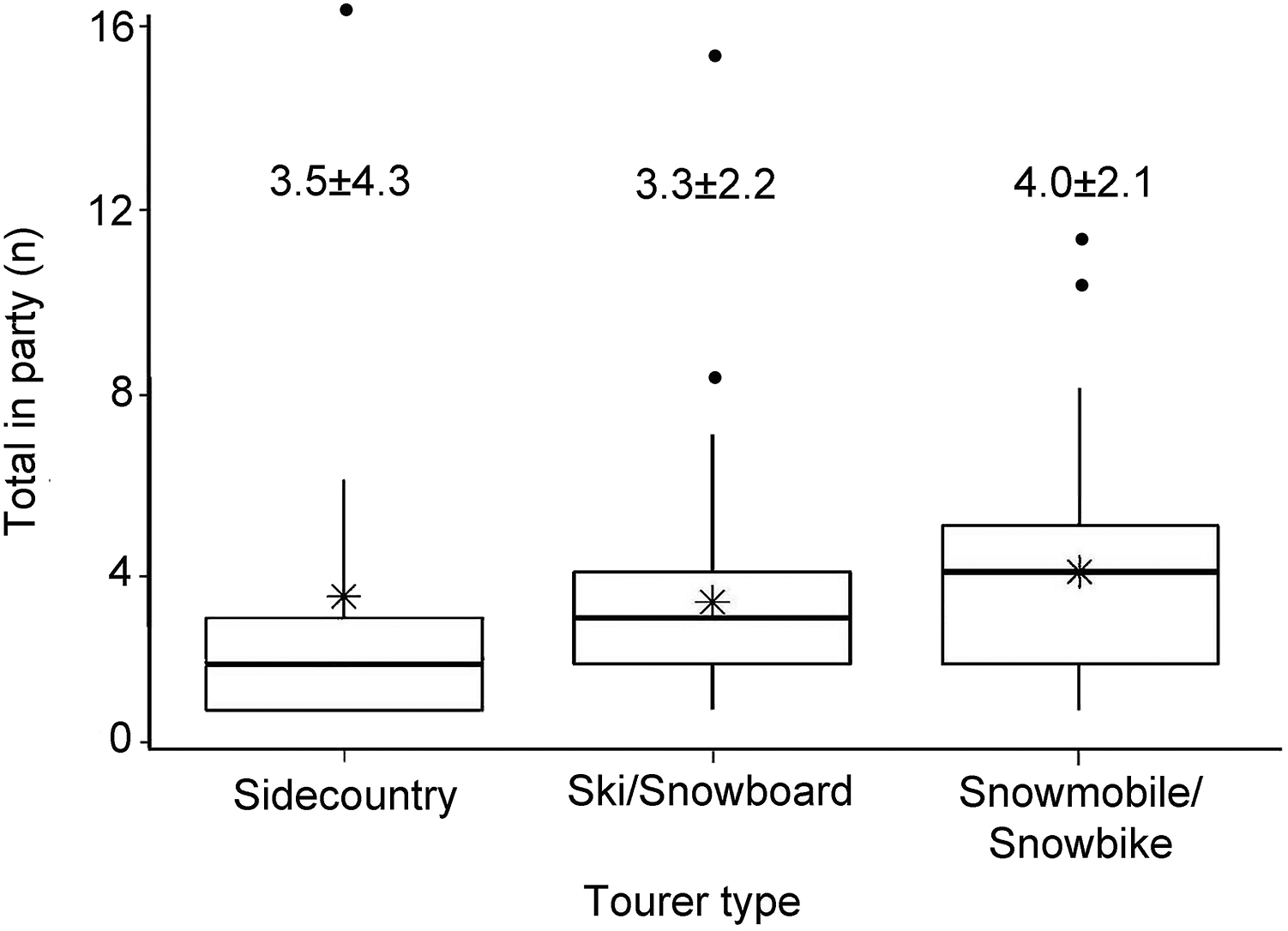
Boxplot of victims’ group size categorized by tourer type. The lines of the boxplot represent the quartiles. The lower vertical line starts at the minimum and extends for the distribution of the first quartile. The horizontal thin lines represent the boundaries of quartile 1 (lower) and quartile 3 (upper). The thick horizontal line is the median and the ∗ symbol is the mean. The upper vertical line extends through the fourth quartile. The individual dots are outliers. Mean±SD are listed on the figure.
Among safety equipment, beacons had the highest percentage of all members of a group carrying 1 in each category of tourer, compared to shovels or probes. Preparedness score 1 was significantly different between the 3 groups of tourers (P<0.01 with ANOVA with type-III test). The ski/snowboard group scores had the greatest number of high scores of the 3 groups (Figures 2 and 3). Preparedness within the sidecountry group was distributed evenly from low to high scores, meaning some fatalities had no or little equipment and some had close to all. In the snowmobile/snowbike group, the majority of scores fell within the middle range of scores per scoring criteria, meaning most groups had some but not all equipment. There was no difference in preparedness scores between solo travelers and groups. Using the model for score 2, there was also a significant difference between tourer groups (classical ANOVA P<0.01, Welch’s 1-way ANOVA P<0.01). Tukey HSD test determined that each tourer group had significantly different preparedness scoring from each other. Figures 2 and 3 reveal a greater distribution of higher preparedness scores for the ski/snowboard group using both scores 1 and 2 as compared to the other groups.
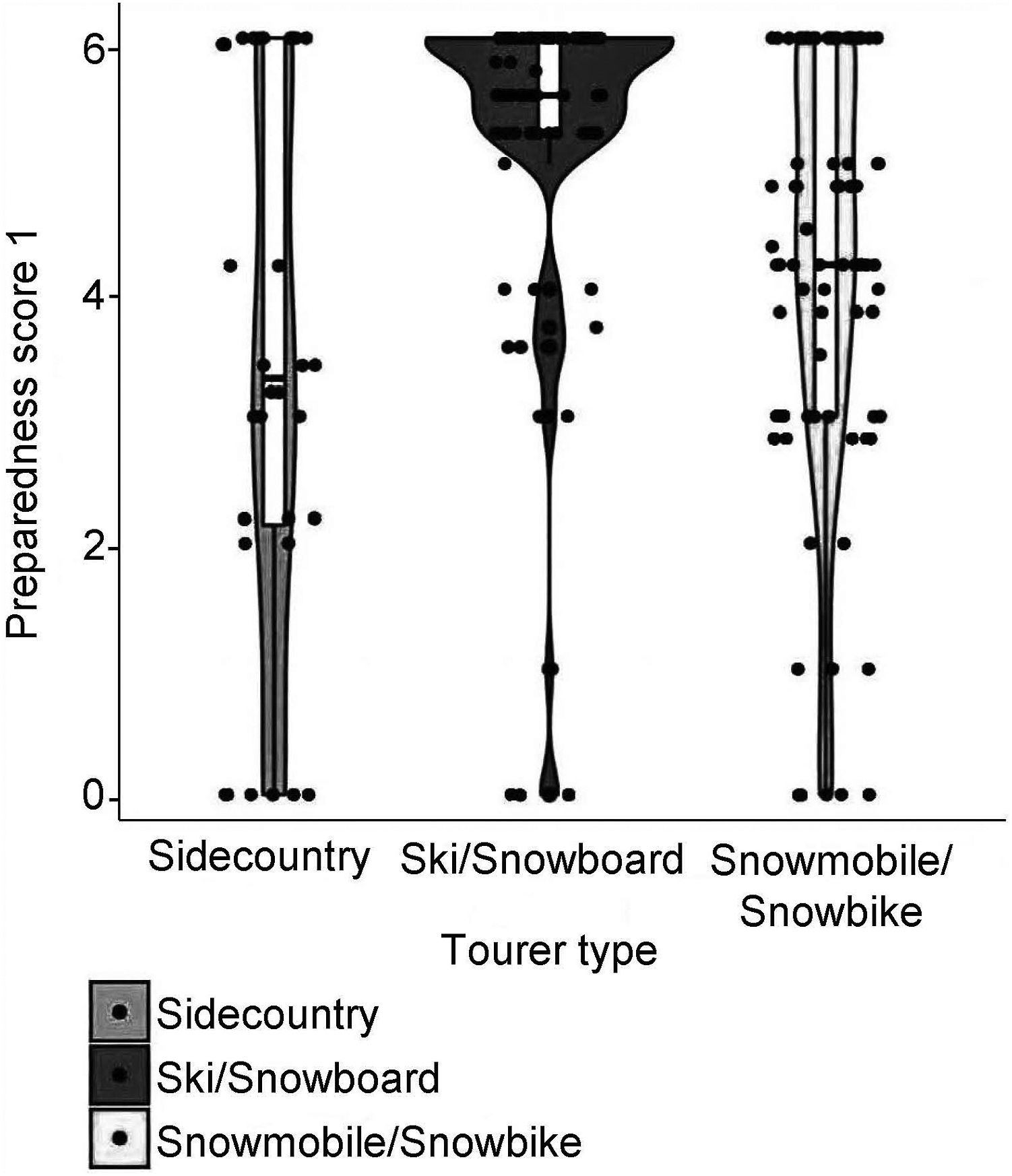
The distribution of preparedness by tourer category using score 1. The dots represent scores for each group (using score 1), and the outlined shape of the graph represents the trend of scores overall. The shading corresponds to each tourer group as seen in the key.
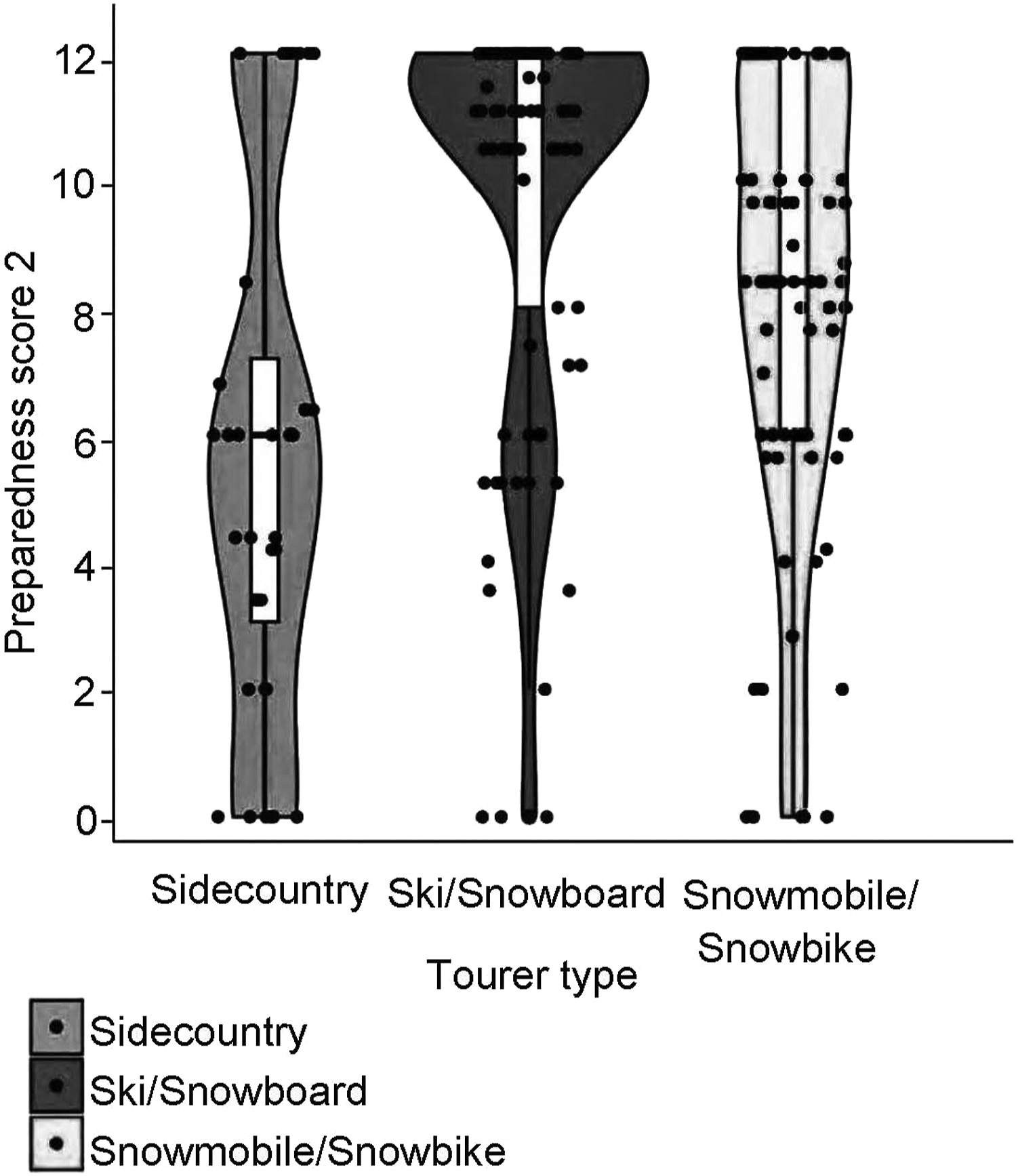
The distribution of preparedness by tourer category using score 2. The graph shape shows the overall trend in preparedness broken down by score using score 2. The dots show the individual scores. The shading represents each tourer group depicted in the key.
Nineteen victims were not buried and therefore were not included in the burial time analysis; 162 fatalities were reported with a burial time. Burial time was different among tourer groups (P=0.04). Burial time for a solo traveler was higher than victims in a group, with all categories combined. The range in burial time was extensive due to rescues requiring additional support other than original group members and delays for safety and avalanche mitigation. In some instances, rescues were unsuccessful and victims were buried for several months until the snow melted or the victim was found incidentally. Therefore, burial time ratio was used to evaluate burials <15 min to burials >15 min. Burial time in <15 min was dependent on the tourer group (P<0.01). The ski/snowboard group had the highest proportion that were buried in <15 min compared to the other 2 groups at 39%, followed by sidecountry at 24% and snowmobile/snowbike at 14%. Burial depth was recorded in 139 reports. Based on the Welch 1-way test, burial depth was significantly different among the 3 tourer groups (P<0.01). Snowmobile/Snowbike victims were buried the deepest at 1.4±0.8 m, followed by ski/snowboard at 1.1±1.2 m, and sidecountry at 0.8±0.6 m (Figure 4).
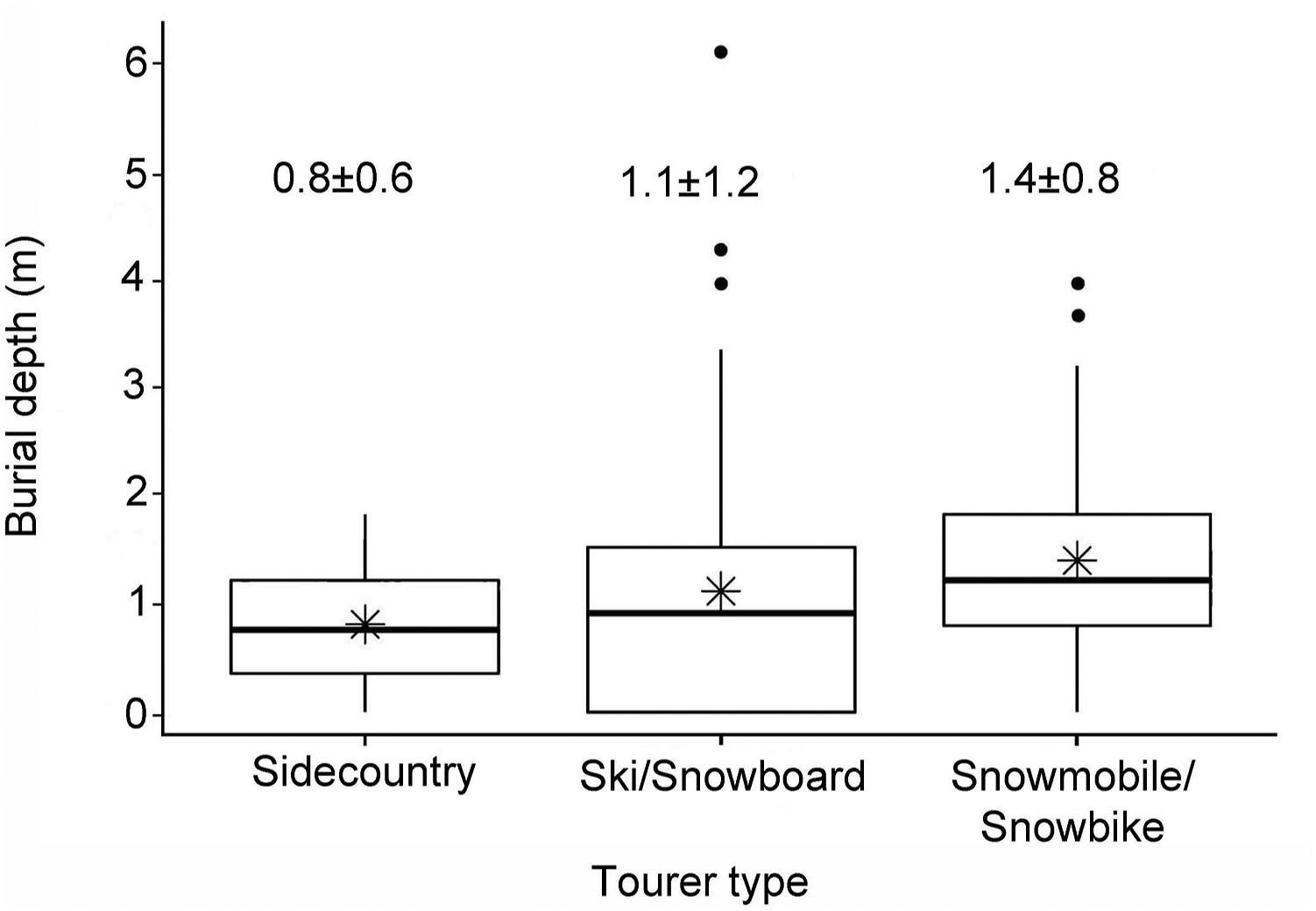
Boxplot of burial depths per tourer category, with the mean burial depth in meters. Vertical lines represent the first and fourth quartiles. The lower box represents the second and the upper box is the third quartile, with the thick line being the median. The individual dots at the top are outliers. The ∗ symbol is the mean. Mean±SD burial depths are listed on the figure.
Discussion
This analysis works to understand the subtle differences among different backcountry user groups that could contribute to avalanche fatalities. Overall preparedness in our study was assessed using 2 scores. A previous study 9 evaluated preparedness by surveying different user types, not caught in avalanches, at trailheads in Utah. Each piece of equipment (beacon, probe, and shovel), and traveling with a partner were evaluated separately and then together as “minimum safety practices,” which included partner, beacon, and shovel. There was a significant difference among the backcountry user type of those who carried beacons, probes, shovels, and avalungs, and those who were carrying out “minimum safe practices.” Backcountry skiers and snowboarders had the highest percentage of those carrying beacons, probes, shovels, and the combination, while snowmobiles had fewer, and out-of-bounds skiers and snowboarders had the least. 9 Although it is inaccurate to define these measures as minimum safety practices, this category consisting of avalanche equipment and inclusion of at least 1 partner was most similar to score 2 in our study. Our score also included having a probe and assessed the group of the victim, rather than an individual user who was not caught in an avalanche. Our results correlate in that both scores 1 and 2 had a significant difference between the 3 groups in terms of preparedness. The ski/snowboard group in our study also had the highest preparedness followed by snowmobile/snowbike, and then sidecountry users.
Group size was a critical component affecting avalanche rescue. One previous study 9 found no significant difference among different backcountry users regarding the number of people traveling with a partner. Among the 3 groups we studied, there was not a significant difference among group size with mean group sizes: sidecountry 3.5, ski/snowboard 3.3, and snowmobile/snowbike 4.0 people. However, the sidecountry group had the most that traveled alone with 38% of fatalities, whereas the snowmobile group had the least at 4%. This was seen in other studies comparing backcountry and sidecountry skiers, with 15% of backcountry skiers going alone compared to 30% of sidecountry skiers. 3 This may suggest a trend in sidecountry tourers going alone and snowmobiles traveling in groups more often.
The reason behind the differences in equipment and traveling with a partner among groups, assessed in our preparedness scores is unknown. One aspect that is commonly attributed to avalanche preparedness is avalanche education. Snowmobilers have been associated with lower levels of avalanche education, however, there has been an increased effort in the past decade toward tailoring avalanche courses to motorized users.12,13 Another consideration is that snowmobile behavior is different than skiers and snowboarders. Snowmobiles travel faster, cover larger areas, can involve hill-climbing, steep descents, catching big air, and ascending tight chutes. Observing subtle clues of avalanche danger can be more challenging.1,13 When comparing snowmobile riding patterns to backcountry skiers using global positioning system data, snowmobiles spent significantly less time in avalanche terrain, but encountered more potentially hazardous terrain features. 14 In addition, when surveyed, snowmobiles had the highest percentage of participants underestimating the avalanche danger compared to skiers, snowboarders, and out-of-bounds skiers and snowboarders, and the highest odds ratio of these groups when compared to skiers. 15 These factors could contribute to the differences in preparedness scores found between groups. Furthermore, in a study comparing backcountry and sidecountry skiers, there was a difference in perceptions of how backcountry terrain is classified. They found that sidecountry skiers had a variety of opinions regarding terrain, skills, and backcountry preparedness compared to backcountry skiers having a common mindset among the group, which is similar to our findings with fatality data. The difference between the classification of sidecountry and backcountry suggests that sidecountry terrain is safer, requiring less skill, knowledge, and equipment. 3 This could contribute to the changes in preparedness among these groups. Among sidecountry users at the backcountry gates at Jackson Hole Mountain Resort, factors such as expertise level and residency status (living in the area of the recreation) were associated with increased likelihood of carrying standard avalanche safety gear. 6 Studies have found that sidecountry users also had a lower proportion who checked the avalanche forecast and this group had a need for increased education. 3 In addition, factors such as gender, backcountry experience, and knowledge of avalanche mitigation influenced travel behavior and decision-making tendencies of backcountry skiers. 16 Therefore, there are many factors likely contributing to why user groups exhibit different tendencies in the backcountry regarding avalanche preparedness.
Burial time was a significant factor among survival of avalanche victims. Depending on the study, 65 to 72% of deaths in Colorado and Utah were due to asphyxia, which consistently accounts for the majority of avalanche fatalities.10,17 A previous study 18 determined that beacons reduced burial time from 102 to 20 min and reduced mortality from 68 to 54% in avalanche accidents in Austria. A significant finding of our study was the difference among user types when comparing the ratio of burial <15 min to >15 min. We found that the ski/snowboard group had the greatest proportion of burial time <15 min and also had highest preparedness scores. There may be a link between ski/snowboarders having reduced burial time and increased equipment. Another study 19 suggests that increased extrication time could be due to a shift into more avalanche prone terrain. Some groups venture into more remote uncontrolled areas, resulting in long or difficult rescues. 19 Reducing burial time is important for preventing avalanche fatalities, especially due to asphyxiation. Burial time is expected to be longer for solo travelers than victims in a group due to lack of rescuers. In our study, sidecountry had the largest proportion of solo travelers. Beyond equipment carried and traveling with a partner, many other factors could contribute to burial time such as avalanche education, practicing recovery techniques, quality of equipment, group size, rider ability level, familiarity with area and partners, and more. Further studies are needed to determine if there is a correlation to equipment carried and other factors that could contribute to this difference among user groups.
Our study determined that on average snowmobile victims were buried the deepest, at an average of 1.4 m compared to 1.1 m in ski/snowboard, and 0.8 m in sidecountry victims. There was a significant difference in burial depth between these groups which could be due to several factors. One could be that snowmobiles traverse into deeper, more remote or consequential areas and the mechanics of the snowmobile cause the victim to be buried deeper due to the weight of the snowmobile. 20 Another factor could be that the ski/snowboard and snowmobile groups were able to rescue victims who were buried in shallower areas, therefore not leading to a fatality. Since there were not uniform data on nonfatal avalanches, the average depth of these groups in victims who survived accidents is unknown. One study 21 determined that burial depth differed between trauma and asphyxiation fatalities. The median burial depth for trauma was 0.9 m compared to asphyxiation at 1.5 m, 21 which could suggest that the location and degree of injury occurring in the accident could contribute.
Limitations
Avalanche data are inherently troublesome due to the lack of uniformity in reporting. There is no standard reporting among fatalities resulting in some avalanche centers including more or less information. Data were sourced from several avalanche centers, which resulted in some centers providing more details than others. In terms of burial depth and time, it is understood that these are not exact measurements as they were taken in the field. Several variables relevant to backcountry user’s behavior such as avalanche education and experience were unable to be analyzed due to the lack of reporting. Furthermore, although some avalanche centers allow for public reporting of nonfatal avalanches, the uniformity of these data is unknown and therefore is difficult to use in comparison to fatal avalanches. 5 Because nonfatal avalanches are not uniformly reported, this study was retrospective and only analyzed fatal avalanches. Future studies are needed observing all fatal and nonfatal avalanches with uniform reporting of all variables to determine possible differences in behavior among victims in fatal accidents.
Conclusions
The ski/snowboard user group had the highest preparedness based on equipment carried and group size among fatalities. The ski/snowboard group had the highest proportion of burials in <15 min, whereas the snowmobile/snowbike group had the highest proportions of burials >15 min. The snowmobile/snowbike group was on average buried the deepest; sidecountry the shallowest. Statistical differences were found among the 3 groups in preparedness scores, burial time ratio of <15 min and >15 min, and in burial depth. These differences in preparedness and accident details suggest there are factors among the user groups that are different and should be further investigated to understand their impact on avalanche fatalities.
Footnotes
Acknowledgements
Author Contributions: Study design (DN); data collection (DN); drafting of manuscript (DN); data analysis (DN, SP); revising (DN, HHR); approval of final manuscript (all authors).
Financial/Material Support: None.
Disclosures: None.