






Abstract
A 34-y-old skier triggered a wind slab avalanche and was completely buried for over 2 h. After extrication by rescuers, the victim was breathing and conscious. Despite directions from the rescuers against standing up, the victim struggled to free himself and ultimately stood upright before collapsing in cardiac arrest. The rescuers performed cardiopulmonary resuscitation during transport to a nearby trailhead, where a helicopter emergency medical services crew found that the victim was in ventricular fibrillation. After further resuscitative efforts, including advanced life support, the victim was declared dead at the scene. Afterdrop and circumrescue collapse were the most likely triggers of cardiac arrest. This case highlights a need for rescuers, emergency medical services, and hospitals to be prepared to care for victims with hypothermia. To prevent circumrescue collapse, victims with hypothermia should be extricated gently, should not be allowed to stand, and should be placed flat. This may be difficult or impossible, as in this case. Hypothermic victims in cardiac arrest may require prolonged cardiopulmonary resuscitation, preferably with mechanical compressions, during transport to a hospital that has protocols for rewarming using extracorporeal life support. Resuscitation from hypothermic cardiac arrest should not be terminated before the victim has been rewarmed.
Keywords
Introduction
The leading causes of avalanche-related death are asphyxia (about 65–75%) and trauma (about 24–30%), depending on geographic region. Hypothermic cardiac arrest is a much less common cause of death, accounting for only 1 to 4% of cases. 1 -3 Although hypothermic cardiac arrest is infrequent, appropriate management is crucial. Survival of hypothermic cardiac arrest with normal neurologic function after several hours of cardiopulmonary resuscitation (CPR) is possible owing to decreased cerebral oxygen demand.1,4-11 An avalanche victim who has a witnessed hypothermic cardiac arrest has a good chance of full neurologic recovery.12,13 There is increasing data supporting improved outcomes through rapid rewarming via extracorporeal life support (ECLS), with either extracorporeal membrane oxygenation or cardiopulmonary bypass.1,13-18 We present a fatal case of an avalanche victim who was found alive after being fully buried for over 2 h without evidence of trauma or asphyxia. This case highlights the need for improved education and awareness of the management of hypothermic cardiac arrest.
Case Report
On a clear, cold day, 2 hikers taking a lunch break observed a backcountry skier descending alone. A nearby webcam captured an image of an avalanche at the same location between 1200 and 1205 (Figure 1). At approximately 1330, a United States Forest Service snow ranger observed the crown (Figure 2) above the new avalanche and hiked up to it for closer examination and to search for potential victims. He noticed faint ski tracks in the snow immediately above the crown, called for rescue personnel at approximately 1405, and reached a gully below the slide that was filled with avalanche debris. The ranger detected the buried skier’s avalanche transceiver signal, located him with a probe strike at a depth of approximately 70 cm, and began shoveling. Soon afterward, he heard faint moaning from beneath the snow. By 1418 he had uncovered the victim’s head and arm and observed the victim moving. The ranger continued to extricate the victim, who was buried in an upright, seated position (Figure 3). Additional rescuers reached the scene and freed the victim’s extremities as the snow ranger performed the primary survey. The victim had a patent airway free of snow and ice, although breathing was labored and irregular. He made poor eye contact, was moaning without speaking words, and was moving all extremities, but did not follow commands. The Glasgow Coma Score was 11. The victim’s helmet was intact. His skin was cool and wet. There were no signs of trauma, specifically no deformity or crepitus on palpation of the spine, chest, pelvis, and femurs. The victim could not be placed flat because he was in a hole with limited additional room, even for a single rescuer. As rescuers continued attempting gentle extrication, the victim struggled and was able to free the 1 arm still buried in the side of the hole. He then stood up, despite commands from the rescuers not to do so (Figure 4). At the same time, the rescue team called for transport by helicopter emergency medical services. The helicopter departed from a nearby tertiary hospital at 1429.
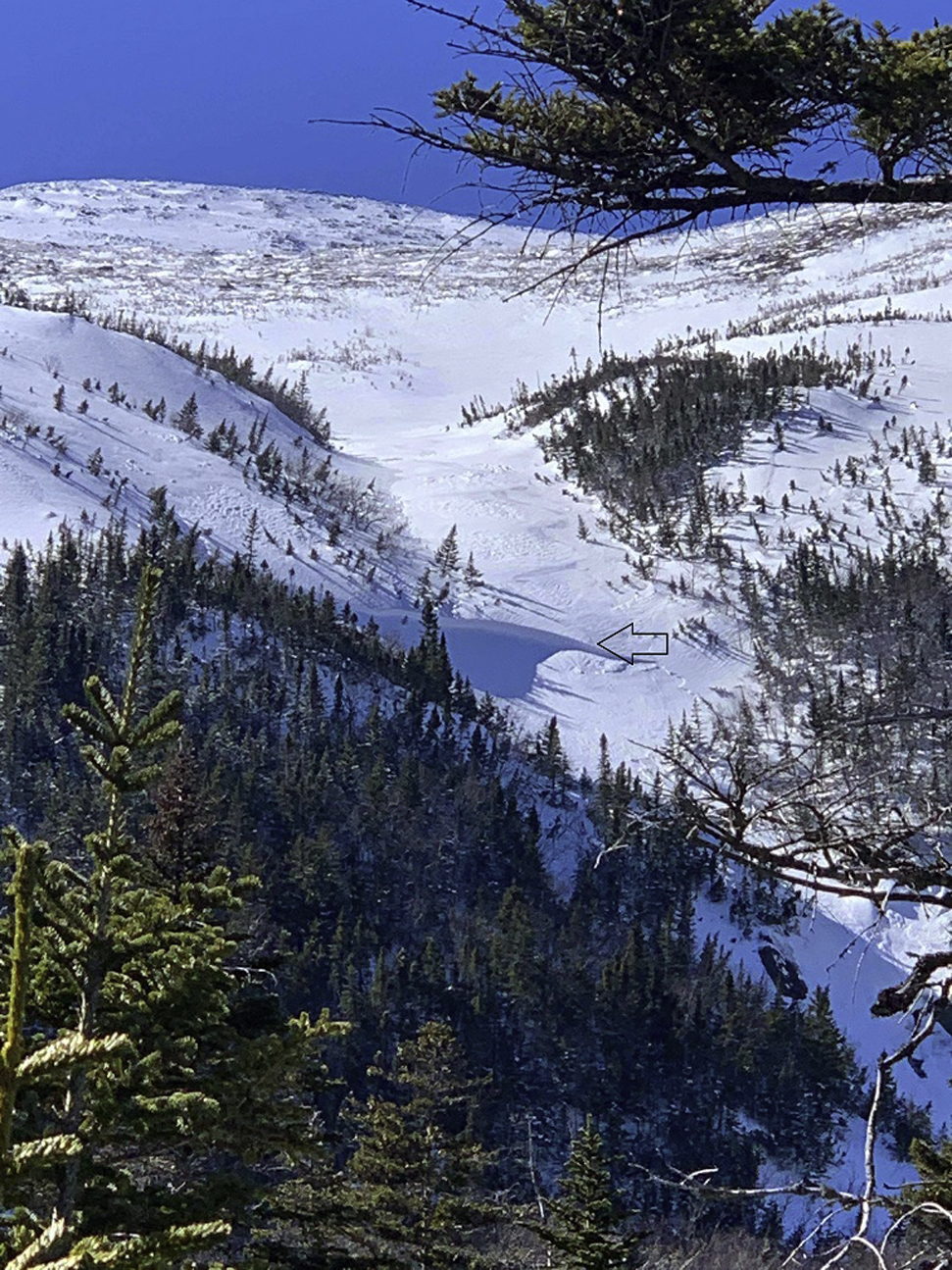
Avalanche crown (arrow) as observed from below.
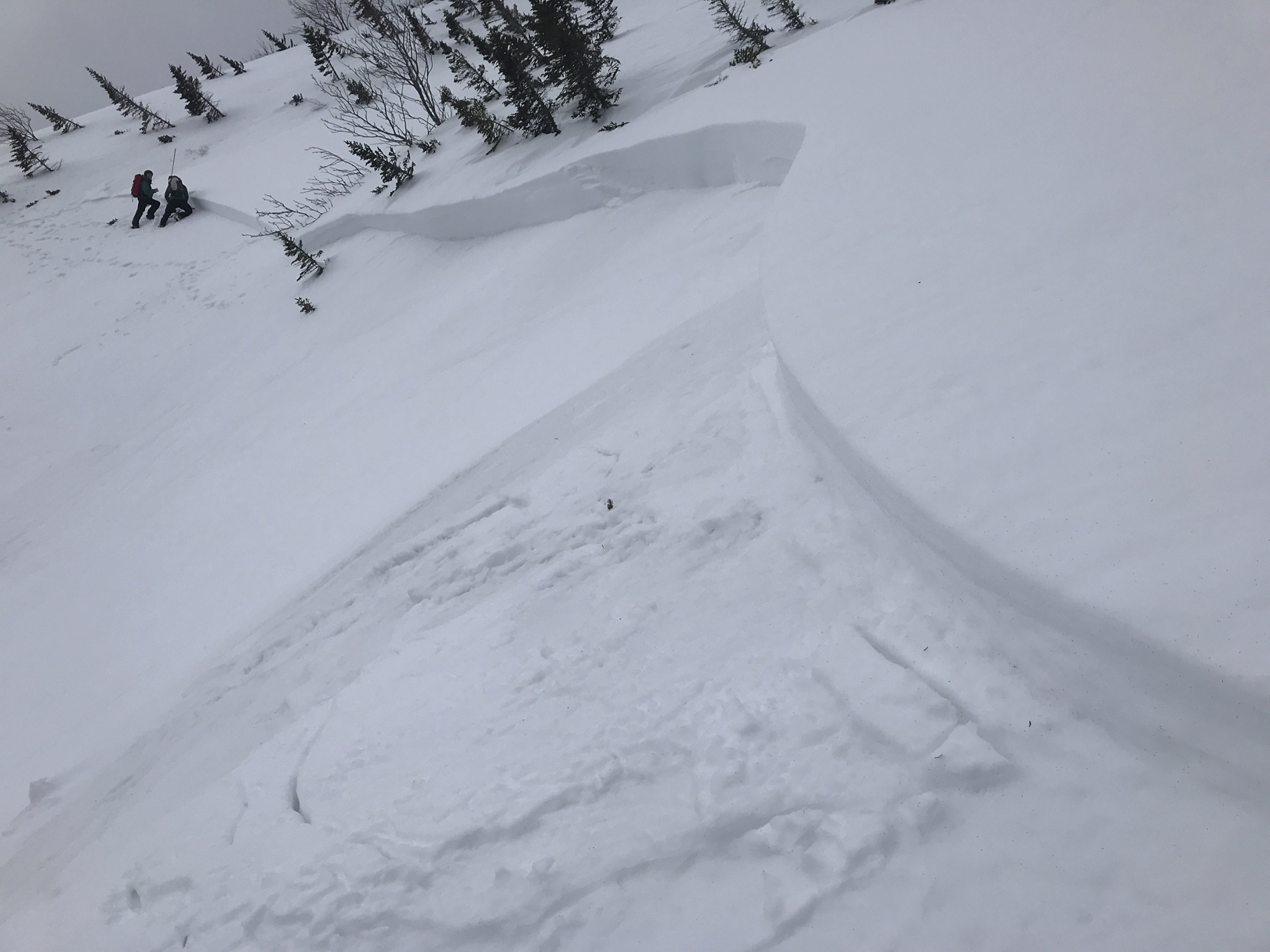
Avalanche crown.
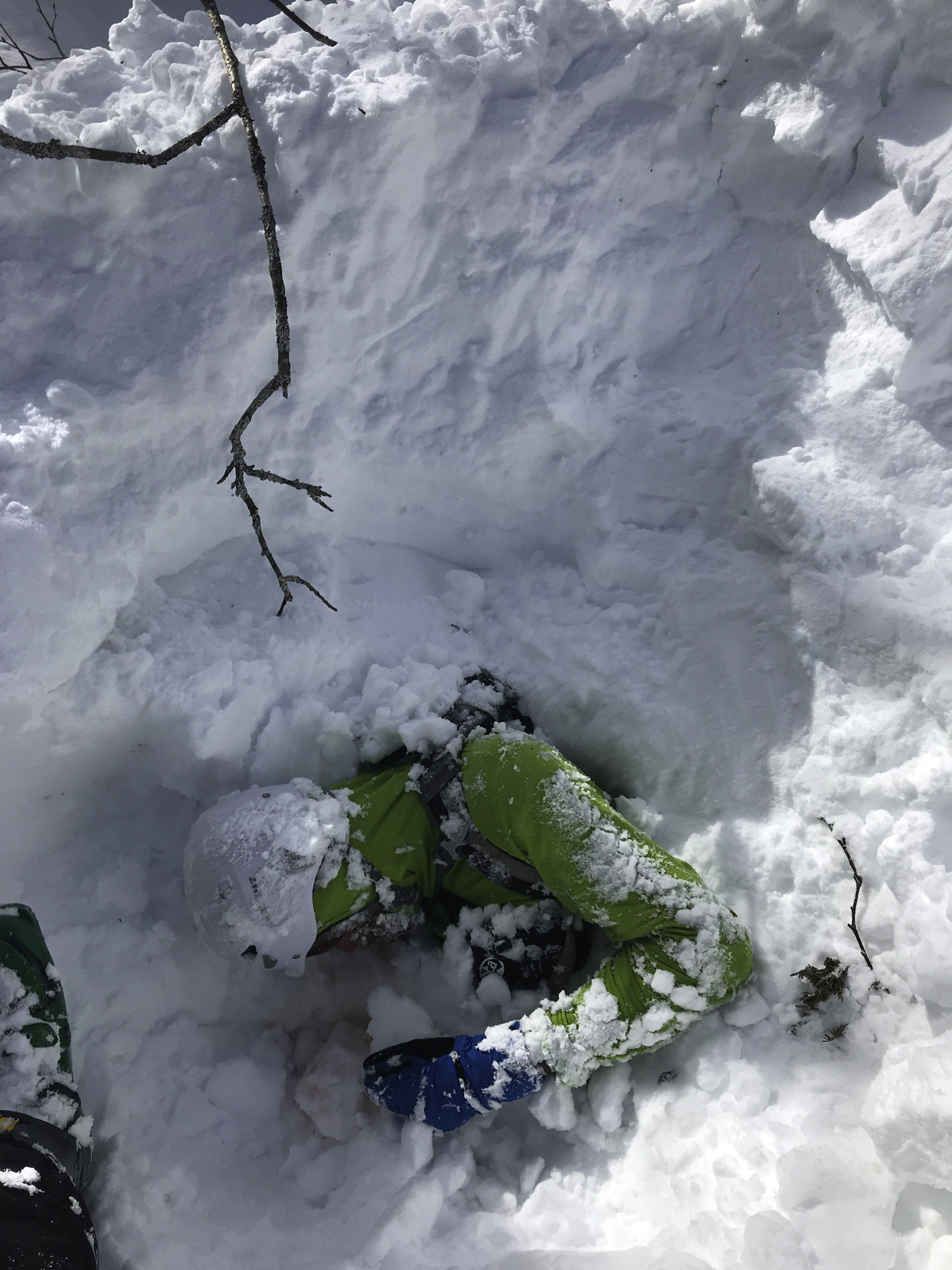
Positioning and depth of the victim on initial extrication.
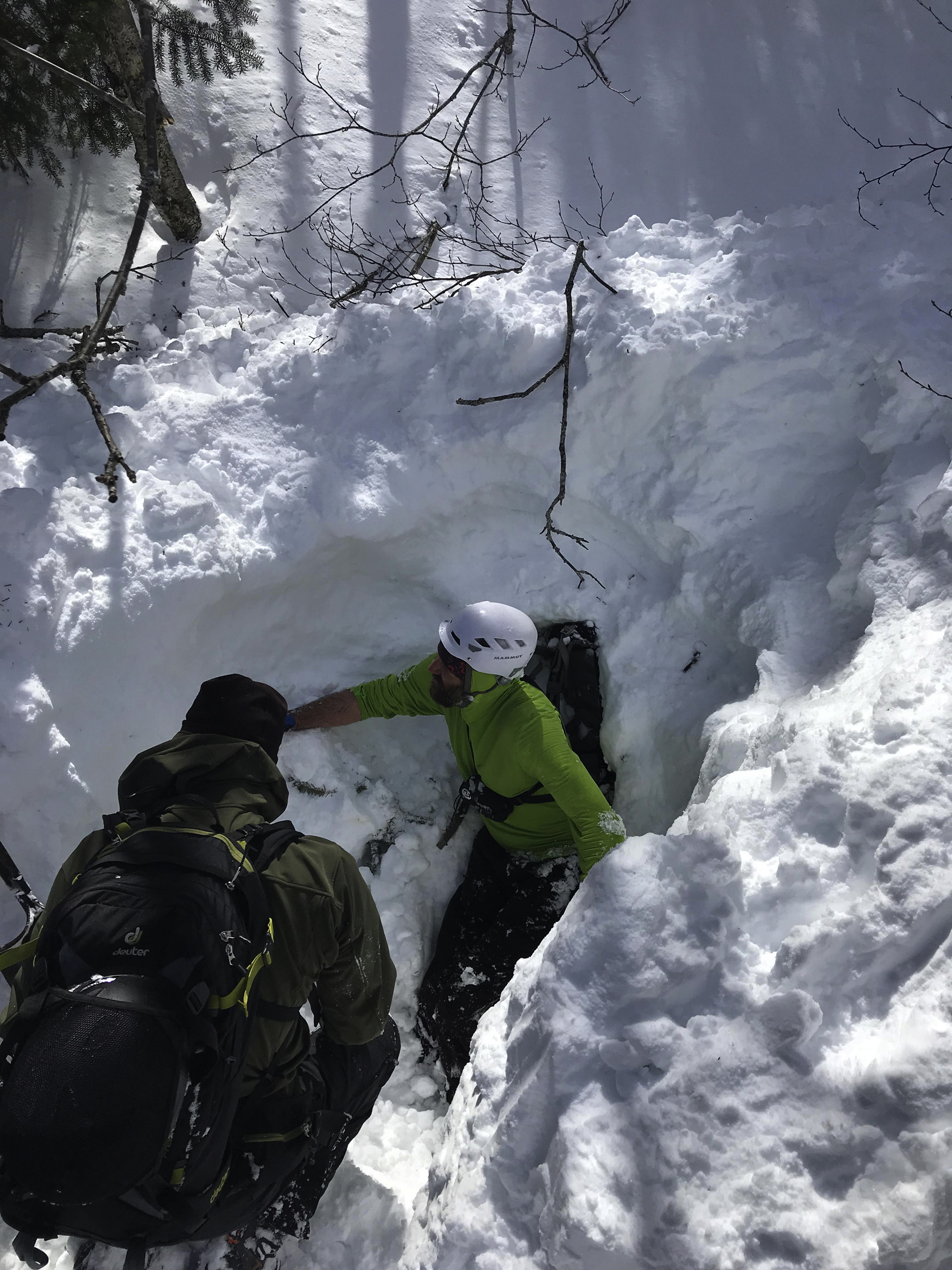
Victim standing, against the direction of the rescuers.
After he had been standing for 1 to 2 min, the victim abruptly lost consciousness. The rescuers were unable to palpate a pulse. They started chest compressions and bag valve mask ventilation. The rescuers interrupted CPR twice to roll the victim onto his side to clear fluids from the airway. Additional rescuers and volunteers arrived, loaded the victim into a litter, and transported him to a snowcat. Rescuers placed the litter in the snowcat and continued CPR during the 3 km descent to the trailhead, where the medical flight crew assumed care. They endotracheally intubated the victim, performed bilateral thoracostomies, and administered fluids via an intraosseous line. The cardiac rhythm on the monitor was ventricular fibrillation. The team attempted defibrillation and administered epinephrine and amiodarone following protocol. The flight crew attempted but were unable to place an esophageal temperature probe. They unsuccessfully attempted to contact medical control and pronounced the victim dead at 1600. Autopsy revealed no evidence of trauma or medical process, other than hypothermia, as the cause of death.
Discussion
Avalanche rescue begins with locating and extricating the victim. The details of avalanche transceiver and probe techniques are beyond the scope of this article. Duration and depth of burial are the main factors affecting survival, unless there is trauma from hitting rocks or trees or from falls over cliffs. Contraindications to resuscitating hypothermic victims include unacceptable risk to the rescuers, obvious lethal injuries, a completely frozen trunk, or serum potassium >12 mmol·L-1.13,16,17 In avalanche-associated cardiac arrest, extrication after >60 min of burial with airway obstruction and serum potassium >8 mmol·L-1 are additional contraindications to resuscitation. 1 In avalanche extrications after >35 min with asystolic cardiac arrest and an obstructed airway, CPR can commence but be stopped if unsuccessful. 17 A hypothermic victim should be handled gently to avoid precipitating ventricular fibrillation. Hemodynamic instability or cardiac arrest in a victim buried for <60 min (assumed core temperature >30°C) should be attributed to trauma or asphyxia rather than to hypothermia. 18
Core temperature measurement with an esophageal probe is the most accurate method to assess the degree of hypothermia, but this may not be available or feasible in the field. An epitympanic thermometer designed for field use is a reasonable alternative, but it is less accurate and usually not available in the United States. A rectal thermometer should be used only after the victim has been removed from the cold environment. If core temperature cannot be measured, it should be estimated using clinical signs, especially mental status and the presence or absence of shivering. The Wilderness Medical Society (WMS) has published a field-based algorithm for estimating the severity of hypothermia (Table 1). 16 The WMS method is similar to the Swiss HT system, 19 which is still used in many areas, although it has flaws. The Swiss system implies that shivering stops below a core temperature of 32°C and that vital signs are lost below 24°C. Because shivering can continue to as low as 30°C and vital signs can persist below 24°C, the Swiss system can underestimate the severity of hypothermia. 16
Stages of hypothermia with clinical characteristics and core temperature estimates a
Mild hypothermia (core temperature 35–32°C), characterized by normal mental status with shivering, can be treated with passive rewarming and by providing calories from carbohydrates to fuel shivering. Active rewarming should be administered with large chemical heat packs or other means, if available. Moderate hypothermia (32–28°C) is identified by altered mental status or loss of consciousness with or without shivering. In addition to receiving active rewarming, a victim with moderate hypothermia should be handled gently and not allowed to stand. Standing can cause increased core temperature afterdrop and circumrescue collapse. Core temperature afterdrop refers to continued heat loss, usually after removal from the cold. Standing causes vasodilation of the lower extremities, allowing relatively cold blood to return to the heart, increasing afterdrop.16,20 Circumrescue collapse was first described in immersion victims after removal from water. 21 In terrestrial rescue, circumrescue collapse may be caused by rapid vasodilation of the lower extremities, with cold blood from the extremities causing ventricular fibrillation or with blood pooling decreasing venous return to the heart, causing hypotensive collapse.
Severe hypothermia (<28°C) may be associated with arrhythmias, hemodynamic instability, and cardiac arrest. Treatment can be particularly challenging, especially in the field, because CPR may be necessary. Rescuers should start CPR if pulse, breathing, or other signs of life are not detected after 1 min. Survival with good neurologic recovery is often possible in hypothermia, even after prolonged resuscitation.22,23 In contrast to advanced cardiac life support in normothermic patients, CPR can be delayed up to 10 min to move a victim of hypothermic cardiac arrest to a safer location. 24 If rescuers cannot provide continuous CPR while transporting a victim, including helicopter transport, CPR may be intermittent (“5 minutes on the chest, 5 minutes rest”), with a 10 min rest phase if core temperature is <20°C. Delayed and intermittent CPR have been associated with good neurologic recovery. 24 Uncertainty exists regarding the efficacy of defibrillation and vasoactive medications. American Heart Association guidelines allow defibrillation and use of vasoactive medications at all core temperatures, whereas the European Resuscitation Council recommends up to 3 defibrillation attempts for ventricular fibrillation and withholding medications and further defibrillations until core temperature is >30°C.18,25
A victim with hemodynamic instability or cardiac arrest should be transported to a hospital capable of performing ECLS, which can provide cardiorespiratory support and rewarming.1,16,17,26 Survival may be improved with ECLS, in contrast to active rewarming without ECLS.1,12,15,27 ECLS likely improves outcomes in profound hypothermia (<24°C). Extracorporeal membrane oxygenation is generally preferred to cardiopulmonary bypass for relative ease of use in providing prolonged support, and possibly for superior outcomes. 27 Rescuers should transport a victim with presumed hypothermic cardiac arrest to an ECLS center, even if CPR must be prolonged or intermittent en route. In avalanche-associated hypothermic arrest, resuscitation should not be terminated until core temperature is ≥32°C without return of spontaneous circulation or potassium level is >8 mmol·L-1. In nonavalanche hypothermic arrest, potassium >12 mmol·L-1 can be used with other factors as a cutoff to terminate resuscitation. 16 -18
Although the vast majority of avalanche deaths are caused by asphyxia or trauma, neither was the likely cause of death in the present case. The victim was buried for over 2 h, was conscious, and was able to stand after being extricated, making asphyxia unlikely. The physical examination showed no evidence of trauma; this was confirmed by autopsy. The witnessed cardiac arrest shortly after the victim stood up was likely caused by circumrescue collapse. The victim would have been a candidate for prolonged CPR with transport to an ECLS center.
Rescuers and other prehospital providers rarely see victims with avalanche-associated hypothermic cardiac arrest and may not be familiar with treatment. Avalanche burials with hypothermic cardiac arrest are uncommon. From 1950 to 2018, there were 1084 documented avalanche-related fatalities in the United States, an average of about 16 per year.28,29 Only a small fraction of these were hypothermic cardiac arrests.
Although rescuers should gently extricate and place a hypothermia victim lying flat, limitations of personnel and difficult terrain may make this difficult or impossible, as in this case.
Resuscitation guidelines for hypothermic cardiac arrest differ from guidelines for normothermic cardiac arrest. Hypothermic cardiac arrest victims may benefit from prolonged CPR, especially after witnessed arrest. 12 Delayed5,24 or intermittent 24 CPR may be effective in hypothermic cardiac arrest. Most helicopter EMS agencies do not routinely transport victims with ongoing CPR in light of space constraints and safety risks. A mechanical compression device may provide a safer and easier alternative to manual CPR. However, these devices are bulky and heavy. Owing to limited space and payload capacity, most medical helicopters in the United States are not routinely equipped with mechanical compression devices.
For successful resuscitation of hypothermic patients in remote areas, a system is necessary. Rescuers should be able to administer prolonged CPR, as in the present case. Air emergency medical crews should be able to provide ongoing advanced life support during transport to a hospital capable of ECLS. CPR can be delayed, if necessary, for the safety of the rescuers, and can be intermittent when logistical factors make continuous CPR impossible.
If an ambulance or medical aircraft does not routinely carry a mechanical compression device, there should be a plan in place to obtain one at the base or en route or to send one to the scene using another vehicle or aircraft, even if it requires a longer response time. If this is not possible, CPR can be provided in an aircraft, even if it must be intermittent.
ECLS is the last link in the chain of survival for a victim of hypothermic cardiac arrest. Most smaller hospitals, especially in rural and remote areas, do not have ECLS capability. Many hospitals with ECLS do not have ECLS protocols for hypothermic patients. The emergency medical system should work with hospitals to develop protocols for transporting hypothermic patients in cardiac arrest to hospitals that are prepared to manage them using ECLS.
Conclusions
This case highlights a need for rescuers, emergency medical services, and hospitals to be prepared to care for victims with hypothermia. To prevent circumrescue collapse, victims with hypothermia should not be allowed stand. Hypothermic victims in cardiac arrest may require prolonged CPR, preferably with mechanical compressions, during transport to a hospital that has protocols for rewarming using ECLS. Resuscitation from hypothermic cardiac arrest should not be terminated before the victim has been rewarmed.
Footnotes
Acknowledgements
Acknowledgments: We thank the family of the victim for their gracious consent to present this case for the purposes of advancing avalanche and hypothermia care. We express our deepest condolences. We salute the rescuers and helicopter crew for their attempts to revive the victim and for their help in presenting this instructive case.
Author Contributions: Study concept and design (ND, NW, FC); acquisition of the data (FC); analysis of the data (ND, NW, FC); drafting the manuscript (ND, NW, FC, BC); critical revision of the manuscript (ND, NW, FC, KZ); approval of final manuscript (ND, NW, FC, BC, KZ).
Financial/Material Support: None.
Disclosures: None.