






Abstract
Treating skin disorders in wilderness settings is often challenging. In this report we describe common skin conditions affecting the feet of river runners on the Colorado River in Grand Canyon National Park. These conditions are frequently referred to by river runners with a catchall term, “tolio.” Several skin disorders have been identified as components of tolio, with the most prevalent currently being pitted keratolysis. We present a case of pitted keratolysis in a river guide occurring during a multiday river trip, where treatment can be difficult. Prevention is often more important.
Introduction
The Colorado River in Grand Canyon National Park (GCNP) is 447 km (277 mi) long and offers one of the most popular whitewater boating trips in the world. River runners may go on professionally guided (commercial) trips or on self-guided (noncommercial or private) trips. Large, motorized pontoon rafts average 7 to 9 d to travel the entire distance, whereas smaller oar-powered (rafts and dories) craft average 13 to 18 d. Each year about 25,000 people run the river through the Grand Canyon.
GCNP is located entirely in northern Arizona. A desert environment exists in the bottom of the canyon throughout the course of the river. Daytime high temperatures in the Grand Canyon average near 40°C (104°F) during the summer months and can reach over 50°C (122°F). In sharp contrast to the often very hot, low-humidity air is the very cold Colorado River with an average temperature near 11°C (52°F). Released from Glen Canyon dam, 32 km (15 mi) upstream, the water is consistently cold because it comes from deep within the dam’s reservoir, Lake Powell. River temperatures at the put-in (Lees Ferry) vary seasonally, ranging from as high as 15.5°C (60°F) in the late summer, early fall to as low as 7°C (45°F) in late winter, early spring. 1 Every year in the GCNP, many unprepared river runners and hikers experience severe illness, injury, or death. GCNP emergency medical service personnel respond to over 300 search and rescue requests annually, often in unique and challenging locations. On rare occasions these requests have included individuals with cutaneous foot maladies.
Case Report
An overall healthy 62-y-old river guide with no known autoimmune disorder or skin conditions and on no medications launched on a 14-d commercial rowing trip in August 2016. His footwear was typical of many river runners: strap-on sandals. For the first week the weather was hot and sunny with an average high temperature of 40.6°C (105°F). On Day 4 of the trip he began to break out with painful lesions on both feet. These lesions were tender, pitted, superficial erosions primarily over the ball of the foot, the arch, and between the toes. They continued to worsen. By Day 6 he could barely walk secondary to pain (Figures 1 and 2).
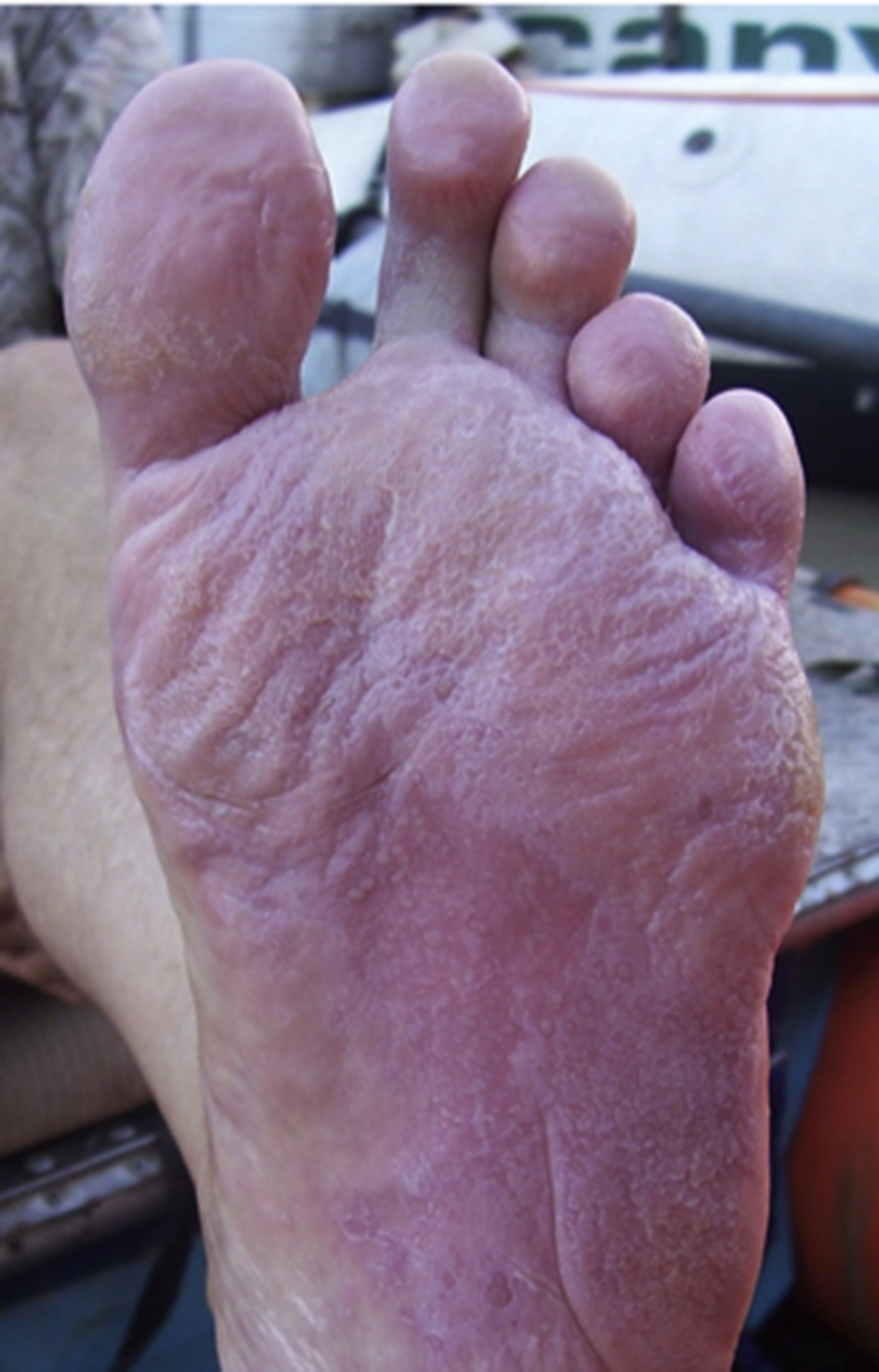
Photographs taken on Day 6 of the river trip, 2 d after the outbreak began, demonstrate the “punched-out” or pitted appearance on the surface of the skin consistent with pitted keratolysis.
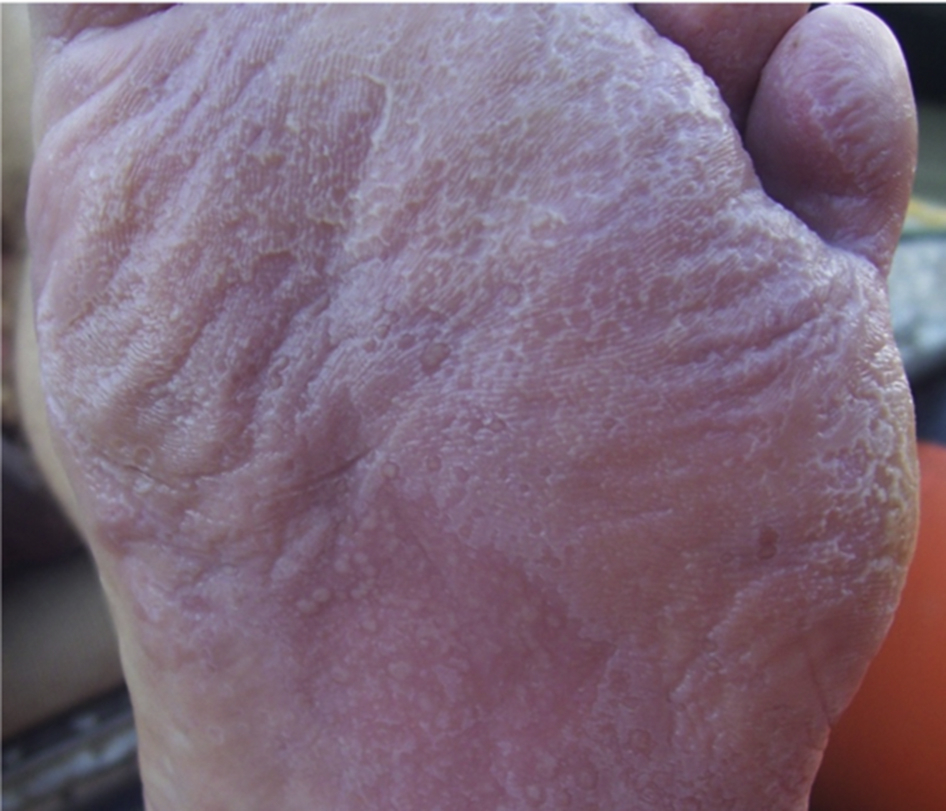
Close-up view of the pitted keratolysis skin lesions.
He consulted the contributing author (TM), who was on the trip. The guide was clinically diagnosed with pitted keratolysis (PK). For treatment, he was advised to stop wearing his strap-on sandals. Instead, he was advised to wear clean, dry socks along with calf-high, rubber (ditch) boots to keep his feet from getting wet or cold. Each day in camp, his feet were thoroughly cleansed, dried, and moisturized. He wore clean, dry socks to bed. By Day 8, after 2 d of treatment, his feet were significantly better, and he finished the remaining 5 d of the trip uneventfully.
Discussion
Acute skin diseases are common in outdoor settings, including foot rashes related to prolonged exposure to cold water. 2 –4 After Glen Canyon dam was completed on the Colorado River in 1963, the water released downstream into Grand Canyon became progressively colder as its reservoir, Lake Powell, deepened. Roughly coinciding with the very cold water releases in the 1980s was the development of specialized strap-on sandals and water shoes (waterproof footwear with openings for water drainage) for use by river runners. Around this time, a variety of foot rashes began to emerge. River guides coined the word “tolio” as a catch-all term to describe all manner of these annoying and painful foot rashes. Although the exact date and origin of the word tolio is unknown, it is believed to have been first used in the early 1980s and is considered a portmanteau of “toe and polio” because the rashes often involved the toes and could sometimes be disabling. Other names given to these foot maladies include “canyon foot rot,” “river rot,” “holio,” and “boatman’s foot.”
Theories as to causes of tolio have evolved. Many river guides believed it was strongly associated with the increasingly cold water coming from the dam. Others speculated that the rashes were related to a unique microorganism or toxin specific to the Grand Canyon riparian system. Unfortunately, formal diagnoses of the etiologies of the rashes were infrequent and varied for several reasons. First, in most cases medical intervention was never sought because the skin condition resolved rapidly after leaving the river environment when the feet could be kept clean and dry. Second, river runners frequently scatter to diverse locations where medical consultations occur randomly and independently, if at all. Third, interpretations of the skin conditions by medical personnel were also varied, indicating there was possibly more than one skin disorder being called tolio. Consequently, equally varied remedies have been used to treat and prevent tolio while on the river, including soaking the feet in bleach water, using hydrogen peroxide cleansings, using topical antifungal and antibacterial creams, and applying a variety of lubricating agents, such as tea-tree oil, Bag Balm, and olive oil.
In the late 1990s, a concerted effort was made by several medical providers in northern Arizona to clear up the mystery of tolio. Surveys were taken of affected river guides, bacterial and fungal analyses were done, and in some cases skin biopsies were performed. Diagnoses were compared, and an informal consensus of tolio etiologies was made. It was concluded that tolio is a mixture of diagnoses caused in part by footwear and by environmental exposures. Again, PK is seen in high frequency in Grand Canyon river runners. Other conditions identified as part of tolio include chilblains (perniosis), irritant dermatitis, tinea pedis, and onychomycosis. Superinfection by bacteria on underlying skin disorders was also seen. 5 –8
PK is currently the most common condition identified in tolio, as in this case report. PK is caused, in large part, by a bacterial infection under moist environmental conditions, resulting in painful pitting of the surface of the skin. Within the general population, it is most frequently reported in individuals between the ages of 21 and 30 y, with a male predominance of approximately 4:1.9,10 It has been presumed that this ratio is the result of more frequent use of occlusive footwear among males and of superior foot hygiene among females. Bacteria most commonly contributing to PK include Corynebacterium species, Kytococcus sendentarius (formerly known as Micrococcus sedentarius), and a Gram-positive Staphylococcus-related bacterium, Dermatophilus congolensis. Some other less common bacteria have also been identified. 11 –14 These bacteria produce proteinases that destroy the stratum corneum, creating open small tunnels and pits, resulting in a “punched-out” or pitted appearance on the surface of the skin. 15 On the foot, it primarily affects the plantar aspect, especially pressure-bearing areas of the toes and the ball of the foot, but lesions can occur on the interdigital surfaces and arch. Diagnosis is fairly easy and typically made by clinical appearance.
PK is typically triggered when footwear occludes the pedal skin for a prolonged time, producing a warm, moist environment and hyperhidrosis. This environment, as well as a resultant increase in skin surface pH, is more suitable for bacterial proliferation. The affected skin can become very malodorous, possibly from the production of sulfur-compound byproducts such as thiols, sulfides, and thioesters. 16 As a result of the odor and the pitted breakdown forming small holes in the skin surface, the condition in Grand Canyon river runners has also been called “river foot rot” or “holio.”
For years it was believed by river runners that the “foot rot” form of tolio was related to a specific microorganism unique to the river when tributaries loaded with silt were in flood. This has not been proven. Silty, dirty river water likely contributes to the development of PK because it is harder to keep the feet clean and the abrasive effect of sand may contribute to superficial breakdown of the epidermis, making the skin more susceptible to PK. For guides, the feet also appear to be more susceptible early in the river running season when the foot skin has little callousing and is more sensitive and prone to breakdown.
The use of strap-on river sandals and water shoes seems to have coincided with the rise of PK cases in the Grand Canyon. This is thought to be secondary to the occlusive effect of the footwear, creating a warm moist environment and hyperhidrosis, all of which make for more favorable conditions for PK to develop, as does multiday trip lengths during hot conditions.
Fortunately, PK is usually mildly symptomatic, although severe cases with extremely painful feet and incapacitation have been reported. Typical cases of PK are easily recognized, requiring no cutaneous biopsy or skin cultures. Most often the only treatment required is getting—and keeping—the feet clean and dry, an often-difficult task while on the river. This treatment alone usually resolves the problem within days.
For more severe cases, PK treatment can include empiric antimicrobial therapy with topical erythromycin, clindamycin phosphate (Cleocin T solution), or mupirocin (Bactroban) for up to 10 d.16,17 Benzoyl peroxide wash or gel may also be effective. 18 Applying the topicals to the entire plantar surfaces of the feet is most effective. Unfortunately, the alcohol component in the topical gels may be too painful for some to tolerate. Successful treatment with topical antiseptics, such as glutaraldehyde and formaldehyde, has also been reported. Chlorhexidine scrubs are another treatment option, reportedly as effective as erythromycin gel and more cost-effective, as well as less odiferous and less potentially dangerous than glutaraldehyde or formaldehyde. 18 Recalcitrant cases may require oral antibiotics; erythromycin, for example, is an option, typically clearing the lesions within 3 to 4 wk. 12 ,15,19
Primary preventive strategies for PK on the river include wearing less-occlusive footwear or on non–strap-on sandals such as flip-flops, which allow the foot to “breathe.” Washing the feet at night, using a moisturizer to prevent epidermal skin desiccation, and wearing clean, dry socks to bed seem to be of help. If strap-on footwear or water shoes are worn, they should be periodically removed to ventilate and dry the foot and to facilitate removal of any sand or grit trapped between the skin and the footwear. Application of a topical moisturizer (or sunscreen) to the entire foot may help prevent skin breakdown. Those who have had PK benefit from keeping the feet as clean and dry as possible. While on the river and running rapids, wearing calf- or knee-high rubber (ditch) boots overlapped by waterproof (rain) pants is an effective way to keep the feet completely dry. It remains uncertain whether applying antiperspirants such as aluminum chloride 20% solution would be helpful in reducing hyperhidrosis. Unfortunately, these and antiseptic foot powders used for prevention in other environments are mostly impractical for this setting.
Pernio (perniosis or chilblains) is another component of tolio. It is a localized skin disorder resulting from abnormal sensitivity to cold.20,21 Prolonged exposure to nonfreezing temperatures and damp conditions, like cold Colorado River water, precipitate the problem in at-risk individuals. It was a disabling condition in the trenches of World War I—thus the name “trench foot.” 3 The acute skin eruption of pernio can begin to develop within 12 to 24 h after cold exposure, but it may be longer. The cold exposure causes inflammatory, erythematous, violaceous, pruritic, or painful lesions on the feet. In severe cases there may be blister-like lesions (bullae) that may ulcerate if rubbed or irritated (Figure 3). Possible pathophysiology includes autoimmune responses to cold-induced alterations of proteins or small vessel damage with dermal ischemia. 22
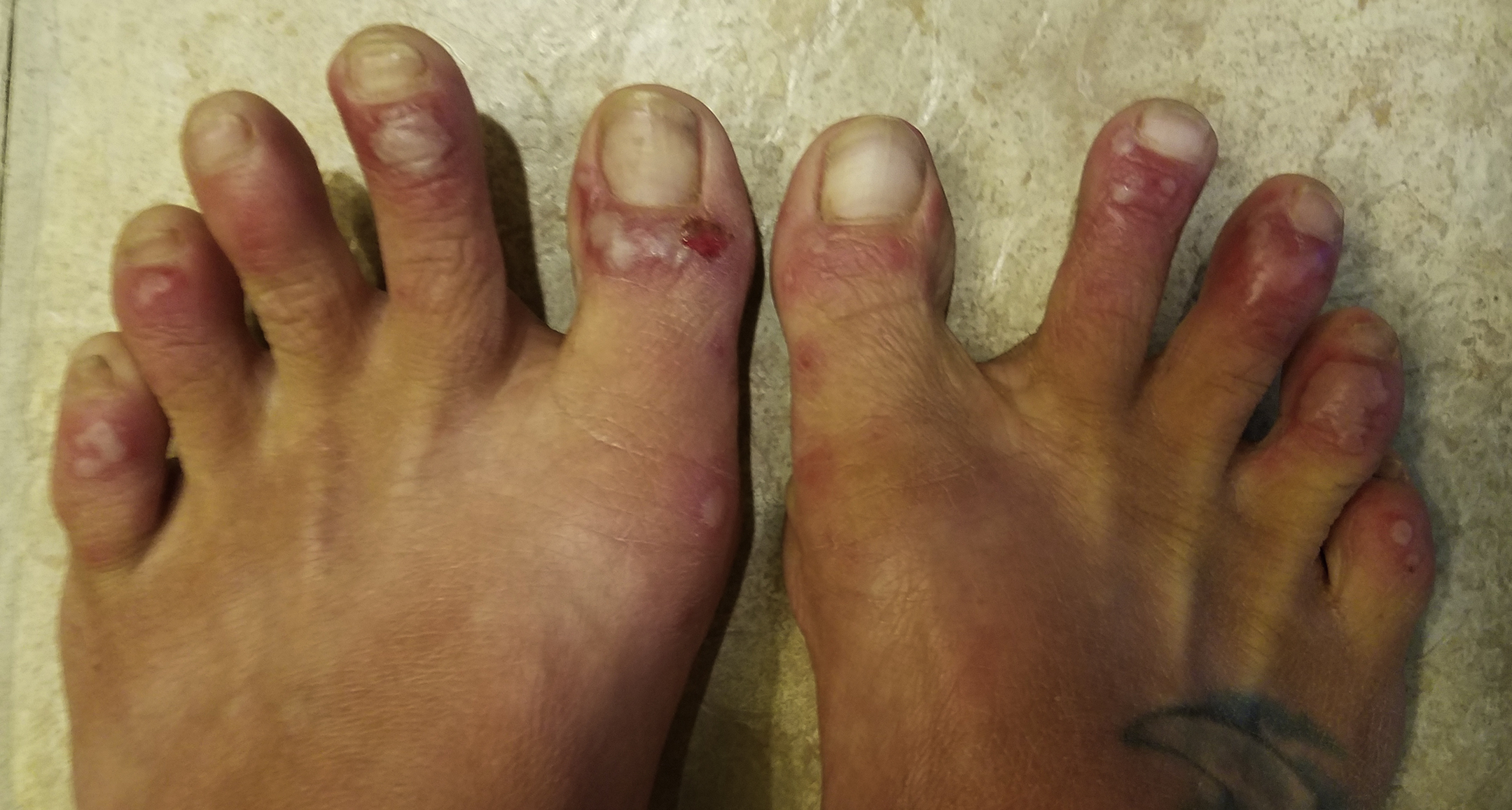
Painful, pruritic inflammatory lesions with bullous eruptions on the toes of a river guide in 2017, consistent with perniosis (chilblains). This commonly seen distribution on the toes helped influence the coining of the name “tolio” by river guides.
Pernio of the feet appears to be less common among Grand Canyon river runners now than in the late 1990s and early 2000s (personal observation of authors). This may be because of the development of “self-bailing” boats, which have inflated or elevated floors that allow for quick water drainage from the boat, minimizing prolonged standing in cold water to bail the boat with buckets after running rapids. Additionally, multiple years of drought conditions in the Southwest since 2000 have led to lower Lake Powell levels and slightly warmer water (by 1-2°C) being released downstream. Typically, pernio is a transient and self-limited problem, provided further exposure is eliminated and the feet are kept warm and dry. Other treatments for pernio include the use of oral calcium channel blockers, which increase peripheral vasodilation, and medium- to high-potency topical corticosteroids. Although topical steroids may be helpful for a variety of wilderness-related skin disorders such as insect bites, irritant dermatitis, and poison oak/ivy dermatitis, they are minimally effective for pernio. 23 Likewise, oral calcium channel blockers are of limited benefit and are typically unavailable and impractical for a wilderness setting. 24
Irritant dermatitis, tinea pedis, onychomycosis, and bacterial superinfections are also part of the tolio differential diagnosis. Irritant dermatitis with epidermal barrier function breakdown of the feet is almost universal in river rafters because of sandal strap or water shoe friction, hot sand exposure, foot trauma, and multiple cycles of wet to dry feet. Irritant dermatitis may contribute to development of pitted keratolysis or other bacterial superinfections and exacerbate pre-existing dermatophyte fungal infections such as tinea pedis (athlete’s foot) and onychomycosis (toenails). Other bacterial infections such as cellulitis may be superimposed on acquired PK, chilblains, irritant dermatitis, or preexisting tinea pedis, making differentiation and treatment more difficult.
Conclusions
Our case highlights the challenges of treating a select group of skin disorders in a wilderness setting. Although typically not life-threatening, skin disorders can be incapacitating and adversely affect the wilderness experience. Tolio is a word coined by river guides to describe several different skin ailments affecting the feet of river runners in Grand Canyon. Currently the most frequent component of tolio appears to be PK. Another common component is pernio (chilblains or perniosis). Both PK and pernio are attributable to environmental conditions and typically require several days of exposure to develop. Irritant dermatitis, preexisting tinea pedis and onychomycosis, and bacterial superinfections are part of the differential diagnosis. Overlap of all of these conditions may be seen in tolio. Treating the PK or chilblains forms of tolio, especially in an austere setting, poses a significant challenge. Most often the only treatment required is getting—and keeping—the feet clean and dry, a difficult task while on the river. Alone, this treatment usually resolves both problems within days. Prevention is easier than treatment. Wearing less-occlusive footwear and avoiding prolonged exposure to cold river water (such as standing in the Colorado River) appear to be beneficial. Having waterproof or rubber (ditch) boots available on trips for prevention and/or treatment should be considered. Keeping the feet clean and dry while on shore, wearing cotton socks at night, and using moisturizers is also helpful.
Footnotes
Acknowledgements
Acknowledgments: We thank Bert Jones, river guide for Outdoors Unlimted, for assistance and nonprofit organizations Grand Canyon River Guides and The Grand Canyon Private Boaters Association for participation in research studies.
Author Contributions: Patient care (TM, CB); drafting of the manuscript (TM, CB); critical revision of the manuscript (TM, CB, MM, MG).
Financial/Material Support: None.
Disclosures: None.