






Abstract
The Wilderness Medical Society convened a panel to review available evidence supporting practices for acute management and treatment of drowning in out-of-hospital and emergency medical care settings. Literature about definitions and terminology, epidemiology, rescue, resuscitation, acute clinical management, disposition, and drowning prevention was reviewed. The panel graded available evidence supporting practices according to the American College of Chest Physicians criteria and then made recommendations based on that evidence. Recommendations were based on the panel’s collective clinical experience and judgment when published evidence was lacking. This is the first update to the original practice guidelines published in 2016.
Introduction
Approximately 360,000 deaths globally are attributed to drowning every year. 1 Drowning often affects young victims and can have dire personal, emotional, and financial consequences for patients, families, and society. The goal of these practice guidelines is to reduce the burden of drowning through improvements in treatment and prevention. We present accepted drowning terminology as part of a review and evaluation of literature regarding acute care for the drowning patient, in both out-of-hospital and emergency medical care settings, with particular focus on the wilderness context. The authors relied upon the experience and knowledge of a panel of wilderness and emergency medicine practitioners to make recommendations where little or unreliable evidence is available. 2 This is the first update of the original publication from 2016. 3
Methods
The authors of this update reviewed each section of the original document to determine relevance and need for updating. Articles were identified through PUBMED, MEDLINE, and Google Scholar using a keyword search appropriate to each topic. Randomized controlled trials, observational studies, case series, and review articles were reviewed and evidence assessed. Abstracts for which the full article could not be obtained were excluded. If no relevant studies were identified, recommendations were based on the panel's clinical experience and judgment. Recommendations were graded using the American College of Chest Physicians classification scheme (online Supplemental Table 1), in accordance with prior versions of the Wilderness Medical Society Practice Guidelines. 4
The authors of this update reviewed each section of the original document to determine relevance and need for updating. Articles were identified through PubMed, MEDLINE, and Google Scholar using a keyword search appropriate to each topic. Randomized controlled trials, observational studies, case series, and review articles were reviewed and evidence assessed. Abstracts for which the full article could not be obtained were excluded. If no relevant studies were identified, recommendations were based on the panel’s clinical experience and judgment. Recommendations were graded using the American College of Chest Physicians classification scheme (see online Supplemental Table 1), in accordance with prior versions of the Wilderness Medical Society Practice Guidelines. 4
Epidemiology
The highest-risk age group for drowning worldwide is children ages 1 to 4 y, primarily owing to unintentional falls into water; the next highest-risk group is adolescents and young adults in natural bodies of water. In the United States, there were on average 3536 drowning deaths per year from 2005 to 2014, plus an additional 679 boating-related deaths, 75% of which were from drowning.5,6 More than 90% of the world’s drowning deaths occur in low- and middle-income countries. 1 In the context of low- and middle-income countries, natural sources of water are often ubiquitous and used for transportation, cleaning, food, and hydration and lack barriers. Based on World Health Organization and Centers for Disease Control and Prevention systems for classifying drowning statistics, these numbers exclude deaths occurring during floods and other natural disasters. In 2010, there were 12,900 emergency department (ED) visits in the United States for drowning, with 20% of patients admitted to the hospital. Drowning deaths were 48% more likely to occur on weekends compared to weekdays. Fifty-three percent of all male and 26% of all female drowning deaths occurred in natural bodies of water. 5
The burden of drowning is underreported because most studies address the issue of fatal drowning. In the United States, a conservative estimate is that for every fatal drowning, another 5 persons seek emergency care for nonfatal drowning. 5 Internationally, the burden of nonfatal drowning is more difficult to estimate because many patients may not present to an emergency medical system or hospital, where data collection typically occurs.5,7,8 In Bangladesh, a large population-based study showed fatal and nonfatal drowning rates of 15.8 per 100,000 and 318.4 per 100,00 compared to 1.17 per 100,000 and 10 per 100,000 in the United States.9,10 Risk factors for nonfatal drowning are similar to those for fatal drowning.9,11–15
Terminology
The standard definition for drowning, as defined by the World Congress on Drowning in 2002, is “the process of experiencing respiratory impairment due to submersion or immersion in liquid.” Inspired by the Utstein Style for reporting cardiac arrest data, the standard definition allows for only 3 outcomes after drowning: 1) morbidity; 2) no morbidity; and 3) mortality. This definition is based on the understanding that “respiratory impairment occurs as the person’s airway goes below the surface of the liquid (submersion) or water splashes over the face (immersion).” 16 However, the inclusion of both submersion and immersion in this definition may cause confusion with the large body of work on survival and rescue related specifically to cold water immersion, which focuses more on hypothermia than on drowning. For the purposes of these guidelines, which could include cold water conditions, a further distinction is necessary. “Immersion” refers to situations in which airways are above water, whereas “submersion” refers to situations in which airways are under water. Thus immersion (in cold water) may lead to hypothermia, and submersion at any water temperature may lead to drowning. The following modifiers should not be used in association with drowning: near, wet, dry, active, passive, saltwater, freshwater, or secondary. Sufficient data related to human drowning pathophysiology show that none of these modifiers is valid because the final common pathway is hypoxemia and eventual cardiopulmonary arrest. 2 ,16,17 By understanding and using the standard definition for drowning and abstaining from using incorrect terminology, communication among medical practitioners, data collection agencies, researchers, and policymakers has become more consistent. Accurate communication better reflects the true incidence, prevalence, and sequelae of drowning and should improve clinical dialogue and management. 18 –20
Rescue of the Drowning Patient
Reaching the Patient
Rescuer safety is paramount during rescue operations; in the aquatic environment, specific skills, training, and physical capabilities are required. The physical characteristics of aquatic environments vary widely, with a spectrum including pools, lakes, rivers, ocean, swift river water, and ice scenarios, each requiring different sets of equipment and training for technical rescue. Few studies objectively measure effectiveness of in-water rescue techniques. Much of the literature on this topic is based on experiences and policies of the writers or organizational authorities. There is a high prevalence of fatal and nonfatal drowning of untrained persons attempting to perform in-water rescues, with 1 study revealing 114 rescuer deaths during a 3-y period in Turkey alone. 21 –23 Hazardous water conditions that led to the initial person drowning often persist and place the well-intentioned rescuer at risk for becoming an additional drowning patient. 24 Rescue by untrained persons should be attempted without entering hazardous conditions by reaching out to the drowning patient with a paddle or branch; throwing a rope, buoy, cooler, or any floating object; or rowing a boat, canoe, or paddleboard to the patient. Trained rescue personnel should operate according to their level of training, expertise, equipment, and comfort level. Entering the water to perform a rescue should be attempted only by persons with specific training to operate in that dangerous environment. Few studies have been conducted on the effectiveness of different water safety devices (eg, rescue tubes, rescue cans, throw bags, life rings), but what has been demonstrated is that proper and effective use of these devices requires basic knowledge of their function combined with regular practice. 25
Recommendation
Persons without formal water rescue training should attempt rescues from a safe location by reaching, throwing, or rowing to the drowning patient. Persons with formal water rescue training should perform in-water rescues according to their level of training and with personal protective and safety equipment. There is insufficient evidence to recommend specific rescue devices. If specialized rescue equipment is available, participants should be familiar with the location and purpose of this equipment, and designated rescue personnel with proper training should be tasked with its use in the event of a water rescue.
PATIENTS IN SUBMERGED VEHICLES
Death from entrapment and drowning in submerged vehicles is often not classified as a drowning death, confounding attempts to accurately track the epidemiology of this type of drowning. 29 Studies suggest that 10% of drowning deaths may be due to entrapment in submerged vehicles and that in the case of inland flooding as much as 10% of motor vehicle crashes result in a drowning death. 30 –33 There is a small body of medical and rescue literature on the topic of vehicle submersions. 31 ,34–39 A formal review of educational and public service information identified “three probable significant contributors to [the] high fatality rate [of drowning in submerged vehicles]: 1) ‘authorities’ provide an inadequate description of vehicle sinking characteristics; 2) contradictory and inadequate advice is often provided; and 3) a poor public perception of how to escape.” 34 Several sources recommend questionable escape practices without supporting evidence for efficacy. These practices include allowing the passenger compartment to fill with water so that it will be easier to open doors, waiting until the vehicle sinks to the bottom of a body of water to maintain orientation, relying on kicking out the windshield or opening doors after the vehicle has fully sunk, and relying on breathing trapped air in the passenger compartment. In a formal survey, more than half of the general public identify an option that involves staying in a vehicle while it sinks to the bottom as being the safest option when trapped in a submerging vehicle; this advice often appears in the popular media. 38 Research data derived from 35 vehicle submersions conducted in diverse locations and seasons suggest that this advice is erroneous. Evidence suggests the best time to escape from a submerging vehicle is immediately during the initial floating phase, ideally during the initial 30 s to 2 min after water entry when most vehicles remain partially above the surface. 38 An algorithm, using the acronym SWOC, has been developed to advise those entrapped in water how to sequence escape actions. The SWOC algorithm recommends the following sequencing of actions: Seatbelts off, Window open, Out immediately, Children first. 39 In 2008, a US-based proprietary out-of-hospital emergency medical dispatcher system added an addendum to its standardized protocols that instructed emergency medical dispatchers not to persist in getting a location for a caller in a submerging vehicle. Instead, it recommends that a caller exit the vehicle immediately if it is submerging, before using precious time to determine location, and using the SWOC protocol.40,41
Recommendation
The safest time to escape from a submerging vehicle is immediately after it enters the water, during the initial floating phase. If the vehicle remains floating, persons should climb out and remain on top of the vehicle. If it is sinking, they should move away from the vehicle and toward safety after exiting.
IN-WATER RESUSCITATION
The primary physiologic insult in a drowning patient is cerebral hypoxia; its rapid reversal is the primary objective of drowning resuscitation. For the purpose of these guidelines, in-water resuscitation (IWR) is defined as an attempt to provide ventilations to a drowning patient who is still in the water. This does not apply to chest compressions. It is impossible to perform adequate chest compressions while the victim and rescuer are in the water, and so they should not be attempted. 42 Successful use of IWR was first described in 1976, with a manikin-based feasibility study reported in 1980; however, the first clinical study to show a positive patient outcome was not published until 2004. 43 –45
Available outcome data for IWR are based on a single retrospective analysis of lifeguard rescues in Brazil and show significant improvement in survival and neurologic outcome in persons receiving IWR. These rescues were performed by trained, professional lifeguards in the ocean environment. Lifeguards would frequently tow the patient beyond breaking waves and perform mouth-to-mouth ventilations while awaiting helicopter pickup. 45 Subsequent studies, primarily using manikins, evaluated ease of performing this task in controlled aquatic environments and found that IWR increases overall rescue time, subjective rescue difficulty, number of submersions, and water aspiration.46,47 A single study comparing lifeguards to lay rescuers when using IWR found that lifeguards showed improved rescue times and decreased estimated pulmonary aspiration. 48 Consensus statements from the International Lifesaving Federation, United States Lifesaving Association, American Red Cross, and the Young Men’s Christian Association recommend IWR by trained rescuers when a patient is rescued in shallow water or in deep water when a flotation device is present.49,50
Rescuer safety and prevention of communicable diseases are of utmost importance, so consideration should be given to the use of barrier devices during IWR. Food and Drug Administration-approved, IWR-specific devices are available that use a self-purging mechanical one-way valve instead of the paper valve on standard CPR masks.51,52
Recommendation
IWR should only be considered by a rescuer with adequate training, ability, and equipment to safely and effectively perform the skill in the aquatic environment. The aquatic conditions must be sufficiently safe for the rescuer to perform IWR, and the point of extrication from the water must be sufficiently distant to warrant an attempt of this technically difficult task. If conditions are too hazardous to safely perform the task, rapid extrication is indicated without a delay for IWR. Chest compressions should not be attempted in the water; all drowning patients without a pulse should be extricated as quickly and safely as possible so that early, effective chest compressions and ventilations can be initiated.
Initial Resuscitation
HYPOTHERMIA
Water is thermally neutral at approximately 33°C (91°F). Because most patients drown in water at a lower temperature than this, concomitant hypothermia is common. 30 The main physiologic problem with drowning is brain hypoxia. Current practice suggests that the brain can withstand longer periods of hypoxia if the body is cooler than the normal physiologic range. On one hand, leaving a patient moderately cool, or warming them to a moderately cool degree, could be beneficial or at least innocuous. On the other hand, moderate to severe hypothermia should be corrected, with the understanding that warming may be operationally difficult in some drowning situations. Beyond initiation of basic warming measures, the details of hypothermia treatment, including augmented advanced life support measures, are beyond the scope of these guidelines. Readers are encouraged to review the most current version of the Wilderness Medical Society Practice Guidelines for the Out-of-Hospital Evaluation and Treatment of Accidental Hypothermia. 53
Recommendation
Suspect and treat hypothermia.
CARDIOPULMONARY RESUSCITATION AND PRIORITIZATION OF AIRWAY
Because of the central role of hypoxemia in the pathophysiology of drowning, initial resuscitation should focus on establishing and maintaining a patent airway and providing oxygen. Recent updates to cardiopulmonary resuscitation (CPR) algorithms, specifically for the lay rescuer, include recommendations for compression-only CPR and prioritization of compressions before airway maneuvers.54,55 Compression-only CPR is likely to be of little to no benefit in drowning resuscitation, and its use is limited to untrained bystanders. Bystander CPR for infants and children includes compressions and ventilations, regardless of which is started first. Professional rescuer CPR should emphasize prioritization of airway and breathing before initiation of chest compressions. If the airway is overlooked in initial resuscitation, ongoing hypoxemia leads to decreased survival and worse neurologic outcomes. Incorrect application of rescue breaths can delay care and cause gastric insufflation and pulmonary aspiration. For lay responders or persons without current training in rescue breathing, compression-only CPR is still the preferred method of resuscitation. All persons who may respond to a drowning person (eg, parents, trip leaders, lifeguards) should take CPR classes that include training on proper use of chest compressions and rescue breathing.
Recommendation
Supplying oxygen to the brain is critical to successful resuscitation of the drowning patient. Establishing an airway and providing oxygen are priorities in initial resuscitation. For the patient in cardiac arrest, provide positive pressure ventilations in addition to chest compressions using the traditional Airway-Breathing-Circulation model of resuscitation. If an advanced airway is available and properly placed, provide breaths at specified time intervals (every 6 to 8 s) while continuous compressions are administered. For lay people without training in rescue breathing, compression-only CPR is a preferred alternative to no intervention.
OXYGENATION
Few large-scale studies have evaluated different airway adjuncts applied to drowning patients. Although ideal rescue breathing includes supplemental oxygen and a positive pressure delivery device, any amount of oxygen delivery (eg, mouth-to-mouth, bag-valve-mask [BVM] with ambient air) is better than none if supplemental oxygen is not available. Manikin studies of supraglottic airways have shown that lifeguards can successfully insert them, but there is concern that this does not replicate real world usage.56,57 Additional concern is that because of pulmonary edema from drowning, certain supraglottic airway devices may perform poorly for oxygenation based on leak pressures.58,59 If the supraglottic airway fails to achieve adequate chest rise, a BVM or other method to oxygenate and ventilate the patient should be used.
Recent resuscitation data have brought into question the benefit of providing high oxygen concentrations in the acute setting of out-of-hospital cardiac arrest and stroke, primarily based on data correlating hyperoxemia after return of spontaneous circulation (ROSC) with increased mortality. Most of these data focus on the period after ROSC in the intensive care unit setting; no studies focus specifically on cardiac arrest associated with drowning or other primary respiratory events. A single retrospective case-control study involving arterial blood analysis during CPR provides support for using high levels of supplemental oxygen. This study showed a significant increase in survival to hospital discharge with increasing levels of arterial oxygenation in all cardiac arrest patients, even at levels that would be considered hyperoxemic. 60
Recommendation
When resuscitating a drowning patient, oxygen should initially be delivered at the highest concentration available. For the patient in respiratory distress or arrest, positive pressure is preferred over passive ventilation. If multiple modalities are available, the method that most effectively delivers the highest concentration of oxygen should be used. If a modality or device fails, BVM or mouth-to-mouth ventilation should be attempted.
AUTOMATED EXTERNAL DEFIBRILLATOR
Although cerebral hypoxia is the primary cause of morbidity in the drowning patient, hypoxic myocardial injury might also occur. Drowning patients initially typically experience sinus tachycardia, followed by bradycardia, pulseless electrical activity, and then asystole, owing to the hypoxic nature of the event. 61 In drowning patients, ventricular fibrillation (VF) is rare, occurring in less than 10% of patients; thus, reversal of hypoxemia with ventilations and compressions should not be delayed in an attempt to apply an automated external defibrillator (AED). 61 –67 Once resuscitation is established, early application of an AED might be beneficial, given the possibility of VF as the cause or result of drowning. In the drowning patient, if global myocardial hypoxia persists, attempts at defibrillation may be unsuccessful without concomitant oxygenation and ventilation.
Experimental animal models have shown that as long as AED pads are placed firmly on a patient’s chest and a rescuer is not in direct contact with that patient, use of an AED in a wet environment does not pose increased risk to the patient or rescuers. 68 –70 AEDs have been tested and noted to correctly detect simulated arrhythmias and deliver shocks on moving boats. 71
Recommendation
VF is rare in drowning, so incorporation of an AED in the initial minutes of drowning resuscitation should not interfere with oxygenation and ventilation. If available, an AED should be used during resuscitation of a drowning patient; its use is not contraindicated in a wet environment.
HEIMLICH MANEUVER
Drowning involves water obstructing the airway and causing cerebral hypoxia; in some cases, small amounts of water are aspirated into the lungs. This can cause atelectasis, direct cellular injury, and pulmonary edema. Even after unconsciousness, reflex swallowing of water from the hypopharynx into the stomach may occur. Dr Henry Heimlich advocated use of abdominal thrusts in initial treatment of the drowning patient, claiming that aspirated water must first be cleared from the airway to allow proper ventilations. 72 –74 In the 30 y since his original report, concern has been raised about this recommendation, resulting in an Institute of Medicine report and a systematic literature review by the American Red Cross.75,76 All of these investigations failed to identify quality data to support use of the Heimlich maneuver before providing ventilations. Its use during initial resuscitation delays delivery of ventilations and prolongs hypoxemia. 75
Recommendation
Owing to the possibility of delaying ventilations, the Heimlich maneuver is not recommended for resuscitation of the drowning patient.
CERVICAL SPINE PRECAUTIONS
Recent discussions and research in the field of out-of-hospital medicine have brought in to question the utility, safety, and clinical benefit of what has been called routine spine immobilization. The most current published review of this topic specific to austere environments is the Wilderness Medical Society Clinical Practice Guidelines for Spinal Cord Protection: 2019 Update. 77 We recommend reviewing the updated guidelines for current evidence on the utility of this procedure.
Retrospective studies of drowning patients found the incidence of cervical spine injuries was low (0.5 to 5%) and that most injuries were related to diving from a height. In patients without obvious signs of trauma or a known fall or diving event, the risk of spine injury is low.78,79 In these patients, treatment maneuvers focused on restricting spine motion may distract rescuers from the critical role of oxygenation and ventilation.
Recommendation
The most current Wilderness Medical Society Practice Guidelines concerning the field treatment of possible spinal injuries should be reviewed when developing or reviewing agency protocols. Drowning patients who display evidence of spine injury, such as focal neurologic deficit, have a history of high-risk activity, or exhibit altered mental status are considered to be at a higher risk for spine injury. This does not include patients with altered mental status who were witnessed to have no trauma as an inciting event. Treatment considerations for this population should be carried out in accordance with the most current version of Wilderness Medical Society Clinical Practice Guidelines for Spinal Cord Protection.
Postresuscitation Management
OXYGENATION/VENTILATION
Mechanical ventilation
No literature is available comparing out-of-hospital or in-hospital mechanical ventilation strategies for the drowning patient. Current practice recommends a lung protective ventilation strategy similar to that used for patients with acute respiratory distress syndrome (ARDS), on the premise that the lung injury pattern after drowning is similar. 16 ,80,81 This includes mechanical ventilation starting with a tidal volume (VT) of 6 to 8 mL·kg-1, augmentation of VT and respiratory rate to maintain plateau pressure < 30 mm Hg, and augmentation of positive end expiratory pressure and fraction of inspired oxygen (FIO2) to maintain partial pressure of arterial oxygen (PaO2) at 55 to 80 mm Hg. 82
Recommendation
Mechanical ventilation for the drowning patient should follow ARDS protocols.
Noninvasive positive pressure ventilation
Noninvasive positive pressure ventilation (NIPPV) has been used successfully in the out-of-hospital setting. There are case reports describing its successful use in drowning. 83 –86 Similar to invasive ventilation, the addition of airway pressure to prevent atelectasis and support respiratory muscle use while preventing hypoxemia can be achieved with NIPPV. However, caution should be used with NIPPV in the drowning patient with altered mental status because there may be increased risk of vomiting and aspiration. Drowning patients who have mild to moderate hypoxemia and are being treated in out-of-hospital and emergency medical systems using NIPPV might benefit from this therapy. One small retrospective study showed similar neurologic outcomes and correction of hypoxemia and acidosis between patients treated with early endotracheal intubation versus NIPPV after drowning; in addition, patients receiving NIPPV had a lower incidence of infection and decreased hospital and intensive care unit length of stay. 87
Recommendation
NIPPV may be usd in the alert drowning patient with mild to moderate respiratory symptoms. Caution should be taken with any patient displaying altered mental status and/or active emesis owing to the potential for aspiration.
Diagnostics
RADIOLOGIC TESTING
Several retrospective ED studies of drowning patients found that the initial chest radiograph did not correlate with arterial blood gas levels, outcome, or disposition. 88 –90 A study of admitted drowning patients showed that those who went on to develop acute lung injury or ARDS had abnormal chest radiograph findings within the first few hours, but not necessarily on arrival to the ED. 80 Head computed tomography (CT) has been studied in an attempt to quantify anoxic brain injury in drowning patients. Retrospective studies have found that patients with abnormal initial CT all went on to develop severe brain injury or die, whereas initially normal head CT had no prognostic value. 91
Recommendation
Initial chest radiograph findings do not correlate with arterial blood gas measurements or outcome; x-rays may be useful in tracking changes in patient condition, but not for determining prognosis if obtained at the time of presentation. A normal initial head CT does not have prognostic value in the drowning patient. Routine use of neuroimaging in the awake and alert drowning patient is not recommended unless dictated by a change in clinical status.
LABORATORY TESTING
Canine studies performed in the 1960s showed clinically significant hemodilution and red blood cell lysis associated with salt, chlorine, and freshwater drowning. 92 –94 These studies were based on instilling up to 44 mL⋅kg-1 of fluid into the trachea of anesthetized dogs, far greater than the 1 to 3 mL⋅kg-1 typically aspirated by human drowning patients. Electrolyte abnormalities and hemodilution only occurred in dogs that had 11 mL⋅kg-1 or more instilled. No studies have identified clinically significant electrolyte or hematologic abnormalities in drowning patients that help guide initial therapy or provide prognostic information. In patients with altered mental status or decreased level of consciousness, laboratory evaluation for alternative causes that might have led to the drowning event, such as hypoglycemia or intoxication, can be helpful. Arterial blood gas analysis in symptomatic patients can be used to help guide respiratory resuscitation.
Recommendation
Routine use of complete blood count or electrolyte testing in the drowning patient is not recommended. Arterial blood gas testing in patients with evidence of hypoxemia or respiratory distress (eg, cyanosis, low oxygen saturation, tachypnea, persistent tachycardia) may be indicated to guide respiratory interventions. For patients whose mental status fails to respond to resuscitation or in whom the initial cause of submersion is unknown, laboratory testing for causes of altered mental status or any inciting event should be considered.
Other Treatments
ANTIBIOTICS
Although microorganisms present in aspirated water may eventually cause pneumonia, no study to date has shown benefit from empiric administration of antibiotics in drowning patients. This is in part because microorganisms found in drowning-associated pneumonia are atypical bacteria or fungi and often are resistant to standard empiric treatments. 95 –97 Aspiration of even small volumes of water can produce abnormalities on chest radiograph that can mimic pneumonia. The trauma of the drowning event and hypoxemia can cause leukocytosis from stress demargination as well as fever from inflammation and irritation caused by water in the airways, making it difficult to differentiate inflammatory from infectious pneumonitis. 98 The decision to administer antibiotics should be made after initial resuscitation and ideally be based on expectorated sputum or endotracheal aspirate bacterial culture, blood cultures, or urinary antigen tests. 95 –97 Because these tests are not available in the wilderness setting, treatment should be initiated for symptoms consistent with pulmonary infection (eg, fever, increased sputum, abnormal lung auscultation) that continue after initial resuscitation and treatment phases.
Recommendation
There is no evidence to support empiric antibiotic therapy in the initial treatment of drowning patients. After initial resuscitation, if pneumonia is present, treatment should be guided by expectorated sputum or endotracheal aspirate bacterial culture, blood cultures, or urinary antigen tests. In the absence of these tests, decision to treat should be based on clinical examination focusing on physical evidence of pulmonary or systemic infection (eg, fever, increased sputum, abnormal lung auscultation).
CORTICOSTEROIDS
Corticosteroids were historically used in drowning patients to facilitate pulmonary recovery and surfactant production. However, there is not sufficient evidence to support empiric corticosteroid administration for drowning patients. 99
Recommendation
Given limited data, corticosteroids should not be routinely administered specifically for treatment of drowning patients.
THERAPEUTIC HYPOTHERMIA
Mild therapeutic hypothermia (TH) has been shown to decrease cerebral oxygen utilization and improve neurologically intact survival in patients with witnessed VF cardiac arrest. 81 Current American Heart Association/International Liaison Committee on Resuscitation guidelines recommend targeted temperature management for adults after cardiac arrest, at a temperature between 32 and 34°C for at least 24 h. 100 Many institutions have extrapolated these data to include non-VF causes of cardiac arrest.
The 2002 World Congress on Drowning provided a consensus statement recommending TH of 32 to 34°C (90 to 93°F) for patients achieving ROSC after cardiac arrest due to drowning. 101 Our literature search yielded multiple case reports and retrospective reviews supporting neurologically intact survival in hypothermic patients, but several older studies showed no benefit. 102 –114 There is no prospective study comparing TH to normothermia after ROSC in drowning patients. There might be benefit to discontinuing rewarming interventions after a hypothermic drowning patient has reached TH temperature range, but this has been insufficiently studied to support an evidence-based recommendation.
Recommendation
Although current literature recommend targeted temperature management in postcardiac arrest care, there is insufficient evidence to either support or discourage induction or maintenance of TH in drowning patients.
Disposition in the Wilderness
DECISION TO EVACUATE
If a patient survives a drowning event in the wilderness, objective physical examination findings may assist in the decision to evacuate the patient to advanced medical care. A single large retrospective study of nearly 42,000 ocean lifeguard rescues serves as the primary evidence for on-scene decision-making. 115 This study found that patients who experienced a drowning event but had no symptoms other than mild cough and who did not have abnormal lung sounds had 0% mortality. As symptoms worsened and abnormal lung sounds appeared, mortality increased. Hypotension (systolic blood pressure < 90 mm Hg or mean arterial pressure < 60 mm Hg) accounted for the next largest increase in mortality (Table 1). In a retrospective study of children who experienced nonfatal drowning, any clinical deterioration occurred within the first 4 h in patients presenting with mild symptoms and Glasgow Coma Scale score ≥13. 88 These findings are similar to those from another retrospective study of pediatric patients in which new symptom development after arrival to the hospital occurred within 4.5 h in all but 1 patient; the 1 outlier developed symptoms in 7 h and had a good outcome. 116 Additional recent emergency department studies are discussed in the Disposition in Emergency Department section of these guidelines. These studies revealed similar results in the fact that clinical decompensation, if present, occurred in the first few hours of observation. 26
Out-of-hospital management and classification of drowning patients
Adapted from Semprsott et al. 25
Recommendation: Any patient with abnormal lung sounds, severe cough, frothy sputum, foamy material in the airway, depressed mentation, or hypotension warrants immediate evacuation to advanced medical care if risks of evacuation do not outweigh potential benefit. Any patient who is asymptomatic (other than a mild cough) and displays normal lung auscultation may be considered for release from the scene. Ideally, another individual should be with them for the next 4 to 6 h to monitor for symptom development or the patient should be advised to seek medical assistance if symptoms develop. If evacuation is difficult or may compromise the overall expedition, patients with mild symptoms and normal mentation should be observed for 4 to 6 h. Any evidence of decompensation warrants prompt evacuation if the risks of evacuation do not outweigh the potential benefit. If evacuation of a mildly symptomatic patient has begun and the patient becomes asymptomatic for 4 to 6 h, canceling further evacuation and continuing previous activity may be appropriate.
CEASING WATER-BASED RESCUE AND RESUSCITATION EFFORTS
A wilderness search and rescue team can range from a small group of untrained participants with no equipment to a highly trained team with extensive resources. In the wilderness setting, available resources, risk to rescuers, and team safety must be considered when deciding how long to search for a submerged patient. Although each drowning episode has unique patient and environmental factors, the most important predictor of outcome is duration of submersion. 67 ,117,118 Available evidence shows that prognosis is poor with submersion times greater than 30 min, regardless of water temperature. 119 There are also case reports of survival with good neurologic outcome despite prolonged submersion, predominantly in children aged ≤ 6 y in water < 6°C (43°F) and with use of advanced treatment modalities, such as extracorporeal membrane oxygenation. 120 –125 For the purpose of these guidelines, recommendations are based on available evidence relevant to a typical drowning patient and on the probability of neurologically intact survival in specific conditions. A literature review of 43 cases serves as the evidence for water-based rescue. 126 The report concludes that there is minimal chance of neurologically intact survival with submersion time > 30 min in water > 6°C (43°F) or > 90 min in water < 6°C (43°F). It is important to note that “submersion time” was defined as beginning upon arrival of emergency services personnel; total submersion time is often unknown.
If a drowning patient is removed from the water and resuscitation takes place, it might be necessary to decide when to cease resuscitation efforts if no signs of life return. Based primarily on retrospective studies, submersion times of >10 min appear to correlate with increased mortality or survival with severe neurologic dysfunction. 67 ,118,127 In addition, more than 25 min of resuscitation or prolonged time to advanced medical care also correlate with negative outcomes, but without the statistical significance of submersion time. In a Dutch retrospective review of 160 hypothermic drowning patients under the age of 16 y, 98 children received CPR for more than 30 min, with only 11 surviving to discharge, all of whom were neurologically devastated. 119 ,127–129
Recommendation: Based on resources, it might be reasonable to cease rescue and resuscitation efforts when there is a known submersion time of greater than 30 min in water > 6°C (43°F), or greater than 90 min in water < 6°C (43°F), or after 25 min of continuous cardiopulmonary resuscitation. If at any point during search and rescue efforts the safety of the rescue team becomes threatened, rescue efforts should be ceased. If resources are available and recovery team safety is maintained, body recovery efforts may continue beyond the search and rescue period with the understanding that resuscitation attempts will likely be futile.
Disposition in the Emergency Department
Although many studies have addressed prognostic factors for neurologic survival at hospital discharge, only a few have addressed the question of which patients can be safely discharged from the ED. The first, a prospective study of primarily pediatric patients, included follow-up phone interviews with 33 patients who were either released on the scene or discharged from the ED within 1 to 6 h of arrival and found that none of these patients experienced delayed effects. 130 A retrospective review of 48 pediatric drowning patients who presented to a single ED with Glasgow Coma Scale score ≥13 studied whether factors predicting safe ED discharge could be identified. 88 Initial chest radiograph did not correlate with severity of disease, and all patients who deteriorated did so within 4 h of ED arrival. The authors concluded that patients could be safely discharged home if normalized and if there was no deterioration in respiratory function after 4 to 6 h of observation in the ED. A retrospective review of hospitalized pediatric patients found that in all patients who were initially asymptomatic, but who went on to develop symptoms during their stay, these symptoms developed within 4.5 h in all but 1 patient and did so within 7 h in the final patient. 116 In the 2 y preceding this current guideline update, 3 more pertinent retrospective studies investigating safe discharge of pediatrics patients were published. 90 ,131,132 The findings of these articles are in line with the aforementioned studies in that patients who initially presented as normal or with minimal symptoms, with normal mentation, and with no need for airway support generally could be safely discharged. Patients in this group who had a clinical decline did so within the first few hours and had subsequent safe discharge. One of the studies derived and validated a clinical score to assist in determining which patients may be safely discharged after 8 h of ED observation. The study found that the presence of 4 or more of the following factors predicted safe discharge: normal mentation, normal respiratory rate, absence of dyspnea, absence of need for airway support, and absence of hypotension. 132
Recommendation
After an observation period of 4 to 6 h, it is reasonable to discharge a drowning patient with normal mental status in whom respiratory function is normalized and no further deterioration in respiratory function has been observed.
Prevention
Prevention has the potential to save far more lives than rescue or treatment of a drowning person. A comprehensive prevention program includes participant screening for medical diseases that increase risk of drowning, swimming ability, use of safety devices, and use of safe practices when in and around water.
PARTICIPANT SCREENING
Retrospective studies have linked coronary artery disease, prolonged QT syndrome, autism, and seizure disorders with higher than normal rates of drowning and drowning deaths. 62 ,133–140 Preparticipation screening should focus on uncovering any medical or physical condition that may potentially impair decision making, physical abilities, and thus swimming ability. These include a history of spontaneous syncope, exertional syncope, and family history of sudden cardiac death. There remains no reliable screening tool for evaluation of cardiac conduction disorders, but screening electrocardiogram and family history of sudden cardiac death can help clinicians differentiate which patients might benefit from further evaluation or genetic testing if indicated.
Recommendation
All patients with coronary artery disease, prolonged QT syndrome or other ion channel disorder, autism, seizure disorders, or other medical and physical impairments should be counseled about the increased risk of drowning and about steps to mitigate the risk, such as buddy swimming and rescue devices, should they choose to participate in water activities. Given the extremely high rate of drowning in patients with epilepsy, patients should be counseled to never swim without direct supervision.
SWIMMING ABILITY
Common sense dictates that an individual who is a competent swimmer and has the neurocognitive ability to make appropriate decisions about water safety has a decreased likelihood of drowning. However, the best ages to learn technique and specific swimming skills that reduce a person’s chance of drowning are not well established. Most literature evaluates infant and pediatric populations for the effects of swimming and the effects of infant survival lessons on drowning and mortality.26,141 There is concern that by providing swim lessons to young children, parents may develop a false sense of security in their child’s swimming ability, which might lead to increased drowning incidents. 27 ,28,142
The American Academy of Pediatrics has always maintained that children should learn to swim at some point in their life. Previous recommendations were against formal swim lessons for all children age 4 y and under. The most recent review by the American Academy of Pediatrics acknowledges a lack of evidence surrounding pediatric swimming lessons and so does not formally recommend for or against lessons for children under age 4 y. 141
There is considerable debate regarding the definition of “swimming” or “survival-swimming” and what constitutes the most protective approach to swim instruction. Although the ability to swim farther distances can be perceived as increased swim ability, for the purpose of swimming as a tool for drowning prevention, the distance of 25 m (82 ft) has been adopted by international lifesaving agencies and a large population-based study in Bangladesh.143,144
Despite the lack of definitive evidence showing clear benefit to formal swim lessons, panel members agree that familiarity with and, more importantly, confidence in an aquatic environment would be beneficial in the event of accidental immersion or submersion. In addition, unique aquatic environments, such as whitewater, should be approached only after focused instruction on swimming techniques specific to that environment.
Recommendation
All persons who participate in activities conducted in or around water should have, at a minimum, enough experience and physical capability to maintain their head above water, tread water, and make forward progress for a distance of 25 m (82 ft).
PERSONAL FLOTATION DEVICES
Within the category of personal flotation devices, devices such as lifejackets, manually or automated inflation systems, and neoprene wetsuits are available. Currently, lifejackets are the only devices with injury prevention data available and will, therefore, be used as the prototypical model for this category. In 2017, according to United States Coast Guard data, drowning was the cause of death in more than 76% of fatal boating accidents. 5 In addition, 85% of these fatalities were not wearing lifejackets. Three other retrospective studies have found an association between lifejacket use and decreased mortality in boating accidents. 145 –147 One of these studies compared drowning deaths before and after increased lifejacket regulations, revealing improved survival rates after regulations went into effect. These data suggest that activities in and around water, especially while boating, should include lifejacket use. 145
Recommendation
Properly fitted lifejackets that meet local regulatory specifications should be worn by participants when boating or engaging in any water sports for which lifejackets are recommended.
ALCOHOL USE
Alcohol is a known contributing factor to drowning deaths. Data obtained primarily from telephone studies likely underrepresents the true burden of alcohol in drowning causation. In 2017, alcohol was a leading factor in boating-related deaths. 5 A 2004 review found that 30 to 70% of drowning fatalities have a measurable blood alcohol level, with 10 to 30% of deaths being directly attributed to alcohol use. 148
Recommendation
Alcohol and other intoxicating substances should be avoided before and during water activities.
LIFEGUARDS
There are no specific peer-reviewed studies on the utility of lifeguards on expeditions or wilderness trips. 149 A 2001 Centers for Disease Control and Prevention working group report recommends the presence of lifeguards for drowning prevention in open water settings. In 2017, the United States Lifesaving Association reported over 8 million preventative actions and over 75,000 water rescues covering a population of almost 386 million beachgoers. There were 17 reported drowning deaths at guarded beaches compared with 131 deaths at beaches without lifeguards. 150 Among nationally recognized lifeguard certifying agencies (Ellis & Associates, American Red Cross, Starfish Aquatics Institute, and National Aquatic Safety Company) there are no specific guidelines or recommendations for the number of lifeguards per number of participants in an event or at an aquatic facility.
Recommendation
Despite a lack of definitive evidence, all groups operating in or near aquatic environments, regardless of size, should consider water safety during planning and execution of excursions. This includes contingencies for prevention, rescue, and treatment of drowning persons. In high-risk environments or large groups, consider including personnel with technical rescue training and appropriate rescue equipment.
Special Situations
COLD WATER SURVIVAL
No single recommendation can address all possible scenarios in a water setting. An unintentional fall into a swift moving river, deep offshore ocean, inland waterways, backyard swimming pool, or through ice into static or moving water are all treated according to the skill level, preparation, and equipment available to patient and rescuer. Immediate attention must always be given to self-rescue and extricating oneself from a hazardous environment. After immersion in cold water, a person has a limited amount of time before fatigue and incapacitation render self-rescue impossible. Likelihood of survival is increased by having appropriate gear and training and by dressing for water temperature, not just air temperature, in the event of immersion.
Extensive controlled trials of cold-water survival are lacking, and the available literature is not generalizable to all scenarios. For example, presence of a lifejacket, sea state, weather, physical fitness, clothing, and mental preparedness all contribute to survivability in cold water. Whitewater is different from still water or the ocean in polar regions. A single large literature review serves as the source for recommendations about cold water survival under ideal conditions and must be interpreted according to the level of training, preparation, and situation presented to the patient. 151
After immersion, the most important decisions a person must make are: 1) assessment of the presence of any potential immediate threats to life and 2) whether to swim to safety or await rescue. Should a person choose to await rescue, preventing loss of body heat becomes paramount. By positioning the body to protect major areas of heat loss, a patient may lengthen immersion survival time. A position that has been proven in a laboratory setting to decrease heat loss is the heat escape lessening position. The goal of this position is to decrease heat loss from areas such as the arm pits, groin, and, to a lesser extent, neck. This position is achieved by pressing the arms against the sides of the chest and squeezing the legs together. If possible, additional protection may be obtained by flexing the hips and knees and shrugging the shoulders. In some cases, it may be possible to pull the knees to the chest with the hands. Some individuals will be unstable in this position; in this case the arms can simply be folded across the chest. In the event of group immersion, the huddle formation has been recommended to lessen heat loss, assist injured or weak persons, and improve group morale. Although this position has been shown to decrease cooling in participating individuals in a controlled environment, the effort needed to assist debilitated individuals in an actual emergency may result in increased heat loss (Figures 1 and 2). 152
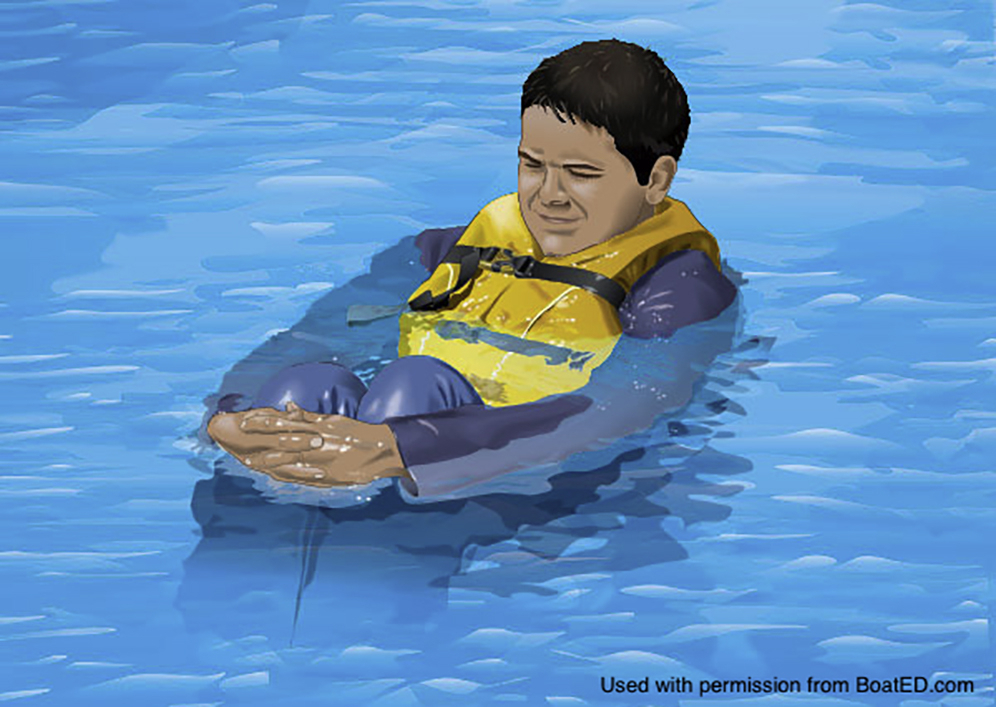
Heat escape lessening position (used with permission from
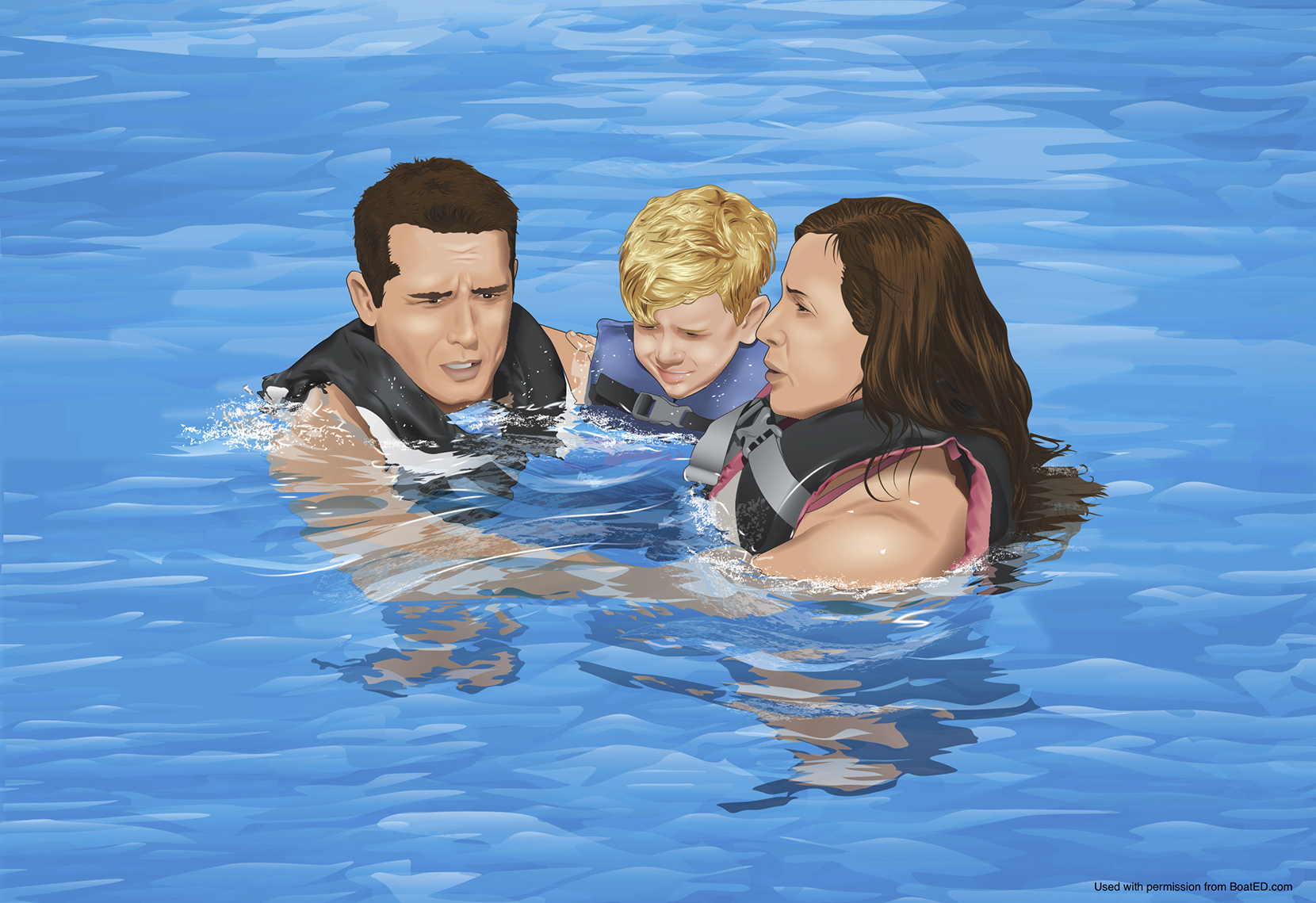
Huddle formation (used with permission from
Swimming or treading water should be limited to minimize heat loss. Life jackets should be worn to aid insulation and flotation. If possible, the ideal location to await rescue is out of the water, even if only partially, to reduce heat loss and delay onset of hypothermia. Prolonged cold-water exposure eventually results in motor disabilities, which can appear within 10 min of immersion, making advanced maneuvers difficult. For this reason, it may be beneficial to affix one’s body or clothing to a floating object using rope, or freezing clothing to the ice surface if exit is not possible. Prolonged immersion will also eventually lead to cognitive disabilities, rendering decision-making difficult.
Should a person decide to swim to safety, some important physiologic changes may occur. The initial cold shock, which lasts seconds to a few minutes, may prompt gasping and hyperventilation and can have a disorienting effect, making self-rescue attempts difficult. Upon immersion in cold water, if no immediate life threats are present, a person should focus on remaining calm and controlling breathing by taking slow, deep breaths. Once a person is able to obtain his or her bearings, he or she may have far less than 10 m of effective swimming, and up to 1 h of consciousness, before succumbing to hypothermia. All of these statements assume the person is wearing an appropriate lifejacket. Further detailed discussion of the science behind cold water immersion is available in chapter 8 of Wilderness Medicine (7th edition). 30
Recommendations: Upon falling into cold water, distance oneself from any immediate life threats (eg, fire, sinking vehicle, whitewater, hazardous waves, rocks). Then, remain calm and focused and control breathing by taking slow deep breaths. Consider physical capabilities, location, resources, and chances of rescue to determine whether to swim to safety. If a decision is made to swim to safety, this should be done as soon as possible before physical capabilities deteriorate from the effects of cold stress. If a decision is made to await rescue, an attempt should be made to remove as much of the body from the water as possible. All clothing should remain on, unless it hampers buoyancy. Most clothing does not compromise buoyancy and will not pull one down, although the water within the garment may impede movement. If the person remains immersed and has a flotation garment on, the heat escape lessening position should be maintained if possible. In a group, the huddle position may be used. If prolonged rescue is expected, it might be beneficial to attach oneself to a buoyant object or to a surface out of the water to improve the chance for survival.
Conclusions
Drowning is a process with outcomes ranging from no morbidity to severe morbidity to death. The most important aspect of treatment is to reverse cerebral hypoxia by providing oxygen to the brain. Drowning prevention can be effective and should be thoroughly deployed.
Author Contributions
All authors contributed to drafting, revision, and approval of final manuscript.
Disclosures
The authors report the following disclosures. AS, JS, and SH are directors of Lifeguards Without Borders. SH is Medical Director for Landmark Learning, Starfish Aquatics, and North Carolina State Parks as well as owner of Hawk Ventures. TC is Section Editor for WMS Practice Guidelines. AA and PA have no disclosures to report.
Financial/Material Support
None.
Footnotes
Supplementary materials
Supplementary data to this article can be found online at https://doi.org/10.1016/j.wem.2019.06.007.
References
Supplementary Material
Please find the following supplemental material available below.
For Open Access articles published under a Creative Commons License, all supplemental material carries the same license as the article it is associated with.
For non-Open Access articles published, all supplemental material carries a non-exclusive license, and permission requests for re-use of supplemental material or any part of supplemental material shall be sent directly to the copyright owner as specified in the copyright notice associated with the article.
