






Abstract
Introduction
Human encounters with the cougar (Puma concolor) are rare in the United States but may be fatal.
Methods
We performed a retrospective analysis of cougar attacks in the United States. We asked Fish and Wildlife Department officials from the 16 states in which cougars are known to live to identify all verified cougar attacks recorded in state history. Variables describing the human victim, cougar, and conditions surrounding the attack were recorded. The Fisher exact test was used for comparison.
Results
Ten states reported 74 cougar attacks from 1924 to 2018. Persons less than 18 y of age were heavily represented among victims; 48% were <18 y old, and 35% were less than 10 y old. Attacks were more common in the summer and fall months. Most attacks occurred during daylight hours. The head, neck, and chest were the most common anatomic sites of injury. Sixteen (46%) victims were hospitalized after being attacked, among the 35 victims with these data available. Eleven (15%) attacks were fatal among 71 reports with this information. None of the hospitalized victims died (P=0.02). No victim variables were predictive of death.
Conclusions
Cougar attacks are uncommon but can be fatal. Attacks commonly affect children and young adults, although all age groups are at risk of attack and death. Most attacks occur during the daytime in the summer and fall. As development and recreational activities put humans in closer contact with cougars, establishing validated public health messaging is critical to minimize injurious encounters.
Introduction
Encounters with Puma concolor—regionally known as the cougar, mountain lion, puma, Florida panther, cat-of-the-mountain, or catamount—have been described as increasing. 1 –3 Cougars are one of the 2 big cats that inhabit the United States (the other being Panthera onca, or the jaguar). 4 Cougars are known to populate the western United States in addition to a small population in Florida. 5 Ubiquitous and adaptable, cougars have been found as far north as Canada and as far south as Argentina. 6 Although cougars typically inhabit steep, mountainous terrain, they occasionally venture into suburban or urban areas. Despite their proximity to humans, cougar encounters and attacks are rare because of both their reclusive nature and their large range. 1 Although the risk of encountering a cougar is low, when visiting cougar habitat, travelers can use recommended strategies to minimize their risk of a confrontation. 1 Given projected increases in the frequency of cougar encounters, we sought to describe the epidemiology of cougar attacks on humans to augment public health messaging.
Methods
We performed a retrospective analysis of cougar attacks on humans in the United States. Officials from the 16 states that cougars are known to inhabit were contacted by e-mail and by phone call. State Fish and Wildlife Department officials were asked to identify all verified cougar attacks in recorded state history. Victim variables assessed included age, sex, month of attack, if the attack occurred in a suburban or urban area, the activity in which the victim was involved at the time of the attack, if the victim was alone, what anatomic site was injured, if the victim was hospitalized, and if the attack was fatal. A narrative description of each attack was sought and recorded, when available. Variables assessed for the cougars included age and sex of the cougar and if the cougar was killed as a result of the attack. We defined an attack as any aggressive behavior by a cougar toward a human that resulted in contact between the cougar and human. A near-attack was defined as aggressive behavior by a cougar toward a human without physical contact. A residential attack was one that occurred within a subdivision or in a peridomestic space (a space is an area immediately adjacent to human dwellings). Anatomic sites of injury were coded independently. Injuries incurred through interactions with captive cougars were excluded. The Fisher exact test was used for comparison, with P <0.05 considered significant. Stata 12.0 (StataCorp, College Station, TX) was used for all statistical analyses. Stanford institutional review board approval was obtained for this study.
Results
Ten states (Colorado [n=20], Washington [n=20], California [n=15], New Mexico [n=6], Montana [n=3], Nevada [n=3], Utah [n=3], Idaho [n=2], Oregon [n=1], Wyoming [n=1]) provided data for review. A total of 74 cougar attacks were identified from 1924 through 2018 (Figure 1). Patient age was 22±18 (2–10) y (mean±SD with range), and 51 (69%) victims were male (Table 1). Persons less than 18 y of age were heavily represented among victims; just less than half of victims were less than 18 y of age (48%), and 35% were less than 10 y old (Figure 2). There was only 1 attack in a person aged >65 y. Attacks were more common in the summer and fall months (Figure 3). Most attacks occurred during daylight hours; only 2 (12%) of 17 attacks for which timing was recorded happened before 1000 or after 2000. Ten (17%) attacks occurred in residential areas. The most common activities victims were doing at the time of attack were hiking (n=20, 35%), performing peridomestic activities (n=9, 16%), hunting (n=8, 16%), and jogging (n=5, 9%). Attacks also occurred when victims were playing by streams or rivers and while victims were walking with domestic animals, mountain biking, working, camping, or snowshoeing. Half of all victims were alone when they were attacked: 100% of joggers, 56% of persons attacked in peridomestic spaces, and 38% of hikers were alone at the time of attack, although these percentages were not statistically significant (P=0.3). The head and neck (n=12, 50%) and chest (n=12, 50%) were common sites of injury (Figures 4 and 5). There was no association between site of injury and age. Of the 74 attacks, 5 were near-attacks. Of the 35 victims with available data, 16 (46%) were hospitalized after being attacked. Eleven (15%) attacks were fatal among 71 reports with this information. Although 7 (64%) of deaths occurred in persons 18 y or older, this was not statistically significant. No other victim variables were predictive of death. None of the hospitalized victims died (P=0.02).
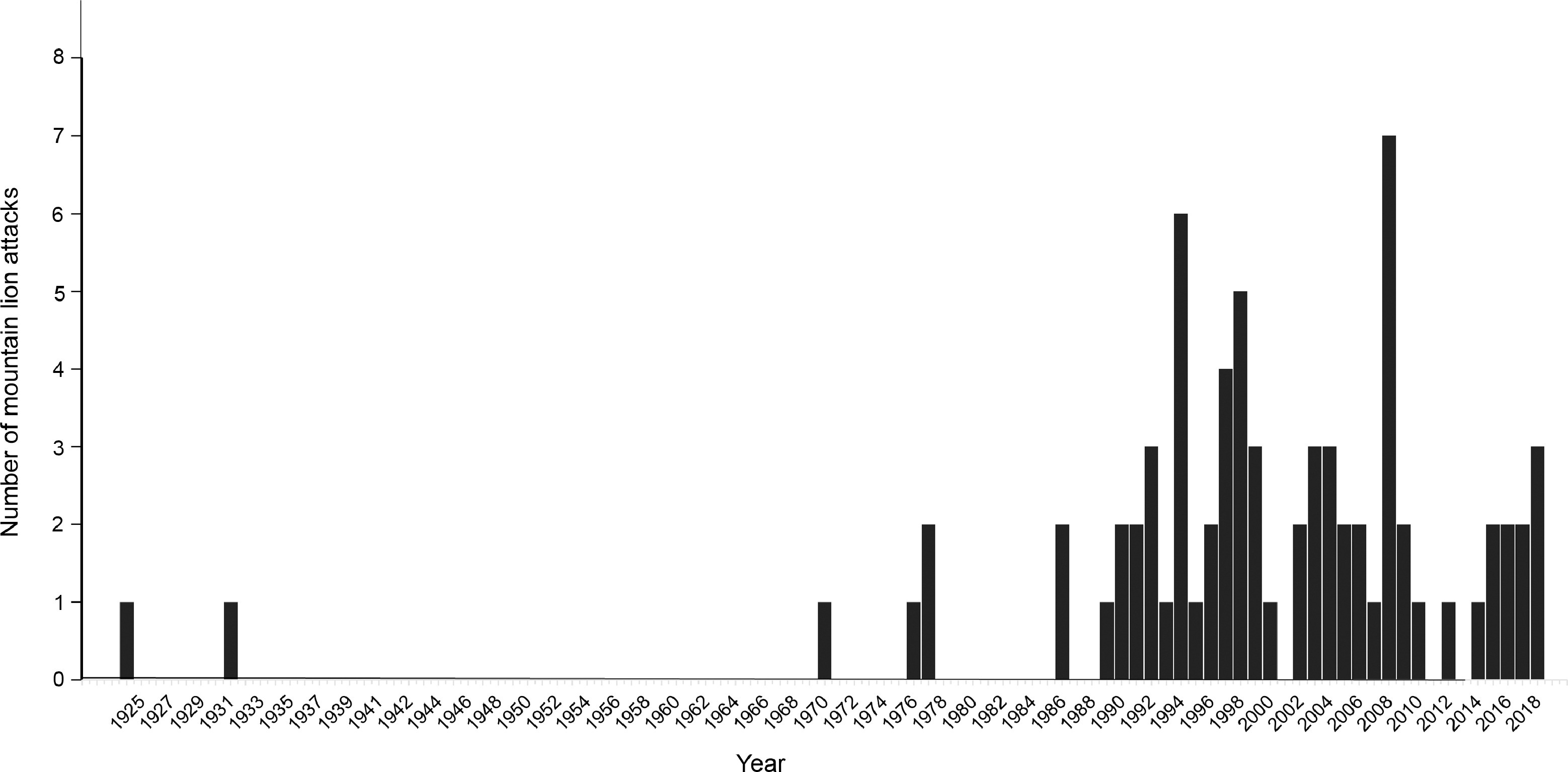
Number of mountain lion attacks by year – United States, 1924–2018.
Mountain lion attacks in the United States
P<0.05.
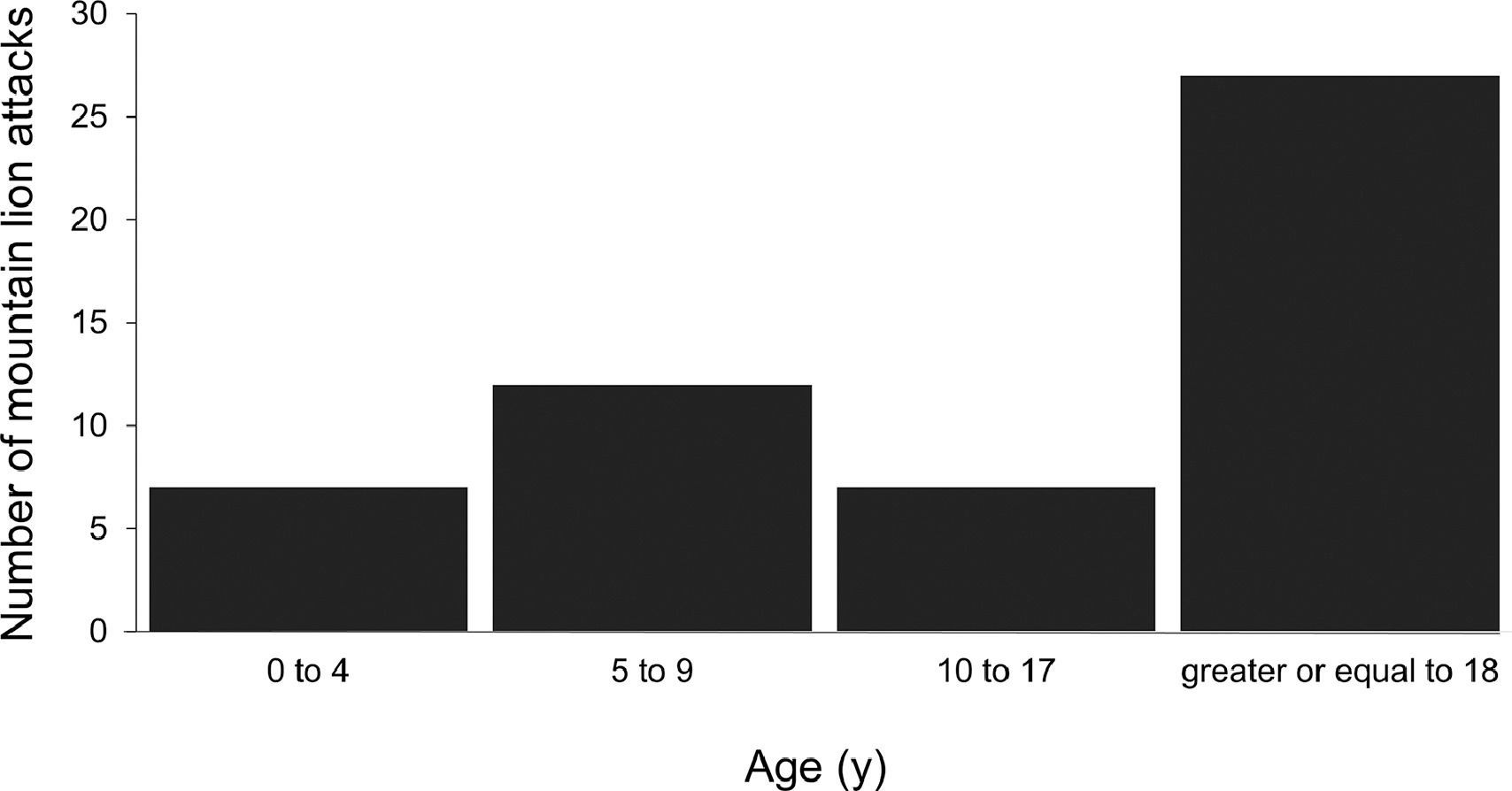
Number of mountain lion attacks by age group – United States.
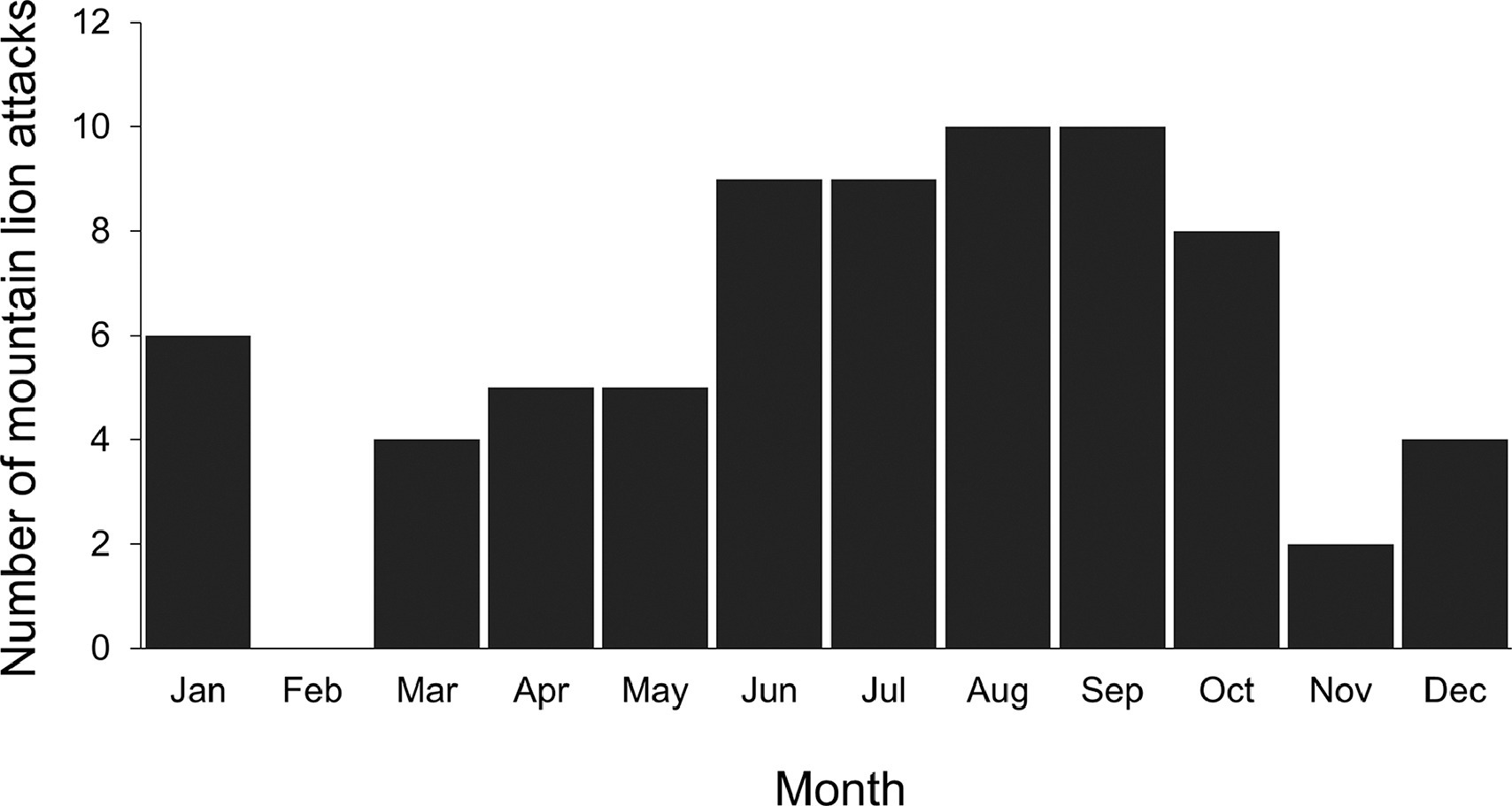
Number of mountain lion attacks by month – United States.
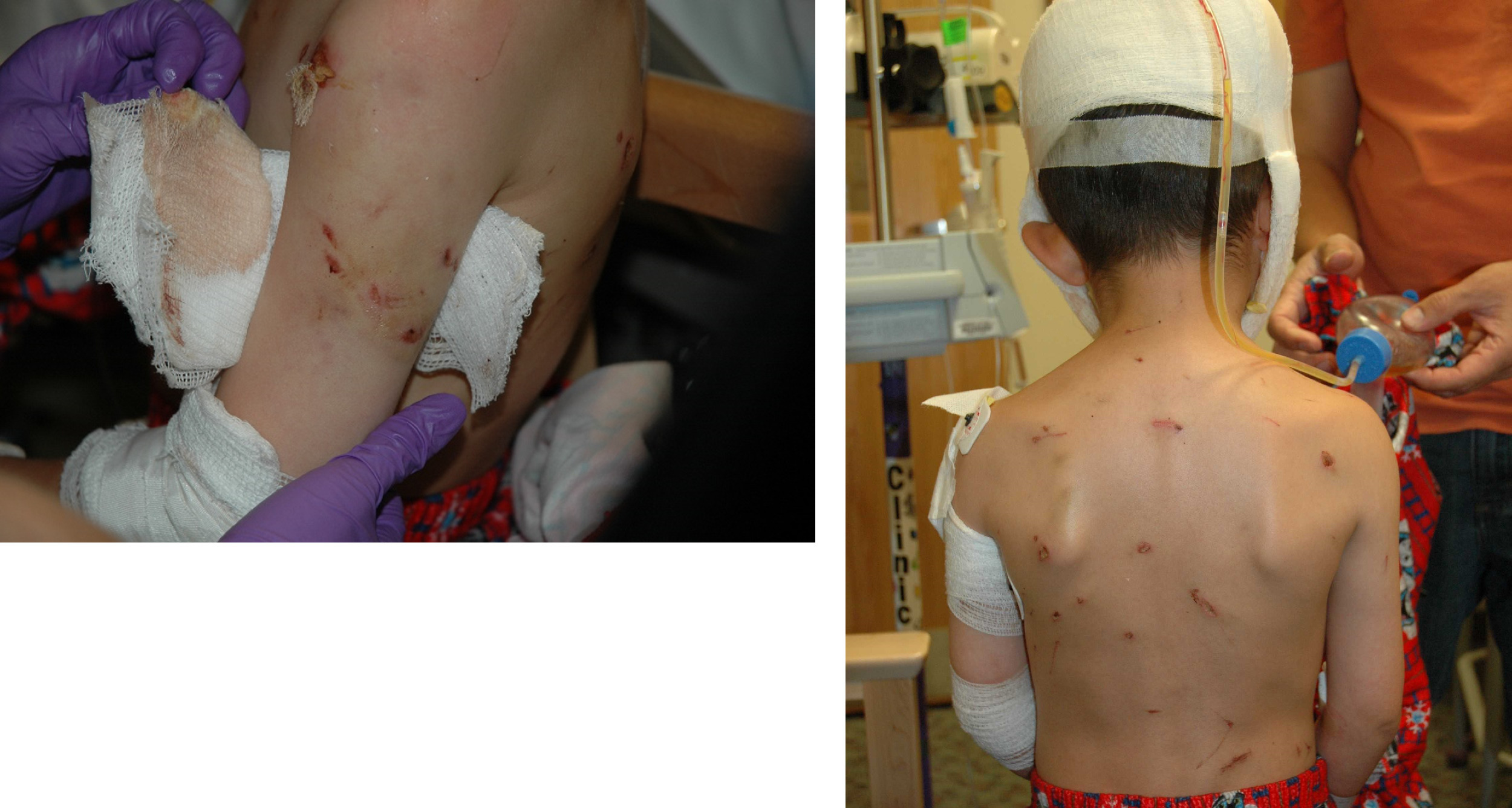
Child attacked by cougar. (Left) Puncture and scratch wounds on young male after attack. (Right) Same child as upper left; puncture and scratch wounds on back, injuries to scalp covered with bandage. Photographs courtesy of New Mexico Fish and Wildlife Department.
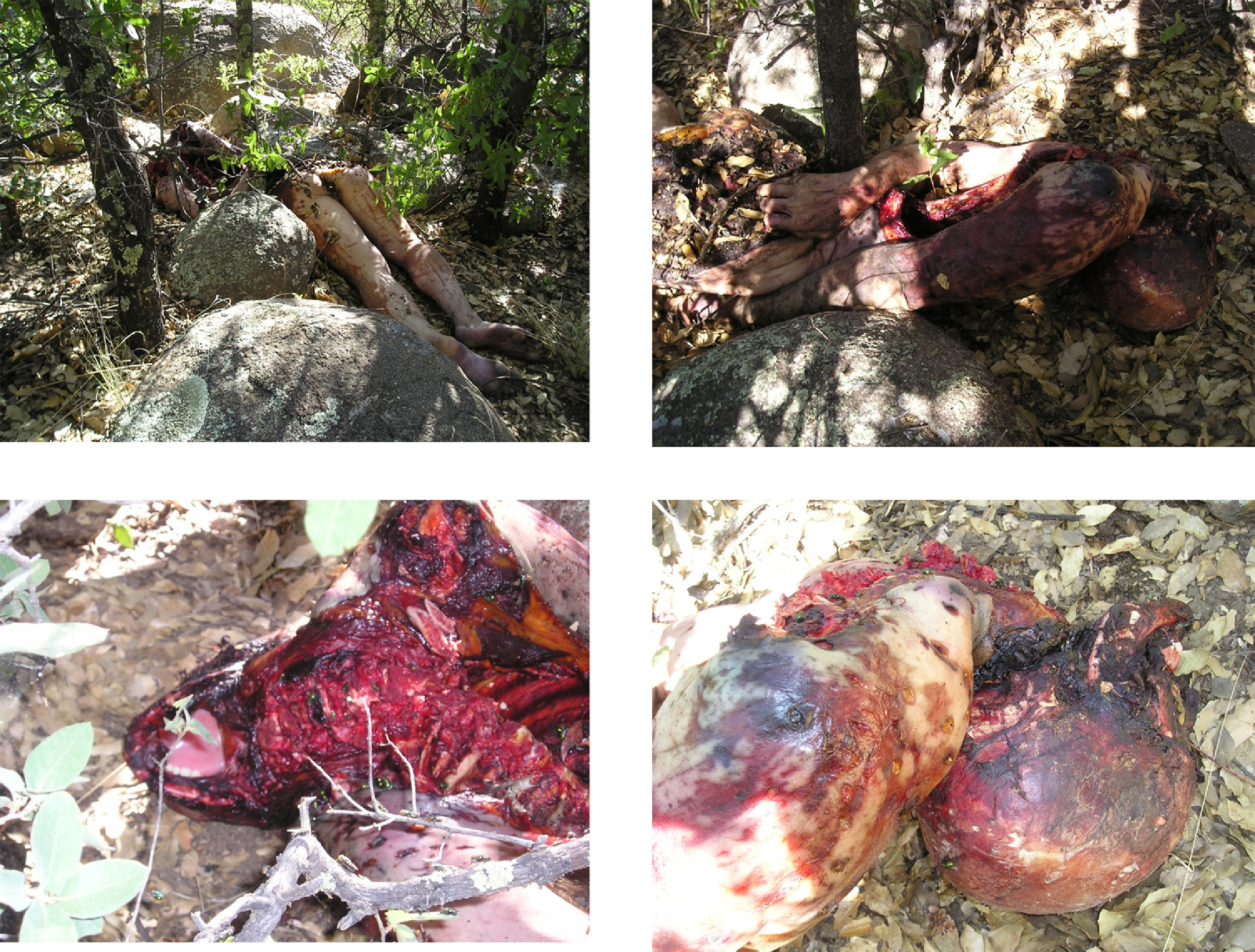
Postmortem images of adult male approximately 2 days after he was killed by a cougar. (Top left) Head to left, feet to right. (Top right) Torso of deceased; note damage to the neck and torso. (Bottom left) Injury to neck and lower jaw. Hard palate visible. (Bottom right) Degloving injury to scalp, absent trachea, and damage to chest. Photographs courtesy of New Mexico Fish and Wildlife Department.
The suspected cougars were identified and killed in 32 (57%) of 56 cases for which this information was available. Of cases with known animal information, 12 (57%) cougars responsible for attacks were male, and mean age was 2 y (range 1–6 y).
Discussion
Each year, approximately 500,000 nonhuman mammalian bite wounds occur in the United States, with only 0.03% of these bites resulting in death. 7 Although cougar attacks in the United States only make up a small percentage of these bites and fatal attacks are exceedingly rare, understanding the epidemiology of attacks is critical to preventing encounters that may be deleterious to both humans and cougars.
There are several potential etiologies for the observed increase in cougar encounters. In the 1900s, cougars were an endangered species on the verge of extinction owing to overhunting. As conservation interventions were applied during the last century, there has been an expected increase in the cougar population.3,8 Larger cougar populations do have some negative effects, particularly upon livestock, which may become a food source in areas where natural prey populations are low or where there is an overabundance of livestock. 5 ,8,9
As humans spend more time in cougar territory for work or recreation, the opportunity for cougar interactions increases. Human residential expansion, particularly suburban sprawl, results in cougar habitat loss, which may fragment habitat.10,11 This fragmented cougar habitat, particularly in areas popular for recreation, may be especially problematic. 12 In these environments, cougars lack natural prey and may alter their preference for quarry. 10 ,11,13 Compounding this, as a result of territoriality, young cougars without established hunting and feeding practices may be forced to more marginal terrain with fewer natural prey and more humans. 14 The preponderance of young cougars seen in the attacks supports this hypothesis and is consistent with other historical assessments. 3
Participation in outdoor recreational activity is increasing. Over 146 million Americans (49%) participated in outdoor recreational activities in 2017, with running, jogging, and trail running being the most common activities. 15 As the proportion of humans to natural prey increases, a greater frequency of attacks is inevitable. Over 80% of attacks occurred during some form of physical activity in the wilderness, demonstrating that untoward encounters are more often a result of humans entering cougar territory than the reverse. Further supporting this hypothesis is the time at which attacks occurred. Most attacks occurred during months and times of peak human outdoor activity rather than peak cougar activity, which is more common at night. 11 This suggests that many cougar attacks on humans may be attacks of convenience rather than specific targeting of humans as prey.
Cougars are ambush hunters that stalk, pounce, and sneak attack their prey. 16 This attack pattern is similar when cougars attack humans. After making contact with prey, cougars focus their attack on the head and neck in an attempt to kill through tracheal injury, cervical spine injury, or hemorrhage; this pattern of injury is also seen among human victims.2,14 Also notable was the consistent injury pattern observed among fatal cases; degloving of the face and neck, thoracic inlet injury, and loss of visceral structures were common findings. 14 The injury pattern observed among victims suggests that many attacks were predatory rather than defensive in nature. Supporting this hypothesis is the near-equal distribution of male and female cougars and the juvenile age distribution of the offending cougars.
Children and young adults made up a considerable number of attack victims in the United States, which is consistent with attack patterns in Canada.2,3 The smaller stature of children and young adults may cause the cougar to perceive them as easier prey requiring less energy expenditure to kill. 16 Historical reports have suggested that children, particularly unsupervised children, were more likely to be victims of attacks. 3 Although only 23% of persons participating in outdoor recreation activities are aged 17 y or younger, 49% of attack victims in our study were in this same age demographic. 15 This suggests that children and young adults may be more likely to be attacked. However, in our data, although a large number of children and adolescents were attacked, there was no statistically significant association between age, being alone, and fatality, findings that are consistent with reports from Canada. 2 Additionally, the age distribution of persons actually in areas at risk for cougar encounter is not defined and may be somewhat different from the age distribution of all persons participating in outdoor recreational activities.
Existing public health messaging on cougar attack prevention focuses on minimizing time spent hiking alone, making noise to prevent surprising a cougar, avoiding fresh kill sites, always having an adult accompany young adults and children, and not traveling in the backcountry with dogs or other animals. 17 –19 There is limited epidemiologic data to support any of these prevention tactics, but they are common-sense methods to minimize encounters. In the event of an attack, not fleeing but backing away slowly, not losing eye contact, making oneself appear large and threatening, protecting the head and neck, using pepper spray, and fighting back have been described as methods to prevent or repel attacks. 17 –19 Again, with the exception of protecting the head and neck, limited epidemiologic data support these methods, although they remain common sense to thwart an attack based on subjective accounts. Additional language that should be incorporated into public health messaging based on our analysis includes 1) reminding outdoor participants to remain vigilant during daylight hours because most attacks occur during the daytime; and 2) emphasizing that even though younger persons may be targeted, adults are also at risk of attacks, including fatal attacks. Finally, reported cougar sightings and attacks should be made available to the general public at the local and regional level in real time, which may augment baseline public health messaging.
There are several limitations to this study. First, not all the state Fish and Wildlife Departments we queried participated in the study. Although multiple efforts were made to capture all states with known cougar populations, unfortunately some states (Arizona, Florida, Nebraska, North Dakota, South Dakota, and Texas) were unable to provide data. Findings from this study may be difficult to extrapolate to all states with cougar populations. Second, there is likely underreporting of minor encounters or near attacks, which may falsely elevate the case fatality rate. For all the states that that submitted data, cougar encounter reporting is encouraged but not mandatory for most encounters. Only in the event that the offending cougar is killed must the cases be reported. Case reporting practices likely varied over time, and it is possible that the increase in the number of attacks observed in our series and others is more a reflection of more comprehensive case capture than a true increase in cases. However, our study, taken in the context of prior studies, suggests that a true increase is likely. 3 Third, recall bias of attacks was possible, which could have led to overestimation of the severity of attacks. Because attacks were deidentified in accordance with data use agreements, no first-person verification of attack conditions was possible. In fatal cases without eyewitnesses, inferences about attack circumstances were made by investigators, which could bias results. Fourth, information about postattack medical care was rarely available, so no long-term morbidity data or data regarding common microbiological flora of attack wounds were assessed. Readers are directed to available references for additional information regarding postexposure rabies prophylaxis, antimicrobial therapy, and wound management. 20
Conclusion
Cougar attacks are uncommon but can be fatal. Attacks commonly affect children and young adults, although all age groups are at risk of attack and death. Most attacks occur during the daytime in the summer and fall and can occur when victims are recreating in wilderness or suburban settings. Victims most commonly sustained injuries to the head, neck, and chest. As development and recreational activities put humans in closer contact with cougars, establishing robust public health messaging is critical to minimize injurious encounters.
Footnotes
Acknowledgments
The authors thank the Fish and Wildlife Departments from Colorado, Idaho, Montana, Nevada, New Mexico, Oregon, Utah, Washington, and Wyoming for their correspondence and providing data for this study. California Fish and Wildlife Department data were obtained from
Author Contributions: Data acquisition (YW, JF); data analysis (YW, JF); manuscript writing (YW, TW, JF); critical review (TW, JF).
Financial/Material Support: None.
Disclosures: None.
The abstract of this manuscript was presented at the 2019 Wilderness Medical Society Conference, July 20–24, 2019, Crested Butte, CO.