






Abstract
Objective
There is widespread and longstanding use of dogs in land search and rescue (SAR) operations, and their effectiveness is well accepted within the SAR community. However, very little published research exists that quantifies that effectiveness within a realistic SAR environment.
Methods
This study included 25 experiments, conducted between October 2013 and February 2014 with 10 dog/handler pairs, using randomized target placement to calculate the ratio of hits, misses, and false positives per dog. Each dog was fitted with a GPS receiver to record their paths and ambient temperature. Wind strength and humidity were recorded throughout each run.
Results
There was no identifiable correlation between humidity, temperature, or wind speed and effectiveness, but the age of the dog has a small positive correlation. Using a standard effectiveness formula, basic descriptive statistics were generated, which showed that the dogs tested were 76.4% successful overall, with an effectiveness of 62.9%. Dogs covered a mean distance 2.4 times greater than their human handlers but travelled at roughly average human walking speed.
Conclusions
This work represents a first attempt to quantify and understand levels of performance in lowland search dogs, and these results need to be understood within that context. A repeatable experimental framework has been demonstrated and provides a foundation for further work in this area.
Introduction
It is well accepted that St Bernard dogs were used by monks in the Alps to rescue lost and injured travelers as early as the 1600s, 1 –3 and before the First World War, search dogs were used to locate incapacitated soldiers. But it was not until World War I (1914–18) that the use of search dogs was officially documented 4 with military dogs being used to locate the wounded and deliver first aid supplies. Today, much of the civilian search and rescue (SAR) training is centered on techniques used in the training of military dogs during World War I and World War II, 5 with dogs also frequently used to detect invasive species, contraband such as drugs or tobacco, explosives, DVDs, contamination in fish tanks, and even cancerous cells. 6 –9
The utilization of search dogs has been built on the advanced olfactory capability of dogs, which is somewhere in the region of 10 parts per billion. 10 There is an obvious desire for organizations to quantify the performance in detection, but restrictions on experimental effectiveness related to environmental and biological factors result in this not being carried out as often or as systematically as possible.
The biological factors relate to the fact that the dog is not an electronic or mechanical sensor that can be relied on to perform with the same characteristics over a large number of tests. Simply put, sometimes dogs have “bad days” or may miss a target for an unknown reason.
Environmental factors arguably have a greater impact when carrying out research into scent detection, especially when all environmental conditions cannot be completely controlled. It is reasonable to assume that wind direction and speed, humidity, and temperature have an impact on the way scent moves through the air, meaning that any miss may be attributable to a lack of constant scent rather than a detection error. 4 ,11,12 Furthermore, carrying out research in public spaces creates the risk of scent from other animals or other humans contaminating the scene and confusing the dog.
The long use of dogs in SAR supports their effectiveness and there have been notable successes 13 ; however, there is currently no standardized method to evaluate the effectiveness of these dogs. Furthermore, there is speculation that the dogs may actually be demonstrating a form of “Clever Hans” phenomenon, in which the handler consciously or unconsciously gives cues to the dog about the location or existence of a target. 14
The aim of this study was to create a structured test bed to evaluate 2 key points; the success rate and the effectiveness of search dogs used for lowland search and rescue. In the United Kingdom, the term lowland SAR concerns SAR work on land, not on coastal cliffs or in mountainous regions. In addition, a number of environmental factors were recorded to test any potential relationships with success or effectiveness.
Methods
The dogs used in this study are classed as air-scenting search dogs, as opposed to trailing and tracking dogs. This means that the dogs are trained to detect traces of human scent within the air and follow it to the source, where the scent is most concentrated. Owing to the nature of this technique, the search dogs must be able to stay on the scent’s path despite varying atmospheric conditions.
Eight routes were identified on 2 sites (Figure 1), which represented a typical “route and path” 15 –17 search route that a dog team could be asked to search in a real event. The routes were all originally designed to be approximately 1.1 km in length, although this varied slightly when alternative routes were used in case of impassable paths or navigation errors on the part of the research facilitators. Table 1 shows the full list of routes, route lengths, and locations.
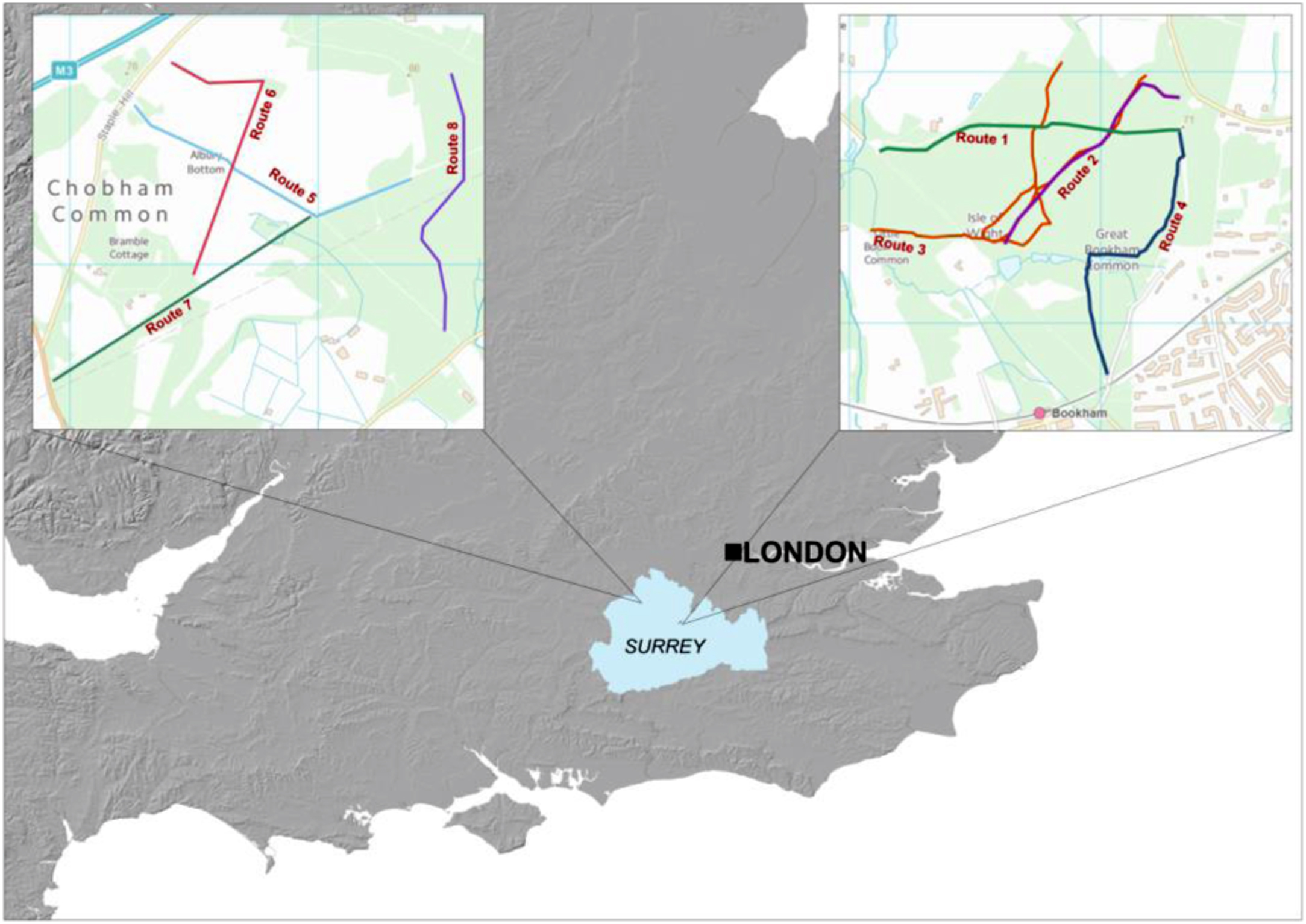
The routes and locations of the two sites.
Location, route number and length of each test run
Ten dog and handler pairs were recruited from UK lowland search and rescue teams. Each pair was tested against a minimum of 2 routes, ideally over 2 different test days, with a maximum participation of 8 routes over 8 testing days (Table 2). Routes were assigned using a random number generator for each test run.
Results and environmental data for each experimental run
Live human targets were placed along each route, with their number, distance along the route, and position to the left or the right of the route randomly determined. Each target was placed between 25 and 30 m from the path edge using a surveying tape measure.
Humidity, as a percentage, temperature in degrees Celsius, and wind speed in meters per second were measured at the beginning, middle, and end of each route (Table 2), using a Kestrel 4000 pocket weather meter (Nielsen Kellerman, Chester, PA). The Kestrel series of weather meters is widely used within environmental research, and has been shown to be effective in a wide range of environments. 18
Before each test run, a GPS tracker was attached to the dogs’ collar or harness, and humidity, temperature, and wind speed measured. The dog handler was asked to describe what their dog’s alert was so that the experimenters would be able to identify it; handlers were also asked to notify the experimenters when they considered their dog to be “working scent” (ie, following a scent plume), if appropriate to do so. An alert is a specific action, such as a jump or bark, that the dog is trained to perform when they believe that they have found the target.
Each test run was timed, and the experimenters followed the dog and handler at a distance. Any alerts, finds (hits), and misses by the dog and the time were recorded by the experimenter. On some occasions dogs incorrectly alerted when no target was present, which was recorded by the experimenter as a false alert.
Wind speed, direction, and temperature were measured halfway along each test route and at the end. Dog speed and distance was calculated using the GPS data and times.
Statistical Analysis
Data for each dog/handler pairing were pooled before analysis, and from these data values for both success and effectiveness were calculated.
Success is defined within this paper as the accomplishment of a purpose, the purpose being to find the target. Therefore, success was classified as the number of targets correctly found, calculated as Hits/Potential Targets.
Effectiveness is considered to be the degree to which the dog is successful in achieving this purpose. Thus, effectiveness takes into account the number of false alerts (when the dog alerts but has not found a target, which can distract the dog from the real target) in relation to the number of correct finds. Effectiveness was calculated as follows: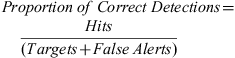
A Hit was recorded if the dog alerted and took the handler to the target. A Miss was recorded if the target was not detected and no alert and repeated find was completed.
A Pearson’s correlation test was performed on the recorded environmental values and the measured effectiveness rates to examine any possible links.
Results
The runs took 37 ± 10 minutes (mean ± SD) to complete. The mean speed of each dog was 4.6 ± 1.6 km/h, with a top speed of 8 km/h. The dogs travelled 2.4 times farther than their human handlers (± 0.79), with a mean of 2767 ± 0.79 m travelled per route.
The dogs tended to travel in a sweeping pattern (Figure 2), branching off the main path at frequent intervals, either in response to a potential scent trail or under the instruction of the handler. In some cases the dogs travelled exaggerated loops or cutbacks, which may be tactics for working into a scent trail to maximize effectiveness.
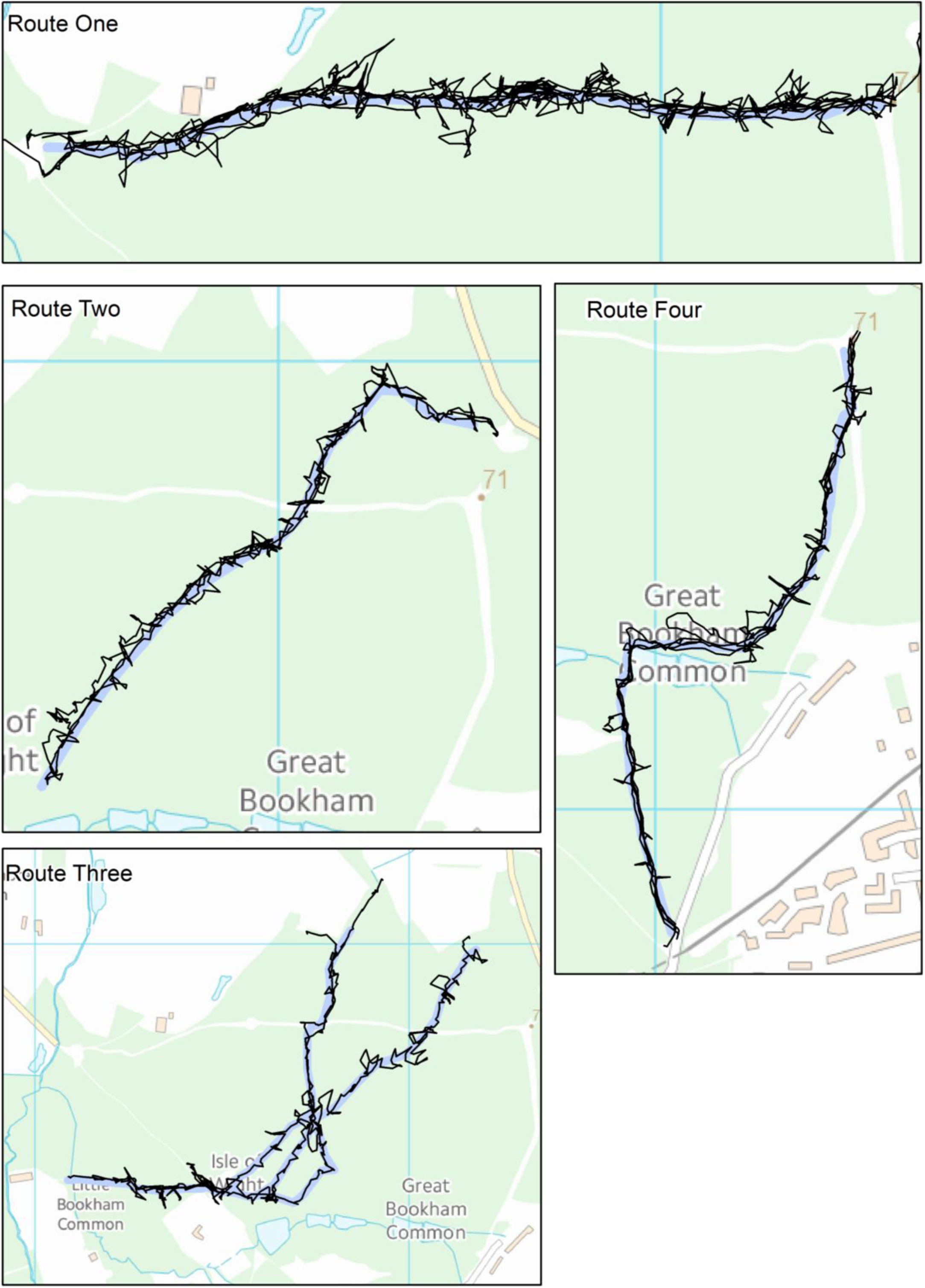
Bookham search routes showing example GPS tracks of dogs along each route. (Chobham routes not shown).
Overall Base Rate Success and Effectiveness
The baseline success rate was 76.4%,5,19 with an effectiveness rate of 62.9%. A difference of more than 10% between the success rate and effectiveness of the search dogs suggests the impact of false alerts could be a significant factor in quantifying overall performance.
Humidity, Temperature, and Effectiveness
There was no significant correlation between environmental factors (humidity, wind speed, and temperature) and search dog effectiveness (all P > .05). A correlation value of r = .38 was identified between dog age and effectiveness, which may be expected as age had a correlation value of r = .49 with operational experience; however, neither was statistically significant (P > .05). The lack of significance may be related to a small sample size.
Discussion
The success base rate of 76.4% is very encouraging and supports the widely held confidence in the abilities of dogs in SAR to find a human. These findings should be extremely useful in regards to expectations from search managers when they deploy dogs, and for training and assessment purposes. A find rate of 4 of 5 is obviously very good, and highlights the usefulness of search dogs operationally, but it does make assessment pass rates of 100% appear to be unrealistically difficult to attain, or at least unrealistic in terms of typical dog success rates. It is also similar to results in preliminary field tests for cadaver dogs (average 81%). 20
The overall success rate is extremely encouraging, but the slightly lower effectiveness rate is of some concern. If a dog gives a false alert on a scent when there is no person present, this could distract the search animal away from the location of the person being searched for. It also becomes tiring for the dog and handler to investigate every false alert, requiring the dog to lead the handler to the source of the scent, and can cause confusion for the search dog when they cannot find the source of the scent. False alerts are taken into account in some assessments of search dogs, but not directly penalized (the assessor may take them into account of the dog’s overall performance). There also appears to be some confusion surrounding what an alert is for, with some assessors taking the view that in qualifying assessments for search dogs, if a dog alerts where there is no human, then this may be valid as the dog could be reporting a scent pool that is of use in the search. The suggestion that scent pools, rather than actual human finds, are a valid positive find must be addressed in training and assessments. If this is to be the future of air-scenting dogs, then 2 alerts could perhaps be used: one to demonstrate an actual find, one to demonstrate a strong scent. However, relying on a handler’s interpretation of a false alert with no other clues is clearly counterproductive, and should be eliminated in training.
No similarly structured data exist for foot teams or for other platforms in terrestrial search (ie, mountain bikes, horses, snowmobiles), highlighting these as areas for further research. This high success rate should be of great use to SAR operators and police in employing dogs in the search for missing or lost people. Without baseline data, evaluating the effectiveness of a search dog in a live search is impossible. Without recorded base levels, the only possible source of information concerning the likely effectiveness of search dogs has been anecdotal evidence from dog handlers or others.
As there are no standardized methods for quantifying search dog performance, it is difficult to compare this result to other sources; however, the Search and Rescue Dog Association (SARDA) claims that in excess of 96% of targets on assessment are found, 21 whereas the Association of Lowland Search and Rescue (ALSAR) requires 100% effectiveness to pass assessment. These figures would suggest that dogs are capable of working at very high performance rates. However, as they are not mechanical devices, these high rates cannot constantly be maintained.
Similar detection field studies carried out into the effectiveness of explosives detection 22 and detection of bat carcasses 23 gave average success rates of 80% and 73%, respectively. These are consistent with the findings of this study, demonstrating that search dogs are a highly valuable asset to search teams but should not be expected to perform at 100% proficiency all of the time.
A lower value of effectiveness, 62.9%, indicates the importance of minimizing false alerts in an operational search environment. During this field study, 1 dog falsely alerted almost every 100 m along the track, which would act as a hindrance during a search. Therefore, although with most dogs if they falsely alerted it only occurred once or twice, this would lower their rate of effectiveness, whether or not they went on to correctly detect the target.
The results of Pearson’s correlation show no or negligible relationship between all environmental factors measured and the effectiveness of the dogs. Despite the fact that wind is believed to be a dominant influence on search dog performance, the correlation between wind speed and effectiveness did not support this. It is feasible that as the highest wind speed recorded was only 4.9 m/s, the winds experienced during the study were not strong enough to significantly impact performance.
Research carried out by Cablk et al 24 indicated that greater wind speed led to greater detection distance of tortoises by trained dogs, but did not cause a decrease in the number of detections. This would suggest that although wind may carry target scent away from the source, trained dogs are able to effectively trace a scent back to its origin.
Likewise, temperature is commonly thought to cause scent to either rise or fall, influencing a dog’s ability to follow scent plumes. Almost all sources that discuss scent plumes state that temperature increases the buoyancy of air, causing lofting or turbulence.4,11 Nevertheless, with the wide temperature range recorded within this study (7°–27°C) it was not apparent that temperature impeded search effectiveness. It is possible that this lack of correlation was related to more complex atmospheric interaction on a wider scale than measured in this study, or required a larger sample size to be detected.
There are several theories on how relative humidity could affect the ability of a dog to detect target scents. Judah 12 suggested that a high level of humidity can be linked to bacterial growth, which could decrease dog scent acuity, whereas other sources have proposed25,26 that humidity can act to improve olfactory sensitivity. However, the findings of this study suggest that there was no significant relationship between relative humidity and effectiveness. The correlation between dog age and effectiveness was r = .38, suggesting there is no decrease in canine olfactory ability with age. This is in contrast to research into the link between age and olfaction acuity within humans, which suggested that the sense of smell decreases with increasing age. 27
The length of time the target has been in place could have an impact on the strength of a scent trail, and there were 2 instances in the current study in which dogs alerted on target sites used for a previous experiment run, suggesting that scent lingers for some considerable time.
Conversely, the mistake could be caused by a training issue; for example, Cablk et al 24 highlighted in their research that training dogs in a terrestrial environment where copious scents were present led to inadvertently teaching a dog to detect impure sources of scent, which could result in confusion between similar scents. Interestingly, in disaster victim rescue dog standards (International Rescue Dog Association), only 1 false alert per run is allowed. 28 However, a detection rate of almost 71% for a complex biological organism in a complex and dynamic search environment is extremely good and reflects well on the capabilities of handlers, trainers, and dogs.
The effectiveness of a search dog is a result of the performance of the dog, but it also rests heavily on the handler. Hebard 29 accentuated the importance of a strong partnership between the dog and handler, going as far as to recommend this as a criterion for a specific assessment. Not only is the handler responsible for training the dog effectively, during searches it is believed that dogs pick up on subtle clues from their handlers, who are often unaware of their influence on the dog’s behavior. It is the responsibility of the handler to correctly interpret their dog’s behavior, making it very important to know when to encourage the dog and when to draw back so as to avoid a false alert. Sargisson and Mclean 30 also reported handlers causing response bias, leading to the occurrence of false alerts.
Training issues also seem to play a part in some observed behaviors, specifically the notion that rotting wood piles have a similar scent profile to humans. Given the materials involved, it would seem unlikely that they do offer similar profiles, but rather it is more likely that dogs who regularly train with targets hidden behind log piles will start to conflate the 2 scents. If the dog is rewarded for finding, even though the find is attributable to the scent of wood rather than the scent of the human, it is unsurprising that they would then replicate that in a live search.
Conclusions
This work represents a first attempt to quantify and understand levels of performance in lowland search dogs, and these results need to be understood within that context. The overall numbers of runs could be construed as low, and any conclusions made from the collected statistics do need to be considered within that constraint. More data are required to provide a broader picture of lowland search dog effectiveness, but the study presented provides a baseline standardized methodology that can be developed further. We recommend further tests, following the same methods, in different locations and environmental conditions and with more breeds of dogs to get a fuller, more comprehensive, picture of basic search dog effectiveness. Base rate data for other search platforms such as mountain bikes, foot teams, and mounted searchers could also be carried out to provide a comparative dataset of base rates across all variables.
Footnotes
Acknowledgments
The authors would like to thank all dogs and dog handlers who contributed their time and goodwill to this project.