






Abstract
Objective
Drinking strategies during long dog sled competitions are important to avoid dehydration. Most of the studies involving dog sled racers (mushers) refer to male subjects. The purpose of this study was to study female mushers participating in a dog sled race of 1044 km, with a focus on hydration and drinking behavior.
Methods
Two female mushers (aged 50 and 23 years), of the 6 who signed up for participation in the dog sled 1044 km race, volunteered for the study. Before the race, maximum oxygen uptake and maximum heart rate (HR) were determined. Body compositions was measured before and shortly after the race. Heart rate was continuously measured by a HR monitor in the first 2 legs of the race, and urine samples were collected during the race. Urine osmolality and urine specific gravity were determined using freezing point depression and handheld refractometer. Values of urine osmolality greater than 900 mOsm·L−1 and specific gravity greater than 1.030 were used as signs of dehydration.
Results
The older musher had a mean HR of 65%, and the younger musher had a mean HR of 57% of the predicted maximum HR. The mushers reached a peak HR of 91% of their predicted maximum; they worked at an average HR of 55% (average of all legs). The younger woman had urine osmolality values above the dehydration limits in most of the samples. Only small changes in the before and after race anthropometric measurements were found.
Conclusions
Dog sled racing is a strenuous activity and drinking strategies are important to avoid dehydration. It seems that the drinking strategy of our subjects was adequate to supplement the hydration loss; yet, emotional arousals occurring during the race may affect drinking behavior. The attentive assistance of the mushers’ handlers is therefore important.
Introduction
In March every year, a continuous dog sled race across the Finnmark Plateau in Norway starts in Alta at 70 degrees North. The race goes through a varied terrain: over hills and steep downward slopes, over lakes and rivers. The snow condition might vary from icy to sugarlike snow. The musher helps the dogs by pulling or kicking while standing on the sledge. The trail is marked with sticks, but the musher might have to navigate owing to the weather conditions. Throughout the race, the participants have to check into several checkpoints every 4 to 10 hours. During the race, there are 2 compulsory stops and a minimum resting time. The 1044 km race takes between 5 and 10 days to complete.
The humidity in the area is very low, which makes the water loss through the respiratory tract significant. The temperature during the race is normally below freezing, making it necessary to wear several layers of insulating clothing and to store liquid in containers. That, along with the driver having to stand on the sled, makes it challenging to drink. Studies have shown that athletes’ voluntary fluid intake is less during winter training than during summer activity, and that the mean dehydration as percentage of body mass is larger during winter activity. 1 Dehydration has been shown to have a negative influence upon physiological and mental performance. In a study done of the Iditarod dog sled race, 2 it was found that the majority of mushers studied showed signs of dehydration. In the 2007 Finnmark dog sled race, we found that 4 of 6 male drivers were dehydrated before the start, and all 6 mushers had urine samples that showed signs of dehydration during the race. 3 Before the 2008 Finnmark dog sled race, information about our findings was given to the participants to sensitize the mushers on undertaking drinking strategies.
In the Finnmark dog sled race there is only a single class, so the male and female mushers are competing together. The participation of female mushers in extreme dog sled races is increasing. Whereas hydration and drinking behaviors in connection with exercise have been widely studied, it seems that only few studies have been undertaken with specific focus on participants in long-lasting dog sled competitions. Furthermore, to date it seems that most of the studies have focused on male mushers. Because a lower thermosensitivity response to exercise has been found in women compared with men, 4 women mushers may have different need in terms of liquid intake compared with the men. The purpose of this project was to study the female mushers participating in the 2008 Finnmark dog sled race, with a special focus of their hydration status and drinking behavior. The aim of the study was to investigate whether the drinking strategies undertaken by these subjects were adequate for supplementing the hydration loss during the race.
Methods
All 6 female mushers who were on the list of participants between February 11 and 17, 2008, were contacted by e-mail, and invited to take part in the study. Two female mushers (ages 23 and 50 years old) volunteered for the study and provided written consent before participating. The project was approved by the Regional Committee for Medical and Health Research Ethics, Northern Norway.
Both of our volunteers had participated and completed the race before, although the younger woman had only finished it once. The older woman had completed the Finnmark race 10 times, and she had also completed the Iditarod in Alaska.
Shortly before the race, the subjects were weighed in their underwear on an electronic scale and their height was measured standing upright without shoes, along a premeasured wall. To measure body composition, we used Lafayette skinfold calipers (Lafayette Instrument, Lafayette, IN) taking skinfold measurements at m. triceps, m. biceps, m. subscapular, m. and suprailiac, according to the procedure described by Heyward. 5 The values were used to calculate the body fat using linear regression equations for estimation of body density from the logarithm of the skinfold thickness, developed by Durnin et al. 6 (Body density = C − M × log skinfold. Note: C and M are age and sex dependent and change with the number of skinfold places used. We used the sum of 4 skinfolds: biceps, triceps, subscapular, and suprailiac.) Fat mass was also measured using bioelectric impedance analysis, hand to hand (Omron BF 302, Omron Healthcare Europe BV, Hoofddorp, Netherlands). A measuring tape was used to measure the circumference of the upper arm, torso, and thigh using the protocol described in McArdle et al. 7 The same anthropometrics were taken shortly after the race.
After the anthropometric measurements, the subjects performed a maximal cardiopulmonary test for the determination of their maximal oxygen consumption (VO2max), by direct measure of respiratory gases using Vmax 29 with mixing chamber (Sensormedics, Yorba Linda, CA). The test protocol asks for running on a treadmill with increasing speed 1 km per hour every 30 s until the respiratory exchange ratio is greater than 1.1; then the speed was maintained until exhaustion. During testing, heart rate (HR) was monitored using a Polar S810i monitor (Polar Electro Oy, Kempele, Finland), epoch length 5 s. Maximum heart rate (HRmax) was determined as the highest HR value measured during the test.
The subjects collected urine samples on the morning of the race and at the checkpoints as often as they were willing to. The handlers (the musher’s helper at the checkpoint) had sterile, sealed urine covers and were instructed to try to have the subjects collect urine samples as soon as possible after the musher had reached the checkpoints; and if the musher took a longer rest, as soon as possible after waking up, before drinking or eating. The exact times for sampling were recorded, and the samples were frozen as fast as possible. The subjects were also asked to take urine samples 24 hours after the race, and again after 6 to 9 days. The subjects used a Freshette (International Sani-fem, Downey, CA) to get the urine samples into the urine covers. The samples were kept frozen until they were analyzed for urine specific gravity (Usg) by refractometer, and for urine osmolality (Uosm) by freezing point depression (Osmomat 30, Gonotec, Berlin, Germany), at the University Hospital in Tromsø, Norway. Following standards set by Shirreffs, 8 we used Uosm greater than 900 mOsm L−1 and Usg greater than 1.030 as cutoff points for dehydration.
The helpers kept a record of the mushers’ food and drink intake through the whole period of the race. As soon as possible after checking in to the checkpoint, the helpers measured the mushers’ rating of perceived exertion (RPE) using a scale from 6 to 20, where 6 corresponds to extremely light and 20 corresponds to extremely hard. 9 During the race, the musher wore a Polar watch with belt (S810i, Polar Electro, Kempele, Finland) to monitor and record HR, with the memory set to 60 s. The Polar watch was synchronized with the official race time used for checking in and out at the checkpoints. Data from the memory were transferred to a personal computer using the appropriate interface. Artefacts (HR = 0 or HR >HRmax) were removed from the HR dataset. The HR data were then analyzed using the Polar Precisions Performance software (Version 2.02.006, Polar Electro) computing the HR mean value, HR standard deviation, HR minimum value, and HR maximum value on each leg for each musher. For the mean HR, we also calculated a relative value as percentage of the individual maximum HR (%maxHR). The individual variables and their development throughout the race are presented in tables or as histograms, and the values for the 2 mushers are compared.
Along with the quantitative measurements (urine sample, food and drink intake, HR values, and RPE), the personal experiences of the subjects were monitored by following them all over the race track, and engaging in regular conversation with them in their breaks at the checkpoints.
Results
Only the older woman finished the race, whereas the younger one, because of problems with the lead dog, had to withdraw from the race at the 765th km, which was covered in 82 hours and 39 minutes.
Figure 1 shows the daily recorded fluid intake for the 2 mushers. From this, we can see that the older woman had a much larger total intake than the younger one on all days. Table 1 shows the anthropometric measures taken before and shortly after the race. Only small changes occurred, with decreases in fat content and increases in the specific gravity in both subjects. Details about the race speed and the duration of the breaks are shown in Table 2, and the work heart rates during the first 3 legs are shown in Table 3. The RPE for the 2 mushers when arriving at the different checkpoints are shown in Figure 2. The younger woman, in general, tended to report higher values for the RPE as the race went on, except for the second ratings, which were lower than the first, whereas the older woman tended to report lower values as the race proceeded.
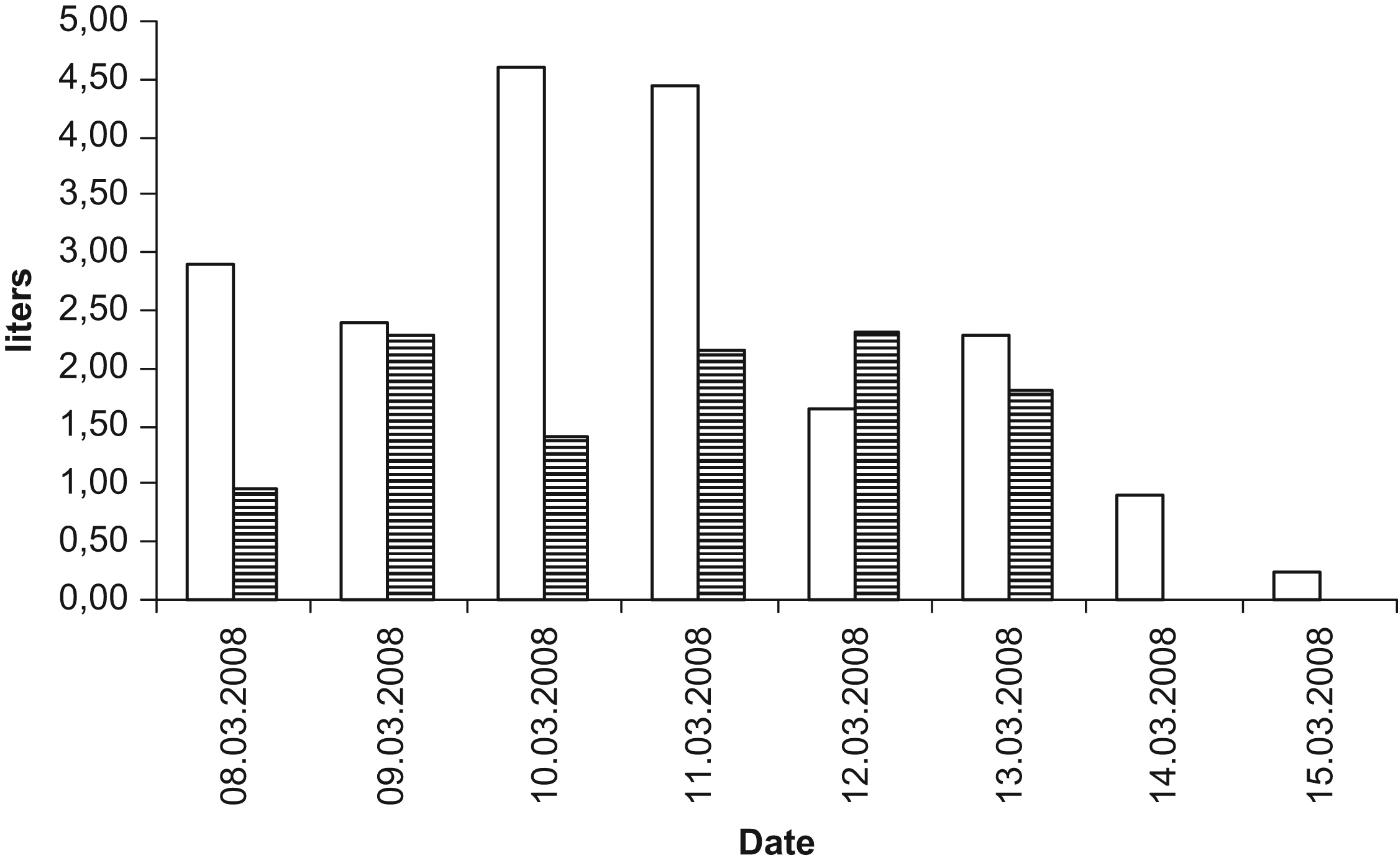
Recorded intake of liquids (open bars represent older subject; dark bars represent younger subject). Fluids in the food are not included nor are the recorded fruits and yoghurts (older musher). For the younger musher, 4.75 L consumed between the checkpoints was added 1 month after the race based on her memory of consumption.
Anthropometrics in 2 female mushers aged 50 years and 23 years before and after participation in the Finnmark 1044 km dogsled race
Time used between each checkpoint and the rest time at the different checkpoints
Results from the official race list (
Heart rates during the first 3 legs of the 2008 Finnmark dog sled race
Heart rates recorded with polar 810si watch; no pause on checkpoint A. HR, heart rate; max, maximum; bpm, beat per minute; avg, average; min, minimum.
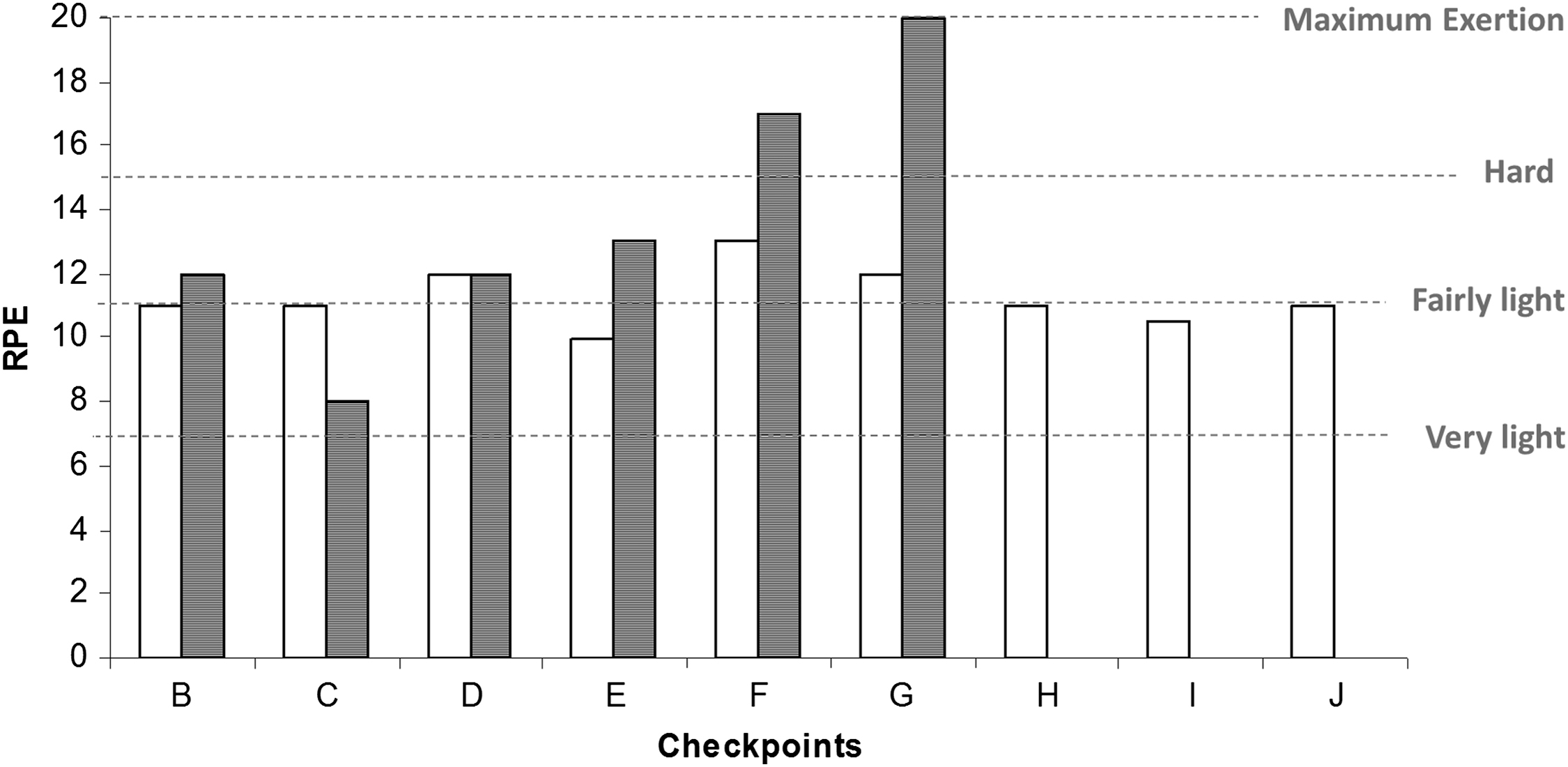
Rate of perceived exertion (Borg RPE) when arriving at the checkpoint (open bars represent older subject; dark bars represent younger subject).
A total of 25 urine samples were collected. Figure 3 shows the date and place for sampling, and Figure 4 shows the results of the analyses. The older woman had values below the set cutoff point for dehydration (Uosm >900 mOsmol/L or Usg >1.030) at all times, whereas the younger woman had values above the osmol cutoff point at all times, except before the start and after a long rest at checkpoint G. The Usg values were between the values set as euhydrated (Usg <1.02) and dehydrated (Usg >1.03).
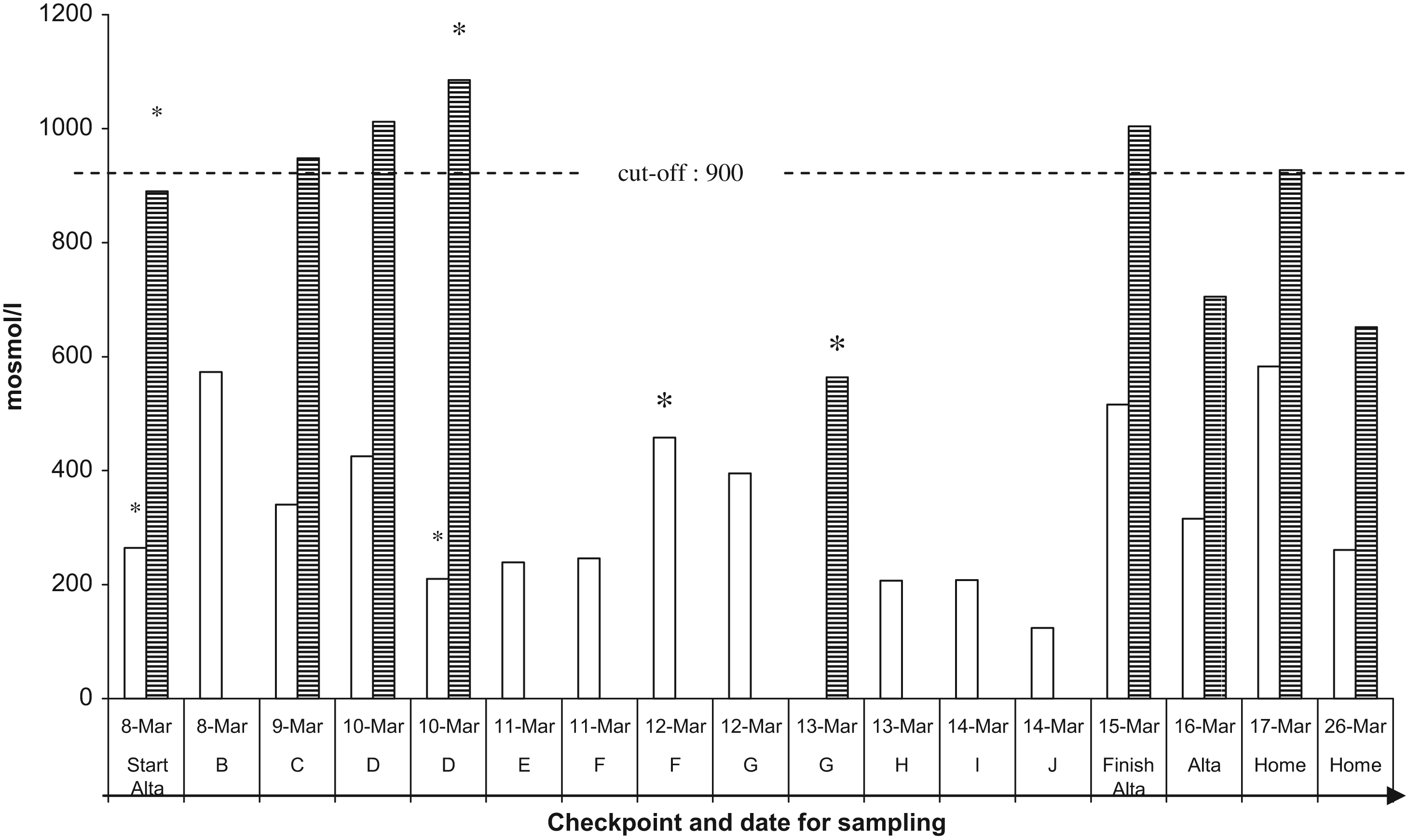
Urine osmolality (mOsm/L) at different times of the race for the 2 mushers (open bars represent older subject; dark bars represent younger subject). The cutoff line for dehydration is marked. Urine samples with a value above that are considered to come from a dehydrated person. Bars marked with * are sampled after more than 4 hours’ rest, as are the samples after March 16.
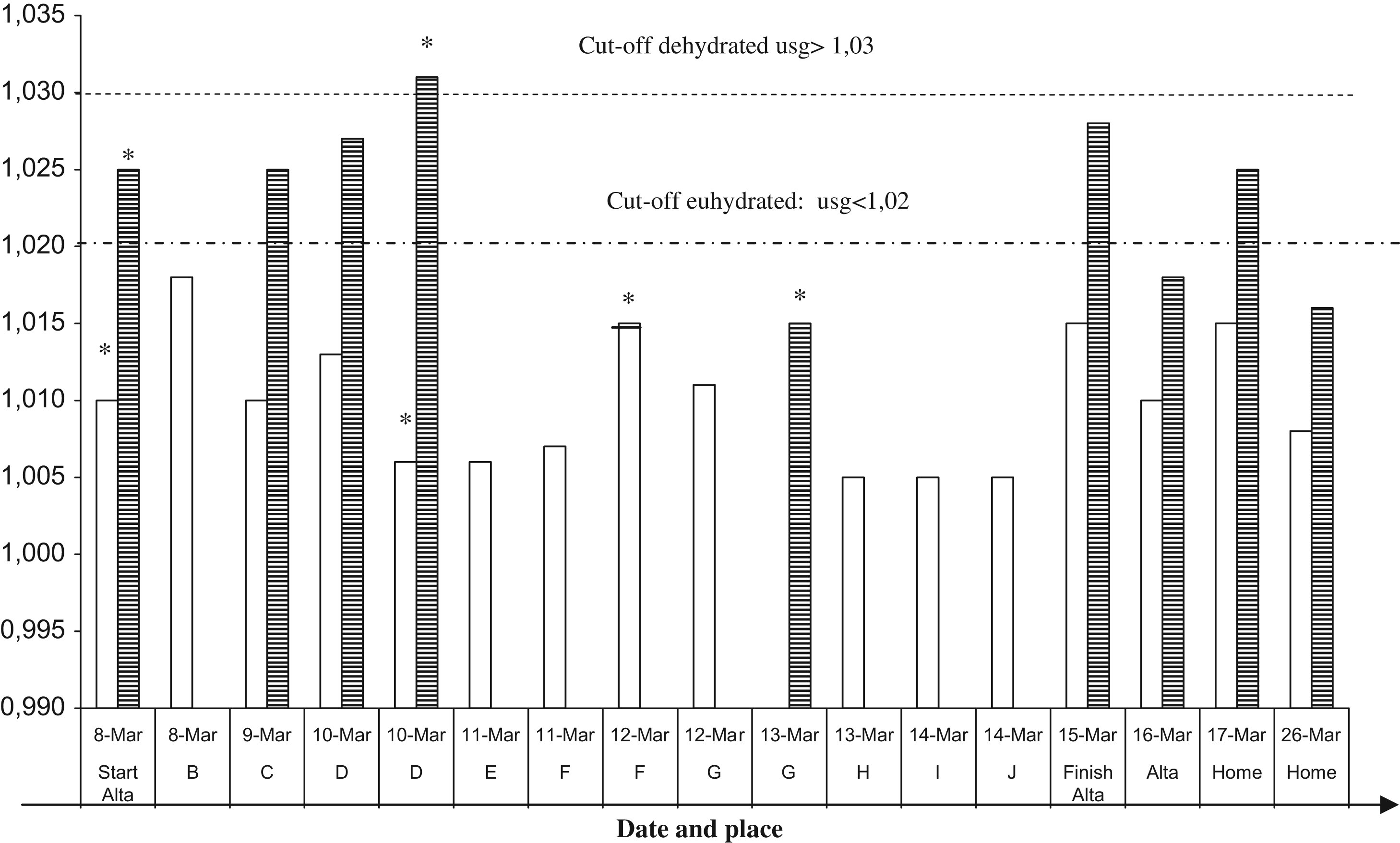
Urine specific gravity (Usg) at different times of the race for the 2 mushers (open bars represent older subject; dark bars represent younger subject). The cutoff line for dehydration (Usg >1.03) and euhydration (Usg <1.02) is marked. Bars marked with * are sampled after more than 4 hours’ rest, as are the samples after March 16.
Discussion
We chose to use the common value of Uosm >900 mOsm L−1 and Usg >1.030 as cut-off-points for dehydration. 8 According to the American College of Sports Medicine Exercise, 1 exercise and fluid replacement, Uosm less than 700 mOsm L−1 and Usg less than 1.020 are indicative of being euhydrated. Values between these cutoff points might be said to be borderline. Urine values can give false information about the hydration status, especially if the sample is obtained during the rehydration period. If a dehydrated person drinks large volumes of fluid, this person will have Usg and Uosm values that reflect euhydration, when in fact the person is still dehydrated. 1 That could be a factor in our study, but we tried to have our subjects give their urine samples before excessive drinking and shortly after arriving to the checkpoints. From the results, we can see that the younger woman had her highest Usg and Uosm values after her first long rest (checkpoint G, Uosm = 1085 mOsm/L, Usg = 1.031). These urine values had increased during the rest period, which shows that rehydration had not occurred during the rest of the competition. That could imply that the borderline values of Usg really show dehydration. For the older woman, the urine values were under the cutoff points at all times, and her urine values decreased after the first long rest (checkpoint G, Uosm = 210 mOsm/L, Usg = 1.006). It is unlikely that these values would be obtained from a dehydrated person.
There has long been a focus on the need to drink fluids during exercise to avoid reduction in performance. It should, however, be emphasized that persons should not drink more fluids than they need to replace their sweat loss.1,10 Although according to Cheuvront, 10 hypohydration per se does not impair endurance exercise performance in cold air as it does in temperate air.
The RPE recordings are in accordance with Cox et al, 2 with increased RPE in mushers with signs of dehydration. Anyway, RPE might also be influenced by the musher’s motivation and not only by the state of dehydration. Conversely, the events occurring during the competitions, along with emotional arousal, may impact the drinking/eating behavior. Halfway into the race, the highly motivated young musher discovered that her leading dog was having problems. She had to help him and walk with the dogs for a long time in deep snow, and she forgot to drink. That lead to a slightly dehydrated state; she got tired and her HR was high, but she also saw her goal of being among the top 10 slipping. Differently, the older woman’s experience was that her dogs were in great shape and worked better than she had expected. She followed her drinking plan and got closer to the finishing line with no increase in RPE.
The results seem to show that the calculated fat mass percentage for both mushers decreased. There was a slight decrease in calculated fat mass and an increase in body density, suggesting the subjects lost fat. The bioelectric impedance analysis that was used was a handheld meter that measured impedance through the upper body only. It can be expected that the recorded change would have been greater if the total impedance had been measured. From the circumferences of the thighs, we see that there is an increase for both mushers, which could strengthen the hypothesis of a change in body mass composition during the race, but it could also be due to edema in the legs due to the amount of time standing.
Body weight was not reduced during the race suggesting that energy intake was adequate. According to Sharp, 11 the recommended total daily water intake for adult women is 2.7 L. Approximately 19% comes from ingesting food and 35% to 40% from drinking water and beverages, which amounts to about 1.0 L. The mushers have a greater need than the average person owing to their level of activity and the increased water loss through sweating and through the respiratory tract. The urine analyses showed that the total intake of drinking water, beverages, and liquids in the food was sufficient to keep the musher at an adequate hydration status. On the contrary, in previous studies, we found that male mushers showed signs of dehydration.2,3 These findings are in accordance with studies showing that women tend to drink more than men when exercising. 12 That would indicate that the food/fluid intake strategy used by the 2 participants in our study was adequate to maintain adequate hydration though the race, and moreover, that women mushers may have less difficulty in sticking to the planned drinking strategy.
A limitation of this study is the small sample size. That can be fairly justified by the little participation of women in long dog sled competitions. In fact, the year the study was implemented, only 6 women signed up for participation in the long category of the Finnmark dog sled race, 2 of whom withdrew before the beginning of the race. However, in recent years, it appears that the participation of women in long dog sled competitions is increasing. In 2013, 12 women crossed the starting line of the long category of the Finnmark dog sled race. Therefore, more studies on drinking behavior and hydration state in women mushers can and should be undertaken.
Footnotes
Acknowledgments
We greatly appreciated the full and enthusiastic cooperation of the 2 mushers and their helpers at all times before, during, and after the race. Thanks to Ole Martin Sand, University Hospital in Tromsø, Norway, for his help with the urine analyses.