






Abstract
Objective
The aim of this study was to investigate thermoregulatory, cardiorespiratory, metabolic, and perceptual responses while running in a hot environment (31.7° ± 1.0°C; 42% ± 3% relative humidity) and wearing T-shirts made from different fiber types.
Methods
Eight well-trained men performed 4 tests wearing either a T-shirt made of 100% polyester with 4, 6, or 8 channels, or one made of 100% cotton. Each test consisted of 30 minutes running at 70% of peak oxygen uptake, followed by a ramp test to exhaustion and 15 minutes of recovery.
Results
There were no differences in skin, core, and body temperatures between fiber types during submaximal and high-intensity running (best P = .08). During recovery, body temperature and shivering/sweating sensations were lower when wearing 4- and 6-channel fibers (P ≤ .04) compared with cotton. The relative humidity at the chest and back were lower for all polyester T-shirts compared with cotton during and after submaximal and maximal running (P ≤ .007). Heart rate (best P = .10), oxygen uptake (P = .95), respiratory exchange ratio (best P = .93), ventilation (best P = .99), and blood lactate concentration (best P = .97) did not differ between the fiber types. Nor were any differences in time to exhaustion (best P = .76), ratings of perceived exertion (best P = .09), thermal sensation (best P = .07), or sensation of clothing wetness (best P = .36) discovered.
Conclusions
Although statistical analysis revealed lower shivering/sweating sensations while wearing 4- and 6-channel fiber shirts during recovery, with an improved chest and back microenvironment for all polyester T-shirts, the question remains whether these differences are of any practical relevance because the performance of the well-trained men was unaffected.
Introduction
Exercise in hot ambient temperature imposes high thermoregulatory, cardiorespiratory, metabolic, and perceptual demands on persons engaged in prolonged or high-intensity exercise, especially when the ambient temperature exceeds 21°C. 1 In these circumstances, individuals produce a significant amount of heat and moisture as a result of the heat generated by contracting muscle, which results in an elevated total body temperature 2 –4 and impaired well-being and running performance. 5
The process of heat and moisture transport from the skin to the atmosphere is mostly determined by the thermodynamics of conduction, convection, thermal radiation, and evaporation. 2 Of these mechanisms, evaporation is the most important factor for heat transfer during exercise, depending on air flow and skin-to-clothing-to-ambient air vapor pressure gradients when exercising in a hot environment.2,6
The runnerʼs outfit, especially the upper body clothing, presents a layer of insulation 2 that hampers heat loss and the evaporation of sweat from the skin 7 and influences the microenvironment between skin and the garments. 8 This results in a pronounced increase in skin and core temperature. 2 Previous findings show that water transfer capacity, rather than water absorption capacity, helps to eliminate sweat rapidly and improve the microenvironment. 8
Cotton, a typical fabric used by runners, has a high water-absorbing capacity, resulting in diminished moisture and heat dissipation 8 and potentially increasing thermal stress during exercise. After exercise, storing sweat within the garment elevates its mass, thereby hindering evaporative cooling and reducing thermal comfort owing to an increased sensation of wetness. 2 ,8,9
To improve evaporative cooling, various polyester fabrics have been designed and become increasingly popular in a wide range of sports garments. It has been claimed that these kinds of garments provide advanced evaporative characteristics, reduce the retention of sweat, 10 and affect thermoregulation. 2
New technological developments have enabled the construction of fibers with 4, 6, or 8 channels, creating a greater fabric surface area that is open to the air. To date, these fabrics are claimed to have a more efficient dissipation of moisture. Improved evaporative characteristics could lead to increased vapor permeation and improved thermoregulatory responses during submaximal and high-intensity exercise. In turn, this could favor thermal comfort and exercise performance. However, it remains unclear whether this new fiber channel technology is beneficial during and after running at submaximal and high intensities in hot environments.
The purpose of the present investigation was thus to investigate 4 running shirts made from polyester fabrics with different channels (ie, 4, 6, or 8 channels) and a cotton fabric during and after submaximal and high-intensity running in a hot environment. We hypothesized that wearing polyester fabrics with channel fiber technology instead of cotton fabric would lead to lower thermoregulatory, cardiorespiratory, metabolic, and perceptual responses.
Methods
Study Population
Eight well-trained male runners volunteered for this study. Before testing, all subjects were fully familiarized with the laboratory exercise procedures and gave their written informed consent to participate in this study. All of the men were asked to report to all tests with their individual eating behavior and to refrain from intake of alcohol or caffeine and from strenuous exercise for at least 24 hours before testing. All procedures were approved by the local ethics committee and conducted in accordance with the Declaration of Helsinki.
Study Design
The study was designed in a randomized and counterbalanced repeated measures manner in which all participants’ data were collected on 5 occasions, each being separated by at least 1 week. All experiments were conducted in September and October of 2011 in a laboratory with an ambient temperature of 31.7° ± 1.0°C and 42% ± 3% relative humidity (RH).
To ensure adequate hydration, subjects were given 500 mL of water to drink the night before and 500 mL to drink 90 minutes before arrival at the laboratory. During the first visit, an incremental ramp test was performed to determine their peak oxygen uptake. For this, the initial running speed was set to 7 km·h−1 on a motorized treadmill (Woodway, PPS 55med, Weil am Rhein, Germany) and increased every minute until 14 km·h−1 was reached. Thereafter, the running speed remained constant, and inclination was increased by 1 degree per minute until exhaustion. The highest values for oxygen uptake were defined as peak oxygen uptake. At least 3 of the 4 criteria for peak oxygen uptake were met in the ramp test.11,12
On the next 4 occasions, each participant ran at a steady-state velocity for 30 minutes that corresponded to 70% of peak oxygen uptake, followed by a ramp protocol until exhaustion, ending with a 15-minute recovery walk at 3.6 km·h−1. The initial 30 minutes of running at submaximal intensity was chosen because Muir et al 13 showed that the vapor pressures reached a steady state after 20 minutes of physical work. During this procedure, the subjects’ fronts were exposed to an air flow of 0.3 m·s−1, as described previously. 14 The experimental design of this investigation, with all time points of measurements and test procedures, is illustrated in Figure 1.
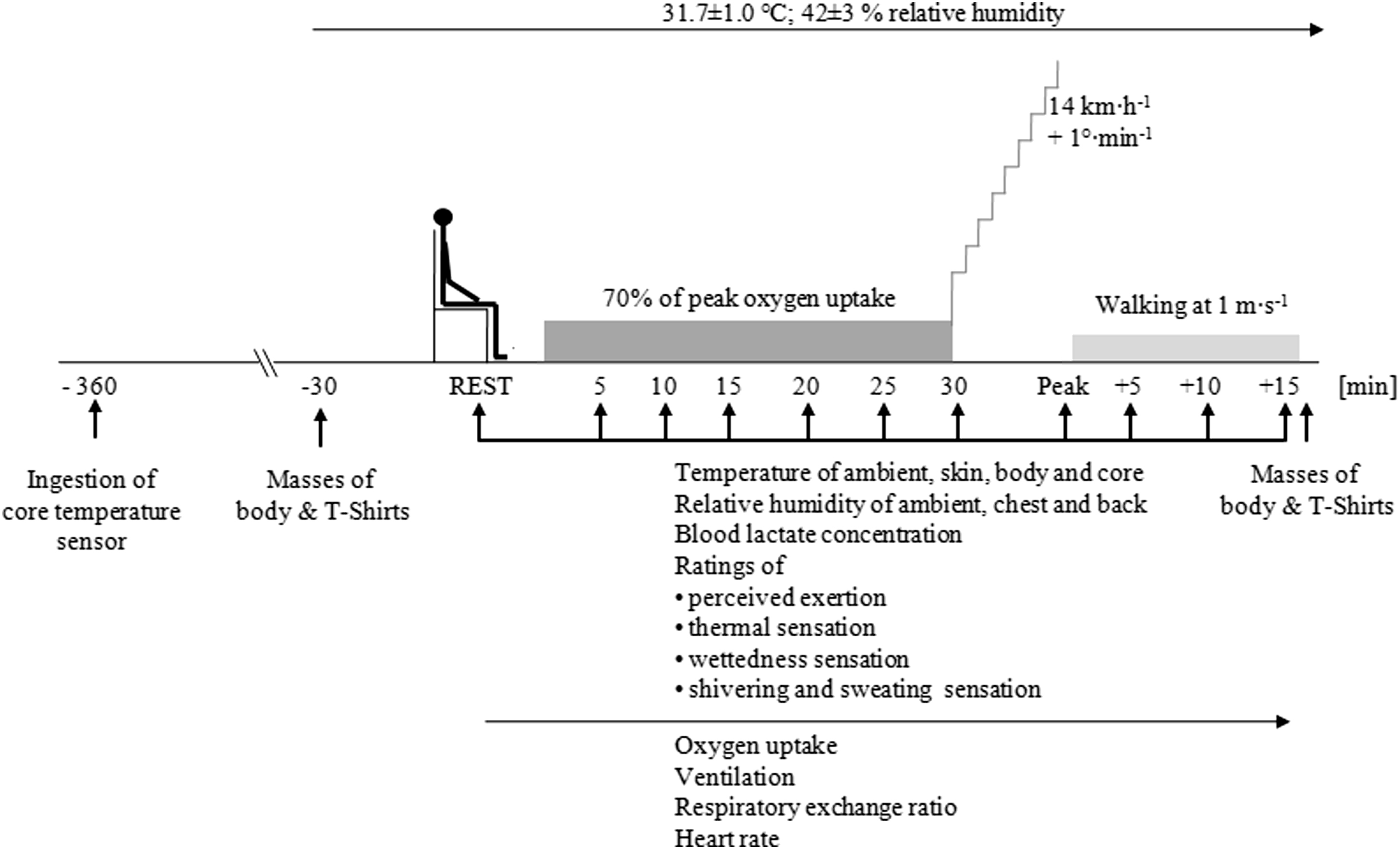
Schematic illustration of the experiment design, indicating the time points before, during, and after submaximal and high-intensity running.
During the 4 trials, all subjects wore the same shoes, socks, and shorts for all of the experiments, but different running T-shirts made from different fabrics of the same color in a randomized order. The tests were conducted at the same time of day for each participant. One hour before the 4 trials all participants were prepared in a room at 25°C, to allow themselves to preacclimatize to the heat.
The running tight-fit T-shirts (Craft, Boras, Sweden) had either 4 (91% polyester, 9% spandex, mass: 130 g·m−2), 6 (100% polyester, 125 g·m−2), or 8 (90% polyester, 10% spandex, 148 g·m−2) channel fibers, creating a greater surface area to the air and purportedly allowing moisture to dissipate more efficiently (Figure 2). As a control, all subjects wore a tight-fit T-shirt made of 100% cotton (185 g·m−2, Fruit of the Loom, Bowling Green, KY). Each ensemble was prewashed and worn once. Each participant had his own set of clothing for each of the clothing types, and the T-shirts were kept in the laboratory for at least 2 hours before testing.
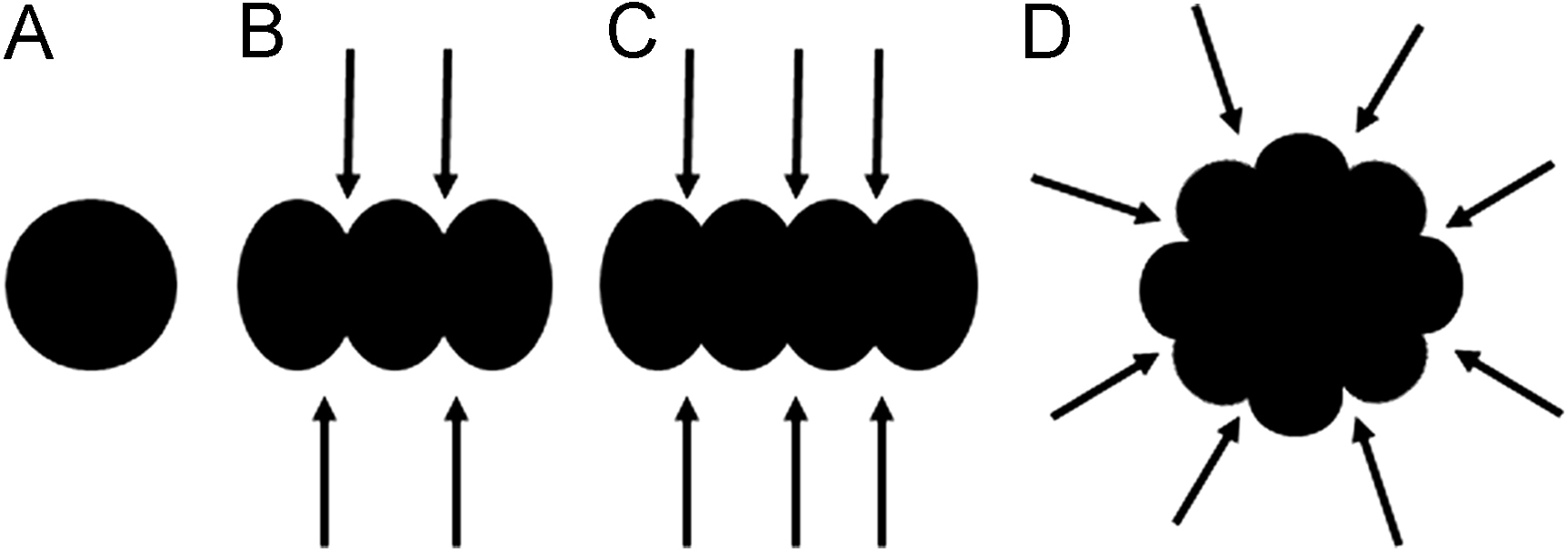
Illustrated cross-section of cotton (A) and polyester with 4- (B), 6- (C), or 8- (D) channel fibers, thereby creating a greater surface area to the air, and purportedly allowing moisture to dissipate more efficiently.
Respiratory and heart rate data were recorded with an open breath-by-breath analyzer (ZANN600, Oberthulba, Germany) using standard algorithms, which included dynamic accounting for the time delay between the gas consumption and volume signal. The system was calibrated before each test using calibration gas (15.8% O2, 5% CO2 in N2; Praxair, Düsseldorf, Germany), targeting the range of anticipated fractional gas concentration, and a precision 3-L syringe (Cortex, Leipzig, Germany). The participants breathed through a Hans-Rudolph mask and a turbine flowmeter during all testing. A heart rate belt (Polar T31, 1 Hz, Polar Oy, Kempele, Finland) was linked to the portable breath-by-breath unit and synchronized with the respiratory data.
Core temperature (Tcore) was measured via ingestible temperature sensor tablets (Mini Mitter Co, Inc, Bend, OR). The participants ingested the sensor approximately 6 hours before each trial as described elsewhere. 15 A resting core temperature was obtained before each test to ensure that the sensor was still activated and to verify similar resting core temperatures between each running session. During and after the tests, the core temperature was recorded every 60 seconds with a telemetric data receiver (Mini Mitter) located at the lumbar region of the participant’s torso. The skin temperature (Tskin) was obtained telemetrically by applying adhesive sensors to various skin sites (Mini Mitter). Mean skin temperature was calculated based on the previously published equation by Hardy and Dubois 16 : Tskin = 0.073hand + 0.163arm + 0.203chest + 0.193back + 0.213thigh + 0.1531eg, where eg is esophagus. Mean body temperature (Tbody) 17 was calculated including Tcore and Tskin: Tbody = 0.65 Tcore + 0.35 Tskin.
The RH between skin and T-shirt was measured as a representative marker for the microenvironment. For this, a humidity sensor (MSR Modular Signal Recorder, Prospective Concepts AG, Glattbrugg, Switzerland) was attached to the sternum as well as to the spine between both inferior angles of the scapulae. Moisture data were then transmitted to a data logger every 60 seconds (MSR Modular Signal Recorder, Prospective Concepts). The change of RH at the site of measurement was used as a representative marker for thermal moisture.
The participants were asked to rate the perceived level of exertion for their whole body on the Borg 6–20 scale. 18 Ratings of thermoregulatory perception were collected as described previously. 19 Ratings of thermal sensation ranged from 1 (very cold) to 9 (very hot); shivering and sweating sensation ranged from 1 (vigorously shivering) to 7 (heavily sweating), and clothing wetness sensation ranged from 1 (dry) to 4 (wet), as described previously. 20
All blood samples were collected from the left earlobe in a capillary tube (Eppendorf AG, Hamburg, Germany). Lactate was analyzed by an amperometric-enzymatic procedure using Ebio Plus (Eppendorf). All analyses were performed in duplicate and the mean used for statistical analysis.
Before and after each test, the participant’s body mass and their T-shirt mass were measured using a body scale (Tanita BC 418 MA, Tanita Corp, Tokyo, Japan) and a high-precision scale (TBF-300, Tanita UK Ltd, Philpots Close, UK), respectively.
During the ramp test, the time to exhaustion (Tlim) was defined as the time beginning the incremental test to the volitional stopping of the treadmill. For this, all displays and monitors with time units were not visible to the subject, to have no chronographic information and to ensure similar motivational conditions.
Statistical Analysis
All data were conventionally calculated and are presented as mean ± SD. One-way analysis of variance with repeated measures was performed to compare the thermophysiological variables (Tcore, Tskin, heart rate, blood lactate concentration, ventilation, oxygen uptake, carbon dioxide production, respiratory exchange ratio, and changes in body mass and T-shirt mass) during and among the submaximal, maximal, and recovery time points. When an overall difference over time was indicated, Fisher’s post hoc analysis was used to identify where the changes occurred. To compare the changes in the ratings of perception (rating of perceived exertion, thermal, clothing wetness, and shivering/sweating sensation), the nonparametric Wilcoxon signed-rank test was used. An alpha value of P < .05 was considered to be statistically significant. The effect size, Cohen’s d (defined as differences between means/SD) 21 was computed for all of the variables to compare the different polyester fabrics with cotton. Effect sizes were then defined as small (0.20–0.50), medium (0.50–0.80) and large (>0.80). 21 All statistical tests were carried out with the Statistica for Windows (version 7.1, StatSoft Inc, Tulsa, OK) software package.
Results
The basic characteristics of all participants are summarized in Table 1.
Mean (95% CI) values of participant characteristics (n = 8)
The mean laboratory temperature and relative air humidity during all testing situations were 31.7° ± 1.0°C (P = .85; largest effect size = 0.18) and 42% ± 3% (P = .22; largest effect size = 0.17) with no differences among the clothing tested. All physiological and thermoregulatory data are presented in Table 2. Pre-to-post changes of body mass and shirt mass did not differ among the clothing (Table 2).
Mean ± SD (range) values of all physiological and thermoregulatory variables assessed before, during, and after submaximal and high-intensity exercise while wearing running T-shirts made from different fibers (n = 8)
Max, maximal; submax, submaximal.
Significant differences from cotton:
4-channel,
6-channel,
8-channel; P < .05.
No differences in total body, skin, and core temperatures were found among the fabric types during submaximal and high-intensity running intensities (Figure 3). However, during recovery, the mean body temperatures while wearing the 4- and 6-channel fibers were lower than that for cotton clothing.
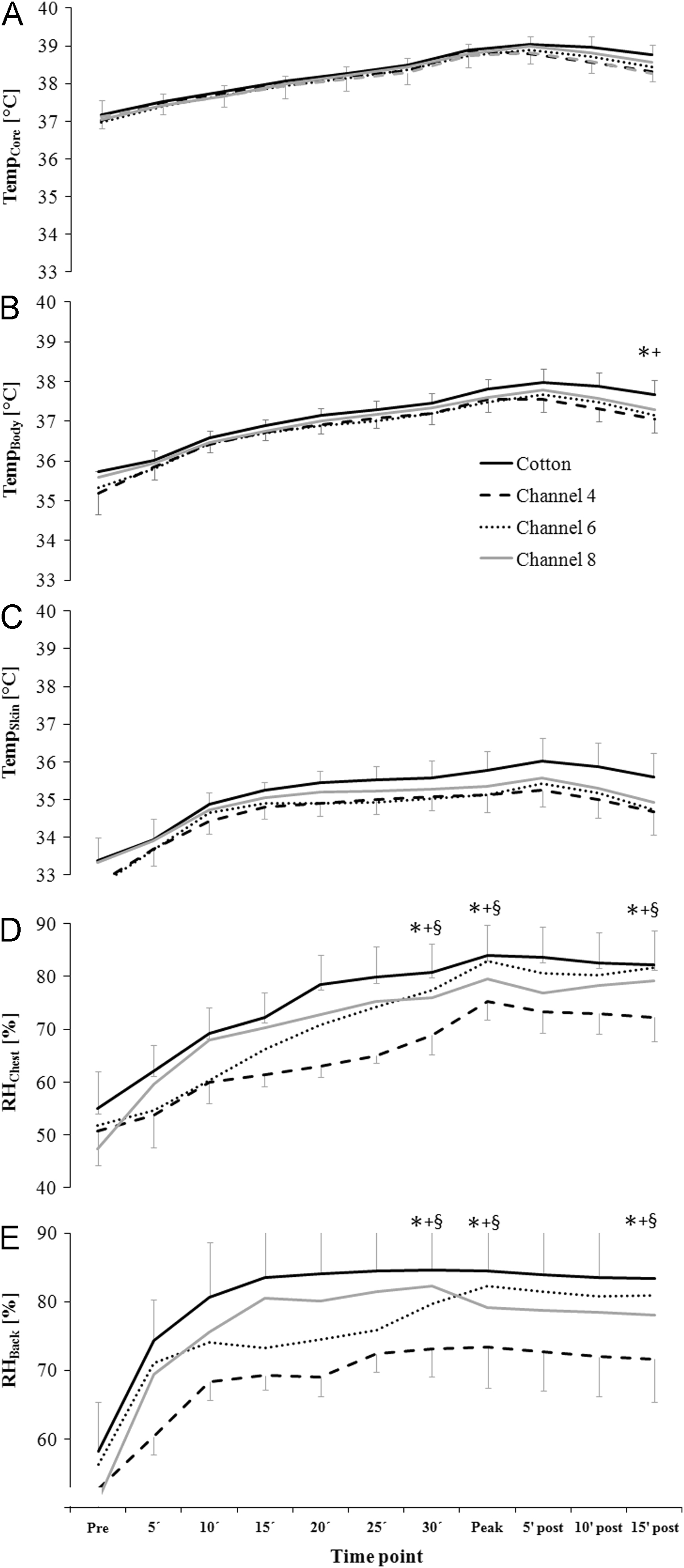
Comparison of changes in core (A), total body (B), and skin (C) temperatures as well as relative humidity (RH) at the chest (D) and back (E) among the 4 T-shirts during submaximal and maximal running intensity, as well as during recovery. Note: significant differences from cotton: * 4-channel, + 6-channel, § 8-channel; P < .05. For the sake of clarity, we have not illustrated all SDs because the magnitudes were similar for all clothing conditions.
The RH between the skin surface and the T-shirt at the chest and back was lower during submaximal and high-intensity running as well as during recovery, compared with the cotton T-shirt. No differences in heart rate, oxygen uptake, respiratory exchange ratio, ventilation, and blood lactate concentration were detected while wearing running shirts with different fibers during submaximal and maximal intensities or during recovery (Table 2). All mean perceptual ratings are summarized in Table 2. No differences in ratings of perceived exertion, thermal sensation, or sensation of clothing wetness were detected while wearing T-shirts with different fibers. Ratings of shivering and sweating sensation during recovery were lower in the 4- and 6-channel fibers than for cotton. Finally, time to exhaustion was unaffected by the type of fabric.
Discussion
The primary purpose of this study was to investigate the thermoregulatory, cardiorespiratory, metabolic, and perceptual responses while running in a hot environment wearing T-shirts of different fiber types, to answer the question of which fabric a person would benefit most from when exercising in a hot environment. This investigation showed no differences in performance benefits. However, well-trained men, exercising in a hot environment, experienced lower body temperatures and shivering/sweating sensations while wearing 4- and 6-channel fiber shirts during recovery from combined submaximal and high-intensity exercise, with improved chest and back microenvironments for 4-, 6-, and 8-channel polyester T-shirts.
Microenvironment and Temperature
When running in warm ambient conditions, increases in sweating rate can affect thermal comfort 22 and any improved evaporative characteristics can potentially lead to a lower body temperature.20,23 In the present study, reduced RHchest or RHback would indicate that the fibers had improved evaporation characteristics. The RHchest increased linearly while running, but RHback leveled off after 15 to 20 minutes. This is in line with the microenvironment data presented by Muir et al, 13 showing that the vapor pressures increased rapidly at the hip, shoulder, and thigh sites during the first 20 minutes of work. Thereafter, vapor pressure remained relatively stable. The statistical analysis showed improved RHback and RHchest between cotton and all channeled fibers, indicating greater evaporation between the skin and the microenvironment with 4-, 6-, and 8-channel fibers when compared with cotton, thus improving the microenvironment. The difference in the behavior of RHback and RHchest in the present study may be related to the constant air flow generated by the ventilator located in front of the runner, leading to higher evaporation of moisture at the chest than the back. Although statistical analysis revealed differences in RHchest and RHback among the different types of clothing, the question is whether these differences have a practical relevance while running, as none of the thermal, wetness, and sweating ratings were different among the garments. Potentially, at lower temperatures and with a wind chill, RHchest and RHback may be more objective markers for determining the differences in the microclimates of different clothing.
In the present study, approximately 42 minutes of combined submaximal and high-intensity exercise at an ambient temperature of approximately 30°C led to a mean core temperature of 38.8° ± 0.3°C, indicating that the subjects in the present study were heat stressed, but with no statistical differences between the fabrics. It has been demonstrated that changes in core temperature during and after high-intensity exercise may not be adequate to distinguish between the amount of clothing insulation, except when there is substantial cardiorespiratory and thermoregulatory stress.24,25 Total body and skin temperatures showed no differences among the fabrics during submaximal and maximal exercise in the present study. Conversely, Ha et al 26 found the surface temperature of the cotton garment was higher than that of a polyester garment when cycling for 10 minutes in 24°C at 30% of maximal oxygen uptake. 26 Because the exercise duration and intensity in the present study were higher than in the study by Ha et al, we assume that the heat production in our study exceeded the heat transfer capacity of the cotton material. However, this also was the case for all polyester fibers in the present investigation. Nevertheless, after 15 minutes of recovery, body temperature was lower with 4- and 6-channel fabrics than for cotton, indicating improved thermoregulatory properties during recovery.
Cardiorespiratory and Metabolic Variables
In general, the running shirts in the present study create a layer of insulation and impair sweat evaporation from the skin. 22 It is well known that exercise-induced increases in skin and core temperatures, 22 as well as heart rate and oxygen uptake, are apparent when clothing interferes with the cooling mechanisms of the body and are linked to impaired performance. 27 However, the present data showed no differences in any cardiorespiratory and metabolic variables at any time and in any running shirt. We therefore conclude that there is no superior effect from any of the investigated fibers on these variables during submaximal and maximal running in heat.
Perceptual and Performance Data
Moisture transport through clothing will impact the microenvironment between the garment and the skin, the thermal sensation of the runner, and finally the thermoregulatory response of the body. 8 However, no significant differences among the fabrics in thermal sensation, clothing wetness sensation, or shivering and sweating sensations were evident during submaximal or maximal intensity running or recovery. This is somewhat in line with previous findings that show no differences in the sensation of comfort between polyester and cotton fabrics during exercise in warm environments.20,23 However, there is some evidence that thermal sensation is related to skin wetness.9,22 It is documented that exercise tolerance can be improved by reducing perceived exertion and, in contrast, that increased skin wetness reduces thermal comfort and possibly performance. 22 Because the runners perceived no difference in any perceptual data during running, it is unlikely that the participants would benefit from the improved perception of any fabric tested when competing.
All running T-shirts covered a substantial amount of the runner’s upper body skin surface, reducing sweat evaporation from the skin. Consequently, runners who are exposed to hot ambient temperatures with moderate-to-high metabolic rates may show impaired performance. 27 Based on the present data, none of the fabrics showed superior effects for maximal performance in runners exposed to heat. Because polyester fabrics are worn in outdoor activities and in the heat, one might benefit from wearing this type of fabric owing to the sun protection.
Limitations
From a methodological point of view some limitations may be taken into account. First, the study duration was limited to approximately 42 minutes. When exercising in a hot environment for a longer period (>60 minutes) the thermoregulatory, cardiorespiratory, metabolic, and perceptual responses while wearing the different fibers may lead to different results. This could have eventually resulted in different core temperatures for the clothing conditions. Second, even though the tests were conducted 1 week apart, we cannot be totally certain whether the participants experienced any heat acclimatization toward the end of the study. The measurements of heart rate might counter this assumption: to monitor the adaptation to exercise several biomarkers were applied, including the monitoring of heart rate during and after submaximal running.28,29 Any changes in submaximal heart rate indicate adaptation either to heat or to exercise. Because our participants were well trained and accustomed to high-intensity exercise and no changes in the heart rate responses were evident, we conclude that the subjects did not experience increased heat acclimatization or training adaptation. Third, the number of subjects in the present study was relatively small when compared with other studies in this area.20,23 More subjects would thus have given more statistical power in the data interpretation. However, the individual responses were similar in all subjects, and in addition to the statistical analysis, we performed effect size calculations, which provided support in interpreting our data.
Conclusions
Among outdoor enthusiasts and leisure and high-performance runners, there is a need for quantitative and qualitative information regarding the proper clothing for submaximal and high-intensity exercise in the heat to 1) enhance thermoregulatory and perceptual properties, as well as performance and to 2) mitigate heat-related injuries. The present study investigated the thermoregulatory, cardiorespiratory, metabolic, and perceptual responses of 4 different running shirts during combined submaximal and high-intensity running (approximately 42 minutes) and recovery in a hot environment (31.7° ± 1.0°C; 42% ± 3% RH). Statistical analysis of the present data revealed lower 1) shivering/sweating sensations while wearing 4- and 6-channel fiber shirts during recovery from combined submaximal and high-intensity exercise and 2) humidity between the skin and 4-, 6-, and 8-channel polyester T-shirts measured at the chest and back. However, the question is whether these differences are of practical relevance because the performance of well-trained men exercising in a hot environment was unaffected.
Footnotes
Acknowledgements
This investigation received financial support from the Swedish National Centre for Research in Sports and Craft, Boras, Sweden. The funders had no role in the study design, data collection and analysis, the decision to publish, or the preparation of the manuscript.
☆
Sources of support: This investigation received financial support from the Swedish National Centre for Research in Sports and Craft, Boras, Sweden.