






Abstract
Objective
Recent studies have shown that significant levels of mercury are being released into the atmosphere by wildland fires throughout the United States. Eagle populations in the western United States are experiencing mercury toxicity in areas where many of these massive fires are occurring. We hypothesized that wildland firefighters exposed to smoke and other contaminates from these extensive fires would also reflect elevated blood levels of mercury.
Methods
Wildland firefighters in the western United States were studied during the summers of 2007, 2008, and 2009. Pre- and post-fire season blood samples were tested for mercury in a cohort of firefighters and control subjects.
Results
Over the course of 3 summers, 66 firefighters were studied (41 had pre- and postseason blood draws). In 2008 and 2009 a control group was added with a total of 39 subjects (24 had pre- and postseason blood draws). Detectable blood levels of mercury were found in 6 firefighters, and 1 elevated level was found over the course of the study period. Six control subjects had detectable mercury levels, and no elevated levels were found.
Conclusions
This study did not show statistically significant elevated blood levels of mercury in our cohort of wildland firefighters. However, as forest fires continue to ignite, we recommend continued investigation to ensure the health and safety of firefighting crews.
Introduction
Wildland firefighters face many risks in the performance of their duties. Although the most obvious of these risks is the fire they are trying to contain, other environmental hazards exist as well. Smoke from these massive fires poses inherent health risks to firefighters from the inhalation of gases and particulates, as well as other less obvious exposures (Figures 1 and 2). 1 Many published studies have indicated that forest fires release a significant amount of mercury. 2 –4 Some reports have found that this mercury release approaches 30% of levels released concomitantly by US industrial sources. 5
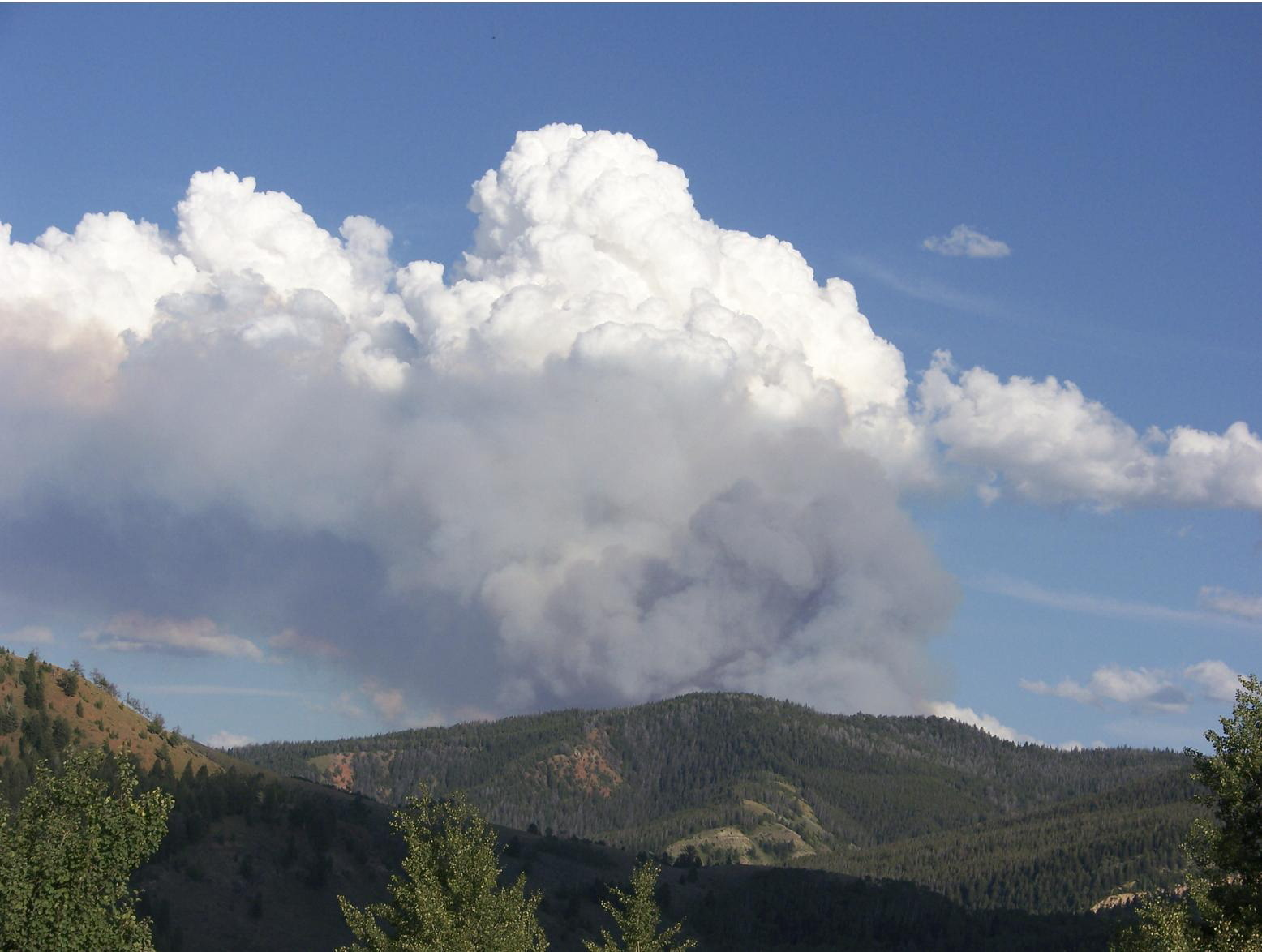
Forest fire smoke. Photo by Wendy Blair.
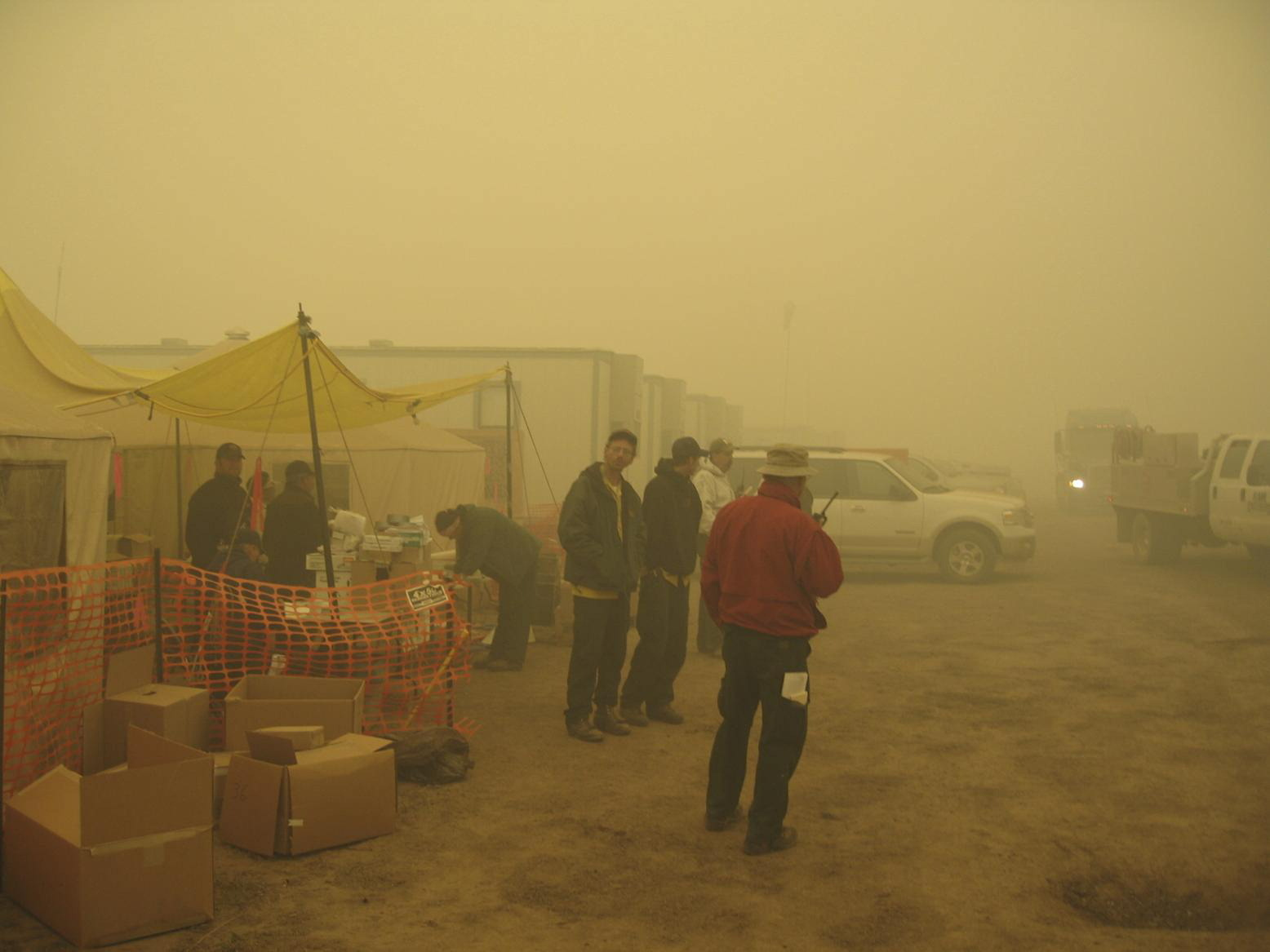
Smoke in fire camp. Photo by Chris Havenar.
Research involving bald eagles (
These fire-induced releases of mercury may place not only indigenous animal species such as bald eagles at risk but also the wildland firefighters who work in similar conditions. With forest fires continuing to ignite at unprecedented levels in the western United States, we hypothesized that wildland firefighters exposed to smoke and other contaminants from extensive fires would show elevated blood levels of mercury.
Methods
We developed a prospective study to investigate whether wildland firefighters were accumulating elevated blood mercury levels during the summer fire seasons of 2007, 2008, and 2009. Institutional Review Board approval was granted through the University of Washington's Human Subjects Division, Seattle, Washington, for all phases of this study. Written consent was obtained from all subjects involved. Funding was provided by grants from the University of Wyoming/National Park Service Research Center and Grand Teton National Park.
During the summer fire season from May to September, 2 blood samples of approximately 7 mL each were obtained by venipuncture from each subject and analyzed as before and after exposure. All whole blood samples were analyzed for total mercury by atomic absorption spectrometry through the certified laboratory at St. John's Medical Center, Jackson, Wyoming.
During the summer of 2007, we initiated our study with a preliminary look at blood levels of mercury in wildland firefighters based in Jackson, Wyoming. These subjects traveled around the western United States to control larger fires. Preexposure blood samples were obtained from each subject early in the fire season (approximately May), followed by a postexposure blood sample (approximately September). There was not a control group in this first phase of the study.
During the summer of 2008, we improved our recruitment and enrolled a larger number of wildland firefighters based in Jackson, Wyoming, and added a control group of employees from Grand Teton National Park (GTNP), Wyoming, without primary firefighting responsibilities. The exposure group consisted of firefighters exposed to considerable levels of smoke and particulates at various locations in the western United States (Figure 3). Two blood samples (pre- and postexposure group and pre- and postseason control group) were collected from each cohort in the same fashion as in 2007.
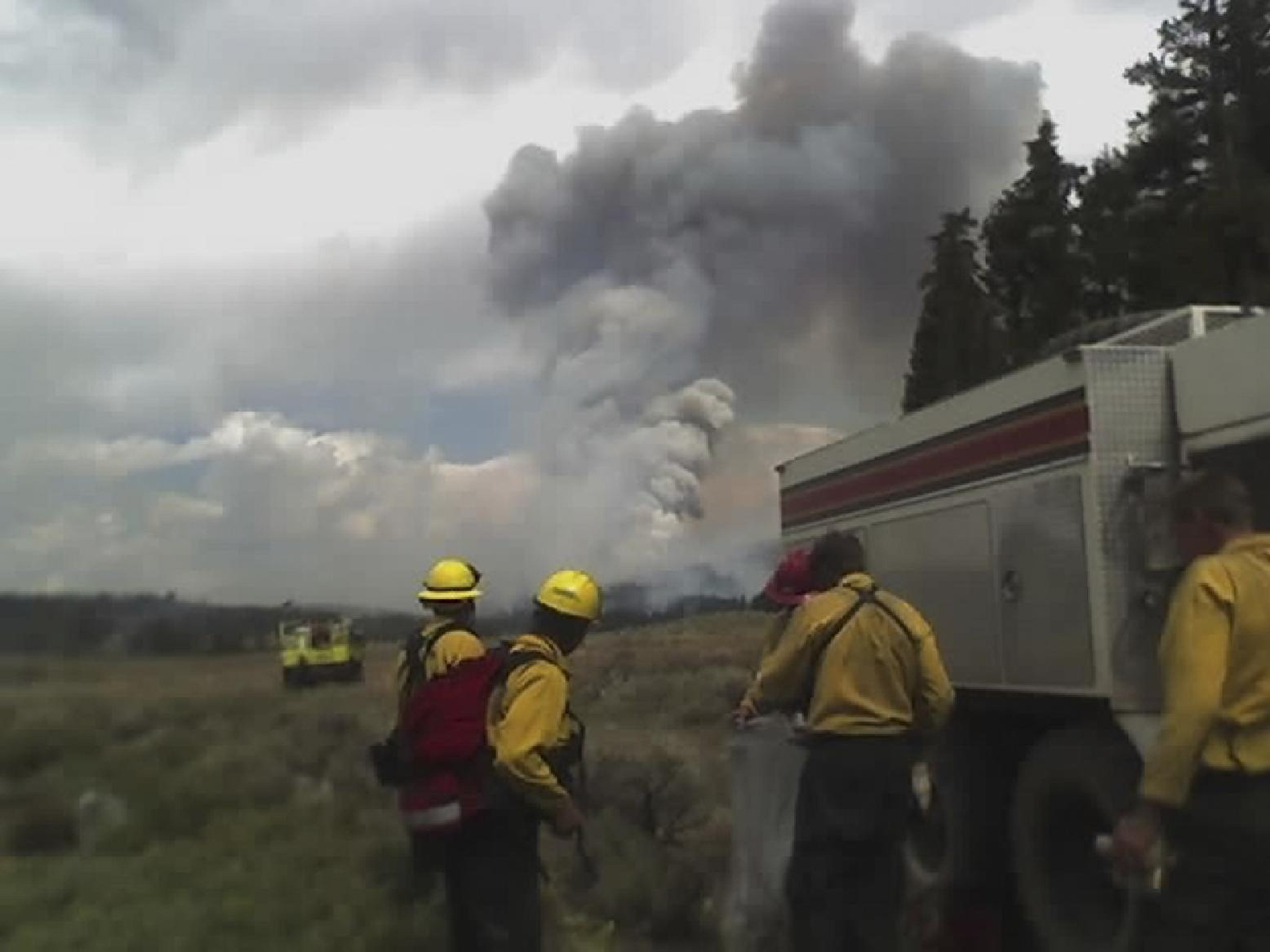
Wildland firefighting. Photo by Mike Moyer.
During the summer of 2009, we adjusted our enrollment to focus on 2 hotshot firefighting crews: the Logan Hotshots (LHS) based in Logan, Utah, and Snake River Hotshots (SRHS) based in Pocatello, Idaho. Hotshot crews are specialized wildland firefighters that have focused training for larger fires throughout the western United States and generally have a greater wildland fire exposure, and thus a greater smoke exposure. We maintained a similar control group as 2008 from GTNP. Two blood samples (pre- and postexposure and pre- and postseason control group) were collected from each cohort in the same fashion as in previous years.
During each test interval, participants were given a brief questionnaire providing information about demographics, and forms to log their daily exposure to smoke for each fire season and other possible mercury exposures.
We intended to analyze the data using a repeated measures analysis in 2007, and mixed model design in 2008 and 2009 (repeated measures analysis with one between-subjects factor consisting of the exposure group(s) and control group). A power analysis based on the difference score (postexposure mercury level minus preexposure mercury level) allowed the detection of a medium effect attributable to mercury (Cohen's d = 0.5, alpha = 0.05 and power = 0.8).
9
By analyzing the difference scores (Diff = preexposure mercury level minus postexposure mercury level), the analyses were conducted using: For 2007, a For 2008, an independent samples For 2009, an analysis of variance (H0: μDiff_Tx1 = μDiff_Tx2 = μDiff_Control)
where Tx1 is treatment group location 1 (LHS), Tx2 is treatment group location 2 (SRHS), and Control is the control group (GTNP).
Results
During the summer of 2007, several logistical and timing issues hindered our ability to enroll numbers anticipated in our original design. We were able to analyze blood from 12 exposed subjects, and repeated blood draws occurred in only 4 subjects. Results for 2007 are reported in the Table. Subject questionnaires were incomplete and are not reported. In 2007, 11 of the 12 exposed subjects were males (92%), and the average age of all subjects was 32.5 years.
Exposure (wildland firefighter) and control group blood mercury levels
All values are μg/L; undetectable levels <4 μg/L; elevated mercury concentration >10 μg/L.
Indicates no blood draw for the subject.
During the summer of 2008, the exposed group consisted of 19 firefighters of whom only 6 had both a pre- and postexposure blood draw. Eighteen of the 19 exposed subjects were males (95%), and the average age of all subjects was 32 years. The Table summarizes the results for 6 of the 19 subjects who had a pre- and postexposure blood draw. No detectable mercury levels were found in the remaining 13 exposed subjects with single blood draws (all tested <4 μg/L for mercury).
The 2008 control group consisted of 26 subjects, of which 11 completed both pre- and postseason blood draws. Nineteen of the 26 control subjects were males (73%), and the average age of all subjects was 37 years. The Table summarizes the results of the control subjects with pre- and postseason blood draws. No mercury levels were found to be elevated in the remaining 15 control subjects with single blood draws (all tested <10 μg/L for mercury).
Questionnaires regarding smoke exposure and modified to include fish consumption were incomplete, and could not be reported for the summer of 2008.
During the summer of 2009, the exposed groups consisted of 35 subjects of whom 16 were from LHS and 19 from SRHS. Of this combined exposure group, 31 had both a pre- and postexposure blood draw (LHS, 14 subjects; SRHS, 17 subjects). Thirty-three of the 35 exposed subjects were males (94%), and the average age of all subjects was 27 years. The Table summarizes the combined results of the exposed group, as there was no difference between mercury levels from the 2 groups (LHS or SRHS).
One subject in our study (firefighter, exposed summer 2009) had an elevated blood mercury level. Although the subject was contacted and encouraged to seek formal medical evaluation to recheck his mercury level, no formal follow-up was performed as this fell outside our institutional review board–approved study design. However, the subject reported no complaints of mercury toxicity symptoms7,8 at the time of our contact or during the study period. At last contact the subject had not obtained repeat testing and remained symptom free.
The 2009 control group consisted of 13 subjects, all of whom completed both pre- and postseason blood draws. Eleven of the 13 control subjects were males (85%), and the average age of all subjects was 47 years. There were no elevated mercury levels as summarized in the Table.
Despite encouragement, questionnaires regarding smoke exposure and fish consumption were incomplete and could not be reported for the summer of 2009.
Statistical analysis was attempted for all data sets in the years 2007, 2008, and 2009. Owing to the small sample sizes and few detectable mercury levels, we attempted but were unable to perform any reliable statistical analysis on our data.
Discussion
This study was partially motivated by the detection of mercury poisoning in bald eagles in the western United States, specifically southwestern Montana and northwest Wyoming. The suggestion that wildland fires may expose firefighters to mercury while occupying a similar spatial relationship was concerning. Although smoke from wildland fires contains many hazardous substances, the focus of this study was on mercury. It was our worry that firefighters (and possibly the public) may be exposed to mercury in the following ways: 1) inhaled after its release into the atmosphere as a result of combustion of mercury-laden tree bark, needles, and other organic plants; 2) inhaled by firefighters while performing activities such as digging fire lines in unburned areas; and, 3) other possible ingestion or absorption while performing firefighting duties. Non-fire-related sources of mercury exposure exist as well, including the following: exposure from natural geologic as well as other industrial discharges, ingestion from dietary sources, as well as other recognized and unrecognized sources from medical, dental, holistic, and religious practices.
Our study revealed a single elevated mercury value in a wildland firefighter in 2009. No symptoms of mercury toxicity were elicited on follow-up with the subject; all other members of the cohort had undetectable levels of mercury. From verbal reports with this subject, there was no clear difference in his potential smoke exposure when compared with the rest of the cohort. We are unable to determine the precise source of this finding and recognize that mercury detection is a multifactorial problem. Based on this limited study, we showed that no statistically significant elevated blood mercury levels were occurring in our sample population of wildland firefighters.
If additional concern and research finds that wildland firefighters are indeed being exposed to mercury or other substances, then immediate actions would need to be implemented to blunt or mediate the exposure. The first should be evaluating current fire suppression tactics and providing a means to reduce inhalation and other exposures during wildland fire suppression. If exposure is unavoidable, then the use of specialized equipment such as a wildland firefighter's mask would be essential.
Limitations
We experienced several limitations to our original research design. These mostly affected our sample size and the ability to obtain blood samples before and after exposure. The major constraints were realized when trying to enroll and then accessing the subjects for blood draws while on remote fire assignments. Different employment start and stop times for each wildland firefighter through the fire season also proved difficult to our obtaining 100% pre- and postexposure blood draws. Despite encouragement, questionnaires regarding smoke exposure and fish consumption were incomplete.
Based on our limitations, we would suggest several modifications for future studies investigating exposures to wildland firefighters. First, a study with a larger sample size of wildland firefighters throughout the western United States would be warranted to obtain statistical power for any exposure. A majority of the firefighters should belong to hotshot crews or other groups that are extensively exposed to fire contaminants (smoke and particulates) for the duration of the summer. A control group of nonfirefighters would remain mandatory to compare background risk.
The duration of smoke exposure by firefighters should be precisely monitored by research-committed individuals. An expanded questionnaire should document other sources of possible mercury exposure. Items to consider documenting should include consumption of foods containing mercury such as fish, as well as other medical, dental, holistic, or religious practices involving mercury intake or exposure. Additional funding would also allow continued follow-up for all research subjects past the summer fire season, especially for any subjects found to have elevated mercury levels. Actual mercury dosimeters would also be useful in correlating and substantiating exposures.
Although blood analysis provides relatively easy sampling media for mercury, it can be variable in detecting tissues levels in relation to timing of actual exposure(s). Elemental analysis of 24-hour urine samples 10 or stool with mercury speciation may better assist in calculating levels of tissue burden from smoke and other exposures.
Lastly, collaboration with other researchers studying mercury in other species of birds, fish, tree-boring insects, and mammals in high wildfire areas would complement and enhance an investigation on firefighters.
Conclusions
This study did not show statistically significant elevated mercury levels in the blood of a relatively small sample size of wildland firefighters in the western United States during the summers of 2007, 2008, and 2009. Detectable levels of mercury were revealed in both our exposed and control groups with 1 elevated mercury level in the exposed group. Based on our initial concern, we still believe there could be an unrecognized health concern and occupational hazard despite these limited data. As forest fires continue to ignite, we encourage continued investigations to ensure the health and safety of our firefighting crews.
Footnotes
Acknowledgments
We wish to extend our deepest appreciation to the following organizations and individuals for their collaboration in our research project: Dr Alan Harmata, University of Washington (especially Geri Feris, HSR Administrator), Grand Teton National Park (especially Andy Fisher, Renny Jackson, Ed Visnovske, Chris Harder, Scott Guenther, Cindy O'Neill, and Lisa Elenz), Bridger Teton National Forest (Bridger Teton National Forest Helitack Crew, especially Chris Havener, Brad Koeckeritz, and Steve Markason; and BTNF Fire Management Overhead, especially Rod Dykehouse, Andy Norman, Kevin Pfister, and Chris Vero), University of Wyoming-National Park Service Research Station (Celeste Havener), and St. John's Medical Center (especially Redeem Sumicad).
Offprints will not be available from the author. Funding was obtained directly through Grand Teton National Park and the University of Wyoming National Park Service Grants. There were no conflicts of interests with funding and the authors' affiliations. No formal presentation of this manuscript has been given.