






Abstract
Objectives
Scorpion envenomation is a common public health problem in Venezuela. We report an envenoming case by
Methods
Clinical signs and symptoms in an adult male were recorded after envenoming and treatment with antivenom. Toxin composition and antigenicity of
Results
The moderately severe case (a 21-year-old man) presented autonomic manifestations, including cardiopulmonary and gastrointestinal effects. Full recovery was achieved after anti–
Conclusions
The severity of the case reinforces categorization of the Guayana Shield region as a macroendemic area of scorpionism in Venezuela and allows classification of
Introduction
Distinction between proven and presumptive reports of envenoming by toxic fauna is crucial in order to provide a more accurate basis for the information appearing in the literature.
1
Appropriate therapeutic measures should ideally be based on the systematic identification of the offending animal as the ensuing envenoming syndrome is very likely to depend on the species implicated. Amply documented for snakes,
2
differential clinical manifestations also have been recorded in the case of scorpions, depending on the species involved. Scorpion envenomation is an important public health problem in tropical and subtropical areas of the world due to its frequent incidence and potential severity. Management of some of these cases can be difficult especially in regions with limited medical facilities.
3
For example, envenoming by
As part of a current survey of the fauna inhabiting the lower Cuyuní River, in the Guayana Highlands (northeast Bolívar State, Venezuela) (Figure 1), this work reports on the association of a clinical case with a scorpion species identified taxonomically as
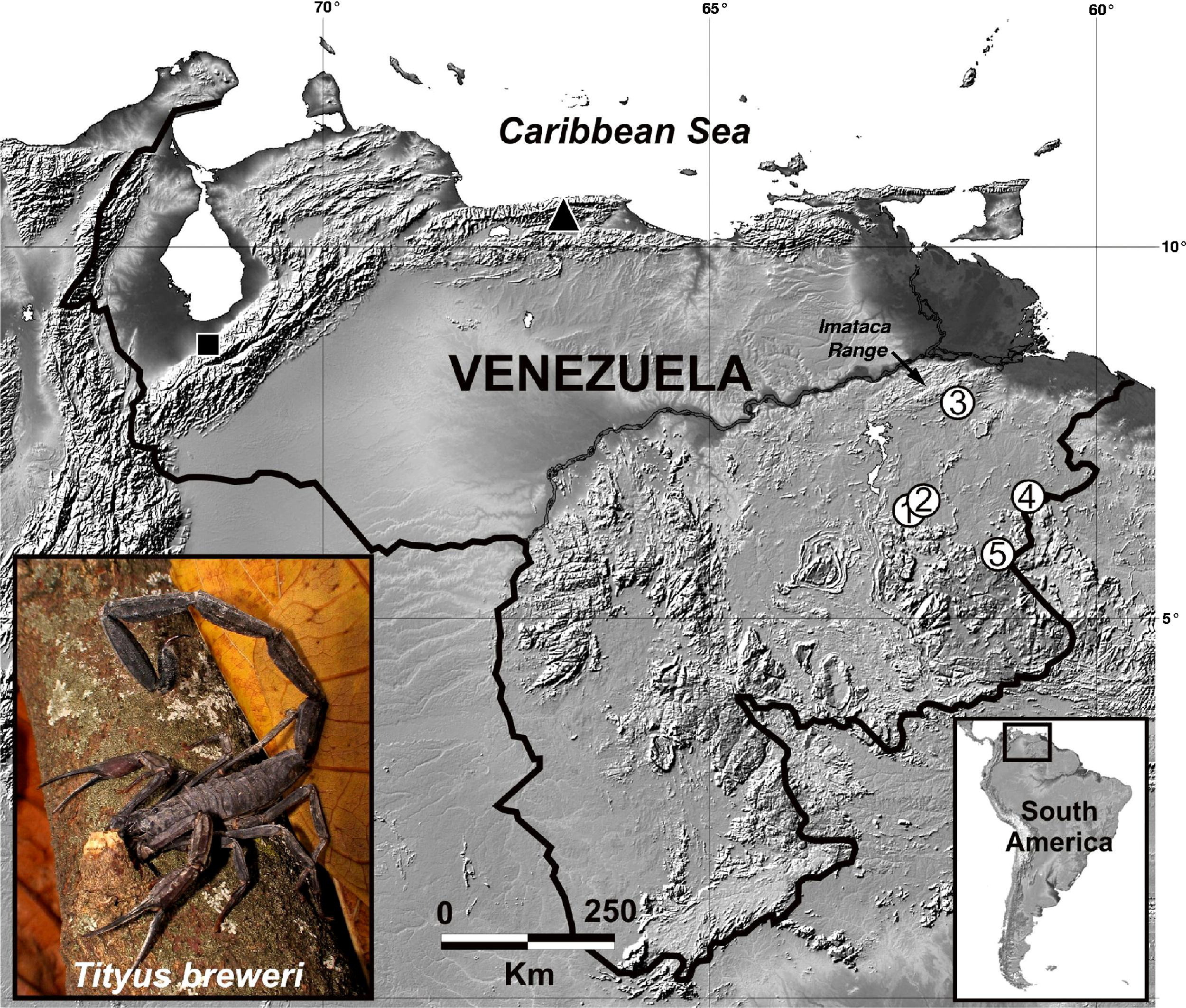
The Guayana Shield region (Figure 1) extends between the Amazon and the Orinoco basins, comprising the states of Bolívar in Venezuela and Roraima in Brazil, and is one of the most diverse centers of floral and faunal endemism of northern South America. 25 The area has been subjected to intensive biological exploration and industrialization due to its biodiversity and natural resources, which involves a higher risk of envenoming by local endemic fauna.
In the 1920s, Oxford noted that large-sized (14–16 cm long) scorpions inhabited the area of the Imataca range (northeast of the current Bolívar State) (see Figure 1) and were responsible for sting cases presenting with high fever, cephalalgia, and vomiting.
26
In 1974, toxic myocarditis was associated to a scorpion envenomation from the area of El Pao, very close to the Imataca range.
27
This mountain range is part of the distribution area of the species
Materials and Methods
Scorpions, Venoms and Antivenom
Scorpions were collected at night using ultraviolet lamps.
29
Adult
Taxonomical diagnosis of the
Venom from
Gel Electrophoresis and Immunoblotting
Lyophilized venom samples were solubilized in doubly distilled water (0.5 mL/mg), centrifuged at 5000
Mass Spectrometry Analyses
Mass spectra of positively charged ions from
Results
Case Report
A 21-year-old man was stung by a scorpion on January 30, 2008 at 20:05 hours on the right foot while checking the electric plant of the base camp during a biological survey near Las Claritas Mine (06°05′11.4″N, 61°29′48.2″W, 154 m above sea level), lower river Wey (tributary to the Cuyuní River), southwest of Bolívar State, Venezuela (Figure 1). He presented immediate, intense pain in the lower section of the right leg that later referred to the inguinal-scrotal area with concomitant erythema around the sting site. Diaphoresis, rhinorrhea, and sialorrhea started 15 minutes after the accident, together with odinophagy and tremors. Generalized muscle fasciculation (in superior and inferior limbs) and fever appeared 25 minutes later, together with persistent cough, thick and abundant sialorrhea, piloerection, bilateral myosis, and epiphora. Upon physical examination, the patient demonstrated tachycardia (115 beats per minute), tachypnea (26 beats per minute) and irregular pulse. The abdomen was painful on deep palpation at the epigastrium and left hypochondrium. The patient was hydrated with saline solution and given intravenously 2 anti–
The scorpion specimen involved in the accident was deposited at La Salle Museum of Natural History, Caracas, Venezuela, under the catalog no. MHNLS 1385. Taxonomical diagnosis was performed at the Laboratory of Toxinology, School of Health Sciences, Universidad de Oriente, Anzoátegui Campus, Venezuela, which allowed its classification as a male
Two additional
T Breweri Venom Composition and Immunoreactivity
Composition of
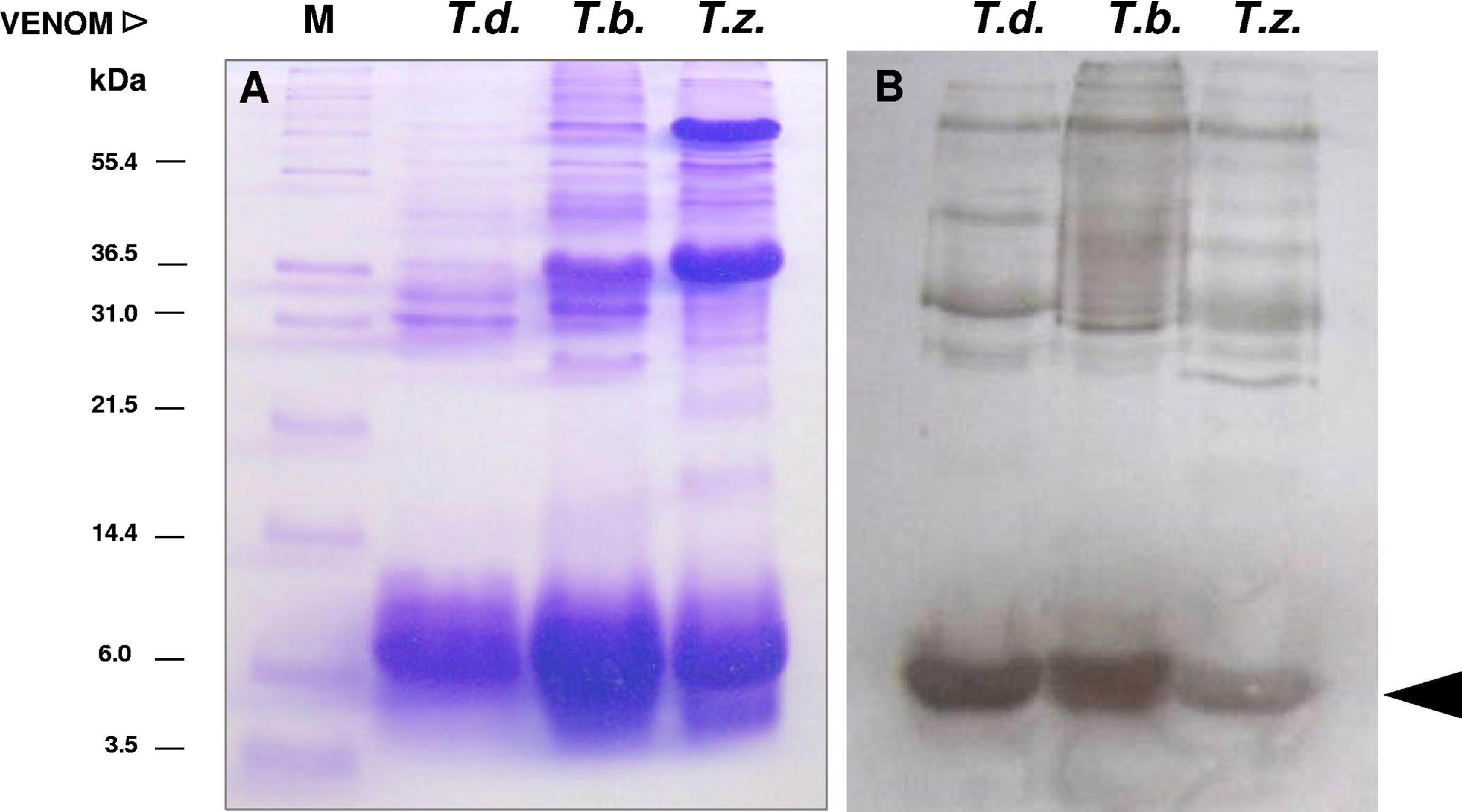
Antigenic reactivity of
Figure 3 shows the spectrum obtained by MALDI-TOF MS of
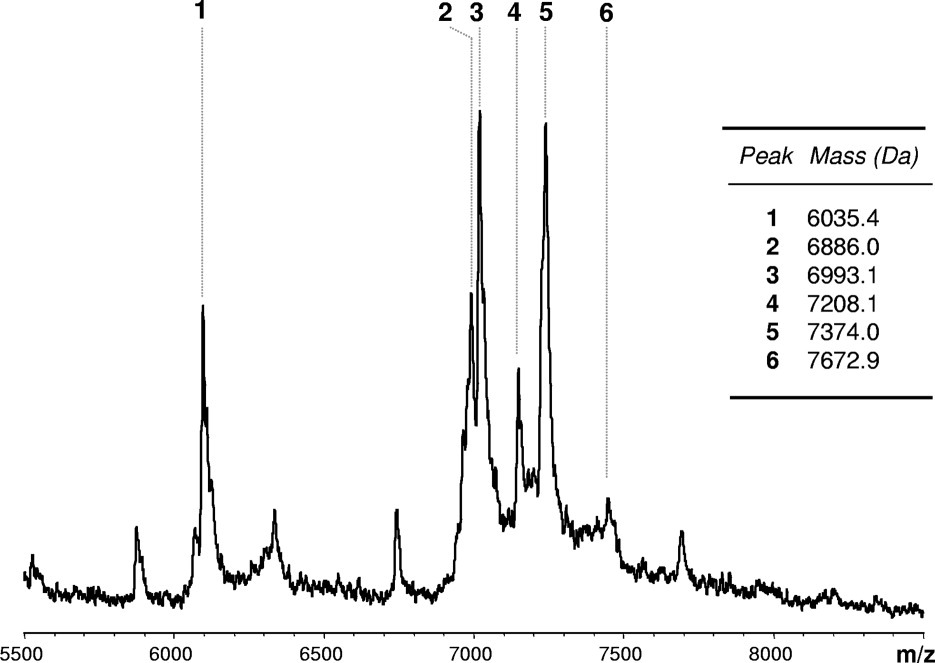
Mass spectral analysis of
Discussion
Tityus Breweri Envenomation and Toxin Composition
Regardless of the Venezuelan
As such manifestations in the envenomed patient by
A Proposal for the Toxinological Partitioning of the Venezuelan Tityus Fauna
Of all referred Venezuelan
Figure 4 presents a proposal for the grouping of the scorpion species responsible for severe/lethal sting cases in Venezuela into toxinological provinces, based on (1) the clinical consequences of the envenomation,
15
and (2) the immunological cross-reactivity of their venoms
40
and their phylogenetic affinity.
13
Province I includes
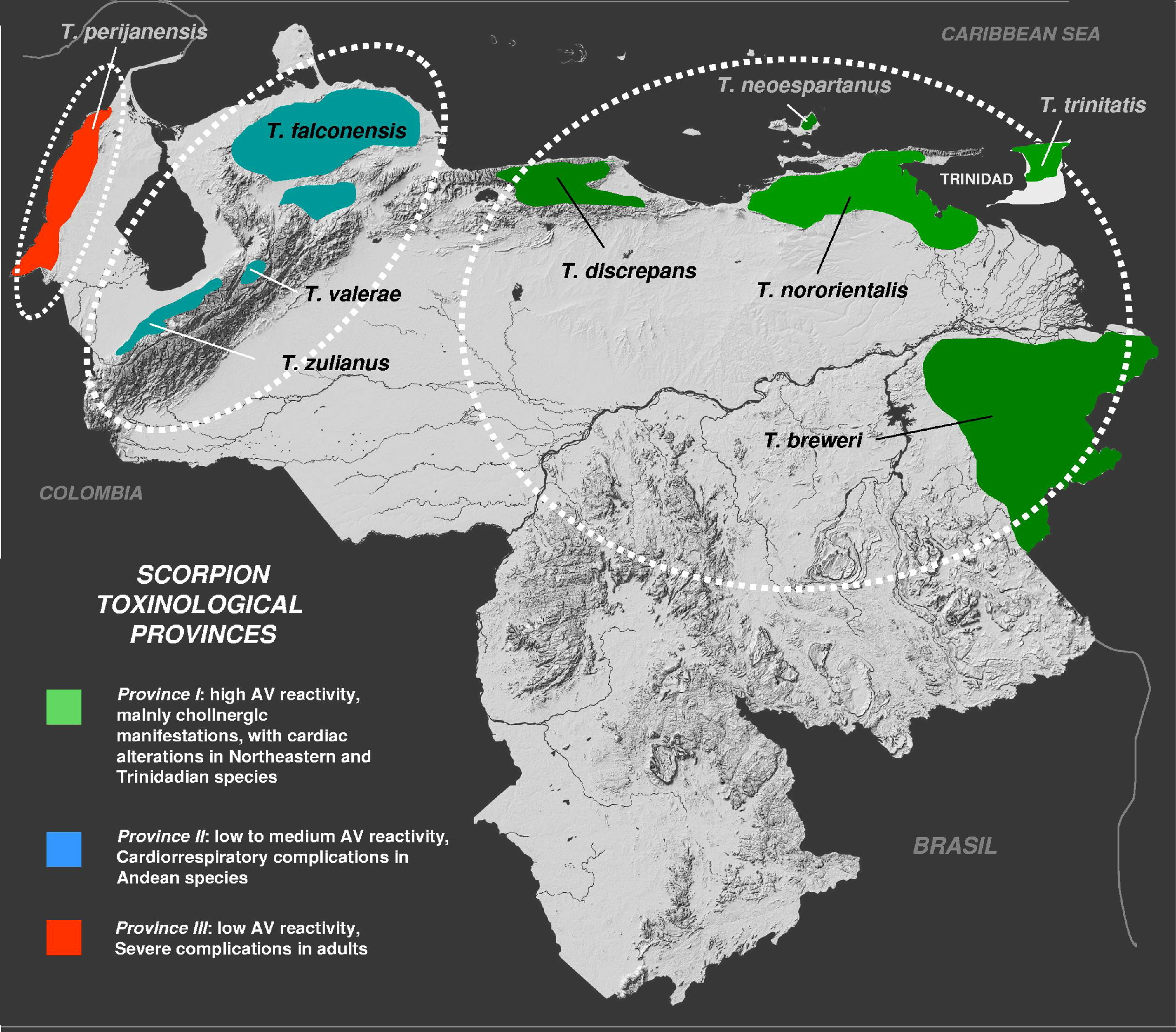
A proposal for a toxinological partitioning of the Venezuelan scorpion fauna of medical importance, considering phylogenetic, immunological (reactivity towards anti–
Province II includes species endemic to the Andean and central-western ranges, including
Province III includes thus far only the species
Available evidence suggests that in parallel to the strong biogeographic structuring of
Footnotes
Acknowledgments
The authors are very grateful to the reviewers of the manuscript for their valuable comments. Thanks are conveyed to Mr Tonio Gregoriani for his assistance with geographical coordinates.
Funding
The envenoming case reported in this work took place during a biological expedition to the High Cuyuní River as part of the Rapid Assessment Program sponsored by Conservación Internacional Venezuela, Compañía Aurífera Brisas del Cuyuní C.A. (Venezuelan subsidiary of Gold Reserve), and Fundación La Salle de Ciencias Naturales. Financial support by Consejo de Investigación, Universidad de Oriente, CI-3-040602-1342/07 and CI-2-010101-1275/06 (to L.D.S.); Fonacit 2001000672 and PI-2004000385 (to A.B).
Supported by Consejo de Investigación, Universidad de Oriente, CI-3-040602-1342/07 and CI-2-010101-1275/06 (to L.D.S.); Fonacit 2001000672 and PI-2004000385 (to A.B).
Conflict of Interest statement: The authors declare that there are no conflicts of interest.