Last month, I was pleased to announce that JALA was accepted for indexing by Thomson's Journal Citation Reports. This month, I am even more pleased to report that JALA also was accepted by the U.S. National Library of Medicine for indexing by MEDLINE, the largest component of PubMed. So now I shall repeat myself: Is this exciting news? Yes! Is this cause for celebration? Definitely!
“This is another huge achievement for JALA.”
This is another huge achievement for JALA. It represents another important milestone and underscores JALA's unique role in supporting the SLAS mission of providing education and facilitating information exchange throughout the laboratory science and technology community. Because MEDLINE functions as an important resource for biomedical researchers worldwide, JALA authors now will enjoy even significantly increased opportunities for discoverability and citations.
Most of you are probably well aware of the MEDLINE bibliographic database, but you may not know how much time and effort it takes for a journal gain acceptance. The great majority of journals selected for MEDLINE are recommended for inclusion by the Literature Selection Technical Review Committee (LSTRC), an National Institutes of Health (NIH) chartered advisory committee of external experts analogous to the committees that review NIH grant applications. The LSTRC meets three times a year and considers approximately 140 titles at each meeting. Critical elements considered include journal scope and coverage, quality of content, quality of editorial work, production quality, audience, and types of content. The MEDLINE application process is extensive and JALA's acceptance is a clear indicator of the broad significance of its findings and their impact on the biomedical research community.1–8
During the MEDLINE application process, JALA is grateful to have been advised by four prestigious scientific leaders to whom our entire scientific community owes sincere thanks for their role is helping the LSTRC recognize the value of our journal.
Leroy Hood, M.D., Ph.D., a member of the National Academy of Sciences, National Academy of Engineering and the Institute of Medicine; and president and cofounder of the Institute for Systems Biology in Seattle. His many honors include the Lasker Award, the Kyoto Prize, the Heinz Award in Technology, and 17 honorary degrees from universities in the United States and other countries. Dr. Hood is well known for his role in the development of the DNA sequencer and synthesizer and the protein synthesizer and sequencer, which led to the successful mapping of the human genome.
Chad Mirkin, Ph.D., a member of the National Academy of Sciences, National Academy of Engineering and the Institute of Medicine, and Director of the International Institute for Nanotechnology, is currently George B. Rathmann Professor of Chemistry, Professor of Chemical and Biological Engineering, Professor of Biomedical Engineering, Professor of Materials Science and Engineering, and Professor of Medicine at Northwestern University. He is currently a member of President Obama's Council of Advisors for Science and Technology. Dr. Mirkin's numerous awards include the $500,000 Lemelson-MIT Prize, Havinga Medal, the Gustavus John Esse-len Award, the Biomedical Engineering Society's Distinguished Achievement Award, the iCON Innovator of the Year Award, an NIH Director's Pioneer Award, the Raymond and Beverly Sackler Prize in the Physical Sciences ACS Nobel Laureate Signature Award for Graduate Education in Chemistry, the Feynman Prize in Nanotechnology.
Michael E. Phelps, Ph.D., a member of the Institute of Medicine and the National Academy of Sciences; and Norton Simon Professor and Chair of the UCLA Department of Molecular and Medical Pharmacology, Director of the Crump Institute for Molecular Imaging, Professor of Biomathematics, Director of the Institute for Molecular Medicine, and the Chief of Nuclear Medicine. His many honors include the Pasarow Foundation Award, the Rosenthal Foundation Award of the American College of Physicians, the George Von Hevesy Prize (won twice) from the Von Hevesy Foundation in Zurich, the Sarah L. Poiley Memorial Award from the New York Academy of Sciences, the Ernest O. Lawrence Presidential Award, the Paul Aebersold Award from the Society of Nuclear Medicine, and the Enrico Fermi Presidential Award. Dr. Phelps also chaired the 1983 Nobel Symposium and is well known for being one of the fathers of positron emission tomography scanning technology.
Xiang Zhang, Ph.D., a member of the National Academy of Engineering; and the Ernest S. Kuh Endowed Chair and Director of the NSF Nanoscale Science and Engineering Center at the University of California at Berkeley; and faculty scientist at Lawrence Berkeley National Laboratory. His many honors include the National Science Foundation CAREER Award, Society of Manufacturing Engineers’ Dell K. Allen Outstanding Young Manufacturing Engineer Award, and the Office of Naval Research Young Investigator Award. Dr. Zhang's research in nanoscale science and technology was selected by Time Magazine as one of the Top Ten Scientific Discoveries of the Year and one of the 50 Best Inventions of the Year in 2008, Discover Magazine as one of the Top 100 Science Stories in 2007, and R&D Magazine as one of the top 25 the Most Innovative Products of 2006.
As a JALA reader, the members of the JALA Editorial Board and I hope you will share our excitement and gratitude for the years of scientific achievements that propelled JALA forward and resulted in this well deserved recognition.
Sincerely,
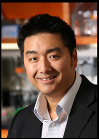
Dean Ho, Ph.D.
Footnotes
References
1.
CunninghamB. T.Photonic crystal surfaces as a general purpose platform for label-free and fluorescent assays.JALA2010, 15(2), 120–135.
2.
AdamsJ. D.; Tom SohH.Perspectives on utilizing unique features of microfiuidics technology for particle and cell sorting.JALA2009, 14(6), 331–340.
3.
MeckerL. C.; MartinR. S.Coupling microdialysis sampling to microchip electrophoresis in a reversibly sealed device.JALA2007, 12(5), 296–302.