






Abstract
Over the past few years, a series of novel microfluidic-based instruments were developed by ThalesNano, Inc. to carry out dangerous and difficult to perform chemical reactions in a safe and fast manner, resulting in superior performance to what commercial batch reactors could provide. Importance of microfluidic devices is continuously raising, as seen there are more and more publications, applications and devices in this field expanding the borders of chemistry. Furthermore, as one of the main advantages for pharmaceutical applications, these new revolutionary reactors allow the fast, on-the-fly mode optimization of different heterogeneous reactions in a high-throughput fashion. The heart of the reactor systems is the actual reactor bed, called the CatCart system. CatCarts allow easy handling of heterogeneous catalyst or immobilized reagents without further purification of products. In addition, the shoe-box size of these reactors makes them available from laboratories to industrial applications.
Keywords
Introduction
Hydrogen is one of the most frequently used reactions, carried out in organic chemistry laboratories, even though reactions with hydrogen are dangerous and require special safety precautions and external hydrogen source. A novel technology to perform hydrogenation reactions in a safe and quick manner was developed by ThalesNano, Inc. This device (H-Cube) is the first member of the so-called cube series (Fig. 1). H-Cube is a winner of the 2005 R&D 100 Award for the top 100 most technically significant product introduced to the market in 2005. Furthermore, H-Cube is the only one microfluidic-based hydrogenation system that works at high temperature and pressure. 1 The hydrogen required is generated in situ from electrolysis of water within the shoe-box size reactor and combined with the reagent/solvent mixture before it is directed into the reaction line by a fluidic pump. After combining the reagents, the mixture is passed through the prepacked catalyst holder system (CatCart), where the actual reactions take place, and the products emerge into the collector vial within minutes (Fig. 2). The CatCart technology allows us to use hazardous or air-sensitive catalysts/reagents without any danger or need of inert atmosphere. Furthermore, either end of the stainless steel tube allows the solvent to pass through the column without washing out the filled material and resulting in pressure change in conjunction with the easy handling. The device allows chemists to perform heterogeneous catalytic reactions at temperatures and pressure up to 100 °C and 100 bars, respectively, with high yield and conversion.
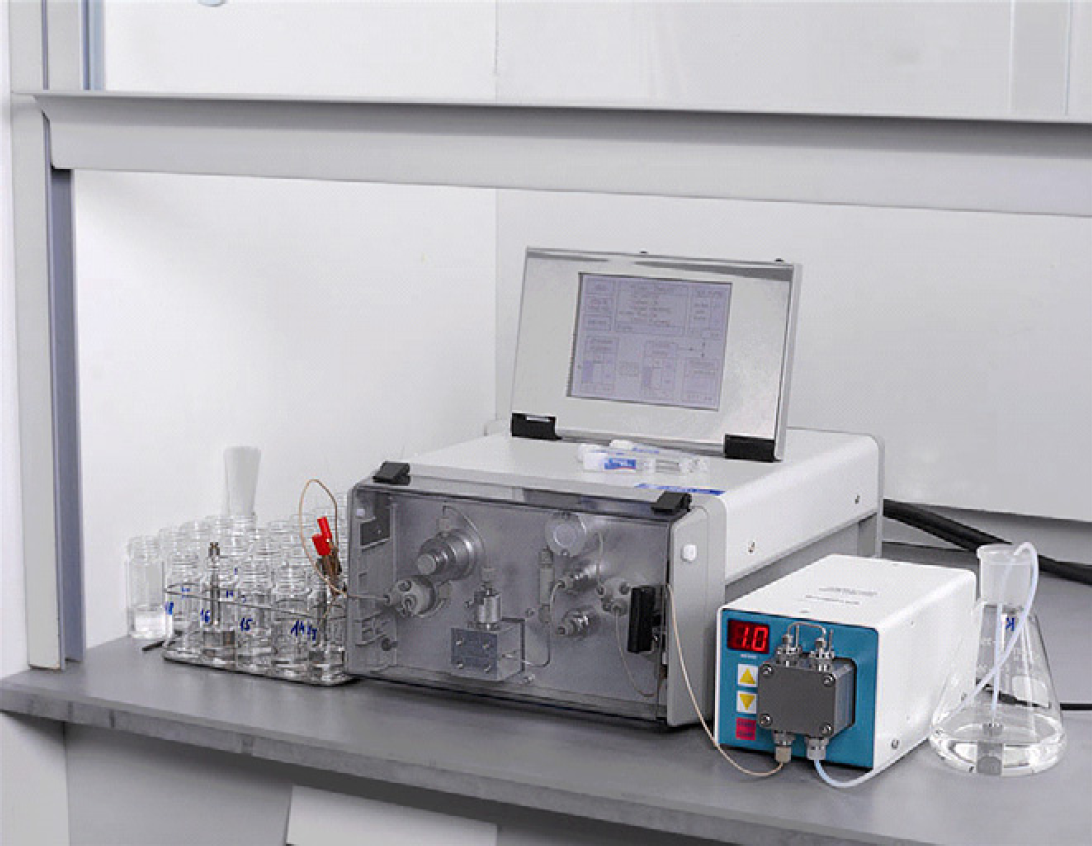
The H-Cube hydrogenation reactor.
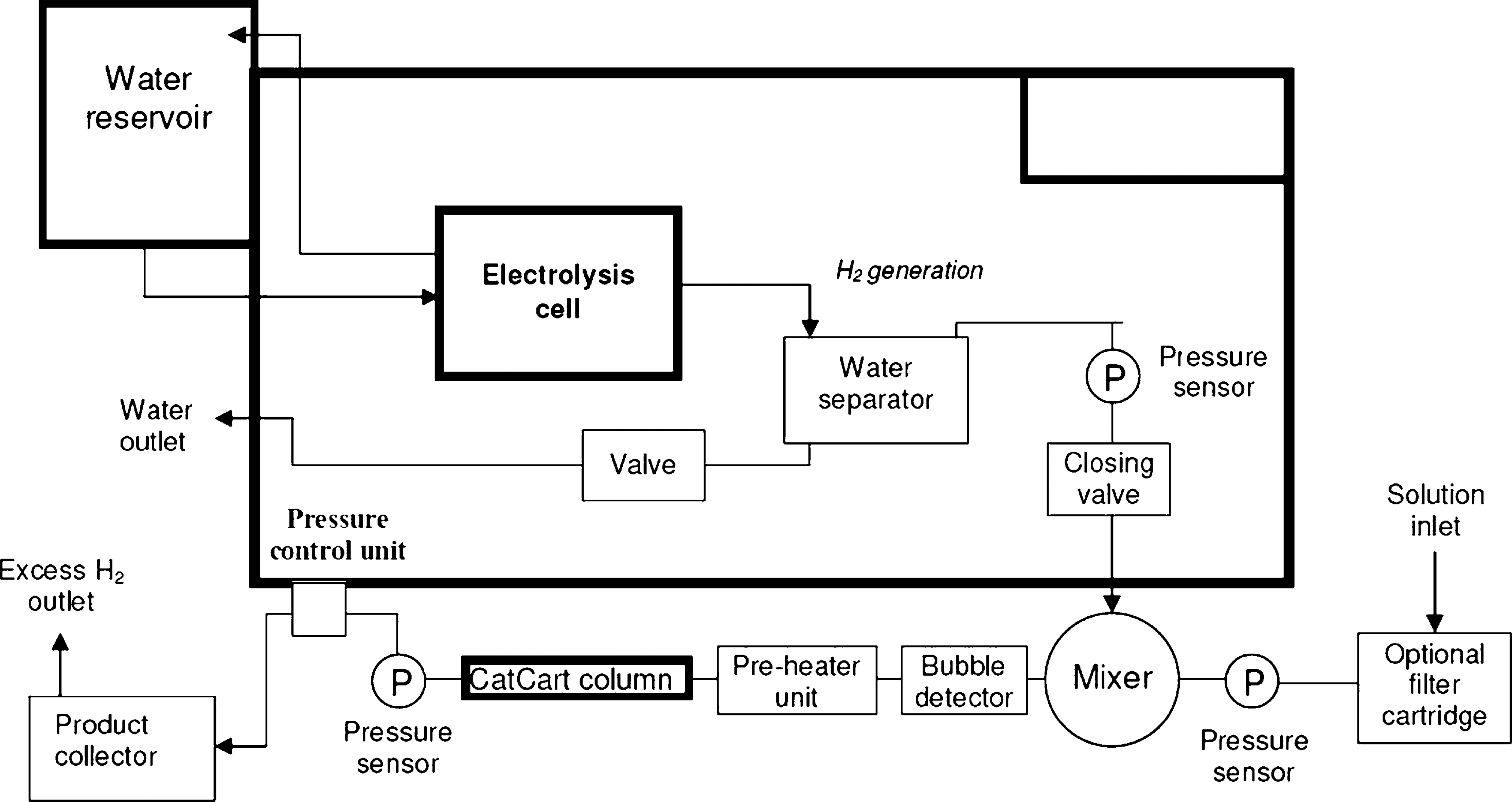
Schematic design of the H-Cube instrument.
Automated systems are necessary for laboratories to carry out reaction optimization faster and to eliminate human presence. The newly developed, successful integration of a liquid handling workstation into the H-Cube reactor allows users to perform more than 50 reactions per day unattended, even if the starting material or the product is hazardous. 2 With its capabilities in sample injection and fraction collection, the H-Cube Autosampler, which is a Gilson G-271 directly integrated to the H-Cube and controlled by a PC run software, can be used for library syntheses, fast reaction optimization, and catalyst screening. Experiments can be run unattended and supervised remotely from a central location using the Windows-based software to set reaction conditions, injections, and collecting of products.
Using the same continuous-flow technology, another generation of cube reactors, called the X-Cube (Fig. 3) was developed to perform different organic chemical reactions. The reactor contains a dual HPLC-pump system completed with a manual injection system which can introduce the reagent mixtures in different fashion. Furthermore, the design of the reactor allows us to add different gases from external gas sources into the reaction mixture to carry out tri-phasic reactions. The same CatCart technology is used as in the case of H-Cube. However, this instrument has a dual catcart-holder system containing heterogeneous catalysts, immobilized homogeneous catalysts, immobilized reagents, inert fillings, or scavengers. As opposed to the H-Cube, this novel reactor may be pressurized up to 150 bars and heated up to 200 °C.
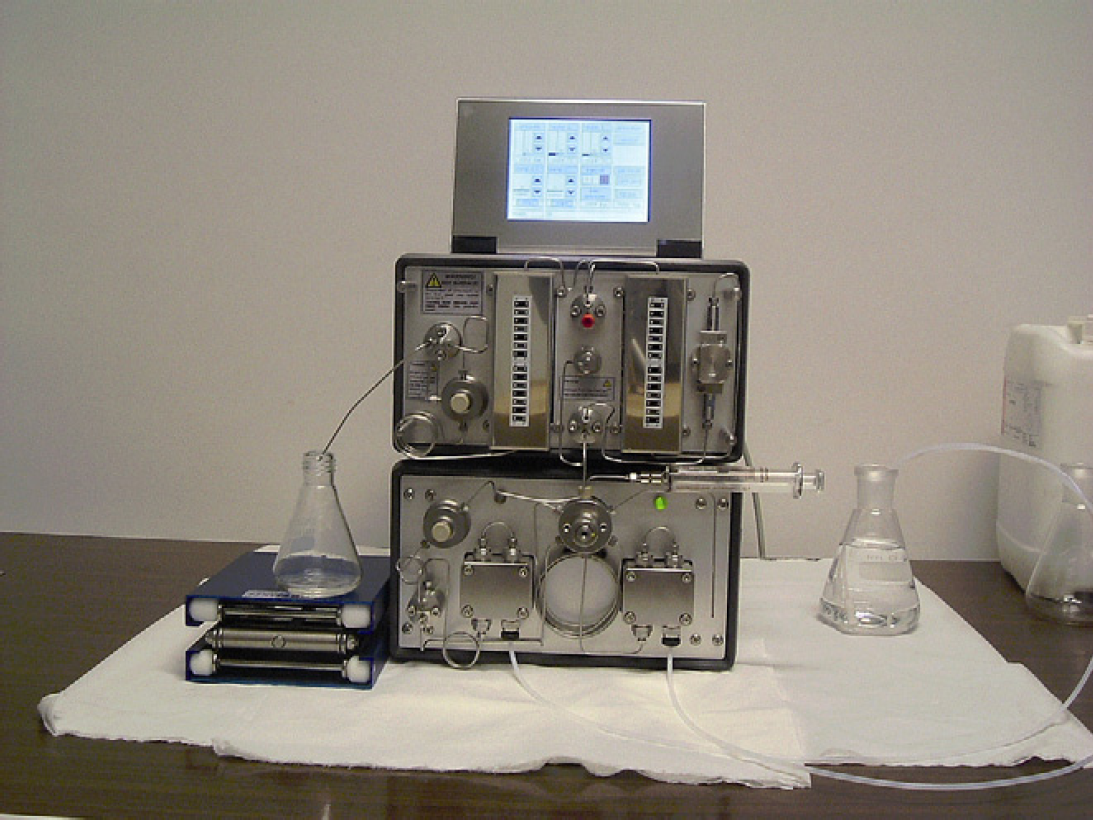
The X-Cube flow reactor.
Experiments Using H-Cube
The general protocol is as follows: the stainless steel CatCart filled with heterogeneous catalyst such as 5% Pd/C, Raney Nickel or Wilkinson's Rh(TPP)3Cl is pretreated by passing the eluent through the device by an HPLC-pump for 2 min. After setting up desired reaction parameters (by using the touch screen interface), such as the flow rate of reagents, pressure of hydrogen, and temperature, the eluent is changed to the reaction mixture and the product is collected to sample vials for analytical measurements within minutes. The total time including sample preparation for one reaction is about 10–20 min. Optimizing the reactions can easily be carried out by changing the temperature while the reaction is in progress. 3 Different type of hydrogenation reactions (Fig. 4), even chemo- and stereoselective ones can be carried out. Such reactions include double bond hydrogenation (in batch this reaction needs 250 °C and 40–50 bar for yield of 64%) and chemoselective reduction of ketones (in batch: required 0 °C to yield of 76%). 4 –6 Furthermore, using deuterated water, deuterated products can also be synthesized (in batch: Wilkinson catalyst with 20% yield). 5 Examples are listed below with their reaction conditions. As can be seen in table 1, using the H-Cube makes it easy to reach high conversion and purity. Using the H-Cube, novel compounds can be synthesized fast.
Reaction summary for the Cube reactors
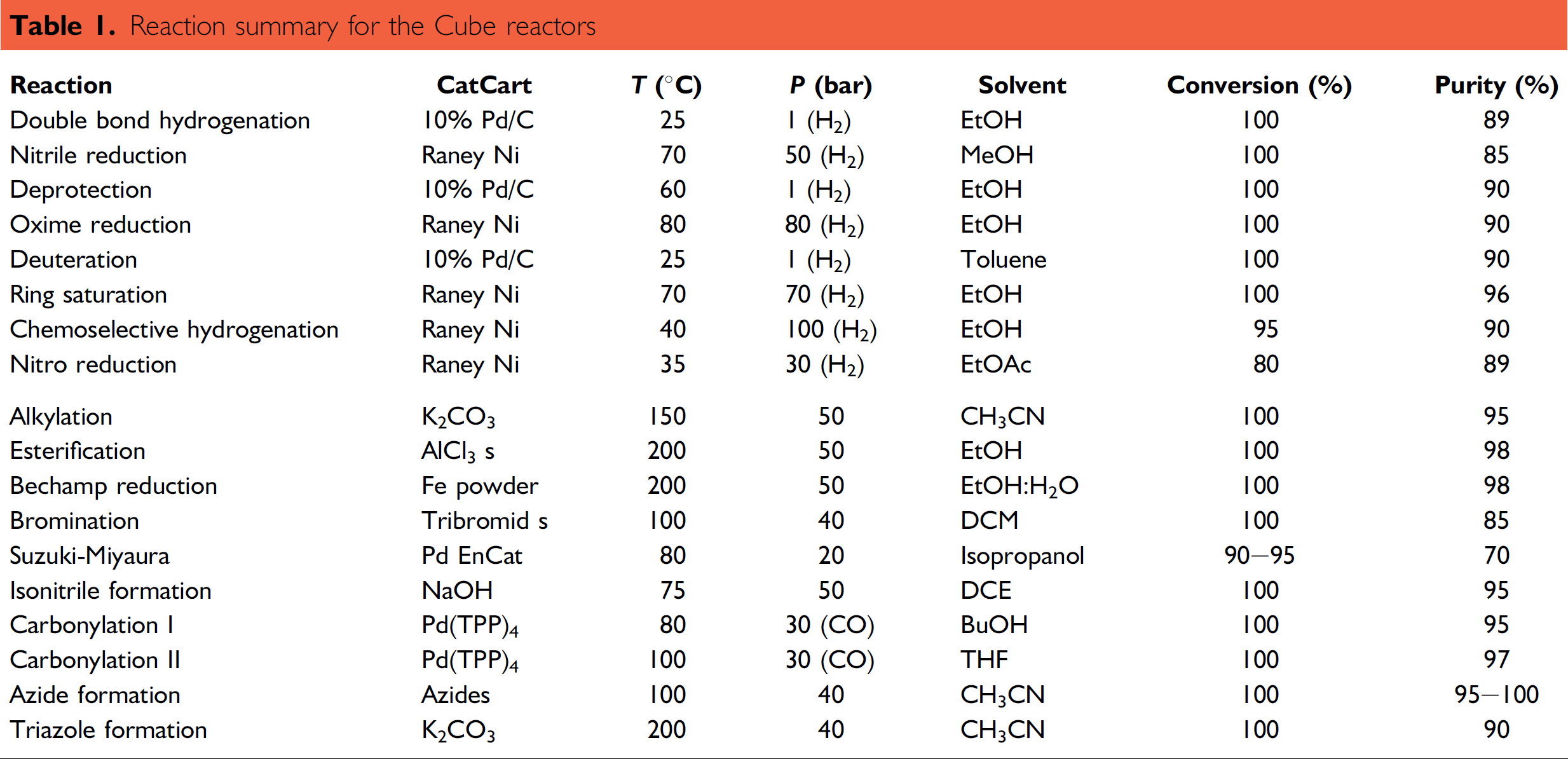
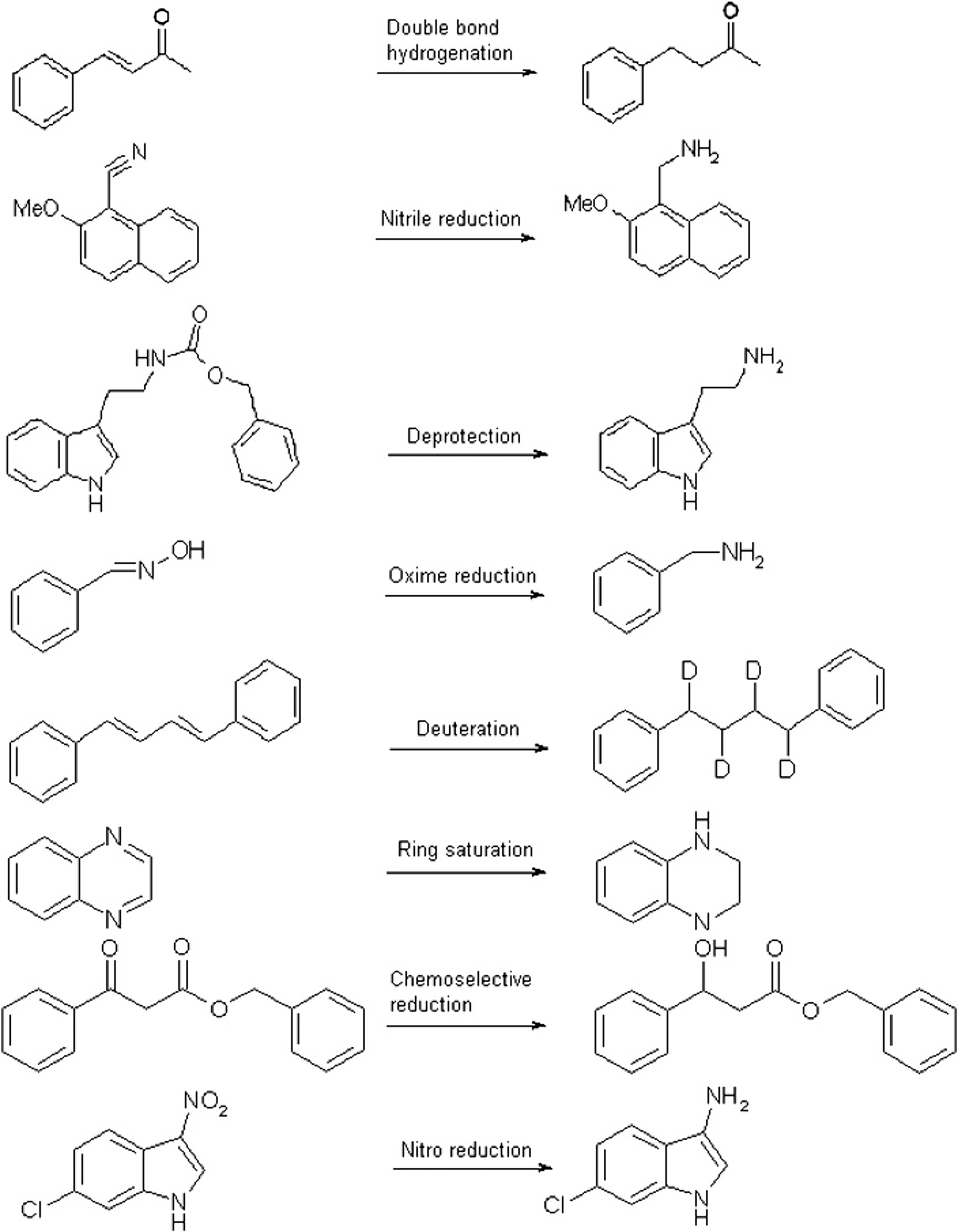
Reactions performed on the H-Cube.
Experiments with X-Cube
The experimental protocol is similar to the one used for the H-Cube, but in this case a double HPLC-pump–injector system passes the reagents or eluent through the catcarts. It is also possible to inject the reaction/solvent mixture directly to the eluent (Fig. 5). The passing starting material at desired flow rate (up to 3 mL/min, intervals of 0.1 mL/min) reach the catalyst/reagent cartridge, where the reaction takes place at set temperatures (up to 200 °C, intervals of 5 °C) and pressures (up to 150 bars, intervals of 5 bars) and finally, the product is emerged into the collection vial. Furthermore, to be able to perform triphasic reactions, there is a possibility to introduce different gases from external gas sources into the instrument through a series of valves and a gas buffer. Controlling is similar to the H-Cube, some examples can be seen in Figure 6. Note that every parameter can be modified in the main menu and the current status of any conditions (e.g., the valve positions) can be followed on the service panel. Some reaction examples performed on the X-Cube are listed below (Fig. 7 and table 1): (1) alkylation (in batch: reaction time is 19 h with yield of 76%), (2) Bechamp reduction, azide synthesis (compare to batch reaction: reaction time is 12 h and yield is 91%), and (3) with external carbon-monoxide source, carbonylation (in batch: 12 h reaction time with 20% yield). 7 –9
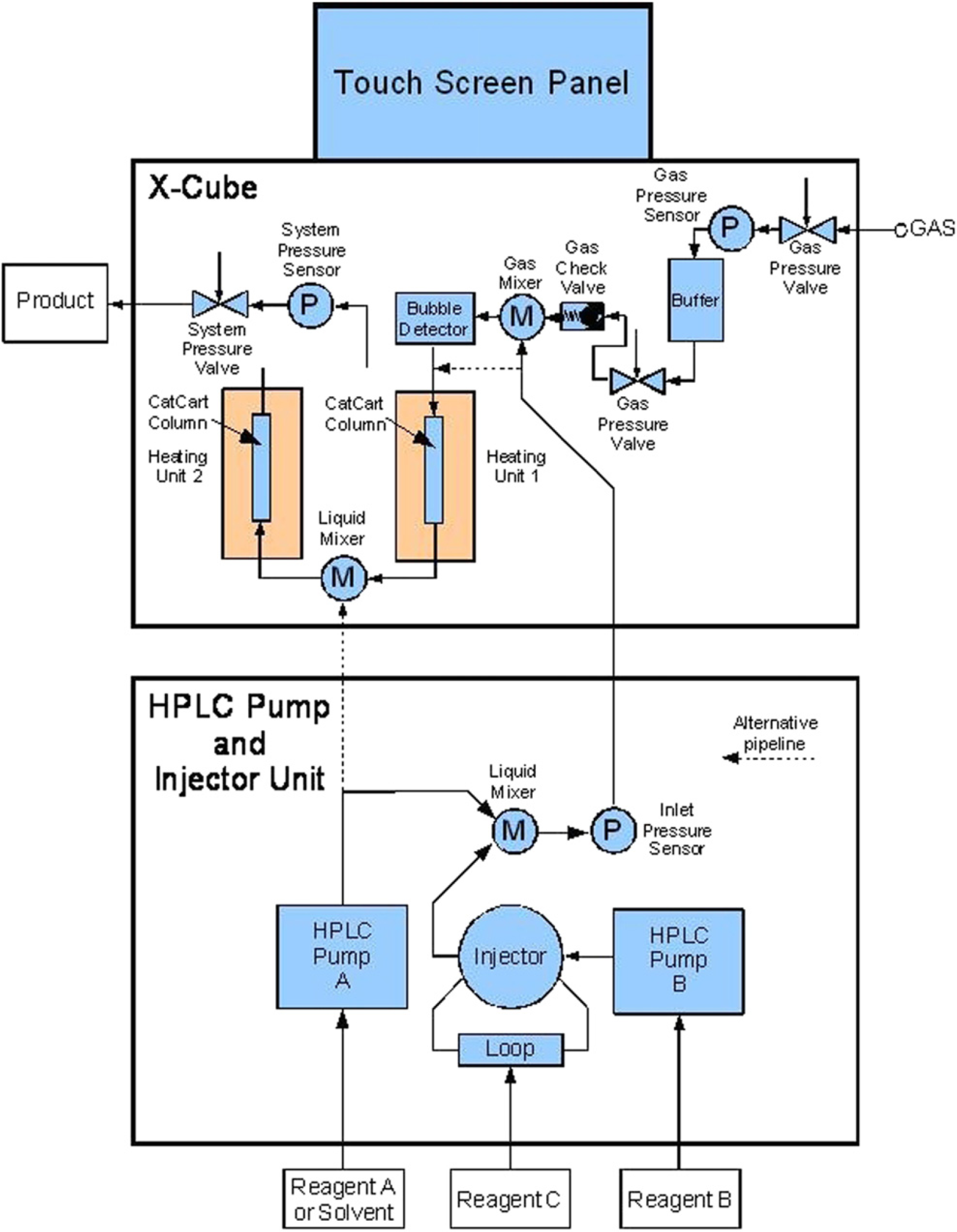
Schematic design of the X-Cube instrument.
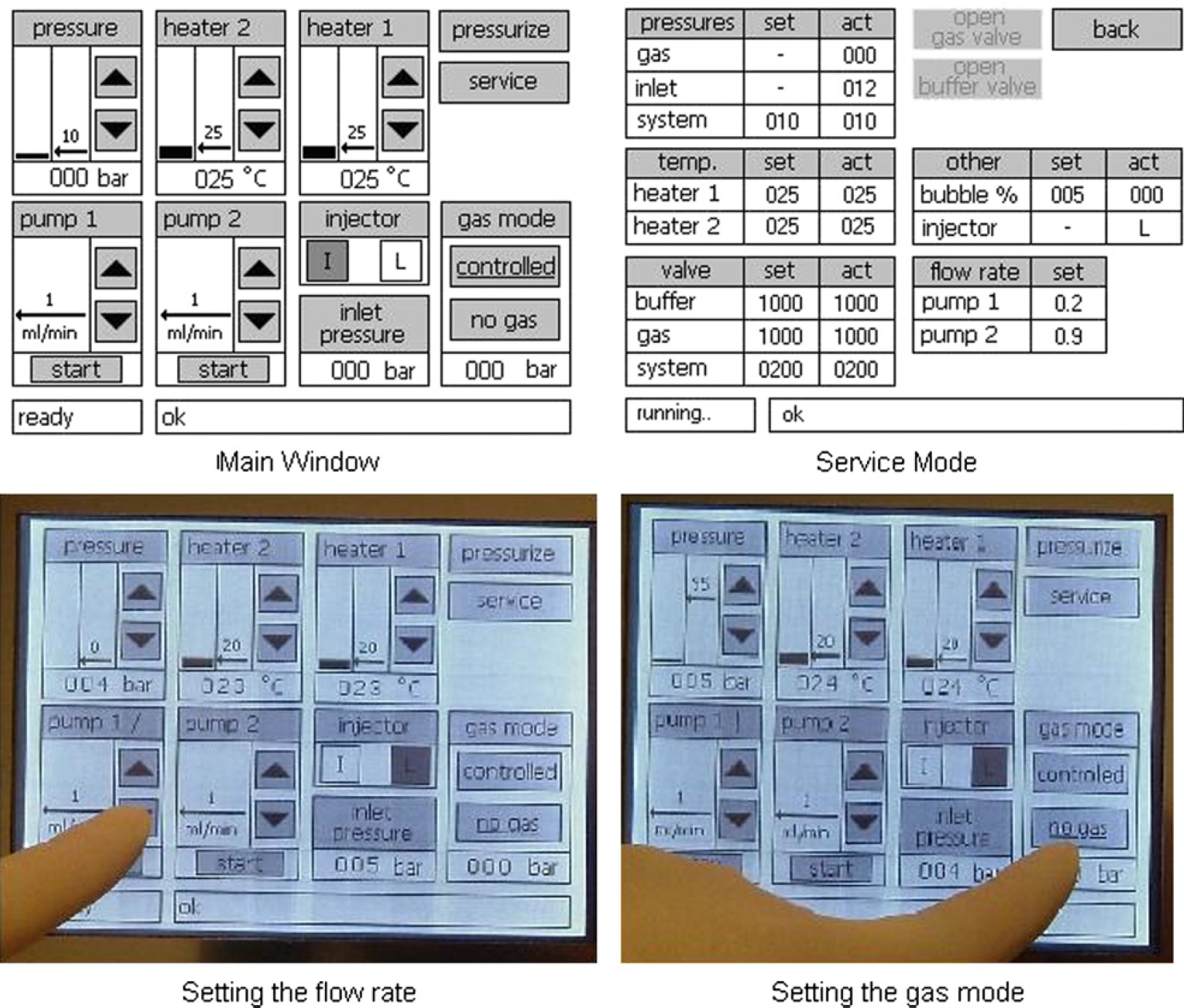
Controlling the X-Cube using the touch screen of the device.
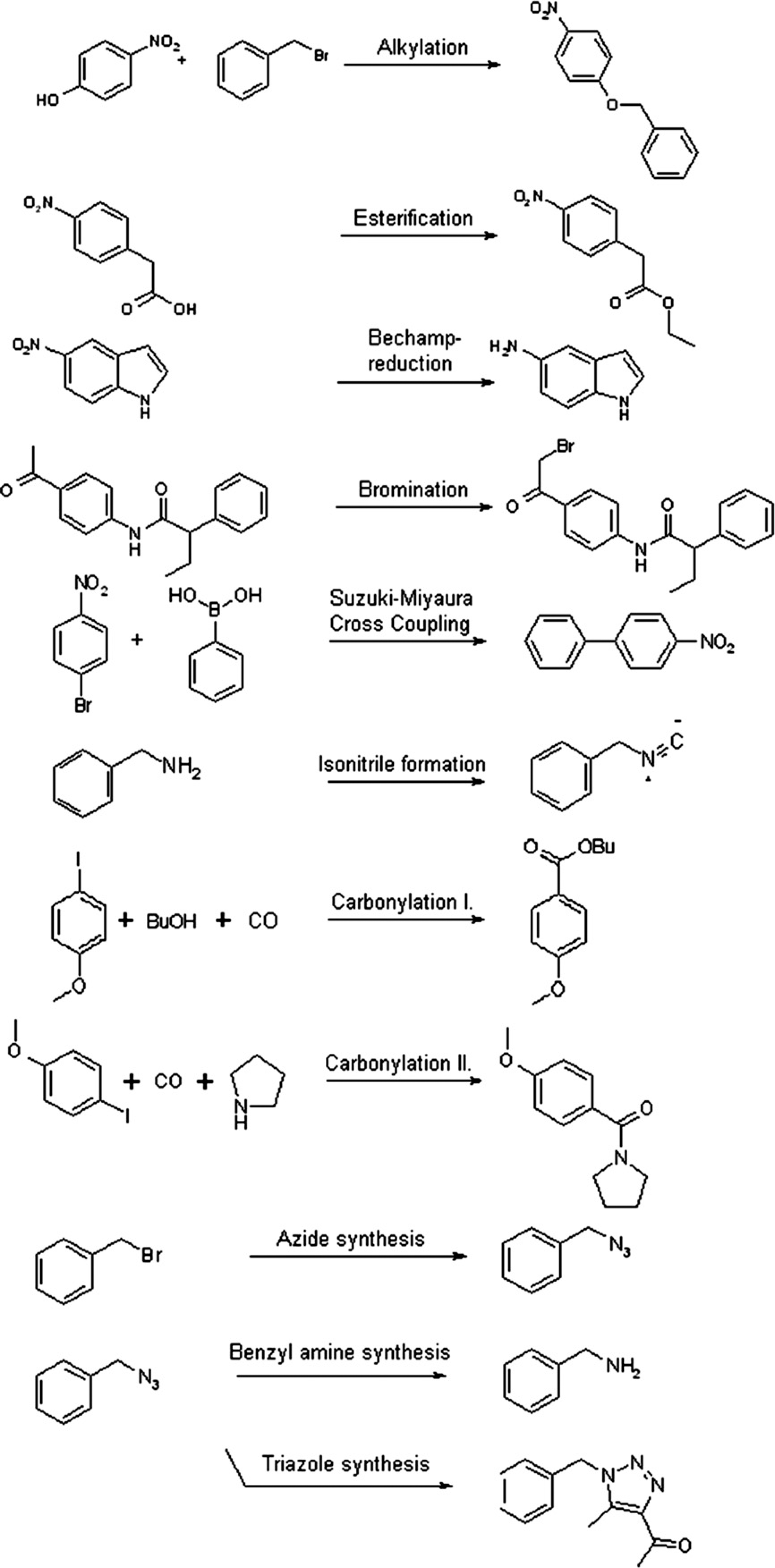
Reactions performed on the X-Cube.
Conclusion
We have presented that continuous-flow catalytic reactions at elevated pressures and temperatures using the H-Cube and X-Cube systems that were developed by ThalesNano, Inc. These novel instruments dramatically reduce optimization time and allow integration with liquid handlers for automation. These technologies are applicable for high-throughput optimizations, and library syntheses safely and efficiently under well controlled conditions. Wide range of organic reactions have been carried out using the “cube generations” including selective hydrogenations, frequently used organic reactions, such as alkylation or unpleasant carbonylation, Sonogashira-type reactions, and in situ reagent formations. Reproducibility of the reactions was also studied and the activity of the catalysts/reagents was found to be constant for hours.
The integration of liquid handler into the H-Cube system is the first example of performing remote controlled, automated, continuous-flow reactions (Fig. 8).
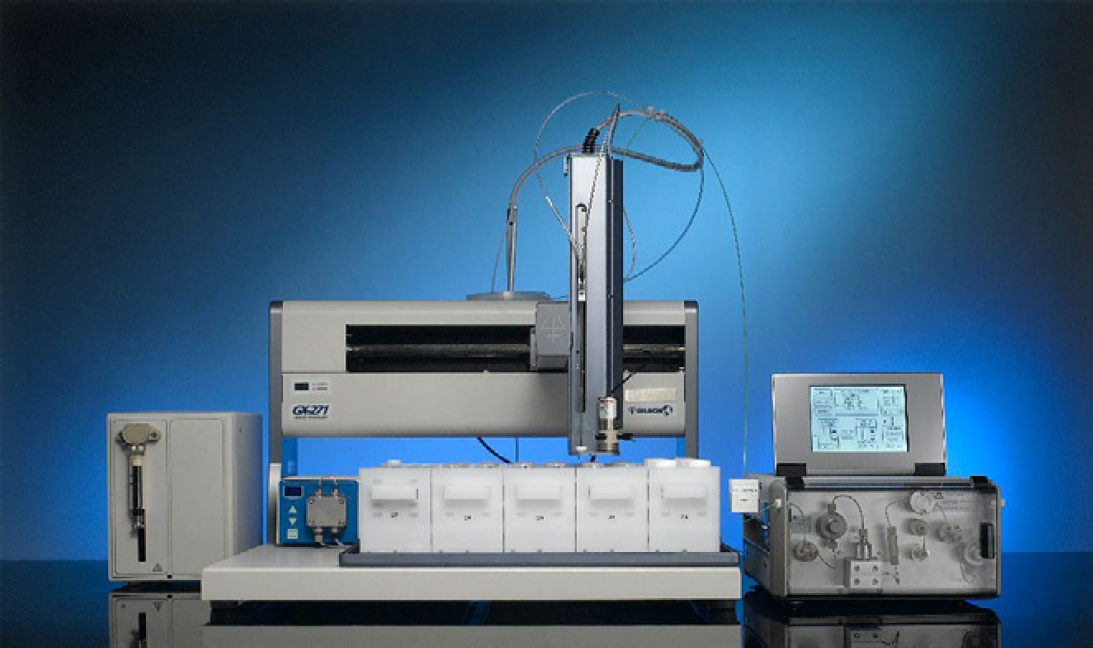
Integration of the liquid handler into the H-Cube.