






Abstract
Multiparallel and combinatorial syntheses have enabled chemists to produce a vast number of chemical compounds for hit- and lead-finding campaigns. For high-throughput screening (HTS), these compound collections are typically dissolved in dimethylsulfoxid (DMSO) and stored at temperatures ranging from —80 °C to room temperature (RT). Having compounds readily available as DMSO solutions greatly facilitates HTS. However, there are a number of stability and solubility issues associated with compounds stored as DMSO solutions. 1 –8 To ensure compound integrity for a long period of time, we have developed a simple dry compound storage concept called DotFoil, from where compounds can be redissolved in a fast, reliable, and easy way and directly used in conventional 96- or 384-well plate based HTS (1536-well format is not supported at this time). Our results indicate that compounds are more stable if stored as dry film on DotFoils, compared to storage as DMSO solutions at +4 °C or RT. Redissolving the dry film of very apolar compounds like triphenylamine, even with a very small extraction volume of 2 μL DMSO, allows > 80% of the total amount of compound to be recovered in solution using the current prototype equipment. Cross contamination between individual wells during the process of redissolving compounds was negligible. Composition of our prototype equipment, procedure, and equipment for the extraction step to redissolve the dry film are described.
Introduction
Compounds used in high-throughput screening (HTS) for hit and lead finding require a high degree of purity to correlate structure with activity. Determination of the active component in a mixture can be tedious or even impossible and considerably delay the early discovery process. Therefore, chemists spend a large effort on the purification of compounds intended to become part of a screening collection. 9 –12 Storage conditions of large compound collections greatly influence compound stability and integrity, 6 and hence, the final outcome of a screen. For HTS, compounds need to be in solution to allow handling by automated pipetting devices, and therefore, most HTS compound collections are prepared and stored as a solution archive. It is well accepted that storing HTS compound collections in a crystalline or dry format assures prolonged compound integrity, 6 but rapid access to the compounds for HTS and the lack of a convenient, highly replicative storage system prevents dry storage today. Most companies, therefore, make use of dimethylsulfoxide (DMSO) solutions for several months, before they go through the tedious process to prepare new solutions from solid compound stocks. This process is time-consuming and uneconomical because unused compounds are wasted. A common solvent for compounds is DMSO. DMSO is nearly inert, has a high boiling point, and has good solvent behavior. However, DMSO is hygroscopic and dissolves a large amount of oxygen, which might lead to oxidation of certain compounds. Storing compounds in DMSO reflects a compromise between compound solubility and compound integrity. Several compound storage systems, which can store compound solutions ready to be integrated into the HTS process, are available. 13 –16 Individual HTS campaigns are normally not started from solid compounds due to the lack of efficient systems and processes. The ideal solution for compound storage should address both compound stability and an efficient and seamless integration into the HTS process. Since modern high-throughput compound syntheses methods deliver compounds for HTS projects in low-mg quantities, efficient usage of compounds should also be considered.
We describe a dry compound storage and retrieval concept, DotFoil, based on space-saving dry film storage of compound collections. Issues of compound stabilities, quantitative recovery of compounds, cross contamination during extraction, and integration into an existing process making use of commonly available robotic and liquid handling systems are addressed.
Materials and Methods
Manufacturing and Handling of DotFoils
A DotFoil is a few μm thick aluminum composite sheet coated on one side with polypropylene (PP) to carry the compound dry film (Alu-Exportfoil E-100, VTT Industri-ebedarf GmbH, Reinach, Switzerland). The back side of the composite sheet is welded onto a 1-mm thick polyethylene-terepthalate (PET) (Veralite, IPB n.V., Waregem, Belgium) carrier containing holes at positions identical to a standard 384-well (or 96-well) microtiterplate (MTP). After printing the bar code onto the DotFoil, the foil is pressed against the carrier using a 384-needle (or 96-needle) press to obtain wells into the foil. Each well has a volume of 1-2 μL.
Compound stock solutions (1 to 2 μL of a 2 to 10-mM DMSO solution) are pipetted to empty DotFoils being placed onto a transfer carrier (to increase weight and allow stacking) using commercially available pipetting devices. The compounds on the DotFoil are dried under an inert, dry, laminar gas flow for 12 h. The dried compounds on DotFoils are removed from the pipetting carrier and stored upside down in a dark, dry, and inert environment (e.g., a gas container flooded with dry nitrogen). DotFoils can be removed from the store and directly integrated into the screening process (Fig. 1).
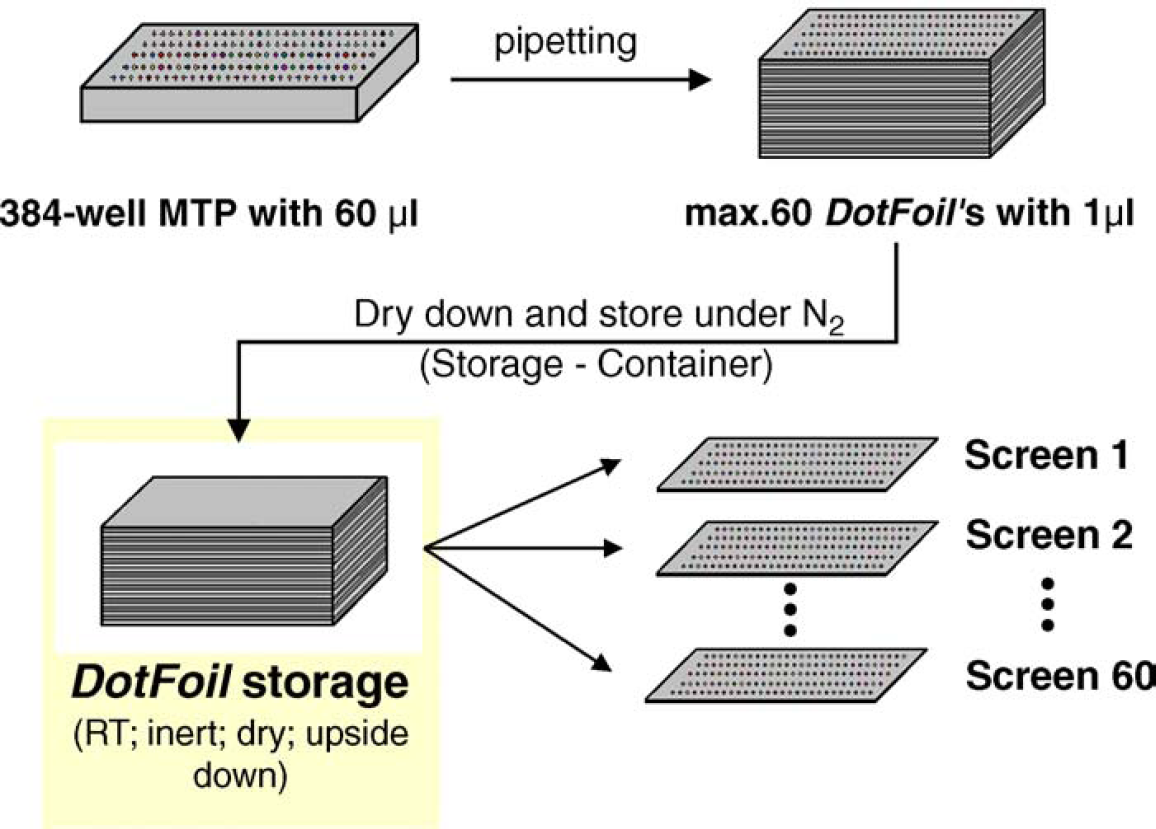
Principle production and application process. DotFoils are loaded with an automated liquid transfer from a 384-well MTP. From 60-μL compound solution, up to 60 DotFoils with μL per dot (2-10 mM) could be prepared and dried under an inert, dry, and laminar nitrogen flow. Compounds are stored upside down in a dark, dry environment at ambient temperature. For a screening campaign, one of these loaded DotFoils will be redissolved and used for HTS. Up to 60 screening campaigns could be run without compound loss.
Redissolve Compounds from DotFoils
To redissolve the dried compounds for the screening process, a DotFoil is taken from the inert environment and placed onto an MTP prefilled with solvent (Fig. 2). Pure DMSO or mixtures of DMSO with other organic solvents, buffer systems, or detergents can be used as solvent. The volume of the solvent can range from 1 μL to the maximal well capacity of the MTP. The DotFoil is pressed onto the MTP in the extraction unit. The compound is brought into contact with the solvent by turning the stack upside down. The unit with the DotFoil is shaken for 2-3 min at 1000 rpm. The stack is then turned back again and centrifuged for 1-2 min at 1500 rpm to collect the compound solution at the bottom of the MTP wells. Finally, the stack is disassembled and the DotFoil discarded. At this stage, the compounds in the MTP are ready to be used in a screening campaign.
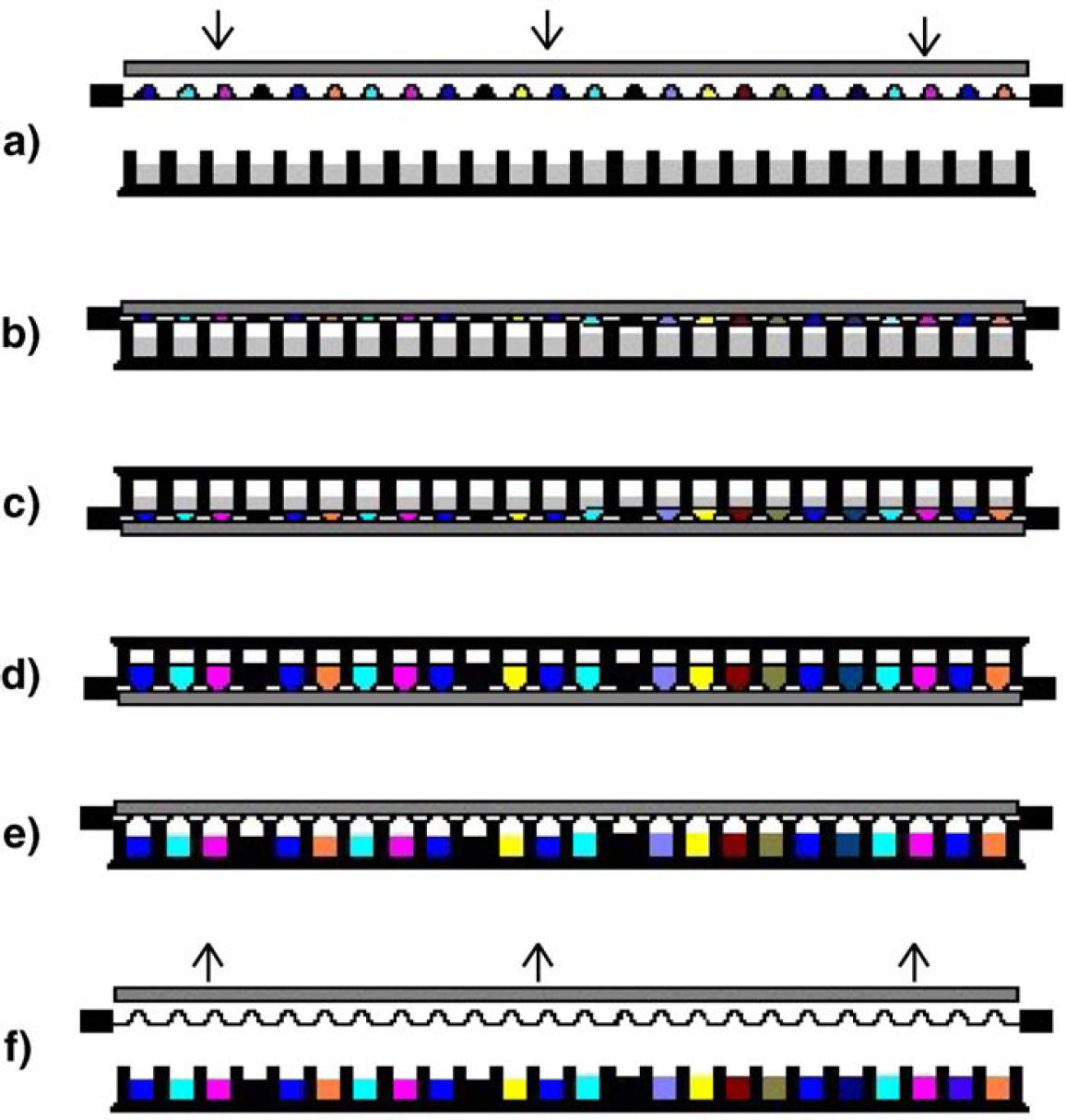
Handling for redissolving compounds from DotFoil into standard MTP. A DotFoil is placed on top of a prefilled MTP (a), assembled (b), and turned upside down allowing the liquid to come in contact with the dry film (c). After shaking, the compound is redissolved (d), and after turning entire stack back with the subsequent centrifugation, the solution is collected at the bottom of the MTP(e). After disassembling the extraction unit, the MTP is ready to be used in a screening campaign (f).
DotFoil Pipetting Carrier
For automated liquid handling and to dry the DMSO stock solution, a pipetting carrier made from aluminum is necessary for each DotFoil. It is used to increase the weight of a DotFoil and to ensure compatibility for standard automated pipetting devices and subsequent compound handling. After drying, the carrier is removed and can be used multiple times for this purpose.
Extraction Unit to Redissolve Compounds
The extraction unit is required for redissolving and transferring compounds back into MTPs. The extraction unit precisely adjusts the DotFoil on top of a prefilled MTP, avoiding cross contamination or leakage during the redis-solving step. The final centrifugation step of the stacks to collect the freshly prepared compound solutions at the bottom of the MTP wells can also be performed within the extraction unit without the necessity of demounting it. In the current prototype version, one extraction unit contains two pressure lids (Fig. 3 (5a and 5b) and Fig. 4), one compressor lid (Fig. 3 (4)) mounted on top of the unit frame, and an adjustment frame (Fig. 3 (2)). Unit frames and the compressor lid are built of aluminum, whereas the pressure lids are built of aluminum on the cover and rubber on the bottom side. This ensures an evenly distributed pressure over the entire plate area. The adjustment frames are prepared from polypropylene.
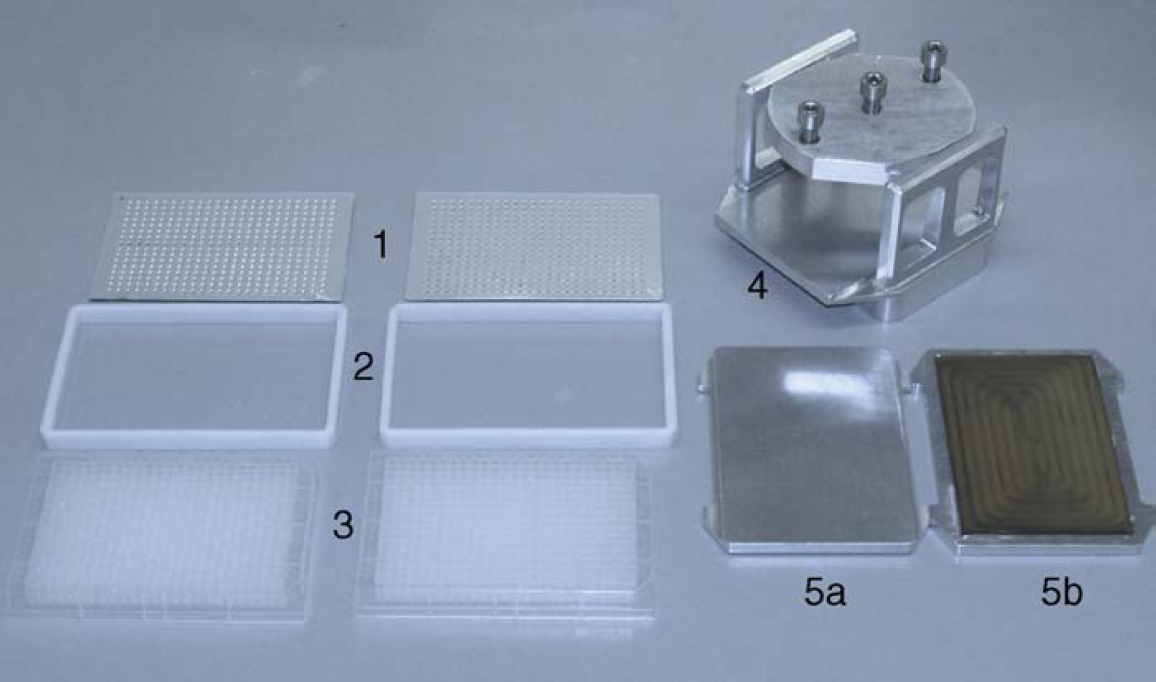
Prototype extraction unit used for redissolving compounds from DotFoil into an MTP. For usage of the extraction unit, the DotFoil (1), is placed on top of the MTP (3), adjusted with the adjustment frame (2), and placed inside the unit frame (4). For more than one plate in a stack, a pressure lid (5a), is placed with the rubber side (5b), on top of the DotFoil, and another MTP with a DotFoil is placed onto it. Another pressure lid is placed on top of the second DotFoil and MTP stack, and finally, the entire stack is tightly pressed together by the compressor lid (on top of the unit frame).
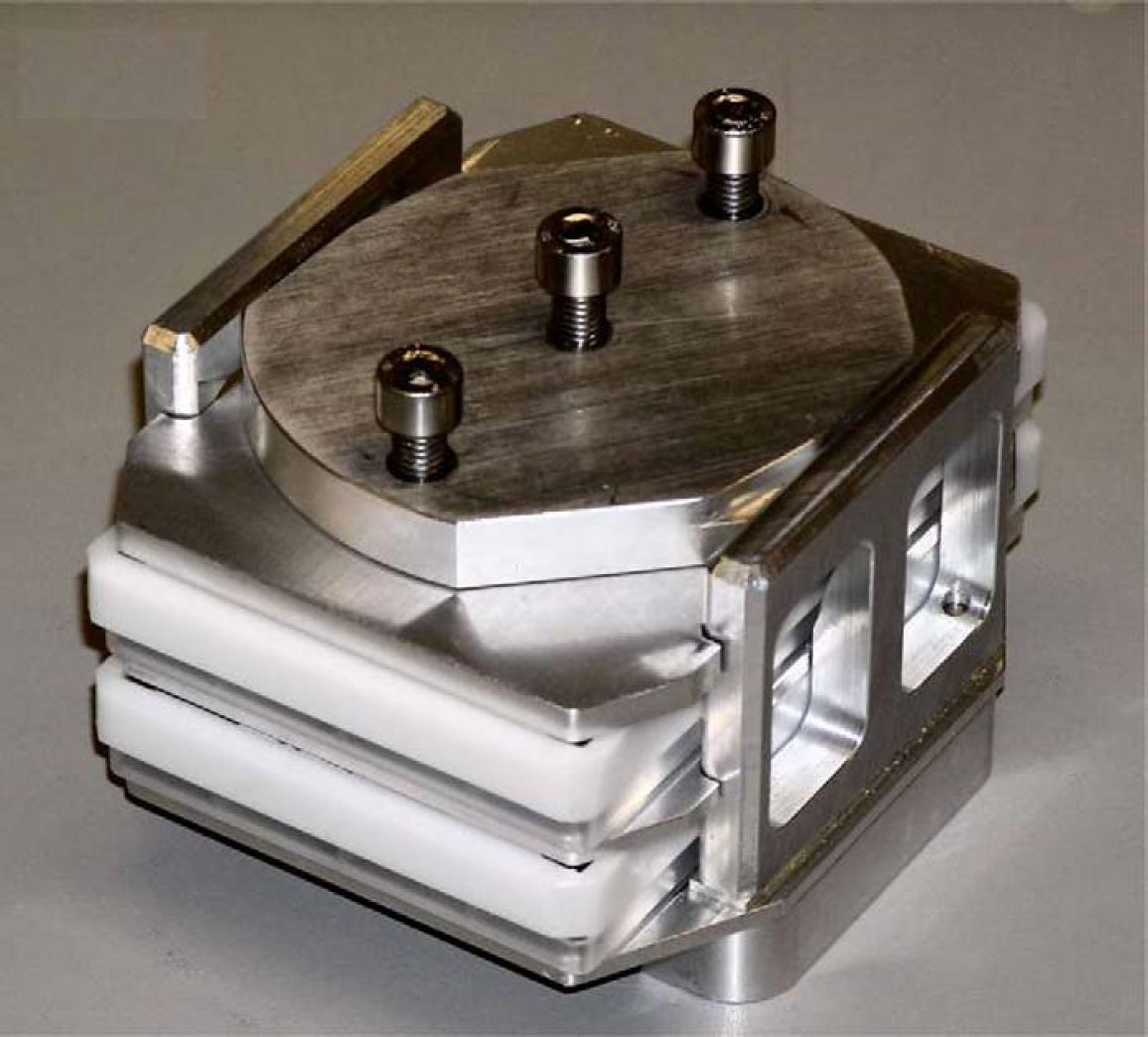
Assembled extraction unit with two MTP/DotFoil stacks ready for use in a shaker to redissolve compounds, or centrifugation to bring solution back to the bottom of the MTP.
For mounting the extraction stack, an MTP filled with DMSO is placed into the unit frame. Then a DotFoil is put into the adjustment frame (compound side up), and the adjustment frame is turned and placed on top of the prefilled MTP. Finally, the pressure lid covers the first stack. A second DotFoil and MTP stack is added on top of the pressure lid of the first DotFoil and MTP stack, and then the entire stack is tightly pressed together by the compressor lid. For centrifu-gation, the extraction unit can be put into an ordinary centrifugation support unit or serve directly in place of a centrifugation support unit.
Chemicals and Instrumentation
The following chemicals were used: DMSO puriss, acetonitrile (HPLC gradient grade), tartrazine puriss, fluorescein (acid free) from Fluka Chemie GmbH (Buchs, Switzerland), triphenylamine from Aldrich (Buchs, Switzerland), carbamazepine (USP) from Sigma (Buchs, Switzerland), bis-(4-hydroxyphenyl)-sulfone (f.s), and caffeine (puriss) from Merck (Dietikon, Switzerland).
For fluorescence analyses, a POLARstar from BMG LABTECH GmbH (Offenburg, Germany), and for absorbance measurement an Ultramark Reader from Bio-Rad Laboratories AG (Reinach, Switzerland) was used. Highperformance liquid chromatography coupled with ultraviolet and mass spectrometric detection (HPLC-UV/MS) analyses were performed on a binary high-pressure gradient system from Shimadzu (Reinach, Switzerland) with two LC-10ADvp pumps and a SPD-10Avp UV-Detector under control of an SCL-10Avp system controller. An API 150ex mass spectrometer from Applied Biosystems (Rotkreuz, Switzerland) was used for MS analyses. For automated sample injection, a PAL HTS from CTC Analytics was used (Zwingen, Switzerland). For the TR-FRET assay, a ViewLux reader (Wallac, Turku, Finland) and LANCE reagents (Perkin Elmer, Geneva, Switzerland) were used.
Experiments and Results
Compound Recovery from DotFoils
The aim of this experiment was to determine whether extraction of compound dry films from DotFoils into standard 384-MTPs can be performed without any edge effects, using our prototype equipment. A 1% w/v DMSO solution of tartrazine, a polar dye, was prepared. A 1-μL portion of tartrazine solution was pipetted into each of the 384 wells of the DotFoil with a 384 CyBi-well from CyBio AG (Jena, Germany). The tartrazine solution on the DotFoil was dried under a laminar flow of dry nitrogen for 12 h and stored for 1 week at room temperature (RT) under nitrogen. The dried tartrazine was extracted from the DotFoil with 1 μL DMSO into an MTP. Subsequent to the extraction step, 70 μL of water were added and 60 μL of the solution were transferred into a flat-bottom MTP. The optical density at 415 nm (OD415) was measured in the plate. The freshly prepared tartrazine solution had an OD415 of 3.0. A total of 3 DotFoils was examined corresponding to 1152 individual wells. For 98% of all wells, an OD of 3.0 ± 0.2 could be observed. The remaining 2% of the randomly distributed wells showed an OD415 ranging from 1.7-2.6. This result demonstrates that tartrazine can be redissolved with high accuracy and re-producibility from DotFoils regardless of the location.
Quantification of the Process to Redissolve Compounds
The aim of this experiment was to determine whether compounds with different properties and originating from stock solutions with different concentrations can be quantitatively extracted from DotFoils. We used carbamazepine (xlogP: 2.3, AlogS: − 3.19) as a highly soluble compound, bis-(4-hydroxyphenyl)-sulfone (xlogP: 2.18, AlogS: −2.61) as compound with medium, and triphenylamine (xlogP: 5.74, AlogS: −4.25) as a compound with low water solubility (in contrast to the AlogS value, our experimental results show that bis-(4-hydroxyphenyl)-sulfone is less soluble than carbamazepine in water at pH 7.4.). AlogS17 represents the calculated intrinsic solubility of the unionized compound in mol/L, and xlogP18 is a calculated parameter for lipophilicity of a compound. Ten millimolar and 2-mM DMSO stock solutions were prepared, and 2 μL, 1 μL, and 0.5 μL of each solution were manually pipetted onto 1 DotFoil in quadruplicates. To push the experiment to its limits, we redissolved the dry films with only 2-μL DMSO back into an MTP with 120-μL nominal volume. After redissolving and subsequent addition of 48-μL water/acetonitrile (1/1 v/v) mixture, HPLC-UV/MS analyses were performed. For quantification, the area under the curve (AuC) of the 210-nm UV trace was used for each compound. MS was used to observe possible cross contaminations. To compare DotFoil experiments with the standard DMSO solutions, the same amount of stock solution was pipetted into an MTP and complemented with 1 - and 1.5-μL DMSO to reach the identical DMSO concentration as for the DotFoil. A high correlation between DMSO compound solutions and the redissolved compounds from DotFoil was obtained even with this very low extraction volume. The relative standard deviation (RSD) of the quadruplicates for DotFoils and DMSO solutions was, on average, below 5%. The quantification of triphenylamine for two concentrations (5 nmol and 1 nmol) was not possible for the DMSO solution because autoinjection failed. Triphenylamine and bis-(4-hydroxy-phenyl)-sulfone showed slightly smaller AuC values for DotFoils than for DMSO solutions (Fig. 5). Carbamazepine, on the other hand, showed slightly higher AuC values for DotFoil. Corresponding values differed by less than 20%. Part of this might be because the DMSO solution from the MTP had to be brought into contact with compound on DotFoil by manual shaking at this prototype stage of the equipment.
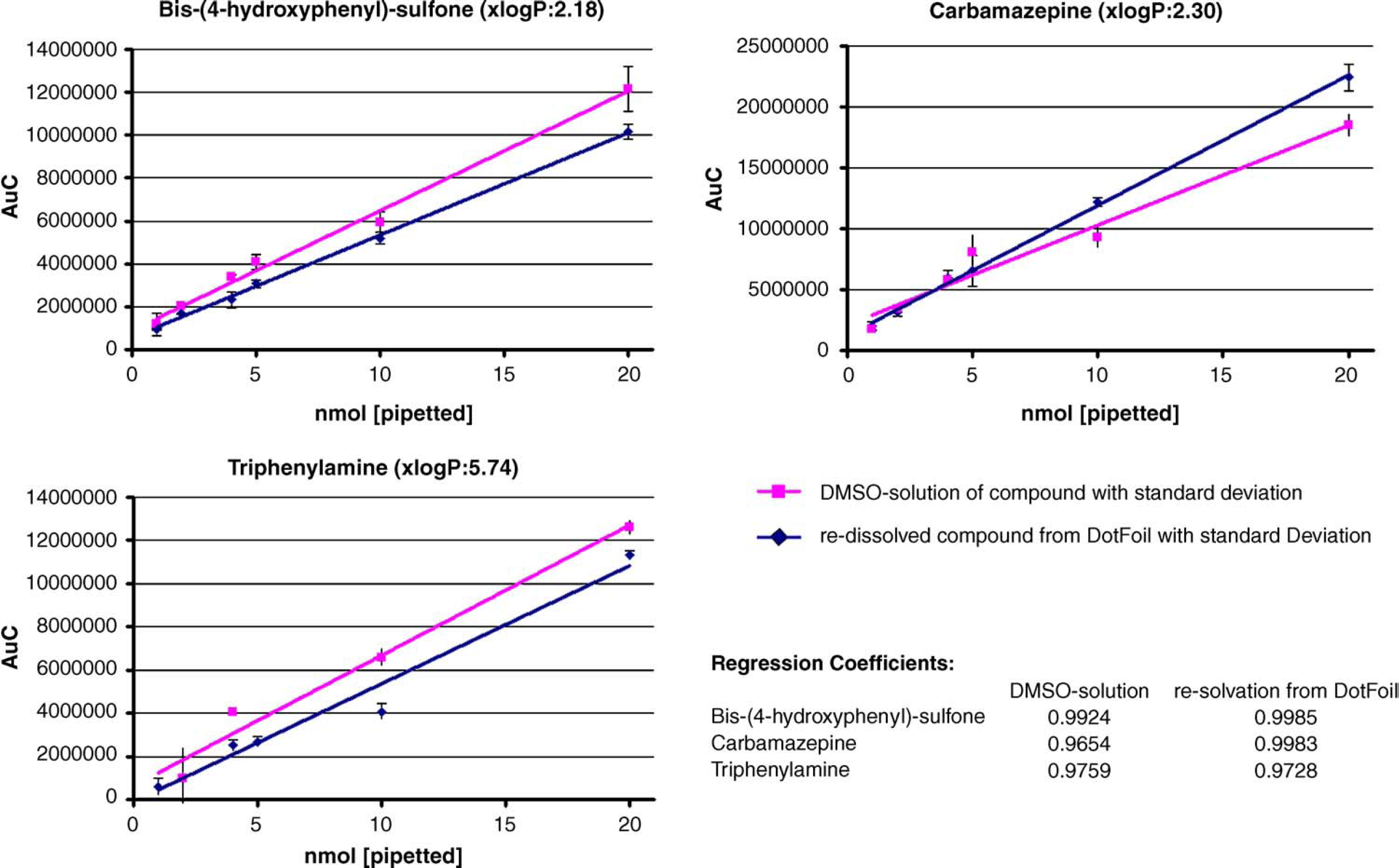
Quantitative extraction of different amounts of compounds from DotFoil versus the same amount of compound prepared from DMSO solution. Different amounts of compounds were pipetted on DotFoils and directly into MTP filled with internal standard and acetonitrile/water mixture. Compounds from DotFoil were extracted and diluted to equal volumes as compounds directly pipetted. Compounds were quantified by HPLC-UV/MS. Regression coefficients indicate reproducibility of pipetting and extraction.
Cross Contamination
To address the question whether cross contaminations occur during the process to redissolve compounds, 2 μL of a 33 μM fluorescein solution in DMSO were pipetted onto DotFoils in a chessboardlike pattern (Fig. 6). The DotFoils were dried as described above. The dry films were extracted using 2 μL of DMSO. Fluorescence intensities were determined by adding 75 μL phosphate-buffered saline (PBS) (pH 7.4) to each well, and subsequently transferring 50 μL into a black MTP to determine fluorescence at an excitation wave length of 485nm and emission wave length of 520 nm on a POLARstar-fluorescence reader. Empty wells showed a background signal of 7 ± 2 fluorescence intensity units (FI units). Wells containing fluorescein solution showed fluorescence intensities in the range of 50,000 to 60,000 FI units with an RSD of 5%. The experiment was repeated five times under the same conditions. Only one single well out of 1720 blank wells showed a small cross contamination with 32 FI units corresponding to 0.05% of the fluorescence intensity of fluoresceine-containing wells (Table 1).
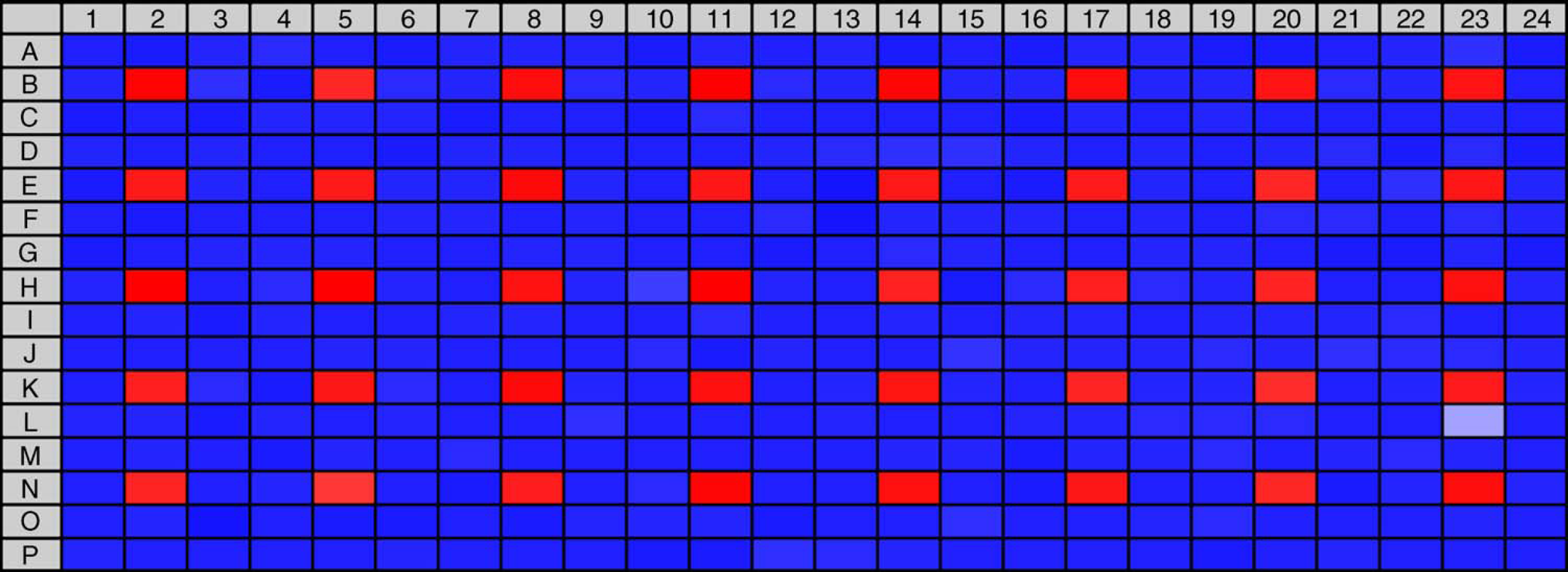
Representative plate from cross-contamination experiments. Wells marked in red contain fluoresceine after redissolving with a color gradient from 50 FI units (white) to 60,000 FI units (red). A blue color mark was used for empty wells, 0 FI units (dark blue) to 50 FI units (white). Well L23 (light blue) is cross contaminated from well K23 with 32 FI units. To make well L23 visible, an extreme gradient from dark blue to white within 50 FI units was used.
Cross-contamination experiments (5 plates with identical experimental layout as in Figure 6)
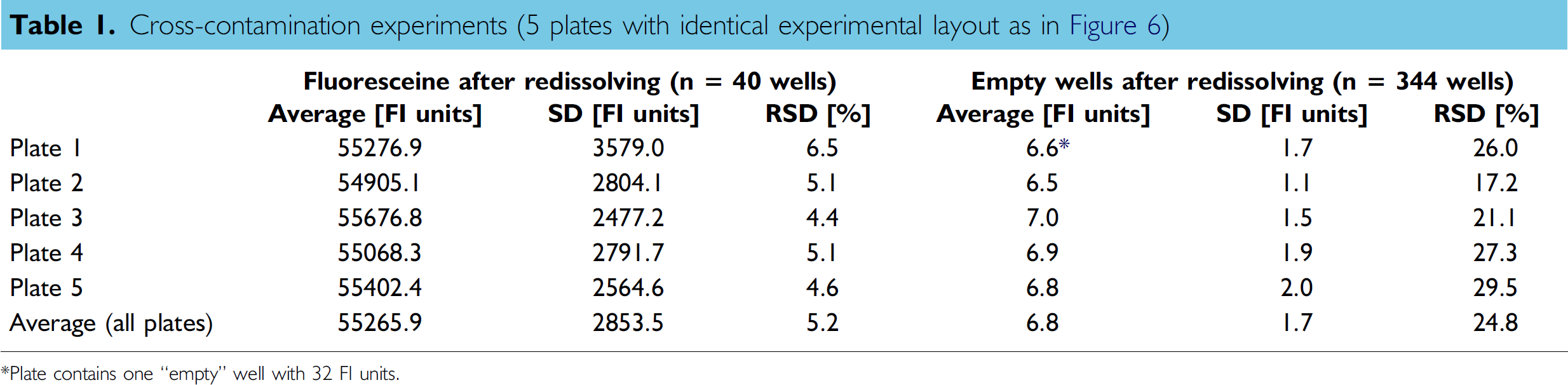
Plate contains one “empty” well with 32 FI units.
Dose-Dependency Experiments
Fifteen compounds, previously identified as kinase inhibitors, were prepared for IC50 determinations from dry film and DMSO solutions and tested in a kinase assay. Depending on the average molecular weight, 1.6-2.7 μL of an 8-mM DMSO compound solution were pipetted onto DotFoil and dried, or pipetted into an MTP and used directly for screening. For extraction of the dry film, 2.8 μL DMSO were used, and the extracts in the MTP were supplemented with PBS solution containing 7% DMSO up to a volume of 40 μL. This leads to a 15-μM compound solution. Also, a 10-μM compound solution was prepared whereof a 1/3 dilution series was generated. Therefore the concentration range on DotFoil was from 15 μM-1.5 nM. For the DMSO solution, the pipetted compound stock solution was filled up to 20 μL with PBS, and afterward nine 1/3 serial dilution steps were carried out. The concentration range in the DMSO solution was from 30 μM down to 1.5 nM. A 1-μL portion of the dilutions was tested in a time-resolved fluorescence resonance energy transfer (TR-FRET) based kinase assay, using the kinase domain of a transmembrane growth factor receptor. The assay results were processed using a Discovery Partners International AG (Allschwill, Switzerland) software package, and the half-maximal inhibitory concentration IC50 was calculated. IC50 values from extracted DotFoil or DMSO solutions of individual compounds are, in general, within a factor of <5, which is not uncommon for independent determinations and compounds with low potency. The data are summarized in Table 2 and Figure 7. The apparent higher potency of compounds (Fig. 7a) from DotFoil extracts might be connected to the lower starting concentration in the dilution series together with the curve fitting algorithms.
IC50 values from DMSO solution and from DotFoil
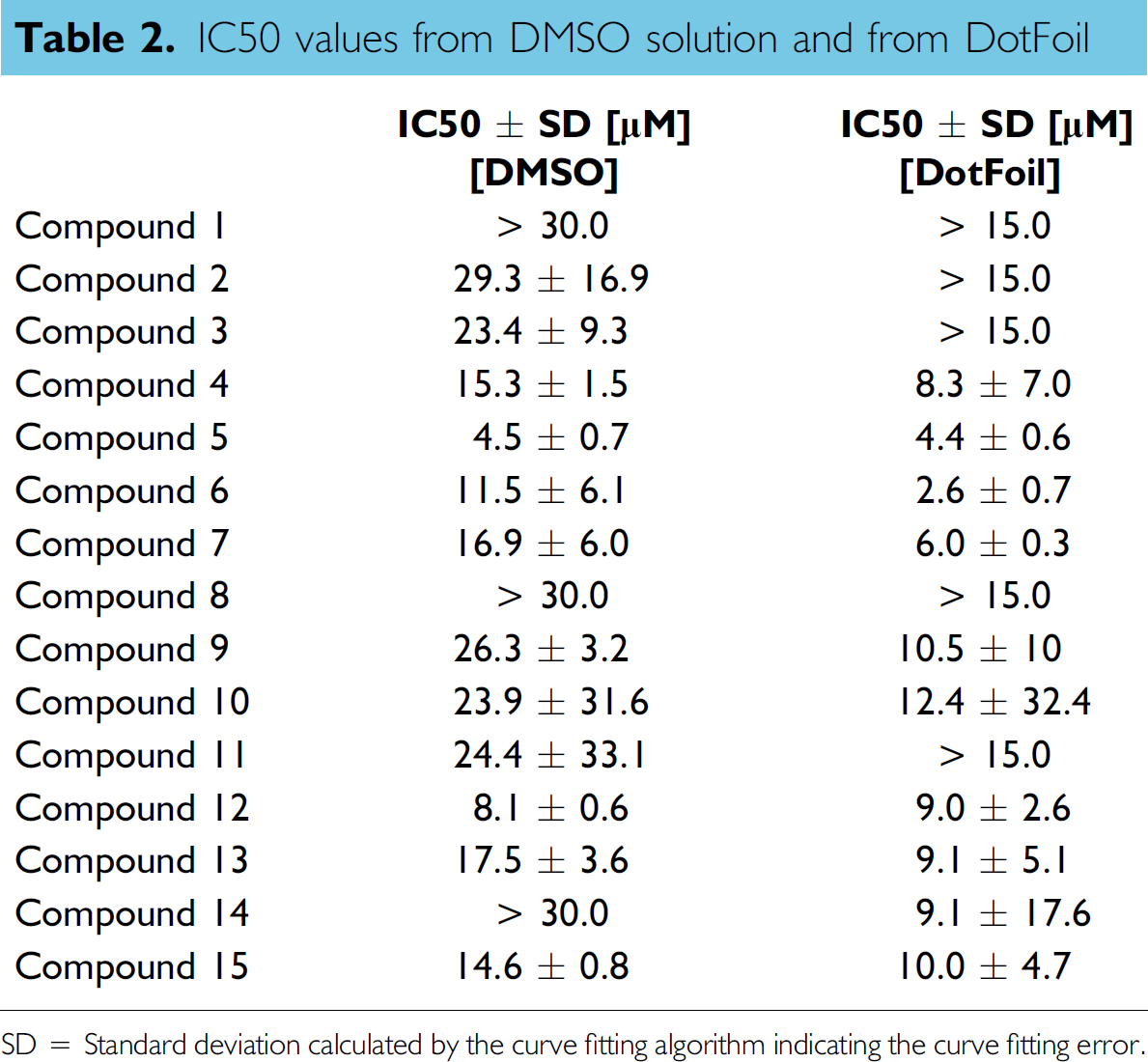
SD = Standard deviation calculated by the curve fitting algorithm indicating the curve fitting error.
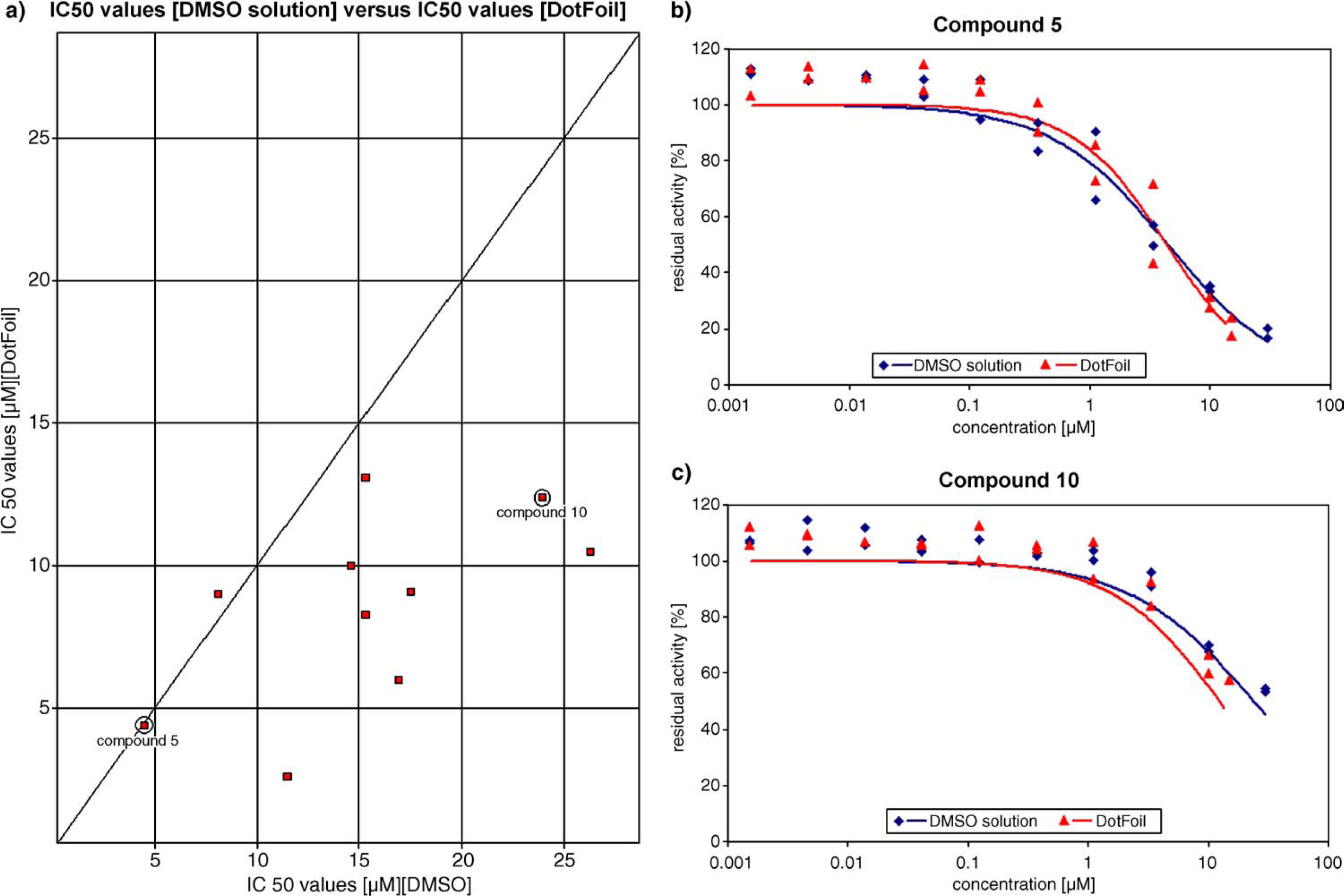
Dose-dependence inhibition of a transmembrane growth factor receptor kinase. (a) The correlation plot shows the obtained IC50 values [μM] from DotFoil vs. DMSO solutions, (b) IC50 curve for a medium active compound, and (c) IC 50 curves for a low active compound.
Compound Integrity on Dry Film and in DMSO
To compare compound stability of dry films, 48 compounds were selected, whereby some of them were known to be highly stable in DMSO solution and some were known to decompose or precipitate in DMSO. Aliquots of 50 μL DMSO solution were sealed and stored at 4 °C at 65% relative humidity (rH) or under dry nitrogen with 10% rH at RT. For storing as dry films, 1 μL of each compound was pipetted into a set of PP-MTPs. (Since these experiments were initiated 2 years ago, no prototype for DotFoils existed yet. Therefore, PP plates were selected to store the dry films to mimic the PP surface of DotFoils. Experiments with compounds stored on DotFoil are ongoing.) The MTPs were dried under a laminar flow of dry nitrogen for 24 h and stored either sealed at +4 °C or unsealed under nitrogen at RT. DMSO solution and dry films were thawed every second day. The plates were unsealed and exposed to room temperature and ∼50% rH to mimic multiple usage under HTS conditions. Samples were taken every two to three months for HPLC-UV/MS measurements. These experiments were performed over a period of more than 1 year. A caffeine standard solution was used as an internal standard for normalization of the data over the entire period of time. For analyses of the DMSO solution, a 1-μL portion was transferred, the internal standard solution added and afterward diluted with 49 μL of an acetonitrile/water (2/1(v/v)) mixture. The dry film was dissolved with 1 μL DMSO and subsequently the internal standard and acetonitrile/water mixture was added.
Decomposition (seen as additional peak in HPLC-UV/MS analyses) and precipitation (identified visually and by reduced AuC in HPLC-UV/MS determination) effects in DMSO solutions in more than 50% of the selected compounds were observed. Thirty-five percent of the compounds showed precipitation effects when stored as DMSO solution at +4 ° C. Forty-five percent of the compounds were found to decompose when stored as DMSO solution at RT (some showed decomposition at RT and precipitation stored at +4 °C). For compounds that decompose, additional peaks in the HPLC-UV/MS analyses could be identified that could be related to decomposition products of the original compound. Twenty-five percent of all compounds stored as DMSO solution showed decomposition at RT or precipitation at +4 °C, but also at RT after 10-40 freeze and thaw cycles. In Figure 8, four compounds were shown with their behavior over a 12 month storage period. These results are in agreement with results previously published. 6 –8 On the contrary, the dry films for all compounds were highly stable regardless of the storage conditions, at 4 °C or at RT under inert atmosphere (only in one case the amount of a volatile compound decreased over time when stored as dry film at RT under a dry laminar nitrogen flow).
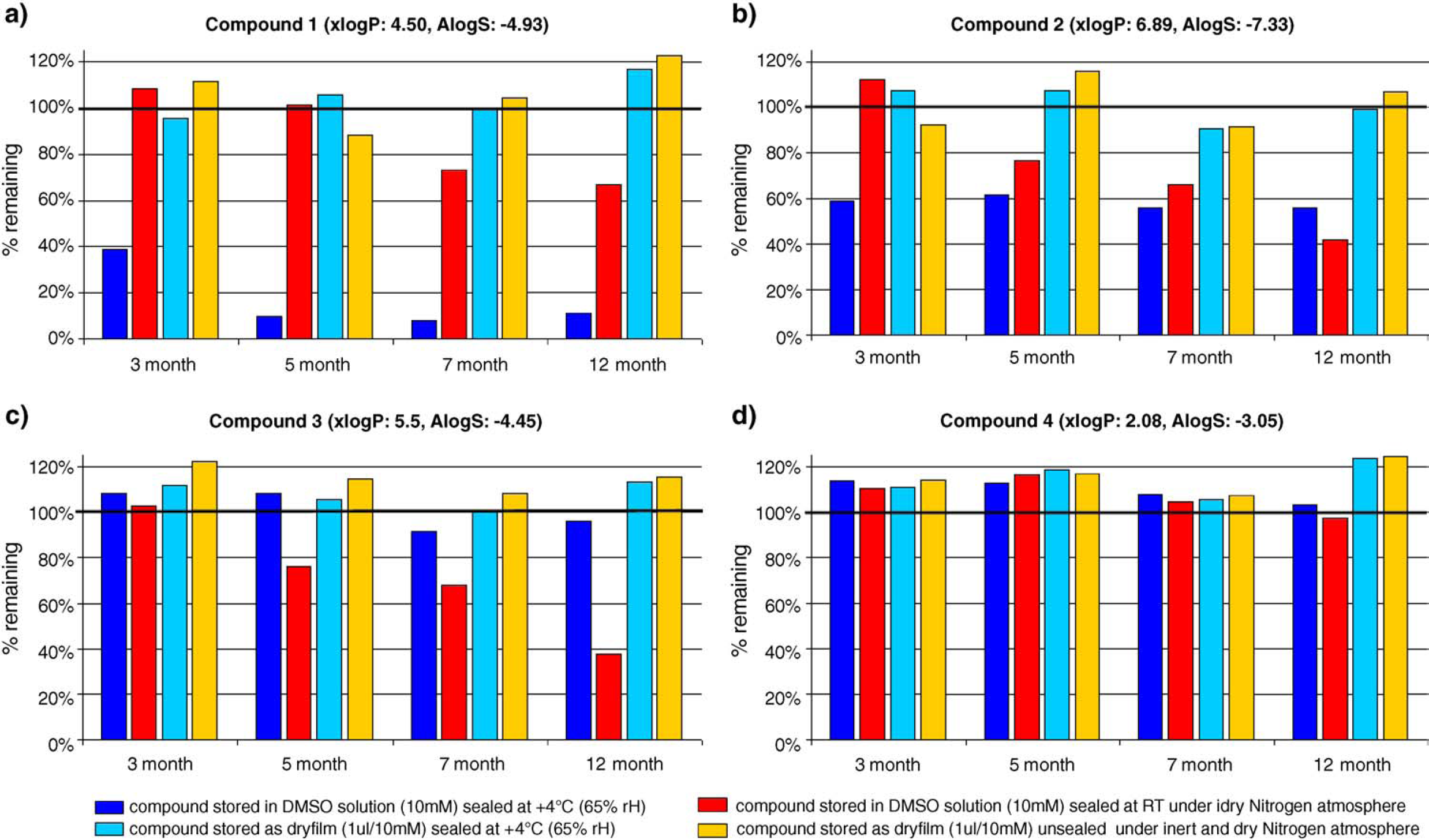
Example of four compounds in long-term storage experiments. (a) Precipitation leads to 60% compound loss after 3 months and more than 80% after 12 months if compound I is stored at +4 °C in DMSO solution. After 7 months, decomposition in DMSO solution was observed. Dry films are highly stable at both storage conditions. (b) At +4 °C, 40% of compound 2 is lost after 12 months due to precipitation in DMSO solution. Decomposition and precipitation after 5 months observed if stored at RT in DMSO solution. Dry films are highly stable at both storage conditions. (c) No precipitation over a 12-month period, but decomposition after 5 months observed for compound 3. Dry films are highly stable at both storage conditions. (d) No precipitation or decomposition observed during a 12 month storage period in DMSO solution or as dry film.
Discussion and Conclusions
DotFoil was developed to maximize compound integrity, miniaturize space for compound storage, and to prepare “ready to use” screening solutions for different screening environments (reader systems, plate formats and types, assay volumes). A system called Microtape 16 is the closest related system to DotFoil. Wells in the Microtape have a volume of 10 μL, and the assay can be carried out inside these wells or the solution can be transferred into a microtiterplate. Compounds are stored as DMSO solutions, and the whole Microtape undergoes freeze and thaw cycles before compounds are used for screening. This could lead to precipitation of compounds. Therefore, DotFoil and Microtape can not be compared directly. The latter is closer to solution storage in plates, whereas DotFoil represents a dry storage concept to store large compound collections that can be easily integrated into an HTS campaign. Compound solutions are prepared directly before usage for HTS, therefore exposure of compounds to DMSO or other solvents lasts for a very short time. High compound integrity leads to more reliable and robust HTS datasets. Since compounds are redissolved from DotFoil into MTP, the storage procedure fits well with the present setups of high-throughput screening. DotFoils can be used for direct extraction of compounds into an assay plate, or the plate can be used as an intermediate for a screening campaign, providing materials for HTS, verification, and dose-dependency experiments. As an example, after the extraction from DotFoil (prepared with 1 μL out of a 7.5-mM compound stock solution) with 5 μL DMSO, the compound concentration is 1.7 mM. To prepare a 50-μM screening solution for 30 μL assay volume, about 1 μL of the extract needs to be transferred into the assay plate. In this case, the final DMSO concentration is 3.3%. For lower DMSO concentrations, a mixture of buffer with, for example, 30% DMSO could be used for the extraction to reach a final DMSO concentration of 1% or less. Since the current equipment is only a prototype, it still has to be proven that the handling of DotFoils can be automated in a noncomplex manner for large HTS projects. Internally, we have already started to use DotFoil to determine DMSO-free solubility of compounds in our absorption, distribution, metabolism, and excretion studies.
Our results indicate that compounds are redissolved reliably and sufficiently for HTS, even for very apolar compounds like triphenylamine, and cross contamination is negligible. Using our current prototype equipment and very low solvent volumes (2 μL DMSO) to redissolve compounds, our results indicate that more than 80% of compound actually present on the DotFoil can be brought back into solution. This finding is supported by IC50 determinations for compounds with inhibitory activity for the transmembrane growth factor receptor kinase. IC50 values of compounds dissolved from DotFoil or directly diluted in DMSO were generally within a factor of <5. Considering the potency of compounds and the fact that we deal with two independent experiments, data are within an expected range. It should be noted that 2 μL of DMSO as extraction volume is rather the lower limit typically used in ordinary 384-well plates to redissolve the dry film. The current prototype extraction unit does not centrifugate the 2-μL extraction volume of DMSO down to the dry film of the DotFoil, because it only fits upside down into the centrifuge for the final centrifugation step. Therefore, this task was done manually in our experiments. Using an automated short centrifugation step would clearly allow the solvent to better reach, and consequently, redissolve the dry film. These initial experiments look very promising.
The integrity of compounds stored as dry films seems to be stable for more than 1 year, thus prolonging the lifetime of a compound by at least a factor of 2 compared to conventional DMSO solutions. Additionally, usage of DotFoils circumvents problems associated with compound precipitation typically observed for DMSO solutions if used over a period of more than 6 months in several HTS projects.
Storing compounds as dry films on DotFoils is an advantage–DotFoils are disposable. As a consequence, no resealing and integration into an archive, as is the case with conventional DMSO solution plates, is necessary. The price for DotFoils is estimated to be much lower than for conventional polypropylene plates, as a potential alternative to host many aliquots of a compound collection. The space requirement is much smaller for the same number of DotFoils compared to normal plates (reduction by a factor of 10). Since the amount of compound pipetted to a DotFoil is typically sufficient to perform multiple experiments, including dose-dependency determination, in most cases one single DotFoil would be sufficient to perform all necessary verification and dose-dependency experiments to confirm hits from HTS without the necessity to retrieve additional material from another solid or solution archive. Assuming that 1 μL of an 8.3-mM stock solution is pipetted to a DotFoil and redissolved in 5 μL DMSO in a transient compound plate yielding a 1.7-mM solution, about 4 times 1 μL can be pipetted from this transient compound plate. Using μL of the transient compound plate and diluting it to a 30-μL final assay volume would result in a 55-μM solution that is still sufficient for a dose-dependency determination in duplicates or triplicates.
DotFoils can be prepared in advance and stored for a long time, ensuring higher compound integrity. Preparation of DotFoils is not a rate-limiting step for an HTS project.
DotFoil is currently fixed to a 96- or 384-well format. Subcollections for screening are, therefore, best reflected by choosing those DotFoils that maximally represent the compounds of interest to be tested in an HTS. Depending on the quantity, composition, and distribution of compounds in a particular collection, this approach can be applied to many targets. DotFoil, with subcollections for certain target families, can be generated as needed. Primary screening hits are best validated from the redissolved compounds from DotFoil. Ideally, and if available, validation could also be done by retrieving solid compounds from a tube-storing archive.
Storing large compound collections as dry film on DotFoils offers several advantages over DMSO-based solutions archives in plates. It is a cost-effective alternative and could be easily integrated into the HTS workflow. Preparing subcollections on a DotFoil base is easily done and compounds can be composed to a screening subcollection. In this case, tubes rarely contain just the amount of compound needed in the screen, and therefore, are not easily integrated into the screening process.
Acknowledgments
The authors would like to thank J. Geu (Biotec AG, Gelterkinden, Switzerland) for building all prototypes and carriers, T. Ahrens, H. Albrecht, D. Brodbeck Hummel, B. Burkhard, S. Fasler, D. Hamburger, M. Hoever, B. Nickel, S. Parel, and B. Schnurr for many valuable discussions during the development of DotFoil and this paper, and R. Ortolf and C. Kerber for technical assistance.