



Abstract

INTRODUCTION
The selective recognition of substrates such as amino acids, peptides, or carbohydrates under physiological conditions, and therefore necessarily in water, is of great importance for the design of biosensors, the targeting of cellular processes in which these molecules are involved (e.g. cancer, Alzheimer, bacterial infections) and the design of new therapeutics. 1 2
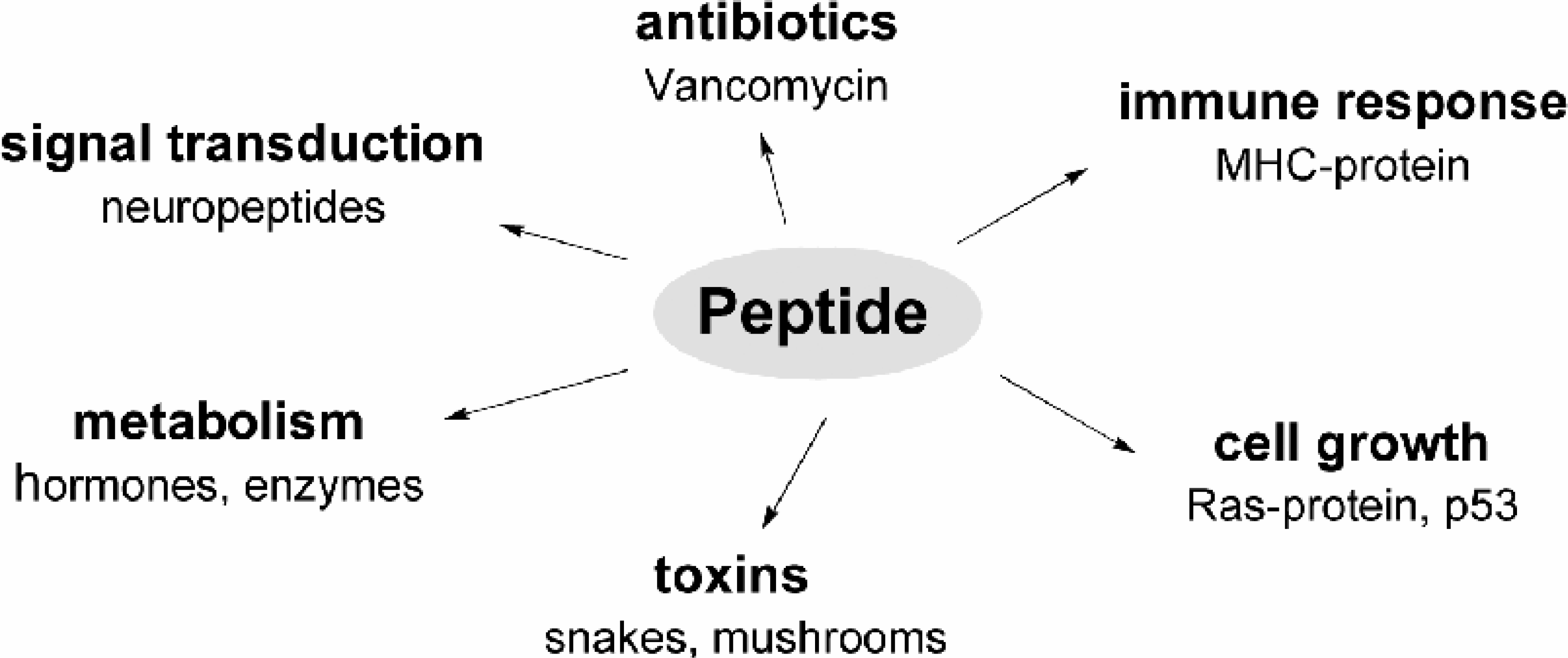
The molecular recognition of small peptides and its biological importance.
STATUS QUO
Molecular recognition 3 is based on the interaction of ions or molecules and is thus the chemistry of noncovalent bonds such as hydrogen bonds, ionic or van der Waals interactions. Today, the rational design of an artificial receptor 4 which selectively binds a given substrate in a polar solvent is still a challenging task for the following reasons:
quantitative aspects of non covalently controlled phenomena are poorly understood
even the qualitative nature of some non-covalent interactions is still under debate (e.g. low barrier hydrogen bonds, cation – π- interactions)
few artificial receptors exist that work in solvents more polar than chloroform, because the strength of hydrogen bonds and ionic interactions decreases rapidly as the polarity of the surrounding solvent increases
OBJECTIVE
The development of artificial receptors for the selective molecular recognition of a given substrate in polar solvents and the study of their complexation characteristics.
OUR APPROACH
Improving the complexation properties of guanidinium cations 5 through additional binding interactions: De novo design of guanidiniocarbonyl-(1H)-pyrroles as a new binding motif.
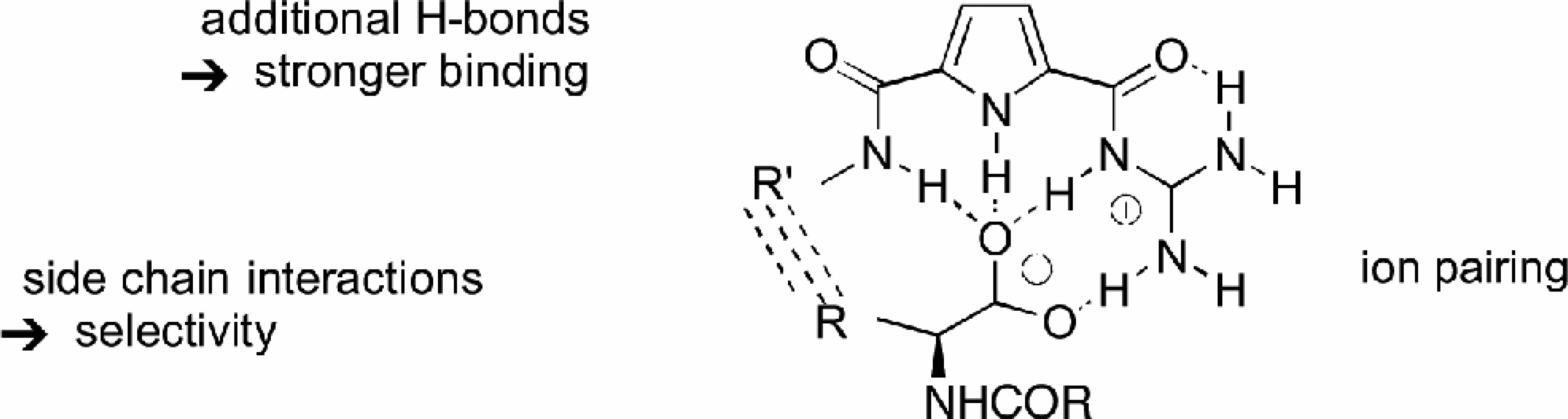
Guanidiniocarbonyl-(1 H)-pyrroles as a new receptor class for the binding of amino acid carboxylates in aqueous solvents.
Features of this new receptor class:
the binding motif is planar and rather rigid → preorganization
higher acidity of the acylguanidinium group compared to a guanidinium cation and additional hydrogen bonds to the pyrrole NH and suitable donor sites in the side chain → stronger binding
side chain interactions between receptor and substrate possible → selectivity
We recently showed that based on these design ideas 2-(guanidiniocarbonyl)-1H-pyrroles bind carboxylates by ion pairing in combination with multiple hydrogen bonds even in highly polar solvents (K = 10 3 mol in 40% water in DMSO). 6
Guanidiniocarbonyl pyrrole cations such as “a” or “b” can also be used for the selective complexation of amino acids and small peptides in aqueous solvents. 7 For example, prototypes in Figure 3 bind amino acid carboxylates in aqueous DMSO with binding constants in the range of K = 700 − 1700 M−1 as determined by NMR titration studies. With the valine derived receptor “b”, which is chiral, the binding is also slighty stereoselective. The association constants for the two enantiomers of alanine carboxylate differ by a factor 3. The L-enantiomer is bound better than the D-enantiomer. With D-alanine there is an unfavorable steric repulsion between the methyl group of the amino acid and the isopropyl side chain of the receptor which is not present in the complex with the L-enantiomer. In accordance with this, the binding constant for the D-enantiomer is even slightly lower than with the ethyl substituted receptor “a” which lacks the sterically demanding isopropyl group. In the complex with the L-enantiomer there is no steric repulsion as the methyl group points away from the isopropyl group. Accordingly, the binding constant is larger relative to the binding by “a” due to additional hydrogen bonds.
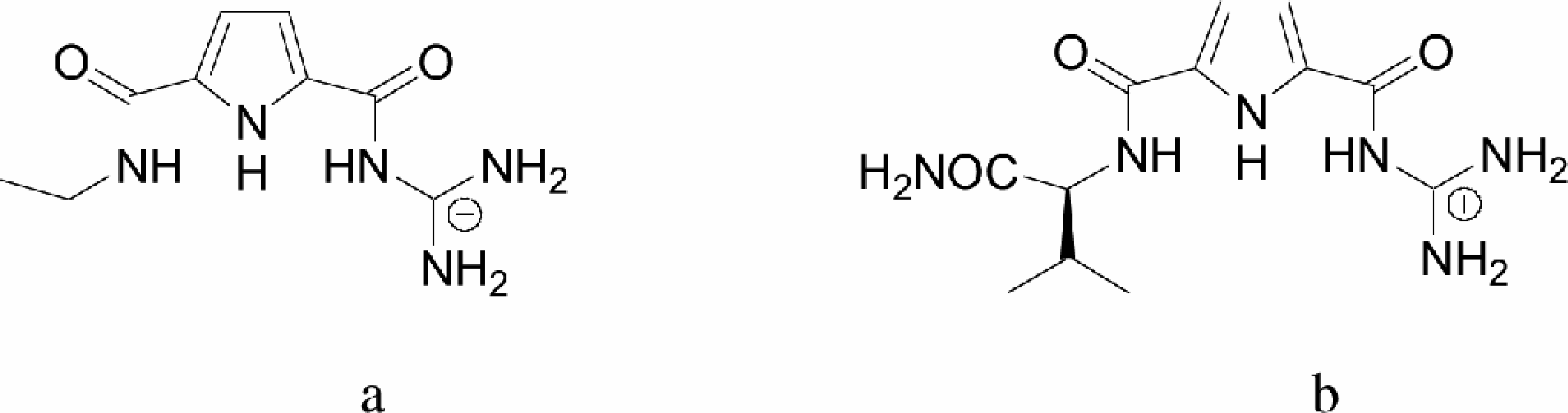
two prototypes of the new guanidiniocarbonyl-pyrrole receptors

Synthetic scheme for the automated, parallel synthesis of a receptor library in solution.
SYNTHESIZING A RECEPTOR LIBRARY
In order to further modify the binding properties and also increase the stereoselectivity of this receptor class, a systematic variation of the side chain in the receptor is necessary. In this context, we used solution phase automated synthesis to prepare a receptor library. 8 Our previously used synthetic approach 6 relied on the coupling of the amine with the guanidiniocarbonyl pyrrole moiety via the acid chloride of the guanidinium carboxylate zwitterion shown in Figure 5. However, this is a heterogenous reaction with low yields and bad reproducibility and is therefore not suitable for an automated set-up. Hence, we had to find milder and more reliable coupling conditions. Due to the limited solubility of the zwitterion in nearly all organic solvents, most standard peptide coupling strategies failed. Finally, we were able to get good yields for a variety of structurally different amines using PyBOP in DMF as the coupling reagent. The activated ester, slowly formed by reaction of the coupling reagent with the nearly insoluble zwitterion, is soluble in DMF and reacts further in homogenous solution with the amine.
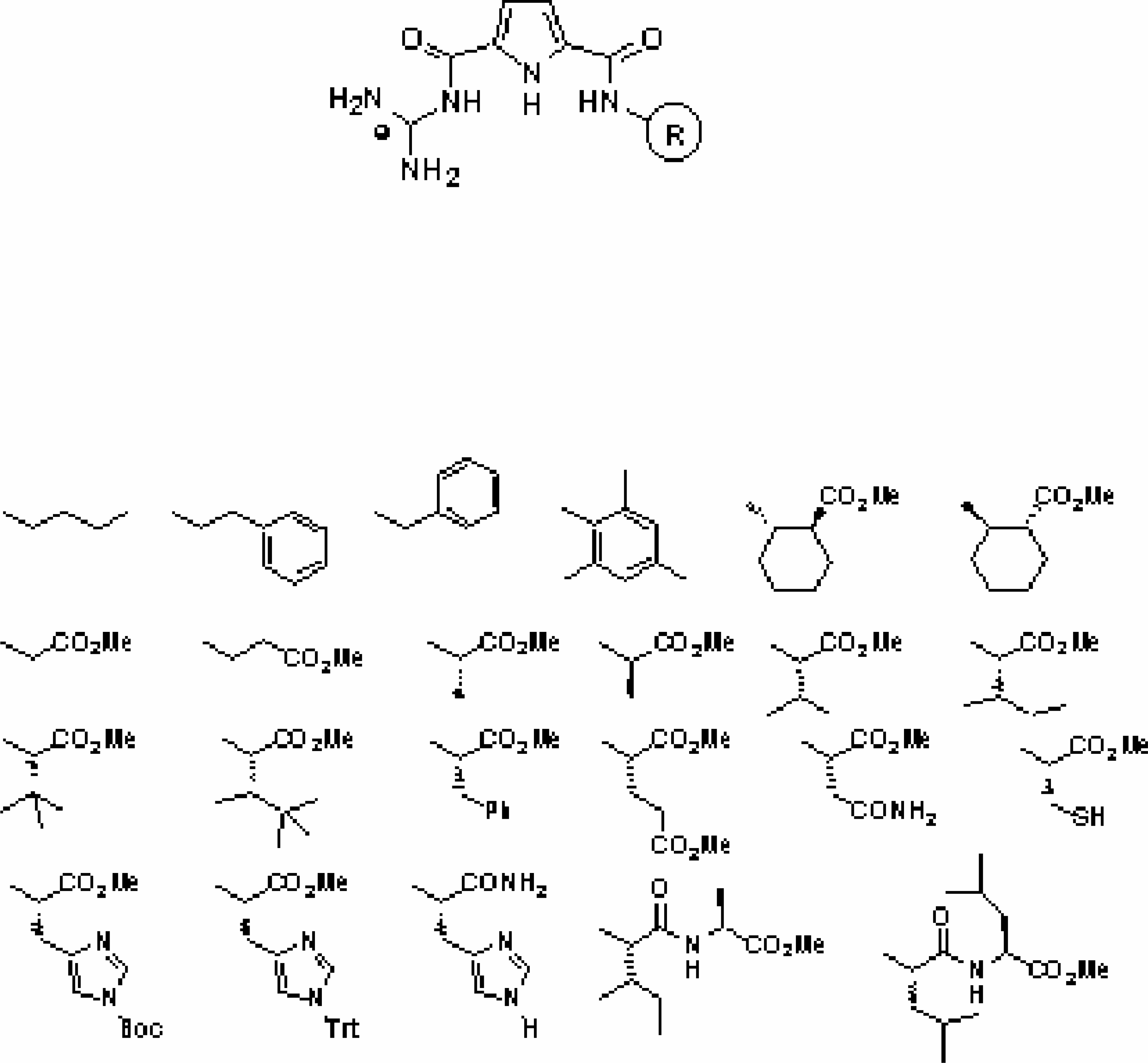
Structural variation of the guanidiniocarbonyl receptors by using 24 different amine components for the coupling step.
The automated, parallel synthesis was then carried out on an ASW2000 robot from Chemspeed Ltd. (Augst, Switzerland) equipped with 13 ml filtration kits with disposable filters using the following protocol:
incubate amine and acid for 16h @ RT in the presence of PyBOP
filter over Celite
parallel evaporation of DMF under reduced pressure
precipitate of the product as picrates in methanol
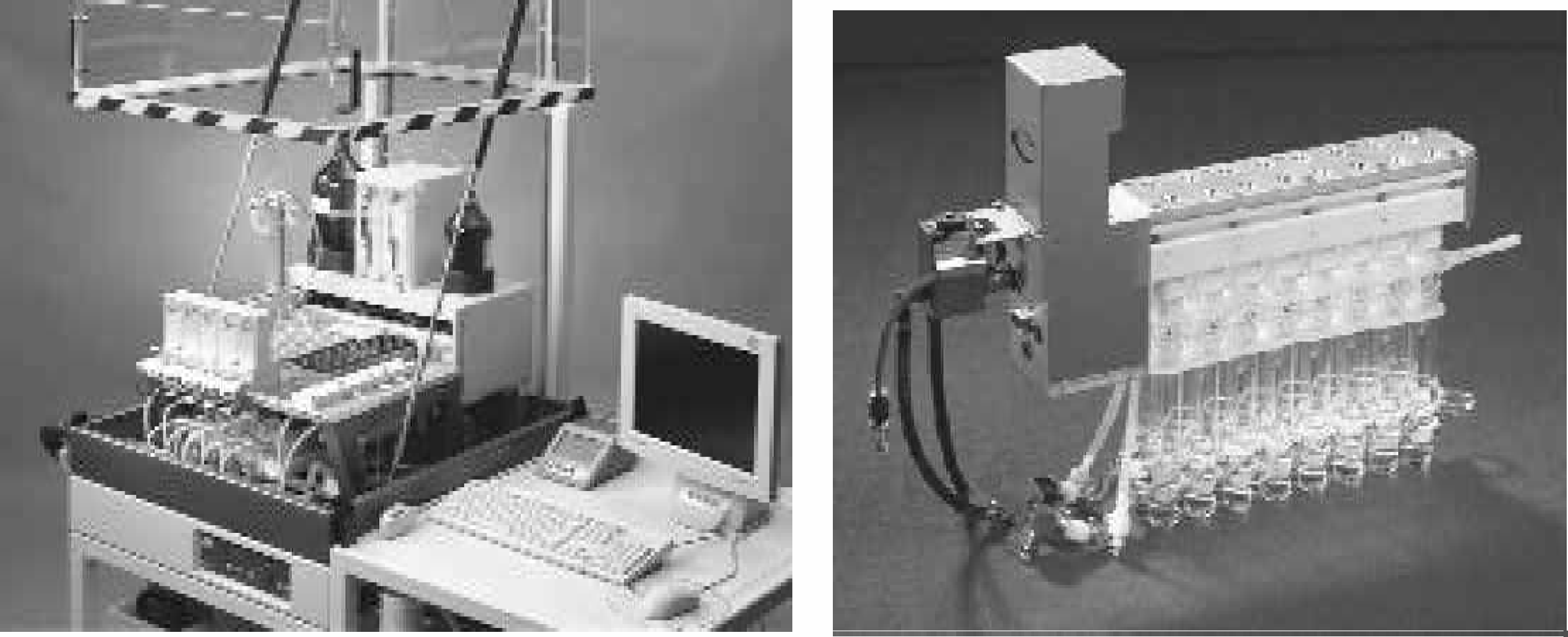
The ASW2000 robot from Chemspeed Ltd. (left) and the reaction vessels (right).
After evaporation of the solvents, the guanidiniocarbonyl pyrroles were precipitated as the picrate salts and, in cases where necessary, repurified by recrystallization. Using the following amine components a first set of 24 different receptors was succesfully prepared in this fully automated fashion.
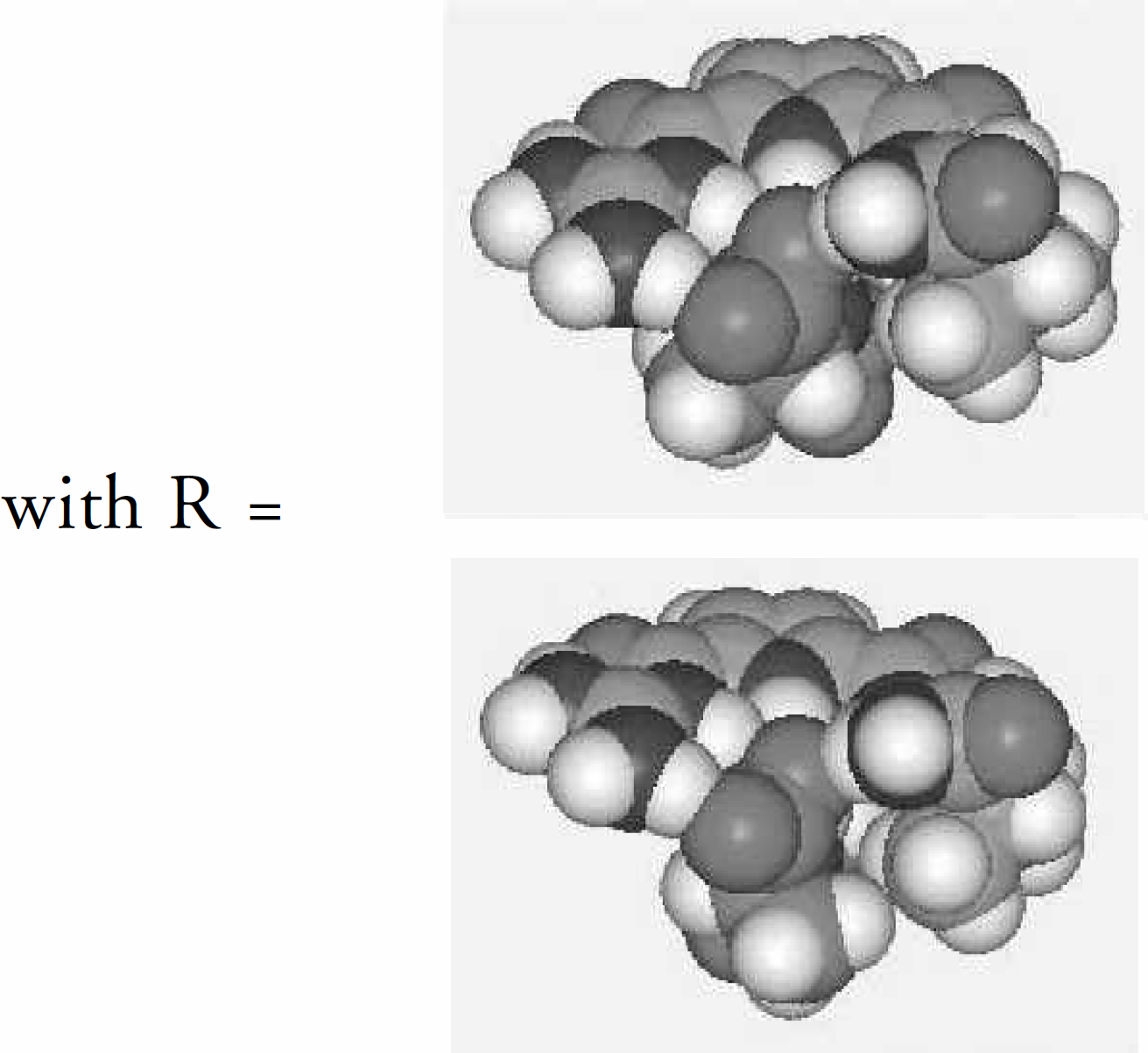
L-Alanine (left) is bound much better than the D-enantiomer (right) by the chiral receptor figure 3b due to unfavorable steric interactions between the isopropyl side chain of the receptor and the methyl group of the amino acid.
Currently, we are exploring the binding characteristics of these new receptor systems using NMR titration studies with amino acid and peptide carboxylates in aqeuous solvents.
CONCLUSION
We have successfully developed and implemented a new synthetic protocol for the automated, parallel synthesis of a guanidiniocarbonyl-pyrrole receptor library in solution. For this purpose we had to find suitable reaction conditions that allow structural variations of the amine component without affecting the coupling yields. We are now able to synthesize various guanidiniocarbonyl pyrrole receptors in a fully automated fashion which enables us to further explore the binding properties of this new receptor class and to better understand the structural and energetical factors that are responsible for binding strength and selectivity.