



Abstract
INTRODUCTION
COLLAPSIBLE MACROPOROUS RESINS
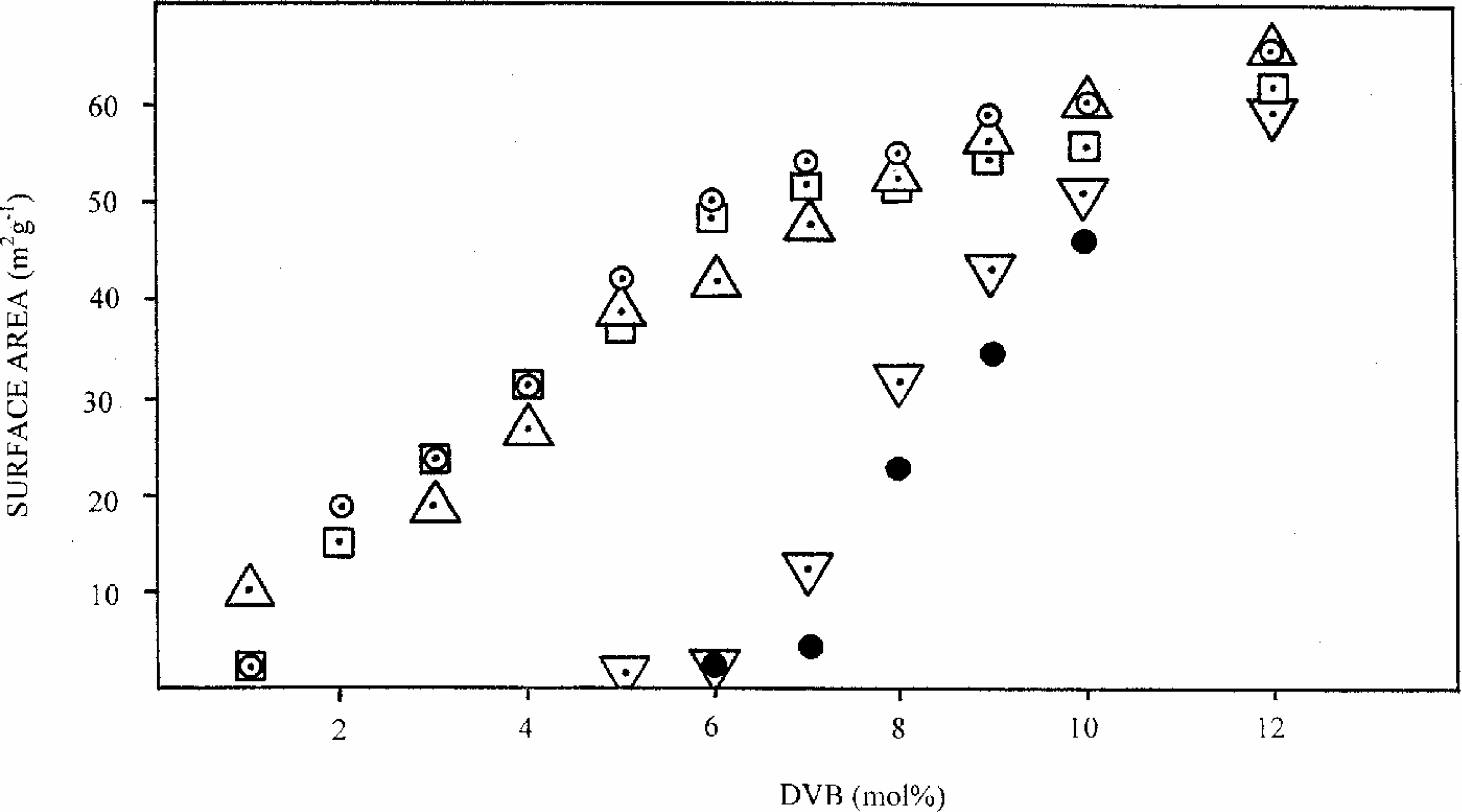
We have now synthesised a range of poly(styrene — DVB), resins with DVB contents of 1–12 mol% and employing 2-ethyl-hexan-1-ol as a thermodynamically poor porogen. The latter would be expected to induce a macroporous morphology via precipitation of the growing polymer chains while a DVB level of < 12% would not be expected to favour phase separation. Figure 1 summaries the dry state surface area data for the various resins, calculated from N2 sorption isotherms using the BET theory. Rather interestingly the data show a strong and systematic dependence on the solvent from which each resin was (last), dried. In the case of acetone, sc CO2 and methanol the resins retain a significant surface area characteristic of macroporosity down to ∼ 2 mol% DVB. However, in the case of methylene chloride and toluene the surface area falls rapidly to ∼ zero at 7 mol% DVB. A resin with ∼ zero surface area dried from toluene, when re-swollen in toluene and then dried from acetone, displays a surface area characteristic of an acetone dried resin. It seems therefore that the resins with ≤ 7 mol% DVB dried from thermodynamically good solvents collapse completely but reversibly, while the same resins dried from thermodynamically poor solvent retain their surface area on drying. This behaviour implies that all the resins are formed with a macroporous morphology and that the latter is permanent and stable only for DVB levels say ≥ 10 mol%. Below this crosslinker level the resins are able to collapse under appropriate conditions but retain a latent pore structure. This model is confirmed by measurement of the surface area and porosity characteristics of the resins in the tetrahydrofuran swollen state using inverse size exclusion chromatography (ISEC). 10 The data in Table 1 confirm that all the resins with DVB content in the range 3–10 mol% do indeed have a macroporous structure in the swollen state, and significant surface area.
Porosity Characteristics of Collapsible Macroporous Poly(styrene-divinylbenzene) Resins when Swollen with Tetrahydrofuran a
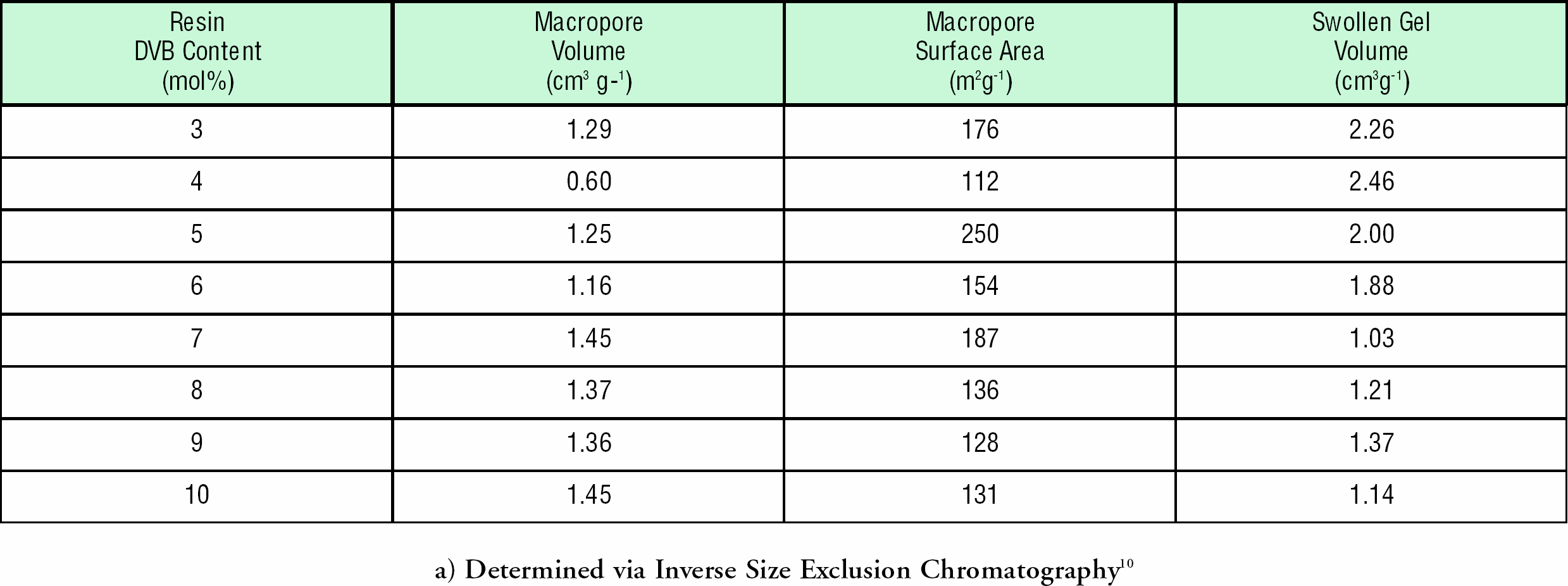
Determined via Inverse Size Exclusion Chromatography 10
These reversibly collapsible macroporous resins offer novel scope for exploitation, and to some extent combine the advantages of gel-type and macroporous species. The somewhat higher overall % DVB content makes these species more mechanically robust than simple gel-types, while the latent pore structure also allows facile ingress and egress of solvent, minimising the likelihood of osmotic shock. Furthermore, in the swollen macroporous state the level of crosslinking of the gel phase is much lower than in conventional macroporous species and so diffusional limitation in the gel phase will be considerably reduced. Further details of these resins are available in reference 11.
POLYMER ROD AND DISC SUPPORTS
Despite the tremendous handling opportunities offered by resin beads, developments in automation have now reached such an advanced state that the weighing out and dosing of beads into columns, small batch reactors, well plates or ‘tea bags’ etc., 12 has become tedious and to some extent rate limiting. As a result resin suppliers are starting to make pre-weighed capsules of resins available. 13 Concurrently with this there is also a trend in solid phase synthesis toward single compound parallel synthesis on supports. To optimise the advantages of automation it would be convenient to have a single polymer particulate or monolith of a convenient size for automated handling, and of such a chemical capacity as to provide enough of an individual compound from a solid phase synthesis for comprehensive structural analysis and for biological activity screening. It would also be attractive if such a monolith could be synthesised in the laboratory without the need of special polymerisation methodology.
We now report on a simple procedure for producing soft rods of polymer support which can be readily cut into discs typically 2mm thick and 8–10 mm in diameter (Figure 2). More details are reported elsewhere, 14 but suffice to say that use of a flexible crosslinking agent, e.g., PEG (1000), di-4-vinylbenzyl ether with vinyl benzyl chloride (VBC), monomer and a small amount of a thermodynamically good solvent e.g., toluene allows polymerisation of such a mixture in a small glass tube to produce a rigid but soft rod. The latter is recovered by breaking the glass tube, and discs of designed thickness can be cut readily using a sharp laboratory razor blade. Appropriate choice of the level of crosslinker allows discs to be produced which swell considerably in methylene chloride (X9), and toluene (X4), reasonably in methanol (X1.5), and even modestly in water (X0.5).
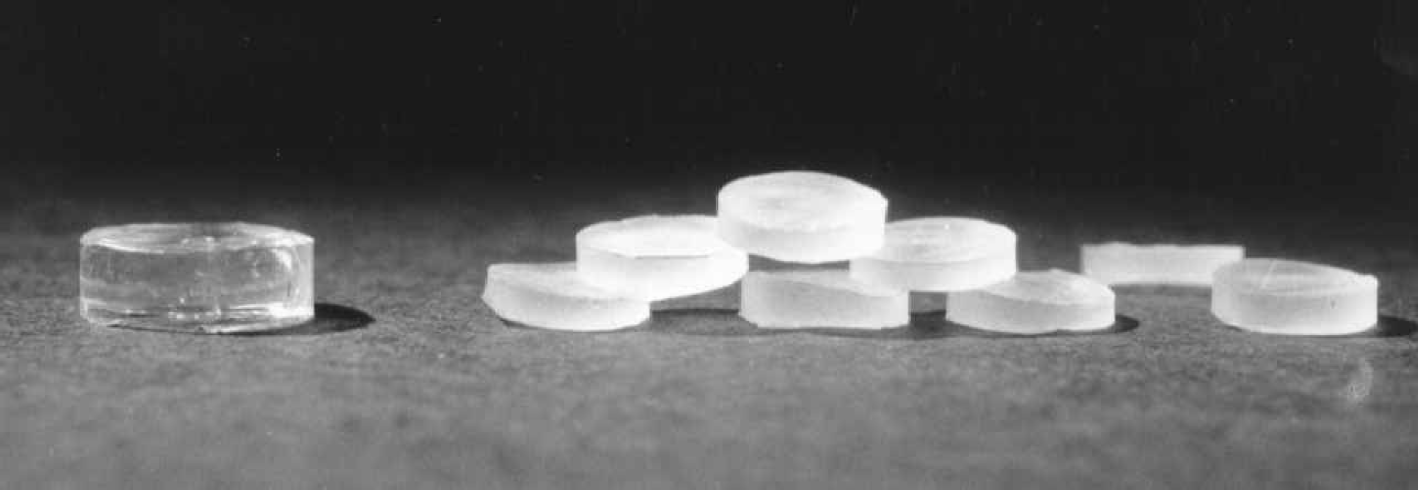
Discs (2mm thick × 8 mm diameter, dry) cut from polymer rod prepared from PEG (1000) di-4-vinylbenzyl ether (50 wt%) and vinylbenzyl chloride (50 wt%) (DMF diluent). 14
The ability to chemically modify the discs containing VBC residues has been demonstrated by reaction with Me3N where con-+ versions to — CHN Me3 of up to ∼ 100% have been achieved. Likewise attachment of 5-bromosalicylic acid methyl ester as the first step in a targeted solid phase synthesis has been achieved in up to ∼ 90% conversion. Interestingly a disc with a composition very close to a standard 2 mol% crosslinked DVB resin showed poor loading ability, and in particular resulted in the formation of a ‘sandwich’ structure in which chemical modification was good in the two outer layers of the disc, while the central ‘filling’ was poorly modified. This result indicates that in using relatively large polymer monoliths as supports extra care has to be taken to optimise mass transfer throughout the whole support.
The polymer discs described here are therefore readily prepared in a normal organic synthesis laboratory and require no specialised equipment or methodology. They can be prepared with a resilient structure and are easily manipulated. Choice of appropriate reaction conditions also allows facile chemical modification, and with further optimisation such single monolithic supports seem capable of providing up to ∼ 0.5 mmole of a compound in a solid phase synthesis; and hence offer exciting prospects in robotic parallel syntheses.
POLYMER THIN FILM SUPPORTS
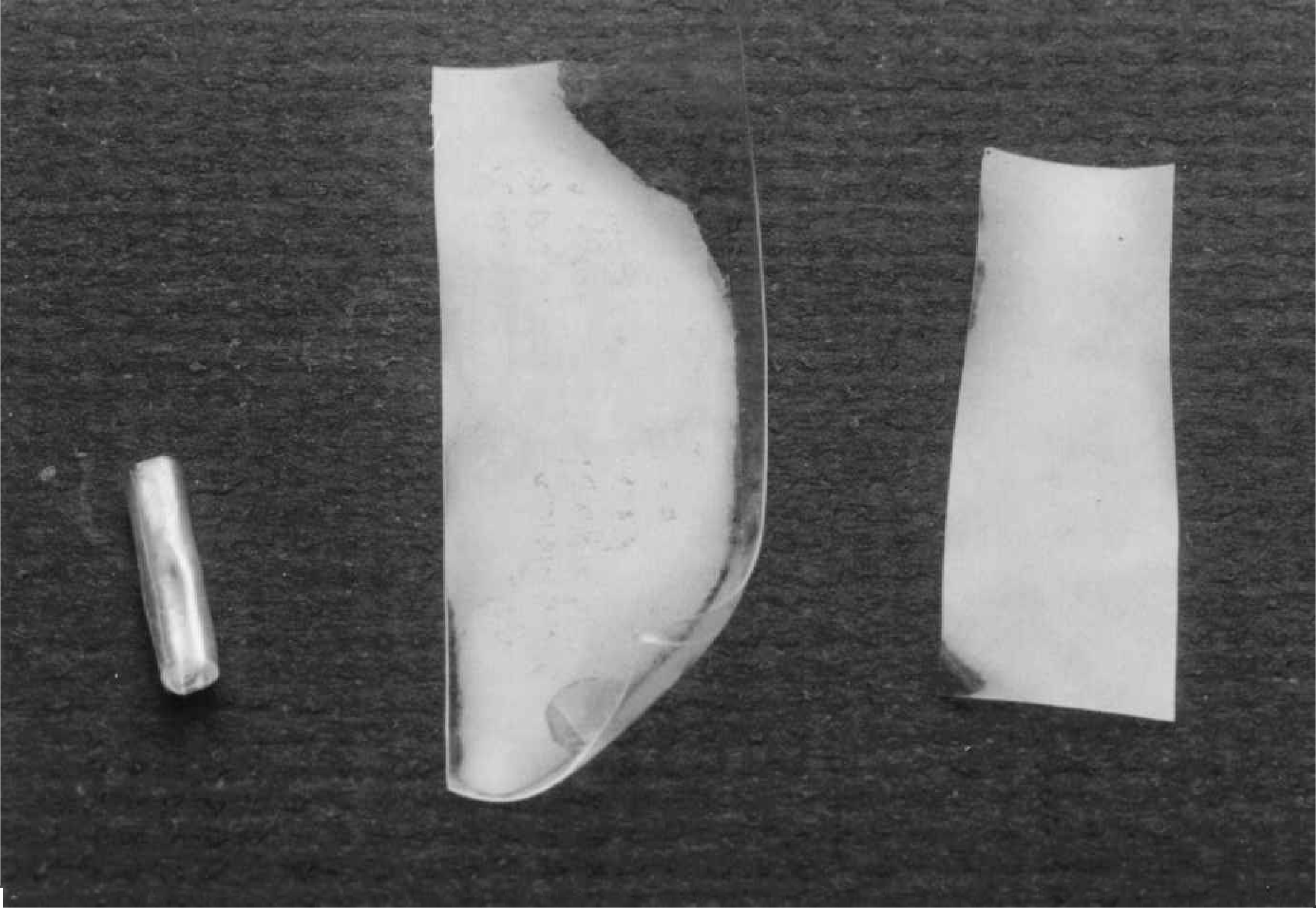
In developing polymer supports in a disc format it also occurred to us that a thin film format might also be useful, particularly in terms of real-time in situ monitoring of solid phase synthesis reactions. Accordingly after a number of futile attempts to devise and fill moulds with polymerisation mixtures, we realised that two appropriately spaced standard microscope slides (76 × 26 mm), can be readily filled with a pre-mixed comonomer/porogen/initiator solution by capillary action. Indeed up to 9 slides can be readily clamped together in a single assembly, allowing simultaneous photo-polymerisation of 8 polymer films (Figure 3). A single layer of PTFE tape as spacer yields films ∼ 60–80 μm in thickness, while two layers yields films of ∼ 120 μm. More experimental details are available in reference 15. In order to produce gel-type polystyrene-based films with sufficient resilience to allow manipulation as free standing supports, it is necessary to use a flexible crosslinker as in the case of the synthesis of polymer discs. Indeed using, e.g., PEG (1500), di-vinyl benzyl ether as crosslinker, clear transparent films are obtained which even in the dry state are sufficiently tough and flexible to be rolled into a scroll arrangements (Figure 4). VBC — containing analogues are also readily chemically modified when swollen in a suitable solvent, and likewise glycidyl methacry-late (GMA), derived films readily undergo chemical derivatisation. In the solvent swollen state gel-type films become extremely flexible and being thin need to be handled with care.
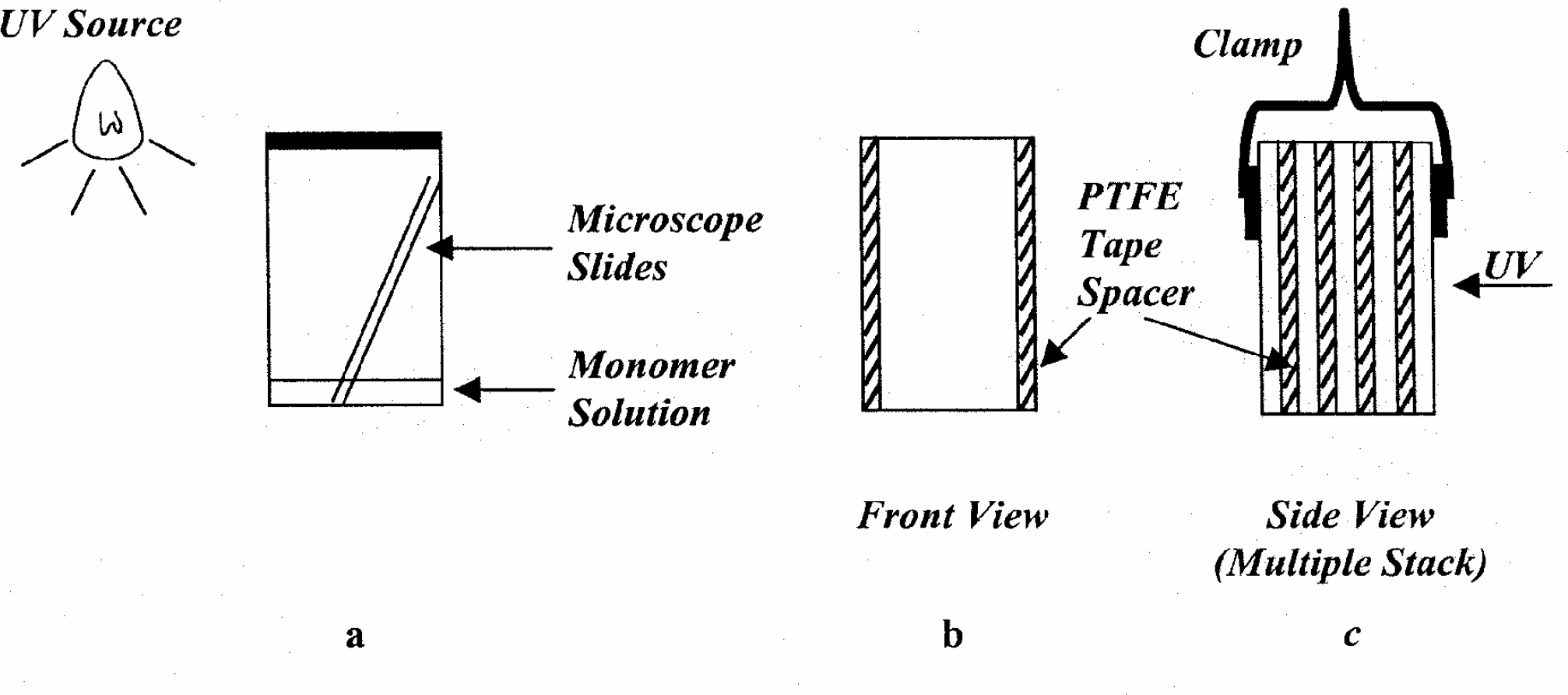
a) Set up for polymer film production; b) Placement of PTFE tape down edge of microscope slide as a spacer; c) Side view of multiple assembly of slides.
In one particular project, now completed, we have prepared macroporous 4-vinyl pyridine-based films with analogues structural composition and morphological form to resins we have previously exploited as metal complex catalyst supports. Though the surface of such films originally in contact with the glass slide during preparation seems superficially smooth, in practice a cleaved surface and a fracture edge are clearly seen as macroporous in a scanning electron micrograph. Such macroporous films have dry state N2 BET surface areas of 20 − 160 m2g-1 depending on the preparation conditions. In this case DVB is a suitable crosslinker and rather surprisingly the films are reasonably resilient.
Our collaborators 16 have found this film format particularly useful in their real-time in-situ FTIR mechanistic studies of a polymer-supported metal complex catalysed reaction operated at low pH and high temperature, and the results will be reported in detail in due course. While our own procedure yields samples typically ∼ 76 × 14 mm, in principle our approach and variants of it could be scaled-up to produce larger samples. Although we do not envisage that this thin film format has broad applicability, the size of the samples does offer new opportunity for robotic handling, and we believe that useful niche applications will emerge.
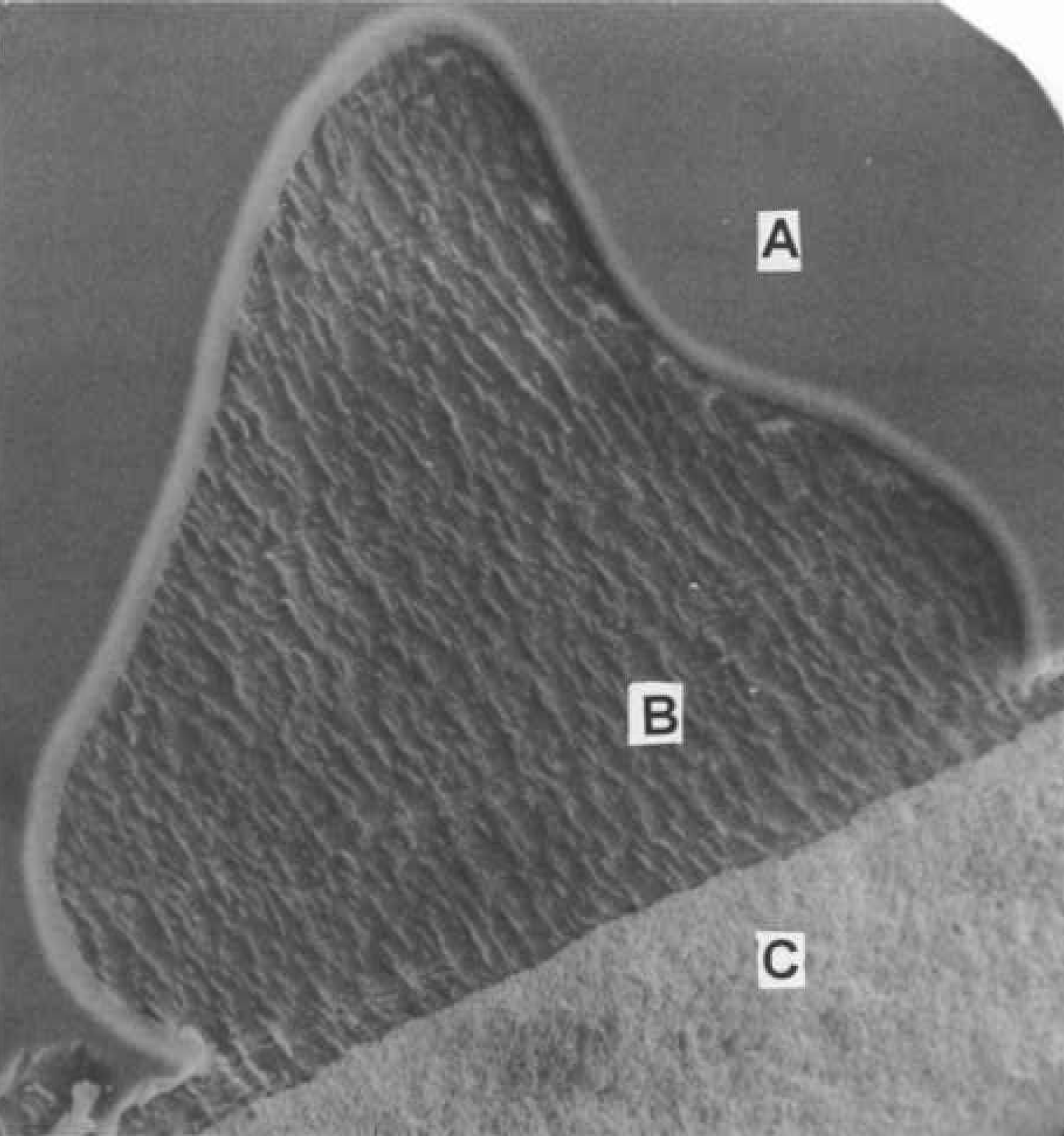
Scanning Electron Micrograph (x750) of macroporous poly (4-vinyl pyridine — DVB) film: A, superficially smooth surface originally in contact with glass; B, surface layer cleared away to show rough interior; C, rough interior, edge view (bar = 10 μm)
ACKNOWLEDGEMENTS
David C Sherrington is grateful to his various collaborators in these projects: SM Howdle, K Jerabek, V Leocorbo, P C Marr. N Hird, I Hughes, D Hunter, MG JT Morrison, L Stevenson, PH Findlay, S M Leinonen and E E A Shepherd.
Footnotes
Acknowledgements
If you are interested in seeing more articles like this in JALA, please email