



Abstract

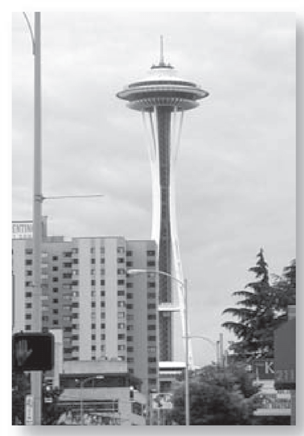
Seattle is always a fun place for a meeting and since I did my undergraduate work at the University of Washington [along with Ted Bundy], the 2007 ACVIM Forum gave me a chance to catch up with old friends while attending the world's premier veterinary meeting, the ACVIM Forum.
Wednesday, June 6th, I began the day at 8AM at a pre-Forum session, the American Academy of Veterinary Nutrition (AAVN) Symposium. This is a fun group. For $40 a year dues, you can attend this symposium with free breakfast and lunch, have full access to the AAVN website and participate on their listserve. For more information, please check out their website at www.aavn.org.
Six of the nine abstracts presented at this 2007 AAVN Symposium pertained to cats!


On Thursday, June 7th, I attended a special ACVIM Animal Survivor session where two cats, their owners and veterinarians were featured survivors. I love this program because the owners and the veterinarians get to talk about the cases and it is such a happy session because they are all survivors.
Sammy, a kitty belonging to Kim Clifton presented to
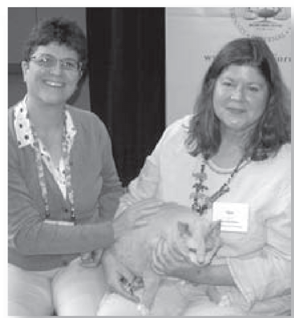
Check out Abstract #1 presented by Theresa Arteaga at the Forum's abstract session!
1 A RETROSPECTIVE ANALYSIS OF FELINE NASAL LYMPHOMA IN 71 CATS (1999-2006).
Theresa Arteaga, John Farrelly, Sebastien Monnette and Philip Bergman. The Animal Medical Center, New York, NY.
Feline nasal lymphoma (Isa) is generally believed to be a local disease with a good prognosis, however no standard of care exists. The purpose of this study was to determine response rates and outcome for cats with nasal Isa, to compare untreated cats (no treatment/glucocorticoids) with treated cats (radiation, chemotherapy, or both) and to evaluate patient, tumor and treatment factors for prognostic value.
Information from 71 medical records, telephone follow-up with owners or referring veterinarians were collected for signalment, duration of clinical signs prior to diagnosis, FeLV/FIV status, histopathologic grade and cell type, clinical stage (WHO for feline Isa), treatment (radiation therapy, chemotherapy, glucocorticoids), response to therapy, disease free interval (DFI), survival time, and treatment side effects (using VCOG and VRTOG toxicity criteria). Response to therapy was defined as complete response (CR), complete resolution of clinical signs, partial response (PR), partial resolution of clinical signs; no response (NR), a complete lack of clinical response or progressive disease. These variables were examined for treatment response, disease control and survival. Univariate analysis to assess prognostic value of covariates was performed by Kaplan-Meier product limit method with Log-Rank testing and Cox proportional Hazards. Cats were censored due to loss to follow up or death other than to lymphoma. Multivariate analysis was performed using the step-wise Cox Proportional Model on all variables with P<0.2 on univariate analysis. P<0.05 was considered significant. Median age for the cats was 9.2 years with 52%MN, 29% FS, 7%MI, 7% Fl and 78% being DSH and 7% Siamese. 55/55 were FeLV negative, 54/55 were FIV negative with 84% Stage 1, 11% Stage 2 and 4% Stage 3. The most common clinical signs were nasal discharge (91%) and sneezing (67%) with a median duration of clinical signs of 64 days. Median survival time (MST) for treated cats (chemotherapy and radiation) was 511 days (40-1945), with a DFI of 435 days (0-1466), versus steroids/no treatment, which had a MST of 266 days (1-1260). Significant prognostic factors on univariate analysis was response to therapy (CR MST=732d, PR MST=144d, NR MST=61d, P=0.0004), histology, (blastic MST=732 d vs non-blastic MST=435d, P=0.0134), side effects (cataracts MST=1153d, myelosuppression MST=465d, no side effects MST=431d), UMW as first chemotherapy treatment (yes 732d vs no 164d, P=0.0028), chemotherapy type (non-UMW 144d vs UMW 759d; p<0.001). Significant on multivariate analysis was blastic vs. not blastic (hazard ratio for blastic = 0.267; confidence interval, 0.096-0.742).
In conclusion, most cats with nasal Isa in this study are high grade viral negative and clinical stage 1. Cats with the blastic form have a higher survival time than other forms of Isa.
(Editor's note: UMW is the University of Madison Wisconsin chemotherapy protocol. 61:61 bone marrows were negative for lymphoma in this study).
Sam, a kitty belonging to Kim Butler of Seattle, WA, was first seen by his veterinarian for lack of appetite. Because he wasn't eating, he developed hepatic lipidosis. Sam was treated for hepatic lipidosis with a feeding tube. After feeding Sam for two and a half months through the feeding tube and watching him slowly lose his coordination, Kim took Sam to Sean Sanders, DVM, PhD, ACVIM-boarded in neurology who practices at the Veterinary Specialty Center of Seattle. Dr. Sanders diagnosed that Sam had a brain tumor. Dr. Sanders adds “we assume the tumor is a meningioma, as it is the most common brain tumor in cats. They are usually benign and usually resectable if in a surgically accessible location which this one was not (pituitary fossae). When I saw Sam he was mentally inappropriate, dull and not engaged. He had slight proprioceptive deficits in all limbs. He occasionally stumbled.”

(Editor's note: Dr. Willard gave a two hour lecture at ACVIM on cats and dogs with anorexia. He said after gastrointestinal causes are eliminated, the next most common cause of anorexia is a brain tumor.)
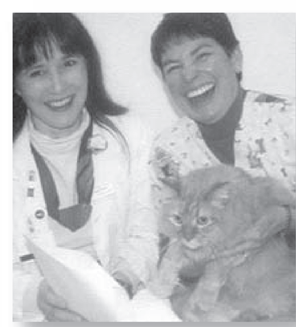
Kim is an amazing owner. She took Sam to Washington State University along with her children and they all stayed in a motel from December 5th through the holidays while he received daily radiation therapy.
Here is another ACVIM abstract:
20 HIGH PREVALENCE OF FELV AND FIV IN CATS WITH ABSCESSES OR BITE WOUNDS.
CE Goldkamp, 1 JK Levy, 1 Jessica Lachtara. 2 1. College of Veterinary Medicine, University of Florida, Gainesville, FL,
2. IDEXX Laboratories, Westbrook, ME.
Bites from infected cats are a highly efficient method for transmission for FIV and FeLV due to high levels of virus in the saliva. The purpose of this study was to determine the seroprevalence of FIV/FeLV at the time of treatment of a cutaneous abscess or bite wound in a prospective clinical trial and to determine the rate of seroconversion for FIV and FeLV following bite wounds and abscesses. Veterinarians were asked use an ELISA that simultaneously tests for FeLV p27 antigen and FIV p24/pl5 antibodies when cats presented for treatment of cutaneous abscesses or bite wounds. Each cat's age, sex, neutering status, access to outdoors, previous cutaneous wound history, previous testing results, and previous vaccination status were recorded. Risk factors were compared using the chi square test. Clients were advised to return their cats for retesting 2 months after the wound was treated to determine if FIV or FeLV infection resulted from the wound. Testing was offered at no charge and both veterinarians and clients were offered an incentive to encourage retesting of the cats.
A total of 967 cats were enrolled in the study. Most were males (66%), adults (92%), and had outdoor access (93%). A majority of the cats (59%) had no previous known history of wounds. Seroprevalence was 13% for FIV and 9% for FeLV. Risk of FIV was significantly higher in adults (13%) vs. juveniles (5%), males (17%) vs. females (5%), and cats with a previous history of cutaneous wounds (19%) vs. those without (9%). Risk of FeLV was significantly higher in males (11%) vs. females (5%) and in cats with previous cutaneous wounds (13%) vs. those without (6%). Males (37%) had a significantly higher risk than females (29%) of sustaining head or neck wounds, whereas females had a significantly higher risk than males of sustaining hind-end wounds (34% vs. 26%) and trunk wounds (13% vs. 6%). Less than half of the veterinarians followed up to encourage retesting 60 days after the initial FeLV/FIV test. Of the 385 cats whose owners were contacted, only 58 (15%) of the cats were returned for retesting. Of these, a single cat seroconverted for FIV following an abscess.
Overall, 19% of cats with abscesses or bite wounds were positive for FIV and/or FeLV, which is substantially higher than the rate of 3% reported from a recent national survey of veterinary clinics in the US. We recommend revising current testing guidelines to assure testing of all cats at the time wounds are diagnosed, rather than delaying testing for 2 months as currently recommended. A testing delay is associated with a very low rate of testing compliance among a high-risk population in which 1 of every 5 cats is infected with FeLV and/or FIV.
Special thanks to ACVIM for letting me include the above abstracts.
The American College of Veterinary Internal Medicine (ACVIM) is a national certifying organization for veterinary specialists in large and small animal internal medicine, cardiology, neurology and oncology. Established in 1973, the organization aims to advance the knowledge of animal health and diseases, and to foster the continued development of specialty veterinary care.
The 2008 ACVIM Forum will be in San Antonio, Texas, June 4-7th. For more information, check out the ACVIM website at acvim.org.
Hope to see you there!
Sara Stephens DVM, ABVP (feline) has a small animal practice in Missoula, Montana, and can be reached at