






Abstract
The present study provided a systematic review with meta-analysis of randomized controlled trials involving the effectiveness of various rehabilitation methods that have been implemented for the treatment of anterior cruciate ligament reconstruction (ACLR). The review of the literature revealed the following as evidence for effective ACLR rehabilitation: early intervention strategy focused on restoring range of motion, muscle strength, and ligament stability with the utilization of closed kinetic chain exercises. The literature supports the use of dynamic intraligamentary stabilization, which should also be implemented in the rehabilitation protocol within the first three months after surgery. The research suggests that the patient should undergo at least 30-90 minutes of cryotherapy immediately following ACLR surgery. There is also some evidence regarding the effectiveness of neuromuscular rehabilitation training programs, but further investigations are needed. Future research should consider the timing of rehabilitation as well as supplemental rehabilitation exercises to continue to improve the quality of care delivered to patients following ACLR.
Keywords
Introduction
An anterior cruciate ligament (ACL) injury is a major injury for any individual. 1 The ACL is one of the four ligaments that provide stability to the knee. This ligament is located in the center of the knee and helps control forward and rotational movement of the tibia. 2 The ACL is the most commonly injured ligament in the body, for which surgery is frequently performed. It is estimated that 175,000 ACL reconstructions (ACLRs) were performed in the year 2000 in the United States at a cost of more than $2 billion. This number continues to increase. Incidence rates for tears are difficult to assess because some injuries remain undiagnosed. The majority of ACL tears (67% in men and almost 90% in women) occurred without physical contact. 2 The mechanism of injury for an ACL injury is an acceleration or deceleration twisting injury to the knee and the individual typically hears a pop.1–3
An athlete who sustains an ACL rupture has few options for treatment. If they wish to continue to compete at the preinjury level, then the only viable option is to undergo an ACLR. Otherwise, the athlete is at a substantial risk of sustaining subsequent degenerative changes in the knee at a young age. 4 Rehabilitation programs are designed to rebuild muscle strength, reestablish joint mobility and neuromuscular control, and enable patients to return to preinjury activity levels. 5 These objectives are based on the knowledge of patients undergoing ACLR.5–7 Interventions could therefore include closed and opened chain exercises, cryotherapy, rehabilitative bracing, traditional versus accelerated rehabilitation, and dynamic intraligamentary stabilization (DIS). There are various surgical techniques employed in the ACLR repair through the patellar defect, arthroscopically assisted techniques, and the miniarthrotomy technique. A major emphasis is now placed on the preoperative and postoperative rehabilitation with an ACLR.8–11 An accelerated and aggressive program that relies on early return and maintenance of full hyperextension equal to the contralateral knee, early weight bearing, and closed chain exercises is recommended. 4
Although there have been attempts to examine the effect of these interventions following ACLR, the systematic reviews have been outdated and do not examine modern rehabilitation techniques.5,12 This review also investigated modern rehabilitation procedures, such as DIS and stem cell therapy, which other related systematic reviews failed to mention.5,12
Of particular interest to this study was to investigate the most effective rehabilitation method for returning the injured individual back to physical activity as quickly and efficiently as possible. The goal of this systematic review was to collect the available randomized controlled trials (RCTs) in ACL rehabilitation to assist in the development of rehabilitation methods. Therefore, the primary question of this review was “What is the ideal rehabilitation program for postoperative ACLR?”, ie, what combination of treatment is the most effective for returning an individual recovering from ACLR back to preinjured activity?
Methods
Selection of trials
To determine whether a trial should be included, trials were reviewed using predetermined criteria. The trial had to be an RCT, and the patient needed to have ACLR surgery. The study was also required to involve rehabilitation methods and protocols following ACLR surgery. Exclusion criteria included studies not pertaining to ACLR rehabilitation, studies involving predisposing conditions, or preventative measures for ACL injuries.
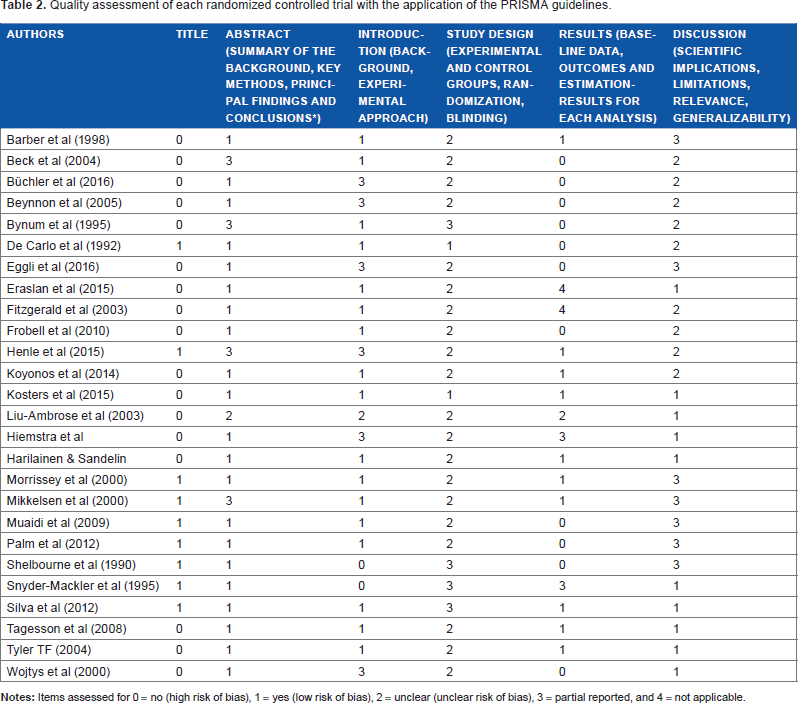
The methodological quality of the studies was assessed based on the method of randomization, power analysis, assessor and participant binding, number of subjects, length and sufficiency of follow-up, and a thorough description of the rehabilitation interventions. Some studies failed to establish an effect because the exercises are ineffective, and the time, duration, specificity, or intensity of the exercises/program are not sufficient for provoking a response. The patients may have also not been compliant with the rehabilitation treatment. Furthermore, RCTs from the literature reviewed covered the following areas of ACL rehabilitation: stem cell therapy, closed and opened chain exercises, glucosamine and creatine supplementation, cryotherapy, rehabilitative bracing, traditional versus accelerated rehabilitation, and DIS. The principal investigator of the review was responsible for checking the articles.
Database and search strategy
Articles were identified from the following sources: MEDLINE (2000-2015), PubMed (1990-2015), and Google scholar (2000-2015). Searches from each database included the search terms “anterior cruciate ligament”, “rehabilitation”, and “randomized controlled trial”. These searches revealed 299 studies. Of these 299 studies, 273 studies were excluded because they failed to meet the inclusion criteria for assessment. The remaining 26 studies were included in this systematic review (see Table 1 and Fig. 1).

Flow chart for the search, retrieval, and quality appraisal process.
Chronological list of randomized controlled trials (RCT) based on the search criteria given for this study: from PubMed, MEDLINE, and Google scholar.

Results
Stem cell therapy
Stem cell therapy has been shown to have promising prospects and draws increasing attention. 13 Despite the significant amount of discussion that has occurred regarding the quality and effectiveness of stem cell therapy following ACLR surgery, few studies have been published that have investigated this issue.13–16 Hirzinger et al 17 evaluated the biological factors that influence the healing process. The factors discussed included local intraligamentous cytokines and mainly cell repair mechanisms that are controlled by stem cells or progenitor cells. This study concluded that there is an unclear deduction whether trophic factors deriving from stem cells improve the regeneration or if the cells themselves form new tissue. Silva et al 16 carried out a study focusing on the graft-to-bone healing in ACLR. Patients received intraoperative infiltration of their graft with noncultivated adult bone marrow-derived stem cells. MRI evaluation showed no difference between the treatment and the control group. 16 Hao et al 13 investigated bone marrow-derived mesenchymal stem cells to emerging ACL-derived CD34+ stem cells. This study suggests that these stem cell types have been proven to be effective in accelerating tendon-bone healing. 13
In spite of the high hopes pinned on cell therapy approaches not only in ACL repair but also in musculoskeletal regeneration in general, the use of stem cells is still far from reaching everyday clinical practice. 17 Besides regulatory obstacles, there needs to be a concise conclusion on which cell type is most beneficial for regenerating ligament tissue.
Closed and open chain exercises
Resistance training using open kinetic chain (OKC) exercises for patients recovering from ACLR surgery has lost favor mainly because of research indicating that OKC exercises cause greater ACL strain than closed kinetic chain (CKC) exercises.18,19 Bynum et al 20 evaluated rehabilitation following bone-tendon-bone autograft ACLR using open versus closed chain exercises. Twenty-one patients in the closed chain group felt that they returned to normal activities of daily living sooner than expected versus 10 patients in the open chain group. The results of this study suggested that CKC is safe and effective and offers a variety of advantages of less stress on the healing graft. These patients also experienced less patellafemoral pain.
Morrissey et al 18 sought to investigate knee extensor resistance training using OKC and CKC exercises for patients recovering from ACLR surgery. This study measured knee laxity for both types of rehabilitation programs and concluded that the use of OKC exercise compared to CKC exercise led to an increase in knee looseness posttraining. Holm et al (2000) also studied the effect of OKC and CKC exercises. The rehabilitation methods used involved level walking for the OKC group and leg presses for the CKC group.
Contrasting to the results presented in the Bynum et al 20 study, Mikkelsen et al 21 emphasized the addition of OKC exercises to a CKC rehabilitation program. This study investigated knee laxity, thigh muscle torque, and return to preinjury sports’ level. The researchers concluded that the addition of OKC quadriceps training after ACLR results in a significantly better improvement in quadriceps torque without reducing knee joint stability at six months. The researchers also found that athletes involved in the OKC rehabilitation program returned to their previous activity earlier.
The literature established the need for a more extensive research investigation in this area. In the Bynum et al's 20 study, there was no concise determination for the specific exercise that may have led to the increase in knee laxity. Mikkelsen et al 21 did not discuss genetic predisposition factors that could have led to a faster recovery time to their previous activity. The studies presented also assessed the final outcome in a short period of six weeks. This follow-up may be too short to make any clear deductions.18,20,21
Quality assessment of each randomized controlled trial with the application of the PRISMA guidelines.
Glucosamine and creatine
Creatine supplementation has been shown to augment training-induced strength gains. 22 Tyler et al 22 proposed that creatine supplementation will facilitate strength gains following ACLR and promote healing. Isokinetic testing was used to measure quadriceps and hamstring strength, while hip flexor, abductor, and adductor strength were measured using a dynamometer. Hop tests also assessed the knee strength of each patient. Over the course of the six-month study, the researchers revealed that creatine supplementation did not affect the strength improvements made by the subjects. 22
Other supplementation rehabilitation methods studied involved the investigation of glucosamine supplementation following ACLR. 23 Eraslan and Ulkar 23 administered glucosamine sulfate to half of the sample size while providing a placebo to the rest of the subjects. After evaluating knee pain and function while also using isokinetic testing, the researchers revealed significant improvements in both groups after the eight-week study. However, there were no significant rehabilitation differences detected when athletes used glucosamine supplementation during rehabilitation.
Creatine supplementation does have the efficacy to increase strength gains; however, studies have shown that this type of supplementation is not effective for patients rehabilitating from ACLR surgery. Further research could investigate the supplementation of creatine during CKC and OKC rehabilitation programs, which have shown mixed findings regarding recovery time following ACLR. Eraslan and Ulkar's 23 study was the first study regarding glucosamine supplementation. Further studies with a longer rehabilitation program will help obtain clear evidence regarding the efficacy of glucosamine supplementation on ACLR rehabilitation. The studies have shown that it may be viable to conclude that it is not necessary to include creatine or glucosamine supplementation in the rehabilitation regimen for patients recovering from ACLR surgery.22,23
Cryotherapy
Unrelieved postoperative pain may impair rehabilitation’ compromise functional outcomes’ and lead to patient dissatisfaction.24,25 Cryotherapy is a popular therapeutic modality to improve the outcomes following surgery. Studies have investigated the use of this therapeutic technique to reduce pain for patients recovering from ACLR surgery. 25 Koyonos et al 25 studied two separate groups in which one group received no cryotherapy while the second group underwent 30-90 minutes cryotherapy. This study employed the use of self-reported measurements to assess the subject's perceived pain. Barber et al 26 also implemented a similar experimental design by evaluating two separated groups.
There have been similar findings in studies, which have investigated the implementation of cryotherapy treatment in the rehabilitation of patients following ACLR surgery.26,27 Barber et al 26 concluded that cryotherapy is safe and effective treatment for reducing postoperative pain. Additional research has also identified the efficacy of the implementation of cryotherapy in the rehabilitation regimen for ACLR surgery patients.26'27
While previous research has displayed significant findings regarding the use of cryotherapy’ additional research with a different experimental design is necessary for a clear conclusion. These studies had patients self-report their pain perceptions to conclude that cryotherapy will lead to less medication required for pain management. Self-report techniques can lead to bias and unreliable data’ which is why other experimental techniques should be used to assess the efficacy of cryotherapy. 28
Neuromuscular training
The biomechanics of the knee are altered after an ACL injury. Rehabilitation protocols that only focus on restoring mechanical restraints has been shown to be insufficient for a pleasing outcome. 29 Neuromuscular training may induce alterations in muscle activity patterns to enhance the control of abnormal joint translations during functional activities. 7 Three RCTs were reviewed which examined the evidence of using neuromuscular training programs during the course of postoperative ACLR rehabilitation.12,30,31
Liu-Ambrose et al 30 investigated subjects undergoing a strength rehabilitation program compared to subjects undergoing a neuromuscular training program. The neuromuscular training group demonstrated a greater percentage of change in isokinetic torques than the strength group. Fitzgerald et al 32 was an RCT that evaluated patients exposed to neuromuscular training with rehabilitation. In this study, subjects were evaluated by the performance of isokinetic quadriceps exercise throughout a 16-week span. Upon conclusion of this study, there was an increase in the activities of daily living in the neuromuscular training group, but there were no significant differences in pain perception. 32 Ross et al 33 also examined neuromuscular training in conjunction with CKC exercises. The researchers found significant evidence that the addition of neuromuscular training produced better lower extremity performance compared to the control group. 33 However, this study did not feature blinding or independent assessment of subjects.
Due to the various constraints used in these studies, it is difficult to make a generalized conclusion regarding the use of neuromuscular electrical stimulation following ACLR. The majority of these studies did not assess randomization, and some were not blinded.12,33,34 Not blinding the study could lead to bias data and cause the research to be unreliable. Also, baseline data were only reported in one study. 32 While some studies demonstrated improved isokinetic strength, this was not connected with patient-based outcomes or other testing related to knee function. In addition, patient satisfaction and pain management were seldom addressed. Neuromuscular electrical stimulation has the potential to improve quadriceps strength and could facilitate the rehabilitation process following ACLR. However, there have not been studies proving that this treatment should be required for ACLR rehabilitation.
Rehabilitative bracing
Given the growing appreciation for restoring native ACL anatomy and both biochemical and neurosensory functions, current surgical innovations suggest strong potential for achieving a closer fusion of surgical repair with possible use of internal bracing.29,35–37 Internal bracing also provides an additional option for repairing adjacent knee tissues that function in synchrony with the ACL such as the medial collateral and anterolateral ligaments.2,5,38 The evidence base supporting postsurgical knee brace use tends to decrease across the healing continuum following ACLR surgery. The traditional focus on postsurgical knee joint protection must be balanced with concerns related to the potential for knee brace-induced maladaptive lower extremity kinematic compensations and range of motion (ROM) restrictions. 34 Knee brace use needs to match the needs of the patient at each phase of the return to sports process. 34 Studies have suggested that even following knee brace prescription, safe training without brace use is essential to better simulate the loads needed for tissue healing, collagen deposition, and remodeling.34,39,40 Over time, the rehabilitation team would need to have a planned strategy to gradually lead the patient away from the use of a brace once biomechanical tissue integrity and high-level performance function have been reestablished. 34
Contrast to the opinions states in the previously mentioned literature, one systematic review 41 found strong evidence that demonstrated the ineffectiveness of postoperative bracing. Two RCTs in this review suggested that bracing did not protect against postoperative injury, decrease pain, alter range of knee motion, or improve knee stability.42,43
Hiemstra et al 43 performed an RCT comparing knee immobilization with no bracing following ACLR with hamstring tendon; early pain was assessed in 88 patients. The primary outcome was patient pain self-assessed at two days after surgery, as well as analgesic use, knee motion and effusion, and wound healing throughout the first 14 days after ACLR. There were no differences in pain, analgesic use, ROM, or effusion at 2 or 14 days. Harilainen and Sandelin 42 assessed knee laxity and isokinetic strength in a brace group compared to a group who was given no bracing post-ACLR. There were no observed differences between the two groups. The majority of the literature reviewed suggests that bracing following ACLR remains neither necessary nor beneficial and adds to the cost of the procedure.41–43
Traditional versus accelerated treatment
Because of the controversy surrounding accelerated ACL rehabilitation, studies have investigated the retrospective comparison of traditional rehabilitation versus an accelerated approach. 44 De Carlo et al 44 demonstrated that patients who started weight bearing or gained ROM earlier than advised had stronger, more functional knees at the completion of rehabilitation. In a second RCT, a dramatic decrease was observed in the number of scar resections and surgical manipulations required to achieve full ROM once the current rehabilitation program was initiated. 45
Patients undergoing ACL reconstruction achieved a better result with the current accelerated rehabilitation program than they did under the initial protocol in De Carlo et al. 44 By encouraging early passive terminal extension, early weight bearing, and quadriceps control while emphasizing closed kinetic strengthening exercises, the patients were able to progress through the postoperative rehabilitation period at an accelerated pace. The patients were able to gain full ROM by six to eight weeks, the full quadriceps strength was regained at an earlier time without compromising stability, and return to competition occurred as early as four to six months following surgery. In another report by Shelbourn and Nitz, it was demonstrated that an accelerated rehabilitation program after ACLR can be beneficial. This report indicated that in one surgeon's practice, the accelerated program was more effective than a traditional program in reducing limitations of motion and loss of strength while maintaining stability and preventing anterior knee pain. 46
Limitations of these studies indicated that these improvements can be generalized to patients from more than one surgeon. Although improved ROM and strength were observed, the patients had received surgical care by three different physicians. This study prompts suggestions for further research such as a comparison between surgeons to determine if a particular surgeon had superior results. Also, an additional study could be implemented with a follow-up period longer than one year.4,45–48
Dynamic intraligamentary stabilization
Recently, a new technique called DIS was introduced for the acute repair of ACL ruptures. 49 Büchler et al 49 reported the functional recovery for patients undergoing ACLR rehabilitation alongside DIS. This strategy preserved the torn ACL and is a fairly new rehabilitation method implemented in the patient's treatment regimen. The DIS method involves employing an internal stabilizer to keep the unstable knee in a posterior translation, combined with microfracturing and platelet-rich fibrin induction at the rupture site to promote self-healing. Eggli et al 50 used a postoperative clinical outcome method with the utilization of a patient satisfaction score. The researchers also assessed knee laxity at 3, 6, 12, 24, and 60 months. Based on the instruments’ outcome scores, a combined success definition was applied. The patients’ preoperative scores were assessed as early as possible. 50
Research has indicated that DIS technique with proper rehabilitation following ACLR provides successful functional recovery and low rerupture rate at one year follow-up. In one of the DIS studies,49,51 only 3 out of the 45 patients suffered from rerupture during the first 12 postoperative months. Other research regarding DIS rehabilitation treatment has shown a five-year survival rate of 80%, and all patients with a functionally healed ACL displayed excellent outcomes and satisfaction with regard to the treatment result. 50 Although DIS research has produced significant findings, the small sample sizes used and the lack of a control group are the major drawbacks from the presented analyses. Therefore, a representative failure rate cannot be concluded from the small case series. 50 Research published by Koyonos et al (2014) confirmed these findings.
Discussion
This systematic review provides information regarding certain rehabilitation methods for patients recovering from ACLR surgery that may have the efficacy to decrease pain, promote healing, and lead to a faster rate of recovery. Many issues relating to ACLR rehabilitation have been evaluated using RCTs. However, the quality of the reviewed studies is variegated. Most of the research reviewed contains a form of potential bias. Despite this bias, reasonable conclusions can be generated from the research used in this systematic review. An accelerated rehabilitation protocol appears beneficial within the five-to six-month time frame and has the efficacy to facilitate the recovery process of an ACLR surgery. Also, CKC rehabilitation within the first six weeks postsurgery might allow for better patellar tracking with minimal stress on the ACL and can help maintain good joint congruency. Early weight bearing may also be beneficial for decreasing patellofemoral pain.
From the information gathered by this systematic review, an ideal rehabilitation regimen for the injured individual should involve an early intervention strategy focused on restoring ROM, muscle strength, and ligament stability with the utilization of CKC exercises. DIS could also be implemented in the rehabilitation protocol within the first three months after surgery. The patient should also undergo at least 30-90 minutes of cryotherapy immediately following ACLR.
Despite the extensive review of 26 RCTs, there is still significant doubt regarding most of the rehabilitation methods suggested. This review differs from previous work regarding the quality of its sources. For example, two systematic reviews regarding ACLR rehabilitation5,12 reviewed studies published prior to 1990. Studies published prior to 1990 may be outdated and could lack the recognition of modern rehabilitation techniques. This systematic review chose most of the reviewed studies from those published after 2000. Further studies are necessary to continue to add confidence to the ACLR rehabilitation procedures. There is a need for further research involving good quality, large scale randomized trials with sufficiently long follow-up to fully assess knee function and recovery. Future research should also consider the timing of rehabilitation as well as supplemental rehabilitation exercises to continue to improve the quality of care delivered to patients following ACLR.
The present review is limited by the fact that certain databases were not used during the selection process of the randomized controlled trials. The Cumulative Index to Nursing and Allied Health Literature (CINAHL), which is the largest database covering interventions by nursing and allied health professionals, was not considered in the search. This was due to the fact that the Mcdonald-Kelce Library at the University of Tampa, which provided the researcher with access to the journals and databases used, did not have access to CINAH. Therefore, this database was able to be accessed and utilized in the search process of the trials.
Author Contributions
Conceived and designed the experiments: DI, RS. Analyzed the data: DI, RS. Wrote the first draft of the manuscript: DI. Contributed to the writing of the manuscript: DI. Agree with manuscript results and conclusions: RS. Jointly developed the structure and arguments for the paper: DI, RS. Made critical revisions and approved final version: DI, RS. All authors reviewed and approved of the final manuscript.
Footnotes
Acknowledgments
The author wishes to thank the University of Tampa's Mcdonald-Kelce Library for providing access to the journals and databases used in this systematic review. The author also wishes to thank Dr Ronda Sturgil (PhD) who supported the research as a faculty mentor for the principal investigator.