






Abstract
Objectives
(1) To determine whether advertising nighttime tampon use for up to eight hours was understood to be consistent with label recommendations and (2) to determine whether television and print advertising with this message affected tampon wear times in adults and teens.
Methods
(1) A comprehension study (online advertising and follow-up questionnaire) among women aged 14–49 years (300 per group) who viewed either the test or a control advertising message; (2) Diary-based surveys of tampon wear times performed prior to (n = 292 adults, 18–49 years, 74 teens, 12–17 years) and after (n = 287 adults, 104 teens) the launch of national advertising.
Results
Significantly more test message viewers than controls stated tampons should be worn less than or equal to eight hours (93.6% vs. 88.6%, respectively, P = 0.049). A directionally higher percentage of test message viewers said they would use a pad if sleeping longer than eight hours (52% vs. 42% of controls). Among the women who used tampons longer than eight hours when sleeping, 52% reported they would wake up and change compared with 45% of controls. No significant difference between baseline and follow-up diary surveys was found among teens or adults in various measures of tampon wear time (mean wear times; usage intervals from less than two hours to more than 10 hours; percentage of tampons used for more than or equal to eight hours; frequency of wearing at least one tampon more than eight hours).
Conclusions
Advertising nighttime tampon wear for up to eight hours effectively communicated label recommendations but did not alter tampon wear times. The informational intervention had limited impact on established habits.
Introduction
Disposable sanitary pads, panty liners, and tampons are typically used for menstrual hygiene in Western industrialized countries. Although tampons have been available commercially in the United States since 1936, 1 surprisingly little published information exists on tampon usage habits. A 1996 survey of 193 women of Caucasian (77%), Latino (8%), and African-American descent (7%) from urban southeast Texas (mean age, 23 years, range 18–50 years) found that 48% of respondents used tampons exclusively, 19% used sanitary pads, and 18% used pads and tampons in combination. 2 A 1999 survey of feminine hygiene practices by age in 713 primarily white, college-educated women in California found that among those aged 18–40 years, 81% used tampons for menstrual hygiene, either exclusively or in combination with sanitary pads; among those aged 41–57 years, 66% used tampons either exclusively or in combination with pads. 3 Tampon use is also prevalent among adolescents and young women: 70% of American adolescents and 81% of college students surveyed in the 1990s used tampons alone or in combination with pads.4,5 Published clinical trials of tampon safety suggest that women use between three and four tampons per day during the menstrual period; wear times averaged 4.5–5 hours, although some tampons were worn for about 2 hours and some for 9–10 hours.6,7
In the United States, the Food and Drug Administration (FDA) regulates tampons as medical devices. The principal health concern related to tampon use is its association with menstrual toxic shock syndrome (mTSS), a serious but rare, recognizable, and treatable disease. 8 Incidence of mTSS remains 1–2/100,000 menstruating women 15–44 years of age with teens showing a greater risk when <19 years of age.9–12 The US FDA recommends alternating tampon use with sanitary napkin use during menstrual periods, a practice thought to reduce the risk of getting TSS. 13 Epidemiologic evidence demonstrates that tampon wear time or change frequency does not increase risk of mTSS.14–16 The FDA also recommends that manufacturers provide instructions to limit wear time per tampon to not more than eight hours and to advise against the use of tampons overnight. 17
Our company monitors women's experience with feminine hygiene products through a toll-free telephone number available on the packaging. We receive about 100 inquiries per month from adult women, teens, and parents of young girls seeking information on overnight or extended use of tampons (Fig. 1). Consequently, we developed an advertising initiative with the principal message that tampons can be worn overnight up to eight hours. We then sought to test the impact of this message, if any, on the consumer's tampon usage habits and practices related to tampon wear time, including mean wear times, proportion of tampons worn for various time intervals, and tampon wear times by absorbency.
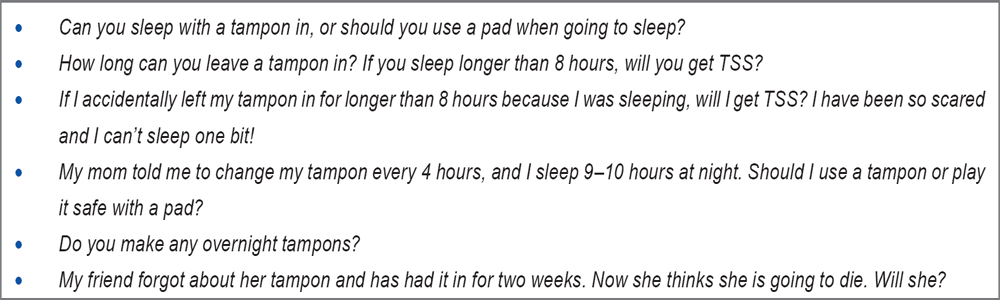
Typical inquiries about tampon wear times and overnight tampon use.
Methods
Three studies were conducted to understand the potential impact, if any, on tampon wear time and absorbency choice of a national advertising campaign with a message that tampons can be worn while sleeping for up to eight hours. The three studies were, in brief, (1) a message comprehension study among women aged 14–49 years (300 per group) exposed to either a test message regarding nighttime tampon use for up to eight hours or a control message with conventional information about fluid absorption and protection against leakage; (2) a baseline diary survey (n = 366 women aged 12–49) of tampon wear times and absorbency choices begun 10 months prior to the national launch of the nighttime wear advertising message described to above; and (3) a follow-up diary survey of the same parameters (n = 391 women aged 12–49) begun approximately two months after the launch of the advertising initiative, performed in the same region and among the same demographic groups as the baseline survey. The three studies were conducted in accordance with the principles of the Declaration of Helsinki.
Advertising Initiative
A television and print advertising initiative for Tampax® tampons was developed to communicate that tampons can be worn at night for up to eight hours. It was similar to previous initiatives in terms of media outlets, number of advertisements, length of the initiative, and target audience and was specifically aimed at adults. Television and print advertising featured a woman asleep at night; superimposed upon the scene was a time-clock image denoting a tampon wear time of up to eight hours and subtext stating one should use a pad if planning to sleep more than eight hours. For television advertisement, the “up-to-eight-hour” wear-time message was stated orally and the superimposed time-clock image appeared dominant within the advertisement (Fig. 2). This advertising excluded teen models or a young teen theme so as not to contradict the recommendation that teenagers need 8–9.5 hours of sleep at night.18,19 The television initiative ran from March 2009 through November 2009. Advertisements were placed during 20 television shows on 20 networks at a time when an adult audience would be watching and was estimated to have reached about 60% of women aged 18–34 per week; although the advertising placement and content was not explicitly aimed at teenagers, it is estimated that the advertising would have reached a similar proportion of teens. Print advertisements were placed in 21 magazines for adult readers. These advertisements ran from April 2009 to January 2010 and were targeted to reach 60% of adult women per week aged 18–34 both nationally and in the Cincinnati and Dayton, Ohio, region where diary surveys of tampon practices were carried out as part of this research. According to Media Effectiveness Tracking Tests conducted by our company, it is estimated that the combination of television and print advertising may have reached over 90% of women in aggregate over the nine months of the advertising campaign.

Advertising comprehension study comparing two messages. (A) Wear-time message: Protection for up to 8 hours, even at night (test). (B) Product performance message: Fluid absorbency and leakage protection (control)
Online Advertising Message Comprehension Study
In February 2009, prior to the launch of the advertising initiative, an online message comprehension study was performed among 600 women with normal menstrual cycles aged 14–49 to confirm that consumers easily understood the “up-to-eight-hour” message. The 600 women (targeted as 200 women in each of the age segments, 14–24, 25–34, and 35–49 years, segments corresponding to the National Health and Nutrition Examination Survey) 20 were assigned in a randomized order to one of the two groups (n = 300/group) and shown a video clip of advertising copy about the same tampon product and packaging: either copy developed for the eight-hour wear advertising initiative described above (test) or copy from a previous initiative where product performance (fluid absorption and leakage protection, but not wear time) was the main message (control; Fig. 2). To avoid biasing responses, viewers then answered a series of online questions (n = 21 questions) about purchase intent and product preference, among which were three questions related to tampon wear time. Responses were analyzed for the teen (aged 14–17 years) and adult (18–49 years) populations combined.
Diary Studies of Tampon Habits and Practice at Baseline and following Advertising
The objective of the baseline and follow-up study was to capture habits and practices information for tampon use over the course of one menstrual cycle. The baseline diary survey involved 292 adults, aged 18–49 and 74 teens, aged 12–17 from the Cincinnati-Dayton area; the follow-up study involved an additional, naive group of women comprised of 287 adults and 104 teens in the defined age ranges. Each diary study lasted one menstrual cycle. Participants were recruited by a contract research organization to be representative of the national population with regard to (1) age distribution (12–17, 18–24, and 25–49 years) as reported by the US Census Bureau (2000) 21 and (2) number of live births and use of hormonal birth control based on the NHANES 2005–2006 Reproductive Health dataset. 20 Other inclusion criteria were self-reported regular menstrual cycles in the past three months, not being pregnant or planning to become pregnant, use of five or more tampons per menstrual cycle, and use of tampons as often or more often than pads to manage menstrual flow. Exclusion criteria included unwillingness to use an electronic device (Palm Pilot®; Palm, Inc.) to keep a detailed diary of tampon use; unwillingness to freeze and return used tampons to the study investigators; employment by a market research firm, advertising agency, media company (radio, television, or newspaper), bank, or brokerage firm; having a position as manager of a grocery store, drug store, or mass merchandizer; or employment by a company that purchases or processes food, personal care, or household products. Parent or guardian consent and teen assent forms were obtained for participants under age 18. Adult participants gave their written, informed consent to participate in the studies. All participants were instructed to use their own feminine hygiene products as they normally would, to use the Palm Pilot® device provided by the Sponsor to document tampon insertion and removal times and to answer specific diary questions about absorbency choice and activity level with each product use for one entire menstrual cycle, and to place the used tampon into a Ziploc bag and freeze it according to the provided instructions. Although commercial products available in the US typically include a toll-free telephone number on the packaging, study participants were given a phone number to reach the contract research facility in case of questions. The baseline study was performed in the summer of 2008 (May through September) and the follow-up study in the summer of 2009 (May through August).
Statistical Analysis
Advertising Comprehension Study
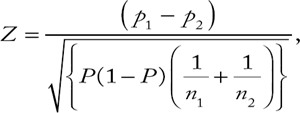
Responses on tampon wear time from Questions 1 and 3 of the advertising comprehension study were analyzed for the combined population (age 14–49) (Table 1). A Z-test of equal proportions was used to compare responses from the two copy messages. Since group sizes were well over 30, the normal approximation of the binomial was used in the calculations. All tests were two-sided.
The formula used for both the advertising comprehension and the habits and practices surveys was:

Responses on tampon wear among women aged 14–49 from an advertising comprehension study of (1) an initiative designed to convey the message that a tampon can be worn at night for up to eight hours (or a pad used if one plans to sleep longer) compared with (2) a previous initiative with a message related to product performance (fluid absorption and leakage protection).
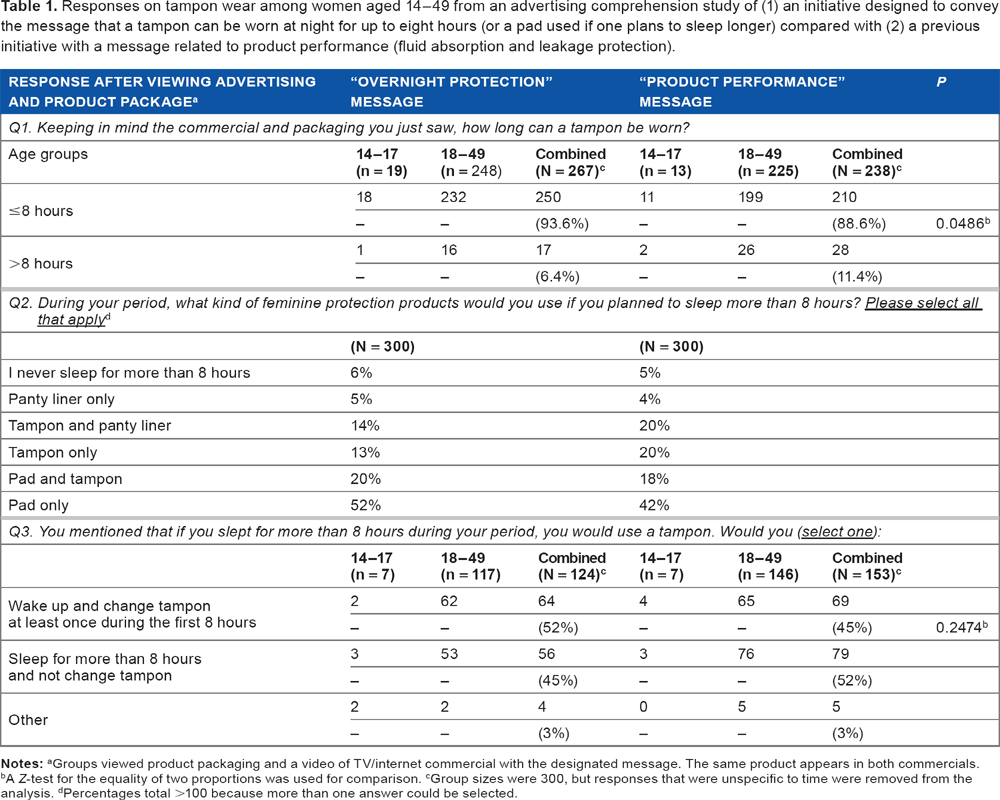
Groups viewed product packaging and a video of TV/internet commercial with the designated message. The same product appears in both commercials.
A Z-test for the equality of two proportions was used for comparison.
Group sizes were 300, but responses that were unspecific to time were removed from the analysis.
Percentages total >100 because more than one answer could be selected.
Habits and Practices Study
A simulation exercise based on data from prior internal studies was used to estimate appropriate group sizes needed to assess a significant change in tampon wear time. This exercise compared the previously observed consumer data to an unpublished simulation in which the following results were projected: 80% of subjects had no change in tampon wear time, 10% increased all wear times by one hour, and 10% increased wear times by two hours. Results showed that the mean number of uses more than eight hours consistent with these assumptions would be 0.796 and 0.957, with medians of 0 and 1 (a two-sided P-value of median shift = 0.1019; one-sided = 0.0510). From this simulation work, it was determined that group sizes of approximately 300 women would be needed to detect at least a median overall difference of between 0 and 1 in the number of tampon uses greater than eight hours with 95% confidence. This same base size would be sufficient to detect an increase in average wear time of ~45 minutes. In order to model the data accurately for repeated measures, average wear time was chosen as the primary endpoint rather than the median.
To compare mean wear-time parameters in the baseline and follow-up diary surveys reported here, a generalized mixed model analysis was used (GLIMMIX procedure, SAS® for Windows, version 9.2, SAS Institute). The probability of using a tampon more than eight hours was modeled using a logistic regression, specifying a binomial distribution and logit link function. The model included fixed effects for study year (baseline or follow-up indicator variable) and age, along with the interaction term. Study participants were treated as random effects, accounting for correlated data and repeated uses.
Results
Advertising Message Comprehension
Wear-time responses from the 600 women who participated in the online advertising message comprehension study (see Methods) conducted approximately one month prior to the launch of the advertising initiative are summarized in Table 1.
Results showed that when women were asked how long a tampon can be worn, a significantly higher percentage of viewers of the nighttime-protection message responded less than or equal to eight hours compared with viewers of the product performance message (93.6% vs. 88.6%, respectively, P = 0.049). The study was statistically powered to assess the understanding of the eight-hour recommended wear time only; nevertheless, consistent with this result, when asked what kind of feminine protection one would choose if one planned to sleep for more than eight hours, a directionally higher percentage of viewers of the nighttime protection message responded that they would use only a pad (52% for the test message and 42% for controls) and a lower frequency responded that they would use only a tampon (13% for the test message vs. 20% for controls). The frequency of respondents who indicated they would wear a pad and a tampon did not differ. Among respondents who indicated they would use a tampon if they slept more than eight hours, a directionally higher percentage of viewers of the nighttime protection message said they would wake up and change the tampon at least once compared with viewers of a conventional product performance message (52% vs. 45%, respectively).
Impact of Advertising on Tampon wear Time Characteristics
To assess the potential impact, if any, of the nighttime protection advertising message on tampon wear times, two daily diary surveys, each lasting one menstrual cycle, were conducted among tampon users: (1) a baseline survey among 366 women (292 adults, aged 18–49, and 74 teens, aged 12–17) begun the year prior to the launch of the advertising initiative and (2) a follow-up study of the same parameters among a different sample of 391 women (287 adults and 104 teens in above the defined age ranges) from the same region begun one month after the launch of the television advertising initiative. Table 2 summarizes the study population demographics.
Characteristics of participants aged 12–47 years in two diary studies of tampon absorbency choices and wear times performed before (baseline) and after (follow-up) the launch of an advertising initiative with the message that tampons can be worn at night for up to eight hours.
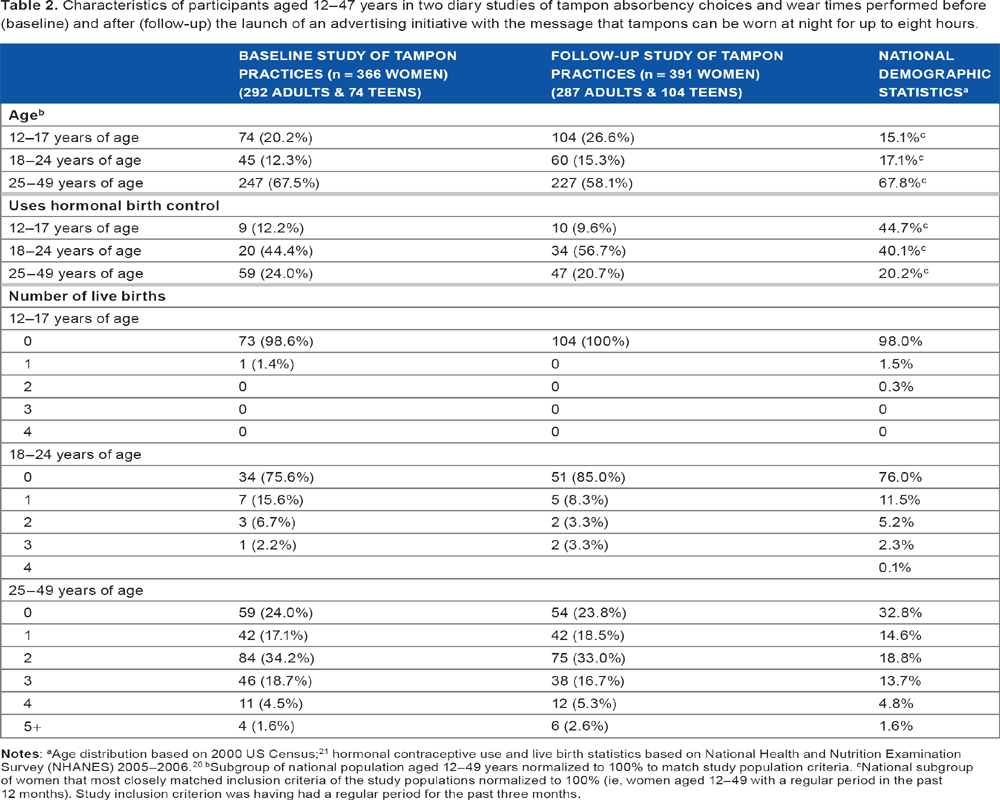
Age distribution based on 2000 US Census; 21 hormonal contraceptive use and live birth statistics based on National Health and Nutrition Examination Survey (NHANES) 2005–2006 20 .
Subgroup of national population aged 12–49 years normalized to 100% to match study population criteria.
National subgroup of women that most closely matched inclusion criteria of the study populations normalized to 100% (ie, women aged 12–49 with a regular period in the past 12 months). Study inclusion criterion was having had a regular period for the past three months.
No significant difference in mean tampon wear times was found between the baseline and follow-up surveys, either in teens, adults, or the total population combined; mean tampon wear times ranged between five and six hours overall (Table 3). No significant difference in the percentage of tampons used for various time intervals was observed either in the total population, among teens, or among adults (Table 4). About 80% of all tampons were worn for less than eight hours: the most common wear times were two to less than four hours (26.7% of teens and 29.6% of adults at baseline and 30.5% of teens and 28.1% of adults during follow-up) and four to less than six hours (26.3% of teens and 26.5% of adults at baseline and 22.2% of teens and 26.3% of adults during follow-up). Nevertheless, many women reported using at least one tampon over eight hours (78.4% of teens and 73.6% of adults at baseline; 76% of teens and 74.6% of adults during follow-up). The average number of tampons used for more than or equal to eight hours during a single menstrual period was 2.24 for the baseline study and 2.35 for the follow-up study. Longest wear times generally occurred during sleep: among teens, mean wear times during sleep at baseline and follow-up were 7.8 and 7.55 hours, respectively, and among adults, 7.52 and 7.50 hours, respectively (Table 3). None of these variables were significantly different between studies.
Mean tampon wear time (hours) in teens and adults prior to (baseline) and after (follow-up) the launch of a national advertising campaign explaining that tampons can be used at night for up to eight hours or that a pad should be used if planning to sleep longer than eight hours.
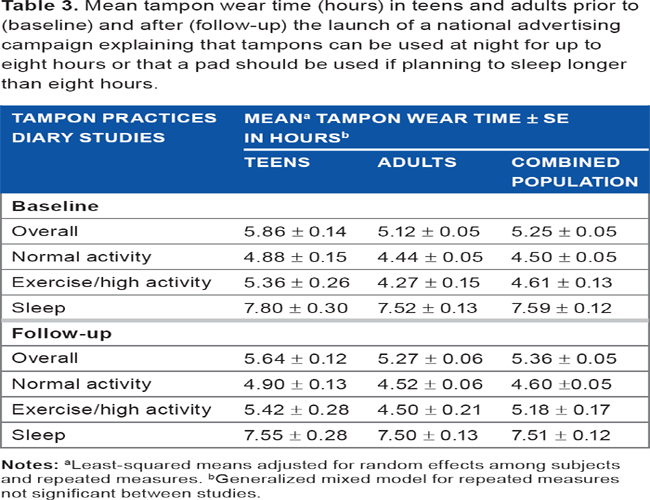
Least-squared means adjusted for random effects among subjects and repeated measures.
Generalized mixed model for repeated measures not significant between studies.
Percentage of total tampons worn for increasing time intervals ranging from less than two hours to more than 10 hours in teens and adults prior to (baseline) and after (follow-up) the launch of a national advertising campaign explaining that tampons can be used at night for up to eight hours.
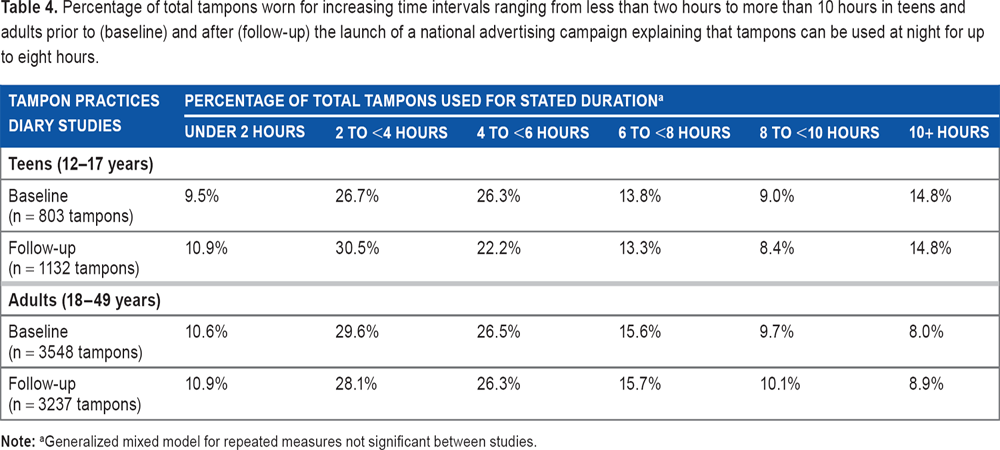
Generalized mixed model for repeated measures not significant between studies.
Tampon absorbency choices were comparable between studies overall (Fig. 3). No significant differences in mean wear time by absorbency were observed either for the total study population (Table 5) or for adults. However, among teens, there were no uses of ultra absorbency tampons in the baseline study, but eight uses were found in the follow-up study. These eight uses occurred in just two teens (1.9% of the sample). One teen used a single ultra absorbent tampon for 8.5 hours between 11 a.m. and 8 p.m. (not overnight). The remaining seven uses were attributed to one 15-year old teen: she used ultra absorbency tampons exclusively and, with the exception of a single pad use, did not alternate tampons with other feminine hygiene products. She provided incomplete documentation, but used tampons for over eight hours in five of seven documented uses, including once overnight. This young woman has adopted habits inconsistent with product labeling and product leaflet information.
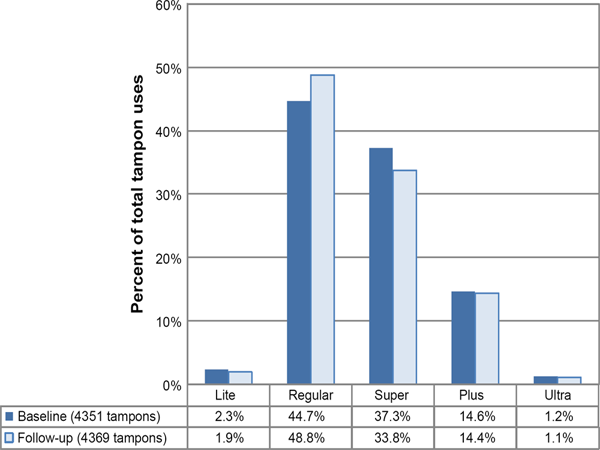
Tampon absorbency choices from diary surveys conducted prior to and after the launch of advertising with a message that tampons can be used at night for up to eight hours.
Tampon wear times by absorbency among teens and adults prior to (baseline) and after (follow-up) the launch of a national advertising campaign explaining that tampons can be used at night for up to eight hours.
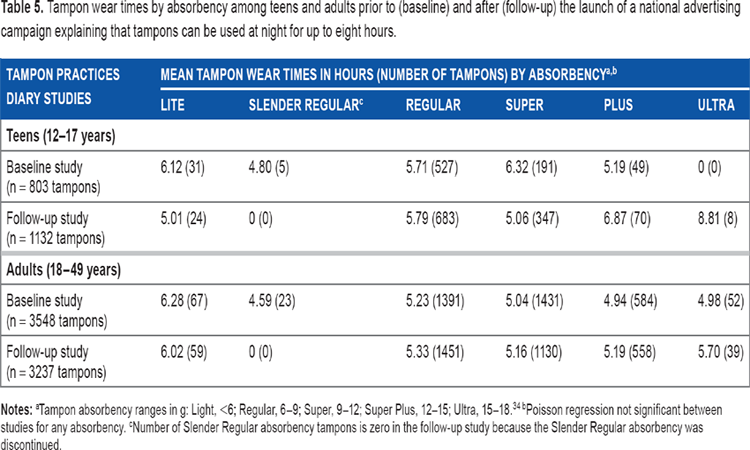
Tampon absorbency ranges in g: Light, <6; Regular, 6–9; Super, 9–12; Super Plus, 12–15; Ultra, 15–1834.
Poisson regression not significant between studies for any absorbency.
Number of Slender Regular absorbency tampons is zero in the follow-up study because the Slender Regular absorbency was discontinued.
Discussion
In North America, a significant proportion of women use tampons for menstrual protection. Surveys conducted in the 1990s suggest that 60%–80% of adult American women,2,3,22 70% of adolescents, and 80% of college students use tampons,4,5 either alone or in combination with pads.
Product package labeling draws attention to the risk of mTSS, includes the statement “use for a maximum of eight hours,” explains industry-wide, standardized tampon absorbencies, and directs users to choose the lowest absorbency to meet their needs. On our product packaging, this information appears directly above a toll-free number that users can call with questions.
Nevertheless, our company receives about 100 contacts per month inquiring about the safety of using tampons for menstrual protection at night in the event that one might sleep longer than eight hours. Hence, we developed and tested the comprehension of a television advertising message to convey that tampons can be worn at night for up to eight hours and that a pad should be worn if one plans to sleep longer (Fig. 2). The advertising was developed for an adult audience, explicitly avoided using teen models, and was used in media outlets aimed at adult viewers in order to avoid any implication that teens should get less sleep than the recommended 8–9.5 hours of sleep per night. 18 However, the comprehension study included women aged 14–49 to ascertain whether the message would be understood by both teens and adults and to ensure that it would not suggest practices inconsistent with product wear guidelines to either younger or older audiences.
Study results showed that the message was understood: a significantly higher percentage of viewers of the test message compared with viewers of a control message reported that tampons should be worn for less than or equal to eight hours (93.6% vs. 88.6%, respectively, P = 0.049). Responses to related questions were consistent with this understanding, although differences did not reach significance. More test message viewers stated they would use only a pad if they planned to sleep for more than eight hours (52% vs. 42% for controls). Among respondents who indicated they would use a tampon if they slept more than eight hours, a higher percentage of viewers of the test message said they would wake up and change the tampon at least once (52% vs. 45%, respectively). Hence, the intended message that eight hours is the maximum recommended wear time was conveyed and understood.
Having established message comprehension, two diary studies each lasting one menstrual cycle each were performed among tampon users aged 12–49 years prior to and after the launch of the initiative to ascertain whether the advertising would have any effect on tampon wear times. No significant change in tampon wear times followed the launch of TV and print media advertising, and, importantly, no adverse effect on the numbers of tampons used longer than recommended was observed.
In brief, tampon absorbency choices were comparable between surveys. No significant difference in mean tampon wear times was found overall or by age: mean tampon wear times for the total sample were 5.44 and 5.56 hours per tampon at baseline and follow-up, respectively, figures similar to those reported in the literature among participants in controlled clinical studies (4.53–5.5 hours per tampon).6,7 One advantage of the present study series is that it documents participants' personal choices and usage practices in the absence of a controlled, study design.
Notably, no impact was observed on the frequency of tampons used for more than eight hours. About 80% of all tampons in both studies (n = 8720) were worn for less than eight hours, consistent with package usage guidelines and FDA recommendations: the most common wear times were two to less than four hours and four to less than six hours. However, over 70% of teens and adults in the surveys used at least one tampon for longer than eight hours; this occurred about twice during the menstrual period.
Consequently, the diary surveys showed no evidence that the advertising campaign adversely affected women's practices with regard to compliance with recommended wear times. Although one limitation of our study is that participants in the follow-up diary survey were not asked directly whether they recalled seeing the advertising, monthly marketing surveys conducted during the advertising campaign among samples of 600–700 consumers indicated that 35%–50% had seen and remembered the advertising content each month. We estimate through Media Effectiveness Tracking tests that the media plan would have reached over 60% of teens and adult women per week in the region where the surveys were conducted and reached over 90% of the intended audience in aggregate over the nine months of advertising.
These surveys extend our understanding of tampon use characteristics beyond that published to date, providing a detailed breakdown of the frequency of tampon use for various time intervals and during different activities. The data indicate that women generally follow recommended use tampon wear times and wearing a tampon for more than eight hours is not a routine practice.
In retrospect, it is not surprising that an advertising message about maximum recommended hours of tampon wear, while meaningful and well understood, did not significantly affect established habits and practices. Interventions intended to alter everyday behaviors often attempt to change people's beliefs or understanding, but such interventions are frequently ineffective at changing well-established, entrenched routines. 23 Habits resist informational interventions because as actions are repeated, they become automatic responses to environmental cues and conscious decision-making recedes. Our internal research, which is supported by the literature,24–26 suggests that menstrual hygiene habits are formed in early adolescence, with mothers and same-sex peers being principal sources of information. Because hygiene practices are established soon after menarche, advertising viewers may not have availed themselves of the new information but simply maintained longstanding routines. Moreover, people with strong habits who do not expect a negative outcome from their behavior often discount information that challenges their assumptions or personal experiences. 23 Our results provide evidence of this phenomenon. In the message comprehension study, a substantial minority of respondents who used tampons for more than eight hours at night and saw the test message (48%) did not indicate an intention to change this practice. Because the significance of the “up-to-eight-hours” message was largely understood, it is likely that these women saw no reason to change because they had experienced no untoward effects. A cautionary note emerged from the observation that one 15-year-old teen displayed habits entirely inconsistent with product labeling: unlike the rest of the teen sample, she repeatedly used the highest tampon absorbency available for longer than eight hours. Had this young woman been reached with pertinent information at a time when she was developing her menstrual hygiene routine, this might have been avoided.
A key implication of our study is that although advertising effectively imparts recommended usage information, to influence behavior pertinent information must reach young women when their menstrual hygiene habits are first being formed. One avenue to reach mothers and daughters jointly is at regularly scheduled pediatric visits between the ages 8 and 14, the time frame of menarche in the industrialized world.27,28 African–American and Hispanic girls should be targeted early, as they experience puberty at younger ages.28,29 Some clinicians articulate the need to discuss tampon use with young girls, 30 but in a 2010 survey of Houston pediatric clinics, 70% of adolescents and 66% of their mothers or guardians reported that no physician had ever spoken to them about tampon use in adolescents 26 and that 21% of the teens and 42% of the mothers and guardians wished a physician had done so. Same-age peers are also a critical source of menstrual information,26,31,32 and the Internet is a growing venue of candid discussion among young girls. 33 Hence, websites, online bulletin boards, and social media offer potentially valuable avenues to deliver accurate information. Our company sponsors the Beinggirl.com website geared to adolescents that candidly discuss menstruation and menstrual hygiene. Finally, educational materials for school health classes are a potentially underutilized medium, as girls report that these classes emphasize biology over the practical information they would find most useful.24,25 Informational campaigns for adult women are a greater challenge. Interventions for this audience may be more effective if they occur during significant life changes, 23 such as leaving home for college, marriage, moving to change jobs, or having a baby. Changes in context that disrupt normal routines may make women more amenable to altering their usual practices, provided they can be reached with impactful information at critical times.
Conclusion
Television advertising featuring the message that tampons can be used for up to eight hours, even at night (with subtext to choose a pad if one plans to sleep longer than eight hours) effectively conveyed the message that eight hours is the recommended tampon wear time when tested in a questionnaire-based, online message comprehension study. Diary studies conducted prior to and after the launch of this advertising revealed that women generally choose absorbency and wear times consistent with product label recommendations and found no evidence that a television and print advertising campaign altered normative wear times or influenced such practices in a manner contrary to usage recommendations. Although we believe that advertising is an effective medium for conveying tampon usage information, informational interventions may be more successful if they occur when menstrual hygiene habits are becoming established or when a significant change in life circumstances makes women more amenable to altering their usual routines.
Footnotes
Acknowledgment
The authors acknowledge Deborah Hutchins, PhD, of Hutchins & Associates LLC (Cincinnati, OH, USA) for scientific writing and editorial assistance.
Author Contributions
Conceived and designed the experiments: ALR. Analyzed the data: LCB. Contributed to writing the first draft of the manuscript: KEW. Agreed with manuscript results and conclusions: KWM. Jointly develop the structure and arguments of the paper: KEW. Made critical revisions and approved final version: KEW and KWM. All authors reviewed and approved the final manuscript.