






Abstract
Background
Bangladesh has been going through the austerity of the unique COVID-19 for more than a year like several other nations in the world in spite of concerted efforts taken by the government along with other concerned authorities who have advocated compulsory guidelines involving social distancing procedures accompanied by lockdown to have control over the pandemic. In this paper, the barriers faced by the government to protect people from the COVID-19 pandemic have been investigated. Also, the number of daily infected people against the number of daily tests has been underlined to comprehend the overall pandemic picture in Bangladesh.
Design and Methods
A descriptive study has been carried out to investigate the obstacles to tackle the COVID-19 pandemic for this country. The intensity of the outbreaks of the pandemic in this country is stated from March 8, 2020, to February 12, 2021. Secondary data have been employed from different sources to serve the goals of the study.
Results
The poor management in the health sector of Bangladesh has been an issue of major concern during the early stage of COVID-19 which incorporates deficiency of medical equipment, lack of facilities for testing COVID-19, poor patient management, and uncertainty in the medication system. Finally, some recommendations have been proposed for the concerned organizations to tackle the current pandemic and as well in the future.
Conclusions
To control this COVID-19 pandemic, it is necessary to find the difficulties and discover the remedies which have been done in this paper for the Bangladesh perspective.
Significance for public health
The COVID-19 pandemic challenges the public health sectors worldwide. The contagious rate of the COVID-19 virus is significantly high and causes huge deaths. One of the reasons for this high contagious rate is the rapid development of physical communication worldwide. It is important to find the gaps in the health management sectors to stop the outbreaks. In this paper, we have investigated the obstacles in the health management sectors in Bangladesh to combat this pandemic. Furthermore, a bunch of work planes has been recommended to tackle the current COVID-19 pandemic based on the investigated obstacles which will significantly improve the public health sectors in this country.
Introduction
Across various countries around the world, the COVID-19 pandemic has exposed the holes in the existing healthcare systems to combat the epidemic. Disparities regarding income and number of physicians along with factors like heart disease, diabetes, obesity, and smoking habit were spotted to be significantly correlated with COVID-19 death cases across various counties in the USA. 1 It was estimated that the COVID-19 would reduce the average life expectancy by almost three years, while every one million deaths would cost the economy by six to ten trillion dollars in the long run. 2 The frequency of positively detected COVID-19 cases was projected to be lesser in various low-income countries where the ratio of older people was on the lower side. 3 The infection rate in younger age groups encompassing more than eighty percent of the total population has been the maximum across SAARC nations. 4
The results of a separate study revealed that a delimited epidemic could considerably affect the overall economy of a low-income country inclosing poor healthcare facilities and high population density. 5 The pandemic may also persuade labor paucity and an alteration to more counteractive savings as well. 6 Although the economic downturn caused by the COVID-19 will get reversed at some stage due to the cyclical nature of the economy, the epidemic would decelerate the existing socio-demographic trends to some extent across countries. 7
The socioeconomic position and educational level of the parents had significant effects on their children's education throughout the lockdown enforced by the government. 8 Although children are nominally vulnerable to COVID-19, being confined at homes for such a long period of time without school and outdoor activities would not only raise boredom, agony, edginess, infuriation, and wide-ranging psychological problems among them, but also upset their regular lifestyle.9,10 The findings of a separate study showed that the epidemic would not only have considerable effects on children's education and welfare but also broaden the inequalities between privileged and underprivileged children in accessing education. 11
Any epidemic would instigate some indirect negative consequences on reproductive health due to the additional burden on the existing health care facilities accompanied by deteriorated gender inequalities.12–15 The supply of various contraceptives has been continuously being interrupted because of the lockdown measures taken for controlling the COVID-19. 16 Furthermore, services like abortion are not being possible in many instances due to the lock-down.17–18 The BCG vaccine was observed to minimize the frequency of COVID-19 cases. 19 Hence, the countries lacking extensive BCG immunization coverage were affected more by the COVID-19. 19
In this pandemic, health workers including doctors (physicians), nurses, medical technicians, hospital staffs are the major front fighters against the COVID-19 virus. Their physical health safety and most importantly mental healthcare play a significantly vital role to combat this current pandemic. Htay et al. 20 performed a study among the 2097 health workers from 31 different countries and found 60% of the participants suffering anxiety and 53% of them are in depression due to the current pandemic. In another study, Htay et al. 21 have shown that how the health workers in different countries cope with mental health challenges throughout this current pandemic. They reported 70% of them getting family supports and having positive thinking, 58.4% of them having a religious belief, and 48.2% of them having sleep and food to cope with the COVID-19 pandemic. Marzo et al. 22 performed a survey regarding psychological distress among Bangladeshi people during this pandemic and reported that 44.3% of the participants were drowning in mild to moderate distress while 9.5% were in severe distress. Moreover, the overall mental health issues among the health workers in different countries as well as in Bangladesh are significantly highlighted in many other studies.23–25
In Bangladesh, proper arrangements to ensure apposite quarantine facilities were absent right from the beginning of the pandemic. Inadequate testing of COVID-19, incomplete investigation and improper treatment of the infected cases, and insufficient protection equipment were some of the notable deficiencies. COVID-19 was fearful and panic among the people which was observed about the lockdown during the month of March 2020. That situation changed gradually. After a certain time, people returned to their normal daily activities. But the tendency of subsequential overlooking of this disease became anxious in the changing situation. In this paper, we investigate the obstacles faced by the government of Bangladesh to protect people from the COVID-19 pandemic and advocate some policies to tackle such type of sudden pandemic in the future. Moreover, to understand the overall pandemic scenario in Bangladesh, the number of infected people against the number of testes on daily basis has been highlighted.
Design and Methods
Sources of the data
The data for the number of daily COVID-19 infected patients and the number of daily tests in Bangladesh were taken from the dataset published by the Institute of Epidemiology, Disease Control and Research (IEDCR), Bangladesh. 26 Furthermore, all other data relevant to this study were collected from different reliable sources like World Health Organization (WHO), 11 Bangladesh Health Watch (BHW), 27 etc.
Pearson's correlation
To estimate the strength of association between two variables,
Pearson's correlation coefficients have been considered mathematically as:
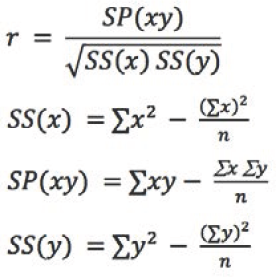
The range of r is between -1 to 1, where stands for perfect negative correlation, and implies perfect positive correlation among the variables.
Analytical tools
Microsoft Excel 2016 has been used to accomplish the required graphical analyses whereas the other statistical analyses have been executed through Statistical Package for the Social Sciences (SPSS).
Results and Discussion
COVID-19 scenario in Bangladesh
COVID-19 was first noticed on 8th March 2020 in the country. As of 12th February 2021, a total of 539975 people have been detected as COVID-19 positive out of 3822435 tests in Bangladesh. 26 Also, 8253 people have been died due to the COVID-19 virus. 26 The number of daily tests together with identified cases in the country is shown in Figure 1. A strong positive association between the number of tests and the number of detected cases (daily) has been found which is highly significant as well () showing that a rise in the number of tests will lead to increased detected cases and vice versa.
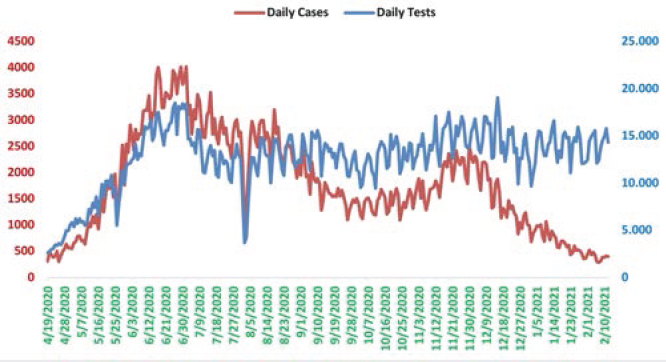
Trends of tests and detected COVID-19 cases in Bangladesh
But the number of tests has continuously been quite low concerning the needed level because of the meager set-up regarding healthcare facilities in conjunction with trained workforce limitations. Many people have been detected late who might have infected several other people by the time of their detection. This has worsened the circumstances further over time and curbed the usual acts of people, administrations, and so on.
Distribution of death cases and case fatality (the number of deaths per number of cases detected) over time in Bangladesh can be seen through Figure 2 which highlights the severity of COVID-19 attributable to the mismanagement of health services.
Obstacles faced during the COVID-19 pandemic in Bangladesh
The COVID-19 pandemic was suddenly spread out in the world and no country was well prepared to defend this situation. Bangladesh as a least developed country faced a lot of obstacles like the other countries. The highly dense population and the deficiency of resources in the health sector are the major impediments for this country to fight against the pandemic.
Crisis of protectable equipment
It was a great crisis of providing the personal protection tools among the front fighter workers beginning of the first few months in the pandemic situation to protect COVID-19 in Bangladesh. An embarrassing situation was found in preparing health workers in the middle of last April-2020. Only 58% of health workers got Personal Protective Equipment (PPE) and nearly 57% were trained upon using PPE. 27 After few months, the situation was a little bit improved than the previous situation (Figure 2). 26 The rate of acceptance of PPE was increased up to 20% although the overall rate of using PPE and COVID-19 was much lower, and more than 50% of health workers were dissatisfied with the quality of PPE.27,33 Moreover, there was a huge crisis of face masks and hand sanitizers due to the high demand and low production in the early pandemic.27,33
Delay to expand the facility of testing COVID-19
At the beginning of the pandemic, IEDCR (Institute of Epidemiology, Disease Control, and Research) as the central institution of Bangladesh has collected the sample and diagnosed it uniquely. As a result, the institution faced a lot of pressure because its capacity was less by comparing the necessity in the case of collecting samples and testing COVID-19. A lot of samples for testing were stored in the middle of the year 2020 due to the delay in expanding the facility of labs and testing equipment. The situation became worst in the middle of April in 2020 due to the lack of skilled manpower. Besides, the speed of work and quality of sample collection were reduced in many areas when medical technologists were affected rapidly. More than 200 medical technologists were affected in the middle of June 2020 all over the country. 27 Many faults have been seen in testing centers like inaccurate sample collection and preservation and. Even some harmful activities were observed like providing fake COVID-19 test reports without testing. 28 Media pot or swab sticks which were used to carry the samples were not standard in some cases. 27 Furthermore, it was a high risk to be affected since proper steps were not followed in collecting the sample such as inadequate hand wash, using of personal equipment and electronics tools in the laboratory, etc. The reason for this issue was the lack of proper training of the sample collectors. They were trained by a short video that solved the initial problems. But it was insufficient to ensure the protection for this category of health workers.
Figure 3 displays the divisional distribution of RT-PCR (RealTime reverse transcription-polymerase Chain Reaction) labs for the COVID-19 test up to August 18, 2020. Due to the lack of RT-PCR lab, the government declared that a person allowed to test only the symptoms of COVID-19 have shown in the early pandemic. The quantity of testing was further reduced owing to the unaffordable test fees fixed by the government. However, 81 PCR (45 were in Dhaka) were established in the middle of July 2020 all over the country though it was quite insufficient for the COVID-19 virus suspected peoples.
Figure 4 illustrates the regional variations of COVID-19 cases across the country reflecting how the covid detection could be related to the variations in the establishment of RT-PCR labs.
Poor management of patients during the pandemic
Bangladesh is one of the highest densely populated countries with 1240 people per square kilometer of the land area. 30 The health facilities are not quite adequate for the 163 million people of this country. There are only 5.4 health workers per 10000 people including doctors, nurses, and staff available with 35% vacancy in sanctioned health worker positions. 31 Clearly, it is insufficient to ensure proper health management in normal circumstances, while the COVID-19 pandemic creates unendurable pressure in this sector. Till now there are only 4237 general beds and 355 ICU beds are available which can not cover the COVID-19 crisis period. 31 In this study, poor management in the health sector has been identified during the pandemic including lack of health workforce, lack of hospital and treatment facilities, miss management and crisis on sample collection and testing of suspected COVID-19 patients, lack of quarantine and isolation facility, unsafe workplace for the health workers, etc. Since the manpower was not sufficient to tackle the pandemic, the government recruited a number of health workers to resolve this problem although still there is a deficiency. Figure 5 shows the scenario of recruitment during the pandemic.

Trends of daily COVID-19 deaths and case fatality Bangladesh
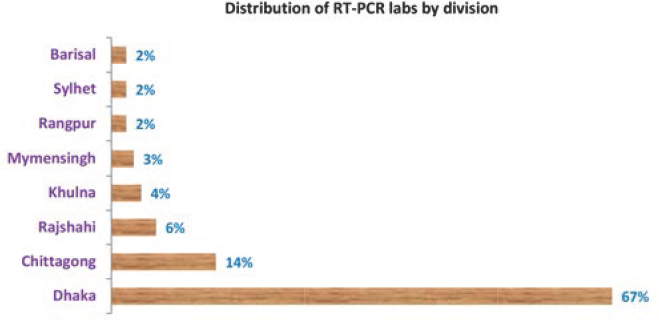
Distribution of RT-PCR labs by division in Bangladesh

Distribution of COVID-19 cases by division in Bangladesh
It is observed that there is plenty of miss management in sample collection and testing of suspected COVID-19 patients. There are on average 4112 suspected patients per day were tested in the first three months of the pandemic. 26 In some cases, cloth swabs were used instead of cotton due to a deficit of suitable swab sticks for testing in the first week of April and May 2020. 27 Even sticks of broom, wood stick, hair clips were used in replace of swab stick in that time. 27 According to the rules, the swab should be pushed and kept in the nose for few seconds so that the swab is wet by the internal immune liquid which was not followed properly due to the lack of trained health workers. The sample preserving tube should be marked by the patients' name, ID (i.e., medical record no.), address, and the date of sample collection. But it was not maintained properly in the early few months of the pandemic.
In the early stage of the pandemic, the concept of quarantine and isolation was quite new and was not clear to the people. Due to the lack of accommodation for the suspected and affected people to ensure quarantine and isolation by the management of the government, people were enforced to do quarantine and isolation in their own homes. It was not possible to keep the consistency in ensuring quarantine and isolation facilities at that time. Keeping standardization in nursing was not noticed due to limitations of quarantine and isolation facilities. Some difficulties are identified regarding quarantine and isolation in our study in the early few months of the pandemic. It was observed that the patient and their family member did not maintain properly the rules of quarantine and isolation. The public and local administrations had a lack of coordination between them. Moreover, an inadequate supply of food, medicine, and other essential commodities has been shown in the quarantine and isolation.
Uncertainty on medication of COVID-19
At the beginning of the pandemic, the treatment of COVID-19 was not introduced worldwide. The World Health Organization (WHO) was not determined the proper treatment in the early pandemic. That is why people were trying and taking different types of unauthorized medication. Also, due to the lack of treatment facilities in the hospitals of Bangladesh, the majority of COVID-19 were not interested to go to the hospital. Rather, affected people took different types of medications like allopathic, supplementary, herbal, and local treatment. After that, the issue of the vitamin would come-Vitamin A, B, and C. Among these, vitamin C was most preferable (78%), 66% of patients took Azithromycin, 10% took Doxycycline and 9% were involved Chloroquine and Hydroxychloroquine. 26 Figure 6 shows the scenario of taking different medications during the early pandemic in this country.
Only a few of them took Hydrocortisone and Ivermectin. Six per cent (6%) took homeopathy and 2% allopathy in parallel herbal treatment. Some patients took antibiotics besides different types of supplementary food such as lemon, orange, extra protein. Even some people acquired different kinds of unproven and unauthorized but popular home treatment, for example, gurgle by warm water with zinger (84%), taking a steam breath (79%), drinking warm water (76%). During the early pandemic, each patient spent an average of Tk 12000 for medicine in this country 27 due to the market price of COVID-19 related medicine was running fast and also the shortage of supply in time.
Furthermore, the unacceptance and disregard of the COVID-19 vaccine among people around the world during the early stage added a new challenge to fight against this pandemic.33–35 Despite that, some countries have shown a positive attitude to accept the COVID-19 vaccine.36,37
Recommendations
The COVID-19 pandemic exposed the weakness of our health management system to tackle a massive sudden disaster. Moreover, it teaches us how to prepare ourselves in the future to fight any pandemic. Based on the experiences we have faced during the pandemic and the obstacles we identified in this study, here we present some essential recommendations to overcome this challenge in the future: i) it is very essential to establish a national health policy to tackle a sudden pandemic; ii) the government should have to recover the deficit of skilled manpower and equipment in connection with health services as well as increase medical technologists and supply PCR machines sufficiently to the hospitals all over the country; iii) all health workers must be trained up to collect and test the samples perfectly; iv) it must be ensured and monitored that the responsibility of all health workers who are directly connected with the treatment and testing of the patients is fulfilled properly; v) the government must have an awareness program to deliver the correct information about the virus, cautions, proper treatment procedures to the nation; vi) ensure sufficient quarantine and isolation facilities all over the country; vii) strictly maintain the quarantine for the migrated people, immigrants, and tourists traveling in this country; viii) ensure and increase the Intensive Care Unit (ICU) facilities to all the hospitals especially in rural areas; ix) monitoring systems should be strict and strong for controlling the medicine sector; x) ensure the reservation of the emergency and essential medical equipment for the pandemic situation; xi) deserve a disaster management fund in the national fiscal budget; xii) to grow the consciousness of any pandemic to our next generation, it is essential to include the necessary information in the education system.

Distribution of manpower recruitment for COVID-19 in Bangladesh
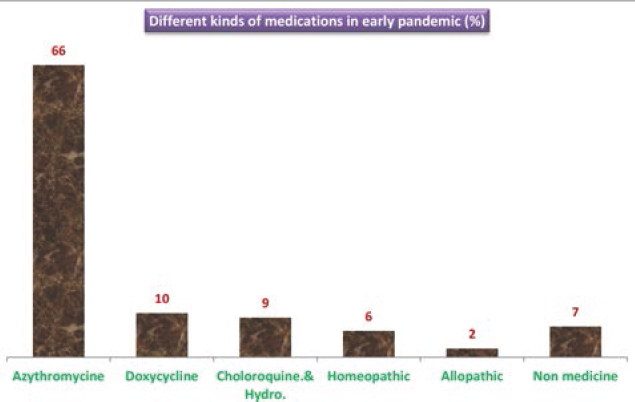
Different types of medications (%) at the early stage of COVID-19 in Bangladesh
Conclusions
The world has experienced a number of infectious diseases in the last few centuries.32,33 But none of them spread worldwide at a pace similar to the COVID-19. The development of the communication system is one of the reasons to spread infectious viruses worldwide. It is not possible to deny the chances of happening this type of pandemic in the future. Therefore, to protect humankind from this pandemic in the future, we have to learn from the current obstacles and mistakes. In this paper, we analyzed and identified the obstacles to protect people from the COVID-19 pandemic in Bangladesh. Also, the current situation of the pandemic has been shown by analyzing the number of affected people against the number of tested people. In this study, it is observed that the deficit of the necessary medical equipment related to COVID-19 testing and treatment, poor management of patients, delaying the required actions to protect the pandemic, and the uncertainty in the medication system were the major obstacles during the COVID-19 pandemic. Finally, several recommendations are proposed to tackle the rest of the pandemic and as well for the future. Further study can be done in the future by observing the COVID-19 pandemic until it will cure permanently and also, observing the situation in other countries.