




Abstract
BACKGROUND:
Playing the violin often requires a rotated and lateral flexed neck, leading to potential neck and shoulder problems. An ergonomic chinrest (EC) with or without a shoulder rest (SR or WSR) may enhance neutral neck positioning, but the feasibility of the EC needs to be studied.
OBJECTIVE:
Our goal was to evaluate the usability of the EC for a two-week familiarisation period, including aspects such as playing performance, comfort level, and emotional response (e.g., feelings about using the product) among a group of violinists.
METHODS:
A one-arm feasibility study was conducted to assess the feasibility of violinists playing with EC every day for two weeks. Six violinists who usually played with SR were included and asked to divide their daily playing time equally between SR and WSR. Feasibility outcomes were measured as adherence (days), compliance (playing hours per day) and usability (5-point Likert scale and open-ended questions). Compliance was achieved with a minimum of 25% playing time.
RESULTS:
Daily violin playing with EC showed high adherence of 89.3%. Compliance with the 25% play time criterion was met for SR, but not for WSR. Low playing performance (median 45.8 points difference), long confidence time (two violinists failed to reach a confidence level) and mainly negative feedback (26 out of 33 comments) were found in WSR compared to SR.
CONCLUSIONS:
The feasibility of playing WSR was low and negatively impacted playing performance. As a result, a larger-scale study will only evaluate the EC with SR due to greater feasibility.
Background
Designing the job to fit the individual worker is a key element in applied ergonomics [1]. In the context of music performance, adherence to ergonomic principles is often constrained by the design limitations of musical instruments, which may necessitate the musician’s adaptation to the instrument’s design characteristics. Musicians typically prioritise the quality of sound produced by their instrument, with performance-related discomfort perceived as a secondary concern to achieving a desired level of musical excellence [2, 3].
Multiple epidemiological studies have established that musicians from all age groups and playing levels (amateurs, conservatory students and professionals) have a high prevalence of musculoskeletal disorders [4–10]. Both amateur and professional musicians have a one-year prevalence of musculoskeletal disorders ranging from 68% -86%, but despite these disorders, musicians continue to play [7, 9]. Musculoskeletal disorders in musicians can be caused by several biomechanical factors such as body posture, weight and shape of instruments, playing technique, type of music played, duration of play and the use of assistive devices (e.g., specialised chairs, violin chin, and shoulder rests or wind instrument shoulder straps) [11–18].
The violin is the most common instrument in a symphony orchestra [19]. From a biomechanically perspective, violin playing is physically demanding, requiring asynchronous coordination and static and dynamic muscle activity in the forearms depending on the repertoire being played [16]. The upper trapezius showed consistent static muscle activity, even with different musical pieces being performed [20]. A violin player holds the instrument between the left shoulder and mandible to accommodate a freely moving left hand. The left thumb partially supports the neck of the violin and keeps the instrument’s weight. Most of the time, while playing, the violinist puts pressure down on the chinrest with the jaw and a left lateral deviation and rotation of the head [21–23]. This may contribute to the greater prevalence of left-side musculoskeletal disorders among violinists compared to other instrument groups [24]. Reducing pressure between the left mandible and shoulder by changing the neck alignment may extend playing hours and prevent fatigue-related complaints [25, 26].
Historically, using chinrest and shoulder rests has been the most common way of adjusting the violin [27]. This equipment is chosen based on anecdotal evidence and traditions and designed without systematic evidence of their effects on muscles and joints. This lack of optimal adjustment may negatively impact musculoskeletal health and playing performance [28]. On most violins, a chinrest is placed to support the player’s jaw. A shoulder rest is attached to the bottom of the violin to lift the violin away from the left shoulder, preventing the violin from slipping from the shoulder and assisting with freedom of movement of the left hand up and down the fingerboard. Shoulder rests are commonly height adjustable and come in different shapes, but there is no consensus about their use [29–32]. To date, there is scarce evidence regarding adjusting chin and shoulder rests for best preventing musculoskeletal disorders in violinists. Furthermore, existing evidence is of low methodological quality [33]. One study suggests that a higher chinrest and lower shoulder rest may be the solution for a better neck posture and less muscle activity [34].
An online search for ergonomic equipment for violins in 2020 revealed many options for adjustable shoulder rests but fewer for chinrests. We found no adjustable chinrests that could move following the violinist’s head/neck/jaw movements during the performance. As the second best, a search was conducted to identify a chinrest that considered ergonomic principles and was fully adjustable (regarding height, rotation and tilting) to accommodate violinists’ neck length, chin placement, and arm length. Although chinrests are available in different heights and shapes, only one fully adjustable ergonomic chinrest (EC) was identified. This chinrest considers many ergonomic principles by being fully adjustable in height and placement (Fig. 1). The novel EC (Kréddle®, Wyoming, US) was designed to gain healthier movement and accommodate a neutral neck position to diminish playing-related pain and tension [35]. This EC was designed to be played without a shoulder rest (WSR) to lower the instrument as close to the collarbone as possible.
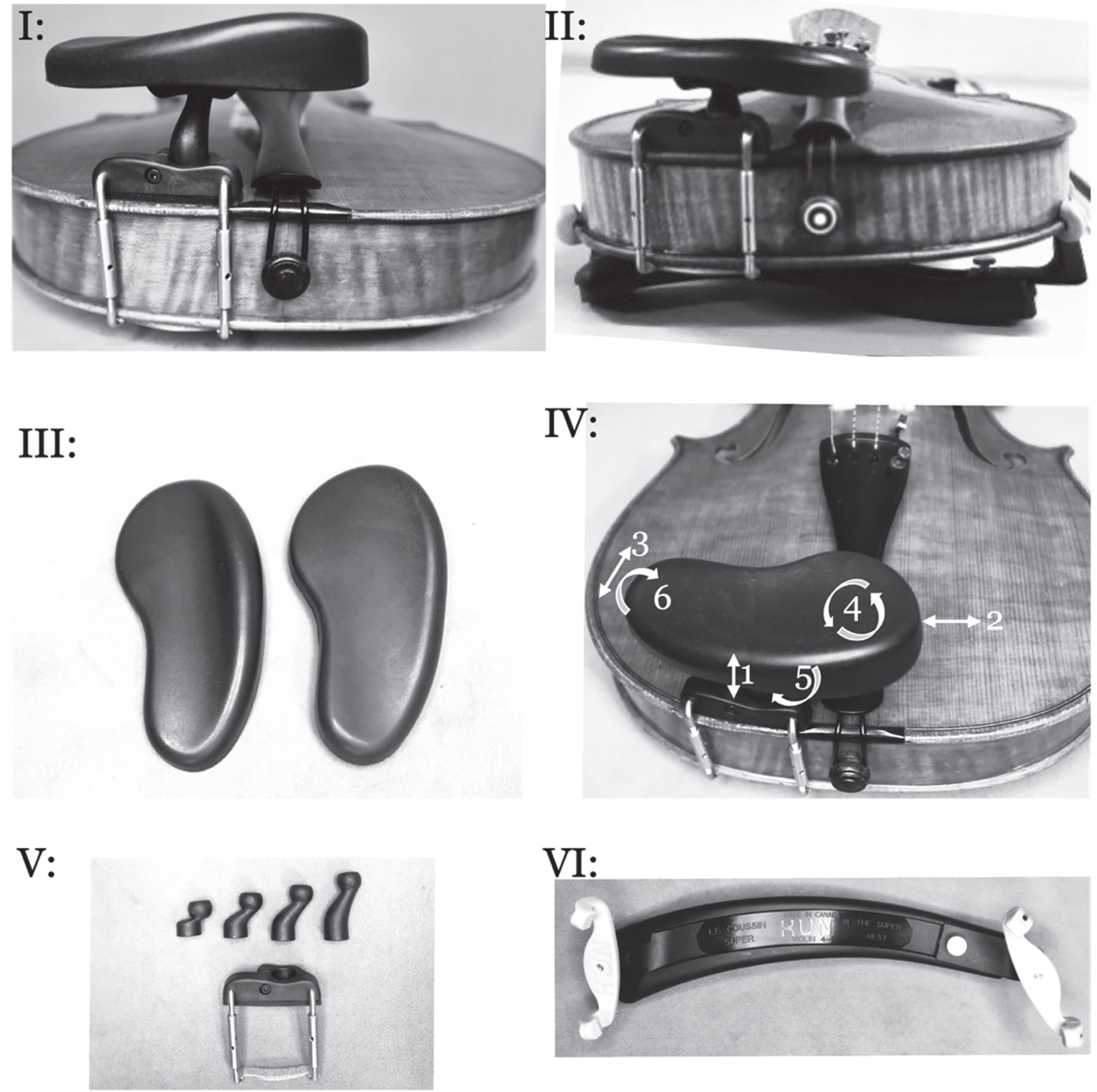
The picture shows the different settings of EC and different parts of both EC and the shoulder rest. I) WSR (ergonomic chinrest without shoulder rest), II) SR (ergonomic chinrest used with low shoulder rest), III) the chin plates: two different shapes (thicknesses), which can also be seen in pictures I (thicker) and II (thinner), IV) different adjustments: 1) height, 2) lateral movement, 3) backward-forward, 4) rotation, 5) pitch angle and 6) tilt angle, V) the four different post for adjustments of the height including the base attached to the violin, VI) the Super Kun shoulder rest used in picture II (SR) in the lowest setting.
A study among 20 violinists evaluated a low shoulder rest as more comfortable than either non- or a high shoulder rest [34]. In Denmark, many violinists are taught to play with a shoulder rest (SR) when they start playing the violin.
The main aim of this study was to assess the feasibility of playing the violin with the EC with or without a low shoulder rest (SR or WSR), evaluated in terms of compliance, adherence and usability, over a two-week familiarisation period. The secondary aim was to explore the variations in lateral neck posture with different chinrest and shoulder rest conditions in the laboratory (with and without the EC). This will enable a statistical power calculation for a larger-scale evaluation trial to assess the effect of EC on neck kinematics.
Design and procedure
This explorative one-arm feasibility study was conducted to optimise a future research protocol.
Participants were given a two-week familiarisation period to self-adjust the EC to accommodate an aligned neck position without tilting their neck to the left/right side of the violin. This period was followed by a test day in the laboratory, which was a balanced crossover design comparing different playing conditions for the violin with the identified EC: 1) playing the violin with SR, 2) playing the violin WSR, and 3) playing the violin with the individual musician’s regular chin and shoulder rest (usual). The trial was retrospectively registered at ClinicalTrials.gov (Identifier: NCT05509465). The reporting in this study adheres to the CONSORT 2010 extension for pilot and feasibility trials [36].
The Template for Intervention Description and Replication (TIDieR) [37] was used as a checklist guide when developing the protocol for the familiarisation period (see Appendix).
Each violinist received the EC (Kréddle) and a shoulder rest set in the lowest position (Kun Super Rest Violin 4/4) via postal delivery and a self-administered two-week diary and music sheets. See Fig. 2 for the two-week familiarisation period. Followingly, each violinist received an email including links to three videos. The videos consisted of a welcome video requesting equal daily playing time between the two conditions (SR and WSR) over the two weeks and two instructional videos informing on EC assembly, adjustment and neck alignment. Participants received a motivational phone call after the first week to encourage compliance. If a violinist was unable to play with EC for more than five consecutive days during the familiarisation period due to illness or interruptions, the period was extended by seven days.
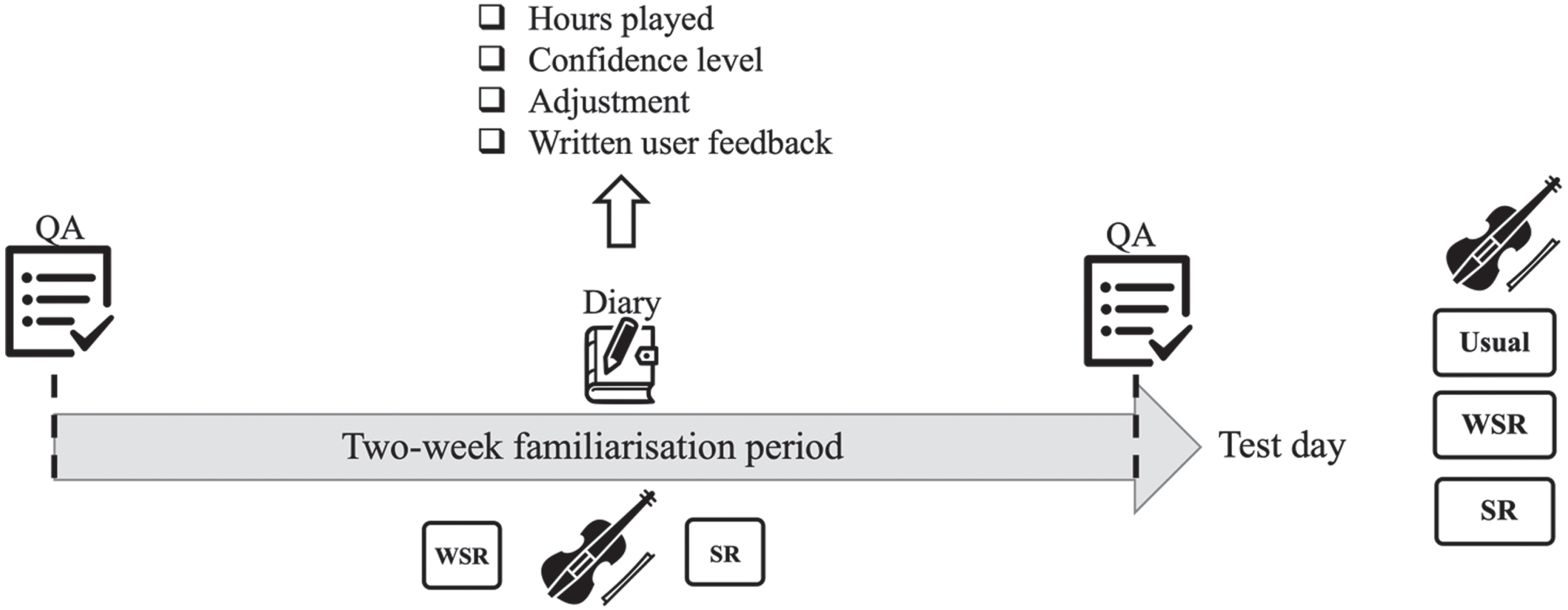
The overview of the familiarisation period was used to test feasibility. Before and after the two-week familiarisation period, violinists were given a questionnaire (QA). During this period, they had two weeks of unsupervised adjustment and playing time with the ergonomic chinrest (EC). The violinists played half the time without a shoulder rest (WSR) and the other half with a low shoulder rest called Kun (SR). Each day, the violinists recorded their daily playing habits in a diary, which included answering various questions. After two weeks, the violinists participated in a test day, playing with their usual chinrest, shoulder rest, and both WSR and SR. Their lateral neck posture was measured during this test.
The inclusion criteria required participants to be fluent in Danish or English and trained violinists ≥18 years capable of playing the classical protocol repertoire [20]. Exclusion criteria were trauma to the upper cervical spine or upper extremities within the previous year, previous or planned shoulder/neck operation, life-threatening health disorders, a pacemaker or severe eczema on the neck and upper extremities. Further exclusion included violinists with a permanent contract in a Danish symphony orchestra. Symphony orchestra violinists will be recruited for a larger-scale intervention study. Participants were recruited via social media and from a local music conservatory.
Outcomes
During the familiarisation period, a paper diary was used to gather different feasibility information about adherence, compliance and usability.
Adherence and compliance
Adherence to the protocol was recorded from the self-administered two-week diary. Each violinist was asked to register daily in their dairy: 1) hours/minutes played with the protocolled conditions, including hours/minutes played with their usual condition. Adherence was counted as the number of days playing with the different protocolled conditions out of the two weeks given.
Compliance for playing with SR and WSR was reached if the violinist managed to play a minimum of 25% of the total playing time in both conditions. Compliance less than 25% defines as a problem to use the condition. Compliance larger than 50% was defined as that violinist favouring one of the conditions, SR or WSR. Considering the novelty of the test protocol, standard guidelines for adherence and compliance could not be identified. The determination of cutpoints was established by the author group and based on a pragmatic estimation of a reasonable level of usage.
Usability
We based our study on the International Organization for Standardization definition of usability focusing on effectiveness, efficiency, and satisfaction [40]. Our analysis revealed insights into the effectiveness of the product in terms of confidence, instruction comprehensibility and performance and its efficiency in terms of adjustments. Additionally, user satisfaction was found to be influenced by a combination of factors, including comfort, sound and emotions [41].
2.3.2.1. Effectiveness: Confidence, instruction comprehensibility and performance. The confidence level was reported daily on a 5-point Likert scale (5 = very confident, 1 = not very confident). ‘Very confident’ was defined as if the violinist could play the music sheets sent to them also after a break of several days. The quicker participants were able to play the music sheets confidently, the more effective the product was in helping them achieve their goals [42].
The effectiveness of how to assemble, adjust and use EC (‘does it work’) was previously tested as a single case study (one professional viola player) using the nine videos provided by the Kréddle YouTube channel [43] and the information sheet ‘Kréddle tips’ from the Kréddle webpage [35]. The viola player was interviewed, and based on this feedback, the nine available videos and instruction sheets were unsuitable for the study. Instead, three new information videos were produced by the lead investigator. The effectiveness of the new videos was tested by asking the violinists if they had enough information about EC to adjust and use it on a simplified nominal scale (3-point expectation score: ‘Yes’, ‘No’, ‘Don’t know’). Specifically, they were asked the question, “Before you started using Kréddle, did you receive enough information to feel well-equipped to use it?”
Performance scores were calculated from the follow-up questionnaire. Some performance questions were modified from the Disabilities of the Arm, Shoulder and Hand questionnaire (DASH), and the score calculation followed the DASH questionnaire [44]. Three questions were used for an overall performance score. “Have you (within the last 14 days)” had difficulty with: 1) playing your violin? 2) using your usual technique when playing? 3) playing as well as you would like to? The questions were answered on a 5-point Likert scale from “no” to “impossible”. These questions were inspired from the extended version of the Quick Dash questionnaire, which consists of four items for performing artists related to work disabilities [45].
2.3.2.2. Efficiency: Adjustment. Adjustment level was obtained in three categories: ‘Yes’, ‘No’, and ‘Not yet’ daily. The quicker participants were able to find an adjustment that worked, the more efficient the product was in allowing them to achieve their goal with minimal effort or time.
2.3.2.3. Satisfaction: Comfort, sound and emotions. The comfort score was calculation followed the DASH questionnaire similar to the performance score [44]. Five questions were used for the overall comfort score. “How comfortable was (the last 14 days)”: 1) playing with SR/WSR, 2) the height of EC (with your chosen adjustment), 3) the configuration of EC that you have chosen, and 4) the size of the EC chin plate? 5) the chinrest surface against your skin? Questions were answered on a 5-point Likert scale from “very comfortable” to “very uncomfortable”. Comfort and performance scores were calculated for SR and WSR separately. These questions are inspired from an earlier study that tested comfort using questions about the chinrest, including position, curvature, size, height, etc. [46].
In the last questionnaire before the laboratory test, the violinists had to grade the violin tone and the overall sound experience for SR and WSR compared to their usual condition on a 5-point Likert scale from “very good” to “very poor”. These questions were used to evaluate musical performance quality and were modified for this project [47].
Violinists were asked to keep a daily diary to record their experiences using SR or WSR. If they used their usual chin and shoulder rest, they were asked to provide written feedback on why. The feedback was categorised by type and grouped as positive or negative. The qualitative data collected from the diary was analysed using content analysis to extract different themes. The primary author reviewed the responses multiple times to gain familiarity with the data. Subsequently, the themes were classified into positive and negative, and general responses [48].
Secondary outcomes
A web-based questionnaire (SurveyXact) was used to gather baseline information about participants before and after the two-week familiarisation period. The collected data revealed their musculoskeletal trouble in the upper extremities and neck [38], self-rated general health rated from poor to excellent [39], work experience in years and demographic information (age, weight, height, and gender). Furthermore, questions about their rationale for participating in the study and about previous experience with ergonomic chin or shoulder rest.
Although the collected data about neck movement in this study did not have statistical power to detect significant changes, these data were collected to estimate the sample size for a planned larger study. On the test day, all violinists played with all three conditions (SR, WSR and usual) and followed a previously described standardised playing protocol [20]. All played the music piece Mozart’s concert in A-major. Their neck movements were detected using two wireless movement sensors (inertial measurement units or IMUs) called ViMove with sampling at 20 Hz: one attached to a hairband placed with the IMUs over the base of the skull (occiput) and the other over the skin of T3 with hypoallergenic double-sided tape. The sensors collect data through an integrated 3D accelerometer, 3D gyroscope and magnetometer, including a Radio Frequency Device, and send the data through a USB to allow for data extraction. This system has shown clinically acceptable agreement compared with the Vicon motion capture system [49].
The data were analysed using ViMove software to calculate the angle of the upper and lower sensors separately relative to the line of gravity. Lateral neck flexion was automatically calculated by ViMove software using the angle displacement of the upper sensor (occiput) relative to the line of gravity.
Sample size
This feasibility study aimed to test the familiarisation period, procedures, and processes, whereas efficacy testing was not performed [50]. Therefore, no formal sample size calculation was performed. When this study was initiated, we aimed at a sample size of 10-12 as a rule of thumb for a pilot/feasibility study [51].
Statistical analysis
Descriptive data are presented as the means (standard deviation, SD) or medians (interquartile range, Q1-Q3). We tested all the variables for normality using Shapiro-Wilk, histograms and QQ-plots and found the distribution to be screwed. The Wilcoxon signed-rank test compared compliance, confidence, adjustment, performance, and comfort scores between SR and WSR. For adjustment and confidence, a score of 100 was assigned if the participant did not report an adjustment or gain confidence within two weeks. The Kruskal-Wallis H test was used to determine any differences between SR, WSR and usual. Statistical significance was set to p < 0.05. All statistical analyses were performed in STATA (StataCorp, version 17). From the Standard Evaluation of Static Working postures from ISO 11226 [52], two categories were made for the lateral flexion neck angle: neutral (-10° to 10°) and awkward (> -10° or > 10°). The percentage of the working time spent in these two categories will be calculated and used for evaluating SR and WSR. Additionally, exploratory analyses were conducted, including amplitude probability distribution function (APDF) on the head angles to identify the static (P0.1), median (P0.5) and peak levels (P0.9).
Ethics
The Research & Innovation Organization approved the management of health and personal information in the study at the University of Southern Denmark (notification number 10.990). All participants gave written informed consent before their involvement in the study in accordance with the Declaration of Helsinki. Furthermore, we provided extended consent about the risk of participating in this study during the COVID-19 pandemic. The Regional Scientific Ethics Committee for the Regions of Southern Denmark assessed the study procedure and stated that further approval was not required (S-20202000-87).
Results
Participants’ characteristics
Six violinists 21-55 years old were recruited: two amateurs, two professionals (a teacher and a freelancer) and two conservatory students (see Table 1). All six violinists participated in this study between August and October 2020.
Baseline characteristics of all six participants, including trouble rating before and after the intervention. Before and after the intervention, trouble, defined as ache, pain and discomfort, was rated on an 11-point numerical rating scale (NRS), ranging from 0 (no trouble) to 10 (worst possible trouble). The mean (SD) is presented for continuous data, and for ordinal data, the median and nominal values are in numbers. Q1-Q3 refers to the interquartile range (IQR). The first quartile (Q1) is the upper boundary of the lower 25% of the dataset and the third quartile (Q3) is the lower boundary of the upper 25%
Baseline characteristics of all six participants, including trouble rating before and after the intervention. Before and after the intervention, trouble, defined as ache, pain and discomfort, was rated on an 11-point numerical rating scale (NRS), ranging from 0 (no trouble) to 10 (worst possible trouble). The mean (SD) is presented for continuous data, and for ordinal data, the median and nominal values are in numbers. Q1-Q3 refers to the interquartile range (IQR). The first quartile (Q1) is the upper boundary of the lower 25% of the dataset and the third quartile (Q3) is the lower boundary of the upper 25%
All six violinists used a shoulder rest at the time of recruitment. Three violinists were content with their current chinrest, and five were content with their present shoulder rest. Four of six violinists had kept the chinrest attached to the violin when they bought it. The six violinists gave different motivations for participating in this project: ‘being curious’, ‘finding a better chinrest’, ‘getting a better posture’, and one wanted ‘to learn to play without shoulder rest’.
Two professional violinists had the planned two-week familiarisation period extended (extra seven days) due to illness (interruption was 14 and 36 days). They played nine and ten days out of fourteen days before the interruption.
Table 2 shows high adherence rates to daily play (median 89%, range 64-100%) over 14 days. Compliance differed significantly between using SR and WSR (p = 0.04). Median compliance for SR was 54.9%, and for WSR it was 45.1%, indicating less use of WSR. Two players played less than 25% with WSR and had low compliance rates (12.4% and 20.5%, respectively) out of the total playing time.
Each violinist was given two weeks to play. Adherence (%) was estimated as the number of days played out of the 14 with the different setups. Total playing hours are given for the two weeks. Compliance was reached if the violinist managed to play at least 25% of the total playing time WSR (the EC played without shoulder rest) and at least 25% with SR (the EC played with a low shoulder rest). Q1-Q3 refers to the interquartile range (IQR). The first quartile (Q1) is the upper boundary of the lower 25% of the dataset and the third quartile (Q3) is the lower boundary of the upper 25%. *Indicate that WSR significantly differs with lower compliance than SR (P = 0.03)
Each violinist was given two weeks to play. Adherence (%) was estimated as the number of days played out of the 14 with the different setups. Total playing hours are given for the two weeks. Compliance was reached if the violinist managed to play at least 25% of the total playing time WSR (the EC played without shoulder rest) and at least 25% with SR (the EC played with a low shoulder rest). Q1-Q3 refers to the interquartile range (IQR). The first quartile (Q1) is the upper boundary of the lower 25% of the dataset and the third quartile (Q3) is the lower boundary of the upper 25%. *Indicate that WSR significantly differs with lower compliance than SR (P = 0.03)
Confidence level, instruction comprehensibility and performance
For the violinists, it took a median of 6 days with WSR and 5 days with SR to reach a fair or very confident playing level. However, two violinists couldn’t achieve confidence within two weeks with WSR, showing a significant difference in confidence-building time between WSR and SR (P = 0.03). All the video instructions were found effective for adjusting EC. Table 3 displays the playing performance score for both WSR and SR, with a significant improvement in performance for SR over WSR.
Performance and comfort scores are presented as the median (Q1-Q3) for WSR (the EC played without shoulder rest) and SR (the EC played with a low shoulder rest). Q1-Q3 refers to the interquartile range (IQR). The first quartile (Q1) is the upper boundary of the lower 25% of the dataset and the third quartile (Q3) is the lower boundary of the upper 25%. A higher score (range 0-100) indicates a negative or reduction in playing performance or comfort. *Indicates a significant difference at p < 0.03 with the Wilcoxon signed-rank test
Performance and comfort scores are presented as the median (Q1-Q3) for WSR (the EC played without shoulder rest) and SR (the EC played with a low shoulder rest). Q1-Q3 refers to the interquartile range (IQR). The first quartile (Q1) is the upper boundary of the lower 25% of the dataset and the third quartile (Q3) is the lower boundary of the upper 25%. A higher score (range 0-100) indicates a negative or reduction in playing performance or comfort. *Indicates a significant difference at p < 0.03 with the Wilcoxon signed-rank test
Adjusting WSR to work efficiently took a median of 6 days for five violinists, but one professional violinist did not find an adjustment in the 14 days. Adjusting to SR took a median of 1.5 days for all participants. No significant difference was found between SR and WSR in terms of efficiency.
Comfort
Table 3 displays the comfort score for both WSR and SR, with no difference found in comfort scores between the two conditions.
Sound
We found no difference between the overall sound or tone between WSR and SR. Three participants answered ‘very good’ or ‘good’ for tone and overall sound when playing WSR and SR. Only one participant scored ‘bad’ for tone and overall sound for both conditions.
Emotions
The six participants recorded different comments in their diaries on an average of 8 out of 14 days (ranging from 3-13 days). The median number of comments made was 4 (ranging from 0-8), with most comments being negative (26 out of 33). The median number of comments about WSR was 5.5 (ranging from 2-8), about SR was 2.5 (ranging from 0-5), and in general was 4 (ranging from 2-5). The negative comments were about “causing pain/tension”, “being uncomfortable”, “not being able to play difficult things with quality”, and “difficult or impossible doing shifting position and making more playing mistakes”. The positive comments were mainly that it improved to be less painful and easier to play using WSR during the two-week familiarisation.
There were mainly positive comments for SR (12 out of 15), including additional comments such as ‘it worked with the setup’ and ‘it was quite comfortable’.
General comments were both negative and positive. The negative ones were mainly about difficulties regarding adjustment and time spent adjusting EC. Another negative comment was that the violin case cannot be closed without removing EC from the violin because of its height. The positive comments contained feedback on a better sound from EC, the experience of less tension while playing, and the fact that they were happy to participate in the study.
Secondary outcome
The percentage of playing time spent in an awkward lateral neck posture (to the left or right, at an angle greater than 10°) was calculated. Three out of six violinists spent over 20% of their playing time (ranging from 23% to 74.5%) in an awkward posture with their usual condition, while the rest spent less than 10% (ranging from 2% to 7%). For three violinists, the awkward neck posture increased with either WSR or SR but decreased for the other three (see Table 4). Overall, both SR and WSR resulted in less time spent in the awkward posture than with their usual condition.
The lateral neck posture angle is categorised into two groups: neutral (-10° to 10°) and awkward (> -10° or > 10°) based on the ISO 11226 Standard Evaluation of Static Working postures. WSR refers to playing with the ergonomic chinrest (EC) without a shoulder rest, while SR refers to playing with the EC and a shoulder rest. The table shows the percentage of time spent in an awkward neck posture position out of the total playing time for each condition. Q1-Q3 refers to the interquartile range (IQR). The first quartile (Q1) is the upper boundary of the lower 25% of the dataset and the third quartile (Q3) is the lower boundary of the upper 25%
The lateral neck posture angle is categorised into two groups: neutral (-10° to 10°) and awkward (> -10° or > 10°) based on the ISO 11226 Standard Evaluation of Static Working postures. WSR refers to playing with the ergonomic chinrest (EC) without a shoulder rest, while SR refers to playing with the EC and a shoulder rest. The table shows the percentage of time spent in an awkward neck posture position out of the total playing time for each condition. Q1-Q3 refers to the interquartile range (IQR). The first quartile (Q1) is the upper boundary of the lower 25% of the dataset and the third quartile (Q3) is the lower boundary of the upper 25%
For all conditions, the neck angle was at the P0.1 level under 4°, the P0.5 level around 4-5° and the P0.9 level around 10°. Meaning that 90% of the time, the violinist’s neck position was under 4° and around 10° for 10% of the time (see Fig. 3). However, the Kruskal-Wallis shows no significant difference comparing the medians between the three conditions.
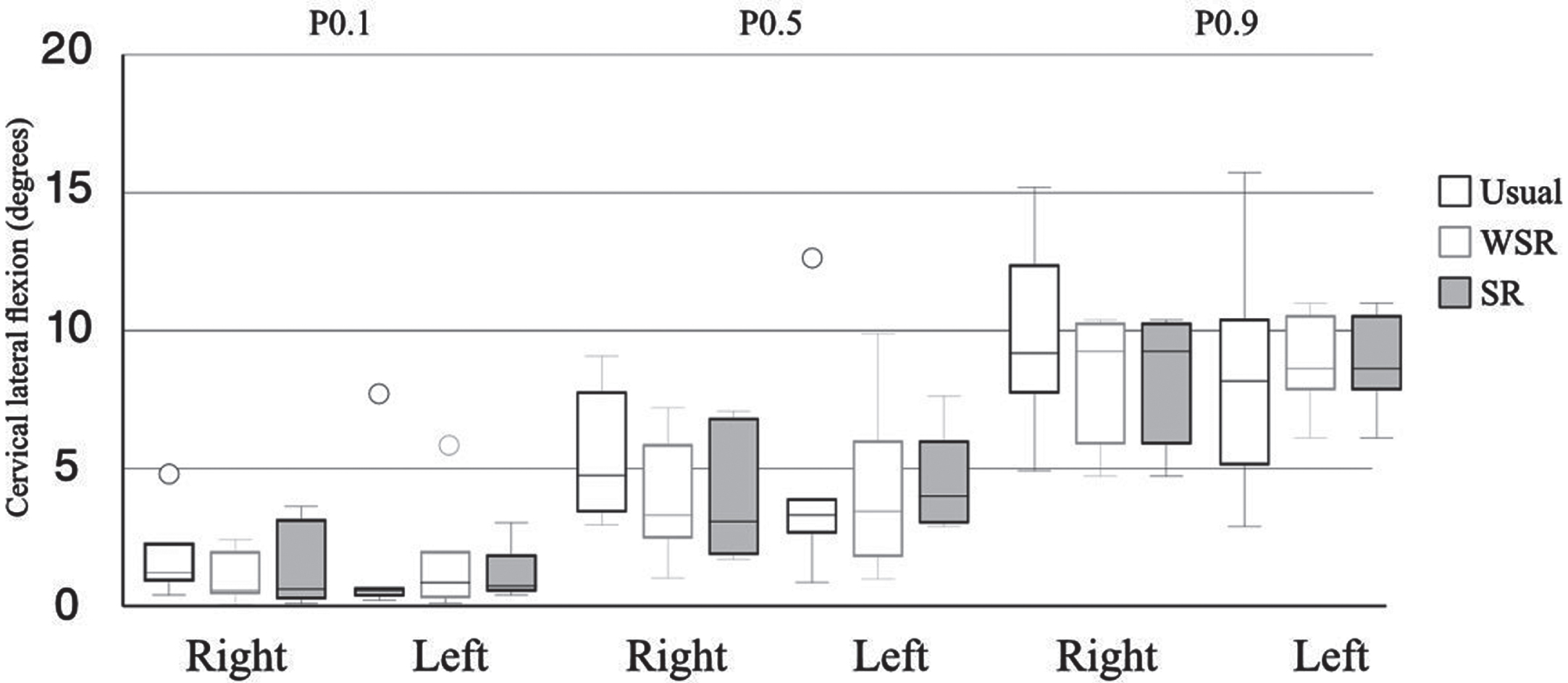
Cervical lateral flexion angle (°) is presented as the median (IQR) over the different levels in the amplitude probability distribution function (APDF). WSR: without shoulder rest and SR: shoulder rest.
Summary of findings
This study evaluated the feasibility of a novel EC used by violinists in combination with SR and WSR over a two-week familiarisation period. The feasibility study found that familiarisation with SR was positive and successful, with high compliance and usability. However, WSR was not feasible due to two violinists not meeting the minimum playing time criterion and lower usability outcomes than SR, including two violinists failing to reach a confidence level, multiple challenges noted in diaries, and lower performance. On the other hand, the participants displayed high adherence to playing with EC (89%), no sound changes were detected, all instruction videos were rated sufficient, and the participants expressed gratitude for participating in the study.
Feasibility of EC
This study is the first to investigate the feasibility of using an EC with SR and WSR from the perspective of violinists’ data collection on usability (effectiveness, efficiency, and satisfaction). Considering violinists’ subjective evaluations when implementing or testing an EC is important. Prior to testing the biomechanical features of playing with the usual chinrest and shoulder rest or the EC in combination with SR or WSR, we evaluated the feasibility of different conditions. This gained important insights and informed us about potential barriers and possibilities, allowing us to plan the larger study trial.
In the violin society, the debate about ergonomic equipment mainly focuses on shoulder rests. This might be because a violin is typically purchased with a chinrest installed, while a shoulder rest is bought supplementally. This is also reflected in this study, where four out of six participants kept the chinrest that came with their violin when they purchased it. Another debate is whether to use shoulder rest. Players favouring a shoulder rest argue that it facilitates better control and use of playing technique with less muscle tension. Those against it argue that it makes the left arm more inactive and static and dampens the sound. In this study, no overall tone or sound change was perceived between WSR and SR.
Scientific studies have explored the use of shoulder rests, with varying results on the best way to adjust or use them [29, 34]. Kok et al. discovered that playing with the highest or without a shoulder rest was the least comfortable compared to playing with a lower shoulder [34]. Rabuffetti et al. found that using a high shoulder rest reduces neck rotation and allows violinists to adapt to different playing conditions without affecting the sound, similar to the results found in our study [31]. Additionally, using a Kun shoulder rest resulted in lower muscle activity in the upper trapezius and neck muscles compared to not using it [29]. One study investigated three different chinrests in combination with two shoulder rests and found that all chinrests change the pressure and chin force and that the shoulder rests change the pressure and contact area utilised over the chinrest [30]. None of the studies considers that the results may differ if the musicians have had a familiarisation period playing with the new equipment. Furthermore, they do not include the importance of a subjective approach where violinists can try and adjust the equipment to their anthropometric body features.
All the participants recruited for this project played with a shoulder rest before the study began, which may have influenced the results. However, in Denmark, the standard is to play with a shoulder rest when you learn to play the violin. This study found a significant difference in performance scores between the two conditions and decreased comfort scores when using a WSR. Playing technique and shifting problems described in the diary may be one of the reasons for the low-performance score and a barrier to playing using WSR. One study found that low or no shoulder rest biomechanically was the best condition, supporting the findings in our study that low shoulder rest was evaluated as the most comfortable [34].
Two major limitations of this feasibility study are the small sample size of six violinists with different backgrounds, which limits the generalizability of the results. Due to the COVID-19 pandemic and national restrictions, it was impossible to recruit the planned number of participants. However, previous research supports our findings, suggesting that a low shoulder rest should be evaluated based on the low comfort reported WSR [34]. The feasibility study results consistently point in the same direction, indicating that playing the violin WSR is less feasible and more problematic for the investigated study group, this is supported by negative feedback comments and low compliance. Despite the limited number of participants in this study, the data collected was not only exploratory but due to the indicated consistency also found valuable for the design and the content of a following larger-scale study evaluating whether neck muscle activity can be lowered using the EC with SR and how it affects the neck position [53]. The feasibility study can only be taken as “direction pointing”, but its main strength lies in its testing of multiple intervention elements with consistent results. The second limitation is that this study used self-developed usability outcomes, which lacks the established standardisation found in widely used scales such as the System Usability Scale [54]. This is a limitation as the results cannot be compared to those obtained using validated standardised scales and can raise concerns about the measurements’ accuracy, consistency, and comparability. However, it is important to note that usability is context-dependent, and this study represents an initial step and insight in exploring usability within this specific context, laying the foundation for future research in this area.
Conclusion and perspectives
This small study presents the feasibility of a familiarisation period using EC for violinists. Playing the violin with SR shows high compliance and usability. In contrast, the findings indicate low feasibility WSR, and two out of six violinists did not meet the criteria of minimum playing time. Playing WSR with EC is a challenge for violinists who usually play with a shoulder rest: low-performance score and a longer time to get confident than SR. A larger study trial is conducted to evaluate whether the EC with SR can lower the muscle activity in the neck muscles and change the lateral neck position compared to a preferred chinrest. Although the study had a limited number of participants, it may interest others in the field due to the valuable data produced by its methods and results, as research in this area is limited. This study protocol can be used as inspiration for incorporating different usability outcomes (sound, playing performance/comfort and user feedback) when investigating musicians going through an ergonomic intervention.
Ethical approval
The Regional Scientific Ethics Committee for the Regions of Southern Denmark assessed the study procedure and stated that approval was not required (Date: 2020, Number: S-20202000-87).
Informed consent
All participants provided written informed consent prior to their participation in the study.
Conflict of interest
The authors declare that they have no known competing financial interests or personal relationships that could have appeared to influence the work reported in this paper. The Kréddle Company was not involved in the design of the study, the execution, analyses, data interpretation or decision about submitting the results.
Footnotes
Acknowledgments
The authors are grateful for the assistance of M.Sc. Jesper Stejnicher Drongstrup Jensen, M.Sc. Henrik Baare Olsen is responsible for collecting the data in the laboratory. They are also grateful to the six violinists who took their time to evaluate the use of the EC.
Funding
This study was supported by Axel Muusfeldts Fond, Denmark (ID: 2018-1061), The Region of Southern Denmark (ID: 18/50654) and Helsefonden, Denmark (ID: 18-B-0292). The Kréddle Company provided the ergonomic chinrest (Kréddle) for this project worth approximately €540 Euro.
Appendix
Template for Intervention Description and Replication (TiDieR) Items 1-12
| Item 1: Brief name | Unsupervised adjustment with an ergonomic chinrest (Kréddle) used with and without shoulder rest (Kun) for two weeks |
| Item 2: Why | The aim is to test the feasibility of an ergonomic chinrest with and without a shoulder rest for two weeks. Secondary to evaluate neck alignment compared to using their usual chin- and shoulder rest. |
| Item 3: What (materials) | •The Kréddle chinrest and Kun shoulder rest •Two-week paper diary •Information videos on YouTube •Information letter about the project and the focus of aligning neck position. |
| Item 4: What (procedures) | Unsupervised adjustment of the Kréddle and Kun shoulder rest during a two-week period before the test in the laboratory •An online questionnaire is given before a two-week familiarisation period. A two-week diary was filled out every day, and in the end, an online questionnaire was given before the test in the laboratory. •Before adjusting the Kréddle, the violinists watched three YouTube videos about the project. •After seven days a motivational phone call was given from the principal investigator to keep the violinist motivated to fill in the diary and play with the Kréddle. |
| Item 5: Who provided: | The principal investigator provided the violinists with all the material and the YouTube videos |
| Item 6: How | Information was sent by mail. The two-week diary including the ergonomic chinrest (Kréddle) and shoulder rest (Kun) was sent by post or delivered to the violinist’s workplace. |
| Item 7: Where | The unsupervised two-week familiarisation period was carried out at the violinist’s workplace or at home. |
| Item 8: When and how much | The violinists should play all their playing time with the ergonomic chinrest (Kréddle) and shoulder rest (Kun). If deviating from this the violinist should write hours played with their usual setting in the diary and explain why. |
| Item 9: Tailoring | During the two-week familiarisation period the violinist can adjust and play with the ergonomic chinrest in many different positions each day until they find an adjustment that suits them. |
| Item 10: Modifications | The violinists were allowed to change the height of the Kun shoulder rest if the highest post from Kréddle was not tall enough or to adjust the Kun if the violin was smaller than the usual standard measurements. |
| Item 11: How well (planned) | The principal investigator encouraged each violinist to the two-week period and the rationale of an aligned neck position was made clear. Before including the violinists into the project each violinist had a personal phone call with the investigator explaining about the project and rationale. After inclusion the violinists could contact the investigator with any questions at any time. YouTube videos and information letters were handed out explaining how to adjust and use the ergonomic chinrest. |
| Item 12: How well (actual) | This study investigated how well the protocol worked for an unsupervised adjustment of the ergonomic chinrest (Kréddle) and shoulder rest (Kun) by looking at the adherence and compliance to the two-week familiarisation period and was described in this article. |