




Abstract
BACKGROUND:
Practicing incorrect postures in online and virtual education during the COVID-19 pandemic can cause significant study-related musculoskeletal problems among students.
OBJECTIVE:
This study evaluated the knowledge, attitude, and practice of sitting posture and computer ergonomics and study-related musculoskeletal problems in undergraduates who followed online education during the pandemic.
METHODS:
A cross-sectional online survey among a cohort of Sri Lankan medical undergraduates was conducted using a structured questionnaire with 56 multiple-choice or Yes/No type questions.
RESULTS:
Of the 410 participants, over 85% (n = 362) knew the correct posture to sit on the chair type that they frequently used for studies. However, the majority (n = 378,92.20%) practised incorrect sitting postures in which leaning forward (n = 319,77.80%) was the most common suboptimal posture. Knowledge (n = 161,40%) and practice (n = 167,40.73%) on taking frequent breaks were poor among the majority. Their knowledge on computer ergonomics was good (>80%, n = 304) except for the recommended eye-to-screen distance (n = 129,31.46%). Importantly, ∼50% (n = 206) did not practise the recommended eye-to-screen distance. Use of non-adjustable chairs with no armrests (n = 346,84.39%) and smartphones (n = 354,86.34%) were identified as the main factors which hindered correct practices. Study-related pain/discomfort reported by the majority (n = 241,58.78%) is potentially due to suboptimal ergonomics. Their attitude toward learning and practicing correct ergonomics in home workstations was good (n = 383,93.41%).
CONCLUSION:
Poor practice of posture and computer ergonomics, despite the good knowledge and attitude is possibly due to the suboptimal work environments. Introducing simple practical measures to facilitate ergonomically appropriate work environments is mandatory in virtual education to prevent study-related musculoskeletal problems.
Introduction
With disease control and preventive measures like social distancing and lockdowns, the COVID-19 pandemic has transiently changed the education system in some countries [1–3]. The introduction of distance learning strategies abruptly changed traditional classroom teaching to online and virtual methods without giving adequate time for students to adjust for this sudden switch [2, 3]. Therefore, students had to participate in their online education activities by setting up any existing computing device in an available space in their houses. Most of these computing devices and workplaces might not be compatible with the ergonomic recommendations for safe workstations at home [4]. Suboptimal workplace at home was identified as a major problem associated with online work during the COVID-19 pandemic in a cohort of university academics. The discomfort experienced by them during online working was attributed to the prolonged use of laptops, working at suboptimal workstations such as couches, beds, and kitchen countertops [5]. Permitting workers to take office chairs, external monitors, keyboards, and mouse devices for their workplace at home and creating a home office with a computing device that has an adequate size screen and a suitable table were recommended for working from home during the COVID-19 pandemic [4, 5].
An association between incorrect sitting posture and computer ergonomic practices and work-related musculoskeletal problems among office workers and students has been identified in many of the studies [6–9]. Practising correct sitting posture and computer ergonomics can be facilitated by improving their knowledge on ergonomic principles and recommendations [7, 10]. Educating workers on office ergonomics through online programmes like web-based animation graphics was shown to have a significant decline in work-related musculoskeletal problems [11]. Further, the attitude of the workers was identified as a significant factor determining the acceptance of such training programmes [12]. However, in some circumstances, lack of facilities and negative attitudes can hinder the correct practices despite good knowledge. Incorrect dimensions of the chair, its arm, and its backrest are known to cause inappropriate upper limb postures causing musculoskeletal pain among computer office workers [9, 14]. The provision of adjustable chairs and other basic ergonomic supports was shown to significantly improve the correct practice of office ergonomics [14, 15]. Therefore, it is essential to evaluate all three elements; knowledge, attitudes, and practice (KAP) to identify the measures that can be taken to improve the practice of correct sitting posture and computer ergonomics of a given cohort of people.
The current study includes an important area with timely significance, where there is a paucity of evidence on KAP of sitting and computer ergonomics in the Sri Lankan population. We evaluated the KAP on correct sitting posture and computer ergonomics among a cohort of medical undergraduates who experienced online and virtual education at their home workstations due to the COVID-19 pandemic. Study-related musculoskeletal problems potentially due to improvised home computer workstations were also explored.
Methodology
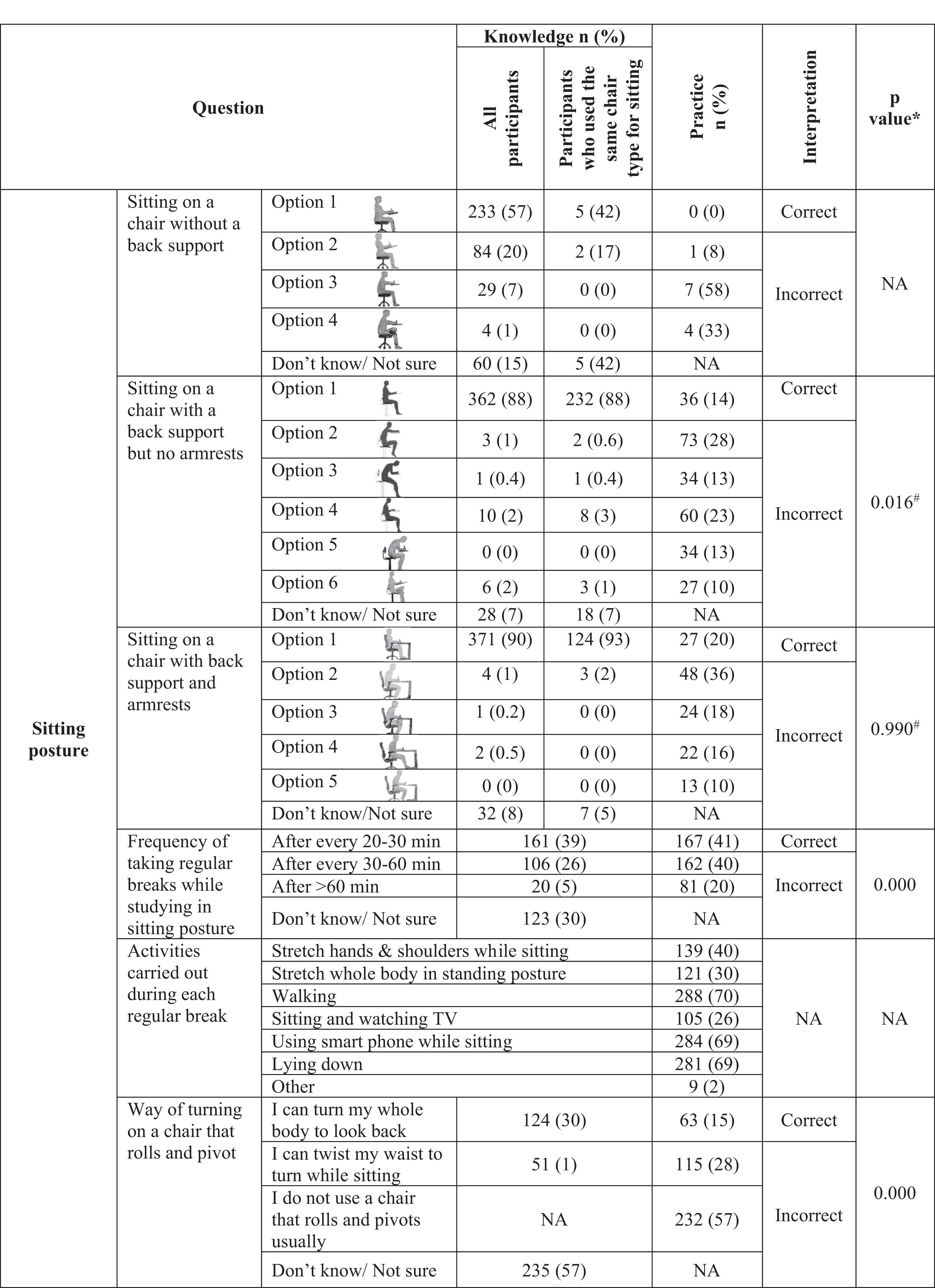
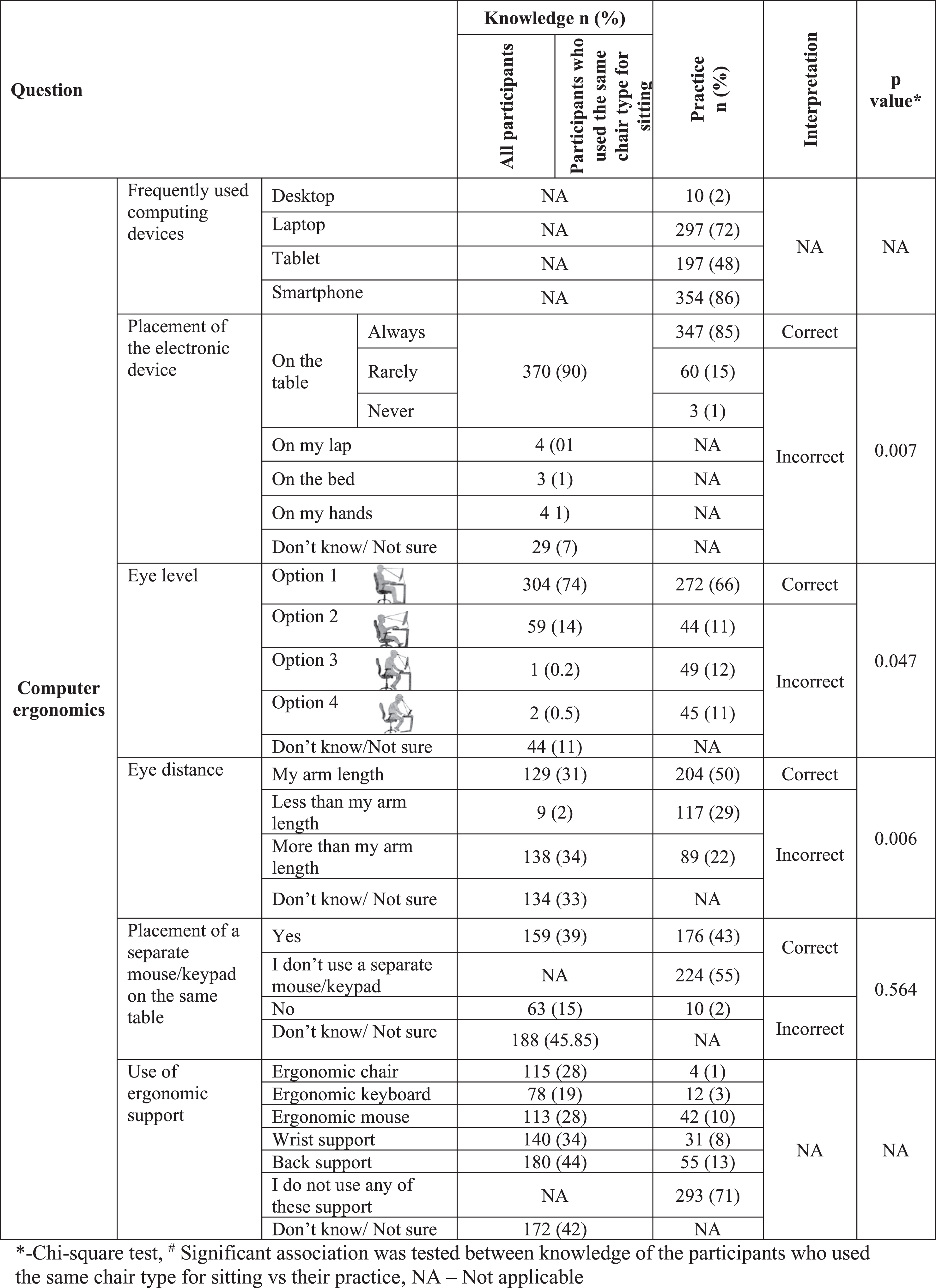
This study was conducted in 2021, the period when most of the undergraduates in Sri Lanka were participating in online teaching-learning activities for more than one year. A cross-sectional online survey, among a cohort of undergraduate medical students in a Sri Lankan state university, was conducted after obtaining ethical approval (#ERC/2021/56). The researchers developed a structured questionnaire consisting of 56 multiple-choice or Yes/No type questions in the English language, based on the previously published guidelines on office ergonomics [13, 17]. These questions inquired about the basic demographic data of the participants, the type of study place at home, computing devices and chairs that they are frequently using, and their KAP on correct sitting posture and computer ergonomics. We used graphic-aided questions (Table 1) to assess the knowledge and practice of sitting posture and computer ergonomics. Before distributing the questionnaire through multiple online platforms, we tested it with ten volunteer undergraduates to correct/modify the unclear and ambiguous questions. Students who volunteered to participate in the online survey were provided with all the necessary information about the study and the questionnaire was opened only for those who gave informed consent. We did not collect personal data to ensure the participants’ privacy. The average time taken to complete the questionnaire was 15–20 minutes. We requested participants consider their practice at home workstations during the COVID-19 pandemic when filling out the questionnaire.
Using Minitab statistical software (version 17, Minitab, LLC, Pennsylvania, USA), the researchers statistically analyzed the data to identify the KAP on correct sitting posture and computer ergonomics and possible study-related musculoskeletal problems using descriptive statistics and the Chi-square test. P < 0.05 was considered as statistically significant in all the statistical tests.
A total of 427 undergraduates responded and the response rate of the survey was 59%. Of them, 410 (96.02%) had completed all the components of the survey and the majority were from the first (n = 91,22%), second (n = 141,34%), and third (n = 138,34%) academic years while only 40 (10%) were from the fourth year. The age range of the study participants was 20–26 years and 74% were (n = 302) females. Most of the participants (n = 382, 93%) had a regular study place at home and ∼50% in the study cohort (n = 219) used to study for more than 6 hours per day. Most of the participants (n = 287,70%) stated that they learned about sitting posture and computer ergonomics mainly by reading documents and watching television programs or videos while only ∼2% (n = 10) learned by attending the workshops.
Knowledge and attitude of the study participants on correct sitting posture and computer ergonomics
Participants’ knowledge and practice on the correct sitting posture and computer ergonomics are summarized in Table 1. Most of the participants knew (n = 320, 78%) what good posture and good sitting posture are (n = 321, 78%) and correctly identified the scientific meaning of the correct posture (n = 286, 89%). To evaluate the knowledge on office ergonomics, their knowledge on the correct sitting posture of different chair types and computer ergonomics was assessed. Further, their attitudes toward learning and practising office ergonomics were analyzed.
The knowledge on the ergonomic standards for sitting on a chair with back support and no armrests (362, 88%) or on a chair with back support and armrests (371, 90%) was higher than their knowledge of sitting on the other types of chairs. Further, only ∼40% (n = 161) were aware of the recommended frequency of taking breaks in prolonged sitting (Table 1). However, the fact whether the participants were aware or not aware of good sitting posture had no statistically significant association with their knowledge (Pearson Chi-Square test, P = 0.188).
Though the majority (n = 328, 80%) stated that they are not aware of computer ergonomics as shown in Table 1, they had the correct knowledge on most of the parameters considered in computer ergonomics and about the furniture/equipment related to computer ergonomics. However, <50% of the participants knew the recommended eye-to-screen distance (n = 129, 31%). Knowledge on computer ergonomics was significantly high (Pearson Chi-Square test, P = 0.011) among the participants who stated that they have good knowledge on computer ergonomics. Further, we have assessed the attitude towards learning and practising sitting and computer ergonomics. Importantly, over 90% realized that practising correct sitting posture (n = 406, 99%) and computer ergonomics (n = 387, 94%) are important to prevent study-related musculoskeletal problems in online education and showed positive attitudes towards learning (n = 384, 94%) and practising (n = 383, 93%) correct sitting posture and computer ergonomics during the COVID-19 pandemic.
Participants’ practice of correct sitting posture and computer ergonomics
Over 90% of our study cohort (n = 381, 93%) preferred sitting posture for their studies. Of them, 328 (80%) usually stayed in the same sitting posture for more than 4 hours per day, to engage in different types of study-related activities (Fig. 1A). To evaluate the office ergonomic practices, participants’ practice of sitting posture for different chair types and computer ergonomics were analyzed. A separate analysis was conducted to identify their sitting posture practices for the type of chair that they had commonly used.
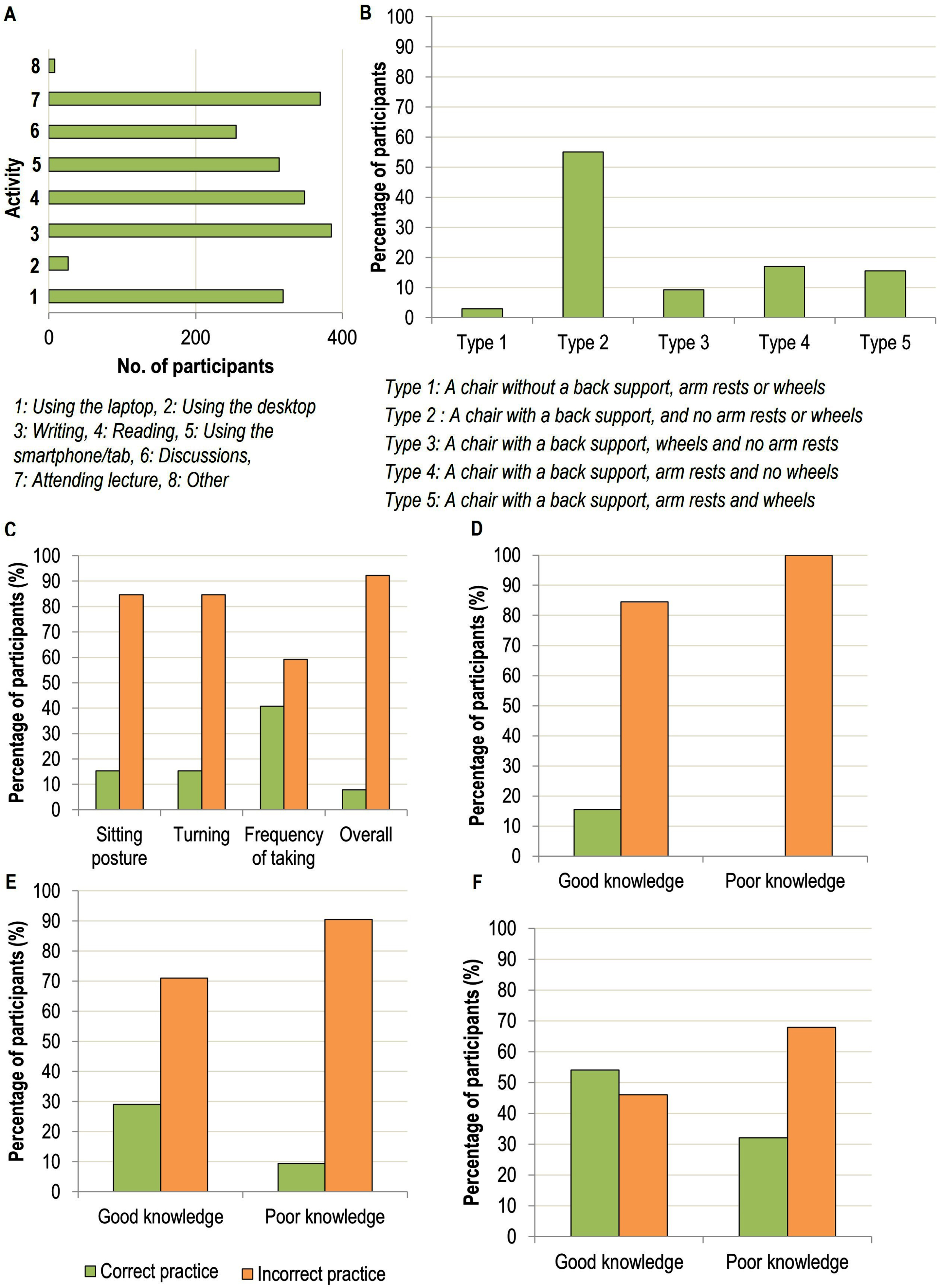
Knowledge and practice of sitting posture A. Activities commonly carried out in sitting posture by the study participants B. Frequency of using different types of chairs during the study hours by the participant. C. Participants’ practice of different ergonomic standards of sitting. Comparison between knowledge and practice of D. sitting on a chair with back support and no armrests (Chi-Square test, P = 0.016). E. the way of turning back while sitting (Chi-Square test, P = 0.000). F. the frequency of taking regular breaks while sitting (Chi-Square test, P = 0.000).
A chair with back support and no armrests was the chair type used by the majority (n = 264, 64%). (Fig. 1B). Irrespective of the chair type, the majority (n = 347, 85%) practised the incorrect sitting posture (Fig. 1C, Table 1). Sitting on a chair while leaning forward was the most common incorrect sitting posture (n = 319, 78%). In our study cohort, only 167 (41%) used to obtain regular breaks in every 20–30 minutes as per the recommendation (Fig. 1C). Though the participants engaged in multiple activities during their regular breaks, ∼70% (n = 284) had the habit of using smartphones while sitting even during their study break. A significantly higher number of participants practised incorrect posture even with a good knowledge of sitting on a chair with back support and no armrests (Chi-Square test, P = 0.016, Fig. 1D). Despite having good knowledge, a significantly higher number of participants did not practice the correct way of turning back while sitting (Chi-Square test, P = 0.000, Fig. 1E), and the recommended frequency of taking regular breaks (Chi-Square test, P = 0.000, Fig. 1F) while sitting. Considering the sitting posture and the frequency of breaks together, only 24 (6%) participants correctly practised all the recommendations and indicated the incorrect practice of sitting posture by the majority.
The majority used more than one computing device for their studies in which smartphones (n = 354, 86%) and laptops (n = 297, 72%) were the commonly used devices. Most of the participants kept their device (347, 84.63%), mouse, and keypad (400, 97.56%) on the same study table as recommended. Moreover, 272 (66.34%) and 204 (49.76%) participants claimed that they were maintaining the recommended viewing angle, and screen-to-eye distance respectively (Fig. 2A). The use of ergonomics furniture/equipment support was uncommon in our cohort (n = 293, 71%) (Table 1). A significant relationship between knowledge and practice of placing the electronic device (Chi-Square test, P = 0.007, Fig. 2B), eye level (Chi-Square test, P = 0.047, Fig. 2C), and screen-to-eye distance (Chi-Square test, P = 0.006, Fig. 2D) were also identified.
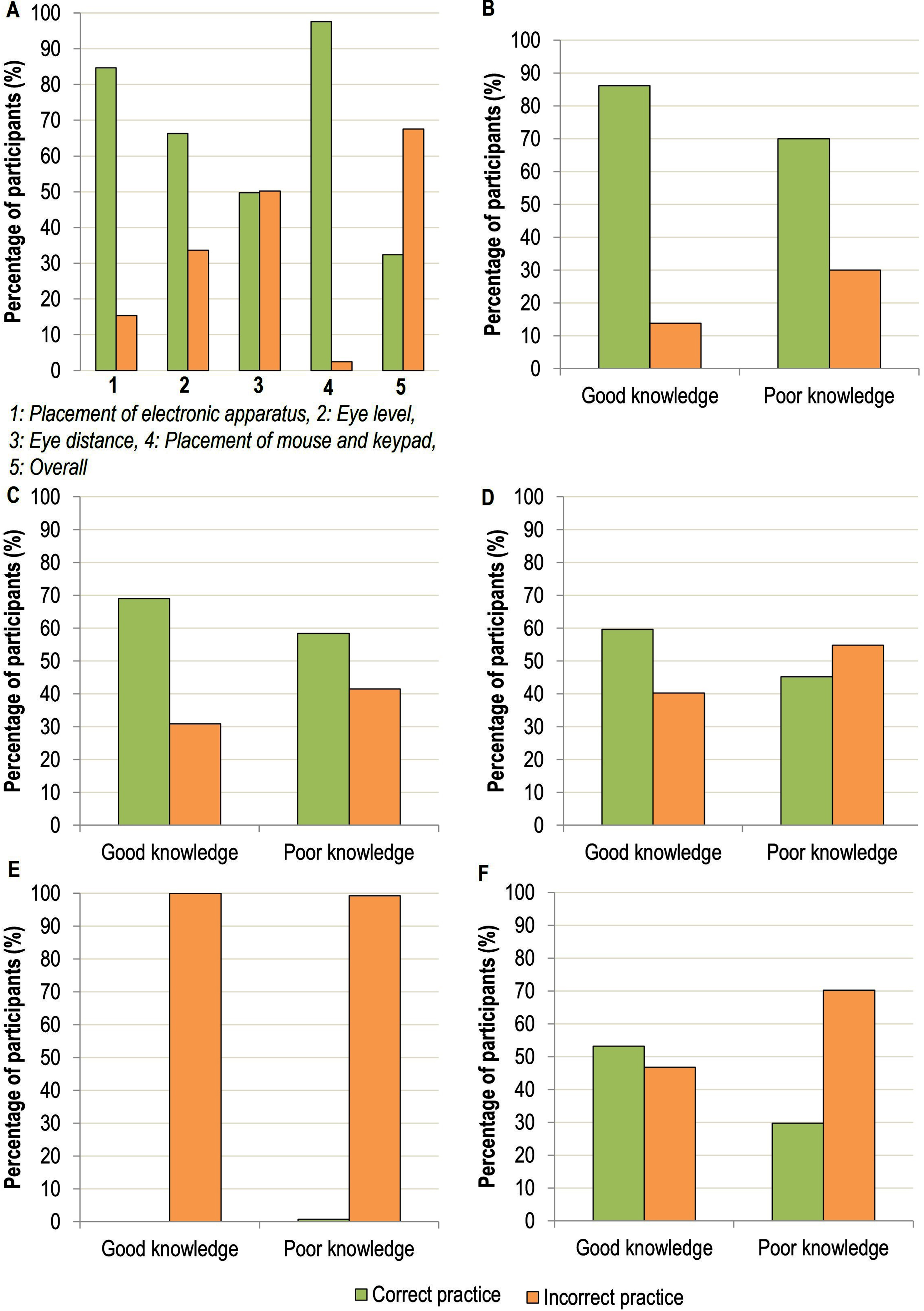
Knowledge and practice of computer ergonomics A. Practice of different standards of computer ergonomics by the study participants. Comparison between participants’ knowledge and practice on B. placing computing devices (Chi-Square test, P = 0.007) C. maintaining the correct eye level while working on a computing device (Chi-Square test, P = 0.047). D. maintaining the distance between eyes and the display of the computing device (Chi-Square test, P = 0.006). E. all the standards of sitting ergonomics. F. all standards of computer ergonomics.
Participants’ practice of computer ergonomics was better than the practice of sitting. Only 32 (8%) participants practised all three parameters involved in sitting (Fig. 2E), while 133 (32%) participants practised all four parameters involved in computer ergonomics (Fig. 2F). The relationship between the knowledge and practice of computer ergonomics was significant (Chi-Square test, P = 0.001) in which over 50% of the participants who had good knowledge correctly practised computer ergonomics as well (n = 218, 53%). Moreover, over 60% (n = 274, 67%) of the participants who practised incorrect sitting posture also practised incorrect computer ergonomics as well.
Musculoskeletal problems complained by the participants were analyzed to identify their association with suboptimal ergonomic practices. Most of the participants complained of multiple musculoskeletal problems related to their studies (Table 2). Out of 410, 241 (59%) stated that they have pain/discomfort while studying. Among them, ∼80% (n = 193) selected sitting as the most uncomfortable posture. Over 50% (n = 139, 58%) identified their pain/discomfort as a disturbing factor for their studies. However, the majority (n = 193, 80%) did not seek medical opinion for pain/discomfort. Most of the participants complained of multiple types of pain/ discomfort in more than one region of the body. Lower back (n = 140, 58%), neck (n = 122, 51%), eyes (n = 106, 44%), shoulders (n = 98, 41%), head (n = 79, 33%), and upper back (n = 75, 31%) were the commonly affected regions in the majority. They were mostly experiencing pain related to muscles (n = 154, 64%) and joints (n = 99, 41%), and the majority experienced pain/ discomfort lasting for more than 10 minutes (n = 154, 64%).
Study-related health problems among the study participants
Study-related health problems among the study participants
The current study examined the KAP of sitting posture and computer ergonomics, and study-related musculoskeletal problems among a group of medical undergraduates in a Sri Lankan State University during the COVID-19 pandemic, a period where online and virtual teaching/ learning activities were conducted. The practice of incorrect sitting posture by most of the participants in their home workstations was identified despite having good knowledge and a positive attitude towards learning and practicing correct sitting posture. Though the majority of the participants in our study had good knowledge on office ergonomics, in a study done recently in an Egyptian dental undergraduate cohort only 25% of the participants had good knowledge on ergonomics [18]. However, 90% of these study participants had poor practice despite positive attitudes, resembling the current study findings. Further, in another study, only 50% of dental surgeons had good knowledge on ergonomics related to correct posture. This study identified the lack of ergonomic training as one of the main reasons for their poor practice [19]. Our results also showed a significant association between knowledge and practice of computer ergonomics. Importantly study-related musculoskeletal problems experienced by the majority could potentially be due to incorrect sitting and computer ergonomic practices due to suboptimal workplaces at home.
The wide use of computing devices including laptops and tablets and suboptimal workplaces have increased posture-related musculoskeletal problems among office workers who worked from home during the COVID-19 pandemic [5, 21]. In our study, though we identified a relatively good level of knowledge on correct sitting posture despite having no guidelines or regular awareness sessions established within the local context, the majority were not aware of the recommended frequency of taking breaks in a prolonged sitting [22]; one of the important practices that can be implemented even at their home workstations. Moreover, even during break time, most of them used to be on their smartphone. Thus, the breaks that they were claiming cannot be considered as true breaks. Our study cohort showed relatively poor knowledge on some standards of computer ergonomics and ergonomic supports that can be used to create ergonomically safe home workstations [4].
The majority failed to practice correct postures while studying despite their good knowledge and motivation. Though most of the participants in our study had a regular place to study, those places seem to be suboptimal to carrying out studies over a long period. Non-adjustable chair with no armrests was the type of chair used by the majority and forward-leaning during the studies was identified as the most common incorrect sitting posture. This was identified as the most common incorrect posture in some previous studies as well [8, 14]. When the height and the back support of the chair cannot be adjusted, students tend to lean forward to have a comfortable posture for their studies. If the back support of the chair is not manufactured according to the ergonomic standards, it may not support maintaining the naturally existing lumbar, thoracic, and cervical curves, that are essential in maintaining the correct sitting posture [16]. The use of these chairs is facilitative towards improper postures, resulting in long- and short-term musculoskeletal problems. Lack of back support can increase muscle stress to support the position of the body. The use of computing devices with small screen sizes like smartphones and tablets for extended times can also aggravate musculoskeletal problems [23]. The build and the usual way of using these computing devices cause moving the worker to suboptimal postures unintentionally [17]. The use of smartphones is known to cause musculoskeletal pain most commonly in the shoulder and neck area [8, 23]. Further, a positive correlation was detected between back pain and the screen size of the smartphone [23].
Importantly, most of the current cohort experienced study-related musculoskeletal problems and the majority identified sitting as the most uncomfortable posture and muscloskeletal pain as a disturbing factor in their study activities. Participants experienced the pain in lower back, neck, shoulders, and upper back areas. The use of nonadjustable chairs and computing devices with small-size screens, leaning forward while studying, and prolonged sitting without getting regular breaks thus can be the main reasons for the musculoskeletal pain complaint by the majority. Lack of awareness, unavailability and relatively less popularity of ergonomic supports were identified as the key factors that hinder correct ergonomic practices at their home workstations. Therefore, planning and conducting regular awareness programmes highlighting simple measures that can be used to improve the correct ergonomic practices during studies is of timely importance. Such training sessions should be incorporated into teaching schedules as mandatory elements irrespective of the level of education as computing devices have become a key component in modern-day education even from the pre-pandemic time. Conducting teaching sessions with mandatory short breaks may provide students an opportunity to learn the importance of getting regular breaks during their study times as well. Thus, improving awareness on ergonomic principles among teachers is also important. Further, simple office stretching exercises can be introduced for practice during these mandatory breaks [19]. Active involvement of administrators and health and workplace safety professionals is essential in promoting safe workstations at home as such intervention effects were known to be stronger when the management is involved [24]. Furniture manufacturers’ response to the availability of more affordable and adjustable furniture is also a key element when introducing safe home workstations [25].
Limitations
As the data used in this analysis was obtained from an online survey conducted among a group of medical undergraduates in a single state University in Sri Lanka, the results are not a complete reflection of the whole undergraduate student population. However, the results provide an insight into the awareness on correct sitting posture and computer ergonomics, and the common arrangements of the home workstations of university students, particularly in the South Asian region. This student cohort is a representation of the entire island, however, it would have been more informative if we could provide their socioeconomic conditions which help in understanding potential reasons for suboptimal ergonomic practices.
This study was conducted as an online survey due to the imposed travel restrictions during the pandemic period. The study tool; online survey has its limitations such as high rates of survey fraud, sampling issues, response bias, and response errors [26]. In our study, the response rate from the 4th year medical students was relatively low compared to that of the first three years. With their high academic workload 4th year students might have ignored voluntary participation in an online survey. Thus, the results mainly reflect the awareness and practices of students who are in their first three years of medical undergraduate training. Although we have used pictorial symbols to indicate different postures and ergonomic support, responses might be subjective and might not reflect their exact practice. More accurate data could be obtained if the researchers had an opportunity to carry out an observational study.
The study identified study-related musculoskeletal problems in most of the participant. However, as the researchers did not inquire about musculoskeletal problems before the pandemic, the results failed to identify any increment in study-related musculoskeletal problems specifically due to online and virtual education and their home workstations. Moreover, the symptoms that they were expressing could be partially related to stress, fatigue, socioeconomic problems, and the fear associated with the ongoing COVID-19 pandemic as well.
Conclusions
This study identified a significant association between knowledge and practice of computer ergonomics among a cohort of university students. Lack of knowledge on simple practices like taking regular breaks in prolonged sitting indicates the importance of providing adequate knowledge on the practices which can be implemented without the need of any special equipment or facilities. Further, a suboptimal work environment at home was identified as a possible reason for the poor practice of correct sitting posture and computer ergonomics, despite good knowledge and attitude. This poor practice might be a strong contributory factor to the musculoskeletal problems reported by the majority. An in-depth understanding of barriers hindering good ergonomic practices, along with the introduction of simple practical measures to facilitate ergonomically appropriate work environments and practices is mandatory in distance education to prevent study-related musculoskeletal problems. The use of computing devices will not be terminated once these students are back in their universities. Thus, all the students should be given adequate training on office ergonomic practices to prevent musculoskeletal problems associated with suboptimal ergonomic practices. Developing guidelines and conducting regular training sessions to provide practical measures that can be used to maintain the correct postures is imperative in this regard. Though the knowledge on office ergonomics should be delivered to students at school age, we would like to recommend university authorities to make necessary measures to provide adequate knowledge and training on office ergonomics at least soon after their university enrolment. Further, the universities should work actively to create opportunities for undergraduates to have computing devices and furniture which can support correct ergonomic practices.
Ethical approval
Ethical approval for this study was obtained from the ethics review committee of the Faculty of Medicine and Allied Sciences, Rajarata University of Sri Lanka (#ERC/2021/56).
Informed consent
Access to the online questionnaire was given only to those who consented to participate in the survey after reading the information provided about the study.
Conflict of interest
None to report.
Footnotes
Acknowledgments
Not applicable.
Funding
Not applicable.