




Abstract
BACKGROUND:
Currently, there is a need for models, methods, and tools that allow ergonomics/human factor (E/HF) practitioners to assess the level of E/HF integration into organizations from a macroergonomics perspective.
OBJECTIVE:
This paper aims to propose the Ergonomic Maturity Model (EMM) and the tools for its application as a framework for integrating E/HF in organizations.
METHODS:
The EMM is a macroergonomic tool that allows stakeholders to evaluate the degree of development and integration of E/HF in the organization based on a participatory and macroergonomic approach. The EMM classifies organizations into five gradual levels of maturity: Ignorance, Understanding, Experimentation, Regular use, and Innovation.
RESULTS:
In this paper, we provide a three-stage procedure for guiding the application of the EMM: preparation of the evaluation, evaluation, and improvement plan and implementation. We include four tools developed specifically for applying EMM in organizations: evaluation matrix, weighting questionnaire, quick questionnaire, and prioritization matrix. Also, we present a Colombian floriculture company’s case study to exemplify the use of the EMM.
CONCLUSIONS:
The EMM provides a framework for integrating E/HF into organizations from the macroergonomics approach. E/HF practitioners can find in the EMM a tool to help them channel the actions taken by the different organizational actors to improve the safety, health, well-being, and performance of work systems. Finally, it should be noted that further studies on the reliability and validity of the EMM are needed, which would contribute to demonstrating that the EMM can effectively and successfully guide change in E/HF maturity levels in organizations.
Keywords
Introduction
The systems approach serves as the conceptual underpinnings and differentiating attribute for the discipline and profession of Ergonomics/Human Factors (E/HF) [1, 2]. In this sense, to highlight the importance of the system approach in E/HF, Wilson (2014, p. 6) states that: “It is tempting to be hard-nosed and suggest that any study, investigation, analysis or development which does not take a systems view is, in fact, not E/HF at all.” [1].
Macroergonomics is founded on the systems approach and aims to harmonize work systems (e.g., organizations) with their socio-technical characteristics [3–5]. In general systems theory, a fully harmonized and compatible system can result in synergistic improvements in several organizational criteria: health, safety, comfort, productivity, quality of products and services, job satisfaction, and quality of working life [3–5].
Although the macroergonomic approach is not a new perspective [5], its application represents a challenge for researchers and professionals in E/HF, especially in those regions (e.g., Latin-American countries) where the microergonomic approach is predominant [6, 7]. This macroergonomics perspective makes it possible to design, develop, intervene, and implement E/HF more successfully in the organization [8].
Several methods and tools have been developed to apply the principles promoted by macroergonomics into practice [9, 10]. In 2014, during the 58th Annual Meeting of the Human Factors and Ergonomics Society, a group of experts met to analyze existing socio-technical and macroergonomic methods and define strategies to increase their effectiveness in real contexts [11]. This group of experts stressed that in the development of new macroergonomic methods, trade-offs must be achieved between their generality, validity, and utility [11].
Many of the available macroergonomic methods and tools are adaptations of tools used for organizational management (e.g., participatory management, organizational questionnaire, field experiments, interviews, and focus groups) [10]. One organizational tool that has become popular is the maturity model, which guides the organization in implementing best practices, offering a starting point for improvement [12–15]. A maturity model describes an evolutionary improvement path for organizations through a sequence of levels, where the highest level describes the characteristics of the most mature and capable organizations [16, 17]. Maturity models provide criteria for assessing maturity. This way, it is possible to classify the organization at a particular maturity level [12, 16], establish improvement strategies to achieve the intended objectives, and identify areas where it should improve [12].
For several years, the development of maturity models has been increasing in various areas of knowledge such as software development, project management, knowledge management, business process management, and safety culture, among others [13, 18]; however, the number of maturity models developed in E/HF is limited [14, 19–21].
Currently, there is a need for models, methods, and tools that allow E/HF practitioners to evaluate the performance of organizations in terms of E/HF [14] and also facilitate the generation of practical actions aimed at integrating E/HF from an organizational perspective. Therefore, we believe that E/HF practitioners may embrace a flexible, practical, and useful tool, conceptually based on maturity models, in order to more effectively integrate and develop E/HF awareness and the application of E/HF at various organizational levels.
This paper aims to propose an initial conceptual framework, named the Ergonomic Maturity Model (EMM), as well as describes the tools used in its application. Also, we present a Colombian floriculture company’s case study to exemplify the use of the EMM and its supporting tools. Finally, strengths, limitations, lessons learned, and future work related to the model are included in the discussion section. This paper is an extension of previous work and initial results of applying the EMM in order to modify and improve it iteratively [20].
Development of the Ergonomic Maturity Model
The Ergonomic Maturity Model (EMM) was developed in three stages: planning, design, and execution, taking as a reference the procedures proposed in the literature for developing maturity models [16, 23].
Maturity models studied during the planning and design stages of the EMM
Maturity models studied during the planning and design stages of the EMM
The work team conceived the EMM as an assessment tool, allowing organizations to identify where they should focus their efforts to integrate E/HF effectively [18]. In line with the above, each work team member proposed which dimensions and factors should be considered to drive change management processes in organizations, specifically in E/HF [25, 29].
In order to contrast the dimensions and factors defined by the work team, seven experts with an average of 15 years of experience were selected from several areas of knowledge: Ergonomics (n = 2), Occupational Health and Safety (n = 1), Human Resources Management (n = 1), Quality Management (n = 1), Business Management (n = 1), and Organizational Psychology (n = 1). For selecting the experts, it was established as a requirement that they had at least five years of practical and academic experience in improving organizational processes in their field of expertise. These experts answered a questionnaire consisting of three open-ended questions: (1) what factors should be considered to facilitate the development of E/HF in the company; (2) what factors should be considered to assess the level of E/HF implementation in a company; and (3) what factors should be considered to implement an E/HF management program in the company. The first question aimed to identify the dimensions, while questions two and three aimed to identify the factors.
Subsequently, the work team held two workshops, each lasting 4 hours, to define the dimensions and factors of the EMM by consensus, based on the consolidation of the opinions of the seven experts and the dimensions and factors defined by the work team. As a result, four dimensions: culture, integration, performers, and surveillance, were defined and operationalized into twelve factors: acceptance, teamwork, strategic alignment, management, commitment, resources, knowledge and skills, person in charge, compensation, indicators, information systems, and risk assessment (Table 2). At the end of this stage, two tools for applying the EMM were developed: the evaluation matrix and the quick questionnaire.
Dimensions and factors of the EMM
Source: [20].
Changes were made to the wording of the quick questionnaire using simple, clear, and precise language to facilitate its understanding by the operational workers. The EMM application procedure was updated, including, from the first stage, workshops to explain to the company’s managers what E/HF is. The texts of the evaluation matrix were adjusted as they were confusing to the respondents because they were written using negative expressions. We changed the position of the culture dimension in the evaluation matrix from last to first place. This change facilitated understanding of the concept and scope of E/HF for the respondent. The description of the factors by maturity level in the evaluation matrix was adjusted. The main changes were made in levels 2 and 4 because the transition and evolution of these maturity levels concerning levels 1, 3, and 5 were unclear. The general descriptions of the maturity levels defined by the work team were revised and adjusted to describe the real behavior of the companies. We detected that companies need to prioritize improvement actions, and in response to this need, we developed two additional tools: the weighting questionnaire and the prioritization matrix. Thus, the EMM consisted of four tools, described in detail in section 4.1.
The maturity model proposed in this article is an extension of previous work [20] and results from a process of improvement since its initial development. As part of this process, the maturity level descriptions were refined, and the tools and procedure for applying the EMM were updated. These improvements are based on experiences and lessons learned from field applications of the model [31, 32], consulting activities (unpublished reports), and feedback from professionals involved during applications and training conducted in the model’s use. This strategy used to improve the model based on practice is aligned with the action research approach proposed to integrate E/HF in organizations [33, 34].
The objective of EMM is to evaluate the degree of development and integration of E/HF within the company. This model proposes five gradual maturity levels in E/HF for companies [20]. Figure 1 shows the graphical representation of the EMM through the five maturity levels.
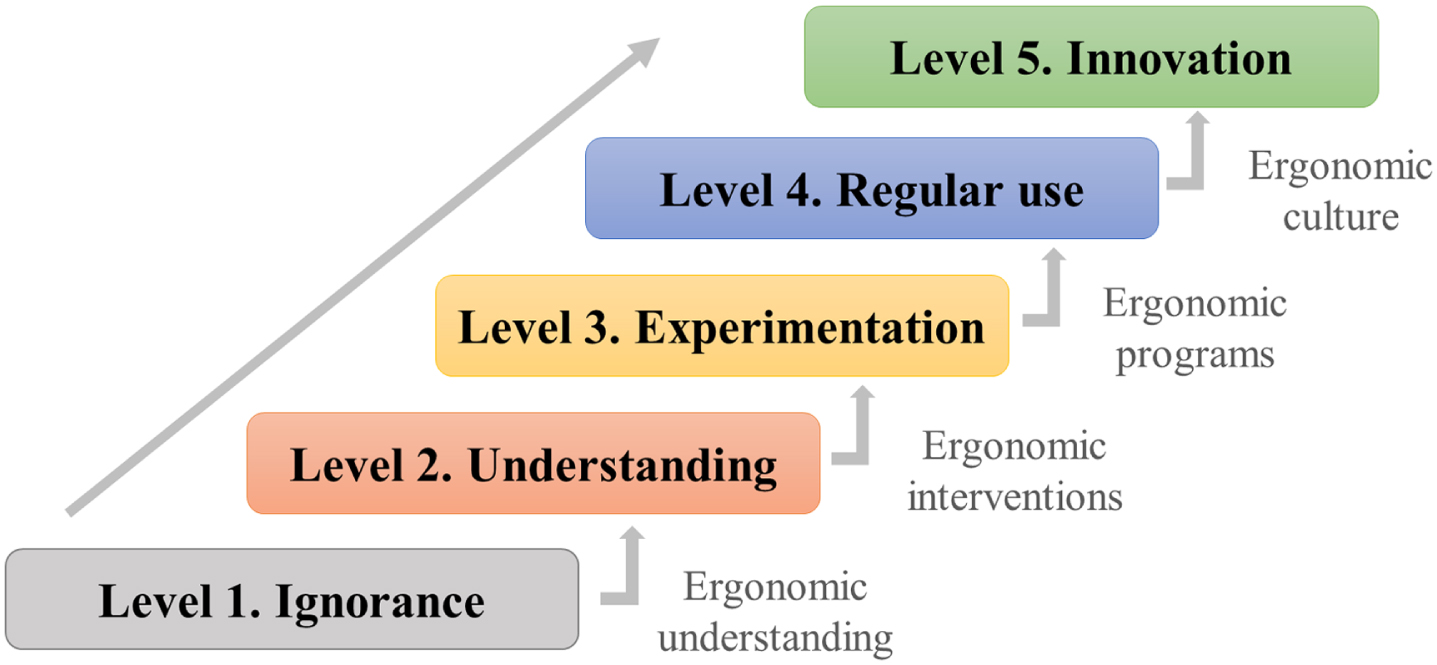
Ergonomic Maturity Model EMM. Source: [20].
To determine the ergonomics maturity level of the organization, the four dimensions of the EMM must be evaluated: culture, integration, performers, surveillance; through the 12 factors that compose them: acceptance, teamwork, strategic alignment, management, commitment, resources, knowledge and skills, person in charge, compensation, indicators, information systems, and risk assessment. Table 2 shows the definition of the dimensions and their respective factors in the context of the EMM.
EMM application procedure and tools
A procedure structured in three stages was designed to facilitate the application of the EMM in organizations: preparation of the evaluation, evaluation, and improvement plan and implementation. Figure 2 shows the application procedure and the activities to be carried out at each stage.
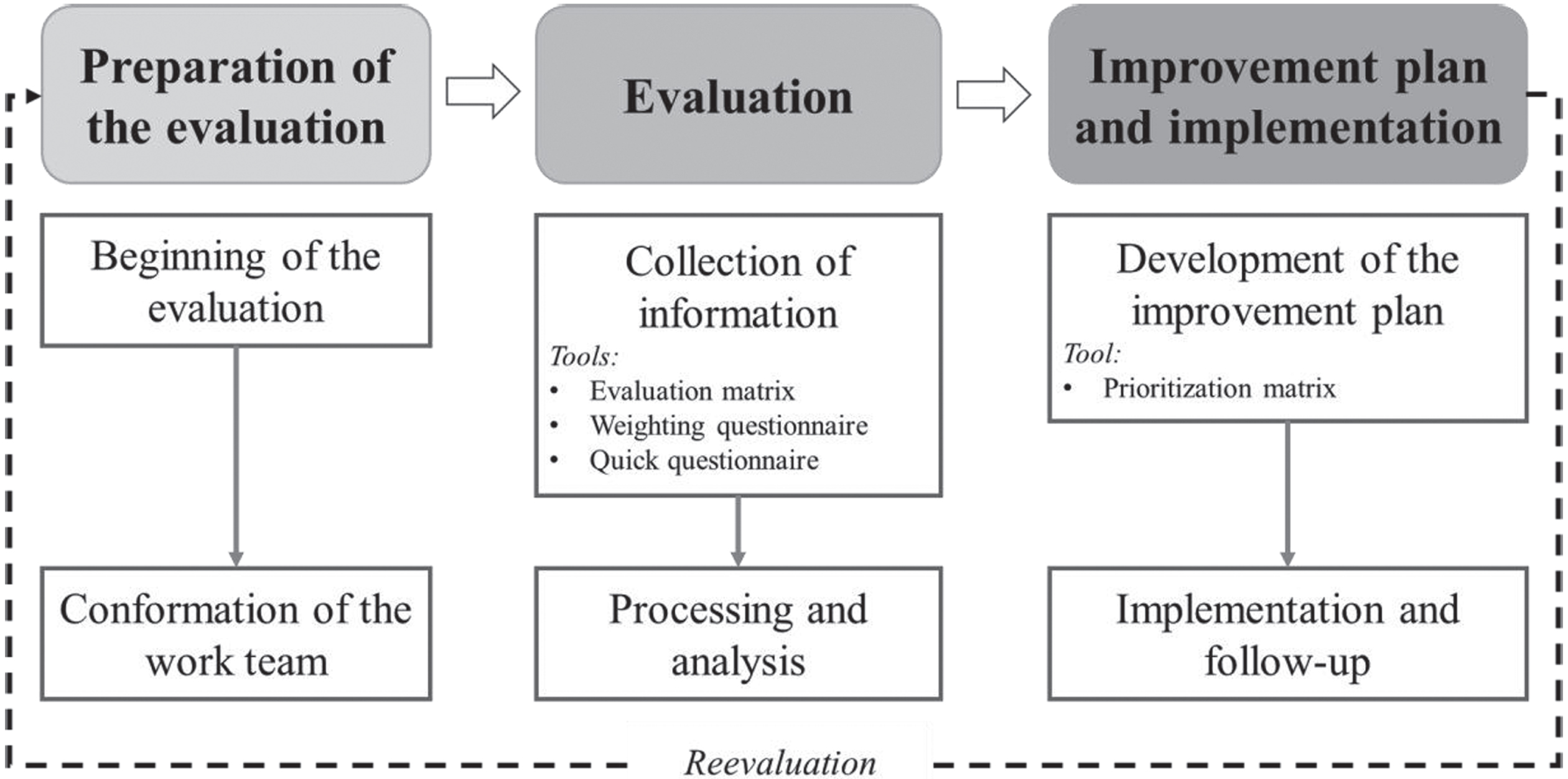
EMM application procedure.
It is recommended that the first time the organization’s maturity is evaluated, it should be done with the support of evaluators who are experts in micro and macro ergonomics until the company gains sufficient experience and knowledge to evaluate with its personnel.
All suggestions and recommendations made in this section are derived from the exchange between the research team and the organizations where the model was applied.
The maturity assessment is a participatory process that occurs within the organization where it requires an initial preparatory stage. This stage is not something new; other authors have made the same point [24, 36]. Beginning of the evaluation.
Based on experiences in applying the EMM, we suggest holding at least two meetings in the organization conducted by an expert E/HF (internal or external to the organization). In the first meeting, the first contact with the managers is established, and we strongly suggest a workshop to explain what E/HF is, its application domains, and how it can help them improve the organization’s performance. The main problems and interests of the organization related to E/HF should also be identified. Then, at the second meeting, the EMM and its usefulness should be explained to management. Furthermore, it will detail how the evaluation process will be conducted: commitments, necessary resources (human and financial), the time required, deliverables, and results. Also, the boundaries of the work system to be evaluated must be defined. Conformation of the work team.
The work team is responsible for the evaluation process, and the organization’s stakeholders should be represented. Some companies have multidisciplinary work teams to address quality, safety, and productivity issues, so they could be considered to form the work team. The work team should be trained in E/HF and designate a leader to direct the following maturity assessment activities.
Collection of information.
In this step, three EMM tools should be used to collect information: an evaluation matrix (Appendix 1), a weighting questionnaire (Appendix 2), and a quick questionnaire (Appendix 3). These tools should be applied interactively by exchanging information between the evaluator and the respondent (e.g., group workshops or individual interviews). Respondents’ observations and comments should also be registered. We recommend that the E/HF experts in the work team apply these tools. However, if the company does not have an ergonomist, it can request an external consultant expert in E/HF.
The evaluation matrix is the primary tool of the EMM and is used to determine the company’s maturity level (Appendix 1). This tool describes the expected behavior of the 12 EMM factors at the five maturity levels. It should be applied to senior and middle managers since they have a more holistic view of the organization. This tool allows obtaining the maturity level of each factor and the organization based on the opinion of senior and middle management. Each respondent must identify the maturity level of each factor in the organization and, as a result, the company’s maturity level will be obtained. The company’s maturity level will correspond to the lowest maturity level of the factors. What sustains this is that if a company has some factor at a lower level than the rest, it will not be able to enjoy all the benefits of being at the higher level of maturity, always having some factor that prevents it from advancing.
The weighting questionnaire (Appendix 2) was designed to identify the importance the company attributes to EMM factors, and it should be applied to senior and middle managers of the organization. In addition, the results of the weighting questionnaire will be used in the prioritization of improvement strategies.
The quick questionnaire (Appendix 3) was designed to assess the degree of development and integration of E/HF in the organization based on workers’ opinions about the organization’s performance. We suggest contrasting the results obtained with the quick questionnaire with the results of the evaluation matrix to analyze the possible differences between the opinion of the workers and that of senior and middle management. In its development, it was taken into account that the language used should be simple to facilitate its understanding by most persons, and few questions were included so that its application would not be time-consuming. The quick questionnaire is divided into four groups that synthesize the general behavior of the four dimensions of the EMM: Group 1: Ergonomics in the company (culture), Group 2: Company strategy (integration), Group 3: Company human resources (performers), and Group 4: Company indicators (surveillance). The surveyed worker must identify the situation that most represents the organization in each group. Processing and analysis.
The information collected must be processed, discussed, and consensus by the work team.
To process the results of the matrix evaluation, a consensus must first be reached regarding the maturity level of each factor. In this step, the respondents’ observations and comments can help reach this consensus. As a second step, the maturity level of each dimension is determined, which will correspond to the lowest maturity level of its factors. Finally, the organization’s maturity level is determined, corresponding to the lowest maturity level of its dimensions.
To process the weighting questionnaire, we recommend reaching a consensus on the weightings for each factor or calculating the average value for each factor of the weightings given by the respondents.
To process the quick questionnaire, the following steps must be followed: Assign the value: 1, 2, 3, 4, or 5 of each group, according to the option marked by the respondent, where 1 corresponds to the first option. The assigned values correspond to the five EMM maturity levels. Determine the value of the “mode” for each group. As a result, the maturity level of each dimension will be obtained according to the workers’ opinions. Determine the organization’s maturity level according to the workers’ opinions, which will correspond to the lowest maturity level of the dimensions.
The work team should consolidate the results obtained with the different tools. For example, there may be differences between the results obtained from the workers’ opinion (quick questionnaire) and senior and middle management (evaluation matrix); in these cases, the results should be discussed and agreed upon to determine the organization’s level of maturity. Finally, the evaluation results should be consolidated and presented to the organization’s management and other stakeholders.
Development of the improvement plan.
The objective of the improvement plan is to generate a set of actions to increase the E/HF maturity level of the organization. To this end, the company should focus on improving those factors that obtained the lowest maturity levels. This approach facilitates the gradual maturation of the organization and, therefore, its capacity to develop and integrate E/HF.
To determine each factor’s priority level, the level of maturity achieved and the level of importance (weighting questionnaire) given by the organization should be considered. In this regard, we suggest using the prioritization matrix shown in Fig. 3, which establishes four priority levels: low, medium, high, and very high. Subsequently, improvement proposals should be developed under a multidisciplinary and participatory approach between the work team and those involved in the organization. Finally, these proposals should be described in detail (e.g., human and financial resources, responsible parties, deadlines) and presented in a report to the organization. Implementation and follow-up.
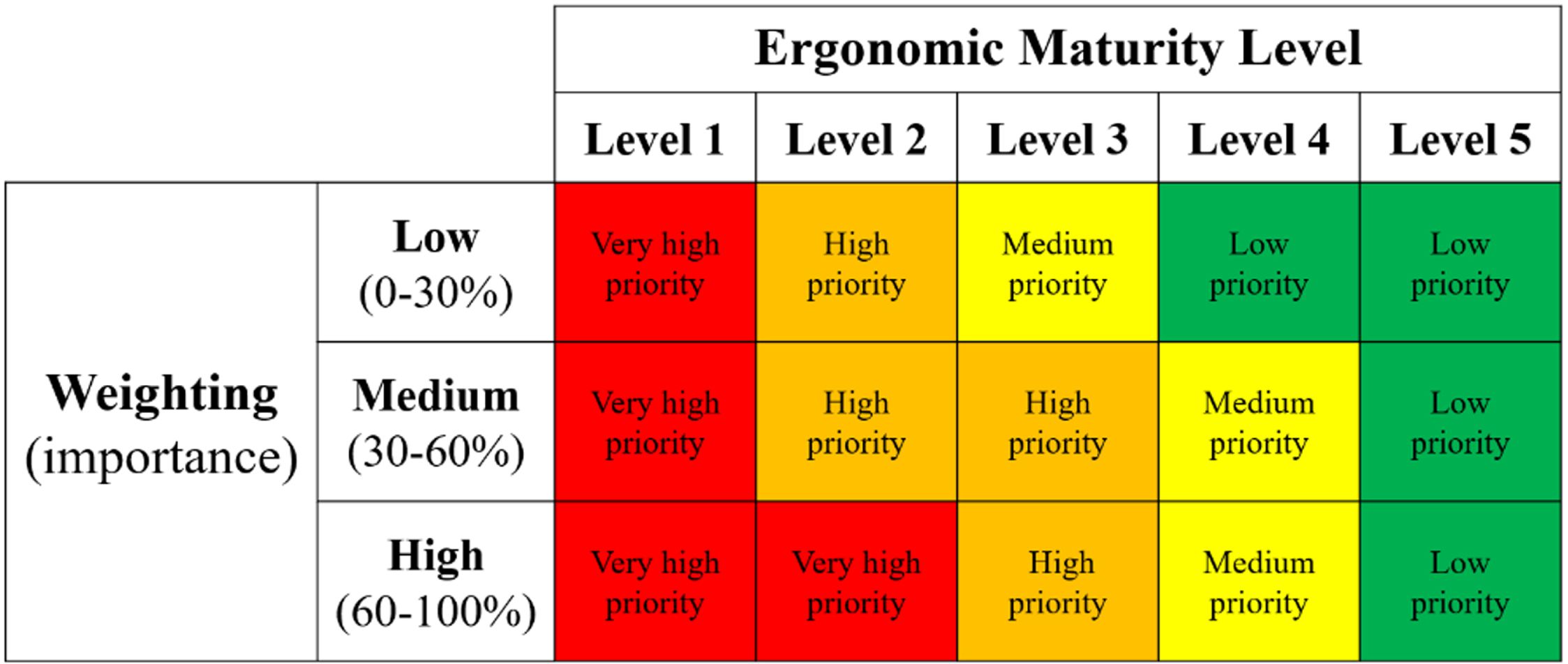
Recommended prioritization matrix to establish the priority level of each model factor.
In this step, the improvement plan starts to be executed. Then, the implementation of the improvements must be followed up, verifying that they are carried out as planned.
It is recommended that the organization re-evaluate with the EMM within six months to one year after implementing the proposed improvements. The improvement plan’s compliance status must be verified in this re-evaluation, and new strategies must be drawn to respond to the new evaluation results. This approach enables and promotes ongoing improvement in the organization.
This section presents an example of EMM application in a Colombian organization in the agricultural sector. The maturity assessment in this company was conducted by an external consultant specializing in E/HF.
As part of the preparation stage of the evaluation, two meetings were held with the participation of the external evaluator and five people from the company’s senior and middle management. In the first meeting, the basic concepts of E/HF were explained (definition, scope, usefulness of application). In the second meeting, the EMM and the evaluation process were explained. Also, the work team members and resources (human and financial) dedicated to the evaluation were decided.
During the evaluation process, 61 workers and five managers participated voluntarily. The three EMM tools were applied as follows: the evaluation matrix and the weighting questionnaire were applied to five people from the middle and senior management of the organization, and the quick questionnaire was applied to 61 workers from all hierarchical levels of the organization. Table 3 shows the results of the evaluation with each EMM tool.
Results of the ergonomic maturity evaluation
Results of the ergonomic maturity evaluation
The organization’s maturity level was 1: Ignorance, which was determined with the evaluation matrix. As suggested in the EMM application procedure, this result should be contrasted with the workers’ evaluation results using the quick questionnaire. In this case, the differences between the maturity levels obtained with these two tools in the four dimensions of the EMM were minimal, indicating a similar perception of the application of E/HF in the different hierarchical levels of the organization. We recommend that in cases where there are notable differences between the results obtained, the causes be analyzed.
The weighting questionnaire was also applied, identifying by consensus the most important factors for the company: risk assessment (70 %), acceptance (60 %), while the least important were strategic alignment (0 %) and person in charge (10 %). Together with the maturity assessment results per factor, these weightings were used to establish the priority levels (Fig. 3).
As nine factors were classified with a high priority level, it was decided to initiate improvement actions on the factors with the lowest maturity level. For example, the factors acceptance (level 3) and teamwork (level 2) had the same priority level (high); however, the improvement actions were focused on the factor with the lowest maturity level (teamwork).
Finally, following the EMM application procedure, the work team developed an improvement plan focused on the following factors: strategic alignment, person in charge, teamwork, resources, compensation, and indicators. Unfortunately, the case study scope and the involvement of the external consultant were up to the development of the improvement plan. Therefore, it was not possible for the external consultant to participate in the implementation and follow-up of the improvements nor to obtain information on how this step was carried out in the organization.
EMM development
A situation that hindered the development of the model was the limited number of E/HF maturity models available, so specific sources on what aspects should be considered for assessing ergonomics maturity were limited. This situation led to the development of the EMM being heavily influenced by models focused on process improvement from a management approach (Table 1), as they are widely used and recognized globally.
Furthermore, the EMM design process was not linear and was guided by a philosophy of ongoing improvement based on practical experience using the EMM [31, 32]. Throughout the EMM design process, a significant challenge was to strike the right balance between the complexity of the phenomenon to be assessed: the degree of E/HF integration and maturity at the organizational level and the model’s simplicity. A model that is too simple may not cover the relevant factors of the phenomenon to be evaluated. At the same time, if the model is too complex, its application may not be attractive to organizations, thus reducing its practical value, among other consequences such as the incorrect use of the model and a high level of training to apply it.
Also, an aspect discussed in the development of the model was the scope within the domain of E/HF. Some of the experts consulted and members of the working team reduced the model’s scope only to physical ergonomics, e.g., prevention of work-related musculoskeletal disorders and workstation design. After some working sessions, it was agreed by consensus that the model’s scope covered all aspects and domains of E/HF in the organization, consistent with the macroergonomic approach [37].
Regarding the development of the tools to apply the EMM, it should be mentioned that initially, only two tools were designed: the evaluation matrix, focused on managers, and the quick questionnaire, focused on operational workers. Additionally, during the pilot test, we detected that the organizations needed to establish priorities to improve the ergonomics maturity level of the company and use the available resources more effectively. In this sense, the first alternative solution was to establish a fixed weighting for the twelve factors of the model. However, during the EMM applications, we detected that the importance of the factors was different in each company and was influenced by the context of the organization, such as the sector of the economy, organizational culture, company size, geographical location, country, and current regulatory framework. For this reason, two new tools were developed: a weighting questionnaire and a prioritization matrix, which allow a flexible prioritization of improvement actions considering each organization’s specific context.
Strengths
In this session, we present the main strengths of the EMM, which are based on the authors’ experiences and the feedback received from practitioners such as master’s students, ergonomics, and occupational safety and health specialists during the application of the EMM.
The main strengths of EMM are
Limitations
Assessing the company’s maturity and applying the tools recommended in the EMM requires an ergonomist or professional with training in E/HF on the assessment team. In many developing countries (e.g., Latin American countries), this could be a limitation for applying the EMM due to the lack of these professionals.
The EMM was designed to address interactions at the organizational level, considering the external environment’s influence. However, one limitation of the EMM is that it does not allow an analysis of interactions that occur beyond the organization’s boundaries [1, 38].
The intent and long-term goal of developing and applying this model is that this model will be appropriate for a variety of organizations. However, a limitation of the proposed model is that it needs to be further tested and refined through an iterative process to demonstrate its usefulness in different types of organizations, i.e., small, medium, and large companies, service, and manufacturing sectors. In addition, it must be recognized that each organization has different structures, policies, and resources that will affect the applicability and use of the model.
Finally, it should be noted that further studies on the reliability and validity of the model are needed, which would contribute to demonstrating that the model can effectively and successfully guide change in E/HF maturity levels in organizations.
Lessons learned
In this section, we present the main lessons learned by the authors during EMM applications. We believe that these lessons could be helpful to potential users of the model.
As stated, in the organizations where the EMM was applied [31, 32], the vision of E/HF was reduced to purely microergonomic analysis, which hindered the EMM application. For that reason, we recommend training people in what E/HF is and its scope during the preparation of the evaluation phase. However, despite the efforts to explain the scope of E/HF, we noted that many participants maintained a microergonomic approach. The above indicates that organizations do not adopt the E/HF approach overnight.
We should also note that the maturity levels assessed in the organizations where the model has been used are strongly linked to how physical ergonomics issues have been addressed. Therefore, other issues of interest, such as work shifts, fatigue, mental workload, human error, and usability, could be considered in future applications.
We also detected that in some meetings held to assess the E/HF maturity level, the participants’ opinions were constrained by the hierarchical relationships among them. For example, there were situations where senior management’s opinion conditioned some participants’ opinions. For this reason, we recommend that the team leader be prepared to prevent and manage similar situations.
On the other hand, during the application of the evaluation matrix, we detected that, on some occasions, senior and middle management tend to overestimate the maturity level of the EMM factors because they relate the maturity level to their work performance. For this reason, we recommend that from the preparation stage of the assessment, it should be emphasized that the purpose of the maturity assessment is to improve the organization’s performance from the E/HF perspective and not to blame or criticize the work performed in the organization.
We further identified that organizations that had implemented quality and occupational health and safety management systems had favorable preconditions for E/HF integration. For example, there were formal working groups with experience recording and monitoring indicators and managing improvement projects in these organizations.
Future work
The results obtained with the application of EMM are promising; however, we consider that future actions could be taken to refine the model.
Organizations are considered “open systems” [39]. Therefore, they will be influenced by the legal, cultural, economic, political, geographical, and historical context in which they are located [2]. Consequently, depending on the context, the factors evaluated with the EMM can have different weights. For this reason, we believe that a process of weighting the model’s factors, taking into consideration the organizational context, could be beneficial. The weighting questionnaire and the prioritization matrix presented in this article are samples of the progress made.
Evaluating the reliability and validity of E/HF methods has been a matter of concern and discussion for several years [40]. However, it is still a matter of interest, not yet fully resolved, since few methods describe how they address reliability and validity [9]. In addition, there are few guidelines on how to design, conduct and analyze reliability and validity studies of E/HF methods for the analysis and modeling of systems [41].
Regarding maturity models, Goncalves and Waterson [13] reported that of the 41 publications analyzed on the safety maturity models, 44% do not report any evidence of having carried out reliability and validity assessments. In fact, reliability studies were conducted in only 27% of the studies, and content and face validity studies in 34% [13]. Perhaps, this situation reflects the point made by Salmon et al. (2012, p. 8): “Formal reliability and validity studies are difficult to run and require a lot of resources” [41].
Taking into account the types of validity mentioned in this review of safety culture maturity models [13], we could say that we have addressed some aspects related to the face and content validity of the EMM. During the development of the EMM, we consulted several experts who gave favorable judgments on the pertinence of the model and the factors included in it. In addition, the managers and professionals of the organizations where the EMM was applied expressed the model’s usefulness in integrating E/HF at the organizational level. Also, the EMM has been taught in E/HF and occupational health and safety postgraduate programs. Students in these programs have applied the EMM in their companies and highlighted its practical value.
However, the evaluation of convergent validity, until now, has not been possible due to the scarcity of tools that evaluate the same construct: organizational maturity in ergonomics. Nevertheless, we consider that formal studies to evaluate the reliability and validity of the EMM and its tools should be carried out.
As mentioned in Stage 3: Improvement plan and implementation, once the improvement measures are implemented, an evaluation should be made to measure the impact on the organization’s maturity globally and by factor. However, none of the published applications of the model [31, 32] has been re-evaluated to check the expected impact on the organization’s maturity. For this reason, it is necessary to carry out large-scale longitudinal studies to verify the real impact of using the EMM on the performance of organizations.
Another aspect, which must be evaluated in the EMM in light of its future applications, is the relationship between the 12 factors evaluated. Analyzing this relationship will require systematic applications of EMM in numerous companies, which can help refine the evaluation.
Conclusion
The EMM and its tools and application procedures proposed in this article provide a framework for integrating E/HF into organizations from the macroergonomics approach. In addition, E/HF practitioners may find in the EMM a tool that helps them channel the actions taken by the different actors in the organization to improve safety, health, well-being, and performance in work systems. We would also like to point out that, although the results of the application of the EMM have been promising and the professionals involved in the field applications have expressed that it is a practical and valuable tool to generate changes from the E/HF approach in organizations, it is important that in the future formal studies of reliability and validity are carried out.
Finally, we must stress that companies cannot integrate E/HF into all levels of the organization overnight. As children must walk and crawl before running, companies need guides to help them move to higher levels of maturity in ergonomics, the proposed model, we believe, can help in this challenging task.
Ethical approval
Not applicable.
Informed consent
Not applicable.
Conflict of interest
The authors declare that they have no conflict of interest.
