




Abstract
BACKGROUND:
Neuromusculoskeletal pain and fatigue have been self-reported by over 70% surgeons who perform minimally invasive surgery (MIS). These problems can become impairments impacting surgical performance, patient outcomes, and career longevity. Human factors engineering has identified microbreaks coupled with activities as a viable strategy to counteract known physical, cognitive, and environmental stressors as well as mitigate neuromusculoskeletal (NMS) problems for workers in office and manufacturing domains.
OBJECTIVE:
Develop a novel set of intraoperative surgical microbreaks activities tailored for MIS surgeons to mitigate surgery-induced neuromusculoskeletal fatigue and pain.
METHODS:
Using NSM problems identified by practitioners and literature, a clinician determined causes and solutions and ranked them based on literature and clinical expertise. Solutions were incorporated into synchronized activities that addressed overarching goals and multiple tissues.
RESULTS:
The resulting activities, translating contemporary science in clinical physical medicine and rehabilitation practice and tissue biomechanics, specifically address the overarching goals of: 1) posture correction; 2) normalization of tissue tension and soft tissue mobility/gliding; and 3) relaxation/stress reduction.
CONCLUSION:
Surgeons can perform the activities in approximately one minute inside the sterile field. Movements encompassing multiple requirements and engaging multiple body segments are combined to provide an efficient and effective intervention to the target tissues.
Introduction
Advances in both technology and techniques, particularly in the 1980s and 1990s, coupled with demand by the public, due to patient benefits [1] such as reduced infection rates and shorter recovery times, have resulted in increased use of minimally invasive surgery (MIS) instead of open procedures. Unfortunately, the health benefits enjoyed by the patients do not universally extend to the surgeons performing the MIS procedures. Reports of surgeons experiencing discomfort and injury began to appear in the early 1990s [1–3]. This trend is expected to continue as techniques such as laparoendoscopic single site surgery (LESS) [4] and natural orifice translumenal endoscopic surgery (NOTES) [5] are further developed and widely implemented.
Surveys of MIS surgeons across a multitude of surgical disciplines have reported musculoskeletal pain and fatigue [6–13]. The severity of problems reported by MIS surgeons varies, with most surgeons reporting neuromusculoskeletal symptoms during the MIS procedures [8] and others identifying symptoms that persist beyond the operative time [6, 14] and extend beyond the work day [12]. Neuromusculoskeletal fatigue, impairment, and injuries have been shown to adversely affect MIS performance, patient safety, and surgeon career longevity [15–20]. The impact of suboptimal health on the ability of surgeons to perform quality MIS procedures is a major concern in hospitals worldwide [9, 21–23], prompting calls by medical practitioners and human factors engineers to request modification of the “hostile” and “dangerous” environment encountered by MIS surgeons [9, 25].
Environmental factors contributing to neuromusculoskeletal problems have been identified in MIS operating rooms [3, 26–28]. Increased complexity and longer duration procedures were noted to have a deleterious effect on the health of surgeons performing MIS [9, 29]. More awkward postures have been identified in all upper extremity joints during MIS procedures when compared with similar open incision procedures [3, 30]. Studies have identified that relatively unchanging static postures are assumed by MIS practitioners throughout their surgical procedures [28, 29]. These have not been addressed by redesign of the operating room (OR) and some cannot be designed out due to patient factors; thus, surgeons continue to perform surgeries in sub-optimal working conditions over extended durations. Strong evidence presented in ergonomics literature suggests a causal relationship between musculoskeletal disorders and awkward and/or sustained postures, especially those with force [31–33].
Anatomic regions often identified as problematic by MIS practitioners are the back, neck and hands [9, 35] with shoulder problems occasionally cited in similar numbers [14, 36]. Tissues identified by MIS surgeons as the source of discomfort include muscles, tendons, ligaments, and nerves; all of which have been associated with suboptimal musculoskeletal mechanics in the operating room (OR) [34]. Common to all these regions and recognized as contributing to pain and dysfunction is the vast network of richly innervated connective tissues (fascia) surrounding and supporting all neuromusculoskeletal tissues [37, 38]. When functioning optimally, elements within the extracellular matrix (ECM) of fascia allow muscles, tendons, nerves, and elements of the vascular system to slide and glide on one another and also provide nutrition, protection, and cellular communication [39]. Poorly functioning fascia creates a sensation of “stiffness” [40] and discomfort [38], which can be ameliorated by offloading tissue in tension and reinstating normal tissue mobility (i.e. sliding and gliding).
Successful interventions to protect MIS practitioners from discomfort and injury must target the neuromusculoskeletal tissues compromised by the sustained and awkward positions. A potential solution adapted from office [41, 42] and industry [43] ergonomics is the use of periodic work breaks suggested by Engelmann (2011) [44] and Dorion and Darveau (2013) [45]. We recently completed a study on the feasibility of incorporating simple callisthenic stretching exercises into a one minute microbreak every 20–40 minutes during MIS procedures [46, 47]. While the microbreaks were widely accepted by surgeons and indicated as helpful, the issues that they have recognized as causing pain, dysfunction, and fatigue were not directly addressed. This manuscript describes the evidence-based creation of shorter, more efficient, and targeted microbreak activities targeted at their neuromuskuloskeletal health which could be incorporated into their surgical workflow in the operating room without scrubbing out of the procedure or impacting patient safety.
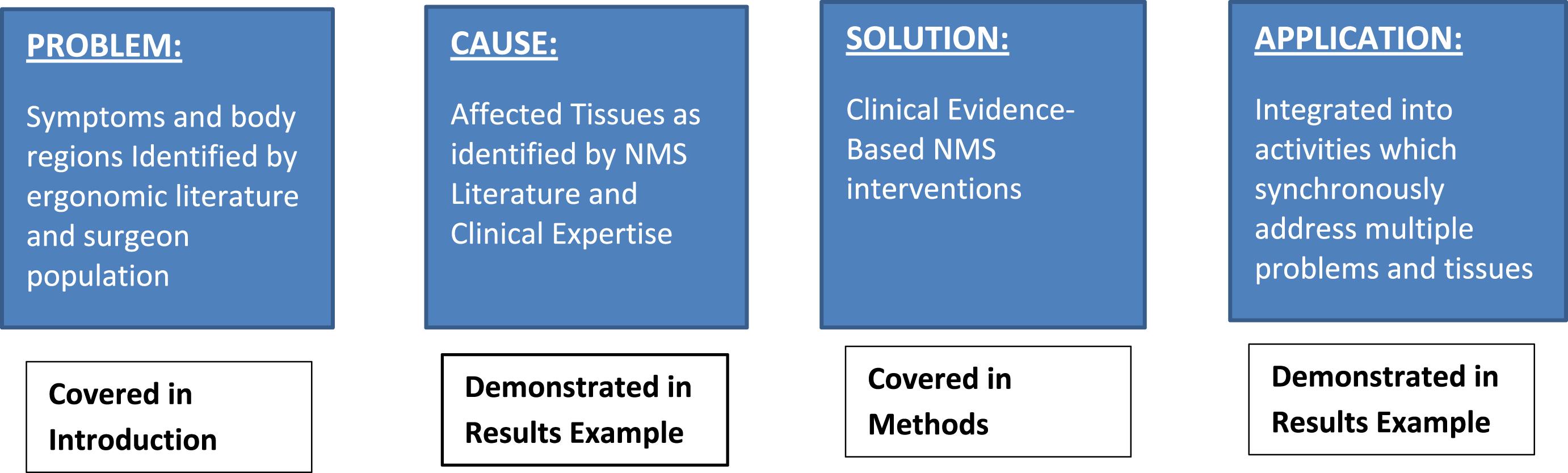
Process flowchart for development of microbreak activity creating guideline.
Methods for novel evidence-based activities
Using principles of clinical guideline development [48], we analyzed problems identified by MIS practitioners to determine causes and solutions and proposed a set of activities to incorporate into intraoperative microbreaks (see Fig. 1). These activities were derived from contemporary literature in tissue biomechanics and clinical neuromusculoskeletal (NMS) health and integrated with clinical expertise on the need and manor in which to complete the activities. This guideline was a part of an overall effort to apply NSM interventions to reduce work-related pain, injury in illness in surgeons.
A specific problem was identified through surgeon-reported symptoms and ergonomic literature. This was described in the introduction. A list of potentially affected tissues (muscles, nerves, joints) that could have caused the problem was generated by a physical therapist with NMS health expertise and an ergonomist based on knowledge of the MIS practitioners postures. Tissues potentially affected were ranked in order of those most likely involved according to contemporary medical and MIS ergonomics literature. To resolve the causes of the identified problems, evidence-based clinical interventions were selected to address the needs of the specific tissues and again ranked in order of the number of tissue needs and magnitude of relief each intervention could provide. The interventions were then integrated into activities which addressed multiple problems simultaneously and adhered to the restrictions of the sterile field for MIS practitioners.
Summary of evidence-based solutions for integration in intraoperative microbreak activities
The process of creating the guideline for these activities included literature-based work integrated with clinical expertise on the subject and expertise on work-related musculoskeletal risk exposure. The activities proposed represent solutions to address issues identified by MIS providers and meet three overarching goals: 1) posture correction; 2) normalization of tissue tension and soft tissue mobility/gliding; and 3) relaxation/stress reduction. The following paragraphs will describe the process of merging clinical decisions with the supporting literature for the accomplishment of incorporating the three overarching goals into these activities. A summary of the guideline formation for the three overarching is available in Table 1.
Posture correction
Posture correction consists of activities to reposition the head, neck, torso, and extremities. These activities offload tissues and structures which are overloaded in either compression or tension due to positions required by MIS procedures and equipment, thus restoring anatomic loading of the articular surfaces in the spinal column and a balanced posture. Posture correction will benefit tissues which, because of the awkward MIS positioning, are subjected continuous tension loading such as joint capsules and constant muscle contractions [49]. Realignment of posture will also alleviate pressure on those soft tissues which the MIS positions statically hold against a rigid structure, such as nerves or vascular structures compressed over a bone or joint [50–52].
Normalization of tissue tension and soft tissue mobility/gliding
Soft tissue mobility activities prevent stasis in the ECM fluid the preventing increased metabolic waste accumulation [53]. These activities allow soft tissues to undergo a spectrum of tensioning between slack and fully elongated, thus relieving tension and likely decreasing the discomfort from tissues which have been under a static constant tension [51, 54]. Activities are selected and integrated to cross multiple joints and limb segments producing a mild elongating and slackening throughout the entirety of muscle, nerve, vascular and fascial tissues [55]. Joints are gently moved through a mid-range providing lubrication to articular surfaces and relieving joints from the protracted compression loading induced by MIS positioning. Introducing a spectrum of normal tensioning to the soft tissues also helps reestablish normal stretch reflexes [56].
Example of guideline application for neck pain and feeling of tension
Relaxation/stress reduction
Relaxation is achieved by activities selected to address modulation of muscle sympathetic activity. Movement of the head on the neck and the neck on the thoracic spine are key components in modulating muscle sympathetic activity of both the axial skeleton as well as upper and lower extremities [57]. Activities which down-regulate muscle sympathetic activity are performed early in the series accompanied by deep breathing to provide a foundation of relaxation and stress reduction which further enhance the posture correction and soft tissue mobility activities.
The activities are integrated into a flowing series of movements similar to “Tai Chi”, providing seamless and efficient attention to multiple anatomic areas and tissues simultaneously. All proposed activities were designed or adapted to meet OR sterile field and hand placement constraints and are compatible with movement within the confined OR environment. The sterile field within the OR is the sterile environment around the patient. If the surgeon remains in the sterile field with his/her hands in front of the body and above the waist, the microbreak activities can take place without the interruption of the surgeon to “scrub out”. Thus, s/he can leave on the current gloves, gown, etc. preventing the need to re-sanitize their hands/arms and doff and re-don new gloves and gown which can take precious surgical time. In addition, the total duration of the activities needs to be minimized for patient safety and financial constraints.
Results
This section demonstrates the results from addressing neuromusculoskeletal complaints in the MIS surgical workforce and determining an implementable solution. It contains an example of the process of applying the created guidelines to implement targeted activities for one problem (neck pain) with an in-depth description of a subset of four integrated activities, selected to mitigate common problems identified by MIS surgeons. There will be an italicized instruction and an explanation following each instruction segment.
Neck example
An example demonstrating the use of the guideline is shown in Table 2. Beginning with the two most common problems specified by MIS practitioners, neck pain and the feeling of tension, the analysis begins with identification of potential causes for each problem. The list of tissues potentially involved in causing the problem are then ranked, with those most likely causing the problem higher on the list, based on a combination of ergonomic literature and expertise of a NMS trained physical therapist. Solutions were identified using clinical interventions which address specific tissue needs and mitigate their causing the problem. These were identified based on evidence from contemporary clinical literature. The physical therapist then integrated multiple interventions into activities which combined the solutions in a sequence that can build on the benefits of the prior intervention. The leveraging of the benefits from one solution to enhance a subsequent intervention makes the sequence of the activities critical in order to optimize benefits while minimizing the time required for the activities. The integrated activities achieve the overarching goals of: 1) posture correction (PC); 2) normalization of tissue tension and soft tissue mobility/gliding (NT); and 3) relaxation/stress reduction (SR), as indicated in Table 2.
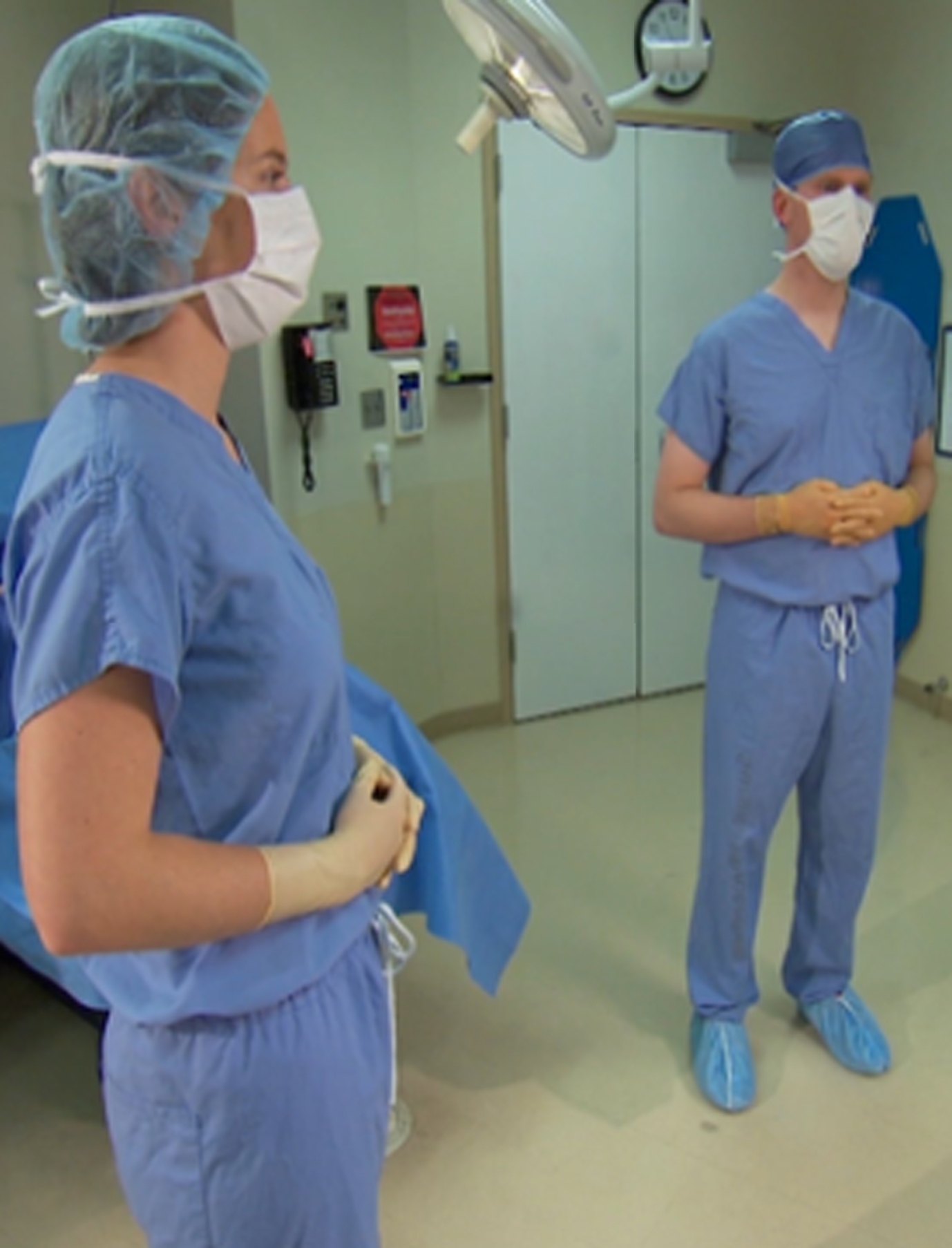
Activity 1 Stand tall (base position for microbreak activities).
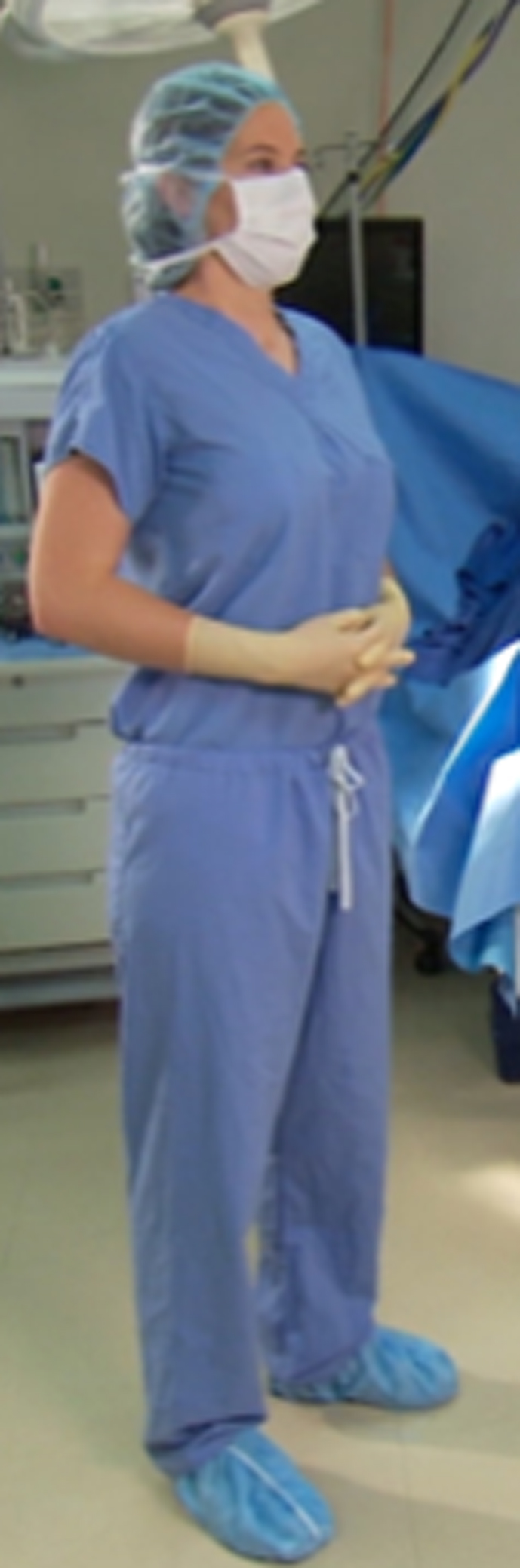
Deep Breath (Take a deep breath in, filling out your ribs. Keep your chest high as you breathe out).
Sample activities
Performing the first two activities (Figs. 2 and 3) establishes a foundation of posture correction and decreased muscle sympathetic activity, thus initiating relaxation and establishing a relaxed stance from which to move into other activities which focus more narrowly on the greatest areas of concern as defined by the MIS surgeons. The next activities address the most frequently reported areas of concern for fatigue, pain and dysfunction, specifically the neck, shoulder and spine (upper and lower back) [46]. For subsequent activities, care was taken to isolate specific tissues addressing areas of concern and to create a sequence, building upon the neuromusculoskeletal relief afforded by the previous activities. The third activity is an example of activities selected to address a tissue-specific area of concern, the neck (Fig. 4). These activities will be piloted in a web-app with a reminder poster which can be placed in the OR.
The base position for these activities is standing tall with your feet approximately shoulder width apart. Your fingers are interlaced and held at the level of your belly button
A “base” position is identified as a balanced standing posture (Fig. 2). Stability is achieved for surgeons by standing tall with their feet approximately shoulder width apart. Surgeons are instructed to interlace their fingers and hold them in front of their torso at a level which preserves the sterile field as they progress through the activities. Standing tall in a stable, balanced position begins the process of posture correction, tissue tension normalization and stress reduction. This position decreases demand on the posterior neck, back, and scapular stabilizing muscles, all of which have been subjected to prolonged contractions in either elongated or shortened positions as they function to optimize the head and upper extremity postures needed by the MIS surgeon. Offloading the posterior muscles by standing upright triggers a down regulation of muscle sympathetic activity which allows the muscles to relax thereby promoting more optimal vascular and ECM fluid flow. Standing upright also gently elongates the muscles and structures on the anterior aspect of the neck and torso which is especially important in gently lifting and separating the ribs to allow for enhanced inspiration.
Take a deep breath in, filling out your ribs. Keep your chest high as you breathe out
Deep breathing from the base position further enhances the posture correction, tissue mobility, muscle relaxation and stress reduction. Deep inspiration gently mobilizes the ribs by lifting and separating them and contributes to further sympathetic down regulation of muscle activity enhancing tissue tension optimization and stress reduction. Keeping the chest “high” during exhalation continues the separation of the ribs providing optimal space for subsequent respirations. This is demonstrated in Fig. 3.
Turn your head toward the right looking over your shoulder, feeling the lengthening in the back of your neck
This activity engages spinal rotation beginning at C1 and progressing inferiorly to approximately T2. During this top-down activity, down modulation of muscle sympathetic activity occurs at each vertebral segment as muscles are gently lengthened. The lengthening of the neck muscles provides relief from the prolonged static contractions required to sustain an optimal head position for the surgical tasks. The rotation causes muscle relaxation on one side of the neck providing relief of facet joint compression. The gentle rotation by turning the head from side to side promotes normal sliding and gliding of the facet joints for articular surface nutrition and provides refreshing of the ECM fluids. Muscle relaxation reduces compression loads on the discs. The rotation of the head and neck also elongates one side of the anterior neck muscles and relaxes the other side. As the end of the anterior neck muscle elongation approaches, the clavicle is gently lifted providing elongation of sub-clavicular tissues and providing increased freedom for rib movement during inspiration. The increased relaxation in the sub-clavicular region combined with relaxation of anterior neck muscles releases compression on cervical and brachial plexus nerves. Once the plexus compression is relieved, activities promoting neural gliding can be introduced allowing nerves to slide and glide normally thus providing lubrication and nourishment in their ECM. This activity is partially shown in Fig. 4.
Summary of activities
These microbreak activities and explanations demonstrate how multiple joints and soft tissues are impacted throughout the activities during the short surgical break. Each subsequent activity builds upon prior activities to enhance relaxation of muscles, provide decompression of joints and soft tissues, and allow for neural gliding and mobility. Through the combination of clinical expertise and supporting literature, these activities have been selected and organized to optimize the restricted time and space allowed in the surgical environment to enhance the 1) posture correction; 2) normalization of tissue tension and soft tissue mobility/gliding; and 3) relaxation/stress reduction, leading to improved neuromusculoskeletal health and reduced fatigue, pain, and dysfunction for MIS surgeons.
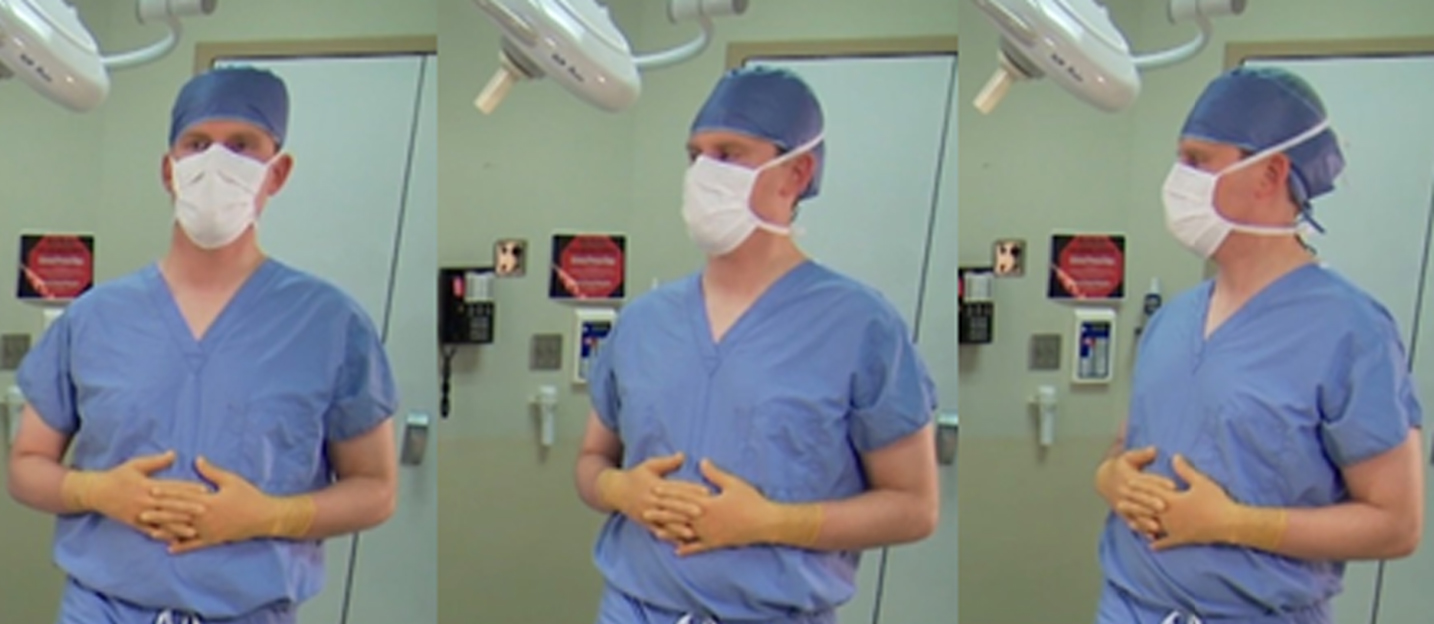
Turn your head toward the right looking over your shoulder, feeling the lengthening in the back of your neck.
Discussion
Taking breaks is widely practiced across many workplaces, particularly during prolonged activities and has been advocated as a technique to sustain employee productivity [58]. Office workers experience decreased levels of discomfort when they take short breaks to change their posture [12]. Participating in five-minute breaks or “micro-pauses” for each hour of a prolonged session is recommended by OSHA as a method to provide time for muscles and tendons to recover [58]. For MIS providers during surgical procedures, neither the length of time a procedure can be interrupted while still maintaining the positive patient outcomes, nor the length of a “microbreak” sufficient to avoid provider discomfort has been defined. A simple break from surgery without the activities might not counteract the awkward postures assumed during MIS, therefore, these activities were developed for use during a micro break for improved outcomes. Self-reported feedback from MIS providers participating in prior studies at our institution have indicated a preference that microbreaks from the surgical procedure be approximately one minute in length and able to be performed in the sterile field. This reduces the length of the interruption by allowing the surgical team to remain at the operating table. Our previous work indicated that a one-minute microbreak every 20–40 minutes was feasible during MIS procedures [46, 47]. Therefore, the efficiency of these activities assists with optimizing the restricted time and space allowed in the surgical environment to increase neuromuscular health.
The majority of programs promoted for use in office, industrial, or athletic settings [59] identify a stretching activity consisting of a 10 to 30 second hold time with 3–5 repetitions. Many of these for the upper extremities are described and demonstrated as moving joints and soft tissues past the end of available volitional movement with over-pressure provided by the contralateral limb [60]. There are several problems with this approach. First, performing stretches in this manner requires a more prolonged break than can be accommodated during surgical procedures to address all problematic areas previously identified by MIS providers. Second, if the goal is to provide relief to tissues which have been under prolonged tension or compression, passively moving a joint and adding additional pressure will actually increase tension in any tissue which crosses the obtuse joint angle and increase compression in tissues on the acute joint angle side. Placing joints at the end of available movement generally causes increased forces in joint ligaments and compression of the articular surfaces risking overuse injury to those tissues. Passively holding a joint at the end of motion creates synovial fluid stasis, thus decreasing joint nutrition. Performing static stretching also reduces fluid and nutrient flow in the soft tissue ECM which is not beneficial to tissues which have been compromised by postures/positions of surgical personnel. Finally, evidence is growing that active stretch achieved via volitional movement is more effective than passive stretch [61, 62]. The dynamic nature of the intraoperative microbreak activities we have proposed for MIS surgeons place no additional stress on joints and rely on volitional movement to reduce tension and compression of tissues across multiple joints simultaneously allowing restoration of the ECM homeostasis and promoting normal sliding and gliding between tissues.
This work represents evidence-based solutions and applications to address the neuromuskuloskeletal concerns in the operating room, however, it is not a complete systematic review of the problems, causes, solutions or applications. While these exercises do focus on three key areas of improvement for the MIS surgeons, the exercises do not include strengthening. Strength cannot be addressed in this short of a time period and should be addressed on an individual basis. Activities focusing on the legs could not be addressed due to the constraints of the OR environment. Additionally, overhead activities would be ideal for addressing NMS concerns with shoulders and the neck. Since this motion required movement outside of the sterile zone (over the head), they were not incorporated into the activities. These microbreak activities will be implemented through pilot studies within a web-app. Future work will include activities that can be incorporated between procedures to address the legs and overhead movement. Strength should be addressed on an individual basis outside of the OR as should be other pre-existing NMS injuries. Subsequent studies will aim to compare microbreaks with and without activities to measure effectiveness of the activities.
Conclusions
A novel set of activities designed to be performed by MIS surgeons during intraoperative microbreaks has been described. Rationale for the activities has been drawn from contemporary neuromusculoskeletal and human factors engineering literature. Based on a multi-center trial [46], MIS practitioners participating in the novel microbreak activities we describe experience significantly less discomfort and fatigue, with increased subjective ratings of physical performance, mental focus and without increasing their surgical duration times. Thus, evidence-based activities addressing specific musculoskeletal challenges posed by the operating room onto the surgeon can be created to restore posture, restore soft tissue mobility and reduce stress with minimal impact to the surgical workflow. This work resulted in an integrated intervention for addressing multiple areas of pain and multiple tissues through targeted and synchronized activities.
Conflict of interest
None to report.