




Abstract
PURPOSE:
Restrictions related to the COVID-19 pandemic can negatively affect patients who require physiotherapy. This study aimed to analyze the consequences of limited physiotherapy on the functional state of children with neuromuscular diseases (NMD). In addition, the caregivers’ well-being and caregiver opinions on physiotherapy were analyzed.
METHODS:
A questionnaire was shared with parents of children with NMD immediately after the COVID-19 lockdown. The survey included questions regarding the physical and mental condition of children and parents before the pandemic and during lockdown as well as their views on physiotherapy and telephysiotherapy. Statistical analysis was performed using the Wilcoxon Matched-Pairs Signed Ranks test, Spearman’s Rank Correlation test, McNemar test, and Chi-square test.
RESULTS:
Parents of 235 children participated in the study. Results indicated that children devoted more time to physiotherapy before the pandemic than during the lockdown period, which was true for those living in cities and the countryside. The functional state of 50.2% of the children deteriorated during the lockdown, in the opinion of their parents. Significant correlations were found between limited physiotherapy time and the deterioration of children’s functional condition, ability to maintain a standing position, and increased anxiety. The majority of parents reported increased levels of fear and anxiety (72.8%), fatigue (67.7%), and pain (53.2%). In-person physiotherapy was rated significantly higher than telephysiotherapy by parents.
CONCLUSIONS:
Limited access to physiotherapy and shorter therapy times may lead to functional deterioration in children with NMD, but this assumption needs to be objectively confirmed. According to the parents’ opinions, telephysiotherapy is less beneficial than direct physiotherapy but may support therapy conducted directly by a physiotherapist. Results based on subjective parental opinions may be helpful in planning future projects.
Introduction
The COVID-19 disease caused by the SARS-CoV-2 virus, declared a pandemic by the World Health Organization in March 2020 [1], brought about numerous negative effects to the economy and health. Scientific research in medicine and health sciences has proven that changes in lifestyle, self-isolation, and social distancing related to the pandemic exert negative influences on mental health [2–5]. Studies on large populations have revealed an increased prevalence of depression, higher levels of anxiety and sleep disorders, and reduced social interaction [5–8]. It has also been proven that people around the world have limited their physical activity due to the pandemic [9, 10]. This has a negative impact on the health of both healthy individuals and patients with various diseases [11, 12], including patients with neuromuscular diseases (NMD) [13] and children with disabilities [14].
NMD are rare diseases manifested as progressive muscle weakness, range of motion (ROM) limitations, skeletal deformations, and breathing and swallowing disorders; they lead to limitations in everyday functioning and increased dependence on caregivers [15–17]. Standards of rehabilitation for patients with NMD include stretching, strengthening, breathing, and positioning exercises; supported standing; and improving other physical activities that may enhance the patients’ quality of life [15–17]. The sudden change in lifestyle caused by the pandemic and the increased risk of developing severe complications of COVID-19 had negative impacts on the availability and regularity of medical care for patients requiring physiotherapy [14, 19]. The situation in Italy is an example in which the frequency of visits of NMD patients to health centers decreased during the pandemic [20].
Due to the pandemic, the Polish government declared a state of epidemic on March 20, 2020, and recommended home isolation and limiting social contacts. Because of this, patients with chronic diseases, including NMD, had limited access to physiotherapy for several weeks. However, full outpatient care was restored on May 4, 2020.
Objectives
This study aimed to analyze the effects of limited access to physiotherapy during the lockdown on the functional state of children with NMD, based on the opinions of their parents. Moreover, the well-being of caregivers and their opinions on the quality of physiotherapy with direct contact compared to telephysiotherapy were analyzed.
Material and methods
Participants
A survey, approved by the local J.Piłsudski’s University of Physical Education Senate Research Ethics Committee, was conducted immediately after the COVID-19 lockdown in Poland in May 2020. The online questionnaire was intended for parents of children with NMD aged 2–18 years. The study information linked to the survey was placed on the websites of several organizations associated with people with NMD and their families. Only completed questionnaires were analyzed. The exclusion criteria included children’s age not between two and 18, diseases other than NMD, no diagnosis, and incomplete questionnaires. All participants were informed about the aim of the study and the fact that it was voluntary.
Questionnaire
The questionnaire included questions regarding demographics, anthropometric data (height and body mass), diagnosis of the child, co-existing diseases, the physical and mental condition of the child, total time devoted to physiotherapy, and type of physiotherapy performed both in the period prior to the pandemic and during the lockdown, parents’ physical and mental condition, and parents’ opinions on physiotherapy conducted in direct contact with a physiotherapist and via telephysiotherapy.
To determine the level of motor function of the children, parents were asked to answer questions about whether their children were able to perform 22 specific movements and activities. This list was prepared based on movements and motor activities occurring in the child’s motor development and is also used in functional scales for children with NMD [21–24]. Motor function data were collected for group compilation only and were not included in the comparative analysis.
Caregivers determined whether, in their opinion, both the child’s general functional condition and selected body functions, structures, and activities (including elements such as ROM, muscle strength, endurance, maintaining position, walking, breathing, speech, swallowing, deformities, pain, fear, sleeping, and daily activities) improved, deteriorated, or did not change during their time of limited access to physiotherapy. If impairments or activity limitations did not occur, the answer “not applicable/not present” was marked.
Parents were also asked about the types of physiotherapy interventions used before the pandemic and during the lockdown period. Time devoted to physiotherapy conducted by a physiotherapist or parents and time devoted to supported standing was calculated in hours per week.
The level of satisfaction with physiotherapy was determined by awarding points to particular responses of the guardians. Parents were asked to evaluate whether physiotherapy provided via telephysiotherapy as well as directly by a physiotherapist ensured 1) professional care, 2) the possibility of examining the child, 3) the possibility of obtaining information about the child’s motor functions, 4) improvement of motor function, 5) the possibility of demonstrating new exercises by a physiotherapist to be performed at home, 6) the possibility of demonstrating exercises performed at home by parents, and 7) psychological support. One point was awarded for each affirmative answer in each category. The sum of points for direct physiotherapy versus telephysiotherapy was then calculated.
Statistical methods
Statistical analysis of quantitative variables was performed by using the Wilcoxon Matched-Pairs Signed Ranks test due to the lack of normal distribution (tested by the Shapiro-Wilk test) of compared variables. Considering the lack of a normal distribution of quantitative variables, relevant characteristics were presented as median values±quarter deviation with mean values as additional information. Ranged, qualitative variables were analyzed using the Spearman’s Rank Correlation test. Intervention before and during the lockdown was compared by the McNemar test. A one-way Chi-square testing equal proportions was used to analyze advantages of in-person physiotherapy versus telephysiotherapy. The significance level was set at p < 0.05. All statistical calculations were performed using STATISTICA 13 version 13.3 (StatSoft Inc., Tulsa, OK, USA).
Results
Group characteristics
The study included parents of 235 children (61 girls and 174 boys) aged 2–18. Of these children, 49.4% had been diagnosed with spinal muscular atrophy (SMA), 32.8% with muscular dystrophy, 17% with myopathy, and 0.8% with neuropathy (see Fig. 1).
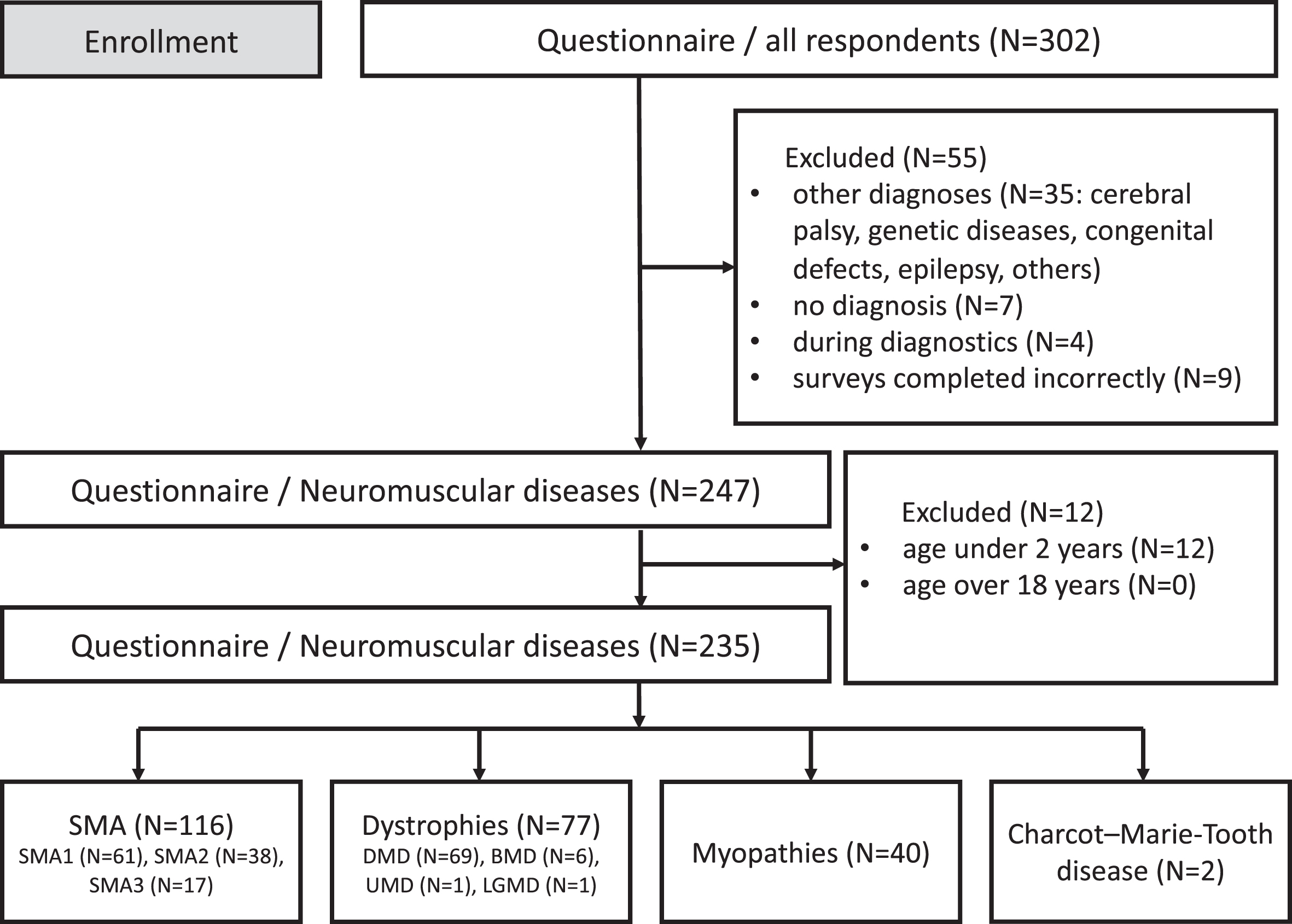
A flowchart of enrollment. Note: SMA –spinal muscular atrophy, DMD –Duchenne muscular dystrophy, BMD –Becker muscular dystrophy, UMD –Ullrich muscular dystrophy, LGMD –limb–girdle muscular dystrophy, N –number.
It has been estimated that approximately 22–33% of potential respondents who read the survey information on the websites of organizations for people with specific NMD completed the survey. The users of these websites are mainly patients and their families but also doctors, therapists, psychologists, employees of charitable foundations, and other people professionally related to helping people with these diseases. It is impossible to precisely determine how many parents viewed the information about participating in the study, and thus the response rate cannot be determined. However, it should be noted that the Polish registry of spinal muscular atrophy includes about 800 people with SMA (about half of whom are children) [25] and about 680 people with muscular dystrophy (the percentage of children is unknown to the authors). This means that approximately 29% of parents of children with SMA and more than 11% of all patients (adults and children) with muscular dystrophy participated in the survey. The authors do not have information on the number of people with myopathies and other NMD.
It was found that 31.1% of respondents lived in a city with over 100,000 inhabitants, 30.6% in a town with under 100,000 inhabitants, and 38.3% in rural areas. Before the COVID-19 pandemic, the majority of the respondents’ children (over 60%) attended school or kindergarten.
For 96 children, scoliosis had been diagnosed by a doctor, while hip subluxation or dislocation occurred in 66 children. Parents of 45 children reported frequent respiratory system infections in their children, while cardiovascular system disorders occurred in the case of nine children. All-day ventilation or part-time ventilation during the day was used in 75 children. For 140 participants, pharmacological treatment of neuromuscular disease (Nusinersen, Risdiplam, and gene therapy for SMA; corticosteroids for muscular dystrophy) was applied.
Children and youth in the examined group manifested various levels of motor abilities. The group consisted of 76 children who could not sit unassisted, 68 who could sit unassisted but could not walk, and 91 walkers. Detailed information regarding the study group is presented in Table 1.
Characteristics of the study group
Before the pandemic, 229 children (97.4%) were undergoing therapy with a physiotherapist, and 86% of the children additionally performed exercises at home with their parents. Supported standing was used in 38.3% of the children. Only three children (1.3%) did not undergo any therapy prior to the pandemic. During the lockdown, 162 children (68.9%) did not have any opportunity to meet a physiotherapist, 215 children (91.5%) performed exercises with parents, and 31.5% were positioned in supported standing. Only 12 children (5.1%) did not undergo any therapy during the lockdown.
In the case of 36 children (15.3% of the study group), the total time devoted to physiotherapy conducted by physiotherapists and parents was longer in the period of isolation; for 41 children (17.4%), physiotherapy time did not change; and for 158 children (67.2%), physiotherapy time was found to be longer before the pandemic.
Comparing the time children spent with physiotherapists before and during the pandemic showed that the duration of physiotherapy decreased significantly during the lockdown. Simultaneously, the duration of exercises performed with parents increased significantly. Overall, significantly more time was spent on all exercises by physiotherapists and parents before the pandemic than during the lockdown, regardless of the participants’ place of residence. No difference was noted between time devoted to supported standing before and during the pandemic (see Table 2).
Time of physiotherapy and supported standing per week
Time of physiotherapy and supported standing per week
Note: N –number of participants.
The information obtained from the parents showed that before the pandemic, 132 children from the study group (56.2%) were undergoing neurodevelopmental treatment [26]; 117 children (49.8%) were undergoing manual therapy [27]; 93 children (39.6%) were being treated with Proprioceptive Neuromuscular Facilitation [28, 29]; 76 (32.3%) with myofascial techniques [30]; and for 56 children (23.8%), the Vojta method [31] was applied. Thirty-seven caregivers (15.7%) could not determine which physiotherapeutic interventions were applied in their child’s therapy.
During physiotherapy before the pandemic and during the lockdown, various interventions included in guidelines on taking care of individuals with NMD [15–17] were applied (Table 3). Before the lockdown period, exercises such as trunk stretching, correction of the spine position, muscle strengthening, maintaining all-fours and kneeling positions, and supported standing were used significantly more often; however, it is worth noting that during the lockdown, parents correctly positioned their children with the same frequency (see Table 3).
Physiotherapeutic interventions applied before the pandemic and during the lockdown
Note: N –number of participants; % –percentage of the study group.
According to parents, 73.6% of children cooperated well with their physiotherapists, and only four children (1.7%) did not want to exercise with their physiotherapists. In contrast, only 37.4% of children wanted to do the exercises with their parents, and 4.3% refused to cooperate during therapy.
According to their parents, the general functional condition of 118 children (50.2%) deteriorated during lockdown; in the case of 106 children (45.1%), their state did not change, while in 11 children (4.7%) an improvement was noted. Deterioration in the functional condition of their children was observed by 45.2% of parents from large cities, 55.5% from small towns, and 51.1% living in rural areas. Parents of 109 children (46.4%) reported increased contractures in their children’s lower limbs. In addition, over 30% of all caregivers reported reduced muscle strength (87 children), deterioration of endurance (77 children), and increased fear and anxiety (78 children).
The children’s general functional condition (scored as improvement, no change, or deterioration) was matched with three categories regarding differences in time devoted to physiotherapy before and during the pandemic (longer, did not change, or was shorter) (see Table 4).
Changes of selected structures, body functions, and activities in children and parents depending on the duration of therapy
Changes of selected structures, body functions, and activities in children and parents depending on the duration of therapy
*Changes in total physiotherapy time were analyzed as precise values (i.e., the result of adjustment of the time spent on therapy before and during pandemic). The structure of this table which includes three options of possible change (“Less time”, “The same time”, “More time”) was chosen to highlight the observed relationship. ADL –Activities of Daily Living.
A limitation of therapy time was significantly associated with the deterioration of the general functional condition of the children. A significant negative low correlation was found between the reduced duration of therapy and an increase in contractures in the joints of extremities (upper and lower) as well as the deterioration of muscle strength, endurance, and swallowing in children. In addition, a statistical trend indicating that limited time of physiotherapy was associated with a reduction in the ability to maintain standing and perform daily activities, as well as with increased anxiety and fear, was observed.
No correlations were noted between limited time devoted to therapy and time of maintaining a sitting position, walking distance, quality of breathing or speaking, spine deformities, pain intensity, and sleeping time.
The survey revealed several distressing issues among parents during isolation. The majority of parents reported increased fear and anxiety (72.8%), increased fatigue (67.7%), and increased or new cases of pain (53.2%). During the lockdown, only 3.4% of parents observed lower fatigue, 0.4% reported decreased pain, 3.0% reported decreased fear, and 13.6% indicated a longer sleeping time. Only 28.1% of the caregivers who participated in the survey did not experience fear or anxiety related to lockdown or taking care of their children full-time. It is worth noting that before the pandemic, only one caregiver (0.4%) reported not experiencing fear or anxiety, and only seven guardians (3.0%) did not report any pain. This analysis revealed no significant correlation between time devoted to therapy and parental well-being (see Table 4).
Opinions on direct physiotherapy and telephysiotherapy
During the lockdown, online physiotherapy was used by 92 families (39.1%). The remaining families exercised at home independently or met their physiotherapists occasionally. All caregivers were asked about their opinions on the advantages of direct contact physiotherapy versus telephysiotherapy. Results of the Chi-square analysis revealed that direct physiotherapy was rated statistically significantly higher than telephysiotherapy, not only in general but also in every single aspect of therapy (see Table 5).
Advantages of in-person physiotherapy versus telephysiotherapy, according to parents
Advantages of in-person physiotherapy versus telephysiotherapy, according to parents
Note: N –number of participants; % –percentage of the study group.
Over 40% of parents found that telephysiotherapy enabled them to learn new exercises and allowed parents to show how they performed exercises. However, only 11% of parents expressed a positive opinion about the possibility of a physical therapist examining their child during telerehabilitation (see Table 5).
Parents did, however, indicate several advantages of telephysiotherapy. An opportunity to rest more often than during therapy conducted directly by a physiotherapist was perceived as an advantage by 150 parents (63.8%). One hundred and three parents (43.8%) responded that telephysiotherapy could be used in an emergency, while 58 (24.7%) positively assessed the possibility of orthopedic equipment that they possessed at home being demonstrated for them. Only 65 parents (27.7%) indicated that telephysiotherapy allowed them to save time and money. Only by three individuals (1.3%) felt that physiotherapy in direct contact with a physiotherapist could be replaced with online therapy. However, 165 respondents (70.2%) gave a positive answer to the question: “Do you think that telephysiotherapy can support physiotherapy conducted directly by a physiotherapist?” This indicates a recognition that telephysiotherapy can support direct physiotherapy.
In recent months, scientific reports have been published on the negative effects of the COVID-19 pandemic on children’s health [2, 14]. It has previously been revealed that sedentary behavior is associated with obesity and cardiometabolic risks in children and adolescents [21]. Due to this, several countries prepared specific recreational and physical activity recommendations for children by age for use during the pandemic [10, 22].
The present study analyzed the influence of limited physiotherapy during isolation on the functional condition of 235 children with NMD. About 800 people with SMA are currently registered in the Polish registry of NMD [25]. More than half of them are adults. This means that the parents of children with SMA who participated in this study represented approximately 29.0% of all children with SMA in the country. The registry also includes approximately 680 patients with Duchenne muscular dystrophy and Becker’s dystrophy. The authors do not have precise information on the percentage of children and adolescents in this group. The study included 77 parents of children with dystrophy, which is over 11.0% of all patients (adults and children) with dystrophy in the country. The number of children with myopathy in Poland is not exactly known; therefore, it is difficult to determine what percentage of the population was represented by the 40 children with myopathy whose parents participated in this study. However, taking into account the above data and the fact that NMD are rare, the study group should be considered sufficiently numerous.
This study revealed that children underwent significantly less physiotherapy during lockdown than before the restrictions, even though exercises with parents lasted longer. The significant difference probably resulted from the fact that children in Poland are usually provided with several hours of physiotherapy a week in the public and private healthcare systems. With limited access to physiotherapists, parents were not able to provide a similar duration of therapy. Unfortunately, there is not information on the frequency of physiotherapy in other countries with which to compare the results.
In a questionnaire, parents were asked to describe the functional condition of their children and to express their opinions on the impacts of limited access to physiotherapy during the lockdown period on the physical and mental condition of their children. More than 50% of the parents expressed the opinion that their children’s general functional condition was worse after the lockdown. Additionally, most parents reported a deterioration in their own mental condition during the lockdown period. A significant low correlation between time devoted to therapy and general functional condition, contractures in the joints of upper and lower extremities, muscle strength, endurance, and swallowing was observed in children in the study. The decrease in time devoted to therapy was accompanied by a higher reported rate of deterioration of health in these aspects. There was also a trend in the relationship between limited duration of therapy and deterioration in maintaining standing and performing daily activities as well as increased anxiety and fear.
These results could indicate that a limited frequency of professional physiotherapy may deteriorate children’s functional abilities. However, it should be noted that this relationship was described based on parents’ subjective opinions, and it cannot be concluded that a shorter exercise time would definitively cause deterioration of the functional condition. The confirmation of this hypothesis requires further studies using objective methods of assessing the physical and mental condition of children. It should also be emphasized that limited physiotherapy was only one of many factors that could affect the functional condition of children. During the lockdown, children were deprived of physical activity in school or kindergarten. They also presumably did not visit their friends and family or go outside, which could negatively impact their functioning.
It is not possible to relate the results of this study to those of other authors because the impact of limited physiotherapy during the pandemic on the functioning of children with NMD has not been assessed in other studies. However, some authors have assessed changes in physical activity levels in the period of restrictions resulting from COVID-19. The study by Di Stefano et al. [13] revealed that COVID-19 lockdowns led to a reduction in physical activity among both NMD patients and healthy controls. Reduced physical activity lasting for a longer period or immobility lasting for even a few days leads to changes in the musculoskeletal system [11, 23–25]. Studies indicate that immobility affects muscle function, causing impaired muscle protein synthesis [24] and rapid atrophy [23] and leading to contractions [26]. It may also lead to neuromuscular junction damage, fiber denervation, and decreased aerobic capacity [11], typical of NMD. Kilroe et al. [23] proved that thigh muscle disuse atrophy is visible within two days of leg immobilization. Faigenbaum et al. [25] observed regressions in strength, power, and balance after detraining in seven-year-old children. The above results confirm the need to conduct regular therapy directed at stimulating muscles and preventing contractures [15–17]. They may also confirm the subjective opinions of caregivers regarding the deterioration of the functional abilities of their children during the period of limited physiotherapy. It should be emphasized that the deterioration of the condition of the children may have resulted not only from limited access to physical therapy but may also have been caused by limitations in functioning in society (at school and in the community) and related physical activities.
The analysis of the quality of exercises performed before and during lockdown by the participants of the present study revealed that parents performed interventions such as trunk stretching, spine correction, strengthening, supported standing, and training positions on all fours and kneeling less frequently than physiotherapists. In Poland, children with NMD are provided with regular physiotherapeutic care and actively participate in rehabilitation. Usually, caregivers are instructed on how to perform exercises at home. However, the present study found that some interventions were performed by parents less frequently when in-person physiotherapy was less available. Perhaps this was because of limited time or because the interventions were too difficult for the parents to perform regularly. These results may be useful for planning further studies aimed at assessing parents’ knowledge about the quality and purpose of therapy and educating parents about continuing exercise at home. To date, no other study has analyzed the exercises performed with children with NMD at home. It can be assumed that exercises conducted by physiotherapists and parents were in line with guidelines on taking care of individuals with NMD [15–17]. It is also worth noting that nearly 95% of the children in this study exercised at home, while in other populations of children with NMD and with cerebral palsy presented in other studies, therapy was conducted by over 60% of parents [14].
The COVID-19 pandemic has affected children’s and adults’ emotional states [2, 8]. Responses provided by parents in this study indicated a correlation between increased levels of fear and anxiety in children who exercised less during the lockdown. A study by Idoiaga et al. [3] revealed that children have experienced mixed emotions during the pandemic. On one hand, they are nervous and sad that they might infect adults, but, on the other hand, they feel safe with their relatives. Cacioppo et al. [14] revealed that the lockdown negatively affected morale, behavior, and social interactions among French children with physical disabilities. They also showed that over 44% of children refrained from physical activity, and only 48% continued physiotherapy during lockdowns.
Over 50% of the parents participating in this study experienced increased levels of fear, anxiety, fatigue, and pain themselves. Shorter sleeping times were reported by 46% of the parents. This finding confirms the results of other researchers who have reported excessive duties and needs of parents of children with disabilities during lockdown [14]. Previous studies also found that parents of children with disabilities are more likely to experience pain than caregivers of healthy children [27]. In addition, it has been observed that caring for a disabled child leads to fatigue and mental breakdown in the form of frustration, anxiety, and problems with concentration [28]. Parents participating in this study spent significantly more time exercising with their children during isolation than before the pandemic. However, as many as 78.3% of the parents reported that they were not certain whether the exercises were performed properly. At the same time, many of them noticed a deterioration in their children’s functional states. All of these factors can influence parents’ well-being. However, only 0.4–3% of parents surveyed indicated that they did not experience fatigue, fear, or pain before the pandemic. These results show that parents are constantly overstretched when taking care of a disabled child and indicate the necessity of providing help to families taking care of children with disabilities.
Over 39% of the participants in this study used telephysiotherapy during the lockdown, but it is hard to compare these data to other results as there is a scarcity of studies in this field. Nevertheless, telephysiotherapy is a recommended form of therapy, accepted by World Physiotherapy. Recently, possibilities have been developed to apply telerehabilitation to neurology [29], after orthopedic operations [30], for cardiology [31], and for oncology [32]. Scientists and practitioners have also highlighted the necessity of creating an effective telemedicine system for individuals with NMD [18, 19].
The analysis of the respondents’ opinions about telephysiotherapy indicated that it has significantly fewer advantages than therapy conducted directly by a physiotherapist; however, it can be treated as an additional function in the healthcare system. This subjective opinion differs from the results of other studies on telerehabilitation, which have indicated that it is an effective additional and/or alternative form of rehabilitation [30, 31]. The fact that the parents of children with NMD in this study considered telerehabilitation to be a worse form of therapy may also have been affected by the patients’ ages and by the progressive character of the diseases.
The present study has limitations. It compared the time and quality of physiotherapy before and during the pandemic. However, the data came from only one survey, which may have affected the results. The results were based on subjective opinions of parents whose role was to assess their children’s physical and mental condition and determine the duration of physiotherapy undertaken. The authors recognize that the subjective opinions of parents should not be a basis for objective conclusions but may be helpful in planning further research and developing standards of therapy. Some studies in children with NMD take into account the subjective opinions of parents about activities that are realistically close to their child’s possible achievements and therapeutic goals [24]. Additionally, the authors are aware that a difficult pandemic situation and the associated fatigue and anxiety may have led to more critical perceptions of children’s physical capabilities.
Parents determined whether various aspects of children’s functional and mental condition improved, deteriorated, or remained unchanged over several weeks of limited access to physiotherapy. Accurately performing this assessment would have required a reliable examination, which was not carried out. However, the authors believe that parents are able to observe which aspects of their child’s functioning change over time. As a rule, these observations are related to successes and difficulties in the daily functioning of a child (e.g., changing positions, eating, walking, getting dressed). Only the negative feelings of the parents were assessed in the questionnaire. Another valid scale could have been used to assess the caregiver’s mental health. Although the survey was available only to people who accessed websites of organizations for NMD, the number of families who took part in the research seems to suggest that awareness of the survey was widespread. There is a small possibility that a parent could have completed more than one survey, but given the number of completed surveys, it is unlikely to have happened frequently enough to change the results.
The results of the present study showed parents’ views of the impact of limited access to physiotherapy on the functional conditions of their children with NMD. The study expanded the knowledge about therapeutic interventions performed by physiotherapists and parents in the rehabilitation process of children with NMD.
Conclusions
While these results cannot be regarded as objective, they can be useful for planning further studies to develop care guidelines for children with NMD.
The study highlights the fact that time devoted to therapy may affect the physical and mental conditions of children with NMD. Limited access to physiotherapy during the pandemic could lead to the deterioration of functional conditions in children; however, definitive conclusions will require confirmation by more objective tools. Reduced time of physiotherapy is only one of the factors that could affect the functioning of children.
In the future, it would be worth carrying out a study aimed at the objective assessment of the effectiveness of in-person physiotherapy versus telephysiotherapy.
Footnotes
Acknowledgments
We would like to thank the following organizations of patients with neuromuscular diseases for their support and for disseminating information about participating in the study: SMA Foundation, Taming Myopathies Foundation, Salemander Foundation, Lion Hearts Association.
Conflict of interest
The authors have no conflicts of interest or funding sources to report.