




Abstract
PURPOSE:
Recurrent botulinum toxin (BoNT) injections are used in the pediatric population for management of spasticity, but the procedure is often associated with significant pain and anxiety for patients. Non-pharmacologic treatment alternatives for procedural discomfort are limited. Immersive virtual reality (VR) has shown efficacy in treatment of procedural discomfort in pediatric patients. A retrospective chart review was performed to assess feasibility and use of treating BoNT procedure-related discomfort in pediatric patients with VR.
METHODS:
Fourteen patients undergoing elective BoNT injections viewed VR videos using a mobile VR headset during the procedure. Face, Legs, Activity, Cry, Consolability scale (FLACC) scores were obtained and feedback was elicited following injections.
RESULTS:
The VR intervention was well tolerated, and patients’ guardians requested that it be used again in 9/14 cases. The remainder either had high FLACC scores despite VR and neutral or negative guardian impressions of intervention, or were unable to utilize the device.
CONCLUSION:
VR was helpful in reducing BoNT procedure-related discomfort in a majority of patients. Challenges with VR setup, patient tolerance, and selecting viewing experiences were identified to guide further research and use of VR in a clinical environment.
Introduction
Botulinum toxin (BoNT) injections are frequently used as an adjunctive treatment for spasticity secondary to cerebral palsy and other etiologies in the pediatric population [1, 2]. Often, recurrent injections are utilized. Although effective in treating spasticity, injection procedures may be associated with significant discomfort including pain and anxiety [3]. Various methods have been used to reduce procedure-related discomfort such as supportive care, local analgesia, and general anesthesia [4]. While anesthesia has been effective in reducing pain during procedures, complications are potentially serious leading to attempts to find alternative, non-pharmacologic therapies. An alternative reported in the literature is clown-care, which involves in-person medical clowns interacting with children during procedures to improve coping [5]. Clown-care has been shown to reduce pain-associated with BoNT injections [5].
Implementation of immersive virtual reality (VR) in medicine has rapidly expanded in recent years and has been shown to be effective in reducing pain for procedures [6, 7, 8]. These include needle-based procedures in pediatric patients such as intravenous placement, phlebotomy, and port access [9, 10, 11, 12]. Additionally, VR has been used successfully in pediatric populations to treat other procedure-related discomfort such as burn-wound procedures and routine care [13, 14, 15, 16]. While the exact mechanism of VR analgesia is unknown, one popular hypothesis explaining its efficacy is the “gate control theory” in which the sensory stimulation of the immersive VR environment overrides the perception of pain [17]. Based on this theory, immersive VR should have more benefit than non-immersive VR in treating pain as the sensory stimulation is more encompassing. This is supported by current literature in which immersive VR has outperformed non-immersive VR for pain control [12, 18, 19]. Immersive VR achieves this through improved presence, which refers to the patients’ sensation of immersion in the virtual environment [20]. In addition to being non-invasive and non-pharmacologic, VR has multiple other advantages including minimal adverse effects, low cost, easy accessibility, portability, and potential customizability. Therefore, immersive VR has potential as an effective alternate treatment for BoNT injection related discomfort. The objectives of this review are to: 1. Determine the feasibility of implementing VR in the clinic setting and 2. Evaluate the use of VR for treatment of BoNT procedure-related discomfort of pediatric patients.
Methods
A retrospective chart review was conducted with Institutional Review Board approval after an outpatient pediatric rehabilitation clinic started offering an immersive VR headset with caregiver’s permission to patients undergoing elective BoNT injections for spasticity. The clinic’s goal in offering this intervention was to decrease procedural-related pain, anxiety, agitation, and improve the clinic visit experience.
Participants
A total of 14 patients utilized the VR device throughout the 3-month
period reviewed. Mean age of patients was 7.79
Summary of patient characteristics and recorded FLACC scores for patients with
positive, neutral, or negative experience with VR therapy
Summary of patient characteristics and recorded FLACC scores for patients with positive, neutral, or negative experience with VR therapy
Gross Motor Function Measure (GMFM), Gross Motor Function Classification System (GMFCS), Botulinum toxin injection (BoNT), Faces, Legs, Activity, Cry, Consolability Scale Score (FLACC), Cerebral Palsy (CP), Spinal cord injury (SCI), Not recorded (NR), Standard deviation (SD), Interquartile range (IQR).
A generic mobile VR headset was used with a VR-capable smartphone (ZMAX
Pro, ZTE, or iPhone, Apple), providing a stereoscopic image (Fig. 1). VR environments were selected from
publicly-available 360
Virtual reality headset used during botulinum toxin injection procedure.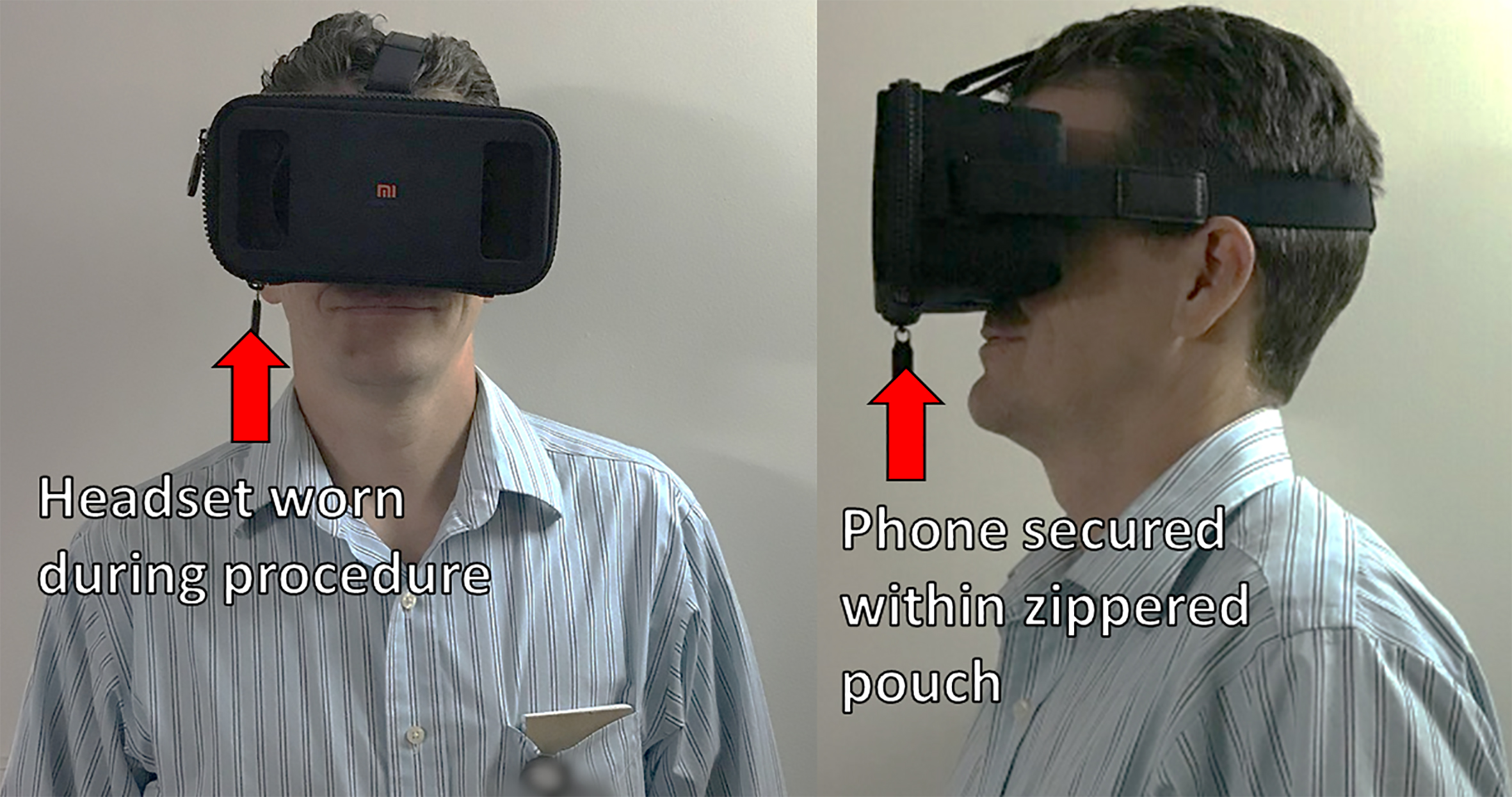
Procedural pain was assessed during injections using the Face, Legs,
Activity, Cry, Consolability scale (FLACC), a behavioral observational pain assessment
tool shown to be reliable for evaluating procedural pain in children [21]. The scale scores behavior from 0 to 2 in five categories –
face, leg, activity, cry, and consolability (maximum total FLACC score
Results
A total of 14 patients utilized the VR headset. Their results are detailed in
Table 1. Of these, 9 caregivers felt that the VR
experience was positive and wanted to use it again. FLACC scores for these patients ranged
from 1–8 with a median (IQR) of 2.5 (1–5.5). Two out of 14 caregivers had a neutral
impression of the VR experience, with FLACC scores of 1 and 10 respectively (median
Discussion
Previous studies have addressed the use of VR therapy in pediatric patients for acute and procedural pain [8]. A recently published randomized controlled trial using VR for pediatric patients undergoing general phlebotomy showed significant reduction in pain and anxiety when comparing VR to standard of care treatment [9]. Patients with higher levels of pre-procedural anxiety benefited more from VR therapy. Additionally, feedback on VR therapy from patients and caregivers was positive with high levels of satisfaction. Similarly, other studies have also shown efficacy of VR in reducing pain and anxiety in needle-based procedures such as intravenous placement and port access in pediatric cancer patients [11, 12]. Another area with strong evidence for the use of VR is with burn patients. Multiple studies have shown pain reduction with the use of VR therapy during burn wound dressing changes for pediatric and adolescent patients [13, 14, 15, 16]. An important distinction between pediatric and adult patients is that pediatric patients seem to have increased presence in the virtual environment [22, 23]. While this does not always result in differences in therapeutic effect, the effect of age on presence should be considered in studies involving pediatric patients [23]. Furthermore, there is potential that this difference can be exploited in developing VR-based pediatric therapies.
To our knowledge, this is the first study evaluating the feasibility and use of immersive VR therapy for BoNT procedure-related discomfort. First, the findings suggest that most patients and caregivers may find VR therapy positive and beneficial, given the positive impression of 9 out of 14 caregivers. Secondly, VR therapy during BoNT procedures is feasible and tolerated since all but one patient completed the therapy. Finally, the trend in FLACC scores (median) correlated with positive (2.5), neutral (5.5), and negative experiences (9.5), suggests that there are objectively identifiable benefits to VR therapy; however, some patients benefit more than others. Those with positive and neutral experiences tended to be older than those with negative experiences, while GMFCS scores were similar across groups (Table 1).
These conclusions are limited by sample size, variance, lack of control group during the period reviewed, and lack of pre-procedural FLACC scores. Despite these limitations, the findings support the use of VR therapy as a viable option in treatment of BoNT procedure-related discomfort. Furthermore, VR allows clinicians to tailor the VR experience to the patient’s interests, although this is limited by available software. Any increase in patient enjoyment during procedures can make future procedures easier. This is important because repeat BoNT injections are often indicated for pediatric patients with chronic dystonia and/or spasticity.
Several other findings were noted during this review. Some patients had a
markedly good response to the VR intervention therefore, completely changing their visit
experience for the better according to their healthcare team and caregivers. In the past,
these patients required multiple staff and caregivers to assist with restraining them during
the procedures. However, with VR minimal assistance was required. Identifying VR experiences
that these patients would best respond to was key in facilitating this change. Additionally,
identifying those most likely to benefit from VR is important, as the findings suggest that
there is variable benefit within the population. Patients who presented to clinic with high
levels of anxiety and verbalizations of distress tended not to benefit from VR. Patients who
were consolable had sufficient cognition to verbalize their interests through interactions
with staff members. In addition, patients that were curious about VR had better experiences.
Patients
Patients and their caregivers did not report any adverse effects from VR treatment. Some complications commonly associated with VR include motion sensitivity and nausea, neither of which were reported during the study. While some VR experiences include motion-tracked ambulation and other movements with the potential for falls to occur, no such issues were noted with this review as patients were stationary during the injections.
While the results are promising, there were also challenges and areas for improvement. Initial setup for patients took about 5–10 minutes but could be reduced with additional experience and optimized equipment. Viewing experience was occasionally compromised due to difficulty in finding appropriate videos. Obstacles included poor resolution, inadequate length, out of focus imagery, inappropriate content, and lack of age rating for videos. Another challenge was aligning the patient properly for both the procedure and viewing experience. At times, the head movement required to interact with the VR environment made the procedure difficult, while at other times positioning for the procedure limited the patient’s viewing experience. Of note, during this study the VR software did not allow for re-orientation of videos based on the patient’s head orientation. This limitation likely contributed to the alignment difficulties and prevented an optimal viewing experience. Patient-related obstacles included lacrimation clouding the headset display. Finally, time had to be allotted to ensure proper sanitation of the headsets between patients.
Most of these areas can be improved upon with simple changes. For example, creating a library of pre-selected videos or interactive experiences meeting video requirements would improve the viewing experience. Additionally, VR software that allows for manual calibration of viewing orientation is readily available and would solve alignment issues. Buying VR hardware more suitable for this procedure and the pediatric population would also improve efficiency and overall experience. Benefits include faster setup time, easier cleaning, and improved patient comfort. Currently, mobile VR headsets are ubiquitous with a wide variety of products available at almost all price points, from $10 USD and upward. The only other equipment needed to complete this study was a VR compatible cell phone (gyroscope features and compatible with Google Cardboard). The total cost of these items varies considerably but can be obtained for less than $100 USD. This means finding the appropriate VR device should not be a barrier to using VR therapy in the clinical environment.
Conclusion
This study of using VR in a pediatric rehabilitation clinic found that it was helpful for treatment of BoNT injection procedure-related discomfort in a majority of patients, suggesting the potential of immersive VR as an alternate treatment option. No complications were reported during the use of VR. Most of the challenges encountered while implementing VR in the clinic setting can be easily overcome, primarily with software changes. Finally, patient demographics and cognition were identified as important variables in selecting which patients would most likely benefit from VR therapy. As this study is limited in scope, randomized clinical trials comparing VR to standard care during BoNT injections are warranted. Future studies may consider implementing the lessons learned from this study.
Footnotes
Acknowledgments
We would like to thank the Loma Linda University Health’s Department of Physical Medicine and Rehabilitation.
Conflict of interest
The authors have no conflict of interest to report.