




Abstract

The terms “Natural Antioxidants” are commonly used to indicate natural molecules present in fruits and vegetables able to exert some beneficial effects for human health, by maintaining a good well-being and preventing the most diffuse chronic diseases. Several studies have in fact shown that the consumption of foods rich in these substances is essential to ensure a good health and protect against many human pathologies, such as diabetes, metabolic syndrome, cardiovascular diseases and some types of cancer [1–7]. Thanks to several health promotion programs launched all over the world, such as “the 5 a day for Better Health Program” in USA or the “Mediterranean Pyramid” in Europe, also consumers have become increasingly aware of the importance of a correct and balanced diet for their health and they have started to consider foods as their medicine [8].
From a scientific point of view, the first definition of antioxidants dates back in the early 1980s, when Halliwell and Gutteridge proposed the broad explanation of an antioxidant as “any substance that, when present at concentrations compared with those of an oxidizable substrate, significantly delays or prevents oxidation of that substrate” [9]. Afterwards, the antioxidants were defined by a more general perspective as “all those compounds that protect biological systems against the harmful effects of excessive generation of oxidants,” and this description is currently the most widely used [10]. This last definition is strictly correlated to the more modern concept of “bioactive compounds”: even if there is still not an unique explanation, we can define them as any type of molecules found in small amounts in plant foods that may promote a good health, even if they are not essential for life; they have been studied especially for the prevention of metabolic, cardiovascular and neurodegenerative diseases, as well as in some type of cancer [11–23].
Over the last 50 years, the scientific research in this field has dramatically increased, as demonstrated by the number of papers published each year on PubMed (Fig. 1) and the concept of antioxidants has evolved over the years.
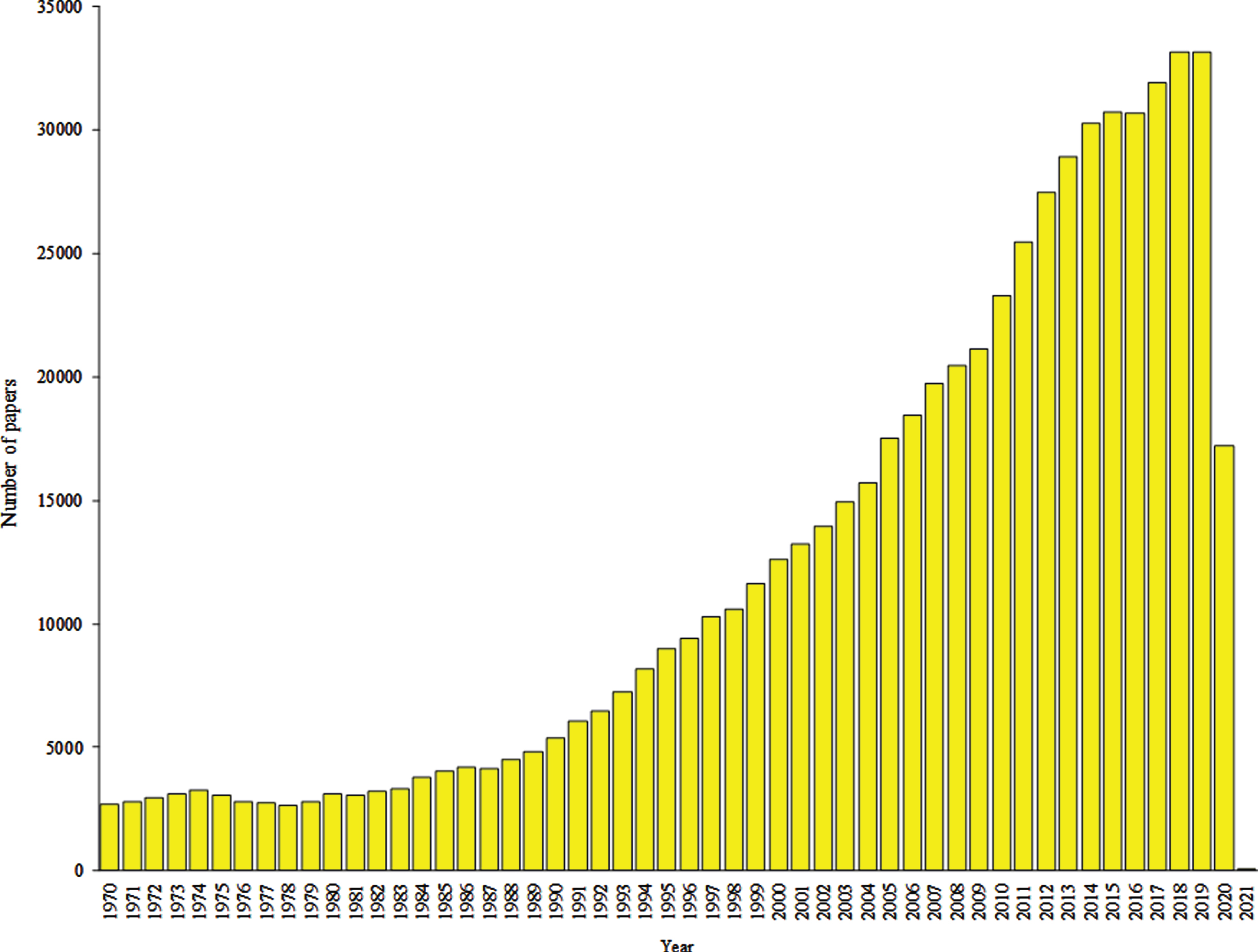
Number of papers present in PubMed, published from 1970 to 2020 and focused on antioxidants.
Despite this, can we say with total certainty that a very high consumption of foods rich in antioxidants keeps us healthy? In other words, are we healthier if we eat more and more antioxidants?
First of all, we should keep in mind that in the last decade many studies have been performed in cell cultures in order to discover mechanistic effects: if this is an excellent way “from the research point of view” to thoroughly investigate the molecular mechanisms involved in the biological effects exerted by antioxidants, “from a nutritional point of view” it is not so good. Indeed, in these cases, it is very difficult to translate the in vitro evidence into in vivo outcomes, considering that: (i) the bioavailability of dietary antioxidants is in general rather low and the metabolites that reach the target tissues are structurally and chemically different from the original ones, (ii) cell cultures with high levels of oxidative stress usually adapt and modify their properties or even mutate, as embryonic stem cells do, so it is hard to compare these cells with those in vivo, (iii) the doses that are used in cell cultures are scarcely reached in in vivo models, including humans, (iv) many antioxidants are not stable in cell culture media and can be decomposed into pro-oxidant molecules, and (v) the endocrine connections, the antibiotic presence and the lipid composition, as well as the rates of oxygen and nutrient supply, are very different between in vitro and in vivo models [8, 25]. Besides this, some concerns exist also for in vivo studies, because animals usually used in laboratory are more sensitive to dietary intervention than humans and this can easily generate misleading data; in addition, the predictive power of these models in some pathological conditions, such as stroke, seems to be zero [26, 27]. Therefore, we should be very cautious when we use culture cells or animal models to predict and even claim the preventive and/or the therapeutic effects of some dietary antioxidants against the onset of the most common human diseases.
Another critical point is that studies that have demonstrated the inefficacy of dietary antioxidants consumption in preventing/treating human disease or in slowing the aging process are accumulating [28–30]. For example, β-carotene, vitamin A, vitamin C, vitamin E and selenium have shown no significant and beneficial effects on the prevention of mortality in adults [31], on the risk to develop diabetes [32], on the treatment of patients affects by different types of cancer [333–36], cardiovascular pathologies [36–39], and dementia, Alzheimer’s and Parkinson disease [40, 41]. Moreover, depending on cellular redox state and concentrations (generally very high), natural antioxidants seem to act as pro-oxidants, inducing oxidative stress and increasing toxicity, as reported for epigallocatechin-3-gallate [42], ascorbic acid [43] and β-carotene [44].
Last but not least, it should be taken into consideration that humans are able to produce several antioxidants, such as for example reduced glutathione, catalases and superoxide dismutase, and, if there is not a vitamin deficiency, this antioxidant endogenous system is maybe more essential than any other antioxidants that can be assumed from foods. In other words, instead of evaluating the effects of the consumption of mega-doses of antioxidants (that seem to be ineffective in many cases), scientists should focus their attention on how these bioactive compounds are able to stimulate and increase the human adaptative and protective systems, in the same way as mild toxins do. Not surprisingly, in the last years several studies have shown that, beside the simple antioxidant capacity, different types of antioxidants and bioactive compounds, including polyphenols, terpenoids and chalcones, are able to activate the nuclear factor erythroid 2-related factor 2/antioxidant response element (Nrf2/ARE) pathway, the most important pathway that modulates the endogenous antioxidant and cytoprotective system [6, 45–48]. On one side the activation of this pathway contributes to prevent and treat many chronic diseases, on the other side its inactivation may represent a promising strategy against multi-drug resistance, enhancing the efficacy of treatment. Of note, the results of these studies reinforce once again the essentiality of consuming foods rich in bioactive compounds that act in a synergistic way to maintain a good health and prevent the most common non-communicable diseases, but certainly dampen the importance of assuming mega-doses.
In conclusion, are we sure that continuing to evaluate the mere effects of antioxidants is the right way to understand how to prevent and counteract the main common human diseases? The debate has only just begun.
Funding
The Authors have not received any financial support for this research.
Conflict of interest
The authors declare that there is no conflict of interest.
Footnotes
Acknowledgments
The authors have no acknowledgments.