




Abstract
BACKGROUND:
Although competitive integrated employment (CIE) has been established as a goal of employment policy and practice for individuals with intellectual and developmental disabilities (IDD), many still receive segregated vocational services for subminimum wage. This persistence of segregated vocational services has occurred despite substantial previous research recommendations and policy directives to encourage CIE.
OBJECTIVE:
The purpose of this systematic review was to examine whether recent research might provide further evidence of the role of segregated vocational services in contributing to or detracting from positive outcomes.
METHOD:
Our review searched peer-reviewed literature from seven electronic databases and screened 589 peer-reviewed articles based on inclusion criteria established following PRISMA guidelines— resulting in a final sample of five studies. In the second phase of our analysis, we provide a comparison of segregated and integrated vocational services in terms of individual outcomes.
RESULTS:
Our findings provide further evidence against the use of segregated vocational services for individuals with IDD.
CONCLUSION:
Implications of these findings for future research, policy, and practice are provided.
Keywords
Introduction
In the recent past, individuals with severe intellectual and developmental disabilities (IDD) were considered unable to successfully enter competitive integrated employment (CIE) and maintain a fulfilling work career, resulting in massive, systematic segregation in the United States and internationally (Wehman et al., 2018). This widespread segregation in the workplace led to placement of individuals with disabilities in day habilitation centers, adult activity centers, and sheltered workshops. Currently, thousands in sheltered workshops still do not earn even a federal minimum wage (Department of Labor, 2020; Grossi et al., 2020). Persons with severe IDD are the only vulnerable class of people in the United States where it is legal to pay subminimum wage due to the ironically-titled Fair Labor Standards Act. More than ever, those of us who are parents, professionals, and persons of all disabilities must ask: Why does segregation continue to happen? Why is segregation from others without disabilities seen as an acceptable human service practice? As we live in a period where we can see the power of activism and public outrage to spark change, it seems only too timely and appropriate to revisit these questions.
However, we must also recognize that this is not a recent challenge. Many persons with severe IDD were emancipated from state institution facilities three decades ago, begging the question of how we ended up in the current situation of so many individuals being shifted into unproductive institutional day program settings? Recent estimates project funding for day habilitation services at $5.62 billion from Medicaid Home and Community-Based Service waivers alone (Friedman, 2016). Furthermore, if significant numbers of persons with severe disabilities have shown that they can work successfully in CIE (Wehman et al., 2014), why do our federal and state governments, professionals, and families tolerate separate and unequal adult placements? Research beginning in the 1970 s demonstrated proof of concept for integrated vocational service alternatives organized under the central theme of first placing individuals in community-integrated workplaces and then training needed supports and skills (Wehman et al., 2018). More recently, subsequent research has provided further evidence demonstrating the efficacy of supported employment, customized employment, Project SEARCH with Autism Spectrum Disorder (ASD) supports, and other vocational rehabilitation (VR) service interventions at promoting CIE for individuals with IDD (Leahy et al., 2018; Schall et al., 2020; Wehman et al., 2019).
In policy, the Workforce Innovation and Opportunity Act (WIOA; 2014) emphasized CIE as the preferred outcome for service recipients and the primary purpose of VR funding, and additionally mandated the use of 15% of state VR funding to provide school-age youth with disabilities an effective pathway to CIE before graduation. Additionally, the Centers for Medicare & Medicaid Services presented new rules in 2014 regarding the use of Home and Community-Based Services (HCBS) waivers that requires that HCBS funded services facilitate access and integration into the community and promote greater personal autonomy (HCBS Advocacy Coalition, 2015). Title I of the Americans with Disabilities Act (1990) also emphasizes the rights of people with disabilities to integrated services, further strengthened by the Olmstead Decision and Department of Justice actions to enforce requirements by closing segregated work settings in several states (e.g., Rhode Island, Oregon) and support their transition to competitive employment (Department of Justice, 2014; Lane v. Brown Data Report, 2017; Shogren et al., 2020). While these systems change efforts in states are still ongoing, initial reports show promise in the potential to dramatically increase the engagement of individuals with IDD from segregation to CIE (Oregon Department of Human Services, 2018; Shogren et al., 2020). Thus, there is currently a confluence of effort in research, policy, and practice toward expanding CIE as a directive of policy and practice for individuals with IDD (Wehman et al., 2018). Although, even more fundamentally, individuals with IDD report a preference for CIE over sheltered workshops as their own desired outcome (Migliore et al., 2007). However, despite this policy commitment and research support, recent rates of individually integrated paid employment for adults with IDD hover at or below 10% (Hiersteiner et al., 2016).
Previous critical reviews of the literature have critically examined the research specific to this issue (e.g., Certo & Luecking, 2008; Mank, 1994; Rusch & Braddock, 2004; Wehman & Bricout, 1999). Each of these has found minimal support for segregated services despite their continued use and outlined both a rationale and policy steps needed to rectify this glaring shortcoming in services for individuals with IDD. However, given the continued segregation of individuals, it is clear that these perspectives alone have not been sufficient to adequately end these practices. Furthermore, there remain voices that argue for workshops as a viable choice for individuals with IDD (Weikle, 2008). With this persistence of segregated vocational options and subminimum wage offerings, a new and thoroughly comprehensive assessment of the research evidence is warranted. Therefore, the purpose of this critical review is to systematically and comprehensively investigate the research evidence supporting or contraindicating segregated vocational service delivery as a pathway to positive employment outcomes (i.e., wages, benefits, health, quality of life, personal independence, and as a pathway to competitive integrated employment), and then to compare it with research evidence supporting integrated services at achieving the same outcomes. Although previous reviews of the research literature have provided no meaningful evidence supporting segregated services and have instead shown a multiplicity of benefits for integrated services promoting CIE (e.g., Certo & Leucking, 2008; Cimera, 2000; Taylor et al., 2021), we felt it important to conduct a clear and transparent literature review to summarize what the research shows us about this important element of policy and practice impacting the lives of individuals with IDD. Based on this central purpose, two research questions were formulated to guide the review process:
What is the evidence or lack thereof for segregated vocational service options at achieving positive employment outcomes? How does the evidence for segregated vocational options compare with evidence for community-integrated vocational services leading to individual outcomes (i.e., wages, benefits, health, quality of life, personal independence, and as a pathway to CIE)
In the following section, we describe our method using a two-phase process using a systematic review approach (Shamseer et al., 2015) to comprehensively assess the level of evidence supporting or contraindicating segregated vocational services. We then present findings from this systematic review of the literature and critically compare those results with outcome research investigating integrated alternatives. Finally, we will present new ideas for what is needed in research, policy, advocacy, and practice to accomplish the goal of providing high-quality CIE services and outcomes for all individuals with IDD.
Method
Given the sequential nature of the two research questions, the review process was conducted in two distinct phases. In the first phase, a systematic review process following PRISMA guidelines (Shamseer et al., 2015) was conducted to comprehensively determine the extent of empirical literature indicating the efficacy of segregated models at achieving CIE and related preferred employment outcomes. In the second phase, studies included in the first phase of the review were compared with existing research demonstrating evidence for integrated vocational service models.
Phase 1 (research question 1)
During the first phase of the review, two main search strategies were conducted to assemble a systematic, comprehensive, and nonbiased sample of studies from the published research literature. Initially, a sample set of studies were identified through computer searches of Academic Search Complete, CINAHL, Education Research Complete, ERIC, PsycNET, Psychology, and Behavioral Sciences Collection, PubMed, Social Services Abstracts, Social Work Abstracts, and SocINDEX, using search terms summarized in Table 1. Second, all study citations used in the reference lists of each study included in the final review were themselves reviewed and considered for identification in the sample based on inclusion and exclusion criteria. Based on the work of several prominent critical reviews and publications on the topic in the late 1990 s and early 2000 s (e.g., Certo & Luecking, 2008; Mank, 1994; Rusch & Braddock, 2004; Wehman & Bricout, 1999), search criteria was limited to research published in or after the year 2000 to ensure that all studies not included in these previous works were considered.
Search terms
Search terms
Articles eligible for inclusion in the review consisted of: a) empirical studies (e.g., both quantitative and qualitative); b) based in the United States; c) participants included youth and adults ages 14 or older; d) examined segregated vocational service delivery as an intervention; and e) included some measure of improved work outcome (i.e., CIE, retention, wages, benefit hours, improved health, improved independence). For our study, segregated vocational service delivery models were operationalized to include sheltered workshops, enclave, pre-employment training, adult day rehabilitation (or “day hab”), work activity centers, and facility-based work. No restrictions were made to included studies with relation to research design or methodology as long as studies included intervention and outcome measures related to the research question.
Exclusion criteria
Studies that were conducted outside of the United States were excluded from the review. While this limited several compelling international studies related to the experience of individuals with IDD receiving segregated services, these studies were excluded to assemble a sample that consistently related to funding mechanisms, service models, national legislation, and economic factors unique to the United States. Similarly, studies that examined the experiences and employment outcomes of students segregated from their peers in K-12 classrooms or non-community integrated special education transition experiences were excluded from this review. Although the researchers believe it is likely that the trajectory of individuals and families toward inclusive or segregated services is shaped by earlier experiences, those inquiries are beyond the scope of the current review.
Procedure
After compiling studies from all search databases, 589 studies were uploaded to Zotero, a reference management software, and 305 duplicates were removed. First, initial screening and coding using article titles and abstracts were conducted using inclusion and exclusion criteria. At this stage, studies were included liberally to ensure a comprehensive sample of studies was included for subsequent review processes. Next, the full-text of 24 studies were reviewed once more to determine final inclusion using stated criteria. One additional study located from archival review of reference lists was added to the final sample. Both the title and abstract screening and full-text review processes were conducted by the first author and verified for accuracy and bias with an audit check by a research assistant using a sample of 30% of studies from each of these stages. A research assistant repeated both stages of the process with this audit sub-sample (n = 95). Inter-observer agreement (IOA) was calculated by dividing total agreements by total screened and was 83.2% for title and abstract screening. IOA was conducted again at the full-text phase, resulting in 100% agreement. Discrepancies at both stages were discussed between team members and determined by consensus to ensure inclusion of all relevant literature. Figure 1 shows the systematic process by which studies sampled in the initial selection process were reviewed, resulting in the final sample of five studies included in this literature review.
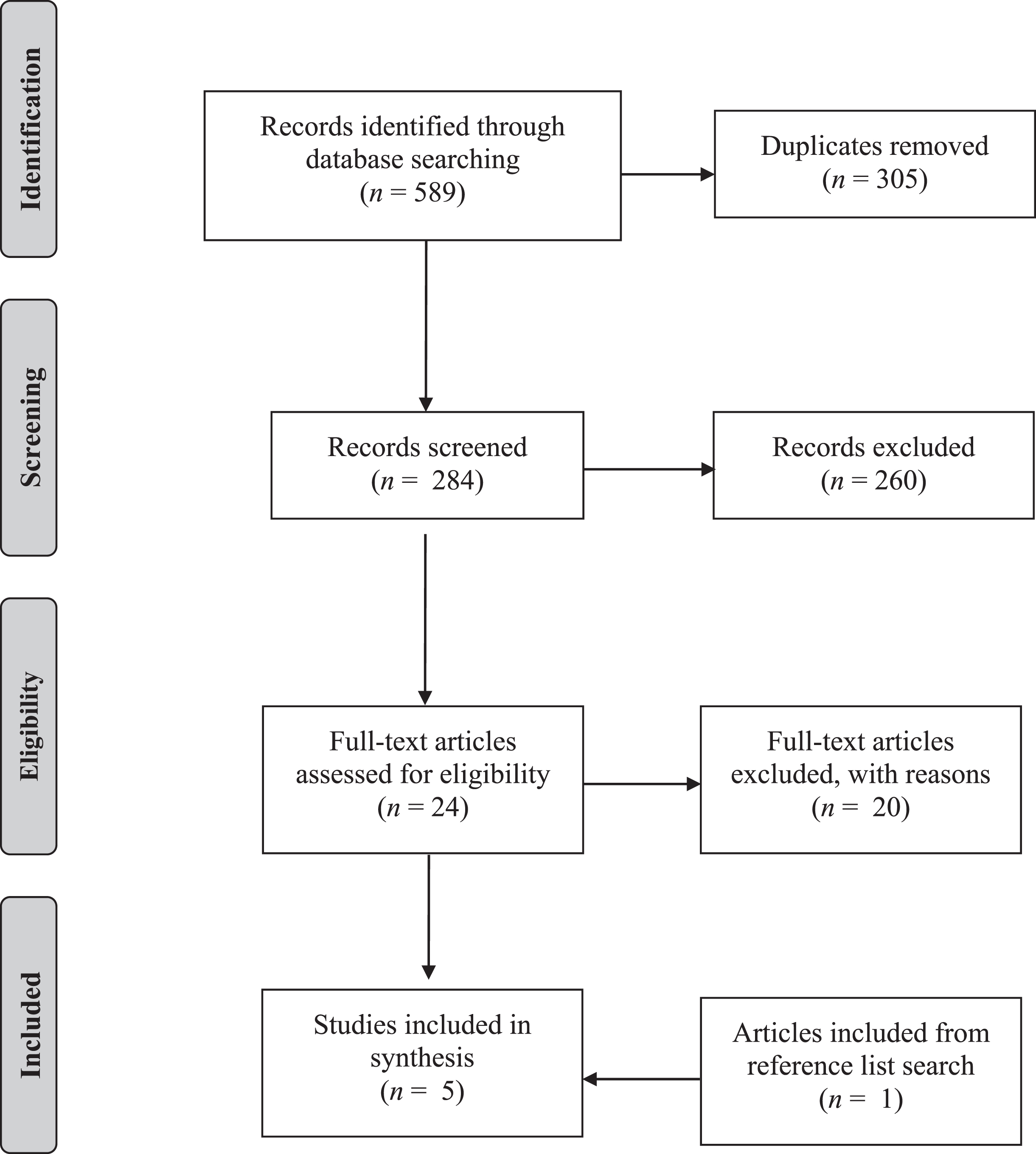
Screening and review process.
Research evidence supporting the use of integrated vocational service delivery models in promoting preferred employment outcomes for individuals with varying support needs is well established (e.g., Bond et al., 2016; Leahy et al., 2014; Wehman et al., 2014). Given this preponderance of research endorsing integrated models, more specific targeted searches of the research were conducted to answer the second research question and provide a comparative sample of research to align with literature from the first research question (indicating the level of evidence for segregated models).
Results
This systematic review of the research literature resulted in five studies that met the inclusion criteria specified to answer the first research question related to the indication or contra-indication of segregated vocational service models as a means of promoting positive employment outcomes for individuals with IDD. These identified studies were then compared with a purposeful sample of research studies demonstrating the evidence supported integrated vocational service models in achieving various employment outcomes to answer the second research question. Overall, this review found no evidence in support of segregation as a method of achieving any meaningful preferred employment outcome— not in CIE, not in wages, not in hours, not in cost, not in quality of life, not in achieving greater independence. Comparatively, integrated vocational service models described by studies led to better employment outcomes in terms of job placement, stability and retention, benefits, independence, and several markers of individual health.
Lack of evidence for segregated vocational service delivery options (RQ1)
Across all included studies, participation in segregated vocational services (as a preparatory practice) did not result in better employment outcomes for individuals with IDD. While two studies found no significant differences between groups (prior segregation vs integration) concerning the likelihood of becoming engaged in employment as broadly defined by these studies (not exclusively CIE), not having previous experience in a preparatory workshop was associated with higher earnings and lower service costs for individuals with ASD and ID, and more hours worked per week for individuals with ID (Cimera, 2011a; Cimera et al., 2012). Furthermore, Blanck et al. (2003) found that participants of segregated vocational services were more likely to regress their career prospects (i.e., type of job, earnings) over time. In several states in their sample, increases in challenging behavior and severity of disability measures were noted in those engaged in segregated vocational services (Blanck et al., 2003). Not only was participation in segregated services linked to these poorer outcomes, these studies also revealed differential impact on quality and life and independence of individuals with IDD (Blick et al., 2016; Inge et al., 2009). While no statistical difference in self-reported satisfaction was observed between individuals spending their day in competitive employment services, sheltered workshops, and adult day care programs, individuals in competitive employment services reported higher quality of life measures regarding control of financial decision-making and more integrated community participation in non-work activities (restaurants, shopping, etc.) compared to other groups (Blick et al., 2016). Although the findings of several included studies in our review show that these segregated vocational services are detrimental to the career advancement of individuals with IDD, there is also evidence that efforts to reform these service providers have been ineffective at changing outcomes for individuals. Inge et al. (2009) found that although most community rehabilitation programs offer integrated service delivery models, a majority of clients still receive segregated services, of which 75% earned less than the federal minimum wage. Perhaps even more troubling was the finding that 89% of community rehabilitation program staff believed facility-based work served as a necessary pre-requisite to CIE for individuals with a prior history of having difficulty securing or maintaining employment— a notion contradicted by the research evidence (Blanck et al., 2003; Christensen & Richardson, 2017).
Overall, this systematic review of the research literature revealed no evidence supporting segregated vocational services for advancing any positive outcome for individuals with IDD. However, one study did reveal that misunderstanding among service providers about research-based practice may be at least partially responsible for persistent use of segregation in the face of the evidence (Inge et al., 2009). It should be noted that one study found similar levels of ‘work’ satisfaction between segregated and integrated employees; however, it was unclear from the research whether these segregated individuals had experienced alternative options to inform this evaluation. Table 2 summarizes each of the studies included in the first phase of this review, including participant information, design and method, intervention components, outcome, and other findings. In the following section, we will compare evidence retrieved from these studies to fully compare integrated and segregated service options as interventions leading to various employment and secondary health outcomes.
Findings from studies evaluating segregated vocational services
Findings from studies evaluating segregated vocational services
Although systematic review of the research literature reveals a comprehensive lack of evidence or anecdotal support for segregated vocational models, the second research question of this study regarding how it compares to that of integrated models remains germane. Unsurprisingly, our review of the literature demonstrated both an overall recommendation of integrated vocational services as a whole and more specifically at achieving a myriad of outcomes with work and life measures. These studies often examined efficacy for specific integrated models such as supported and customized employment (Cimera, 2011a; Wehman et al., 2014), which themselves have been shown effective means of promoting CIE for individuals with IDD (Wehman et al., 2018) and several other populations (Bond et al., 2016). Other research investigated long-term secondary life and health benefits to integrated employment (e.g., Blick et al., 2016; Dean et al., 2018). Finally, several studies directly compared the outcomes of individuals served in both integrated and segregated vocational service models. This section briefly summarizes the research evidence supporting each service model at promoting improved outcomes in these specific areas for individuals with IDD. Table 3 shows a summary of key outcome indicators resulting from integrated and segregated service models and a brief annotation of research findings from relevant studies.
Differential effects of vocational services
Differential effects of vocational services
Before exploring the evidence for more specific outcomes, it is important to first highlight that the research shows only integrated services offer a consistent pathway to achieving CIE. Individuals served through segregated vocational services by and large do not transition to CIE-oriented services or outcomes, rejecting the argument that sheltered workshops and other segregated vocational services could serve as preparatory ‘stepping stones’ for youth and adults (Blanck et al., 2003). Furthermore, in a study of Project SEARCH, a research-based community integrated internship program for transition-aged youth with IDD, Christensen & Richardson (2017) found the model effective even for those who had been placed in segregated previously and never achieved CIE previously. However, Christensen & Richardson (2017) also reported that the longer people had been placed in segregated settings, the less likely they were to respond positively to the intervention. Thus, not only do segregated services such as sheltered workshops and adult day habilitation not serve as pathways to CIE, sustained use of those services can decrease the efficacy of later research-based interventions.
Economic impact
Across all studies using multiple measures of wages earned by employees, earnings were significantly higher for individuals receiving integrated services. Friedman & Rizzolo (2020), found supported community employment (i.e., integrated services) a highly significant predictor of fair wages among people with disabilities who receive employment and community services, also reporting that roughly one in four participants receiving segregated services did not receive at least minimum wage. These wage disparities were consistent across the research literature, with individuals with IDD engaged in integrated services receiving higher wages per month (Cimera, 2011b), higher overall wages and wage rates (Thompson et al., 1992), and sharp increases after transitioning from segregated to integrated service models (Blanck et al., 2002; Murphy et al., 2012).
3.2.2.1 Cost-benefit. Related to wages, several studies examined specific measures of the cost-benefit of various intervention services, which were calculated by dividing the cost of vocational service provision by some measure of benefit to the individual or to the amount of support services required. In assessments of cost-effectiveness for clients, several studies found that integrated services (i.e., supported employment) were more effective in terms of service cost per earnings (Cimera, 2000, 2011b; Kregel et al., 2000). In summary, this research indicates that segregation costs more and provides much less.
Health
In addition to improved employment outcomes in terms of CIE, wages, cost-benefit, integrated vocational services have shown some tenuous evidence for several additional benefits in areas of public health. In a recent literature review examining health and quality of life outcome of employment for individuals with ID, Dean et al., (2018) found that although much of the research was inconclusive, several studies pointed to a positive association between integration in employment and several measures of health as varied as self-reports of overall health to weight loss. Dean et al. (2018) are quick to point out that much more research is needed in the area to inform the relationship between health and employment for people with ID. However, several studies found positive associations between work and another specific health outcome measure— quality of life.
3.2.3.1 Quality of life. Quality of life is a contextual and subjective health construct that spans not only physical health but also mental and social health. Previous research examining how the quality of life of individuals with IDD is impacted by vocational type and employment setting found higher quality of life for individuals in integrated workplaces than those in segregated settings (Blick et al., 2016). Much of the research to date has been conducted outside of the United States, but studies in the UK, Australia, and New Zealand (Beyer et al., 2009; Eggleton et al., 1999; Kober & Eggleton, 2005) found similar support for integrated vocational services and CIE as a means to enhance quality of life for individuals with intellectual disability. In fact, not only did Eggleton et al. (1999) find that segregated ‘employees’ reported significantly lower than their integrated peers, the authors found no difference in quality of life between those segregated and those remaining unengaged at home. Furthermore, not only does successful CIE promote higher quality of life, participation in integrated vocational service models themselves have been shown to lead to better outcomes. Leucking et al. (2006) conducted a student with disabilities (including those with IDD) and found that those who participated in the customized employment process reported significantly higher quality of life across 12 of the 13 domain indicators.
3.2.3.2 Mental health. Few studies have offered conclusive evidence regarding the association between integrated employment and mental health outcomes, but a few studies do show positive links. Griffin et al. (1996) found that supported employees had significantly higher levels of self-esteem and job satisfaction compared to sheltered employees in a sample of individuals with mild ID, and also found a significant relationship between self-esteem and job satisfaction for both groups. In a study in Ireland, McGlinchey et al. (2013) found that individuals with ID receiving segregated services were significantly more likely to be diagnosed with depression. Though this research has not been replicated in the United States, it provides important insight into the effect of segregation on the mental well-being of people with disabilities.
Self-determination
Finally, self-determination has become a widely researched construct shown to lead to many positive life outcomes for individuals with IDD (Shogren et al., 2015). In terms of employment, this relationship appears to be bidirectional. In other words, participation in integrated workplaces has been shown to increase self-determination (Wehmeyer & Bolding, 2001) and in turn, higher levels of self-determination are known to predict improved employment outcomes among many other positive life domains (Shogren et al., 2015).
Wehmeyer and Bolding (2001) found that individuals who transitioned from a segregated work or living setting to a more integrated model experienced an increase in their self-determination, autonomy, and choice making. Conversely, individuals remaining in segregated vocational service settings report lower levels of control over their lives and choices (Wehmeyer, 1994).
Discussion
The purpose of this review of the literature was to investigate whether there was any evidence supporting the use of segregated vocational services at achieving positive employment outcomes and how those findings compared to those related to integrated services. To address this purpose, we conducted a thorough and systematic review of the research literature employing both database searches as well as ancestral and archival search techniques. This systematic review of the literature found little evidence of an association between segregated vocational services and any meaningful positive outcomes in terms of CIE. In fact, not only did segregated vocational services not serve as a useful training process in furthering the careers of individuals with IDD, there was evidence that the effect was detrimental— reducing the potential for future positive CIE outcomes (e.g., Blanck et al., 2003; Cimera, 2011a; Cimera et al., 2012). This key finding aligns with previous research showing that, in many cases, segregated individuals with IDD spend little of the day in purposeful and age-inappropriate activities (Reid et al., 2001). Comparatively, integrated vocational service models that directly promote CIE such as supported and customized employment were found to lead to substantially improved outcomes across many key domains (i.e., economic, quality of life, mental health).
Our systematic review shows plainly that segregated vocational services do not serve as a pathway to improved employment outcomes for individuals with IDD. Our findings lend further support to previous calls from the field to decrease and end the engagement of transition-age youth in segregated vocational services (e.g., Mank, 1994; Rusch & Braddock, 2004) as well as the policy commitment to CIE evidenced by WIOA (2014) and Employment First policy and legislation across a majority of states. Not only should this commitment to CIE as a preferred outcome be maintained, our review also shows that further effort is merited to continue to shift disability employment policy and practice away from segregated models. In the following section, we discuss the more specific implications of these findings for future research, policy, and practice after first noting some key limitations of the included studies.
Limitations
The main limitation of the review itself is the scarcity of more recent empirical research investigating the association between segregated vocational services and outcomes for individuals. Although likely that researchers have largely dismissed this topic as an area of inquiry due to a perception that older research has ‘proven’ the ineffectiveness of these segregated vocational services (instead focusing on more effective interventions), the issue remains that little high-quality research exists specific to these programs and services. The studies included in this review provide important insight into the experiences of individuals with IDD but do not provide the strength of evidence that more rigorous experimental designs would provide. While the evidence that does exist is fairly consistent, our findings should nevertheless be interpreted with some caution.
Another key limitation of our review central to the second research question comparing segregated and integrated vocational service models was the use of a purposeful, rather than systematic review of the literature. We feel that the research evidence on effective practices for vocational rehabilitation is well-established enough (e.g., Leahy et al., 2014; 2018) for the secondary purpose of this review in comparing outcomes. Studies not included in this purposeful sampling may provide additional insight in comparing these service models.
Finally, since our review focused on the effect of service models on individuals with IDD, it is likely that literature related to systems change within states and localities shifting from segregated to integrated service models was not included in this review. While this research was outside the scope of our review, future research should consider how these systems change efforts affect individuals that have been previously served under segregated models or would otherwise.
Implications for research
The findings of our review resulted in several key implications for future research. First, as more states adopt Employment First policy and expand implementation of WIOA (2014), there is an immediate need for research investigating these systems change efforts to shift from more segregated to integrated vocational models both in terms of organizational change and the impact on individuals with IDD. Initial research in this area shows that individuals with IDD previously served in segregated models can be successful in CIE in states undergoing court-appointed systems-change efforts (e.g., Shogren et al., 2020). These findings, along with the substantial effort of states to address CIE outcomes for individuals with IDD through partnerships to promote Employment First (e.g., Butterworth et al., 2017; Carter et al., 2017) underscore the need for additional research to investigate the extent to which these partnerships and policies committed to CIE are effective at accomplishing their goals for individuals with IDD.
Additionally, more research is needed to investigate approaches and supports to address barriers and concerns expressed by job seekers and family members about supported employment that continue to lead some toward segregated options (e.g., Carter et al., 2018; Migliore et al., 2008). Building on the findings of these studies related to factors that may cause individuals and families to select segregated service options, further investigation is needed to guide training or planning approaches that may be effective in providing information to individuals and families about the benefits of CIE. Given the importance of family expectations in predicting positive postsecondary outcomes (e.g., Mazzotti et al., 2021), a focus on collaboration with families is particularly deserving of further study.
To fully realize the employment potential of individuals with IDD, further research on the efficacy of vocational services at achieving CIE outcomes is needed. Supported and customized employment are widely accepted as evidence-based vocational practice for individuals with IDD (Leahy et al., 2018). However, more rigorous research on the efficacy of supported and customized employment using experimental designs with diverse populations of individuals with IDD is needed to further establish its efficacy in the field.
Finally, our review discovered little discussion of the experiences of individuals with IDD from historically marginalized racial, ethnic, cultural, and linguistic groups relative to their experiences in employment. This represents a critical area of needed research. Employment and other adult outcomes for many of these groups are especially poor, but to date, limited research has specifically focused on how to ameliorate systemic barriers and biases within the service system which may explain these outcome disparities (Thoma et al., 2015; Trainor et al., 2020). Further investigation into both culturally relevant approaches to employment service delivery as well as more systematic analysis of equity and disproportionality within those service systems themselves are needed in this area.
Implications for policy
The implications of our findings for future policy are fairly straightforward. Our review contributes further support for recent policies promoting the goal of CIE as the preferred outcome for all individuals. However, the inverse of this statement also merits discussion in its own right— the findings of our review show that not only do segregated vocational services not provide a comparative or even supplementary role in promoting CIE, there is also evidence that these services may be detrimental to individuals’ career potential. Our findings contribute further to substantial research over the last several decades showing the extraordinary financial and human cost of segregated vocational services for adults with IDD. Thus, as agencies continue to interpret and implement mandates from WIOA (2014) and implications of Employment First policy, our findings suggest further commitment to integrated vocational services leading to CIE by strengthening language banning disability employment funds to be used in segregated settings. Furthermore, technical assistance will be needed to more broadly implement these changes. Initial findings on these efforts (e.g., Shogren et al., 2020) have shown that they can be highly effective at achieving meaningful change in real outcomes for individuals with IDD.
Since its passage, WIOA (2014) has received considerable attention in peer-reviewed literature and mainstream discussions regarding key service mandates such as the provision of pre-employment transition services (Pre-ETS) to transition-age youth, an approach designed to foster collaboration between VR and K-12 public education. Yet, to date, there is considerably less information available related to Section 511 of WIOA, which limits the use of subminimum wage. Specifically, Section 511 stipulation prohibits employers previously using 14(c) subminimum wage certificates to continue from paying wages below Federal regulated minimum wage to employees with disabilities. So while subminimum wage certificates have been limited they are still very much in use. According to the Department of Labor (2020), 762 service organizations have currently active 14(c) waivers to pay subminimum wage to 9,370 individuals. Equally troubling, another 486 organizations currently have applications pending. This single practice continues to segregate significant numbers of people with disabilities from being included in their communities.
Implications for practice
For practitioners, the implications of our review are quite clear— segregated vocational services are not an effective means of achieving positive employment outcomes for individuals with IDD. Although this finding in itself is fairly straightforward, the implications for various stakeholders are more nuanced. For community rehabilitation providers, this review provides further evidence underscoring the need to shift toward more integrated and efficacious models of vocational service delivery such as supported and customized employment (Leahy et al., 2018). For K-12, educational, and transition personnel, our findings further support previous calls from the research (e.g., Rusch & Braddock, 2004; Test, 2004) that all students exiting high school enter CIE or postsecondary education following years of effective, early-intervention transition planning and programming aligned with CIE-related goals. This recommendation represents a substantial enough shift from current practice that these target areas should receive substantial attention in the preparation of both future rehabilitation personnel and K-12 teachers.
However, it is also important to acknowledge that this call for an end to segregated vocational services has been made several times before over the last several decades (e.g., Mank, 1994; Rusch & Braddock, 2004). However, this is reason for optimism regarding the potential to make new headway in this area. WIOA’s (2014) commitment to CIE and dedication of 15% of annual budgets to transition-age youth through Pre-ETS provides an opportunity to ensure that young adults enter the workforce with a career goal of achieving CIE. Rusch and Braddock (2004) set the policy recommendation almost two decades ago of establishing a requirement that all students exit high school into either CIE or postsecondary education. Although that goal has yet to be realized, now more than ever, the foundation is laid by the commitment of Pre-ETS funding to promote interagency partnership and the increased knowledge of best practice in VR and transition (e.g., Leahy et al., 2018; Mazzotti et al., 2021), and progress toward ending the practice of segregation in vocational service delivery is possible.
Conclusion
Despite calls for CIE as the preferred employment outcome for all, many individuals with disabilities continue to receive segregated vocational services. This review demonstrated the comprehensive lack of evidence to support this approach, and thus we revisit the call to end its practice and serve employees with disabilities in integrated and evidence-based service delivery models. However, as we add further evidence to a long history of research, policy, and advocacy opposing segregation in employment, there are reasons for optimism regarding progress in this area thanks to recent policy, legislation, and executive action to provide systems change toward CIE. Further innovation and implementation of these policies and practices targeting CIE hold great promise for the employment potential of individuals with IDD.
Footnotes
Acknowledgments
No acknowledgements reported by the authors.
Conflict of interest
No conflict of interest reported by the authors.
Disclaimer
Virginia Commonwealth University, Rehabilitation Research and Training Center (VCU-RRTC) is an equal opportunity/affirmative action institution that provides access to education and employment without regard to age, race, color, national origin, gender, religion, sexual orientation, veteran’s status, political affiliation, or disability.
Ethics statement
The systematic review of the literature did not involve individual data collection or analysis, so ethical approval was not needed.
Funding
The contents of this paper were developed with support from a grant from the National Institute on Disability, Independent Living, and Rehabilitation Research (Grant number: 90RTEM0003), a center within the Administration for Community Living (ACL), U.S. Department of Health and Human Services (HHS), and from the Vocational Rehabilitation Technical Assistance Center for Quality Employment (Grant number: H264K200003) from the U.S. Department of Education. However, the contents do not necessarily represent the policy of the U.S. Department of Education or U.S. Department of Health and Human Services, and you should not assume endorsement by the Federal government.
Informed consent
The systematic review of the literature did not involve individual data collection or analysis, so informed consent was not needed.