




Abstract
People’s demands for a higher quality of life are increasing, and furniture remains an essential part of daily life. In traditional furniture design methods, designers typically rely on their experience, leading to significant disparities between design solutions and user expectations. A comprehensive model is proposed with combination of Fuzzy KANO (FKANO) method, the Criteria Importance through Intercriteria Correlation (CRITIC) method, and the Coupling Coordination Degree (CCD) method for furniture design and evaluation, using desk design as an example. Firstly, FKANO model is applied to classify and filter user requirements, identifying crucial user needs as the basis for subsequent design. Secondly, three desk design proposals that align with user requirements are formulated. Thirdly, the CRITIC method is introduced, using the filtered user requirements to construct an evaluation system and calculate the weights of various indicators. Lastly, the CCD method is applied to select the optimal desk design from five samples, including three designed by this study and two existing on the market. This comprehensive approach contains critical stages such as requirement identification, weight determination, and solution selection, achieving comprehensive research objectives. Besides, sensitivity analysis was conducted to validate the effectiveness of this integrated model, demonstrating its ability to balance different user requirements under different weight settings. The results indicate that the proposed approach enhances the scientific rigor, systematization, and user satisfaction of the furniture design and decision-making process. It offers valuable guidance for furniture manufacturers and designers, allowing furniture products to more effectively align with market demands, thus enhancing their competitiveness.
Introduction
As society progresses and people’s pursuit of a higher quality of life continues to grow, the field of furniture design is increasingly important. As an essential type of furniture at home, the design of desks plays a crucial role in enhancing efficiency for work and study and meeting diverse user demands. H. Q. Wang [1] examined the design of university dormitory furniture, while J. H. Lv and M. Chen [2] explored the fusion of traditional and modern furniture design in the western Sichuan province of China. Within these conventional approaches to furniture design, designers often rely on their own experience and intuition to create furniture designs. These designs may be based on past successful cases or design trends but typically lack a foundation in scientific methodology and systematic approaches. Some furniture design processes may incorporate market feedback by presenting samples or prototypes to gather user feedback. However, this method typically occurs when the design is already completed or near completion, making it challenging to capture user requirements proactively. It is evident that traditional furniture design methods often lack scientific tools and methodologies for systematically identifying, analyzing, and quantifying user requirements. Consequently, there is a risk of overlooking or underestimating certain critical requirements during the design process. Therefore, it is plausible that due to the diversity and complexity of user requirements, traditional furniture design methods often result in significant disparities between design solutions and user expectations.
To address this issue, this study aims to propose a hybrid model based on Fuzzy KANO (FKANO) method, Criteria Importance through Intercriteria Correlation (CRITIC), and Coupling Coordination Degree (CCD) technique, for desk design and decision-making. This hybrid model applies FKANO method to classify and filter user requirements, accurately identifying crucial user needs. Based on the filtered user demands, we design three desk proposals that align with user expectations. Subsequently, CRITIC method is introduced, using the filtered user requirements as evaluation indicators to calculate their respective weights, ensuring a reasonable consideration of each indicator during the decision-making process. Finally, CCD technique is applied to select the optimal desk design from the five proposals, providing the best user experience and meeting diverse needs. The integration of these three models in the research provides multiple perspectives for analysis and methodologies to address the diversity, complexity, and uncertainty inherent in furniture design. The study encompasses various crucial stages, including requirement identification, criteria weight determination, and final solution selection, to achieve comprehensive research objectives. This integrated approach contributes to enhancing the scientific rigor, systematization, and user satisfaction of the design process in furniture design.
J. Lyu et al. [3] applied Kano model and Quality Function Deployment (QFD) analysis to investigate issues encountered by users of wooden office desks in open offices. I. W. Taifa and D. A. Desai [4] conducted anthropometric measurements and health surveys on engineering students in India, providing detailed dimensions for adjustable classroom furniture design, aiming to improve comfort, safety, and student attention. They proposed an integrated Kano-QFD model to identify specific user needs and experiential scenarios, optimizing wooden office desk designs for improved rationality, scientificity, and enhanced market competitiveness. This study adopts an integrated approach that combines the Fuzzy Kano model with the CRITIC method and the CCD method. This integration is unique and goes beyond the standalone application of the Kano model and QFD. It allows for a more nuanced and flexible categorization of user requirements, acknowledging that preferences can exist on a spectrum rather than in discrete categories. Unlike some previous approaches that may gather user feedback later in the design process, this research focuses on early-stage user requirement identification. The objective of this study is to effectively capture user requirements, optimize desktop design, and enhance product quality and usability. Additionally, the proposed methodology offers a systematic, efficient, and innovative approach in the field of furniture design, empowering designers to better meet diverse user needs, thereby strengthening product competitiveness and market advantage. Furthermore, the introduction of CRITIC method ensures objective weight calculation for evaluation indicators, contributing to the scientific and precise nature of decision-making. In conclusion, the proposed hybrid model brings new theoretical and practical value to the realm of desk design and decision-making. It holds significant guidance for research and practice in furniture design domain. Therefore, the primary contributions of this study include: A hybrid model with combination of FKANO-CRITIC-CCD was proposed, taking into consideration of user requirement analysis, weight calculation, and solution evaluation. This integration enhances the accuracy and reliability of research outcomes. FKANO model survey was applied to accurately capture and categorize user needs. Building on this foundation, three desk design proposals that align with user requirements were formulated, enhancing the practicality and acceptability of furniture products.
The rest of this article is organized as follows: Section 2 provides a literature review of relevant methods. Section 3 proposes a framework of the hybrid approach. Section 4 conducts case study of desk design to validates the feasibility of the proposed method. Section 5 analyzes and discusses the results. Finally, Section 6 summarizes the main conclusions of this study.
Literature review
Desk design
Desk design research is gaining attention from both academia and industry. With the increasing diversity of user demands for furniture design, researchers are dedicated to developing more intelligent, multifunctional, and personalized desks to enhance user experience and satisfaction. S. G. Yang and P. Du [5] studied the complex forming, product development, component production, and product main body forming processes of 3D printing technology in the furniture manufacturing industry. They explored the general characteristics of furniture products printed using 3D printing equipment, providing practical references for furniture manufacturing. J. L. Li and H. Han [6] studied emotional design strategies for small-sized smart furniture to enhance the practical value of design and improve user experience in small-sized smart homes. S. Q. Wang [7] proposed a method of using panel furniture cabinet modules to design and produce imitation solid wood frame cabinet furniture, allowing shape and style changes through various decorative modules to enhance furniture sustainability. J. M. Ma et al. [8] introduced a novel furniture design and manufacturing workflow, combining computer graphics, topology optimization, and advanced manufacturing technologies, achieving innovative furniture design and manufacturing. J. G. Zhu and J. Y. Niu [9] comprehensively investigated the current application status of green materials in Chinese and overseas office furniture companies, and proposed environmentally friendly material selection strategies for office desk furniture based on questionnaire surveys and literature analysis. S. Khojasteh-Khosro et al. [10] evaluated Iranian furniture manufacturers’ perceptions of lightweight panels’ applications in furniture manufacturing through questionnaire surveys and provided suggestions for further developing lightweight panels to adapt to market changes.
While the above-mentioned research has achieved certain results in the field of furniture, there are also some potential shortcomings, further highlighting the advantages of this study. Firstly, the aforementioned literature typically focuses on specific aspects of desk design or related technologies, such as 3D printing technology, emotional design strategies, material selection, and the like. While these studies contribute to solving particular issues, they may lack comprehensive methodologies to address the diversity and complexity inherent in furniture design. In contrast, this study employs a comprehensive approach capable of addressing user requirements comprehensively, from requirement identification to the determination of metric weights and subsequent solution selection, thereby offering a more comprehensive response to user needs. Secondly, the majority of the literature employs a singular method or model, such as the KANO model or QFD analysis. This singular focus may result in shortcomings in aspects like requirement identification, metric weight determination, and solution selection, making it challenging to comprehensively fulfill user requirements. The strength of this study lies in its integration of the Fuzzy KANO model, CRITIC model, and CCD model, providing more comprehensive decision support for furniture design. Moreover, some literature fails to address the handling of fuzzy requirements, despite the fact that user requirements in the real world often exhibit varying degrees of fuzziness and uncertainty. This oversight may lead to design solutions that do not accurately meet all user expectations. This study, on the other hand, introduces the Fuzzy KANO model, which enhances the ability to deal with fuzzy requirements and improves the adaptability of the design. Lastly, some research relies on subjective methods, such as expert assessments or questionnaire surveys, for metric weight determination. This approach can introduce subjectivity and uncertainty into the allocation of weights. In contrast, this study incorporates the CRITIC model, which offers an objective method for determining metric weights, thereby enhancing the scientific rigor and precision of decision-making.
Overall, in comparison to the aforementioned literature, this study’s strength lies in its comprehensive approach, capable of addressing user requirements comprehensively, handling fuzzy requirements, and providing objective metric weight allocation through the integration of the Fuzzy KANO model, CRITIC model, and CCD model. These methods make it better suited to address the diverse and complex challenges of furniture design needs, ultimately enhancing scientific rigor, comprehensiveness, and user satisfaction.
Design and evaluation methods
FKANO model is a commonly used method for analyzing product or service demands, enabling researchers and businesses to better understand the characteristics and importance of user requirements. Y. J. Qu et al. [11] proposed a method based on a multi-stakeholder sustainable value perspective to capture the requirements of intelligent manufacturing systems and conducted quantitative analysis of these requirements using an integrated FKANO model. N. Haber et al. [12] applied Kano model to QFD and presented a systematic approach for developing product-service systems, focusing on the analysis and selection of customer requirements that can effectively enhance product value. Y. X. Wu and J. X. Cheng [13] investigated a consumer demand evaluation method based on FKANO model and Fuzzy Analytic Hierarchy Process (AHP) to determine the development priorities of factors influencing the attractiveness of electric scooters. It can be observed that in the field of demand analysis, researchers applied FKANO model along with its integration with other methods, leading to diverse research endeavors. However, further systematic research and optimization are still lacking in terms of the integration of FKANO model with other methods.
In the field of engineering, CRITIC method is widely applied to product design and optimization. H. A. Lu et al. [14] established a farm machinery selection model based on an improved CRITIC-entropy weight and Grey Relational Analysis (GRA)-Technique. This model aims to address issues in the farm machinery selection process, such as insufficient decision information, subjectivity and lack of accuracy in selection results. A. Dhara et al. [15] utilized the CRITIC and TOPSIS methods to determine the most suitable ultra-light business aircraft that meets passenger efficiency and aesthetic comfort requirements. W. Y. Song et al. [16] presented the rough Best Worst Method (BWM)-CRITIC-TOPSIS approach, using it as a case study in the design of an intelligent washing machine product-service system. The method’s effectiveness and efficiency were verified. However, there has been relatively little research on the application of the CRITIC method in the furniture design field, and the incorporation of user participation in the decision-making process has not been considered.
CCD method is used to assess the degree of mutual correlation among multiple factors, playing a significant role in various research applications across different fields. It aids in evaluating the interrelationship between multiple elements, providing a scientific basis for decision-making and optimization. W. J. Zhang and Y. J. Zhang [17] proposed a quantitative evaluation method based on the entropy-TOPSIS-CCD model, conducting a comprehensive risk analysis of autonomous ship navigation from the perspectives of “human-ship-environment-management.” X. H. Chen et al. [18] improved CCD model based on game theory to assess the coordination between mineral resource development, economy, and the environment, which has practical significance for achieving high-quality economic development. X. X. Xia et al. [19] constructed a comprehensive index system for regional urbanization urban rail transit based on CCD theory, exploring the overall and pairwise coupling coordination characteristics of population, economy, spatial urbanization, and urban rail transit.
The aforementioned literature generally focuses on the application of specific methods or approaches in particular domains, such as the FKANO model, CRITIC method, or CCD method. While these studies contribute to addressing specific issues within their respective domains, they often lack comprehensive research that bridges different fields or methods. In contrast, this study integrates the FKANO model, CRITIC method, and CCD method to provide a more comprehensive methodological framework that can be flexibly applied across various decision stages, thereby better accommodating the complex and diverse range of demands. Furthermore, some of the reviewed literature overlooks the significance of involving users in the decision-making process, particularly in the fields of engineering and product design. This oversight can result in decision outcomes that do not align with actual user requirements. However, this study emphasizes the capture and integration of user demands, with the FKANO model serving as a pivotal tool to incorporate user participation as a vital component of the design and evaluation processes. This approach enhances the ability to meet user expectations effectively. Finally, certain studies tend to have a narrower focus, limiting the exploration of the applicability of their methods across diverse domains. But this research adopts a holistic approach by integrating the FKANO model, CRITIC method, and CCD method. This not only broadens the scope of method applicability but also provides a versatile framework that can be applied to various decision scenarios.
Methodology
Proposed framework
This study focuses on furniture design and evaluation, and the desk is chosen as the research object because it plays a key role in the modern office and learning environment, and its design and evaluation directly affect people’s work efficiency and health. In addition, the design and evaluation of office desks are also influenced by the needs of different user groups, such as office workers, students, remote workers, etc. Therefore, the field of desk design and evaluation has broad research and application prospects. By integrating FKANO, CRITIC, and CCD methods in a hybrid model, this study aims to gain a comprehensive understanding of user requirements, determine the weights of evaluation indicators, and select the optimal desk design schemes to enhance the quality and user satisfaction of desk products. Simultaneously, the application of this comprehensive approach offers a fresh perspective and methodology to the field of furniture design, providing valuable insights and references for future furniture product design and decision-making. Figure 1 is a technical roadmap for furniture design and evaluation. The specific steps are summarized as follows:
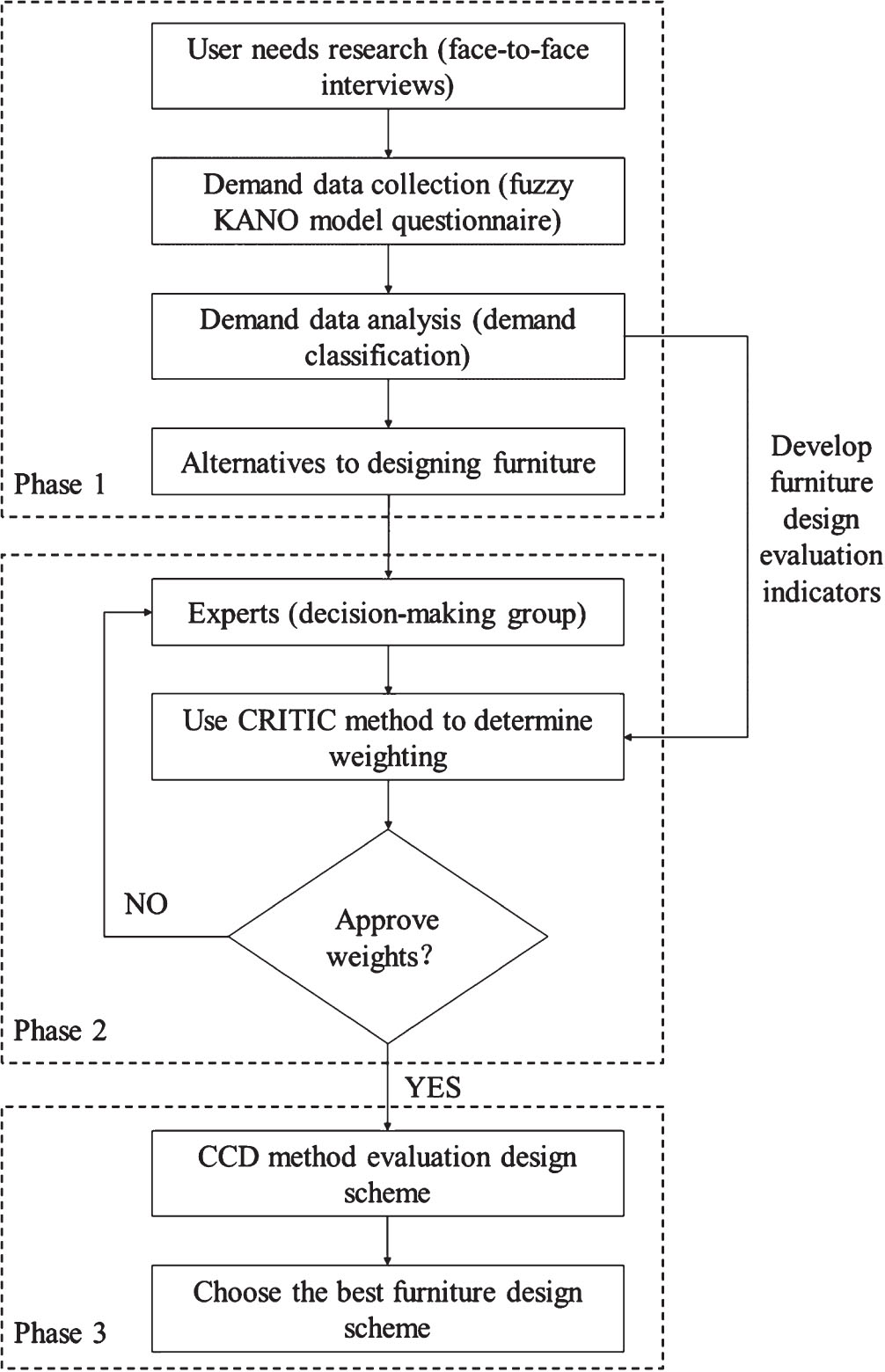
Technology road-map for furniture design and evaluation.
FKANO model combines the concepts of fuzzy logic and KANO model, enabling more flexibility and accuracy in the assessment of product features. FKANO model addresses uncertainty by introducing fuzzy set theory and fuzzy logic [20]. It allows customers to provide fuzzy evaluations of their satisfaction with product features, rather than selecting specific categories. Based on fuzzy mathematics theory, FKANO model questionnaire is designed to collect users’ satisfaction evaluations for different requirements. Respondents rate each option for a question on a scale between 0 and 1, with the sum of all scores being 1 [21]. In contrast, traditional KANO model (Fig. 2) may not handle the fuzzy evaluation of feature satisfaction effectively. However, FKANO model comprehensively considers fuzziness of feature satisfaction and incorporates it into product design and decision-making.
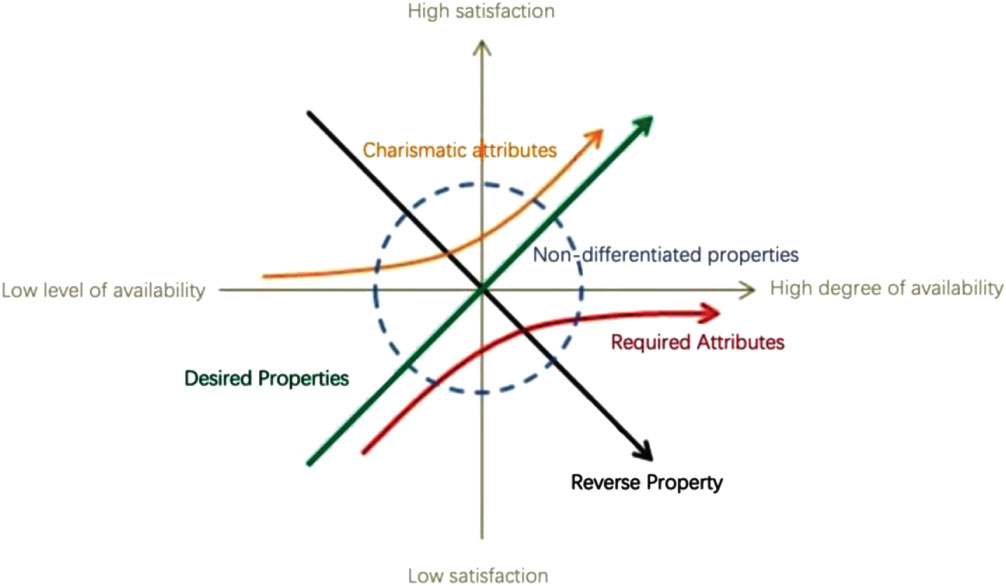
KANO model [22].
FKANO model is an extended version of KANO, aiming to analyze and understand customers’ perceptions and responses to product features more comprehensively. It helps to determine the importance and priority of product features, categorizing them into five main types: Must-be requirements (M), One-dimensional requirements (O), Attractive requirements (A), Indifferent requirements (I), and Reverse requirements (R). Each category represents different types of customer needs and satisfaction levels. The Better-Worse calculation is applied to assess user satisfaction with the proportions of the i-th type of user requirement in each category, denoted as A i , M i , O i , I i . Equation (1) computes the satisfaction coefficient S i after adding features, while Equation (2) calculates the dissatisfaction coefficient D i after removing features.
Combining FKANO model with desk design allows for better handling of the ambiguity and complexity of requirements in furniture design and decision-making processes. It offers a more flexible, accurate, and comprehensive approach to effectively identify the focal points and priorities in furniture design. This provides more comprehensive guidance for furniture design and improvement, ultimately enhancing the market competitiveness and user satisfaction of desks.
CRITIC method is an objective weighting technique aimed at addressing the issue of weight calculation among correlated indicators. In the research on desk and other furniture design and decision-making, the application of CRITIC method is particularly significant [23]. With customers’ increasingly complex and diversified demands for furniture design, designers need to consider the interrelationships among multiple evaluation indicators to ensure the accuracy and comprehensiveness of their design proposals. In CRITIC method, the determination of weights is achieved by analyzing the variability and conflict among indicators. By calculating weights based on the correlation among indicators, designers can comprehensively consider the importance of various requirements, thus avoiding the shortcomings of relying solely on subjective judgment [24]. This approach helps researchers and designers better understand the significance and mutual influences of various indicators in furniture product schemes. The specific steps are as follows:
1) Constructing the Evaluation Matrix: Let us assume there are n candidate schemes to be evaluated against m evaluation criteria.
In the equation, i ranges from 1 to n, and j ranges from 1 to m.
2) To eliminate the influence of dimensions, the data is standardized.
Where: min(x j ) and max(x j ) represent the minimum and maximum values of the j th indicator, respectively.
3) Calculate the variability and conflict of evaluation indicators. The variability of evaluation indicators is represented by the standard deviation σ
j
. Calculate the conflict coefficient of the j
th
indicator using the formula, where r
ij
denotes the correlation coefficient between evaluation indicators.
4) Calculate the weight coefficients. Compute the weight coefficients for the j
th
indicator by comprehensively considering the variability and conflict of evaluation indicators.
The basic idea of CCD method is to comprehensively evaluate and compare various design schemes based on multiple evaluation indicators and their respective weights, considering their interrelationships [25]. Once the weights of the indicators are determined, the coupling coordination degree values of each scheme can be calculated based on the scores and weights of the indicators. The coupling coordination degree values reflect the interrelationships among different indicators and the performance of the schemes in the comprehensive evaluation. This approach avoids the potential drawbacks of inaccuracy that may arise from a simple indicator analysis by considering the mutual influence between different indicators. In this study, the application of the CCD method is beneficial in ensuring that the selected final desk scheme performs optimally across multiple critical indicators and meets the complex needs of consumers. The specific steps are as follows:
1) In this study, to explore the coupling coordination degree of three desk product schemes, five schemes are treated as five subsystems, designated as U1, U2, U3, U4 and U5 respectively. A coordination evaluation system for their degree of coordination is established using the coupling coordination model. According to the concept of coupling in physics, the calculation model for multi-system coupling is given as follows:
2) The above formula only reflects the coupling status among these five systems, and it cannot determine whether they are coordinated or not. Therefore, a coupling coordination model is established for these three design schemes, namely:
In this equation, D represents the coupling coordination degree, C represents the coupling degree, and T represents the comprehensive coordination index of the five systems. The coefficients α, β, γ,δandɛ are used to ensure the accuracy of the evaluation. In this study, considering the equal importance of the design schemes, we set α=β=γ=δ=ɛ= 0.5.
User research
In order to ensure the authenticity of user needs, user needs are collected through offline interviews. Appendix A presents the interview guidelines used to understand the diverse needs and preferences of different users in the context of desk design. Such insights are crucial for desk designers as they aim to create products that better align with user expectations, ultimately enhancing their product competitiveness. Figure 3 constructs three typical user personas. It is evident that users take various factors into consideration when selecting desks, including aesthetics, price, quality, brand reputation, and after-sales service. These factors significantly influence their purchasing decisions. Furthermore, users have distinct requirements for desk designs, such as efficient storage, ease of cleaning, and simple assembly. These demands reflect their daily life and work needs, offering valuable guidance for desk designers. Therefore, a comprehensive understanding of user needs and preferences is essential for desk designers to create products that cater to a diverse range of user expectations and enhance their overall competitiveness.
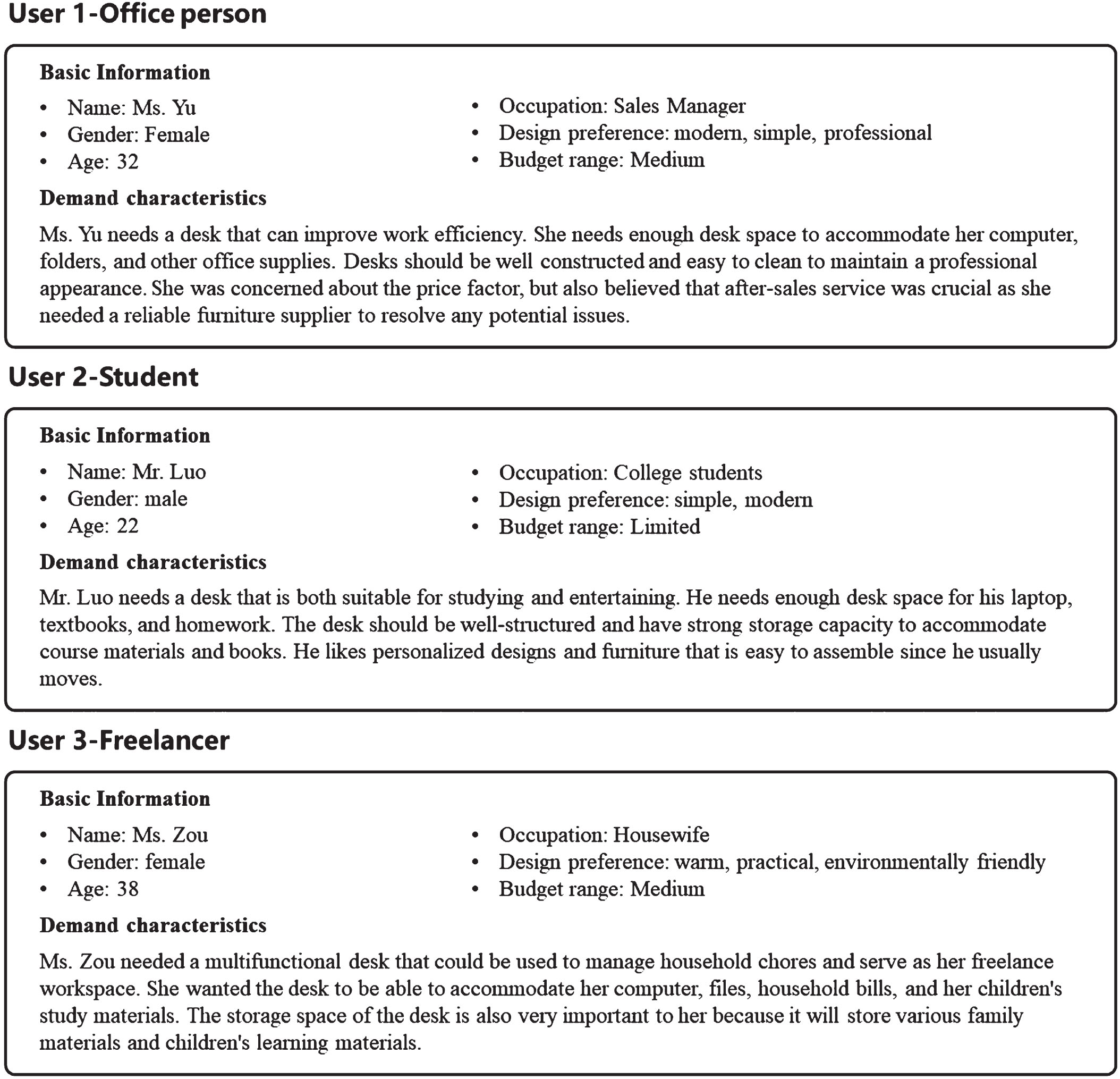
User portrait.
User needs were collected through offline interviews, and these needs were organized and summarized to create a FKANO model questionnaire. An online questionnaire was used to conduct a survey among customers, furniture engineers and professors, and a total of 236 questionnaires were distributed. However, in order to ensure the credibility and representativeness of the data, 200 valid questionnaires were finally selected for further research after strict screening. Figure 4 presents the user information participating in the survey in detail, further strengthening the data support of user research.
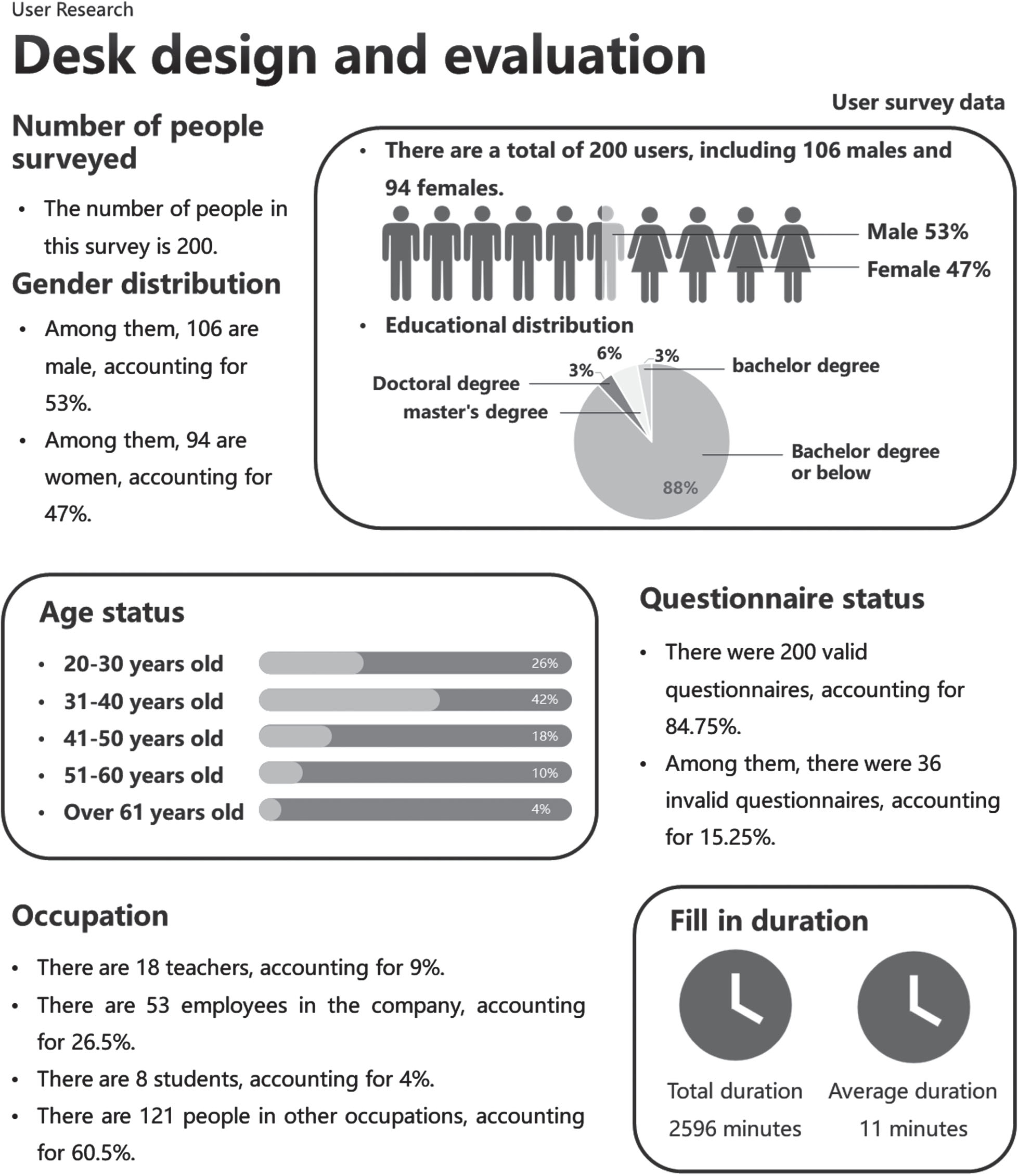
Investigate user data.
Classification and selection of user requirements for desk design and decision-making: In order to address desk design and decision-making, user requirements were categorized and screened. By face-to-face interviews and questionnaire surveys, extensive communication was conducted with potential users. In-depth research and collection of opinions were conducted with the target user group, yielding abundant user requirement information. User requirements for desk design were classified into four categories: appearance, functionality, craftsmanship, and value. For ease of categorization and discussion, these requirements were assigned specific numbers (Table 1): Appearance (C1–C7), Functionality (C8–C14), Craftsmanship (C15–C21), and Value (C22–C28).
User Requirements for Desk Design
User Requirements for Desk Design
Based on Table 1, corresponding FKANO questionnaires were designed to conduct a survey on user requirements using positive and negative questions. The use of fuzzy intervals [0, 1] was assigned to express the degree of user demands, which facilitated the classification and quantitative analysis of these requirements, thus identifying the most crucial features and functionalities desired by users. This approach aids designers in developing desks that better align with user expectations, ultimately enhancing the products’ competitiveness. In order to better understand the characteristics of the FKANO model, Table 2 lists some of the FKANO questionnaires. Respondents rated the positive and negative questions for each need in the questionnaire based on their feelings. Through this comprehensive data collection process, a deeper understanding of the complexity of user needs and capturing their nuanced preferences is gained.
Fuzzy KANO questionnaire (part)
The collected user requirements data was processed by establishing two matrices: the “ Satisfied” matrix P and the “dissatisfied” matrix N. These matrices were utilized to handle user requirements data effectively. The interaction matrix S was derived as the result of combining P and N, calculated as S = P T ×N. To ensure accurate classification of each requirement, a membership vector T was used to correspond with the categorized demands in Table 3. This approach enabled a more precise understanding of the attribute categories to which each requirement belongs, facilitating an effective classification of the demands.
FKANO model evaluation
Must-be requirements (M), One-dimensional requirements (O), Attractive requirements (A), Indifferent requirements (I), Reverse requirements (R).
This study targeted customers, furniture engineers, and professors in the furniture design field, and a total of 200 valid questionnaires were collected. Due to the large amount of data, let’s take the example of C1 from Table 2. We obtained the “ Satisfied “ matrix P as follows:
Corresponding the values in Table 3 with the matrix S, we obtained the vector of requirement membership degrees as follows:
In the calculation process, the membership degree vector T is introduced, and the α= 0.4 confidence level method is adopted to classify the requirements. According to this method, when the value α in the membership degree vector T is α≥0.4, the requirement takes the value t = 1; otherwise, it takes the value t = 0. If there are multiple requirements in the membership degree vector T that are assigned the value 1, they are arranged in priority order (M, O, A, I, R), with higher priority requirements being selected first. By using this classification method, the final category attribute of each user requirement can be determined. Therefore, for the given FKANO questionnaire, the membership degree vector T1 is (1, 0, 0, 0, 0), and the corresponding attribute is categorized as “M” (Must-be). Subsequently, all collected questionnaire information is calculated and summarized individually, and the category attribute with the highest occurrence frequency is determined as the final category attribute for that user requirement. Next, according to formulas (1) and (2), the Better-Worse satisfaction coefficients are computed, as well as the absolute values of the user requirement’s satisfaction improvement coefficient and satisfaction decrease coefficient. These coefficients approaching 0 indicate that the design requirement has a minor impact on user satisfaction; conversely, values close to 1 imply a significant impact on user satisfaction. The specific calculation results can be referenced in Table 4.
Statistical results of user demand attributes of desk products
Based on the above user demand results, we eliminated Indifferent requirements (I) and compiled them (Table 5). A comprehensive analysis of these categorized attributes provides essential guidance for designers, emphasizing the diversity of user expectations. Designers must effectively balance and integrate these requirements.
Classification and summary of user demand attributes
Firstly, concerning Must-be requirements (M), these represent users’ most fundamental expectations, including attributes like beautiful style, user-friendly, enough desktop space, reasonable structure, among others. Designers should consistently regard these factors as the bedrock of design, ensuring the flawless execution of the desk’s core functions. This implies that the desk’s aesthetics should be appealing while maintaining practicality and comfort. The structure should be sturdy and durable, easy to clean, priced reasonably, and supported by attentive after-sales service. For furniture designers and suppliers, this underscores the imperative of not neglecting these foundational needs but rather incorporating them at the heart of the design process to ensure users’ fundamental expectations are met.
Secondly, One-dimensional requirements (O) represent users’ potentially more specific and in-depth needs. For instance, users desire desks that harmonize with their interior environment, requiring designers to consider adaptability to various styles. Users also seek desks with appropriate dimensions, robust storage capacity, expandable design options, and outstanding craftsmanship. These requirements demand that furniture designers be more flexible in their considerations to cater to the specific needs of different users. This flexibility allows users to select desks based on their space, storage, and craftsmanship requirements.
Lastly, Attractive requirements (A) underscore users’ demands for emotional connection and added value in design. These encompass attributes such as good design, fine details, easy assembly, recyclability, brand value, and a long service life. Designers must recognize that when users purchase desks, they seek products that go beyond basic functionality, they desire products with aesthetic appeal, usability, sustainability, and brand reputation [26]. Consequently, designers should focus on intricate design details, provide straightforward assembly processes, choose environmentally friendly materials and manufacturing techniques, while also maintaining product quality and brand reputation in the long term to satisfy users’ emotional desires and expectations.
Through such analysis and calculation processes, we can gain a deeper understanding of the impact level of each requirement on user satisfaction. These data and results provide us with valuable insights, facilitating the optimization of desk design schemes. By focusing on requirements that have a significant impact on user satisfaction, we can further enhance the practicality and user experience of the product.
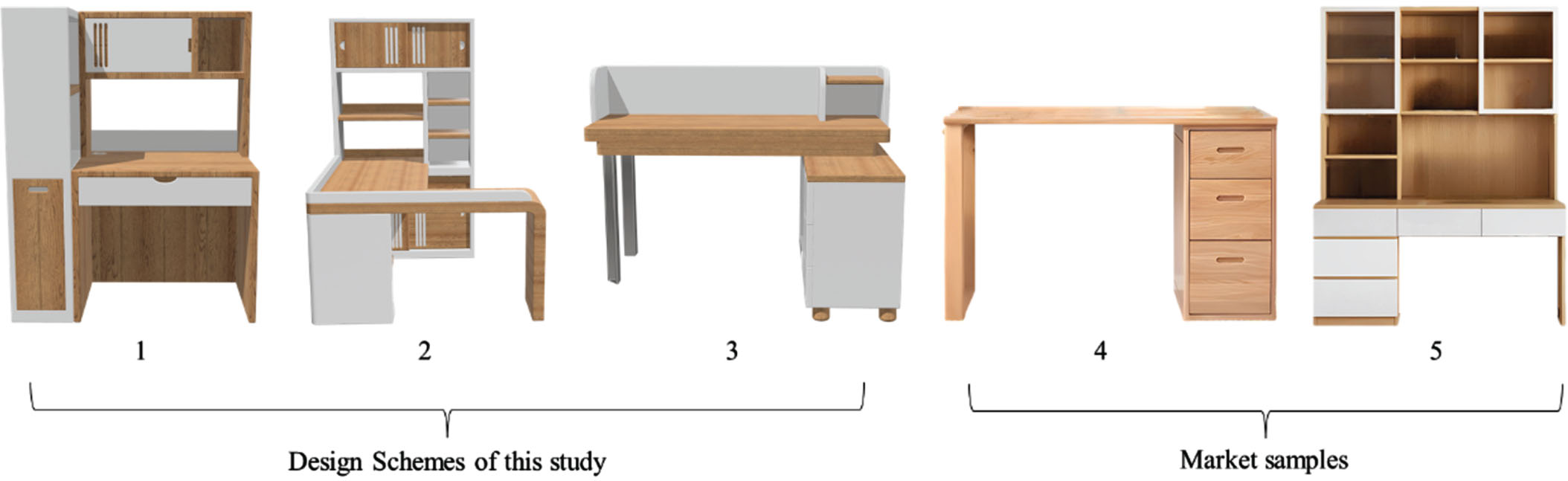
Based on the above user requirements classification results, we propose three desk designs with a minimalist and practical style. They are of significant importance in meeting user needs, improving the quality of home environment, leading design trends, and enhancing work efficiency and comfort. And in order to verify the rationality of the three desk designs, we added two additional desks on the market to participate in the expert evaluation. The serial numbers 1–3 in Fig. 5 are three desk schemes designed in this study, and the serial numbers 4-5 are the existing desks on the market. The market samples No. 4-5 come from the best-selling desks on China online platform named T-mall. Their colors are similar to the three desks designed in this study, which avoids the possibility of being affected by color in the decision-making process. The following is a detailed description of the three design options based on FKANO model demand classification results.
Product design schemes.
Scheme 1 adheres to Must-be requirements, prioritizing user-friendly, beautiful style, and reasonable structure. It offers a rectangular desk structure with a modern and minimalist design, combining white and wooden colors for an aesthetically pleasing appearance. The desk provides ample desktop space, ensuring users have sufficient room to work comfortably. To maintain ease of use, the desk incorporates storage cabinets and drawers, supporting organization and easy cleaning. Additionally, its reasonable price and after-sales service focus on fulfilling users’ basic expectations.
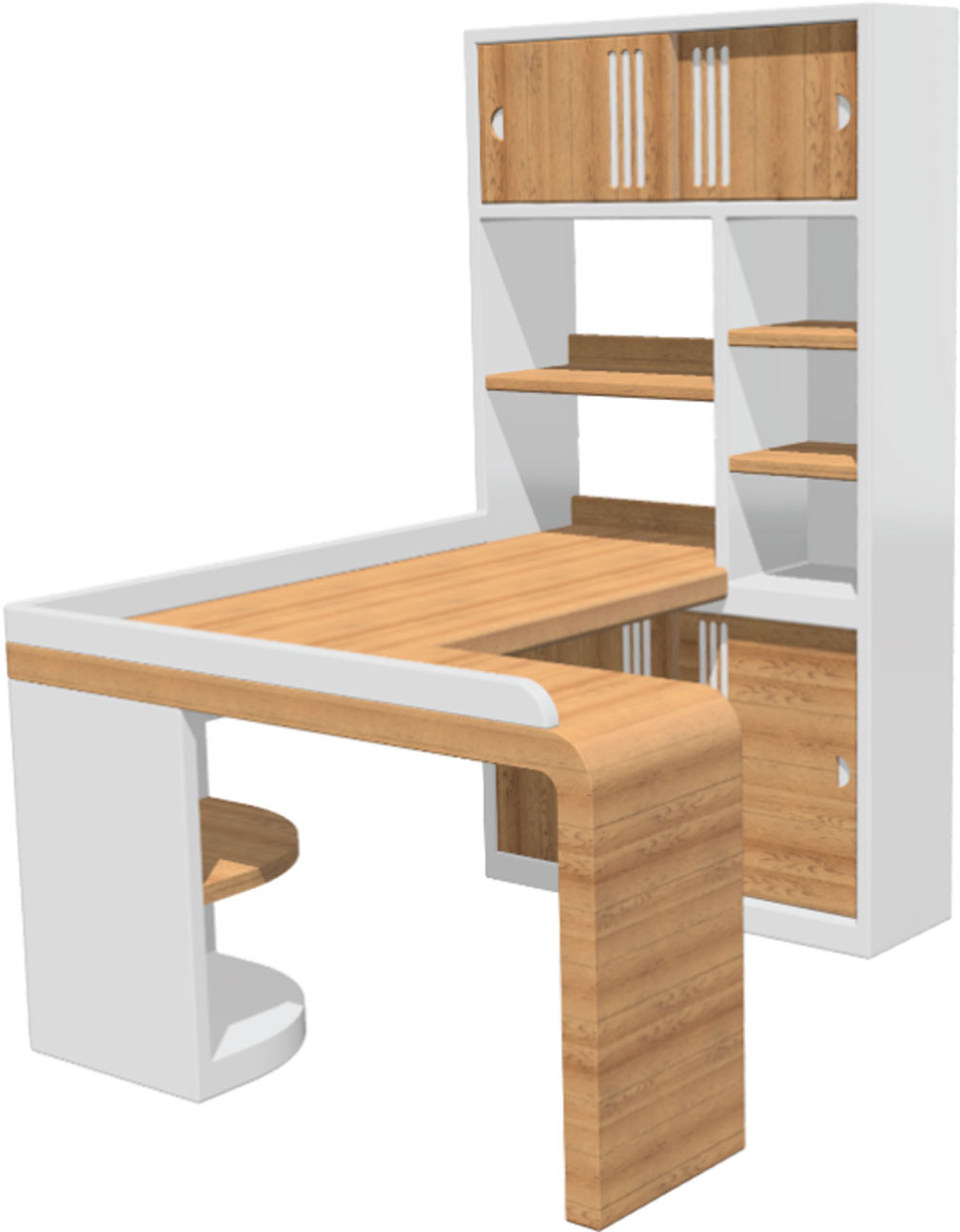
Scheme 2 comprehensively addresses Must-be, One-dimensional, and Attractive requirements. This U-shaped desk structure combines white and wooden colors to create an inviting atmosphere. The design prioritizes user comfort with ample workspace and effective item containment with barriers. It caters to various interior environments through its harmonious aesthetics. The storage cabinets offer extensive storage options, promoting personalized customization. Its thoughtful craftsmanship ensures easy assembly, recyclability, long service life, and brand value, making it a holistic and attractive choice for users.
Scheme 3 caters to both Must-be and One-dimensional requirements. It features an L-shaped desk structure with an elegant design, combining white and wooden colors. The desk ensures a comfortable and user-friendly workspace, preventing items from falling off with a front barrier. The design emphasizes reasonable size, strong storage capacity, and superior workmanship. The inclusion of drawers and compartments provides users with practical storage options. Moreover, its low environmental impact aligns with sustainability concerns, further enhancing its appeal.
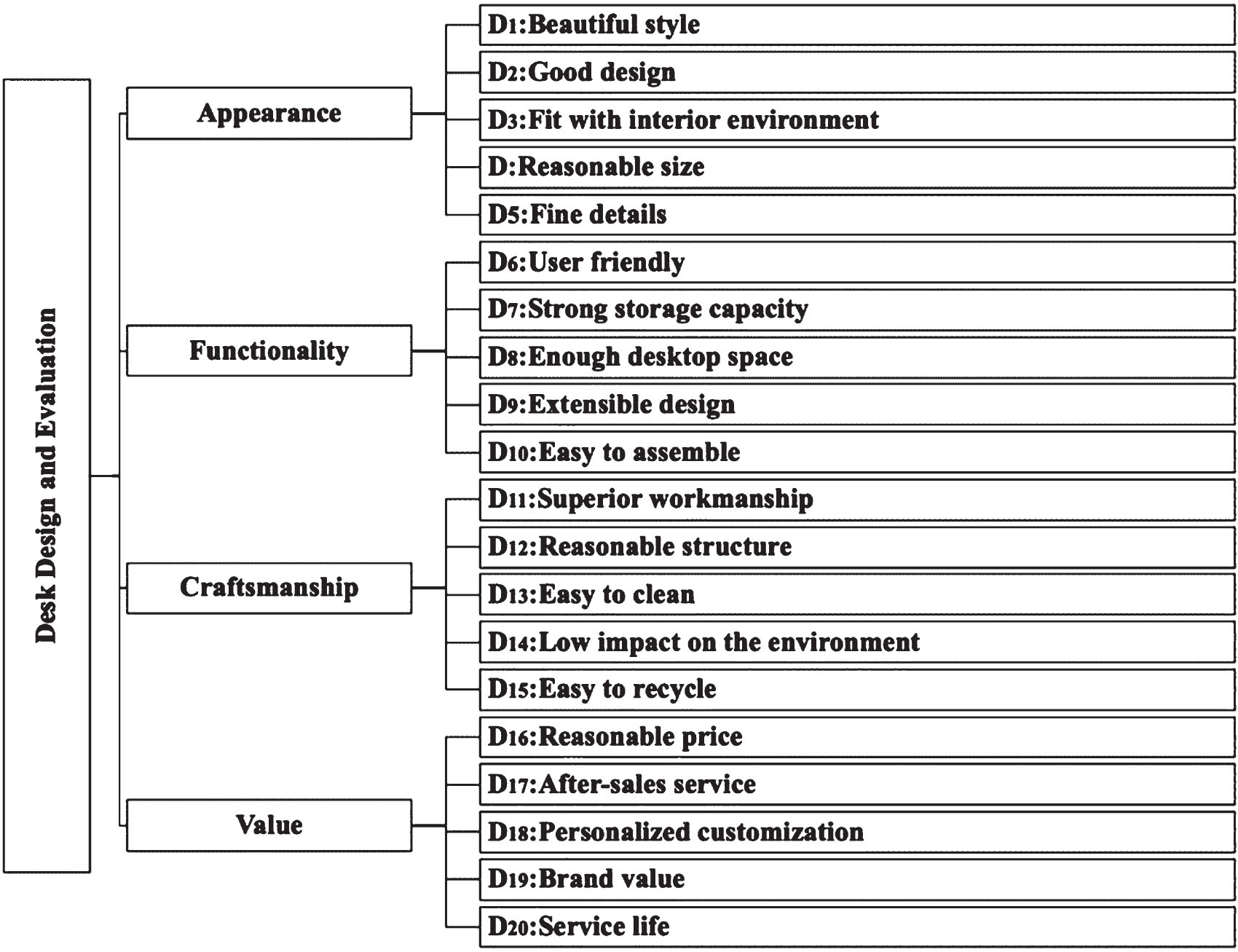
Based on the classification results of the FKANO model, user requirements are categorized into M, O, A, and I classes. Since I-class requirements are indifferent attributes, meaning that user satisfaction is independent of the fulfillment level of these requirements, they are not considered as evaluation criteria in constructing the desk design evaluation system (Fig. 6). This is because I-class requirements do not impact user satisfaction. We will comprehensively evaluate the performance of the five desk designs from four aspects: appearance features, practical functionality, material craftsmanship, and value-added services. To facilitate subsequent weight calculations, each indicator is assigned a code: Appearance (D1-D5), Functionality (D6-D10), Craftsmanship (D11-D15), and Value (D16-D20).
Evaluation system for desk design.
The CRITIC method calculates weights based on the interrelations among indicators. It takes into account the correlations among indicators to determine their relative importance in decision-making. This makes the CRITIC method more effective when dealing with multi-indicator data that exhibits inherent inter-dependencies [27, 28]. In complex decision-making data where various indicators have intricate relationships, the CRITIC method can accurately capture these relationships and provide more rational weight allocations. Therefore, in order to calculate the weight of each indicator, we adopted the CRITIC method. Based on equations (3) to (6), the weight values for each indicator were derived (Table 8). In order to ensure the accuracy and objectivity of the evaluation results, 20 experts were invited to participate in the evaluation, and then the average value was taken as the score corresponding to each evaluation index for each sample (Table 7). The panel of experts consisted of 5 professors in furniture design research and 15 furniture design engineers. They first experienced the desk samples in practice and then rated each indicator using a 9-point scale (Table 6).
Rating scale
Expert evaluation matrix
Indicator Weight
By combining the calculated weights of each indicator with the principles of CCD, the five desk product proposals are treated as three subsystems, denoted as U1, U2, U3, U4, and U5. The CCD values for each desk design are then computed using Equations (7)–(9). The CCD value indicates the degree of coordination for each proposal within the comprehensive evaluation system. According to the results (Table 9), scheme 2 (Fig. 7) is identified as the optimal solution with a CCD value of 0.809. It exhibits a higher level of coordination across multiple evaluation indicators, thus better meeting user demands and enhancing product quality and usability.
Calculation results of coupling coordination degree
Calculation results of coupling coordination degree
Best Scheme.
Comparison of decision-making methods
The FKANO-CRITIC-CCD hybrid model proposed in this study for desk design and evaluation, was compared with the results of two other decision-making methods, as shown in Table 10. By comparing the calculation results of these three methods, it was found that the CCD method and TOPSIS method (Table 12) produced consistent results, with Scheme 2 being the best option in both cases. However, the VlseKriterijumska Optimizacija I Kompromisno Resenje (VIKOR) method (Table 11) resulted in multiple proposals being ranked as the best options.
Comparison of the results of three decision-making methods
Comparison of the results of three decision-making methods
Decision results of VIKOR method
Decision results of TOPSIS method
VIKOR method [29] is a multi-criteria decision-making approach that takes into account both the best and worst solutions. It calculates the worst and best scores of each alternative solution on various criteria and combines a parameter to determine the degree of difference between the best and worst solutions. The VIKOR method consists of two steps. Step 1:Arranging the candidate design alternatives based on the values of S i , R i and Q i , and selecting the one with the minimum value as the optimal solution. Step 2: Ordering the alternatives A ={ A1, A2, A3, …, A m } in increasing order of Q i values, and the candidate design alternative A1 is considered the best solution if it satisfies the following two conditions.
Condition 1:
Condition 2: At least one of the rankings of A1 in terms of S i and R i should be the best, indicating the scheme with the smallest value.
If only Condition 1 is satisfied, the compromise solution set is {A1, A2}. If only Condition 2 is satisfied, the compromise solution set is {A1, A2, A3, ⋯ A
m
}, where m should satisfy
Here Q2 - Q1 = 0.07, which does not satisfy Condition 1. However, it satisfies Condition 2, so the compromise solution set is{A1, A2, A3, A4, A5}, meaning that all five schemes (Scheme 1–5) are considered the best solutions. Therefore, it can be observed that the VIKOR method provides a relatively simple treatment for the best and worst solutions, which may not accurately reflect the real decision-making situation.
TOPSIS method [30] is a multi-criteria decision-making approach used for selecting the optimal solution. Its fundamental idea involves calculating the proximity and remoteness of each alternative to the ideal solution, and then determining the comprehensive scores of each alternative based on the distances between the proximity and remoteness. TOPSIS can provide a ranking, arranging different alternatives according to their closeness to the ideal solution.
The TOPSIS and CCD methods yield consistent evaluation results, enhancing the credibility and stability of the research. However, CCD is typically simpler and more straightforward to understand and implement compared to the TOPSIS method. This simplicity can reduce the complexity of the study and lower operational difficulties. TOPSIS requires standardization of all indicator data to ensure uniform scale and weight. Nevertheless, during the data standardization process, it may affect the results, particularly when significant differences exist between the indicators, potentially resulting in information loss or distortion. Furthermore, CCD can be applied to address multidimensional data and complex decision problems, aligning with the circumstances in this study.
To assess the sensitivity of the decision-making process to small changes in each weight, a series of sensitivity analysis experiments were conducted. The weight values were fine-tuned to study their impact on the final decision. Under uncertain conditions, sensitivity analysis is very effective in determining indicator weights and selecting appropriate desk design solutions.
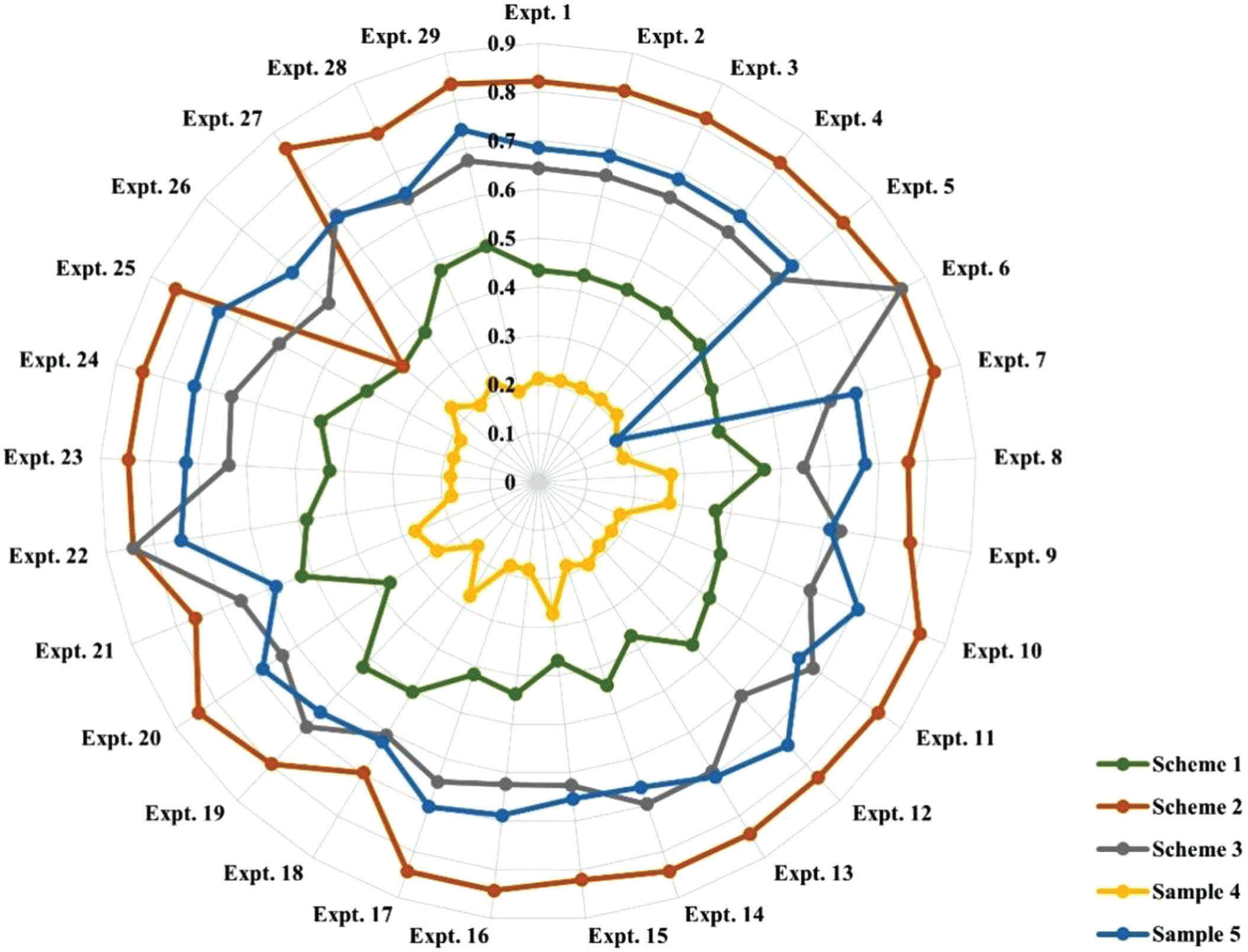
A total of 29 experiments were conducted, and the details are recorded in Appendix B. In the first 5 experiments, we set the weights of all indicators to the same values, i.e., 1, 3, 5, 7 and 9 respectively. The next 6 to 25 experiments set the weight of one indicator to the highest value (9), while setting the weights of other indicators to the lowest value (1) one by one, in order to understand the possible impact of small changes in each indicator. Subsequently, in the 26th to 29th experiments, the weight of each indicator under the first-level user needs (Appearance, Functionality, Craftsmanship, and Value) was set to the highest value (9). At the same time, the weight of each indicator under the needs of other first-level users is set to the lowest value (1). The results of the sensitivity analysis are shown in Fig. 8. Since the 26th trial sets the weights of indicators D1-D5 to the highest value (9), the weights of the remaining indicators are set to the highest value (1). This increases the dispersion of expert evaluation scores for scheme 2, resulting in the test results of scheme 2 being lower than those of sample 5 and scheme 3. In addition, scheme 2 always receives the highest score in 28 experiments, which clearly shows that scheme 2 is the best choice among all design schemes.
Results of sensitivity analysis experiments.
In summary, the integrated FKANO-CRITIC-CCD model presented in this study offers a scientifically effective decision-making approach for desk design and evaluation. By combining FKANO, CRITIC, and CCD methods, the model excels in user requirement identification, weight determination, and solution selection. This comprehensive approach holds significant potential in balancing diverse user needs and delivering comprehensive and satisfactory design solutions, ultimately enhancing product market competitiveness and user satisfaction.
Firstly, the FKANO model classifies user requirements into different levels, including Like, Must-be, Indifferent, Tolerable, and Dislike. This detailed categorization aligns more closely with real-world scenarios, as user requirements are often not simply “satisfied” or “dissatisfied.” In contrast, the traditional KANO model can only categorize requirements into satisfied or dissatisfied, failing to capture subtle differences in demands.
Secondly, the FKANO model is employed for requirement classification, CRITIC for determining the weights of evaluation criteria, and CCD for final decision-making. The rational integration of these three methods allows the model to leverage their respective strengths in requirement classification, weight determination, and solution selection. This holistic approach ensures comprehensive consideration of various factors, resulting in comprehensive, accurate, and reliable evaluation outcomes. It excels in balancing diverse user requirements, thus improving product market acceptance.
Finally, sensitivity analysis of the integrated model reveals that Scheme 2 consistently achieves the highest scores under different weight settings, indicating it as the best choice. This underscores the model’s ability to balance various user demands in decision solution selection, guaranteeing the comprehensiveness and market competitiveness of product design solutions, as demonstrated in this study.
This study aims to provide a scientifically effective decision-making method for the field of desk design and evaluation. By constructing the integrated FKANO-CRITIC-CCD model and leveraging the strengths of different methods, it achieves a comprehensive understanding of user requirements, rational balancing of evaluation criteria, and thorough consideration of the final design solutions.
(1) The primary contributions of this study are as follows: Integration of FKANO, CRITIC, and CCD Methods: By comprehensively combining the FKANO, CRITIC, and CCD methods, this study fully exploits their advantages in demand classification, weight determination, and solution selection. This ensures comprehensive, accurate, and reliable evaluation results, making a positive contribution to the development of the furniture design field and the enhancement of user requirements. Development of a Comprehensive Desk Design Evaluation System: The study constructs a comprehensive evaluation system for desk design, encompassing multiple dimensions of user requirements. This system provides holistic and systematic guidance for desk design, ensuring that design solutions better meet user needs.
(2) Limitations include: Sample Size: The study’s data sample consisted of 200 individuals, which may impose certain limitations on the generalizability of the results. Future considerations may involve expanding the sample size to enhance the study’s representative ability. Subjectivity in Design: Although the FKANO model provides a reference for user requirements, the final design solutions are still influenced by the subjective judgment of designers. Integration of Decision Methods: While this study integrates the FKANO, CRITIC, and CCD methods, there are other decision-making approaches that have not been considered. Future research may explore the possibilities of incorporating additional integrated methods to enhance comprehensiveness.
(3) Future directions for improvement: Increased Sample Size: Expanding the sample size to include a broader range of users and diverse product types can provide more comprehensive data and enhance the model’s applicability. Objective Design Methods: Future research can explore more objective design approaches to reduce subjectivity in design decisions. Integration of More Decision Methods: Investigating the integration of additional decision-making methods can help identify decision solutions that are more suitable.
Footnotes
Acknowledgments
This research was funded by Key Research Base of Humanities and Social Sciences for Universities in Jiangxi Province (JD21018). The authors really appreciate the anonymous referees for their helpful comments.