




Abstract
Against the backdrop of global attention to climate change and environmental sustainability, the development timing and comprehensive cost of regional renewable energy power generation projects have become a focus of attention. By constructing effective models to evaluate them, it can help promote the healthy development of renewable energy projects. The research aims to quantitatively evaluate the development status of local renewable energy projects by constructing a comprehensive evaluation model, minimize information loss, and improve the accuracy of evaluation results. This study adopted a comprehensive evaluation model that combines Analytic Hierarchy Process (AHP) based on accelerated genetic algorithm, entropy weight method, and ideal point method. Firstly, the subjective weights of the development evaluation indicators for regional renewable energy power generation projects are calculated. Secondly, the entropy weight method is used to analyze the trend of each indicator and obtain objective weights. Finally, combined with the objective weights and the evaluation results calculated using the TOPSIS method, a comprehensive evaluation of renewable energy power generation projects in various regions is conducted. Through analysis, the core indicators of the development level of renewable energy power generation projects in various regions show specific performance, such as Hebei’s evaluation value of 0.4945 in the proportion of comprehensive energy development, and Inner Mongolia’s evaluation value of 0.4045 in the proportion of comprehensive energy installed capacity. Meanwhile, genetic optimization methods exhibit significant advantages in the calculation of optimization schemes compared to dynamic programming methods, possessing strong global search capabilities and high-precision solutions. This study provides a new research method and approach for the evaluation of regional renewable energy power generation projects, demonstrating the practical value and certain advantages of the research method.
Keywords
Introduction
As an efficient, environmentally friendly, and economical energy supply method, modern integrated energy systems have attracted widespread attention and research. However, the operation and optimization of equipment in a comprehensive energy system is a complex process that requires consideration of multiple factors such as uncertainty in energy supply and demand, system economy, and environmental impact [1, 2, 3]. The comprehensive evaluation and optimization of the comprehensive energy system adopts new research methods including comprehensive evaluation models and time series optimization. This method not only provides decision support for the design and operation of the system, but also provides more scientific basis for decision-makers to formulate more reasonable and effective energy policies [4, 5, 6]. The main content of this study includes designing an evaluation index system and a comprehensive evaluation model to quantitatively measure and evaluate the development level of regional comprehensive energy systems
This study is divided into four parts. The first part introduces the research purpose and related work. The second part is to design a comprehensive energy system evaluation model for comprehensive evaluation and time series optimization. The third part did not test the application effect of the model. The fourth part draws research conclusions.
The innovation of this study lies in the adoption of a comprehensive evaluation index system based on the perspective of the entire industry chain. By combining the comprehensive evaluation model of AGA-AHP, EM, and TOPSIS, quantitative and comprehensive evaluation of comprehensive energy systems in different regions can be achieved. This method can improve the accuracy and scientificity of evaluation in dealing with complex evaluation problems with multiple levels and attributes. In addition, a time series optimization model based on genetic algorithm was studied and designed to optimize the development time series of comprehensive energy systems. This optimization model has higher reliability and progressiveness in solving multi-objective optimization problems such as development timing and comprehensive cost of integrated energy system.
The social contribution of this study is extraordinary, providing a new way to measure and understand the development status of regional renewable energy power generation projects, and helping to promote the healthy development of renewable energy projects. In addition, this study provides important information for relevant decision-makers on the specific performance of the studied region in terms of comprehensive energy development and comprehensive energy installed capacity by analyzing the detailed performance of the core indicators of renewable energy generation projects in various regions. This not only helps to have a more accurate understanding of the current status of energy projects in various regions, but also provides valuable reference information in strategic planning and resource allocation. Furthermore, based on the significant advantages demonstrated by genetic optimization methods in the calculation of optimization schemes, the results of this study may change existing dynamic programming methods and lead to the adoption of new methods with more global search capabilities and high-precision solutions. Therefore, the methods and findings of this study provide strong incentives for promoting the development of renewable energy projects, while also potentially having a positive impact on global efforts for environmental protection and climate change.
Related works
With the increasing discussion of energy issues in the community in recent years, research related to energy system evaluation has been enriched. Alsagri et al. set out to look into ways to supply energy and clean water to medical facilities in order to better address the basic needs of people living in distant places. The findings demonstrated that health clinics’ power requirements can be satisfied by a hybrid energy system that combines solar panels, diesel generators, and battery packs [7]. Xu et al. used a multi-objective particle swarm optimisation technique to examine the trade-off between maximum power supply dependability and minimal investment cost in order to assess the possibility of a stand-alone hybrid system based on RE sources in supplying dependable continuous electricity. According to the findings, compared to PV-pumped storage and wind-pumped storage systems, respectively, the average cost of energy for PV-wind hybrid energy systems is lowered by 32.8% and 45.0% [8]. Javed et al. detailed a hybrid solar-wind power supply system based on pumped hydro storage (PHS), focusing on the crucial function of energy storage in future RE systems. The hybridization with other energy storage technologies is explored to extend the service range and overall system reliability of PHS, especially when the RE system is separated from the grid [9].
At the same time the development of integrated assessment technologies in all aspects is gradually becoming comprehensive. Deng proposed a hybrid beamforming scheme based on RHS, which can perform digital beamforming and holographic beamforming between the base station and RHS, while performing reception combination at each user, significantly optimizing data transmission performance. The simulation results demonstrate the effectiveness of the proposed scheme. A medium sized RHS can achieve a satisfactory total rate, surpassing the performance of phased arrays of the same size [10]. Levesque-Bristol et al. conducted research on student motivation and its relationship to learning outcomes, focusing on students’ perceptions of the transferability of knowledge. The results of the study showed that meeting students’ needs for autonomy, competence and relevance can promote students’ motivation and increase perceptions of knowledge transferability [11]. Rawa et al. conducted research on the economic, technological, and environmental operations of power grids with wind, solar, and hydropower. The team used a series of meta heuristic optimization techniques in a modified IEEE 30-bus system, including flame optimization, salmon swarm optimization, improved grey wolf optimizer, and multiverse optimizer, with the main goal of minimizing overall fuel cost, active power loss, and emission levels. According to research, the proposed AHP-ETED model can significantly reduce fuel costs to 902.4951 $/h, reduce emission levels to 0.09785 t/h, and achieve lower power losses of 2.4110 MW [12]. There is also a growing body of research in the area of temporal optimization. Chen et al. explored the temporal optimality of federated learning. The study uses the base station as the central controller that receives the local model and generates the global model and transmits it to all users. The base station prefers to include the local model of all users to generate a converged global model [13]. Song et al. adopted a security assessment method based on a combination of cloud models and nonlinear fuzzy analytic hierarchy process. In this method, they comprehensively consider the safety impact elements of human factors in seven aspects: organization, information, work design, human-machine system interface, task environment, workplace design, and operator characteristics. Then they used the fuzzy analytic hierarchy process to establish a hierarchical structure system and quantified the indicators using triangular fuzzy numbers, ultimately using cloud models to determine the safety level of the chemical plant production process. The research results indicate that the simulation results show that this method is a reliable, practical, and scientific chemical production safety assessment method [14]. Huang et al. focused their research on the economic scheduling problem of integrated energy systems considering network attacks. They designed a privacy protection protocol that hides some important information for the economic scheduling of IES. At the same time, they proposed a distributed robust economic scheduling strategy to address erroneous behavior units. Strong robustness is demonstrated in the face of various collusive and non collusive attacks [15]. Huang et al. proposed a reliability and vulnerability assessment method for multi energy systems based on the energy center model from a new perspective. They used this model to provide a compact and linear description of energy conversion, transmission, and storage in multi energy systems, making it possible to assess the reliability and vulnerability of MES. They also proposed some indicators to evaluate the vulnerability of MES in order to identify key components to improve the reliability of MES [16]. Zhang et al. innovatively proposed a distributed hybrid control scheme based on event triggering. In this scheme, each energy center can achieve maximum economic benefits by adjusting equipment, thereby achieving the safe and economic operation of the entire energy system [17]. Zhang et al. proposed an advanced day ahead optimization scheduling method that considers P2G (power to gas) units and dynamic pipeline networks. They proposed a collaborative scheduling strategy between P2G and pipeline storage capacity, which can capture the flexibility of IES and convert unbalanced wind power into natural gas and store it in the pipeline network. Their research shows that this collaborative scheduling strategy can effectively increase wind power consumption and reduce the operating cost of the entire system, without having to bear high computational loads [18].
In summary, research teams have focused on meeting the basic needs of people in remote areas, ensuring stable electricity supply from renewable energy, and emphasizing the crucial role of energy storage in renewable energy systems. The innovation of this study lies in the combination of integrated evaluation models and time series optimization methods, which use time series optimization technology to evaluate integrated energy systems and further improve energy utilization efficiency.
Research on integrated energy system evaluation model based on integrated assessment model and time series optimization
In this study, a system of indexes is developed that can be used to assess the state of development of local renewable energy projects. And a comprehensive evaluation model is constructed by combining the accelerated genetic algorithm hierarchical analysis method, entropy weight method and ideal point method. An optimization model based on multi-objective decision theory is also designed.
RE project development evaluation model design
In the face of the slowdown of energy consumption, the prominent development quality problems and the new trend of weakening power demand and RE power demand, it is crucial to establish a scientific and reasonable regional RE power generation project evaluation index system [19, 20, 21]. To this end, this study constructs a regional RE power generation project evaluation index system based on the whole industry chain vision, with systematic comprehensiveness, stratified profile, relative autonomy, dominance, operability and comparability characteristics. The study chooses 11 relevant and comprehensive evaluation indices from three areas: resource development level, power production level, and power consumption status in light of the current state of domestic RE power generation projects. The research and establishment of an indicator system mainly follows five principles. Firstly, the principle of systematic comprehensiveness should be followed. The indicator system should comprehensively reflect all important aspects and levels of regional renewable energy power generation projects, including construction and development, production and operation, power consumption and other links, as well as various levels such as resources, installation, and electricity production; Secondly, there is the principle of hierarchical simplicity. In order to achieve both comprehensiveness and conciseness, multiple indicators should be classified into several categories according to certain classification standards and functional requirements, forming a hierarchical system. Once again, the principle of relative autonomy should be applied. In order to reflect subjective choices, indicators that are easy to obtain, compare, and reflect essential laws should be selected as much as possible. Afterwards, there is the principle of dominance, which determines one or a few of the most important comparative items from among the many, and serves as the dominant factor, while all other items are subordinate to it. Finally, there are principles of operability and comparability, where indicators should have clear measurement standards and calculation methods to ensure their operability in practical applications; At the same time, it should have a certain degree of
Project development evaluation index system
Project development evaluation index system
universality and comparability, ensuring that it can be effectively compared in different regions, times, and situations. Based on the above principles, the 11 evaluation indicators selected in this study evaluate the development level of renewable energy generation projects from the perspectives of resource development level, power output level, and power consumption status. These indicator systems can comprehensively reflect and evaluate the development level of regional renewable energy power generation projects from the perspective of the entire industry chain. This system of indicators is shown in Table 1.
In order to efficiently estimate the progress level of regional RE generation projects, this study constructs a comprehensive evaluation model based on accelerated genetic algorithm hierarchical analysis (AGA-AHP), entropy weight method (EM) and ideal point method (TOPSIS). The model achieves quantitative and comprehensive assessment by combining the subjective and objective weighting methods with traditional evaluation methods and weighting and integrating each evaluation index. Figure 1 depicts the hierarchical analytical structure.
Analytic Hierarchy Process.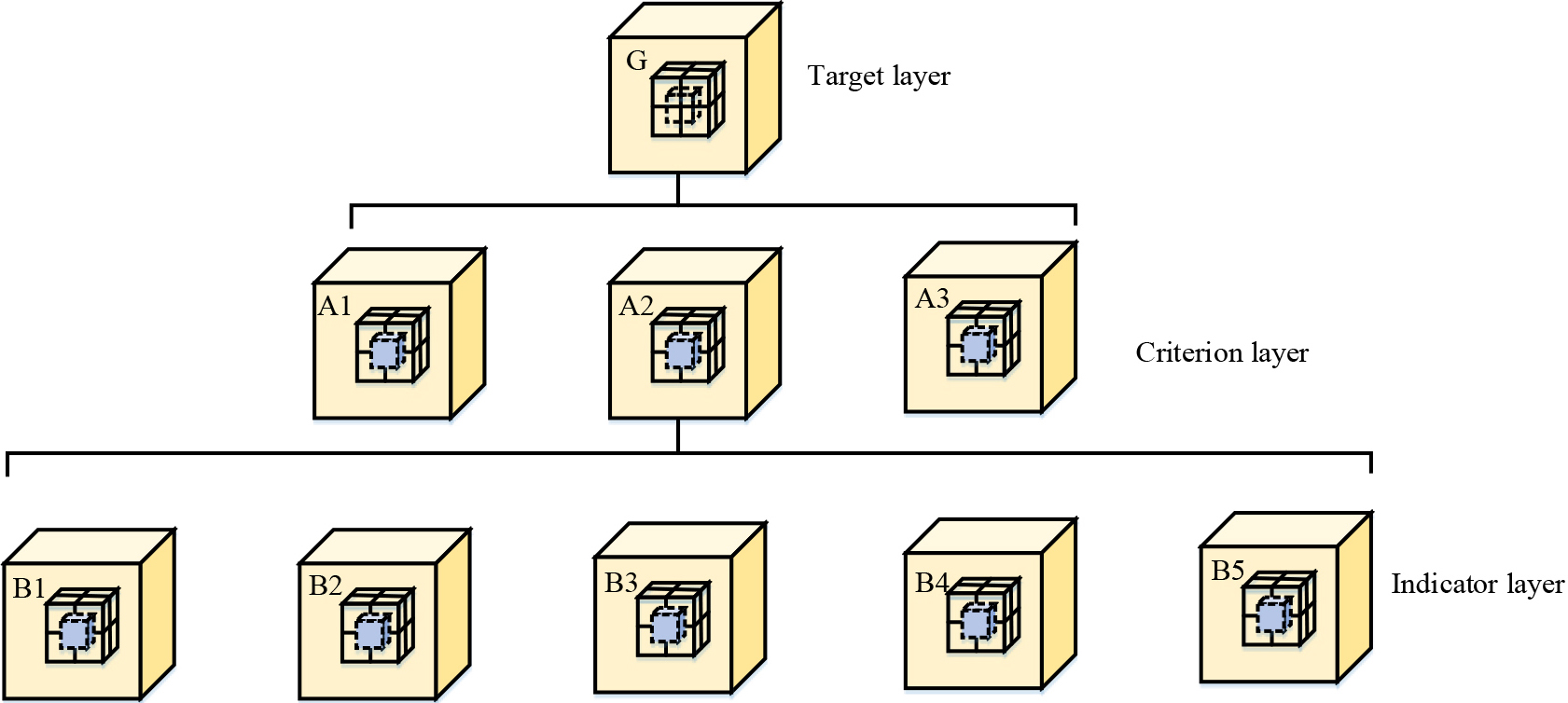
First, the Accelerating Genetic Algorithm-Analytic Hierarchy Process (AGA-AHP) based on accelerated genetic algorithm is used to calculate the subjective weights of regional RE power project development evaluation indexes. As a global optimization method, the accelerated genetic algorithm can avoid the possible inconsistency problem of the judgment matrix, thus improving the accuracy of the evaluation index weight calculation. The judgment matrix is shown in Eq. (1).
In Eq. (1),
The consistency test formula is Eq. (3).
In Eq. (3),
Consistency index value
On this basis by always judging the matrix with the mass information can get the nonlinear model as shown in Eq. (4).
In Eq. (4),
In Eq. (5),
In Eq. (6),
Overall model structure.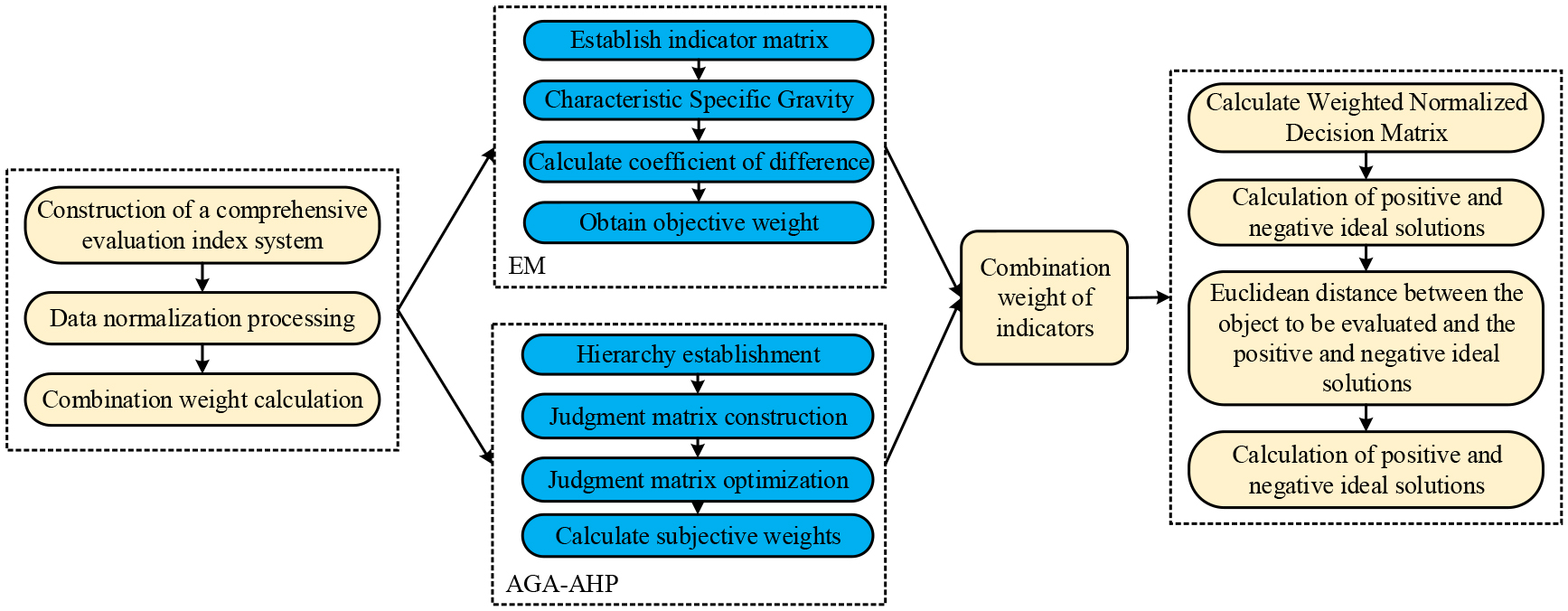
The approach assesses an object’s merits by gauging how close it is to both positive ideal solutions (PIS) and negative ideal solutions (NIS). The optimum point approach may fully utilise assessment index data, minimise information loss, and enhance the accuracy of evaluation outcomes. Establishing the decision matrix, processing the data in a dimensionless manner, calculating the weighted normalised decision matrix, obtaining the PIS and NIS, and calculating the separation between the evaluation scheme and the PIS and NIS are the steps in the procedure. Equation (7) illustrates the desired, positive outcome.
In Eq. (7),
In Eq. (8),
In Eq. (9),
In Eq. (10),
The model has a broad range of potential applications and can be used to assess the state of development of local renewable energy projects in each typical Chinese province and promote the establishment of sensible policies by the government.
The theoretical basis of this model is mainly based on several core principles. Firstly, the principle of low-carbon is crucial for environmental protection and compliance in the context of global warming. Reducing CO2 emissions is crucial. Secondly, there is the principle of cleanliness, which aims to use energy with a small carbon footprint and no pollution. Therefore, the principle of cleanliness here involves minimizing emissions such as SO2, NOx, and smoke to reduce environmental pollution and climate change contributions. Once again, the principle of energy conservation is considered. Considering the limited energy resources required for world operation, saving resources, improving energy efficiency, and reducing the use of non renewable energy such as coal are also important principles of this model, which helps to achieve sustainable development. Finally, there is the economic principle that, regardless of the situation, cost-effectiveness should be considered. This involves reducing the total cost of power production projects, including capital expenditure on fixed assets, annual maintenance costs, fuel costs, pollutant treatment costs, and costs related to carbon emission trading. While meeting the above principles, the model also considers various constraints, including safety principles, power guarantee limitations, backup capacity reliability limitations, installed capacity limitations, and upper and lower boundary limitations of the power supply structure. Overall, the theoretical basis of this model comes from using an improved genetic algorithm to find the optimal time strategy for regional RE power project development, while meeting the principles of economy, environmental protection, and sustainable resource utilization, while also meeting a series of constraints, in order to improve the project’s economy and feasibility.
A time-series multi-objective optimisation model is built for the development of regional RE power plants under the combined influence of numerous influencing factors. The study first develops the model assumptions listed below, which are based on the time-series optimisation approach for energy projects as depicted in Fig. 3.
Model assumptions.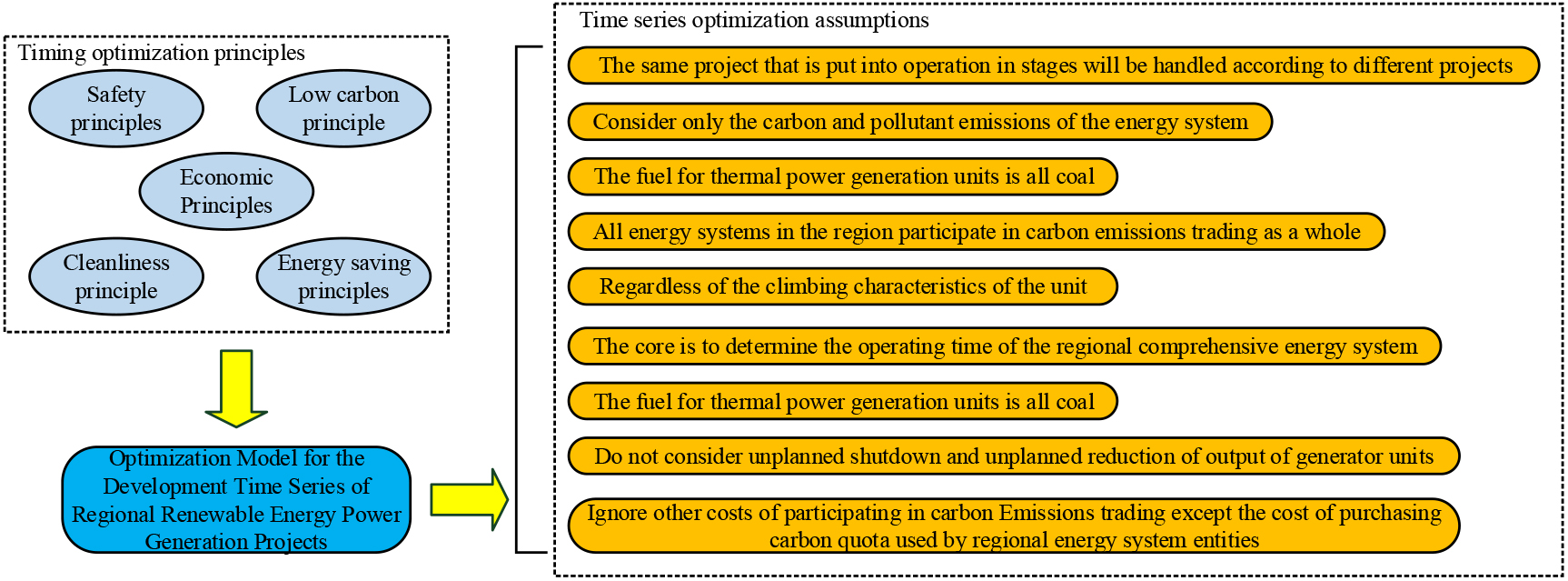
According to the optimization principles, the study uses low-carbon, clean, energy-saving and economic principles to establish the objective function. The low-carbon principle is expressed as minimizing CO2 emissions in the regional planning period. The clean principle is to minimize SO2, NOx and soot emissions in the regional planning period. The energy saving principle is to reduce the amount of coal used in the regional planning period. The economic tenet is to lower the total cost of power production projects within the regional planning period, including capital expenditures for fixed assets, yearly maintenance costs, fuel costs, treatment costs for pollutants, and costs associated with the trading of carbon emission rights. In terms of model constraints, the safety principle is used as the priority constraint. The electricity assurance constraint is shown in Eq. (12).
In Eq. (12),
In Eq. (13),
In Eq. (14),
In Eq. (15), represents the generation share,
Improving the Genetic Algorithm Process.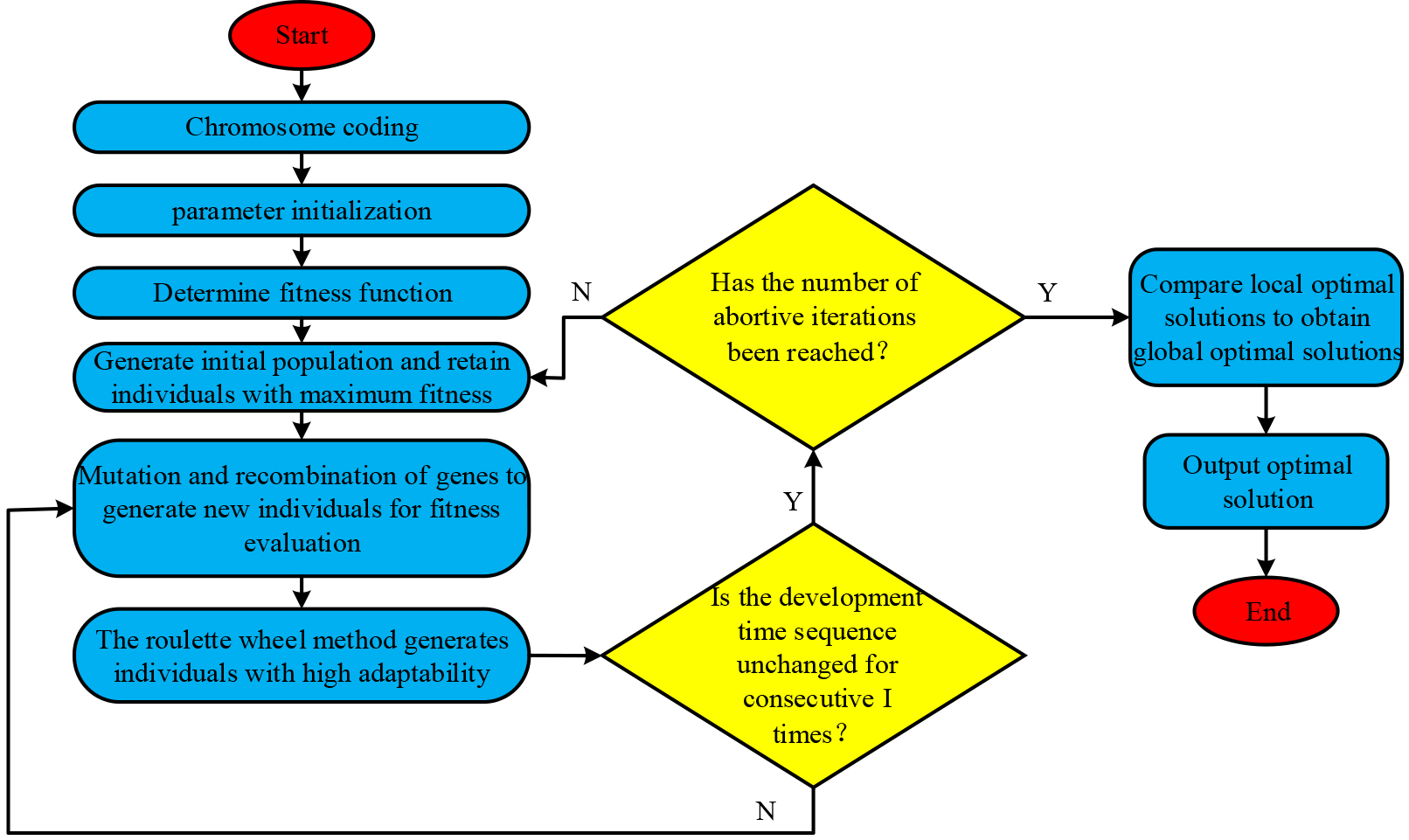
Setting the adaptation function, here the objective function is applied to measure the adaptation value. For this practical case, there are three objective functions: maximum waste emissions, maximum coal consumption and maximum overall cost of the regional power project. We need to normalize and de-scale these three objective functions. When calculating the fitness values, the weights of the three objective functions are temporarily ignored. Subsequently, an initial population of size M is randomly generated, and the adaptation value of each individual in the initial population is calculated. The individual with the highest fitness is retained. Then, the fitness of new individuals is calculated according to the genetic operation law of gene mutation and gene recombination. The local optimal solution is obtained by progressing the selection operation using the betting wheel method. In the process of solving, we must determine whether the number of terminating iterative rounds T is reached; if not, we return to step 4 and continue to solve other local optimal solutions; if so, we proceed to the next step. Finally, compare all local optimal solutions, calculate the global optimal solution, and output the corresponding regional RE power project development timing optimization scheme. The improved genetic algorithm can simplify the solution process of the regional RE power project development timing optimization model. The efficiency and financial advantages of projects for the generation of RE power can be improved by applying the optimised genetic algorithm to real-world issues.
The study employs the integrated evaluation approach to determine the total evaluation value for each region after calculating the weight of each index using the AGA-AHP subjective assignment method and the entropy weight method. The time-series optimisation model’s impact analysis was also carried out. First, iterative analysis is used in the study to identify the model’s stable state. The outcomes of the dynamic programming method and the IGA optimisation method are then contrasted to determine which yields superior results.
Integrated model effect analysis
The study selected a certain number of regions as experimental objects. The relevant index data of each region are collected and the weight of each index is calculated according to the principles of AGA-AHP subjective assignment method and entropy weight method. The integrated assessment method is used to determine the value of each region’s complete evaluation based on the weights and data of the indicators. Figure 5 displays the weighted findings.
Weight results.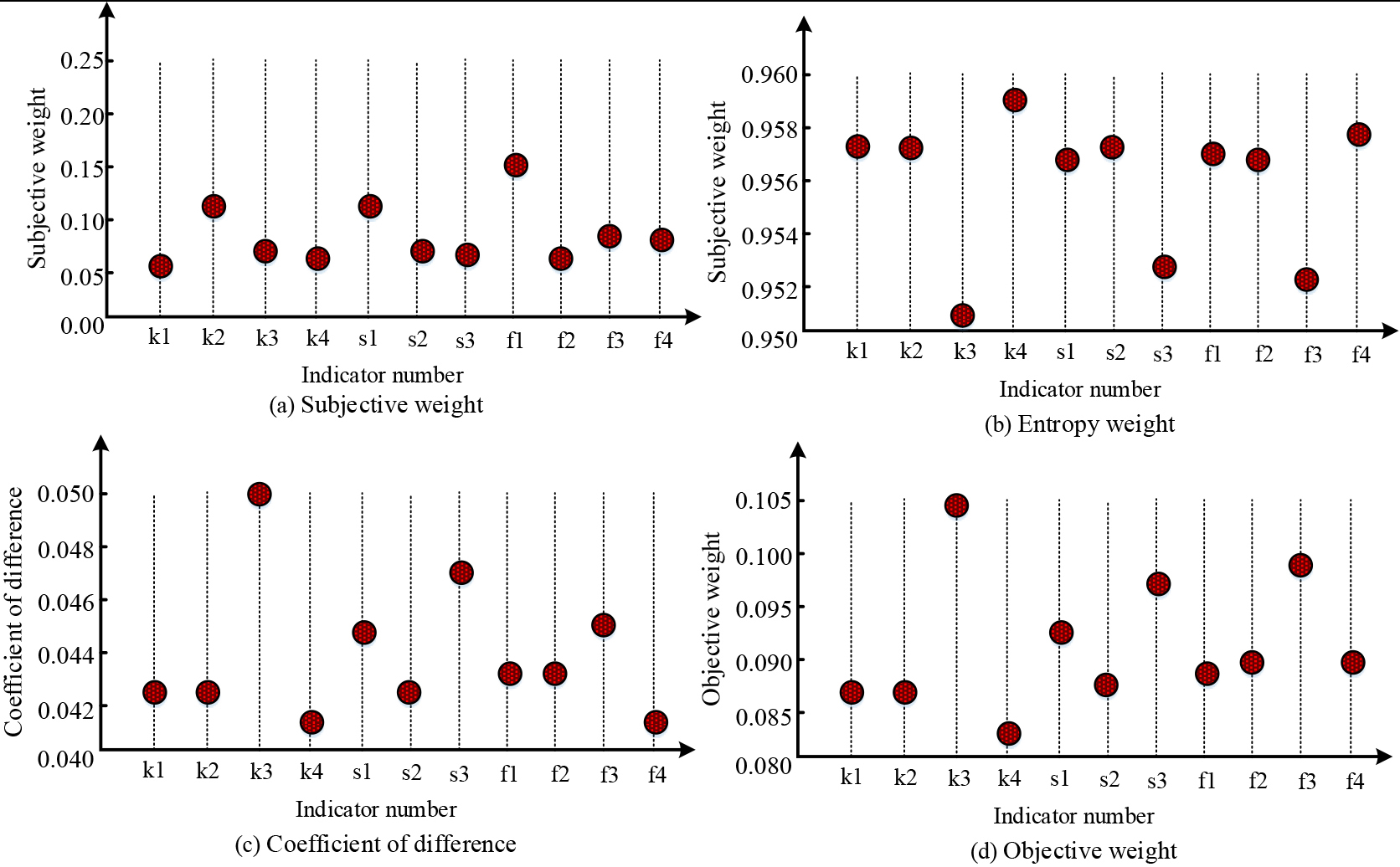
Figure 5 illustrates how heavily weighted the three indicators are: the proportion of installed RE, the proportion of RE power generation, and the proportion of RE power consumption. It is interesting that the RE power consumption ratio indicator has the most weight. While the weights of other indicators are quite similar, the objective weight of the growth rate of installed RE is relatively large. This suggests that while assessing the stage of development of RE power projects, the installed growth rate is crucial. Figure 6 displays the thorough results.
Comprehensive results.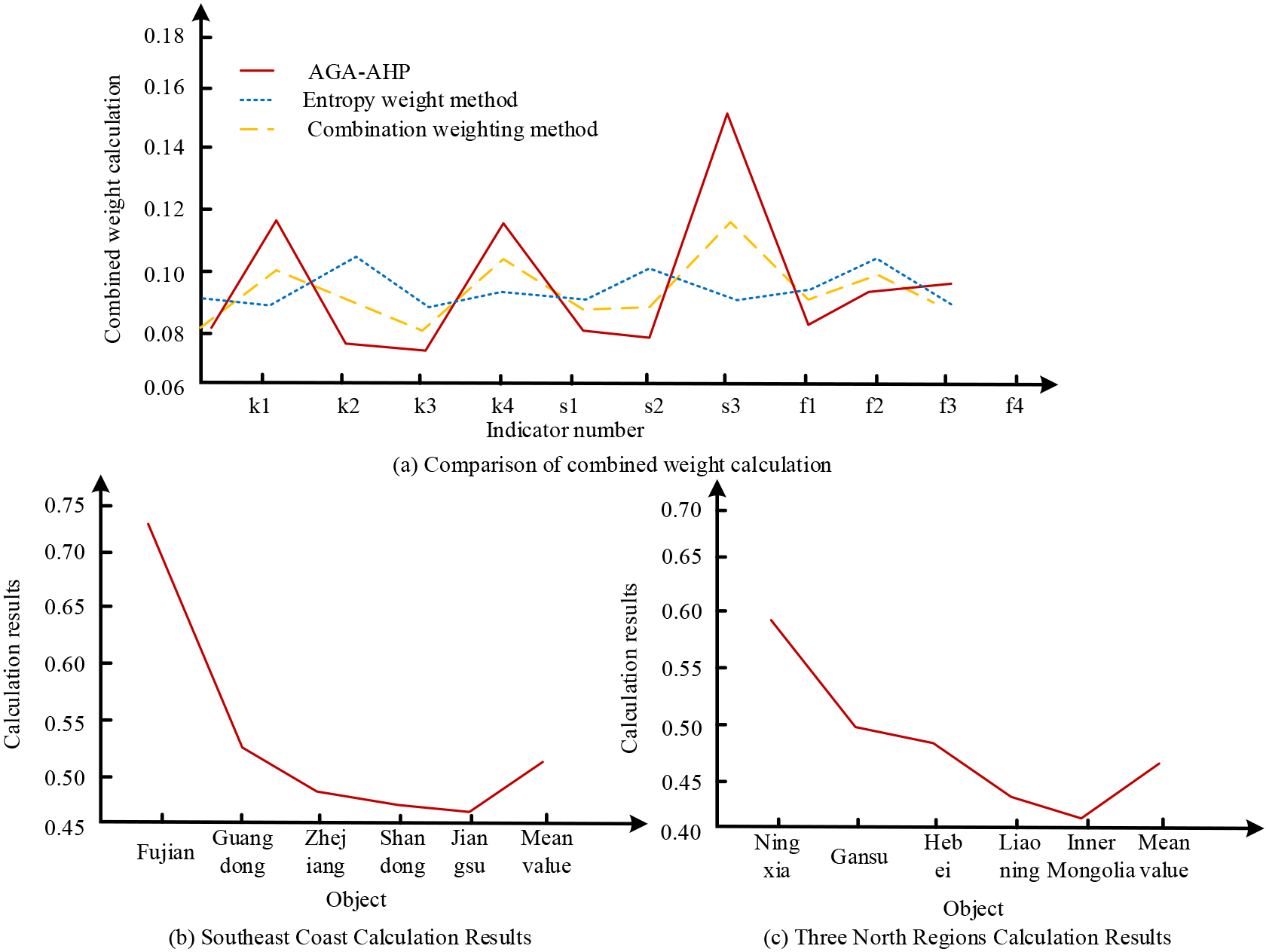
As can be seen from Fig. 6, the distribution of the combination weights is between the AGA-AHP subjective assignment method and the entropy weight method, which combines the two. In addition, the southeast coastal region has a huge electricity demand because of its rapid economic development. Therefore, it has an advantage over the “Three Norths” region in terms of RE consumption. Although the “Three Norths” region has abundant RE resources, it has limited capacity to consume them. This is also the main reason why the southeast coastal provinces have higher scores. The results of the integrated assessment are shown in Table 3.
Integration evaluation results
Table 3 shows the comprehensive evaluation results of various energy related indicators in different regions of China. The evaluation indicators include the proportion of developed comprehensive energy resources, the proportion of comprehensive energy installed capacity, the growth rate of comprehensive energy installed capacity, the completion progress of comprehensive energy installation during the planning period, the proportion of comprehensive energy generation, the growth rate of comprehensive energy generation, the elasticity ratio of electricity production, the proportion of comprehensive energy consumption, the growth rate of comprehensive energy consumption, and the elasticity coefficient of electricity consumption, And the completion progress of comprehensive energy and electricity consumption during the planning period. For these indicators, the table provides positive ideal solutions (the best possible values), negative ideal solutions (the worst possible values), the specific region being evaluated, the distance between the actual performance of the region and the positive ideal solution, the distance between the actual performance of the region and the negative ideal solution, and a comprehensive evaluation valuation, which may represent the overall performance of the region in terms of evaluation indicators. From the given data, it can be seen that different regions perform differently in various indicators. For example, the comprehensive evaluation value of Hebei in the proportion of developed comprehensive energy resources is 0.4945, while Inner Mongolia in the proportion of comprehensive energy installed capacity is 0.4045. This indicates that each region has its own advantages and disadvantages in the development and utilization of energy resources.
The study was conducted in the analysis of the effect of the timing optimization model by first conducting the analysis of the iterative effect of the model, followed by the analysis of the actual application, and the iterative status is shown in Fig. 7.
Figure 7 shows that after 39 iterations of the model, the values of the three evaluation criterion functions stop changing, suggesting that the ideal solution has achieved the steady state. The number of iterations can be thought of as being suitably modified during the iterative process in order to reach the stable ideal solution more quickly since, from the standpoint of performance analysis, the number of iterations has a significant impact on the rate of attaining the steady state. Table 4 compares the consequences of the solutions.
Comparison of scheme effects
Comparison of scheme effects
Iteration status.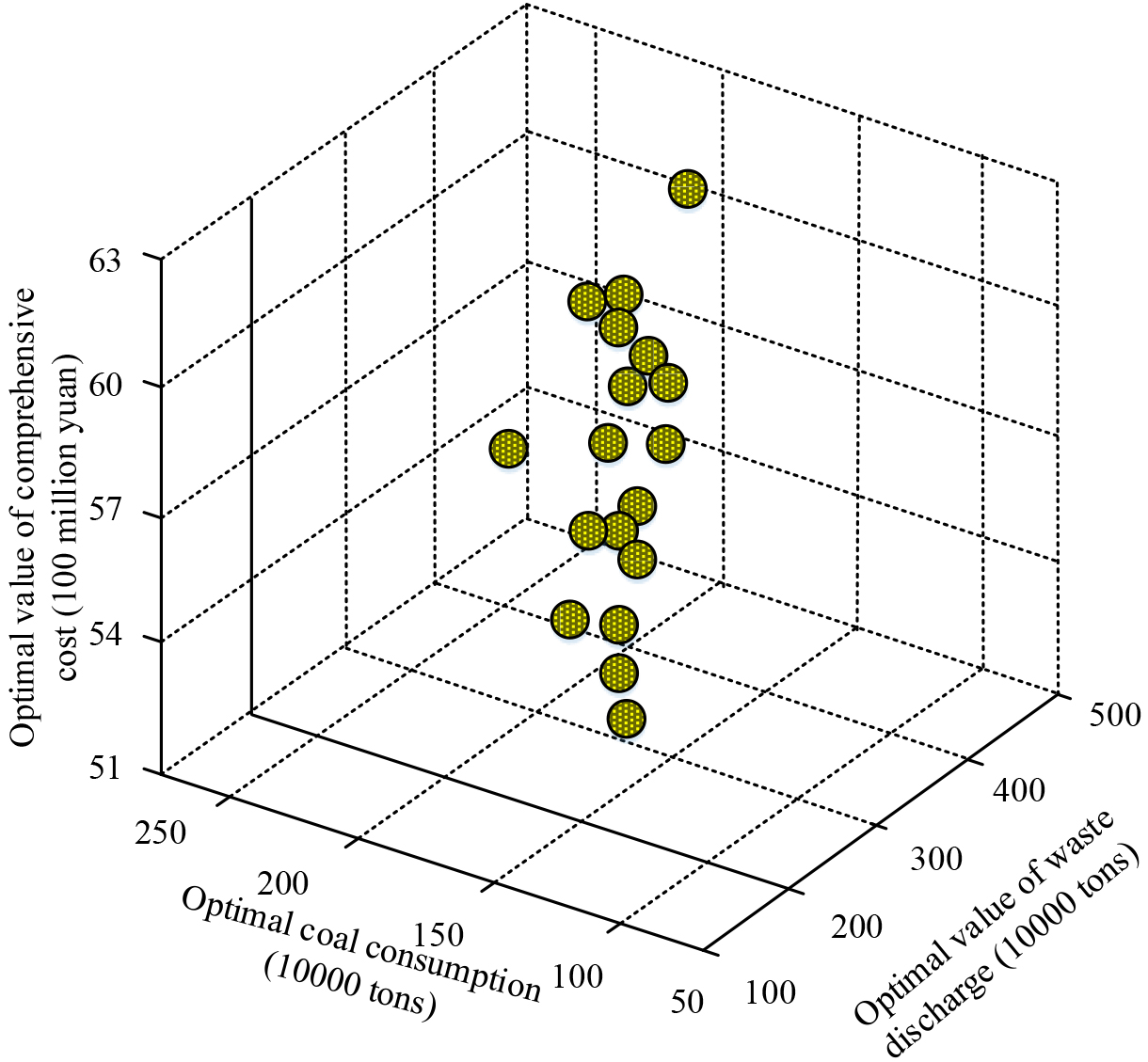
As can be seen from Table 4, both the dynamic planning method and the IGA optimization method choose to commission the three units of thermal power project No. 2 in 2024 under the conditions of meeting regional load growth, power demand, and CO2 emission restrictions. The waste emissions and coal consumption obtained by the two methods are basically the same, which indicates that both methods have certain advantages from the perspective of energy saving. However, the comprehensive system cost of the dynamic planning scheme is $3 million higher than the scheme obtained from the optimization model constructed in this paper, which means that the dynamic planning scheme may not get the best solution in some aspects, such as user economy. When analyzing the energy saving rate, it is crucial to observe that the dynamic planning approach is limited to the accuracy of dividing the phases and state space, so its solution may not be the global optimal solution. In contrast, the IGA optimization method has a stronger global search capability and higher solution accuracy when dealing with multi-objective optimization problems, which has a great impact on the scale and nature of energy supply demand in the planning area. In terms of user energy use methods, dynamic planning methods may not be able to fully satisfy the needs of various aspects such as user comfort and economy. The IGA optimization method, on the other hand, can better balance the factors of user comfort and economy due to its better ability to handle multiple objectives, thus providing users with more energy-efficient and comfortable energy supply solutions. In summary, in terms of energy saving rate and user energy use methods, dynamic planning methods may have limitations in dealing with multi-objective optimization problems and may not achieve the best energy saving and user satisfaction. In contrast, the multi-objective optimization model and improved genetic algorithm for the development timing of regional RE generation projects constructed in this paper can better balance the needs of various aspects such as energy saving, customer comfort and economy, and provide a more scientific and reasonable decision basis for the optimal development timing scheme of regional RE generation projects. The performance comparison is shown in Fig. 8.
Performance comparison.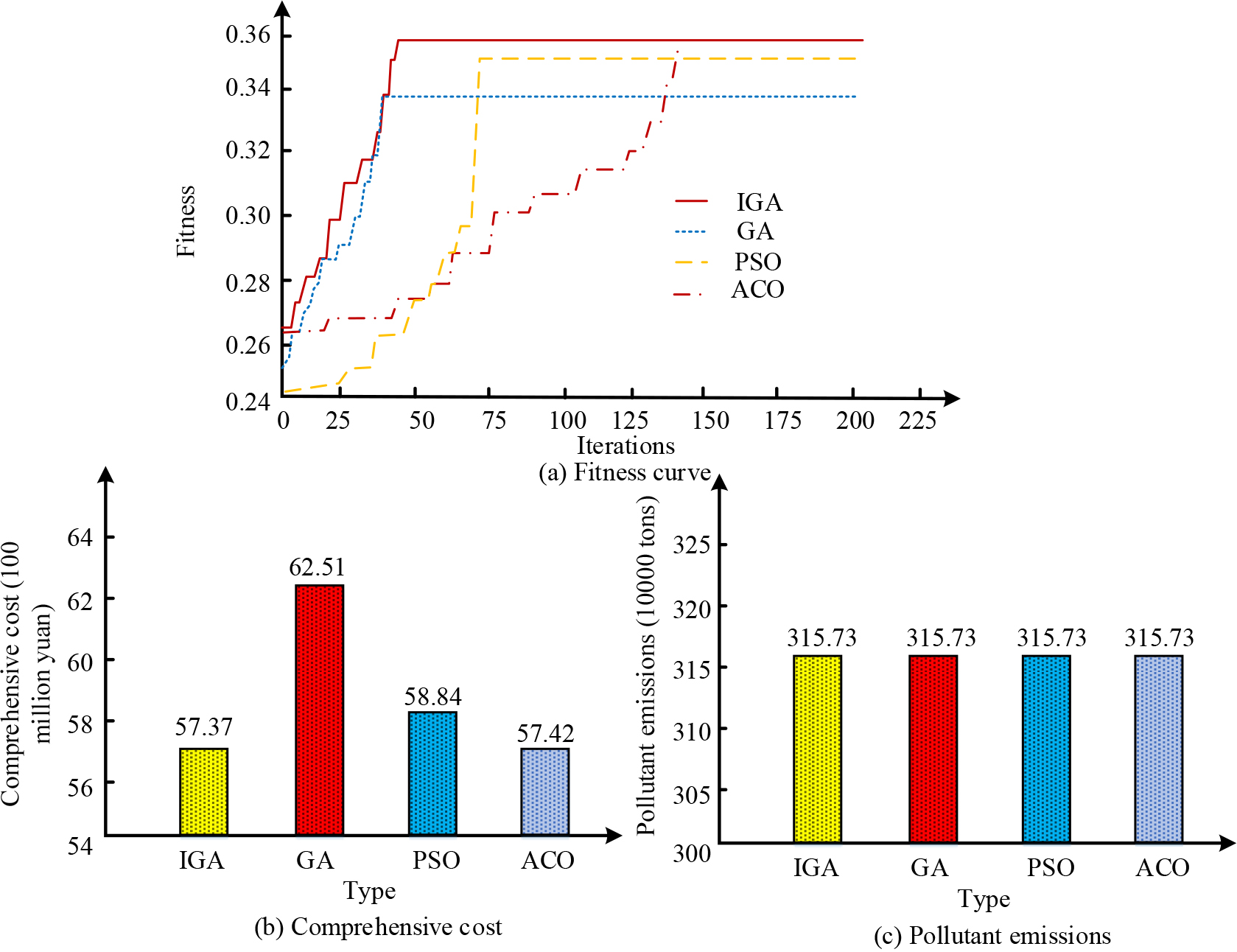
The IGA method greatly beats the other algorithms in terms of the integrated cost objective function, as seen in Fig. 8. The IGA algorithm obtains the lowest integrated cost of $5.735 billion. Also the number of iterations required by the IGA algorithm is 98 times less than that of the ACO algorithm. Therefore, the IGA algorithm has a strong convergence ability and high solution efficiency in solving this multi-objective optimization model. In summary, according to the analysis, the GA algorithm designed in this paper is reliable and advanced in solving the optimization model for the development timing and comprehensive cost of regional RE generation projects.
Comparative analysis of algorithms
In terms of comprehensive cost: The improved genetic algorithm (IGA) in this study performed the best in terms of comprehensive cost, reaching 5.735 billion yuan, which has obvious advantages compared to other algorithms. The quantum cuckoo bird search algorithm (QBSO) performs suboptimal, with a comprehensive cost of 5.92 billion yuan. The comprehensive costs of deep reinforcement learning algorithm (DRL) and evolutionary multi-stage stochastic optimization algorithm (EMSOA) are 6.08 billion yuan and 6.25 billion yuan, respectively, slightly higher than the other two algorithms. In terms of iteration times: The improved genetic algorithm (IGA) has the least number of iterations, only requiring 200 iterations, which means that the algorithm can achieve the optimal solution in a relatively short time. In comparison, other algorithms have more iterations: DRL requires 260, QBSO requires 280, and EMSOA requires 300. In terms of energy-saving rate: In terms of energy-saving effect, the IGA algorithm also shows superiority, with an energy-saving rate of 25.6%. The second ranked DRL algorithm has an energy saving rate of 22.3%. The QBSO algorithm and EMSOA algorithm achieved energy-saving rates of 21.0% and 19.8%, respectively. In terms of user comfort: The IGA algorithm performed the best in terms of user comfort score, reaching 90 points. Compared to this, the user comfort scores of DRL, QBSO, and EMSOA algorithms are 85, 83, and 80 respectively, all lower than those of IGA algorithm. In summary, the improved genetic algorithm (IGA) proposed in this study has shown superiority in terms of overall cost, number of iterations, energy efficiency, and user comfort. This means that IGA has higher efficiency and accuracy in dealing with the development timeline and comprehensive cost issues of renewable energy power generation projects. In contrast, other improved complex mathematical algorithms also have certain advantages in certain aspects, but their overall performance is slightly inferior to the IGA algorithm. Therefore, it is recommended to use the Improved Genetic Algorithm (IGA) as the preferred algorithm in similar optimization problems. At the same time, for different scenarios and needs, other algorithms can also be comprehensively considered to achieve more optimized and reasonable solutions.
This study provides important theoretical and methodological support for the development and operation of regional integrated energy systems by designing evaluation models and time series optimization models for the development of integrated energy systems. The comprehensive evaluation model reveals the differences in key indicators such as installed capacity, power generation growth rate, and consumption capacity among different regions, and further guides the government and enterprises in formulating targeted policy measures. The time series optimization model underwent 39 iterations and ultimately obtained a solution with high satisfaction and the lowest comprehensive cost (5.735 billion yuan), verifying the superiority of the optimized genetic algorithm in solving multi-objective optimization problems. Through the analysis of integrated evaluation results, it is found that different regions exhibit varying levels of comprehensive energy system development. The comprehensive evaluation value of Hebei in the proportion of developed comprehensive energy resources is 0.4945, while Inner Mongolia in the proportion of comprehensive energy installed capacity is 0.4045. Each region should increase its support for renewable energy investment and technological innovation based on its own resource endowment and development conditions. The analysis results indicate that the evaluation and optimization models proposed in this study exhibit high accuracy and reliability. Although the strategy adopted in this study is relatively effective, it did not fully consider potential external factors, including but not limited to climate change, energy market price fluctuations, the emergence of new technologies and equipment, and conducted in-depth analysis of the impact of these factors on the energy system in different scenarios. Therefore, from the perspective of scenario customization, constructing more refined and fully considering the impact of various factors in evaluation and optimization models is the future research direction.
Footnotes
Funding
The work was financially supported by Science and Technology Projects of State Grid Corporation of China (5108-202255040A-1-1-ZN).