




Abstract
Day-ahead scheduling strategy is an effective way to improve the renewable energy accommodation. To increase the renewable energy accommodation in the regional power grids, reduce the total costs of the power system, and improve the supply reliability of the power system, this research suggests a multi-time-scale “source-storage-load” coordinated dispatching strategy that considers the distribution and characteristics of pumped energy storage and loss of the network. Taking the wind curtailment penalty costs, the system operating costs, and the load loss penalty costs as the objective functions, a day-ahead coordinated scheduling strategy for source storage and load considering demand response and lines loss is established. Finally, the commercial software package CPLEX is called through the MATLAB platform to complete the optimization of mixed integer programming. Simulation results shows that the proposed scheduling strategy could build the power generation plant, effectively adjust the output power of pumped storage, and regulate the assumption of translationable load and transferable load.
Introduction
As of the end of 2022, the installed capacity of wind power and photovoltaic in China was 1200 GW. The large-scale integration of renewable energy will bring serious problems of wind and light abandonment. Improving the power grid’s ability to absorb renewable energy is the current development trend.
Most of the regional power supply networks are active distribution networks, which have the characteristics of active control and active management. The dispatch instructions could be used for achieving unified dispatch control of distributed energy resources, energy storage devices and adjustable loads. In these days, most researches focuses on the topics of “source-load” complementarity, “grid-load storage” complementarity or “source-source” complementarity [1, 2, 3]. However, targeting high proportion distributed renewable energy networked power systems, the research on the “source-grid-load-storage” collaborative scheduling strategy is not sufficient to solve the issues of coordinated scheduling strategy for source storage and load considering demand response.
Recently, in the research on the optimization scheduling filed of “source network load storage”, the optimal operation strategy of microgrid systems focuses on several aspects, such as the economy, environmental protection and the line transmission power threshold [4]. He et al. [5] proposed an economic scheduling model for microgrid systems considering load demand under the peak valley electricity price mechanism; an optimal strategy of a university campus micro-grid operating under unreliable grid considering PV and battery storage is suggested [6]; Navinand and Sharma [7] established a power dispatch model for microgrid retailers to maximize profits based on time-varying electricity prices; an effective method based on priority rolling to provide demand side incentive response for users is suggested in [8]; Khalili [9] proposed an independent microgrid average shift entropy model with the goal of maximizing efficiency. Du et al. [10] proposed a comprehensive economic model for multiple microgrids and adopted an improved cuckoo search algorithm for power optimization scheduling of multiple microgrids. Karimi and Jadid [11] developed a multi microgrid operation model with multiple resources to solve the multi-objective management problem of energy in microgrid systems; an innovative multi-layer microgrid cluster optimization framework is proposed in [12], which divides the cluster microgrid into multiple layers using distribution networks and systems to achieve demand-based coordinated energy management. Sun et al. [13] introduced the laminar flow structure into the distributed optimization scheduling of intelligent distribution networks, and established a layer scheduling model for intelligent distribution networks and a distributed renewable energy lower level scheduling model to effectively improve the flexible scheduling of source network load storage resources and distributed renewable energy consumption; Li et al. [14] modeled the distribution network scheduling problem as a multi-level stochastic programming model and solves it using deep reinforcement learning algorithms; a source network load storage collaborative scheduling strategy is proposed that adapts to the seasonal characteristics of rural microgrids, balancing the robustness and economy of rural microgrid scheduling [15, 16]. Premadasa et al. [17] proposed a multi-objective optimization model for sizing an off-grid hybrid energy microgrid with optimal dispatching of a diesel generator. A two-stage stochastic p-robust optimal energy trading management in microgrid operation considering uncertainty with hybrid demand response in [18]. The optimal scheduling models of microgrids are solved by mathematical programming methods and intelligent optimization algorithms [19].
The above literature proposes improvement methods from the perspectives of hierarchical optimization of scheduling models, improvement of solving algorithms, and model robustness. By establishing the “source network load storage” coordinated scheduling model, the day ahead scheduling plan is formulated to improve the renewable energy absorption capacity of the grid. However, the shortcoming is that the volatility and randomness of renewable energy output and the uncertainty of demand response load will affect the accuracy of the day-ahead dispatching plan formulated by the grid. Energy storage technology is widely used in fields such as frequency regulation, peak shaving, suppressing fluctuations in renewable energy output, demand side response, and improving user reliability, playing an important supporting role in the development of the energy internet. The national and local governments vigorously promote the application of energy storage technology, and the development prospects of energy storage are broad. Electrochemical energy storage has different output characteristics from traditional pumped storage power stations. Through energy storage systems, electricity is stored during the peak electricity price period of the power grid, and released to supply users during the peak electricity price period, which can save electricity costs for users and alleviate the pressure of peak load regulation of the power grid. With the continuous development and application of distributed power generation, its role in the distribution network is becoming increasingly significant. Studying the calculation method of line loss in distribution network technology with distributed power generation has important theoretical significance.
In this manuscript, the loss of the distribution network is considered to build day ahead scheduling optimization model. The organization of the rest manuscript is as follows: Section 2 introduces the classification of demand response resources and Operating characteristics of pumped storage power plants. Section 3 derives the loss mode when considering the DG connection. Section 4 proposes the day-ahead scheduling optimization model with the objectives of system operating costs, and the load loss penalty costs. Section 5 analyzes the effectiveness of the proposed scheduling optimization model. The conclusion is summarized in Section 6.
Day-ahead scheduling optimization model considering the ESS and DR
Operating characteristics of pumped storage power plants and demand response resources
The pumped energy storage power station is mainly composed of upper reservoir, water diversion system, pumped storage unit and lower reservoir. It generates electricity at the peak load of the power system and pumps water at the trough of the load to achieve the purpose of mechanical energy and electrical energy conversion. The power generation operation principle of pumped storage power station is the same as that of conventional hydropower plant, and the mechanical energy can drive the generator to rotate through the turbine, and the electric energy is connected to the power grid through the transformer. Therefore, its regulation speed is consistent with that of conventional hydropower units, and it does not have fast adjustment ability. Pumped storage power stations have the advantages of fast start-up speed and large energy storage capacity, but also have greater disadvantages limited by geographical environment. Other existing energy storage methods have the advantages of flexible space layout and fast adjustment speed, but they have the disadvantages of high equipment cost and limited energy storage capacity.
Translationable load and transferable load both have the characteristics of load power supply time changing according to plan, but there are also differences from each other. The difference is that the translationable load is required to be translated as a whole, its power consumption time cannot be interrupted and the duration is fixed, and the power required during the power period cannot be changed, such as disinfection cabinets, washing machines, etc. Transferable load is more flexible than translational load since the electricity consumption of the power period can be flexibly adjusted; in addition, the power period is allowed to be interrupted and the duration time is not fixed, as long as the total load demand remains unchanged before and after adjusting, electric vehicles are typical transferable loads because the charging time and charging power of electric vehicles in the orderly charging mode can be adjusted, while the total amount of charging required remains unchanged. Such characteristics are satisfying the required of transferable load.
In this study, electricity prices use a dynamic day-ahead pricing model, so that price-based demand response needs to be determined in day-ahead scheduling. Incentive-based demand response can be divided into the following types according to the length of time it takes to respond to grid dispatching instructions: 1) Class A Incentive-based demand response, planned 1 day in advance; 2) Class B Incentive-based demand response, response time 15 min-2 h. The shorter time scales are not considered.
Loss calculation considering DGs integrating to the distribution network
One important aspect of the integration of distributed power sources into the distribution network is that it will have an impact on the losses of the distribution network. The loss of the power grid mainly depends on the power flow of the system. After connecting distributed power sources near the load of the distribution network, the load distribution of the entire distribution network will change, and the power flow of the distribution network may also change from the original “one-way” flow to “two-way” flow.
Assuming that the voltage on the transmission line is the same everywhere, ignoring the voltage changes before and after the introduction of DG. In Figs 1 and 2,
Simple radial distribution network.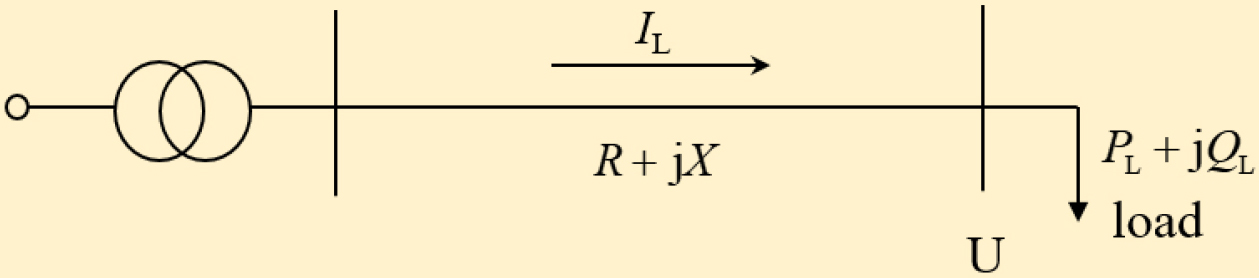
Distributed power supply connected to distribution network.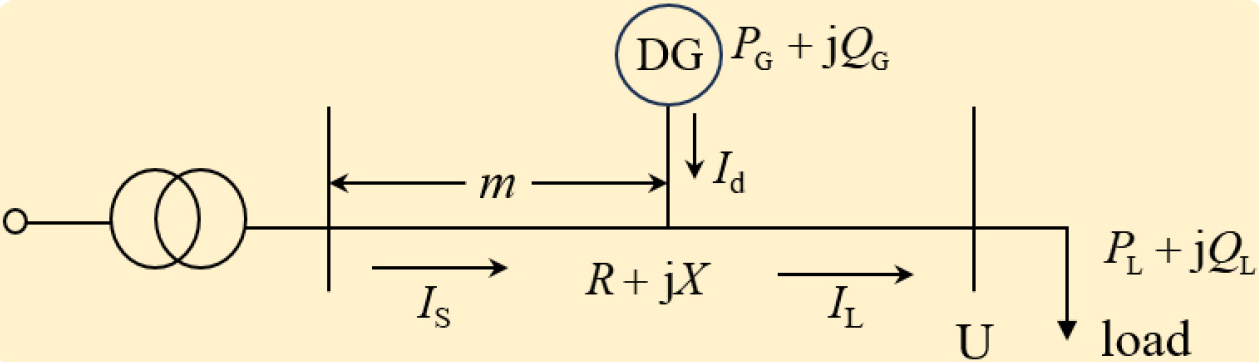
In the case of no DG scenario, the loss could be derived as
When considering the injection power of DG, the distribution network loss can be divided into two parts: (1) line loss between SUB-DG; (2) line loss between DG load, as follows:
Therefore, the entire network loss is represented as:
After DG is connected to the distribution network, the line loss is related to the DG’s connection location, connection capacity, and power factor. This model could be considered in the day ahead scheduling optimization model.
Figure 3 illustrates the simplified integrated electric system model, which includes distribution generation, ESS, basic load, and flexible load.
Simplified integrated electric system model.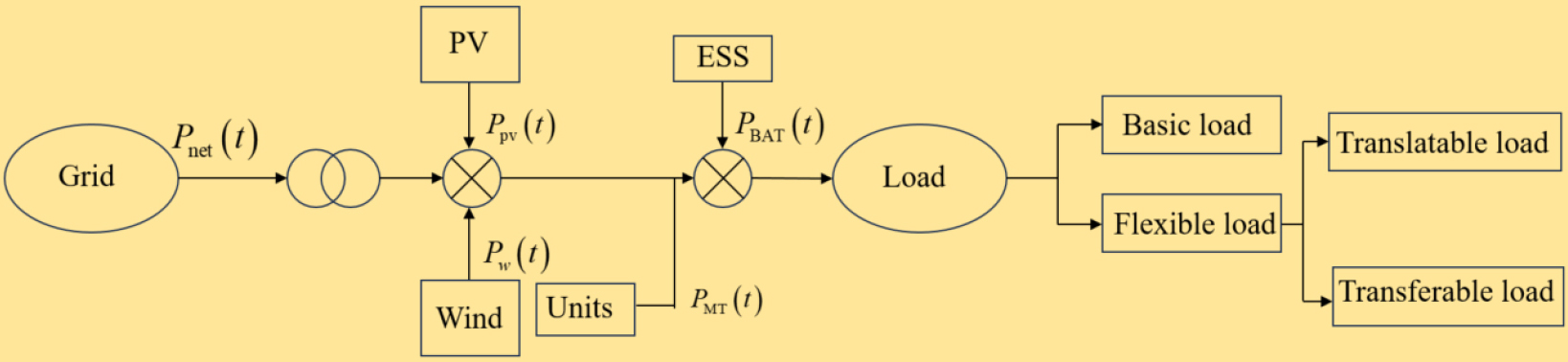
Figure 4 shows the day-ahead scheduling framework proposed in this research. Based on the short-term prediction of DGs and loads, the amount of ESS and flexible load are the variable to participate in day ahead optimization so as to achieve optimal operation considering the conventional unit startup and shutdown plant, PDR, DR response, pumped storage station regulating capability.
According to the existing research, the multi-scenario stochastic programming method suitable for large uncertainty is adopted for the scheduling of the recent dispatch, and the system safety constraints are met for the error under the prediction scenario of different loads and renewable energy output.
Day ahead scheduling framework.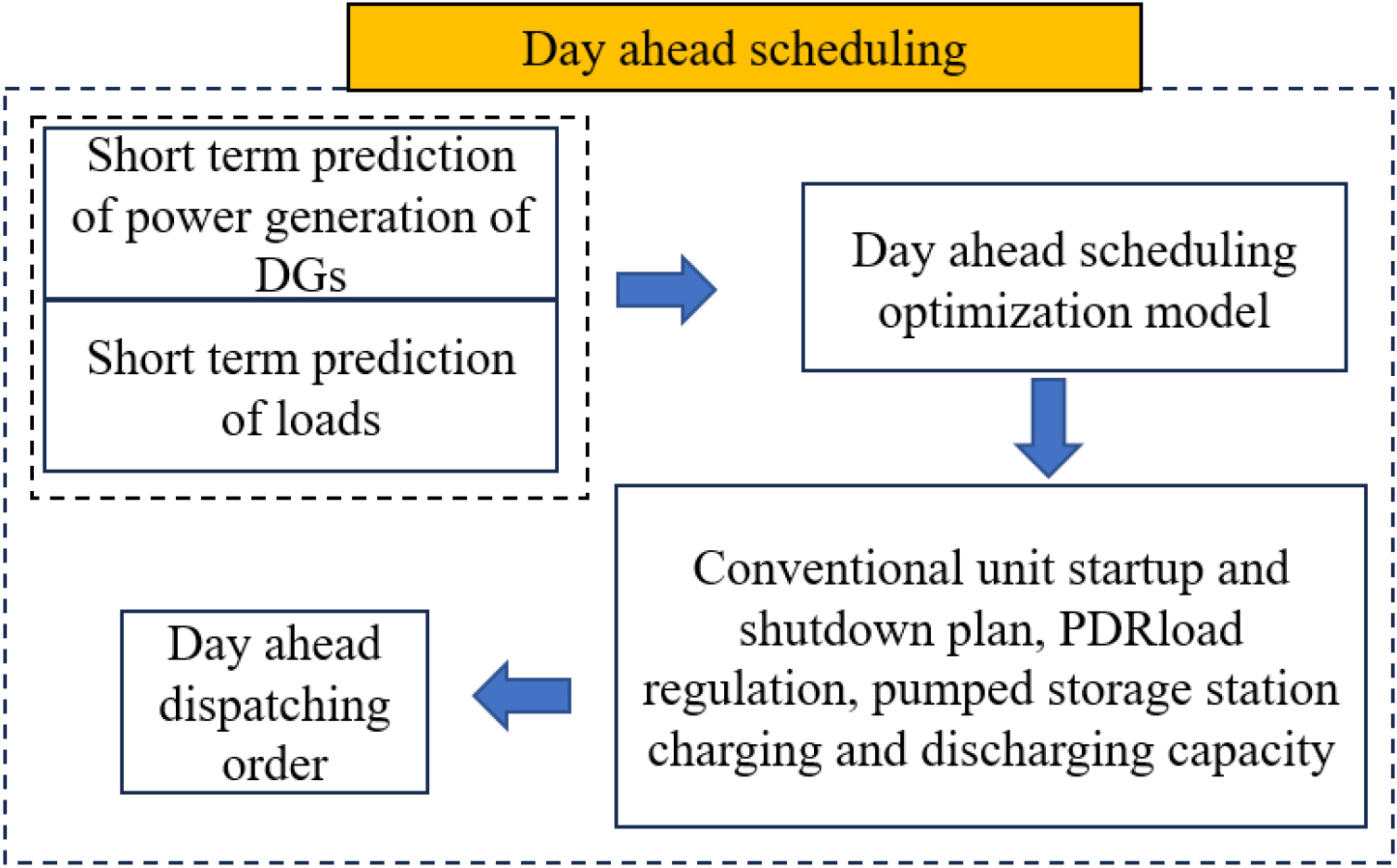
(1) Objective function
In order to improve the accommodation capacity of renewable energy in the power grid and improve the reliability of power supply in the emergency mode of the power grid, the objective function of the scheduling model should be included in the system operating cost by converting the abandoned air volume and load power shortage into penalty costs based on the minimum total operating cost of the system, and the depreciation cost of electrochemical energy storage should be taken into account. It can optimize economy, and improve renewable energy consumption capacity and power supply reliability in emergency mode.
Where
(2) Constraint conditions
(1) Power balance constraints
Where
(2) Operation constraints of conventional unit
Unit output constraints and climbing constraints of unit
Where
(3) Output constraints of distributed renewable energy
The output of renewable energy power generation should be less than the predicted value.
(4) Operation constraints of energy storage station
1) Constraints of electrochemical energy storage station
Electrochemical energy storage is mainly constrained by the rated power of inverter and the rated charging and discharging power of energy storage station.
where
2) Constraints of pumped storage station
The constraints of pumped storage station are mainly the water capacity of the reservoir and the climbing rate affected by the pumping and waterproofing rate.
where
(5) Transmission power constraints of transmission lines
Where
(6) Constraints of DR
The transferable power and constrain the minimum duration of load transfer operation are shown in Eqs (12) and (2.3).
Where
The minimum continuous reduction, maximum continuous reduction time constraint, and reduction frequency constraint are shown in Eq. (2.3)
Where
The optimization algorithm is used to solve the day ahead scheduling model, which represents: 1) The start and stop status of conventional units; 2) Charging and discharging capacity of pumped storage units; 3) PDR adjustment amount, and adjustment amount of Class A IDR.
Parameters of conventional generators
The regional power grid includes six conventional thermal power units, located at nodes 1, 2, 5, 8, 11, and 13. The parameters of the thermal power units are shown in Table 1. Conventional generators are connected a 400 MW wind farm at node 2 and a 100 MW/400 MW/h pumped storage power plant at node 8, as shown in Fig. 5. This article sets up comparative cases for discussion in two scenarios of positive and negative peak shaving of wind power to achieve day head optimization scheduling considering the loss of distribution network. The YALMIP toolkit of the model in MATLAB platform calls CPLEX software for optimization solution.
Regional power grid with wind power generator.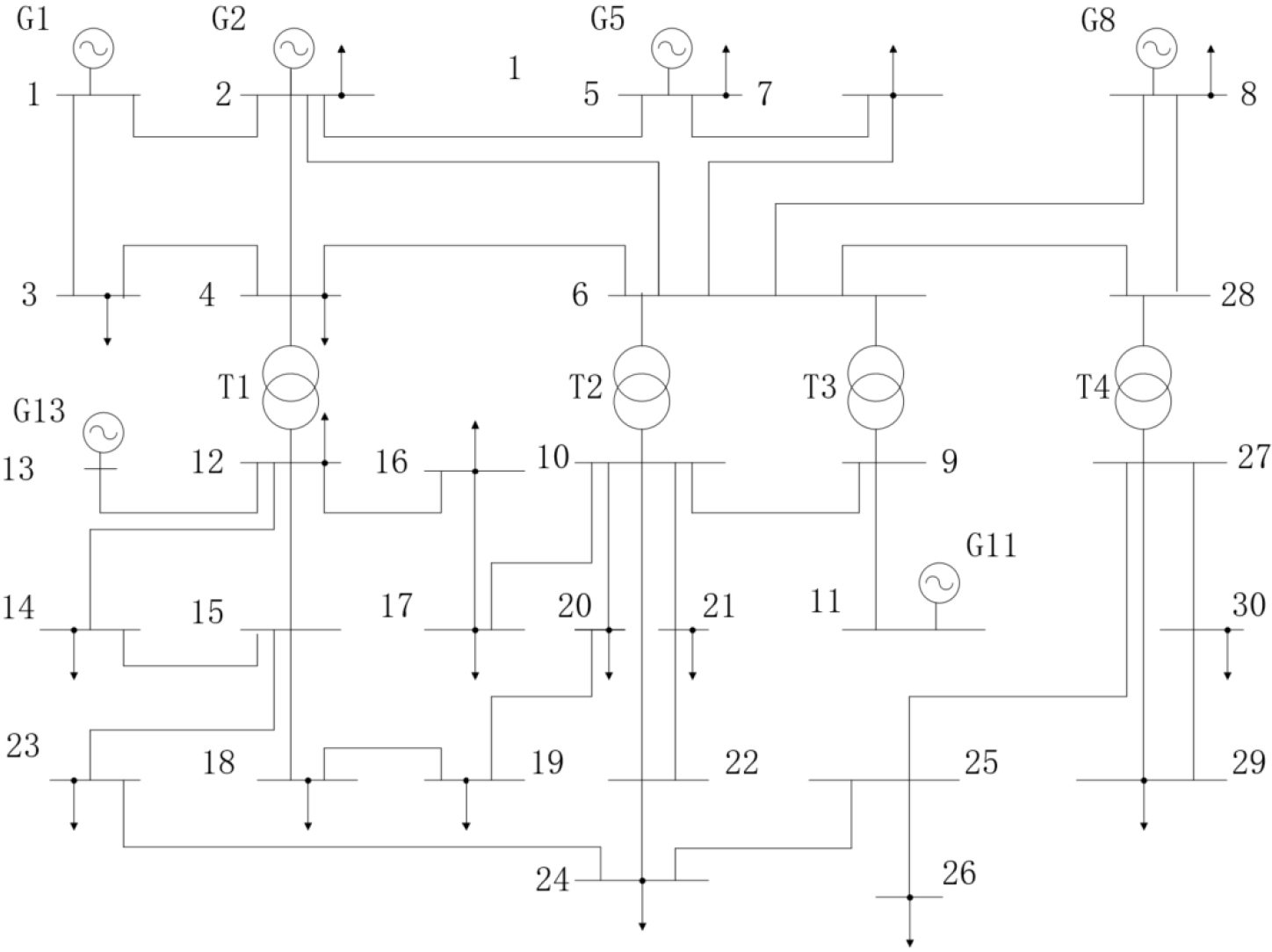
System scheduling plan.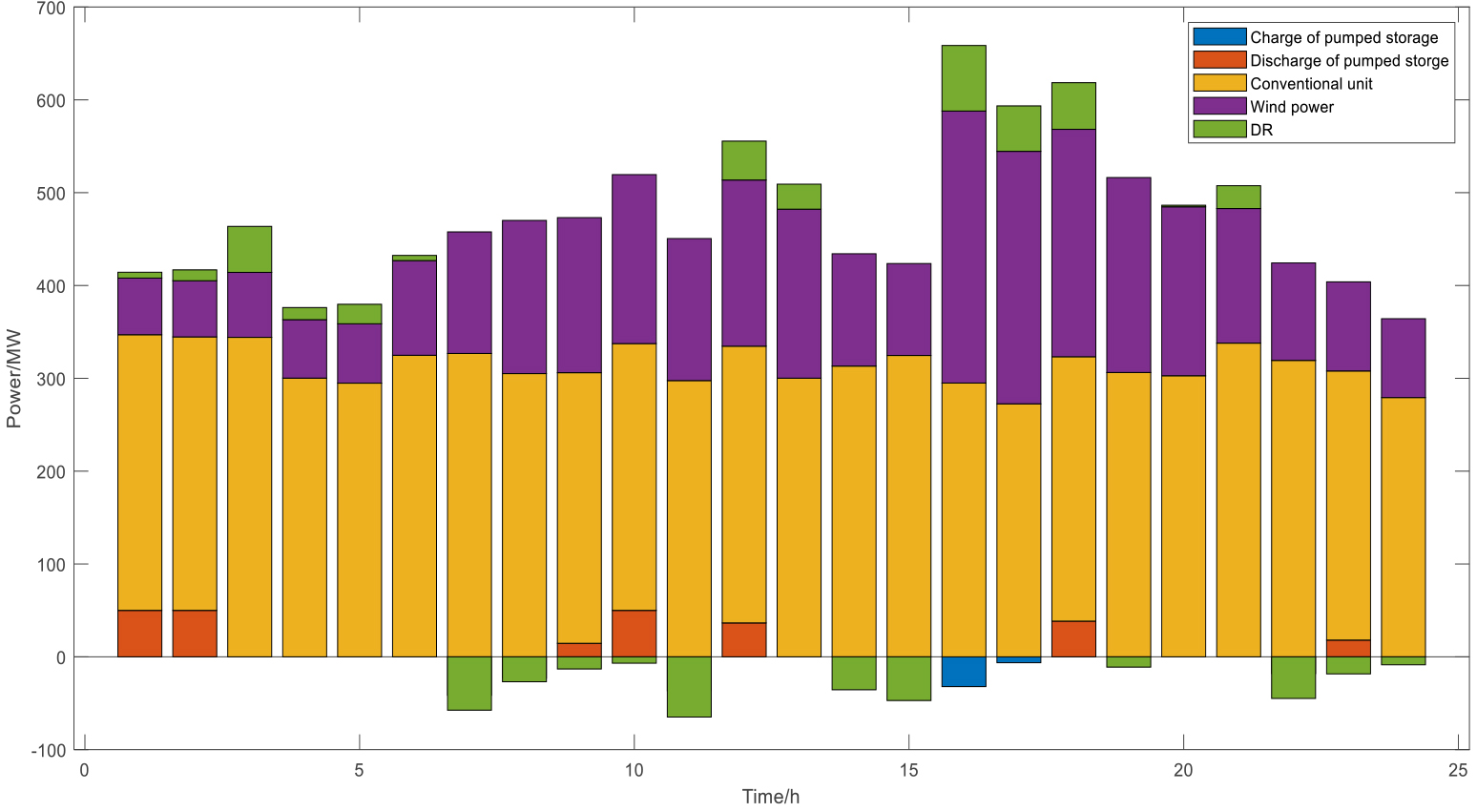
DR resource scheduling plan.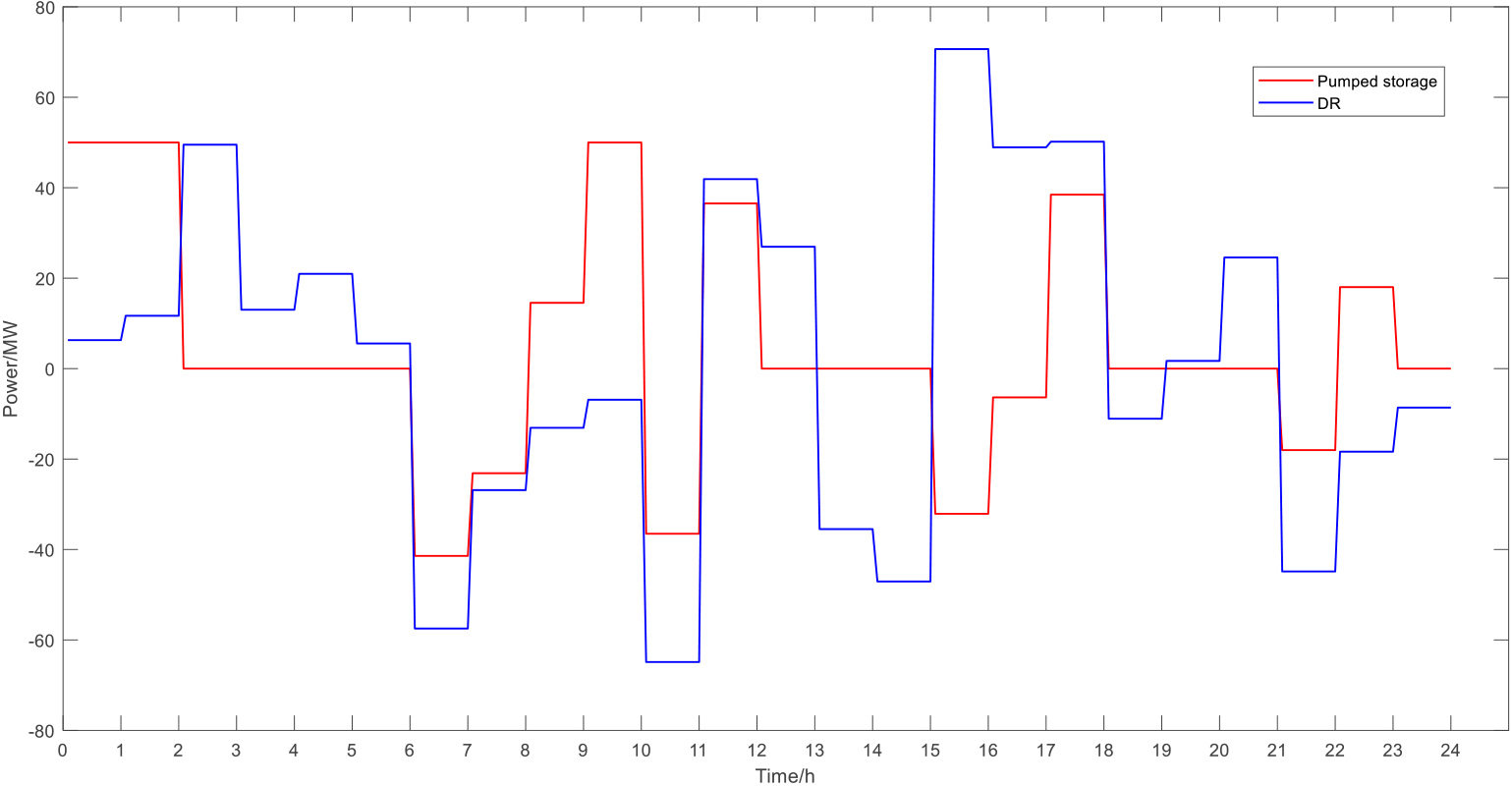
System scheduling plan.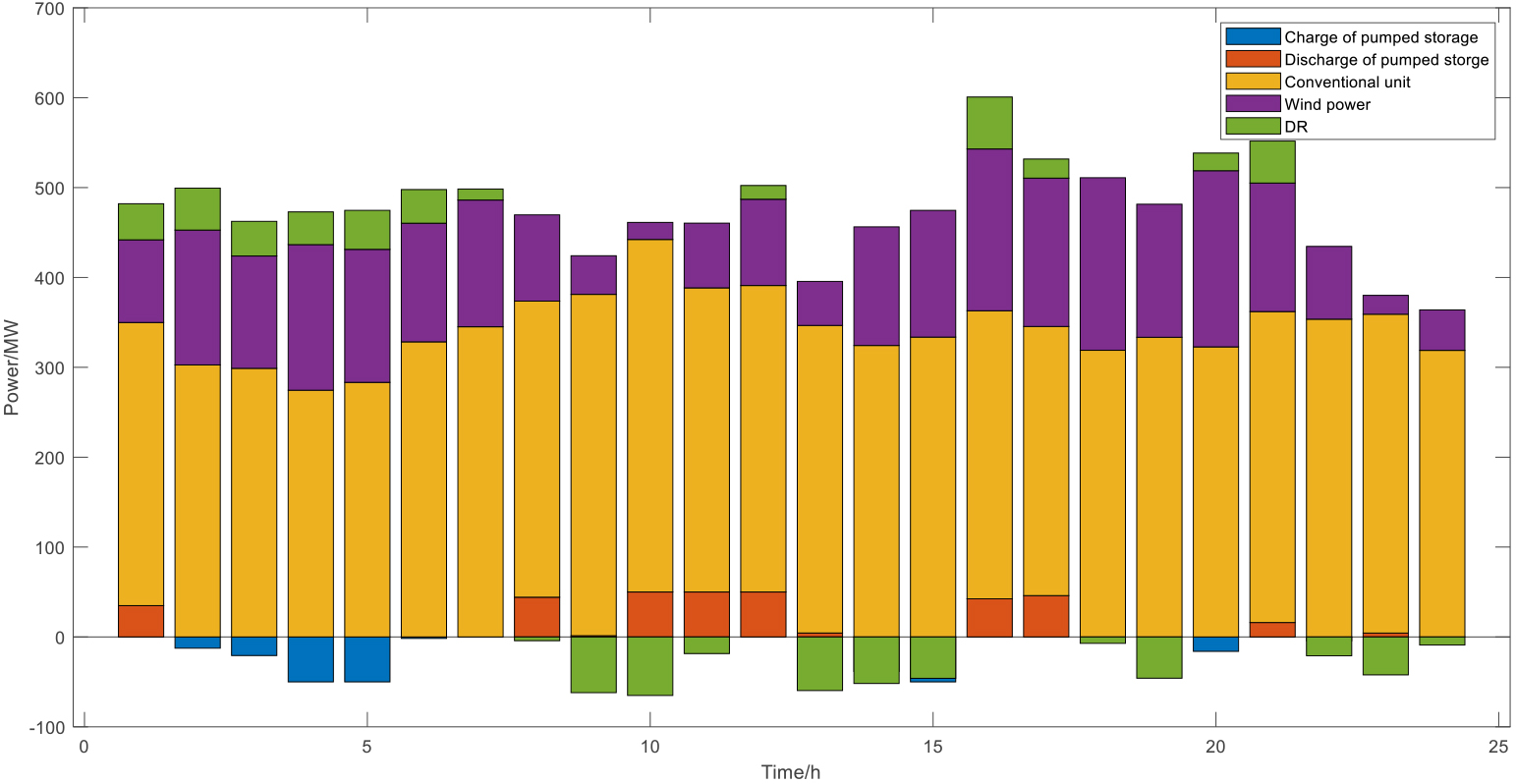
DR resource scheduling plan.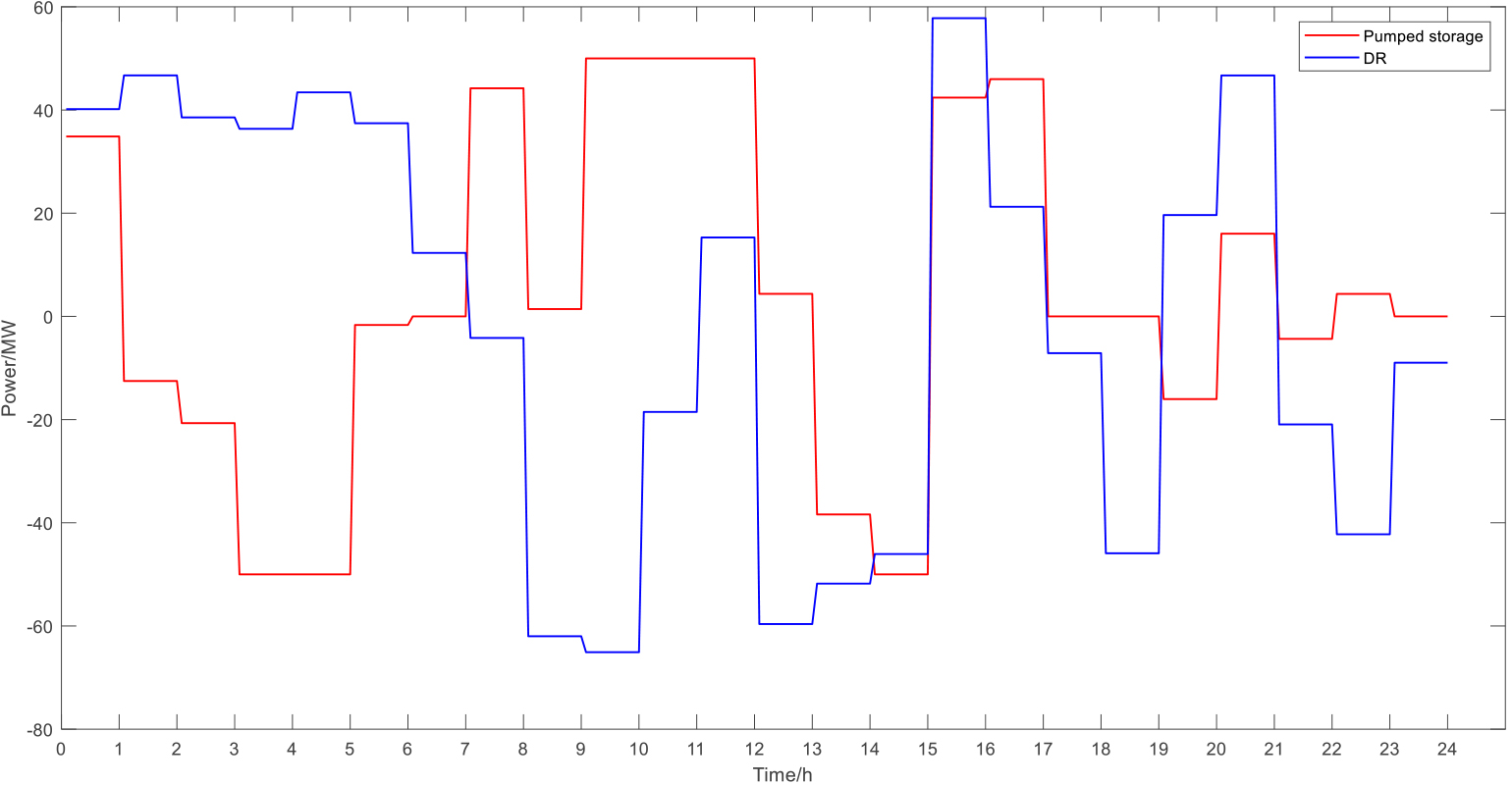
As shown in Figs 6 and 7, during the peak shaving of wind power, the trend of wind power output changes is basically consistent with the trend of basic load changes, which plays a role in reducing the imbalance of power. The adjustable resources such as pumped storage and DR are at a relatively low level. Due to the fact that pumped storage power stations do not have fast response capabilities, and DR contains Class A IDRs with smaller time scales, in the face of sudden changes in wind power and load (13–16 hours), the regulation amount of DR is significantly higher than that of pumped storage.
As shown in Figs 8 and 9, during the reverse peak shaving of wind power, the trend of wind power output change does not match the trend of basic load change, which exacerbates the imbalance. The adjustable resource utilization of pumped storage, DR, and other resources is significantly higher than the level of positive peak shaving. The large capacity and long time scale characteristics of pumped storage are complementary to the small capacity and small time scale characteristics of DR, which can achieve a significant reduction in wind abandonment rate in both positive and negative peak shaving scenarios.
Day-ahead scheduling strategy of power system is an effective option to increase the renewable energy accommodation. To increase the renewable energy accommodation in the regional power grids, reduce the total costs of the power system, and improve the supply reliability of the power system, this research suggests a multi-time-scale “source-storage-load” coordinated dispatching strategy that considers the distribution and characteristics of pumped energy storage and loss of the network. Taking the wind curtailment penalty costs, the system operating costs, and the load loss penalty costs as the objective functions, this article proposes a “source-storage-load” scheduling plan that comprehensively considers the time characteristics of pumped storage, line loss, and the characteristics of DR resources. The output characteristics of pumped storage power station are analyzed, and combined with the characteristics of DR resources for interaction, the day ahead scheduling plan is formulated. Simulation results shows that the proposed scheduling strategy could build the power generation plant, effectively adjust the output power of pumped storage, and regulate the assumption of translationable load and transferable load.
Footnotes
Acknowledgments
The work was financially supported by Science and Technology Projects from State Grid Corporation of China (No: 5400-202323233A-1-1-ZN; Title: Research on real-time analysis about energy loss of new style distribution area with “source-grid-load-storage” and related key technologies of energy saving and loss reduction).