




Abstract
With the increasing demand for logistics in modern society, how to achieve low-cost and efficient logistics delivery has become an urgent research topic. A hybrid evolutionary JAYA algorithm (H-JAYA) based on global optimization was designed to address the complex path planning problem of electric vehicles. This algorithm introduces a reverse learning mechanism to calculate the current optimal and worst individuals, while using differential perturbation mechanism and sine cosine operator to update the individual’s position. In addition, the study used the H-JAYA algorithm to construct a corresponding mathematical model for the optimization problem of electric vehicle paths. The results showed that in the three examples, the H-JAYA algorithm tested the optimal curve convergence speed, and it tended to stabilize after about 30 iterations. Meanwhile, in the RCDP5001 example, the total cost of the H-JAYA algorithm reached the lowest value of 623 yuan. The H-JAYA algorithm has significant advantages in solving the distribution path problem of electric vehicles, and can be well applied to practical logistics distribution, providing effective technical support for modern e-commerce logistics planning.
Introduction
The logistics distribution problem with time window belongs to one of the optimization problems in 5G e-commerce logistics, which is mainly to solve the best operation route of the distribution vehicle under the conditions of satisfying the time window, the distribution cost, and the carrying capacity [1, 2]. A reasonable approach to solving this optimization problem can improve the efficiency of logistics and distribution and reduce the industry cost. Traditional optimization methods are no longer suitable for solving the current complex optimization problems, such as dynamic non-linear programming and Powell’s method. Intelligent algorithms, on the other hand, have shown advantages in solving optimization problems, such as strong solving power, high accuracy in finding the best solution and ease of implementation, thus attracting the attention of a wide range of research scholars. The basic JAYA algorithm has the advantages of fewer control parameters and easy implementation, making it very suitable for solving engineering optimization problems. However, the algorithm has low stability in solving and is extremely prone to falling into local extremum [3]. Therefore, in order to solve logistics distribution optimization problems more effectively, the traditional JAYA algorithm has been studied and improved. A global optimization hybrid evolutionary JAYA algorithm (H-JAYA) has been proposed, which has stronger global search ability and robustness, and is expected to have good application effects in electric vehicle path planning problems. The research content mainly includes four parts. The first part reviews the JAYA algorithm and the methods of e-commerce logistics distribution. The second part provides a detailed introduction to the application of the hybrid evolutionary JAYA algorithm based on global optimization in 5G e-commerce logistics. Among them, the first section explains the principle of the hybrid evolutionary JAYA algorithm based on global optimization, and the second section discusses the practical application of this improved method in e-commerce logistics. The third part conducts experimental verification of the proposed method. The fourth part discusses the experimental results and proposes future development directions.
Related work
The JAYA algorithm has a good optimization mechanism and convergence performance, and is now widely used in solving optimization problems in various fields. In the research on the improvement and application of JAYA algorithm. Abu Zitar et al. [4] have optimized the convergence of JAYA and determined its open source code to address some problems in the processing of optimization problems, effectively improving the global JAYA optimization performance. Zhao et al. [5] proposed a self-learning discrete JAYA algorithm for the shop floor scheduling problem of heterogeneous factory systems. The algorithm focuses on plant load balancing, total energy consumption and minimizing total delay, and designs a self-learning operator selection scheme to convert the success rate of the operators into knowledge. The results show that it can solve the scheduling problem more efficiently. Ramesh and Vydeki [6] introduced the JAYA algorithm to optimize a deep neural network for disease identification and classification of rice leaves. The method focuses on first directly acquiring images of plant leaves from farmland, then extracting the binary images for segmentation of diseased and non-diseased parts, and finally classifying the diseases using JAYA. The results show that it achieves an accuracy of over 90% in disease recognition. Mishra et al. [7] developed a hybrid CSA-JAYA to optimize the original two deep learning algorithms in order to reduce the consumption of fossil fuels and the risk of emissions. The results show that the method is able to maintain a good balance between fuel cost and minimal risk of release into the environment, resulting in higher quality results. Das et al. [8] introduced a feature selection method by JAYA for the optimization problem of the JAYA algorithm and used supervised machine learning for optimal features selection. The results show that it can obtain the optimal subset of features and has very good performance.
Modern e-commerce logistics and distribution is crucial to the proper functioning of the entire transport industry, and has therefore been the subject of much research. The results show that in order to reduce the return rate, the retailer should adjust the pre-delivery period in the logistics model accordingly [9]. Teng [10] found that the traditional logistics distribution method is vulnerable to the influence of vehicle carbon emissions and thus can hardly obtain the optimal logistics path. So he proposed a recursive neural network-based cross-border e-commerce logistics distribution method by the calculation of vehicle speed under different road conditions and the inference of the speed of logistics vehicles by combining the ratio of the carrying capacity of logistics routes to the maximum. The results show that it can effectively obtain the optimal route for cross-border e-commerce logistics. Guan [11] considered logistics crucial for cross-border e-commerce, and therefore introduces big data for the smart logistics construction. The results show that this technology can further develop cross-border e-commerce and provide reliable technical support for future sustainable development. Feng [12] conducted a study to assess the viability of implementing ant colony algorithms in rural e-commerce logistics, where third-party distribution was established as the primary logistics mode. Utilizing the ant colony algorithm to calculate the shortest path and cost, the study found that this approach effectively reduces rural logistics cost while improving distribution efficiency. Das et al. [13] constructed an analytical model to address game problems in the e-commerce logistics market and utilized the Cournot game model to determine the competitive structure of logistics service demand to verify the existence of Nash equilibrium in the service game. Results from the study show that this method is effective in explaining the logistics marginal profit problem.
In summary, a large number of researchers have designed corresponding solutions for the distribution problem of e-commerce logistics, including neural network-based methods, big data mining technology, etc., and have also achieved certain results. At the same time, relevant research has been conducted on the application of JAYA in various fields. However, few studies have applied the JAYA algorithm to the design of logistics distribution path schemes. Therefore, the study proposed H-JAYA to design 5G e-commerce logistics solutions. Compared with other single algorithms, H-JAYA has stronger global search and optimization capabilities. The study aims to achieve better application results in path planning by adopting this method.
Hybrid evolutionary JAYA algorithm based on global optimization for e-commerce logistics design
Hybrid evolutionary JAYA algorithm
Logistics plays a crucial role in e-commerce, and effective e-commerce logistics design can improve the efficiency and service quality of logistics networks, thereby providing consumers with a better shopping experience. Based on this, the study introduced the JAYA algorithm, which is an optimization algorithm with fewer control parameters and a high success rate of optimization. The algorithm first initialises the population, then calculates the fitness values of the candidate solutions, then selects the current better solution to update the candidate solutions, and finally converges to the optimal solution. The concrete steps of its implementation are shown in Fig. 1.
Specific process of JAYA algorithm.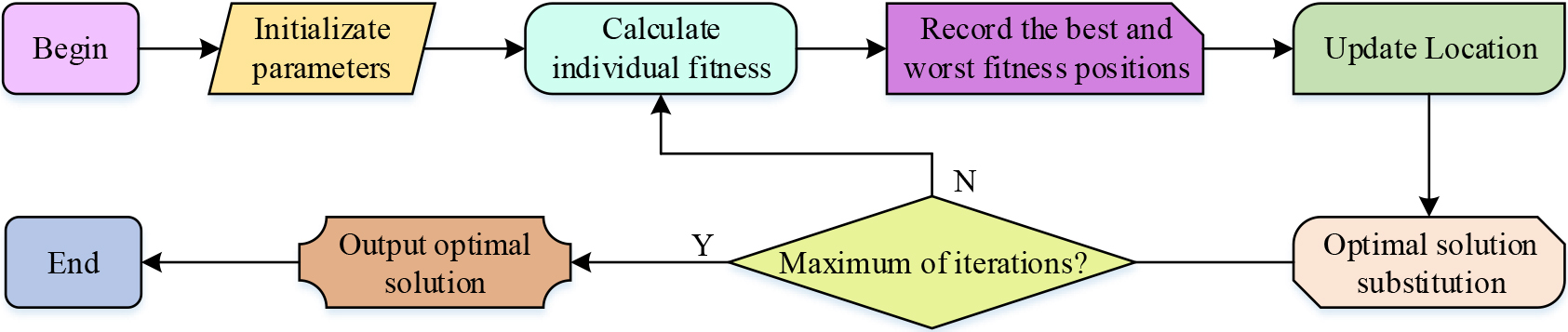
The traditional JAYA algorithm suffers from a tendency to fall into local extremes and from solution instability, so a hybrid evolutionary JAYA algorithm for global optimisation is introduced at [14]. The algorithm is improved at three levels. Firstly, a backward learning mechanism is introduced into the computation of the best and worst individual positions in order to move them out of the local extremes. Subsequently, the algorithm utilizes differential perturbation mechanism and sine cosine operator to update individual positions. Finally, research is conducted to improve the optimization and convergence of the algorithm through mixed evolutionary methods with different parity. The specific flow of the hybrid evolutionary JAYA algorithm based on global optimisation is shown in Fig. 2.
Specific process of hybrid evolutionary JAYA algorithm based on global optimization.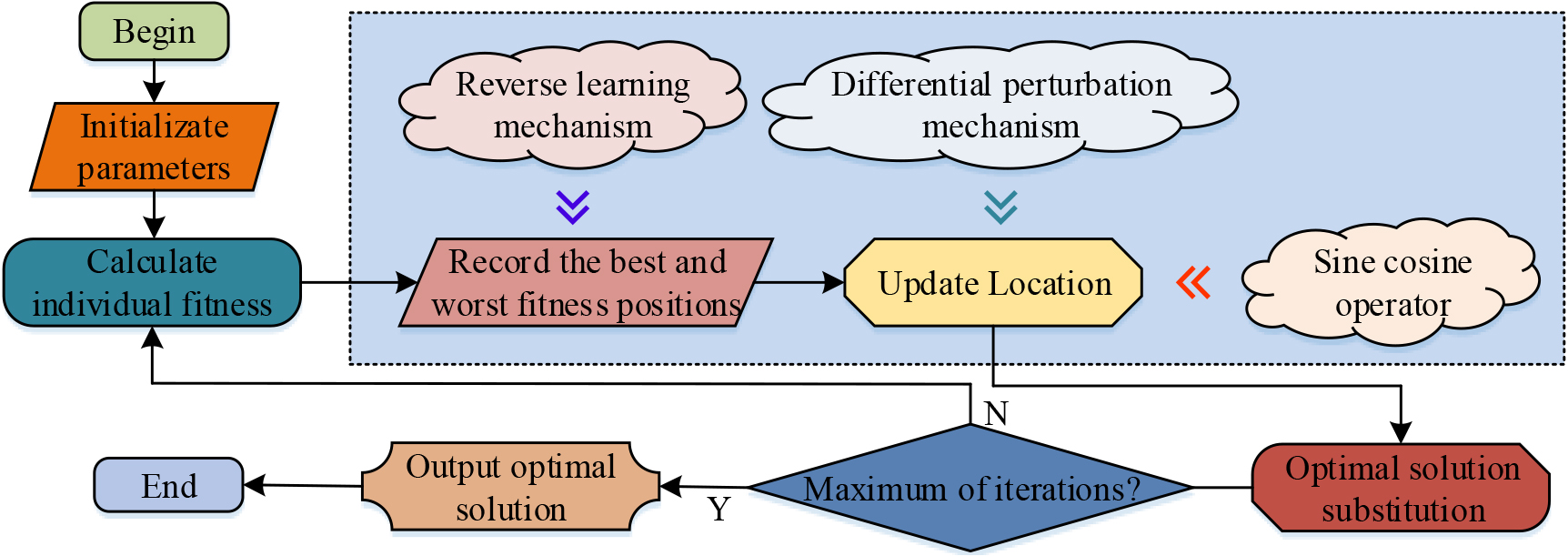
The H-JAYA algorithm not only helps to ensure the diversity of the population, but also meets the algorithm’s requirements for mining capabilities. Due to the fact that the optimal and worst positions of individuals in the population fall into local extreme regions, which can cause the search of the population to stop and prevent the achievement of a global optimal solution, a reverse learning mechanism has been introduced to improve the traditional JAYA algorithm. This mechanism mainly combines two types of reverse learning, namely random reverse learning and ordinary reverse learning. The optimal and worst positions of the current population are calculated as shown in Eq. (1).
In Eq. (1),
In Eq. (2), rand is a random value between [0, 1]. In addition, the next generation optimal individual position after updating the position is calculated as shown in Eq. (3).
The next generation worst individual position after updating the position is calculated as shown in Eq. (4).
The algorithm that introduces a reverse mechanism can select different reverse learning modes based on actual situations, thereby better finding the global optimal solution [15, 16]. At the same time, reverse learning only for the optimal and worst individuals can avoid falling into local extremum while ensuring the convergence performance of the algorithm. Traditional JAYA algorithm uses a simple and easy-to-implement position update formula, but it is often ineffective for complex multi-level optimization. The main reason is the inability to perform global search and local mining at different iteration stages, which prevents the algorithm from performing sufficient global search to cause local extremes in the early stages, while the lack of fine local mining capability in the later stages leads to slower convergence and reduced optimisation accuracy [17, 18]. Therefore, a differential perturbation mechanism and a sine cosine operator are introduced. The differential perturbation mechanism can improve the convergence speed and local search capability. The mechanism prevents JAYA from falling into local extremes while ensuring that the population is active, and its specific structure is shown in Fig. 3.
Schematic diagram of differential perturbation mechanism structure.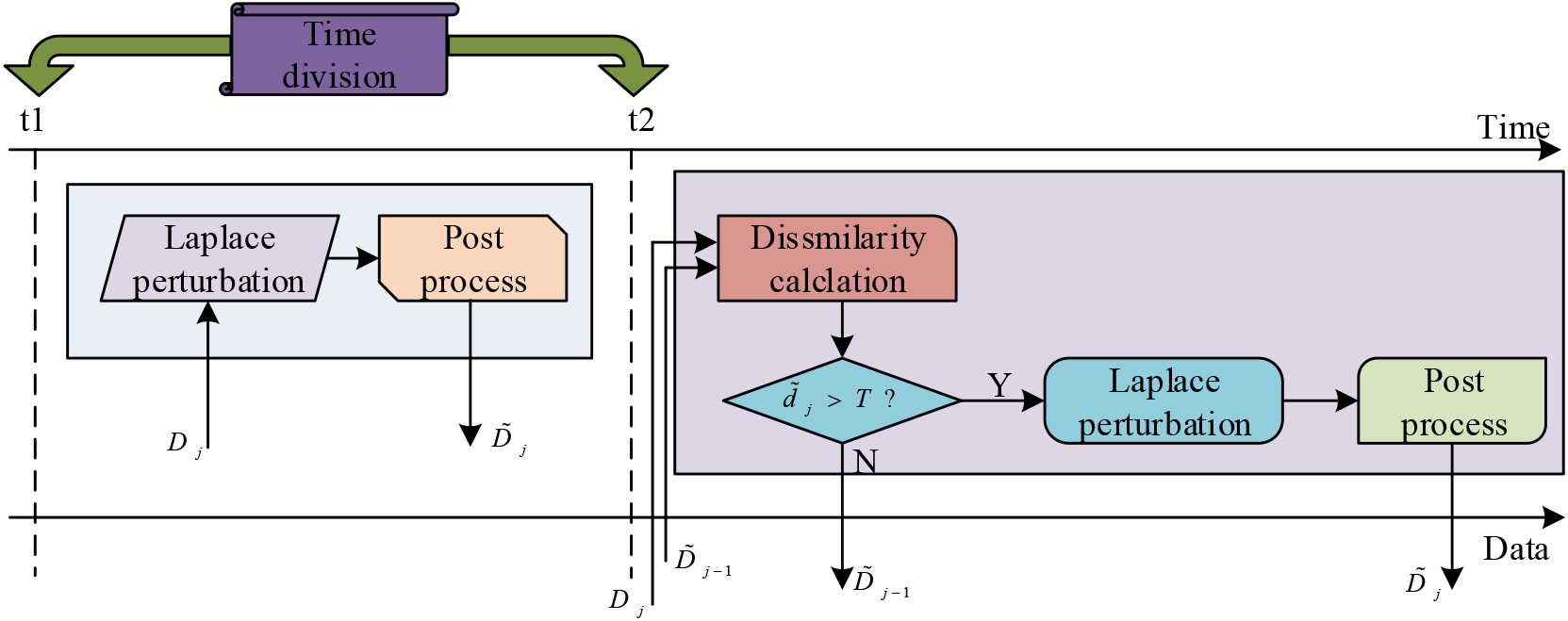
The sine cosine operator mainly uses changes in the sine cosine function and iterative adaptive factors to make changes to the individual states of the population. Research combining these two mechanisms to improve the global search and local mining of the algorithm, in order to improve the convergence performance and optimization accuracy of the JAYA algorithm. In particular, the location value after population location update is calculated as shown in Eq. (5).
In Eq. (5),
In Eq. (6),
In Eq. (7),
Green logistics is the future development trend of the e-commerce logistics industry, and due to the advantages of electric vehicles such as low noise, zero pollution and energy saving, they are gradually applied to modern urban transportation. The study constructs a mathematical model of the electric vehicle path optimisation problem for simultaneous pick-up and delivery with charging stations and with a time window in e-commerce green logistics, which consists of four main components, namely time penalty cost, vehicle driving cost, fixed dispatch cost and charging cost [20, 21]. The time window penalty cost refers to the delivery time window, but if a penalty is imposed, the customer can allow the electric vehicle to deviate from the time window. The functional expression for the time window penalty cost is shown in Eq. (8).
In Eq. (8),
In Eq. (9),
Schematic diagram of time window penalty cost.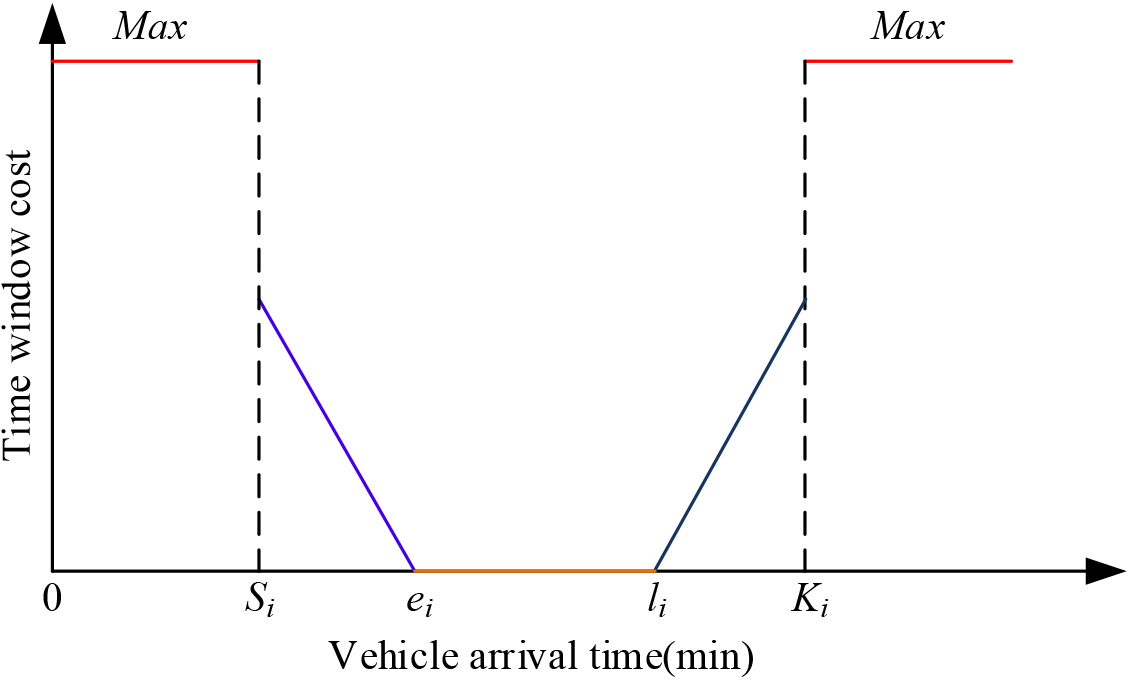
The JAYA algorithm was constructed as a mathematical model for the problem of optimising the path of an electric vehicle that picks up deliveries simultaneously and contains a charging station and with a time window [23]. In this case, the relationship between the customer’s service demand and the carrying capacity of the electric vehicle is expressed as shown in Eq. (10).
In Eq. (10),
In Eq. (11),
In Eq. (12),
In Eq. (13),
In Eq. (14),
The relationship between the distribution path problem and the H-JAYA algorithm.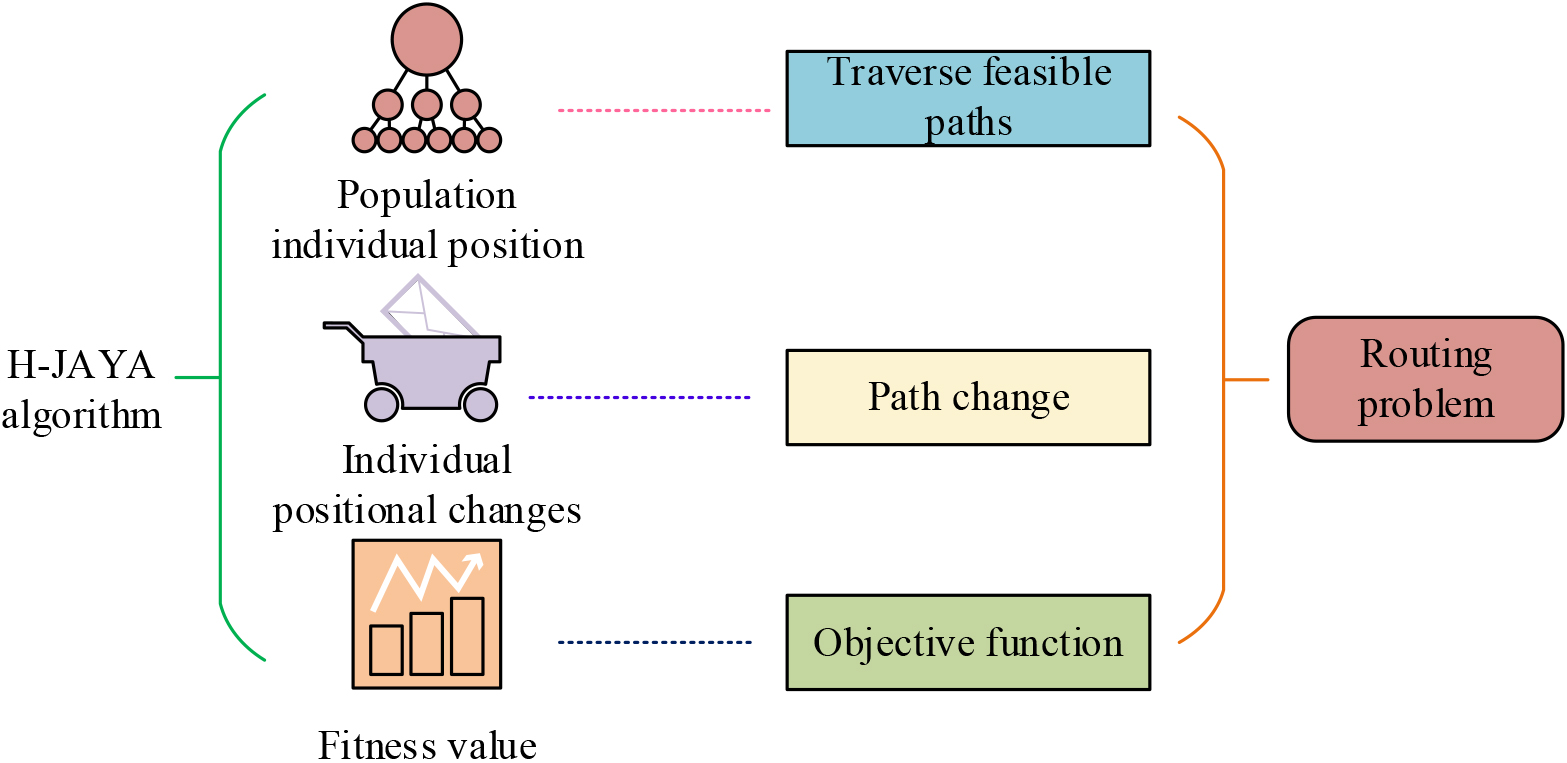
The study used an array coding approach to describe the individual locations of the population, where the charging stations, distribution centres and customer points are all discrete points. The coding was done in a location-order coding approach, which is represented as shown in Eq. (15).
In Eq. (15),
Schematic diagram of the solution structure.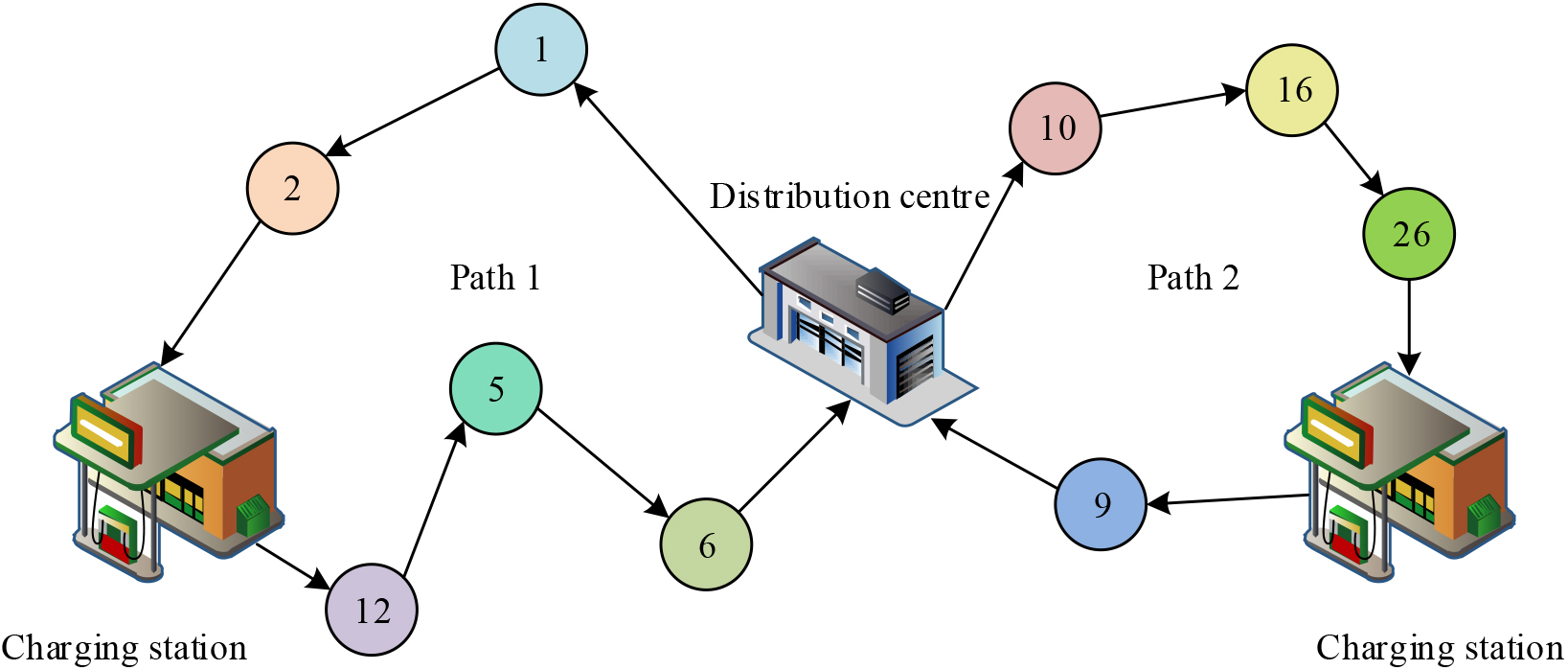
Performance analysis of the H-JAYA algorithm
To verify H-JAYA’s performance in finding the best performance, three commonly used algorithms were selected experimentally for comparative performance analysis with the H-JAYA algorithm, including the basic JAYA algorithm, the Whale optimization algorithm (WOA), the Improved JAYA Optimization Algorithm (IJAYA). To ensure the objectivity, the experiments will be run 50 times under the same conditions for the four algorithms, with the population size set to 50 and the maximum number of iterations set to 1000. meanwhile, the algorithms of the JAYA class are not set with any parameters, and the logarithmic spiral parameter in the WOA algorithm is set to 1. In addition, the study chose to conduct experiments with the CEC2017 test set with composite constructive properties, which includes the following test functions single-peaked functions, multi-peaked functions, hybrid functions and combined functions. Among them, the single-peaked function finding results in different dimensions are shown in Table 1. IJAYA outperforms the basic JAYA algorithm in all metric values. The best value, mean value and variance of H-JAYA are all optimal and have a value of 0. The accuracy and stability of the H-JAYA algorithm in different dimensions are higher than those of other algorithms, and it has better solution results.
Optimization results of unimodal functions in different dimensions
Optimization results of unimodal functions in different dimensions
The study introduced reverse learning mechanism, differential perturbation mechanism, sine cosine operator, and the method of updating individual positions to improve the JAYA algorithm, resulting in the H-JAYA algorithm. To verify the effectiveness of the proposed improvement method, the convergence of the H-JAYA algorithm in unimodal functions was tested. The study selected two unimodal functions from the CEC2017 test set as test functions and compared the convergence curves using different algorithms. The convergence curves can show the convergence speed and the number of times it falls into a local optimum. In addition, the test dimension was set to 50 and the maximum number of iterations was 1000, and the convergence curves of the four different algorithms are shown in Fig. 7. H-JAYA algorithm converges the fastest and has the smoothest convergence curves on the two single-peaked functions in the CEC2017 test set. Among them, the number of convergence iterations of the H-JAYA algorithm on the single-peaked function 1 is only 10, 85 times less compared to the traditional JAYA algorithm, and JAYA achieves the local optimum more frequently. And compared to the WOA algorithm and IJAVA algorithm, it has reduced by 25 and 40 times respectively. Meanwhile, the H-JAYA algorithm has only 38 convergence iterations on unimodal function 2, which is 156 and 125 fewer than WOA algorithm and traditional JAVA algorithm, respectively. This indicates that the H-JAYA algorithm is better at finding an optimum on the single-peaked function than the rest of the algorithms, and it has the lowest probability of falling into a local optimum.
Convergence curves of unimodal functions for different algorithms.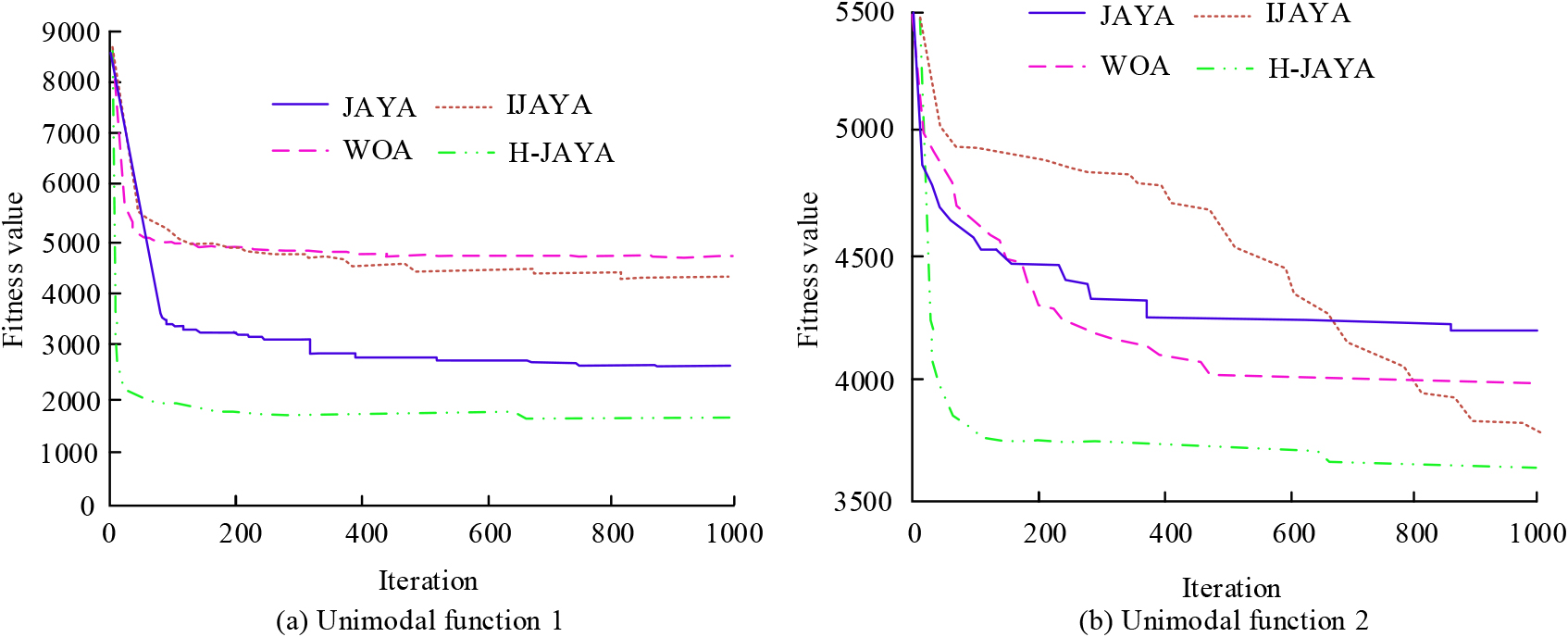
H-JAYA convergence in the bimodal functions was tested by selecting two bimodal functions from the CEC2017 test set with a dimension of 50. The convergence test results are shown in Fig. 8. In Fig. 8, H-JAYA convergence performance in the two bimodal functions is significantly better, with faster convergence and a lower frequency of falling into local extremes. In particular, the H-JAYA algorithm converges in only 25 iterations for bimodal function 1, which is 327 fewer iterations than the JAYA algorithm. Meanwhile, the H-JAYA algorithm converges in the bimodal function 2 with only 17 iterations, which is 166 fewer iterations compared to the IJAYA algorithm. This indicates that H-JAYA has significantly better performance in the bimodal function and does not easily fall into the local optimum region.
Convergence curves of multimodal functions for different algorithms.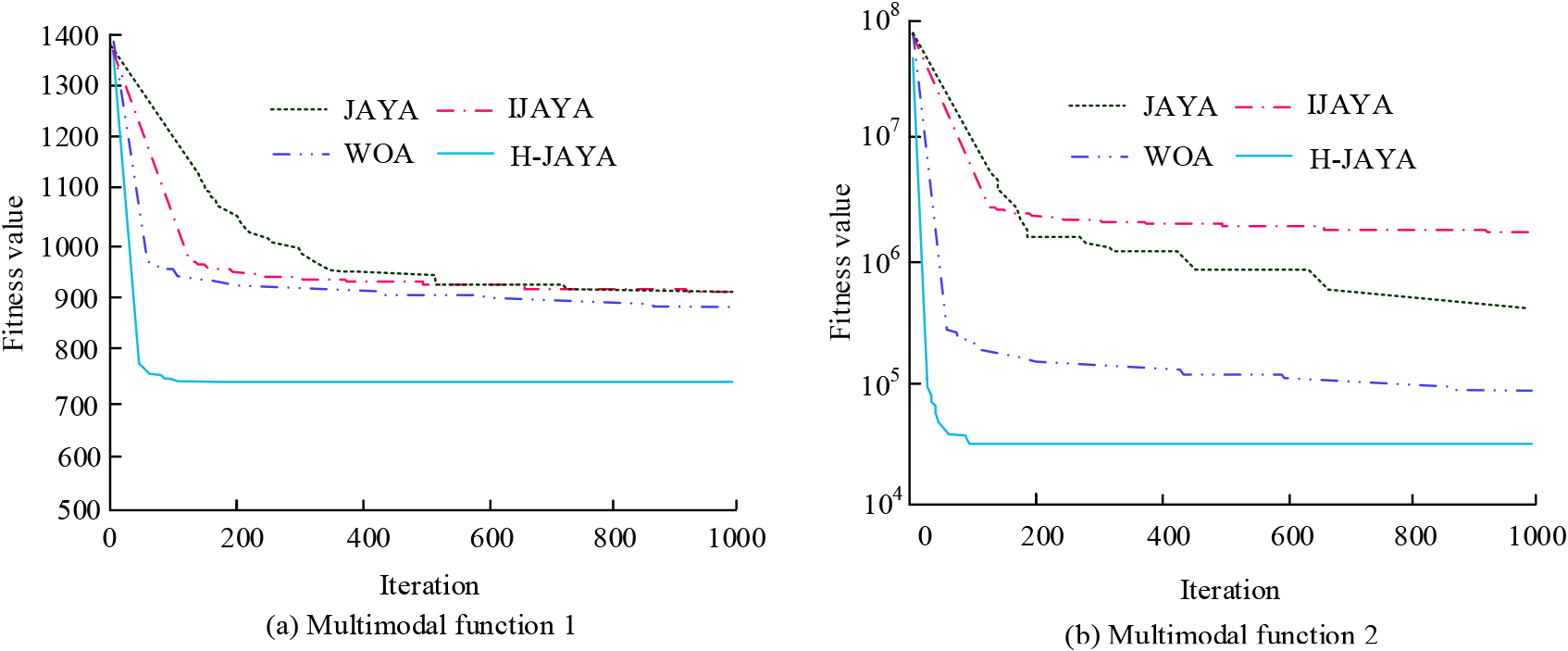
Further research was conducted to validate the performance of the H-JAYA algorithm in complex composite functions. A composite function from the CEC2017 test set was selected as the test function, with test dimensions of 10 and 50, respectively. The combination function has the combination characteristics of unimodal and multimodal functions, and the objective function values of the four algorithms in the combination function under different test dimensions are shown in Fig. 9. From Fig. 9, it can be seen that the objective function value of the proposed H-JAYA algorithm is below 1.64
The objective function values of four algorithms in combination functions under different test dimensions.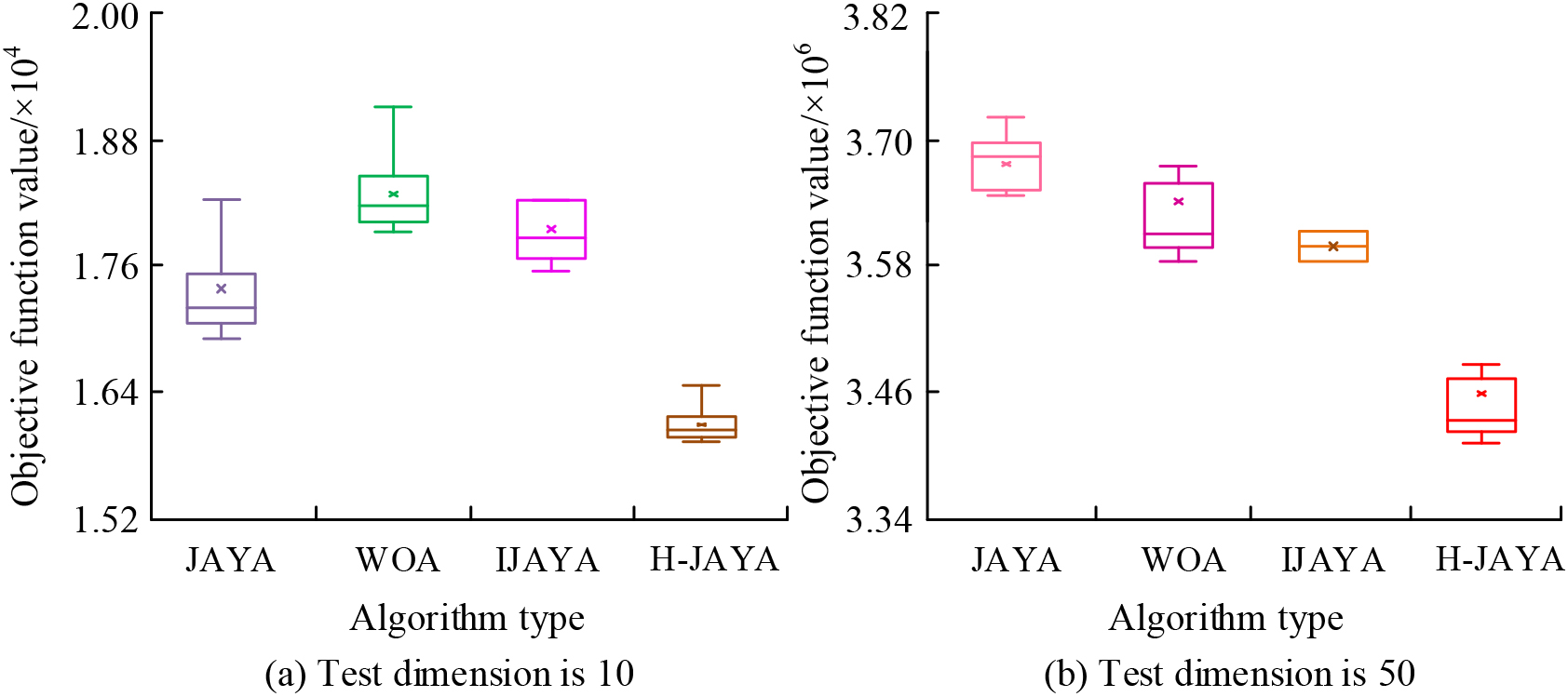
The study was conducted to test H-JAYA’s effectiveness for solving the electric vehicle path problem with simultaneous delivery pickup and charging stations and with time windows, using three test cases for optimization testing, including a logistics company, R101 and RCDP5001. where the parameters of the optimization model were set to a maximum capacity of 25 x 106 AH for the electric vehicle battery, a power consumption of 3 x 10⁶ AH for the vehicle and the driving speed of the distribution vehicle is 55 km/h. Meanwhile, the single charging time for each electric vehicle is 15 min and the charging cost is 25 RMB/time. In addition, the time window penalty cost coefficients for logistics distribution ep
Convergence results of different test cases.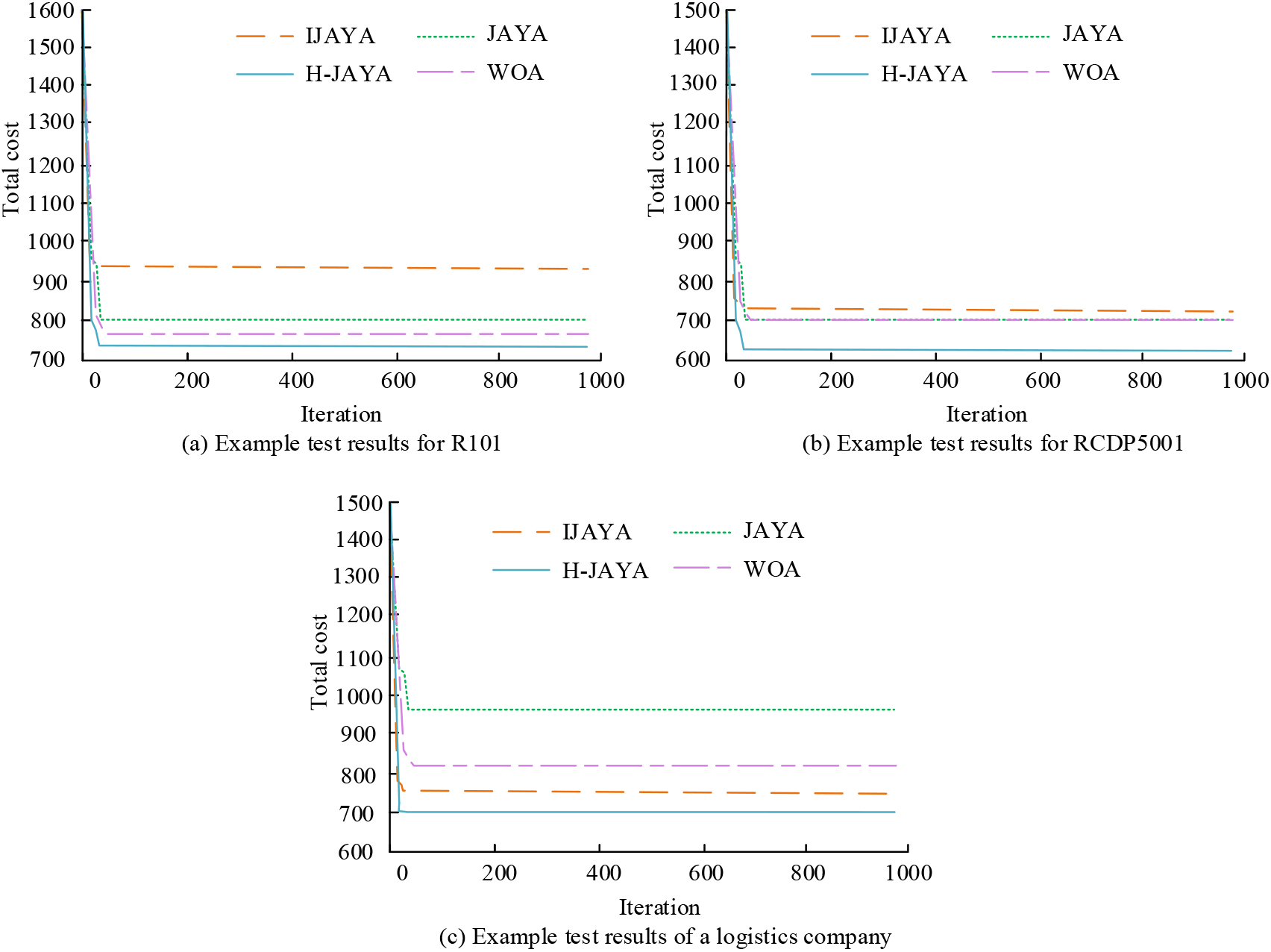
The study continued to verify the validity of the distribution paths in the R101 test case, and the experiments were selected to compare the basic JAYA algorithm with the H-JAYA algorithm. The distribution paths of the two algorithms are shown in Fig. 11. In Fig. 11, the horizontal and vertical axes represent the location coordinates of the distribution area. H-JAYA takes full account of the time penalty cost in the delivery process and divides all customer points into four paths for delivery, which ensures that the delivery time is within the range specified by the customer and effectively reduces the time penalty cost. The basic JAYA algorithm only divides the customer points into 2 paths, which may cause delivery timeout problems and therefore has a significantly higher time penalty cost. At the same time, the H-JAYA algorithm takes into account the charging cost by locating the charging station at the centre of the entire path and not setting up charging stations at customer points that are fewer and closer together. The basic JAYA algorithm results in a distribution route that does not place charging stations in the middle of the route and has multiple charging stations at the closer customer points, with a significantly higher charging cost compared to the H-JAYA algorithm. This indicates that the H-JAYA algorithm has a lower time penalty cost and charging cost, and can be better applied to the actual logistics distribution.
Delivery paths for different algorithms.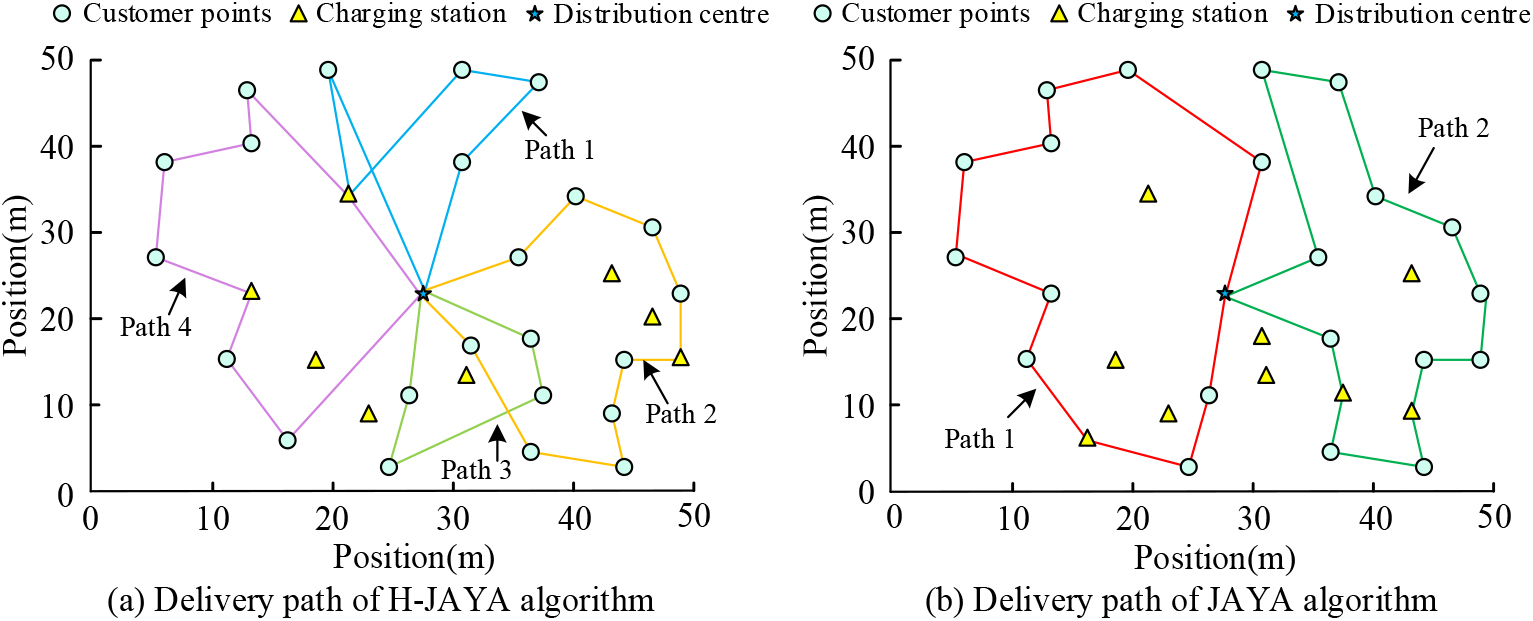
The logistics and distribution problem of modern e-commerce influences the transport industry. A hybrid evolutionary JAYA algorithm based on global optimization is proposed to study the path planning problem of electric vehicles in logistics distribution. The results showed that in the performance experiment of verifying the H-JAYA algorithm, the optimal value, average value, and variance of the H-JAYA algorithm achieved the best results, with values of 0. The H-JAYA algorithm has only 10 convergence iterations on unimodal function 1, which is 85 fewer than the traditional JAYA algorithm. Meanwhile, the H-JAYA algorithm converges in only 17 iterations in the bimodal function 2, a reduction of 166 iterations compared to the IJAYA algorithm. In the practical application experiment of the H-JAYA algorithm, the total cost of the H-JAYA algorithm in the test case of a logistics company was the lowest at 701 yuan, which was 124 yuan lower than the WOA algorithm. The H-JAYA algorithm can effectively solve the logistics distribution problem of electric vehicles. The parameter settings in the JAYA algorithm are crucial for algorithm performance. Future research can explore how to dynamically adjust algorithm parameters through adaptive mechanisms to improve algorithm performance and robustness. Meanwhile, future research can combine the JAYA algorithm with machine learning methods to improve the adaptability and generalization ability of the algorithm in practical applications.