




Abstract
Background:
Religious and spiritual interventions may have an effect on Alzheimer’s disease prevention. Kirtan Kriya meditation has been shown to mitigate the deleterious effects of chronic stress on cognition, reverse memory loss, and create psychological and spiritual wellbeing, which may reduce multiple drivers of Alzheimer’s disease risk.
Objective:
To detail a new concept in medicine called Spiritual Fitness, a merging of stress reduction, basic wellbeing, and psycho/spiritual wellbeing to prevent Alzheimer’s disease.
Methods:
The literature on the topics mentioned above is described, including an in-depth discussion on why and how each are critical to advancing the future of Alzheimer’s disease prevention. The many negative effects of chronic stress, and the benefits of Kirtan Kriya, are reviewed. The four pillars of basic wellbeing, six practical aspects of psychological wellbeing, and the four new non-sectarian features of spiritual fitness are then disclosed. Moreover, instructions on practicing Kirtan Kriya are offered in the Supplementary Material.
Conclusion:
Religious and spiritual practices, including Kirtan Kriya, are crucial components in the development of enhanced cognition and well-being, which may help prevent and, in some cases, reverse cognitive decline. The key point of this review is that making a commitment to live a brain longevity lifestyle including spiritual fitness is a critically important way for aging Alzheimer’s disease free. We hope that this article will inspire scientists, clinicians, and patients to embrace this new concept of spiritual fitness and make it a part of every multidomain program for the prevention of cognitive disability.
Keywords
INTRODUCTION
The ultimate purpose of this article is to review how religious and spiritual involvement may prevent Alzheimer’s disease (AD). Additionally, it presents research not only on the various aspects of religious and spiritual involvement but also on a practical app-roach to achieving spiritual fitness™, a new concept combining multiple aspects of religious involvement, spirituality, and psychological well-being [1, 2].
An important component of that practical approach is the regular practice of techniques enhancing spiritual fitness. Kirtan Kriya will be introduced later as an example of a memory meditation exercise suitable for everyday use with numerous effects on spiritual fitness hallmarks suggested in multiple research studies.
In a systematic review of the effect of religious and spiritual involvement on cognitive function from 2019, 82% of the research articles reported positive associations between religious involvement, spirituality, and brain health. According to the above-noted systematic review, religious and spiritual involvement appears therefore to be protective against cog-nitive decline in middle and old age adults [3, 4]. The opposite appears to be true as well. According to research by Dos Santos, lower spiritual well-being is associated with mild cognitive impairment (MCI) and early dementia [5].
With the aging of the world’s population, AD continues to be a serious problem including increased caregiver stress and burden. Currently there are 5.7 million cases in the United States (US), about 44–50 million cases worldwide and approximately 150,000 deaths each year in America, making AD the third leading cause of death in the US among seniors before the COVID-19 pandemic [6]. Of note is that African Americans and other underserved populations are twice as likely to suffer from AD [7]. Dire predictions are for total case numbers to surge to 14–16 million Americans living with AD and up to 152 million worldwide by 2050 [8]. If a preventative approach does not gain widespread utilization, financial costs are estimated to further soar in the future. In the US alone, AD and all forms of dementia cost the nation an estimated $305 billion in 2020 [9].
There are no drugs that have a substantial positive impact on either the prevention or reversal of cogni-tive decline [10]. Living a particular type of lifestyle is the only proven way to possibly slow or prevent the onset of AD [11, 12]. In an ongoing study of life-style modification, The Finnish Geriatric Intervention Study To Prevent Cognitive Impairment and Disability (The FINGER Study), the effects of an int-ervention targeting several lifestyle and vascular risk factors were studied simultaneously. It indicated that utilizing nutritional intervention, physical exercise, cognitive training, and social activities together re-sults in a significant beneficial effect on overall cognitive performance [13–15].
As mentioned at the outset and according to the MacArthur Foundation Research Network on Successful Aging, spirituality and religious participation are highly correlated with positive successful aging, including the maintenance of good cognitive function throughout life. In fact, spirituality and religious participation may be just as beneficial as diet, exercise, mental stimulation, and social connectedness [16, 17]. Conversely, compared to those who report the same level of continuous religious involvement, subjects who report less religious observance now than 20 years ago commonly show more cognitive difficulties [18]. Moreover, spirituality, as we will soon see, moderates positive relationships with var-ious measures of life satisfaction, psychosocial well-being, both physical and mental health, and is helpful in the quest for meaning and purpose in life [19].
Not unlike physical fitness, which has a clear benefit in improving cognitive function, both independently and as part of an integrative medical pro-gram [20], spiritual fitness, especially as developed through meditation exercises such as Kirtan Kriya (KK), discussed in this paper, is effective in impro-ving cognition [21, 22]. Once clinicians, psychologists, social workers, and others become aware of this new advance, the concept of spiritual fitness may be easily incorporated into an AD prevention program.
RELIGION, SPIRITUALITY, HEALTH, AND WELL-BEING
It is a major premise of this article that today’s detrimental stressful existence impedes the creation of a healthy lifestyle, including psychological and spiritual well-being, while well-being augments brain function and may prevent AD [23]. Most people intuitively know what religion is: the practice of a certain set of rules, rituals, and traditions that bring one closer to God. However, what is spirituality itself?
In 2008, Koenig argued that spirituality should be sharply defined, especially from a research perspective [24]. In his 2020 Handbook of Spirituality, Religion, and Mental Health, he states, however, that people in Western nations are going through a transition to less religious identity over all [25]. For exa-mple, he cites that 89% of Americans believe in God, 90% pray on a regular basis, yet only 77% report aff-iliation with a religious group [18]. However, 82% acknowledge the need for spiritual growth [26]. Also of note is that 84% of the world’s population is religiously affiliated, and 68% of unaffiliated individuals believe in a higher power [27]. Additionally, according to a Yoga Alliance/Yoga International study published in 2016, at least 36 million Americans practice yoga and 300 million do so worldwide, while 80 million Americans are likely to try yoga within 12 months [28]. The number of people who meditate in the US is now at least 35 million [29].
Since Koenig’s 2008 thesis, spirituality, both in the academic context and in the non-academic sense, has taken on an important new texture. Many people may think of themselves as “spiritual” but not necessarily religious, while similarly, some consider themselves both religious and spiritual. The number of people who consider themselves religious but not spiritual is not reported but is generally considered low [19]. Purely speaking, the notion of spirituality has grown to where it is considered an inner-directed construct that involves an individual’s, “search for the sacred or higher power” both within themselves and perhaps outside as well, such as in nature [30]. Spirituality activates a particular spark within an individual that encompasses connection—religious or otherwise—with a non-physical reality as perceived by the person. Spirituality, therefore, is a broad term referring to any activity that brings a divine or metaphysical quality to the individual, and religion, by contrast, is a specific term referring to such aspects of life that are shared with others within a named institutional/cultural group [18].
Religiosity is often measured using the five-item Duke University Religion Index [31]. There are also a number of analysis and research studies, which define the most useful quantitative domain measures of spirituality such as the SHALOM or The Spiritual Well-Being Questionnaire, the Fisher Scale and others. SHALOM is a multidimensional scale of spirituality based on the synergy between theism, environment, community, and personal development. The theme running through this research, as alluded to above, is connection: with self, others, and/or God. However, recent studies have shown that relating to God in one’s own way, is most important for spiritual well-being. Beyond that, however, no one scale has proven to be more accurate than any other [32–34].
Today, spiritual well-being generally refers to a subjective experience of the deepest values and meanings by which people live. This is often outside the context of an organized religion although many religious people use the characteristics of their faith to bring themselves to these heightened experiences and values that guide their life [35].
Herein, although spirituality is not defined rigidly, it is characterized by a group of developmental, behavioral, and experiential characteristics that one experiences along a path of personal growth, which eventually leads to spiritual fitness. Today, therefore, spirituality, personal growth, or transformation, is considered separately from organized religious institutions. This idea of spirituality may be part of every religion or separate from it. Significantly, having a sense of spiritual connection and optimal personal development, what Jung called individuation, regardless of its origin, reduces risk and slows AD progression [36, 37].
STRESS, COGNITION, AND WELL-BEING
As evidenced by the recent Lancet review paper on dementia prevention, where stress and stress management go unmentioned, it is still an underappreciated and under discussed topic [38]. Beyond the physical, stress can also be psychological or emotional, and the potency and pathogenicity of psychological stress cannot be ignored, as it may increase the risk of developing AD [39–41]. In contrast, spiritual practices including KK, may counterbalance many aspects of the stress response and protect the brain specifically from the ravages of aging combined with stress overload [42–44]. It is not an understatement to say that the US, and indeed the world, is in a state of unbridled perpetual stress and turmoil. With that is seen a surge in anxiety, depression, post-traumatic stress disorder, and other stress-related illnesses, such as cardiovascular disease including hypertension, diabetes, neuroinflammation, a lack of exercise, poor sleep, and an unhealthy diet, all risk factors for the development of AD [45]. With the advent of lockdowns due to COVID-19, although technological communication such as Zoom, FaceTime, and the like have been utilized extensively, it has been established that social isolation and loneliness are rampant [46]. This lack of connection and community, moreover, is shown to increase depression symptoms during the COVID-19 pandemic, elevating AD risk [47, 48]. Beyond that, it is now clear that many survivors of COVID-19 are left with an indelible imprint of neuroinflammation as well as multiple organ negative parameters in physiological function, including a penchant for cardiovascular, pulmonary, neurologic disease, and cognitive decline, all risk factors for AD as well [49, 50]. Moreover, as suggested by Koenig, spirituality helps COVID-19 survivors nor only cope with their pathology but enhance their cognition and prevent decline [51, 52].
Additionally, high levels of stress toxicity involved in adverse childhood experiences and early life stress such as trauma, abuse, or neglect are risk factors for cognitive decline [53]. Early stressors, such as abuse, can result in a multiplicity of negative biomarkers and unhealthy behaviors, which suggest a dose-response relationship between severity of early adversity, and inflammation, shorter telomeres, and other unhealthy biological markers [54, 55]. The effects of early life stress may be more important in advanced age than self- reports of early life adversity and stress. This highlights the importance of the use of regular meditation techniques such as KK, and spirituality, as positive habits to develop during the aging process. Moreover, it is possible that older adults underestimate their level of life stress and early adversity [56]. According to research by Jiang et al, the underlying cause of the cognitive decline produced by adverse childhood experiences is an epigenetic phenomenon leading to a perturbation in DNA methylation and histone modification resulting from prenatal maternal stress and a lack of nurturing during infancy [57, 58]. Such epigenetic modifications not only affect the individual’s stress response, but also the stress response of future generations [18].
Gene-environment interactions involving the APOE ɛ4 allele may also play a role in AD risk from stress. In fact, research has already shown that spirituality can modify the effect of the APOE4 gene on MCI in adults 55 and older by increasing telomere length [59]. In other words, spirituality and meditation practices such as KK and other techniques may influence cellular aging, through modifying the effect that high-risk genes have on increasing vulnerability to cognitive impairment and AD [60–62].
Chronic stress, via its well- known cortisol connection, its hippocampal and limbic system toxicity, and epigenetic damage, is a causative factor in the development of cognitive decline and decreased well-being [63, 64]. Coming full circle, this diminishment of well-being may lead to a loss of cognitive function, while an improvement in well-being actually augments cognition and prevents cognitive decline [65]. In addition, the negative lifestyle habits that decrease cognition and well-being are less prevalent in individuals who are either religious or spiritual [18]. Compelling research thus suggests that stress has a pronounced negative effect on cognition, including injuring genes by decreasing the level of the enzyme telomerase. While shorter telomeres are associated with poor immune system function, inflammation, accelerated aging, and AD, longer telomeres may equal a longer life with a clear mind. Indeed, the effects of various spiritual practices on telomerase activity, telomere length, and immune cell aging is well documented [61]. Herein, we introduce KK, which has multiple documented effects on stress, while increasing telomerase and telomere length, slows cognitive decline, and acts as a bridge between chronic stress and the development of spiritual fitness [66–69].
KIRTAN KRIYA: THE BRIDGE BETWEEN STRESS AND SPIRITUAL FITNESS
While KK is shown to specifically reverse memory loss [70] and takes only 12 minutes once a day, other meditation techniques which are more time consuming [22, 23] suggest inconsistent effects on cognition and perhaps only a trend toward improvement. They have not been shown to impact significantly memory loss, however.
Beyond cognitive improvement, research on KK for the past two decades suggests it has multiple positive benefits on anxiety and depression while improving sleep hygiene. KK increases blood flow to multiple brain anatomical areas that are involved in cognition and emotional regulation, including the hippocampus, anterior and posterior cingulate gyrus, frontal lobes, and pre-frontal cortex [71]. This is highly significant in view of a study by Pa that suggests that decreased blood flow may be meaningfully associated with tau build-up in the brain [72]. Moreover, a recent report by MacDonald suggests that during normal aging cerebral blood flow reduction and cerebral cortical thinning are typically observed. KK increases gray matter volume and decrease ventricular size in long- term practitioners, which may therefore slow brain aging [70, 74].
As can be seen in the scans below in Figs. 1 and 2, KK practice activates the prefrontal cortex, the frontal lobe, and the anterior cingulate gyrus, both the first time the subjects practiced it and, more prominently, after eight weeks of practice [70].
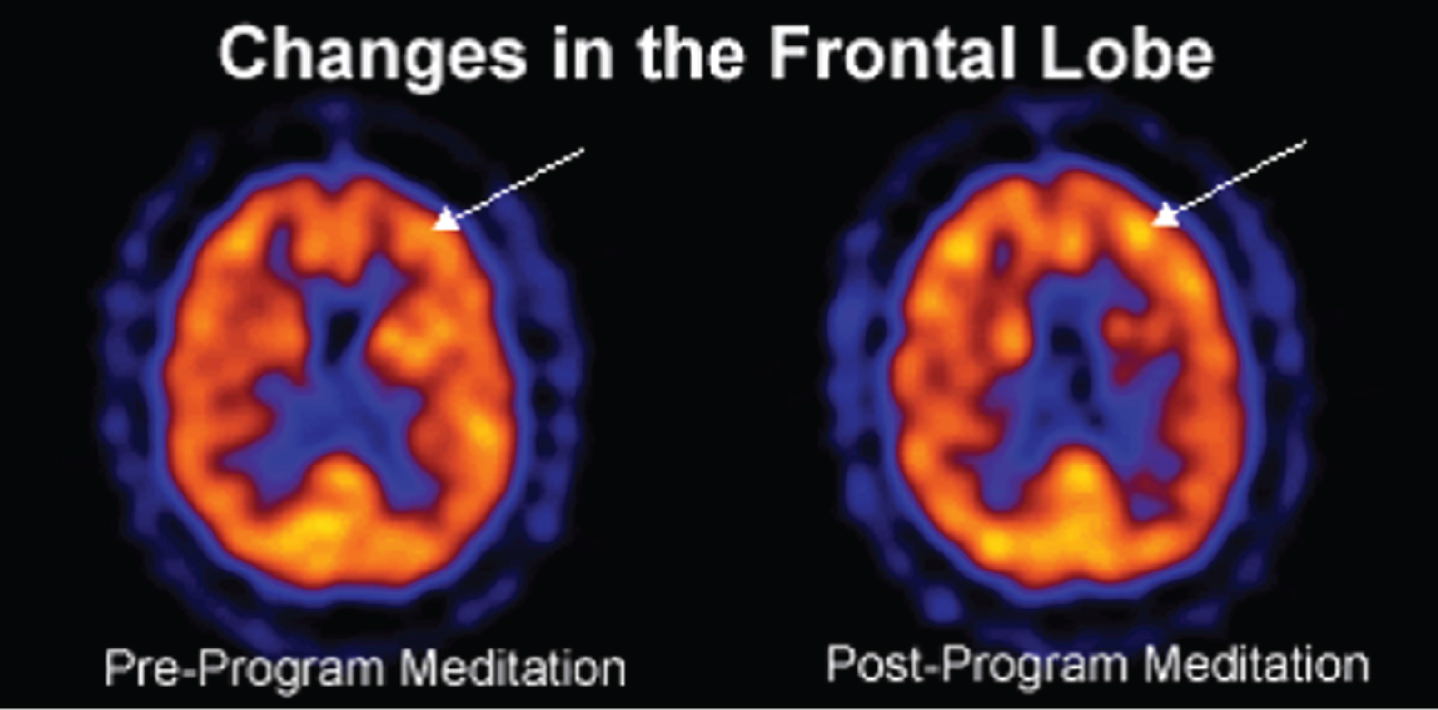
Changes in the frontal lobe.
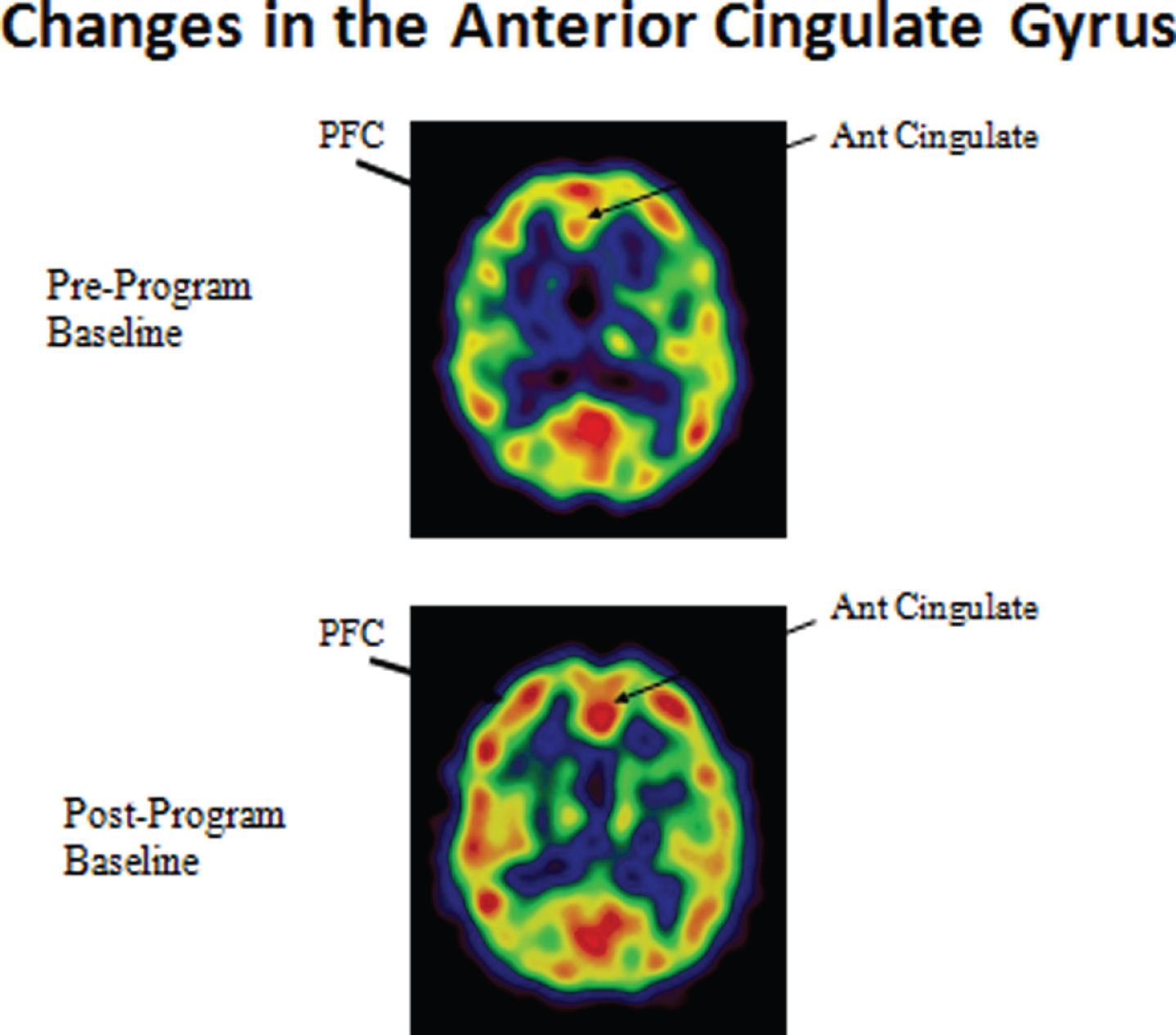
Enhanced cerebral blood flow in the prefrontal cortex and anterior cingulate gyrus.
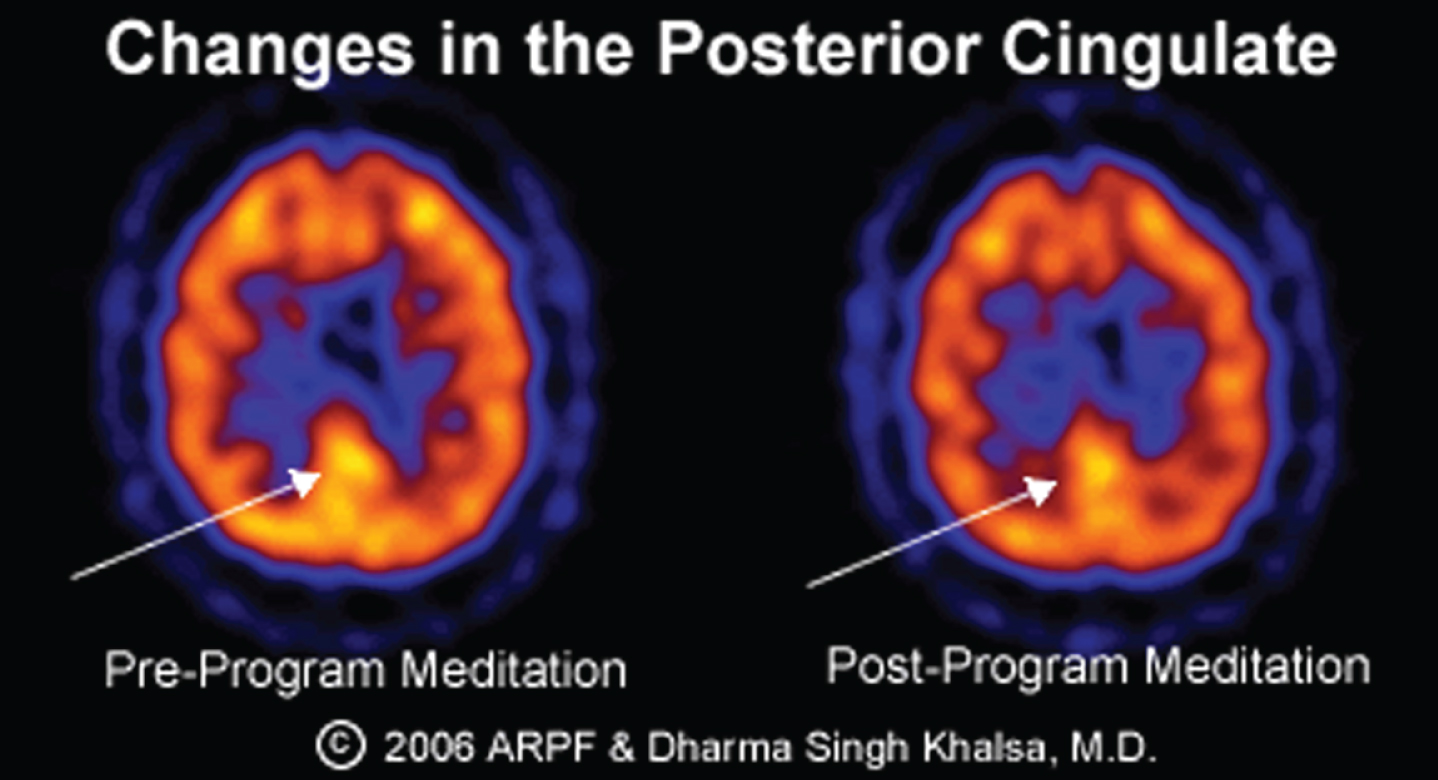
Changes in the posterior cingulate gyrus.
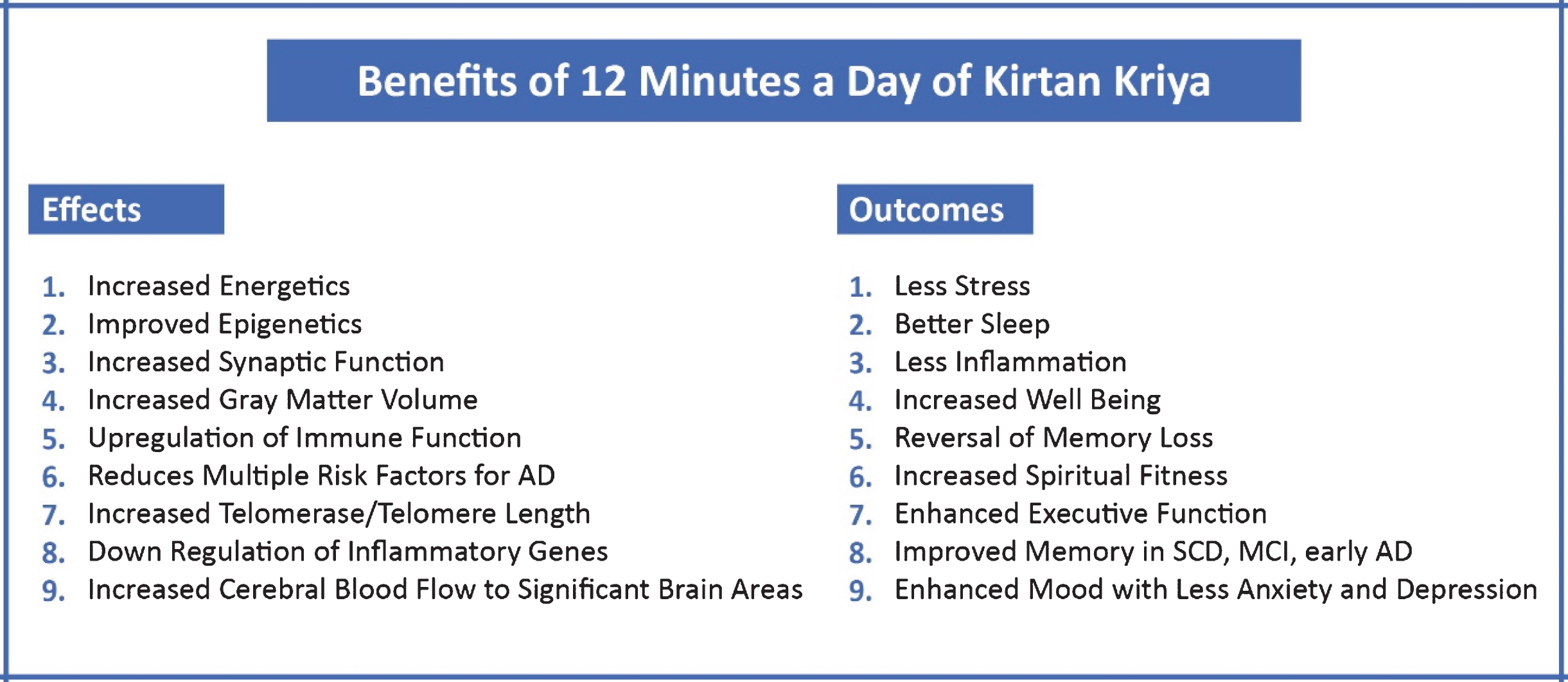
Benefits of Kirtan Kriya.
The activation of the prefrontal cortex is especially important because diminished prefrontal cortex activity is associated with MCI [70]. The prefrontal cortex sends reciprocal fibers to the limbic system including the amygdala to stabilize emotions. The anterior cingulate cortex improves stress regulation and, of specific interest, is the finding that the well-known Super Ager Study revealed that the oldest old who maintained optimal memory function had a larger anterior cingulate gyrus and cerebral cortex; these same two findings seen in people who practiced KK [70, 74–76]. Separately, super-aging appears to be associated with the resistance to tau and amyloid-β pathology, which likely permits maintenance of cognitive performance despite advancing age. In turn, differences between normal aging and MCI appear to be driven in large measure by amyloid-β burden [77]. Of note is that KK may decrease brain amyloid-β burden as evidenced by increased plasma amyloid-β [61].
The activation of the posterior cingulate gyrus is most relevant because it is highly connected to other important anatomical areas and one of the most metabolically active regions in the brain [71]. It is hence critically important for many types of memory and emotional functions. Reduced cerebral blood flow and hypometabolism in the posterior cingulate gyrus are early signs of AD and are frequently present before a clinical diagnosis is evident, indicating a particular vulnerability of this structure to neurodegeneration. Furthermore, in early AD, the connection between the posterior cinguate gyrus and the hippocampus is disrupted [78].
KK may work by several neurochemical mechani-sms including stabilizing the brain synapse by increasing important neurotransmitters, such as acet-ylcholine, norepinephrine, and gamma aminobutyric acid [79–82]. This is significant, as previous research suggests that synaptic dysfunction is also a unique hallmark of AD [83–85]. Moreover, two aspects utilized in KK, singing and touching the fingertips in sequence, stimulate the cortical homunculus, a rep-resentation of anatomical divisions of the motor-sen-sory cortex, the tongue, vocal apparatus and the dense nerve endings in the fingertips [86]. Such enhancement of the brain with increased blood flow has beneficial effects and may provide optimal protection against neurodegeneration [70].
Additionally, in a study of 37 stressed family dementia caregivers, the KK group had significantly lower levels of depressive symptoms, and greater improvement of mental health, well-being, and memory, compared with the relaxation control group. The KK group showed a 43% improvement in telomerase activity, the largest ever reported, compared with 3.7% in the control. These findings suggest an improvement in stress-induced cellular aging. A further study found positive epigenetic effects with an up regulation of 19 genes related to positive immune function and a down regulation of 49 genes associated with inflammation, such as pro-inflammatory cytokines, potentially indicating lower AD risk [87].
Most recently, a study utilizing both kundalini yoga and KK together in subjects with MCI suggested a marked improvement in memory compared to the gold standard, Memory Enhancement Training. This research also suggested that the kundalini yoga and KK group showed short- and long-term improvements in executive functioning as compared to Memory Enhancement Training, and broader effects on depressed mood and resilience [88, 89]. Further, published studies in subjects with subjective cognitive decline (SCD) suggest that KK compared to a music listening control improved memory, mood, and general brain function. Those subjects who practiced KK most consistently had the best results and enjoyed the greatest increase in telomerase and telomere length and plasma concentration of amyloid-β [61]. Additional biomarker results were associated with improvements in cognitive function, sleep, mood, and well-being, suggesting a potential functional relationship [90, 91].
KK can be performed by people of any age without memory loss or with various degrees of impairment. Moreover, the benefits accrue from the very first practice session and requires no other training sessions, seminars, retreats, additional practices, or costs [60, 70]. This is critically important as utilizing online sources obviates the need for in person training, especially if the COVID-19 pandemic is still an issue. KK therefore is a multifaceted, multisensory exercise that in normal individuals, caregivers, and those with cognitive decline improves cognition, slows memory loss, improves mood and with practice may embolden a person’s spiritual growth in this age of anxiety [67, 84]. The chart below summarizes the many potential benefits of KK, all of which boost brain function, improve sleep, and provide a vehicle to develop heightened levels of well-being and spiritual fitness.
To discover how to do KK, please see the Supplementary Material.
SPIRITUAL FITNESS: THE NEW DIMENSION IN ALZHEIMER’S DISEASE PREVENTION
We have discussed extensively the effects of chr-onic unrelenting stress on cognitive health and well-being. We have suggested that not only do people who practice spiritual techniques such as KK lower their risk for dementia, they may enter a new dimension called spiritual fitness, an interweaving of basic, psychological, and spiritual well-being [92]. Since the components of spiritual fitness as defined below are used to help moderate life stressors and soften their effects on mental and physical health, spiritual fitness may reduce their effects on cognitive functioning through this clear pathway [93]. Spiritual fitness may affect AD risk by reducing depressive symptoms, engendering positive emotions, and influencing affirmative personality traits such as conscientiousness, optimism, and agreeableness, as well as the other attributes of spiritual fitness, including the development of inner peace [18, 94]. Spiritual fitness also includes greater social support, larger social networks, and less loneliness, critically important during the COVID-19 pandemic, which has lowered emotional well-being by as much as 74% [95]. It is also associated with a greater likelihood of marital and family stability. These influences may also result in a lower risk for AD [18, 26].
In a 3-year study presented at The Alzheimer’s Association International Conference in 2018, spirituality, fostered especially by meditation, was associated with lowered atrophy rates in brain regions related to memory, visuospatial attention, and behavioral deficits in subjects at risk for AD [96].
Medically, spiritual fitness may reduce the risk of coronary artery disease, hypertension, stroke, and diabetes, medical conditions that also predict strongly the development of AD in later life [97]. Finally, the development of spiritual fitness has great positive impact on health behaviors such as diet, exercise, meditation, and prayer as well as lessening negative behaviors such as cigarette smoking, excessive alcohol consumption, and illicit drug use [18, 26]. Physiologically, religious and spiritual involvement increase levels of brain derived neurotrophic factor (BDNF), as revealed by Mosqueiro and colleagues. BDNF is a key component in the brain responsible for synaptic plasticity, dendritic and neuronal fiber growth, and neuronal survival [98]. Most significantly, religious and/or spiritual activity is associated with better cognitive function in old age [99–101]. Thus, there are multiple medical, psychological, and behavioral mechanisms by which spiritual fitness might impact AD risk.
BASIC WELL-BEING
In their seminal book called Well-being, Rath and Harter discuss what they describe as “the five essential elements” [102]. Their work was based on a comprehensive Gallup study of people in more than 150 countries, which revealed 5 universal interconnected elements that shape people’s lives:
The authors contend that these five elements are what make life worthwhile. Their research reveals that while 66% of people are doing well in at least one of these areas, just 7% are thriving in all five. A lack of well-being is a risk factor for AD or perhaps more accurately stated: when a person enjoys well-being, especially psychological and spiritual well-being, they are lowering their risk factors for the development AD. As the authors point out: “Although these basic elements of well-being are universal across faiths, cultures, and nationalities, people take different paths to increasing their individual well-being. What is common to many of them, however, is that spirituality, but not necessarily religion, drives them in all these areas. For others, however, it is their faith that may be the most important facet of their lives. And yet for others, a sense of purpose or a deep mission, such as protecting the environment, inspires them each day” [102]. Having a purpose in life is critically important to AD prevention, especially because it not only reverses multiple drivers of risk for AD, and as described below, is an independent variable for AD prevention by itself [103].
PSYCHOLOGICAL WELL BEING INCLUDES THE FOLLOWING: [104–106]
THE HEART AND SOUL OF PURPOSE
As suggested above, psychological well-being (PWB) may reduce inflammation, cholesterol; reduce risk of myocardial infarction, stroke, and the incidence of disability [110–113]. It is also linked with decreased use of preventive care services and mortality among community-dwelling older persons [114, 115]. Most significantly, as revealed in more detail shortly, PIL lowers the risk for AD [23, 116]. Findings in aging women show that those enjoying PWB had lower levels of salivary cortisol, pro-inflammatory cytokines, and cardiovascular risk, and longer duration REM sleep compared with those showing lower levels of PWB [92]. Ill-being, conversely, increases levels of cortisol, epinephrine, norepinephrine, and IL-6 [92, 117]. Higher levels of PWB, including purpose, may also increase telomere length and reverse the deposits of amyloid-β plaques in the brain, limiting the effects of the disease [118, 119]. Moreover, PWB increases life expectancy by about eight years [120, 121]. Regarding PIL specifically, in a landmark 7-year project by Boyle, 900 community dwelling older persons without dementia were studied and the effect of PIL on risk for AD and MCI was examined. PIL was assessed using a 10-item scale derived from Ryff’s longer scale of Psychological Well-Being [115].
The results suggest that a person with a higher score on the PIL measure was 2.4 times more likely to remain free of AD than one with a low score, which persisted beyond all controls for depressive symptoms, level of distress, social network size, and number of chronic medical conditions. Therefore, the conclusion of this work is that greater PIL is associated with a reduced risk of AD and MCI [103]. Another study suggests that PIL modified the association between pathologic changes in AD and cognition such that participants who reported higher levels of PIL not only exhibited better cognitive function, but in conjunction with that, PIL protected those with already existing pathological changes, thus slowing their decline. Boyle postulates that having a purpose stimulates the brain of the individual as well as having anti-anxiety and anti-depressant effects [118].
Regardless of what an individual believes about their purpose, finding one has significant positive health outcomes during aging and compression of morbidity including fewer chronic conditions, less disability, and reduced mortality. Indeed, in a paper published in the journal Population Health Management in 2018, Musich and Wang address a multi-variate regression model to determine characteristics of PIL levels and the impact of health care utilization and expenditures, preventive services compliance and quality of life [109]. The study suggested that PIL is strongly associated with improved mental and physical health outcomes among older adults. The authors conclude by stating, “Interventions to improve and or maintain higher levels of PIL, over time may promote successful aging,” which includes cognitive health. The negative impact of stress on health was also buffered by PIL. Toward the end of life, many people look back and realize that their main purpose was to develop a relationship with the divine aspect of themselves and reconnect with who they really are: their spirit. They often ask, “Did I love enough and was I loved? Did I live a life in tune with my best and highest spiritual self?” [122]. Various meditation practices including KK help to develop PWB and create spiritual fitness, which we now know may not only prevent AD but also slows its progression [18, 124].
SPIRITUAL FITNESS AND AD PREVENTION
Burgeoning inquiry now suggests that the healthiest people are the ones who grow with age and exp-erience; even in times of trouble like these. It is also well known, as discussed above, that PWB leads to the type of energy and resilience that help us create a buffer against illness, inflammation, anxiety, depression, and cognitive decline [125, 126]. The new concept of spiritual fitness interweaves PWB with four non-sectarian features that may enable a person to achieve high levels of cognitive health [23].
Progressing on one’s spiritual path evokes an experience of what Post calls “unlimited love”, which he considers the “ultimate reality” [130]. Not unlike compassion, this ultimate reality encompasses altruism. In this heightened state of evolution, one has the ability to hear their inner voice and beyond that, truly see the other as him or herself. Spiritual fitness is also a way to develop personalized, patient-centered healthcare that may include or transcend religion and accents the process of self-discovery [92]. KK and spiritual fitness are associated with distinct positive psychological outcomes, many of which can affect cognition, and are more relevant, according to work by Montero-Marin, than even religious beliefs [140].
Although KK is a fast and reliable way to clarify PIL and develop spiritual fitness, other mind/body practices, attending religious services, prayer, bible reading, being in nature, altruism, sharing our own happiness, and grace may also lead to a higher level of spiritual fitness.
SPIRITUAL FITNESS AND NEUROTHEOLOGY
The overall relationship between spiritual fitness and a person’s complete physical and mental health is a topic of investigation in the emerging field of study called neurotheology. Neurotheology explores the relationship between the brain and our spiritual or religious self [141, 142]. Neurotheology may also be called Spiritual Neuroscience [79]. Early work has focused on both the theoretical development of models regarding which brain areas are affected through spiritual practices such as meditation or prayer. Moreover, in the past 20 years, there has been an extensive growth in neuroimaging and other physiological studies evaluating the effect of meditation, spiritual practices, and mystical experiences [143, 144]. The result is that a number of brain structures are typically involved with meditation practices, and concomitantly, we would expect them to be involved in spiritual fitness [145].
For example, we have observed decreased frontal lobe function associated with feelings of surrender and changes of activity in the parietal lobe and related social brain areas involved with feelings of compassion [146, 147]. Further, in our original neuroimaging study of KK, we found long-term brain effects, not just during meditation, but afterwards [70]. Thus, neurotheological studies can help understand how a practice such as KK can lead to more permanent eff-ects in brain function that support spiritual fitness. Similarly, neurotheological studies of spiritual practices can provide a foundation for understanding more practical applications. By observing brain changes involved in meditation practices, we can determine the underlying mechanism by which it improves memory and concentration.
For future scientific research, it would be helpful to categorize meditation types depending on the neural networks, brain chemistry, anatomical and EEG changes involved. For example, although KK involves multiple aspects such as breath, finger-tip movements, and singing, i.e., mantra, it belongs to the focused attention meditation practices similar to transcendental meditation or Yogic meditations, while mindfulness or Vipassana meditation belong to the open awareness practices [148]. Each of these types of meditation rely on different neuronal networks, brain anatomical changes, biochemistry, and brain wave changes. Hence this can explain different results concerning the effect on cognitive processes and might be suitable for different health conditions, thus making KK and other practices useful as a precise meditation as medicine prescription. Such knowledge could be useful for directing future research exploring other aspects of both physical and mental health.
A NEW BEGINNING
Mitigating the extensive negative biochemical effects of stress with meditation practices, in tandem with the creation of heightened levels of spiritual fitness, may help lower the risk for AD. This review paper highlights the research done on KK, successfully employed in studies of people with SCD and MCI, as well as highly stressed caregivers. Research suggests that KK reduces AD risk by improving sleep, decreasing depression, increasing well-being, downregulating inflammatory genes, upregulating immune system genes, maximizing insulin and glucose metabolism, improving sleep, and increasing telomerase, as well as increasing actual telomere length. Moreover, multiple studies have all illumined objective evidence of memory loss reversal when stud-ying KK [21, 89]. KK also impacts a number of aspects of mental health leading to spiritual fitness, important for maintenance of cognitive function.
Small shifts in one’s daily routine can make all the difference in AD prevention. If physicians, patients, scientists, and others made such changes with their patients, colleagues, and friends, we would know that everything possible is being done to slow the AD epidemic now and into the future [151, 154]. It is our hope that those who study the prevention and treatment of AD embrace this new concept of spiritual fitness and that soon so much progress is made that its use as part of a multidomain program will be considered mainstream.
We are optimistic that this article will inspire future research on the topic of spiritual fitness, which may bring more useful information in the field of AD prevention and modification of the clinical course of the disease.
It was Ralph Waldo Emerson who wrote, “What lies behind us and what lies before us are tiny matter compared to what lies within.” This heightened level of consciousness and cognition is an important frontier in AD prevention, and a dimension that should be pursued further.
