Abstract
BACKGROUND:
External focus isometric exercises using a paper balloon can change trunk muscle activation in the chest squeeze; however, it is unknown whether this method affects muscle activities in conventional exercises.
OBJECTIVE:
To check variations of trunk muscle activity during front plank (static task) and shoulder press (dynamic task) both with and without instruction to avoid crushing an object.
METHODS:
Twenty-six healthy adult males aged 19–49 were recruited. Ten trunk muscle activities were measured using surface electromyography during a front plank and dynamic shoulder press exercises, both with and without external-focus instruction.
RESULTS:
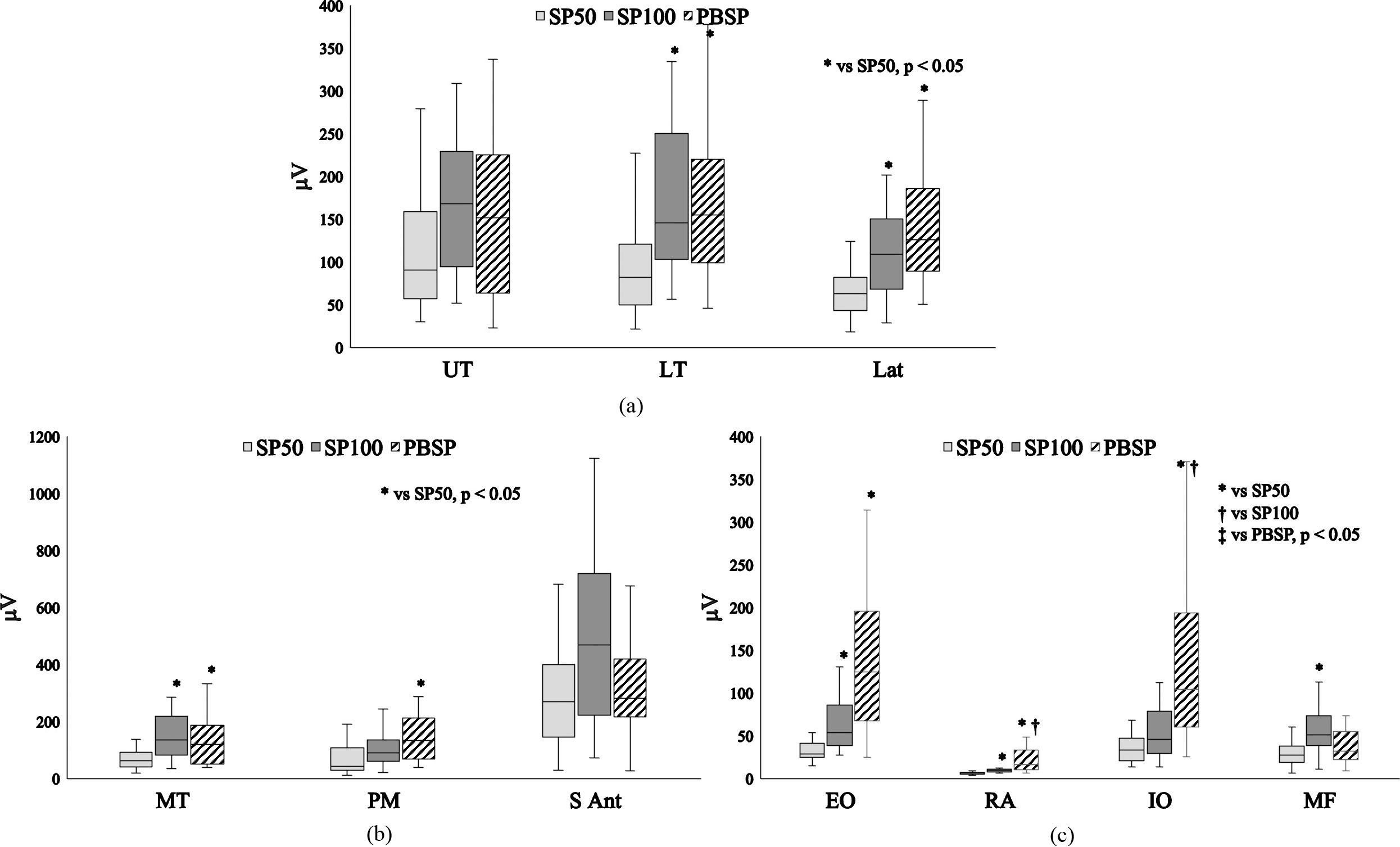
Adding the external-focus using the paper balloon to the front plank significantly activated 8 out of the 10 muscles. In the downward shoulder press, 5 out of 10 muscles with 50% 1 RM, 2 out of 10 muscles with 100% 1 RM were significantly activated.
CONCLUSIONS:
Adding external-focus instruction using paper balloon increases trunk muscles in front plank and shoulder press while possibly improving trunk stability. Novel exercises using paper balloon may efficiently activate specific muscles without external loading thus possibly reducing the stress on the involved joints during exercise.
Introduction
Various lumbar stability exercises are used in lower back treatment programs, or performance improvement in sport [1, 2], and several studies have examined their effects [3, 4]. Rehabilitation professionals have used plank (bridge) exercises to activate the trunk muscles in both healthy individuals and those with lower back pain [5, 6]. Further, there are studies exploring how, theoretically, trunk activities can be enhanced by adding elements, such as unstable surfaces or changing body position. For example, Imai et al. have suggested that lumbar stabilization exercises improve trunk activities when performed on an unstable surface [7], or trunk muscle activation can be changed by different body positions [8].
The press exercise is a popular upper-body resistance exercise that enhances the upper limb and trunk muscles. Variations of pressing exercises exist and are commonly used in weight training for strength and power by strengthening the chest, shoulder, and trunk muscles; developing sport or exercise ability; or simply various activities of daily living. There are also several varieties of pressing exercises based on the available equipment for example a weightlifting bar, dumbbells, kettlebells, or cables. Some studies have also investigated muscle activities according to different body positions or in unstable conditions [9, 10]. In the past, standing and seated or unilaterally compared to bilaterally on muscle activation of the core during shoulder press exercise have been used. Further, press exercise movements can be divided into two phases: push the weight upward (concentric) and return to the start position (eccentric). A study by Luczak et al. examined upper extremity muscle activity between dumbbell bench, incline, and shoulder press exercises, divided into concentric and eccentric phases [11]. Behm et al. conducted a cross-sectional study of trunk and limb exercises, such as chest and shoulder presses, using both uni- and bilateral resistance, combined with the stable/unstable condition [12]. They stated that trunk exercises in unstable conditions were more effective in activating trunk muscles those in stable conditions. However, in resistance exercises for the moving limbs, such as the chest and shoulder press, unilateral conditions were more influential in trunk muscle activation.
Murofushi et al. introduced an isometric method using a paper balloon – an external focused instruction where control must be exerted to not crush an either a solid object or paper balloon, while maintaining a static position during chest squeeze exercise [13]. This method significantly activates the lower trapezius (LT) muscle without involving any complicated movements and causes agonist and antagonist muscle co-contractions between the LT and upper trapezius (UT), latissimus dorsi (Lat), and pectoralis major clavicular part of the pectoralis major (PM) muscles. Further lowering UT and PM muscles activation compared with the conventional isometric method.
However, no study has yet examined whether adding the external-fucus instruction to "not to crush the paper balloon while exerting maximum pressure” to the front plank (static task or trunk exercises) and shoulder press (dynamic task or limb exercises) on muscle activation. Therefore, this study aimed to examine the effect of external-focus using a paper balloon on the activity of upper limb and trunk muscles during static and dynamic tasks.
Plank hand placement. a: Paper balloon front plank (PBFP) hand setup. b: Front plank (FP) hand setup. I: PBFP, II: FP.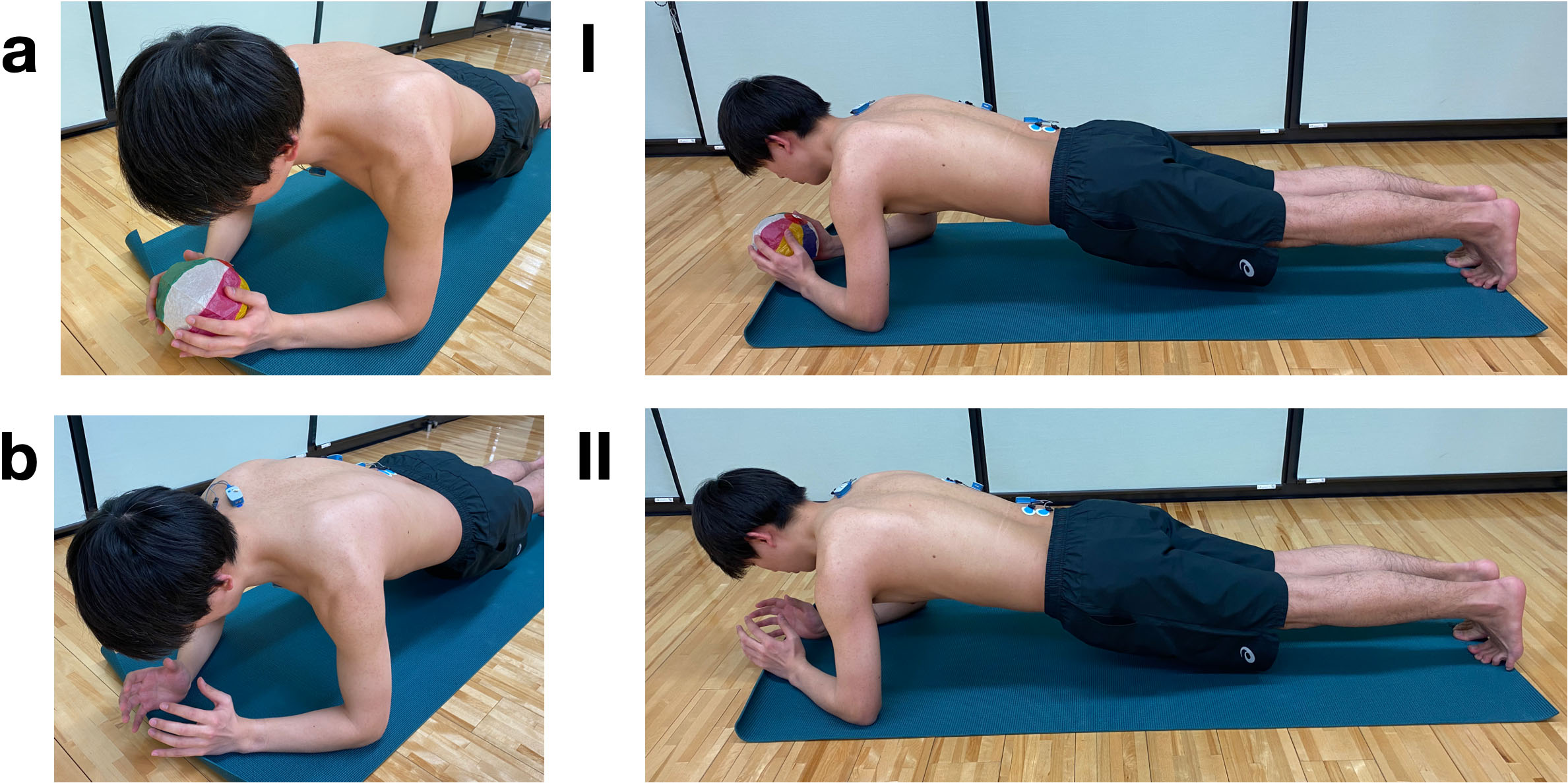
a. Paper balloon shoulder press (PBSP) hand setup. b. Shoulder press (SP) 50/100 hand setup. I. PBSP low; II. PBSP high; III. SP50/100 low; IV. SP50/100 high.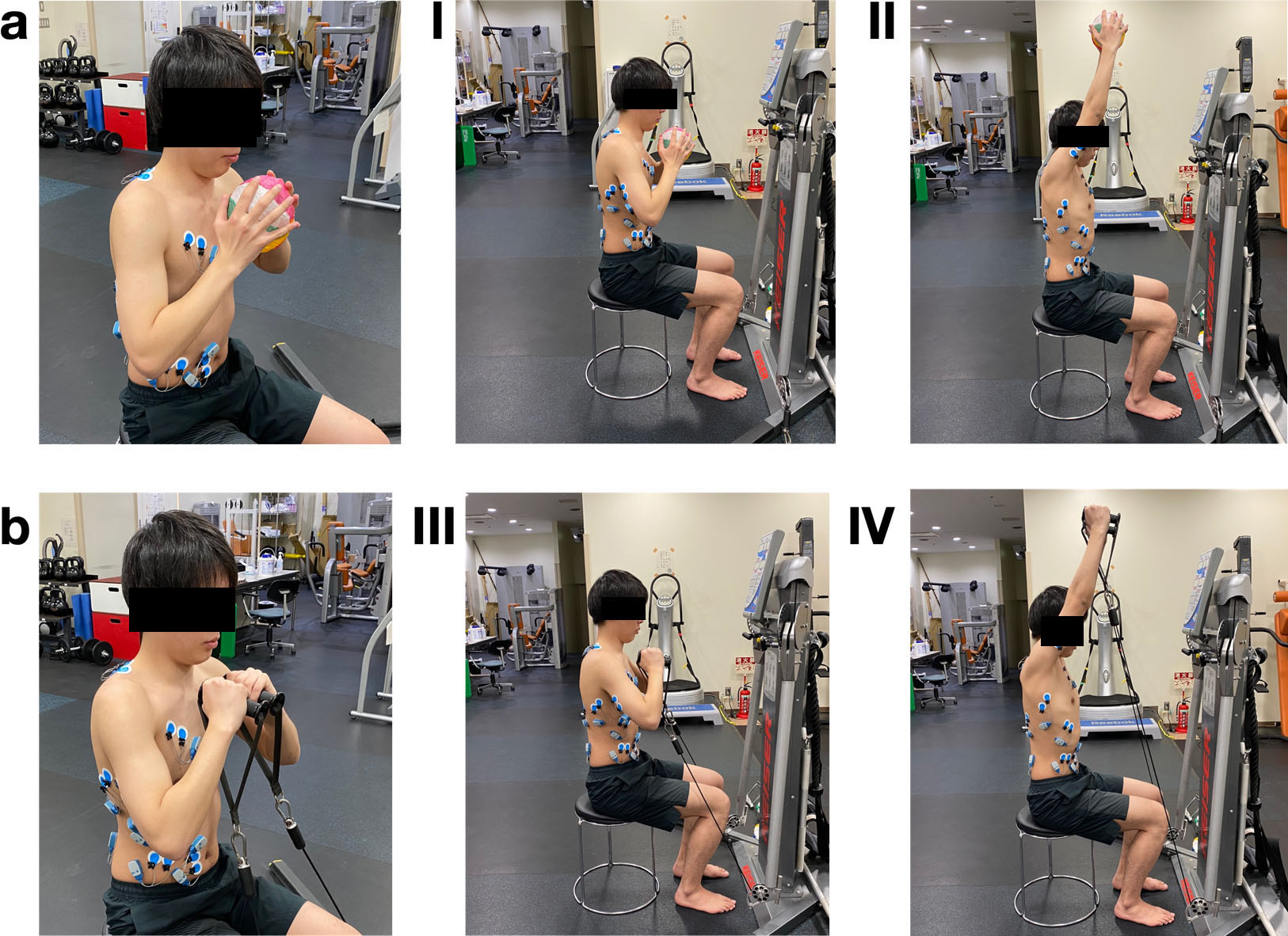
Participants
In this study, front plank trials (Fig. 1) and shoulder press trials (Fig. 2) were conducted separately. A total of 26 participants for front plank trials and shoulder press trial participated in this study. In front plank trials, 24 healthy males participated (mean age 31.0
Study design
This study was designed as a within-participant repeated-measures. Muscle activity was the dependent variable, and the form of exercise was the independent variable. The research ethics committee of Tokyo Medical and Dental University approved the study (approval number: M2019-295, March 4, 2020). All participants provided written informed consent for participation in the experiment prior to engagement in the study.
Procedures
The front plank and shoulder press exercises were performed, and wireless surface electromyography (EMG) was used to analyze changes in muscle activation and its variability within the same participants and period. Muscle activation when performing the isometric method, using a soft paper balloon [14] with control exerted to avoid crushing the item between the hands, was compared with that achieved by a regular plank exercise and shoulder press loading with air compressor machine.
We requested that participants to hold their body in plank position and either: hold the soft paper balloon while exerting control to avoid crushing it as for set position in front plank (Fig. 1I), identified as the paper balloon front plank (PBFP); or perform a regular front plank exercise (Fig. 1b), identified as the front plank (FP).
For the seated shoulder press while exerting control to avoid crushing the soft paper balloon set position (Fig. 2I/II), identified as the paper balloon shoulder press (PBSP). For the air compressor machine loading on shoulder press, the 50% one repetition maximum (1RM) (Fig. 1d) was identified as SP50, and 100% 1RM (Fig. 2II/IV) is identified as SP100.
Paper balloon
For both PBFP and PBSP we chose a soft paper balloon – or kamifusen (UTF8min紙風èˆ) – a classic Japanese toy balloon with a small hole made from rice paper (configuration of the paper balloon: diameter, 14 cm; weight, 5 g).
Keiser machine
For the SP50 and SP100, we selected the air compressed Functional Trainer Keiser cable machine (Functional Trainer model 3020, height arms up 92 inches/2337 mm, width 96”/2439 mm, depth 47”/ 1194 mm, weight 369 lbs/168 kg, resistance/handle 50 lbs/22 kg; Keiser Corporation, Fresno, CA, USA), and set the cable arms in the lowest position using two cable handles to set the hand position similar to the PBSP (Fig. 2a/b).
Trials
All experimental tests were performed in one day, with one session for both the FP and shoulder press tasks. The participants performed total of four trials for the front plank task – with two trials each for PBFP and FP – and six trials for shoulder press task with two trials each for PBSP, SP50, and SP100. All trials were done in random order. The duration of the trials was defined in order to prevent possible fatigue due to the maximum muscle exertion during the exercise task. A 90-s interval was allowed between each individual test performance [15]. The participants were also instructed to perform the PBFP and FP, PBSP, SP50, and SP100 within the same conditions to control the posture or the joint angles. The examiner evaluated the posture before starting each task and continuously controlled throughout each task.
Front plank
With both PBFP and FP, the instruction for the position was given as follows “slowly lift your entire body from the floor, then keep the upper body and legs straight. Do not arch the back, wing the shoulder blades, and bend the hips or the knees. Keep the shoulders directly over the elbows with palms facing each other and the wrist slightly supinated in radial deviation.” Additionally, participants were told to hold a paper balloon while performing the front plank for PBFP. Verbal instructions were given to each participant before each trial to make sure that the proper technique was as follows: “using both hands, try to squeeze the paper balloon with maximum force, but do not crush it.” The joint angles and hand position remained the same by maintaining the object’s shape.
Shoulder press
Every participant’s 1RM was measured before the trials to set the load for SP100. The load for the SP50 trial was determined using half the value of SP100. With PBSP, SP50, and SP100 participants were asked to remain in the same position during each trial. Initially, participants were guided to sit on the chair in a naturally upright position with the knees and hips bent at 90
For PBSP, participants were told to hold paper balloon while performing the shoulder press. Verbal instructions were given to each participant before each trial to make sure proper technique was conducted as follows “using both hands, try to squeeze the paper balloon with maximum force, but do not crush it, and keep same tension all the way up, then come back to the starting position.”
For each PBFP and PBSP session, we ensured that the paper balloon was properly inflated. All participants had no experience with the paper balloon method, but each watched an instructional movie prior to attending the experiment. Furthermore, participants had opportunities to practice the method for 5- to 10-min before start of the experiment for familiarization with the exercises.
The electrode application sites for electromyography. I, posterior view of the upper back; II, posterior view of the lower back; III, lateral view; IV, frontal view of the chest; V, frontal view of the abdomen. A, upper trapezius; B, medial head of the triceps brachii; C, lower trapezius; D, multifidus; E, latissimus dorsi; F, serratus anterior; G, clavicular part of pectorals major; H, external oblique; I, rectus abdominis; J, internal oblique.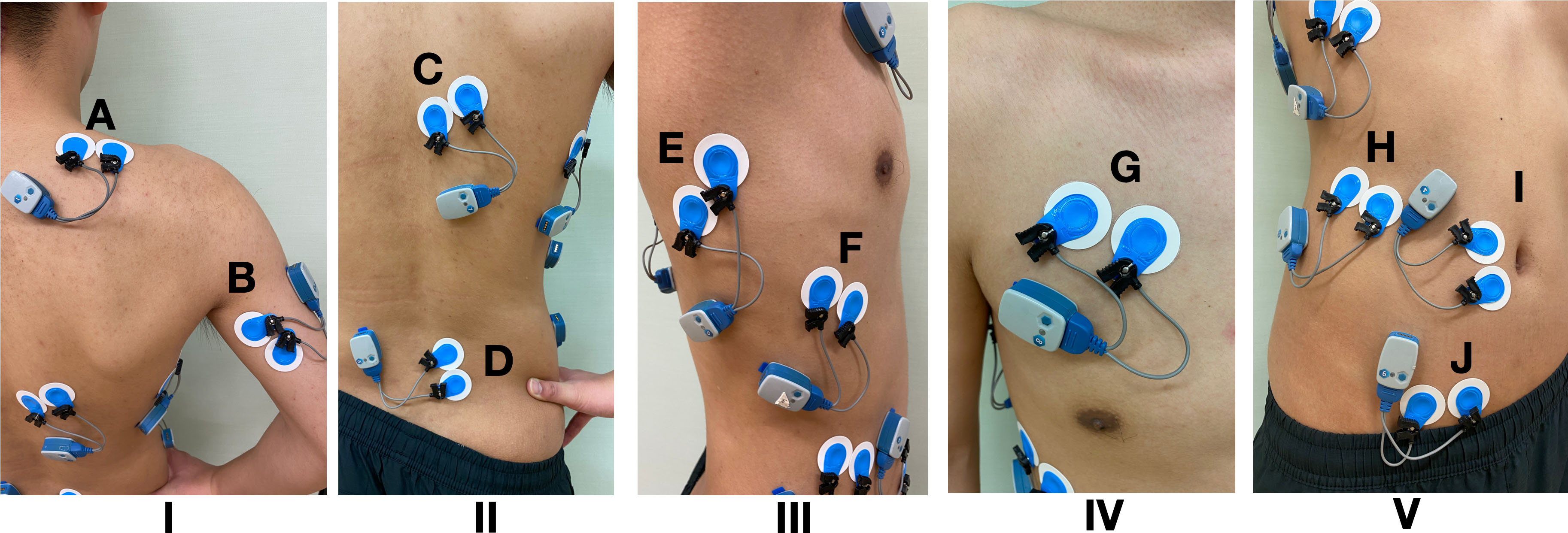
a. Differences in muscle activity between exercise tasks in the scapulothoracic muscles in front plank. PBFP, paper balloon front plank; FP, front plank. UT, upper trapezius; LT, lower trapezius; Lat, latissimus dorsi. b. Differences in muscle activity between exercise tasks in the scapulohumeral muscles in front plank. PBFP, paper balloon front plank; FP, front plank. MT, medial head of the triceps brachii, PM, clavicular part of the pectoralis major; S Ant, serratus anterior. c. Differences in muscle activity between exercise tasks in trunk muscles in front plank. PBFP, paper balloon front plank; FP, front plank. EO, external oblique; RA, rectus abdominis; IO, internal oblique; MF, multifidus. 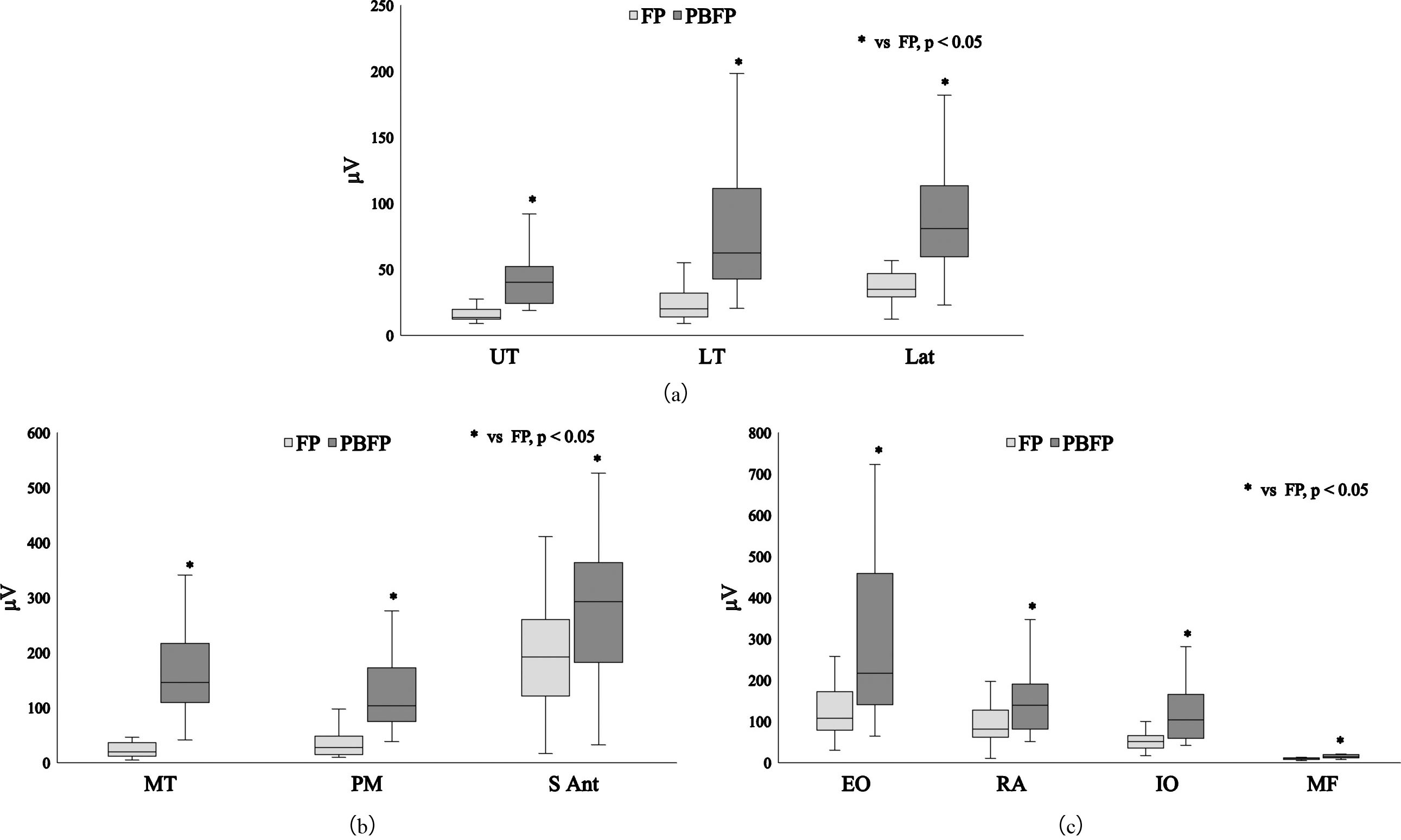
For the EMG recording we used the Ultium, EM-U810M8 by Noraxon (USA Inc., Scottsdale, AZ, USA) with a sampling rate of 2 kHz and band-pass filtering of 10–500 Hz. Before placement of the electrodes, the skin was shaved, abraded, and cleaned with alcohol. The electrode application site for EMG was determined according to prior studies [16, 17] and the SENIAM [18] guidelines. Surface electrodes (Blue Sensor M-00-S, Ambu, Ballerup, Denmark) were attached 35-mm apart to the UT, LT, Lat, medial head of the triceps brachii (MT), PM, serratus anterior (S Ant), external oblique (EO), rectus abdominis (RA), internal oblique (IO) and multifidus (MF) muscles of the right side. The electrodes for each muscle were specifically attached, fixed parallel to the muscle fibers (Fig. 3). Skin impedance was verified to be less than 5-k
Results of the statistical analysis for the front plank
Results of the statistical analysis for the front plank
a. Differences in muscle activity between exercise tasks in the scapulothoracic muscles in shoulder press upward. PBSP paper balloon shoulder press; SP50, shoulder press 50%; SP100, shoulder press 100%. UT, upper trapezius; LT, lower trapezius; Lat, latissimus dorsi. b. Differences in muscle activity between exercise tasks in the scapulohumeral muscles in shoulder press upward. PBSP paper balloon shoulder press; SP50, shoulder press 50%; SP100, shoulder press 100%; MT, medial head of the triceps brachii; PM, clavicular part of the pectoralis major; S Ant, serratus anterior. c. Differences in muscle activity between exercise tasks in trunk muscles in shoulder press upward. PBSP paper balloon shoulder press; SP50, shoulder press 50%; SP100, shoulder press 100%; EO, external oblique; RA, rectus abdominis; IO, internal oblique; MF, multifidus. 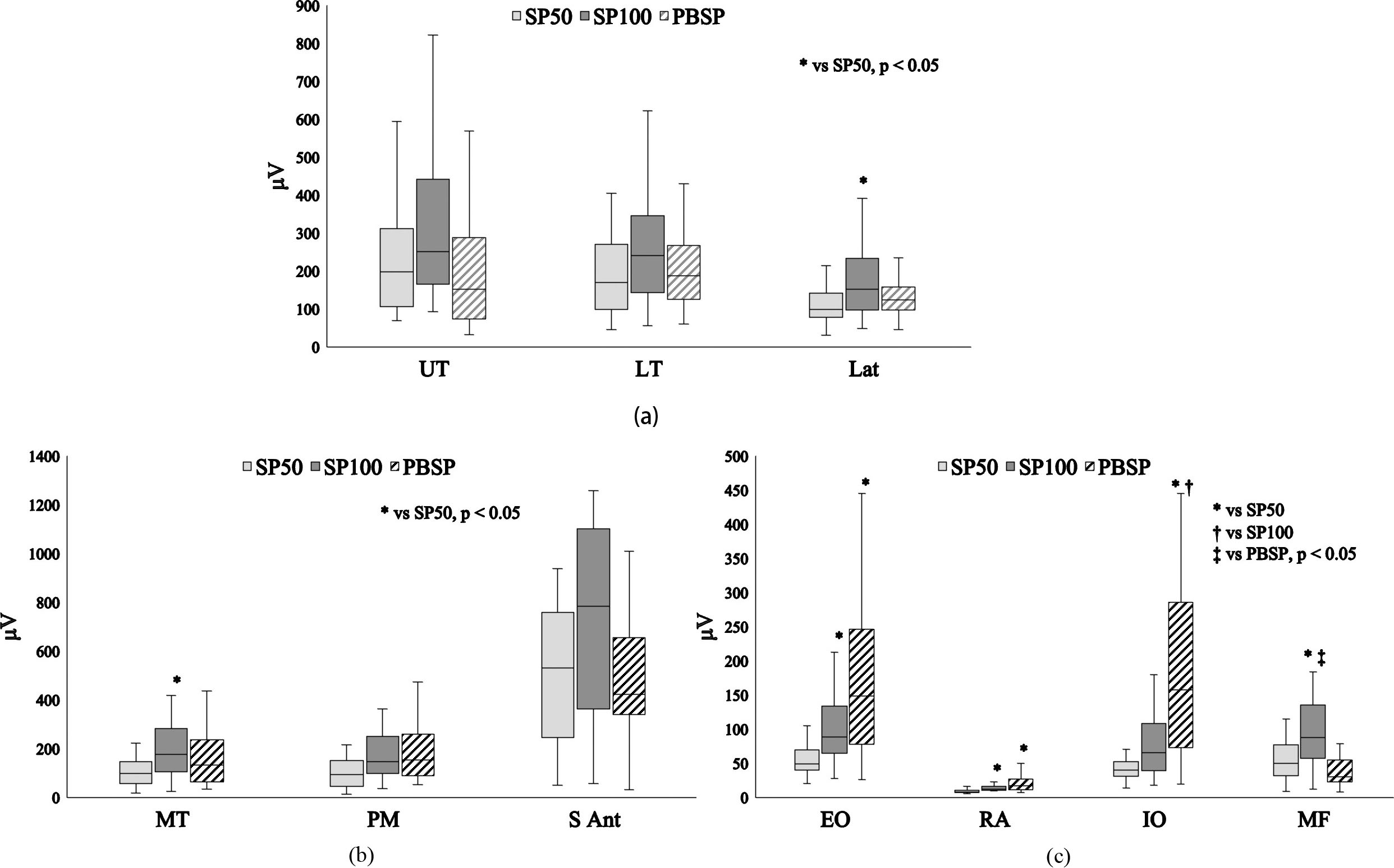
The results of statistical analysis for shoulder press – upward