Interrelationship between specific high-intensity intermittent efforts ability with aerobic capacity and slow stretch-shortening cycle utilization in taekwondo athletes
Free accessResearch articleFirst published online August, 2022
Interrelationship between specific high-intensity intermittent efforts ability with aerobic capacity and slow stretch-shortening cycle utilization in taekwondo athletes
In taekwondo the ability to repeat high-intensity efforts is characteristic of the sport. The Frequency speed of kick test (FSKT) is frequently used to assess this ability, although its influence on aerobic capacity and dynamic strength characteristics has received less attention in the literature.
OBJECTIVE:
To examine the relationship between specific high-intensity intermittent efforts with aerobic capacity and slow stretch-shortening cycle utilization in taekwondo athletes.
METHODS:
Nineteen taekwondo male athletes were assessed by squat jump (SJ), countermovement jump (CMJ), 20-meter shuttle run (20MSR), and frequency speed of kick test multiple (FSKT). From the FSKT, total kicks and kick decrement index [KDI] were calculated. Additionally, from both jump tests, the slow stretch-shortening cycle utilization (Slow SSC Utilization) was determined from the eccentric utilization ratio [EUR], pre-stretch augmentation [PSA], and reactive strength index [RSI].
RESULTS:
There were positive and significant correlations between total kicks with 20MSR ( 0.85; 0.00) and SJ ( 0.66; 0.05). The multiple regression model demonstrated that total kicks where significantly influenced by 20MSR ( 71%; 0.00). Additionally, only EUR and RSI explained total kicks performance to a greater proportion ( 76%).
CONCLUSIONS:
The FSKT total kicks performance is positively correlated and influenced by aerobic capacity and slow SSC utilization.
Taekwondo in combat modality is a complex activity that demands the athletes to possess a specific physical and physiological profile, including a high technical ability of the lower limbs [1, 2]. In this sense, simulated combats show that athletes execute intermittent (effort: pause ratio; 1:7 to 1:2) and high-intensity physiological efforts ( 90% of maximum heart rate or HRmax and maximal oxygen uptake or VOmax 44–63 ml/kg/min; Lactate: La 12 Mmol L) [3]. Additionally, athletes perform multiple combats (three two-minute rounds with a one-minute rest between rounds) during a tournament [1]. The simulated combat reports mixed metabolic responses (aerobic component: 58–66%; ATP-PCr: 26–30%; glycolytic: 4–5%) increasing aerobic metabolism during successive combats [4]. Aerobic fitness allows the athlete to effectively recover between attack periods during combat and between combat [2]. Likewise, this capacity is related to high-intensity efforts tolerance ability [3]. This ability permits repeated kicks exchange during combat and is related to a developed anaerobic capacity [1, 2, 5, 6, 7, 8, 9, 10, 11]. Additionally, athletes must strike and/or kick by applying fast and explosive force to score requiring developed dynamic strength characteristics [1].
In this context, considering the impossibility to assess simultaneously the performance factors under controlled conditions, the best available approach is to assess individually the characteristics that are part of the competitive success [2]. In this regard, the ability to perform high-intensity efforts (in terms of muscle power) is commonly assessed using the Wingate test [1], although it is not recommended due to its limited specificity, technical and application costs [7]. To address this limitation, in taekwondo, specific ecologically validated strategies have recently emerged, such as the Frequency speed of kick test (FSKT) in the 10-s version and multiple (FSKT) that include five sets of 10-s repeated circular kicks by 10-s recovery [7, 14]. These specific tests are useful to discriminate by competitive level [7, 15], to improve performance after training programs [16, 17], and be a specific-field test for coaches to use to assess the total number of kicks and fatigue induced by repeated efforts [18]. In turn, aerobic capacity is assessed through VOmax testing through the treadmill [12, 13] and cycle ergometer [1]. Another frequent field test used in taekwondo is the 20-meter shuttle run (20MSR) [1, 8, 13]. In terms of dynamic strength characteristics of lower limb performance, squat jump (SJ) and countermovement jump (CMJ) field tests are usually used in taekwondo testing [1, 8, 11, 13]. Elite athletes report higher performance in this ability than amateur athletes [1]. Additionally, previous reports use the comparison of both tests to determine the efficiency or slow stretch-shortening cycle utilization (SSC) [19, 20], which includes the eccentric contribution of the muscle, through the eccentric utilization ratio (EUR) and the pre-stretch augmentation (PSA) and the reactive characteristics through the reactive strength index (RSI) [19, 20, 21, 22, 23], although its application is mainly focused on collective and individual sports (e.g., running) [19, 20, 21, 22].
Correlational studies inform recently the positive relationship between specific high-intensity effort ability with aerobic capacity in combat sports, including Olympic wrestling [24, 25, 26] and judo [27], showing significant correlations in elite athletes. In turn, the relationship between SJ and CMJ with the specific change of direction speed ability in taekwondo [28], karate [29], and fencing [30] in elite athletes [28, 29].
However, understanding the influence between FSKT outcomes with aerobic capacity and slow SSC utilization has received less attention in the scientific literature. From a practical perspective, considering the importance of FSKT in determining the specific performance of athletes, the influence of aerobic capacity, and the slow SSC utilization could help coaches provide useful information to control training. In turn, the use of the slow SSC would allow controlling the dynamic strength capacity of the lower body or the effectiveness of the slow cycle obtained from the jumping tests (SJ and CMJ) commonly used in combat sports.
Therefore, the aim of this study was to examine the inter-relationships between taekwondo-specific high-intensity intermittent efforts with the aerobic capacity and slow stretch-shortening cycle utilization in taekwondo athletes. We hypothesized that FSKT outcomes would relate to and be positively influenced by aerobic capacity and slow SSC utilization.
Methods
Participants
Nineteen male taekwondo athletes with a mean age of 19.1 7.3 years; height 164.7 9.6 cm; body mass 64.5 11.2 kg; fat mass percentage 18.4 8.0%; and competitive experience of 4.1 4 years who compete frequently in national and international tournaments participated in this study. The athletes had to meet the following inclusion criteria: i) four or more years of experience; ii) training three or more times per week; iii) preparing for competitions or tournaments organized by the Federación Deportiva Nacional de Taekwondo (FEDENAT, Chile), an organization recognized World Taekwondo; iv) enrolled in a club affiliated to FEDENAT; v) no injuries or neuromuscular problems in the last 10 weeks, and vi) not in a period of body mass reduction. All athletes and/or family members of athletes under 18 years of age were informed in advance of the study purposes, associated benefits, experimental procedures, and potential risks by informed consent or informed assent before the assessments. The study was conducted under the Helsinki declaration on human subjects and approved by the Scientific Ethics Committee of Universidad Autónoma (Code: 080-18, Date: 10-05-2018).
Testing procedure
This study used a cross-sectional correlational and explanatory design to analyze the relationship and influence of the FSKT with aerobic capacity and Slow SSC Utilization in male taekwondo athletes. Assessments were conducted 48-h after the last physical training session on the first weekend of July 2019 during the physical performance maintenance period before the start of specific training and as part of the athletes’ physical performance monitoring.
A prior week to the testing sessions, the athletes performed a familiarization session to reduce the learning effect. The jumps were practiced as many times as necessary. In turn, the FSKT and the 20MSR were explained in detail and performed twice due to the high-intensity execution. All standardized tests were scheduled between 9:00 am and 1:00 pm on Saturday, July 4 and Sunday, July 5, 2019, in university locations, supervised by the principal researcher and taken by an assistant sports science professional who was blinded from the study participants at the time of the assessments. Among the clothing conditions, the athletes were asked to wear a t-shirt, shorts, and the same running shoes. In the first testing session, the outcomes assessed included chronological age, height, body weight, fat percentage, and FSKT. The second session included SJ, CMJ, and 20MSR. Before the assessments, all athletes were instructed to i) adequate rest for at least 8-h, ii) not consume stimulant or caffeine beverages before the assessments, and iii) maintain their normal dietary and hydration habits. Before the physical assessments, the athletes were previously instructed to give their maximum effort during the tests. The order of the assessments was established according to the muscular intensity. In both days, the usual warm-up was applied for 20-min for this sport, which included 10-min of joint mobility, 5-min jogging, 30-s of dynamic stretching, dynamic jumps, and dynamic hand and foot techniques. The best of three attempts was considered for both jump tests, and one for the FSKT and 20MSR. A 10-min rest interval was applied between the assessments to reduce the fatigue effects [33].
Slow SSC utilization
The slow SSC utilization of the lower limbs was assessed by comparing the performance of the maximum height reached (cm) from the squat jump (SJ) and the countermovement jump (CMJ) [19] using an electronic contact platform (Ergojump; Globus, Codogne, Italy; accuracy: 0.01 m). For SJ, each athlete was previously instructed to rest his hands on his hips, feet, and shoulders wide apart and adopt a flexed-knee position (approximately 90) for 3-s, and then perform a maximal effort vertical jump [31]. For the CMJ, each athlete was instructed to rest his hands on his hips, feet, and shoulders wide apart and perform a downward movement (no restriction was imposed on the knee angle achieved) followed by a maximal effort vertical jump [31]. Then, slow SSC utilization [19] were calculated by pre-stretch augmentation (PSA) using the formula of García-Pinillos et al. [23]: PSA ((CMJ-SJ)/SJ) 100 and the eccentric muscle contribution by the eccentric utilization coefficient or EUR (CMJ/SJ) [22]. Finally, the reactive contribution (RSI) was calculated using the formula RSI (CMJ-SJ) [23].
Specific high-intensity intermittent efforts ability
The ability to repeat taekwondo-specific high- intensity intermittent efforts was assessed using the Frequency speed of kick test multiple (FSKT) designed for taekwondo following the previously described protocols [7, 14]. Briefly, each of the five FSKT sets had a duration of 10-s work by 10-s rest between sets. To perform the FSKT, each athlete performed the test in front of a partner wearing a trunk protector (breastplate). After the sound signal, the athlete performed as many kicks as possible, alternating the right and left legs. An iPhone 8 plus camera attached to a tripod was used to verify the performance during the test. Performance was determined and verified by the number of kicks in each series by obtaining the total number of kicks (total kicks) and the kick decrement index (KDI). To calculate the KDI, the following equation was used [14]:
Aerobic capacity
Aerobic capacity was determined indirectly through the 20-meter shuttle run test (20MSR) according to the procedures of Leger and Lambert [32] and previous studies in taekwondo [13]. Athletes started running at 8.5 km/h and increased their speed by 0.5 km/h every minute. The speed was dictated by an audio signal sounded at an increasing rate from a computer using software developed for this purpose. The athletes had to run back and forth between the two lines 20-m apart at the set pace of the audio signal. Each run was successful in completing the 20-meter distance. Athletes were advised once when they did not reach the finish line during the given time. The assessment was terminated when the athlete i) could not follow the set pace of the signal for two successive runs or ii) when he voluntarily stopped. The 20MSR outcomes were expressed as total time in minutes from the start to the point of voluntary exhaustion or disqualification.
Statistical analysis
Data were processed with SPSS version 23 (Microsoft Corp., Redmond, WA, USA). Data are presented as mean standard deviation (SD) with a 95% confidence interval (95%CI). The normal distribution was verified by the Shapiro-Wilk test. The correlations between each outcome were examined using Pearson’s product-moment coefficient (r). The correlation magnitude was interpreted using the following thresholds: 0 to 0.30 (small); 0.31 to 0.49 (moderate); 0.50 to 0.69 (large); 0.70 to 0.89 (very large); and 0.90 to 1.0 (a near-perfect to perfect correlation) [34]. Subsequently, to examine the influence between FSKT outcomes with aerobic capacity a simple linear regression model was applied. Meanwhile, to examine the influence between FSKT outcomes and slow SSC utilization was used a stepwise multiple regression analysis (forward and backward stepwise methods). Only independent variables and linear correlations that were statistically significant ( 0.05) with dependent variables were used in the regression models [35]. To meet the assumptions for the application of the regression model, specifically to determine the differences between the independent variables a one-way analysis of variance was used (ANOVA) [35]. To detect outliers a residuals analysis [35]. The possibility of collinearity between the predictor variables was examined using the variance inflation factor (VIF), the tolerance (VIF 10 and tolerance 0.2), and verified by the Durbin-Watson test [36]. The SJ and CMJ showed acceptable reliability (coefficient of variation [CV] 10% and intra-class correlation [ICC] 0.90) [34].
Results
All data showed a normal distribution. Additionally, all regression models complied with collinearity, the autocorrelation of residuals, and independence assumptions. Table 1 presents the descriptive characteristics.
Descriptive outcomes analyzed ( 19)
Outcomes
Mean SD
95% CI
SJ (cm)
28.6
6.4
25.5 to 31.7
CMJ (cm)
32.7
5.9
29.9 to 35.6
EUR (ratio)
1.17
0.14
1.10 to 1.124
PSA (%)
16.3
14.45
8.88 to 23.7
RSI (ratio)
4.10
3.21
2.55 to 5.65
20MSR (min)
7.2
2.5
5.9 to 8.3
FSKT (kicks)
18
3
17.2 to 20.3
FSKT (kicks)
19
2
17.7 to 20.6
FSKT (kicks)
18
2
16.9 to 19.5
FSKT (kicks)
17
2
16.8 to 18.9
FSKT (kicks)
17
2
16.1 to 18.7
Total kicks
91
12
85.7 to 97.3
KDI (%)
8.5
3.6
6.7 to 10.5
CMJ: Countermovement jump. EUR: Eccentric utilization ratio. FSKT: Frequency speed of kick test multiple. PSA: Pre-stretch augmentation. SJ: Squat jump. RSI: Reactive strength index. SD: Standard deviation. 95% CI: 95% Confidence interval. 20MSR: 20-Meter shuttle run.
Correlation between aerobic capacity and Slow SSC Utilization with FSKT outcomes of the athletes ( 19)
Table 2 illustrates the results of correlations in detail. Significant and large correlations were reported between FSKT total kicks ( 0.69; 0.001), FSKT ( 0.62; 0.004), and FSKT ( 0.68; 0.001) with 20MSR. Additionally, were found large to very large significant correlations between FSKT ( 0.84; 0.001), FSKT ( 0.88; 0.001) with 20MSR. Specifically, a significant and very large correlation between total kicks ( 0.85; 0.000) with 20MSR. Meanwhile, a trivial correlation was observed between KDI with 20MSR ( 0.07; 0.76).
Regarding the results to the dynamic strength characteristics, a very large statistically significant correlation was reported between total kicks with SJ ( 0.66; 0.00). Additionally, significantly very large correlations were documented between total kicks with PSA (0.73; 0.0004) and EUR (0.77; 0.000). In turn, a significant and moderate correlation was reported between total kicks and RSI (0.54; 0.01). Moreover, a small correlation was reported between total kicks with CMJ ( 0.42; 0.07). Finally, trivial to small correlations ( 0.07 to 0.18) between dynamic strength characteristics with KDI were found.
Influence of aerobic capacity on total kicks
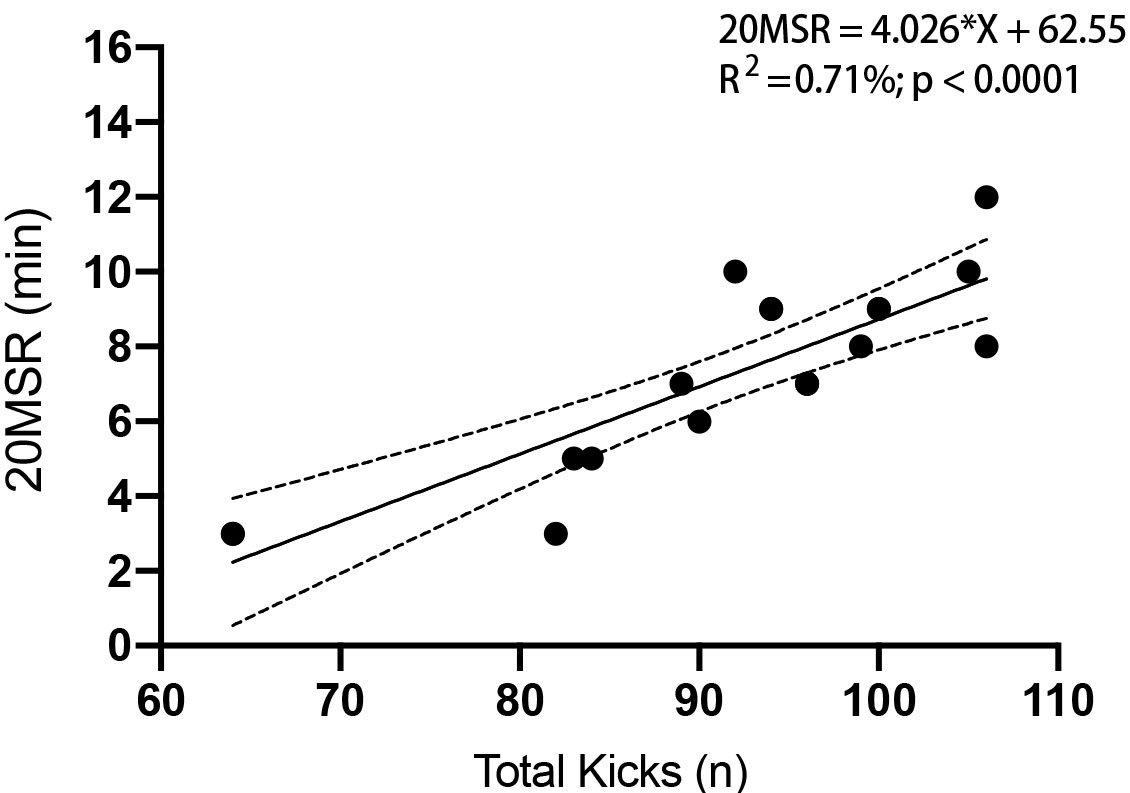
Figure 1 illustrates the simple linear regression model, which indicates that total kicks was significantly influenced ( 44.9; 0.001) by 20MSR (ß 4.026; 0.00).
Influence of 20MSR performance on total kicks from FSKT.
Influence of slow SSC utilization on total kicks
The forward stepwise multiple linear model reported that the best model (i.e., including only EUR and RSI) had a greater influence (76%; 0.001) on the variance of the total kicks return than the forward model including only EUR (56%; 0.001). These results were confirmed from the backward stepwise multiple linear modelling that included EUR and RSI (76%; 0.001), obtaining the same results. Meanwhile, the modelling that included EUR, RSI, and PSA (74%; 0.001) and the one that incorporated SJ, EUR, RSI, and PSA (73%; 0.001) explained in smaller proportion the variance of the performance for the total kicks (Table 3).
Discussion
This study aimed was to examine the relationship and influence between specific high-intensity intermittent efforts ability with the aerobic capacity and slow stretch-shortening cycle utilization in taekwondo athletes. Among the main findings, were reported a significant relationship and influence between FSKT total kicks with aerobic capacity. Moreover, significant large to very large correlations were documented between total kicks with dynamic strength characteristics, except for CMJ. However, only EUR and RSI characteristics explained the changes in total kicks performance to a greater proportion. These results partially confirm our hypothesis, i.e., aerobic capacity and slow SSC utilization significantly influenced total kicks. However, the KDI showed a trivial to a small relationship with outcomes examined.
Relationship between FSKT with aerobic capacity
The total kicks was significantly correlated with 20MSR. Additionally, the multiple linear regression model showed a significant influence of 20MSR on this outcome. Conversely, there was no correlation between KDI with 20MSR. In this regard, the results are controversial compared to other combat sports. For example, recently Herrera-Valenzuela et al. [24] in Chilean elite Olympic wrestling athletes ( 9) reported a significant correlation ( 0.93; 0.001) between the VOmax assessed during a treadmill incremental test and the Special Wrestling Fitness Test (SWFT). Although, the authors did not document a significant correlation between VOmax with the number of throws and the test index score (SWFT) [24]. Conversely, previous studies, in Chilean athletes ( 20) [25] and in young Spanish athletes ( 62) [26] shows significant correlations (0.77; 0.47; 0.05, respectively) between indirect VO from YoYo-test with SWFT, although neither study reported a correlation between aerobic capacity and the total number of throws [25, 26]. In another sport with similar characteristics such as judo, Hesari et al. [27] in Iranian elite athletes ( 19) indicated a significant correlation between VO assessed in a treadmill ( 0.78; 0.01) and the total number of throws. However, in contrast to our study, the authors documented a significant negative correlation (0.87; 0.01) with the Special Judo Fitness Test fatigue index (SJFT) [27]. Furthermore, in this same sport, Lopes-Silva et al. [37], analyzed the VOmax influence (estimated on an upper and lower body cycle ergometer) on the SJFT outcomes (heart rate immediately and 1-min after the test, and the total number of throws) through a multiple linear regression model. The authors documented significant moderate correlations between upper body ( 0.37, 0.01) and lower body ( 0.40, 0.001) assessments with the total number of throws [37]. Additionally, a moderate correlation with SJFT (0.42; 0.006). However, because of the model, only 27% ( 0.002) upper body VOmax influenced the total number of throws and 15% of the SJFT ( 0.001). However, it is important to note that the tests analyzed, in contrast to taekwondo [1], are focused on the dominant combat sports, which differ in their physical and physiological characteristics [38, 39].
However, to date, judo and Olympic wrestling have received the most attention from sports scientists, reflected in the specific evidence developed [2, 40], as well as in the systematic reviews conducted on the SJFT [41, 42].
Accordingly, it is not surprising that aerobic capacity influenced the ability to execute kicks consecutively during the FSKT performance. This result could be explained because this intermittent ability, as well as the continuous efforts, depends centrally on the ability to absorb, distribute and efficiently use oxygen during the efforts [43]. Furthermore, FSKT is a 90 s intermittent and high-intensity effort, that in metabolic terms, the ATP-PCr and glycolytic energy systems would contribute in a high proportion during the first seconds, followed by an increasing aerobic contribution [37, 44, 45, 46]. Additionally, aerobic capacity influences ATP-PCr resynthesis during high-intensity efforts, resulting in efficient recovery [37, 46]. Therefore, increasing aerobic capacity probably improves the ability to repeat high-intensity efforts during tournaments by increasing oxygen availability, improving lactate buffering and PCr regeneration [2, 45, 46]. Increased aerobic capacity would also induce physiological adaptations that could enhance endurance in taekwondo, such as increased mitochondrial dynamic, faster oxygen uptake kinetics, accelerate muscle re-oxygenation, improve lactate and ventilatory thresholds, and a VO increase [2]. By contrast, the lack of correlation between aerobic capacity and KDI could be related to the lack of heart rate control as an internal load control measure in the KDI equation, as both the SJFT and the SWFT incorporate this physiological variable in the fatigue equations [37].
Relationship between FSKTMULT with the slow SSC utilization
Our study reported a significant correlation between dynamic strength muscle characteristics, except CMJ, with total kicks. However, only EUR and RSI had the greatest influence on the total kicks change variance. These results are mainly studied with specific assessments of change of direction speed (CODS) (i.e., using sport-specific techniques). In this sense, the FSKT, similar to specific CODS, would have similarities in terms of specificity, duration time, and high-intensity muscle activity [40]. Specifically, Chaabene et al. [28] documented a significant correlation between the taekwondo-specific agility test (TSAT) in elite athletes (total: 27) with SJ (0.62; 0.001) and CMJ (0.43; 0.02) performance. Additionally, Herrera-Valenzuela et al. [29] in elite karate athletes (total: 10) reported significant correlations between the movement change in karate position test with SJ (0.65; 0.04) and CMJ (0.70; 0.02) performance.
Based on this background, this is the first study to examine the use of the slow SSC from the SJ and CMJ with a taekwondo-specific high-intensity intermittent test. Therefore, the results could be explained by RSI and EUR derived from SJ and CMJ [19, 22, 49]. In this regard, it is important to remember that an efficient SSC is a critical factor in taekwondo athletes. Indeed, small differences between SJ and CMJ are observed in elite athletes [1, 29, 50]. In practical terms, the lower EUR and RSI indicate these differences [22, 49]. The above is relevant because this small difference represents a muscular efficiency that includes efficient use of the eccentric muscle characteristics and the reactive component. This translates into the ability to develop force quickly or in the shortest possible time to score and/or cause the technical knockout in this sport [10, 22, 49]. In parallel, it is relevant to note that eccentric-dominant movement patterns are present, for example, in the control of the musculature involved in knee stabilization during kick impact and in the backward movement during defense and counterattack [51, 52, 53]. Finally, the lack of relationship between the dynamic capacity of the lower limb performance and the KDI is probably because the KDI represents only FSKT performance, specifically for this test.
Limitations
This study is not exempt from limitations. In this sense, it is pertinent to mention that, despite the results obtained, it should be taken into account that i) although the 20MSR is a test frequently used in health and sport contexts to estimate aerobic capacity due to its relationship with VOmax, it is an indirect test; ii) the sample presents variability in age, which could have influenced the results; and iii) 20MSR and FSKT were evaluated only once, therefore it was not possible to verify the reliability of these results.
Highlights and future studies
Considering the above limitations, this study contributes to the literature in combat sports exploring through correlational analysis and linear regression the contribution of aerobic capacity and slow SSC utilization in a sport-specific Field test designed to determine high-intensity intermittent efforts performance. Generally, aerobic capacity and the use of SJ and CMJ to determine slow SSC utilization influence FSKT total kicks. Specifically, 20MSR performance influenced total kicks by 71%, which is interesting because it suggests that aerobic capacity has a robust influence in a high-intensity intermittent specific effort test. It follows that the KDI would be specific only for assessing high-intensity intermittent efforts in taekwondo. Future studies could i) examine VO2max kinetics using gas analysis during FSKT; ii) examine muscle strength and performance characteristics using other technologies and metrics; iii) replicate the study in elite athletes.
Practical applications for field
Understanding the interactions of the physical abilities involved in the specific field tests in taekwondo contributes to the control, monitoring, and evaluation of the physical fitness of athletes and consequently to the sport performance in this sport [1, 50, 54]. In particular, the FSKT is a specific field test designed to assess high-intensity intermittent specific efforts and we show that only the total number of kicks could be considered to understand the aerobic capacity influence in this test. This point is important because to date, only high-intensity aspects were known. Likewise, this study reports that from SJ and CMJ the slow SSC utilization can be evaluated. Importantly, assessments of these components contribute to the coaches’ ability to identify and improve the state of the different muscle characteristics during the training process. Especially, in the case of combat sports that are characterized by the complexity of technical/tactical and physical/physiological demands that include striking as part of the key abilities [27].
Conclusions
The FSKT total kicks performance is positively correlated and influenced by aerobic capacity and slow SSC utilization. KDI is not related to aerobic capacity and with slow SSC utilization.
Author contributions
CONCEPTION: Alex Ojeda-Aravena.
PERFORMANCE OF WORK: Alex Ojeda-Aravena.
INTERPRETATION OR ANALYSIS OF DATA: Alex Ojeda-Aravena, Tomás Herrera-Valenzuela, Pablo Valdés-Badilla and José Manuel García-García.
PREPARATION OF THE MANUSCRIPT: Alex Ojeda- Aravena, Tomás Herrera-Valenzuela, Pablo Valdés-Badilla, Eduardo Baez-San Martín, José Zapata-Bastías, Esteban Aedo-Muñoz and José Manuel García-García.
REVISION FOR IMPORTANT INTELLECTUAL CONTENT: Alex Ojeda- Aravena, Tomás Herrera-Valenzuela, Pablo Valdés-Badilla, Eduardo Baez-San Martín, José Zapata-Bastías, Esteban Aedo-Muñoz and José Manuel García-García.
SUPERVISION: José Manuel García-García.
Ethical considerations
This study was conducted under the Declaration of Helsinki on Work Involving Human Subjects. All athletes and/or family members of athletes under 18 years of age were informed in advance of the study purposes, associated benefits, experimental procedures, and potential risks by informed consent or informed assent before the assessments. The studies involving human participants were reviewed and approved by the Ethics Committee of Universidad Autónoma (Code: 080-18).
Funding
None.
Footnotes
Acknowledgments
The authors acknowledge all volunteer participants for the study.
Conflict of interest
None.
References
1.
BridgeCAda Silva SantosJFChaabeneHPieterWFranchiniE. Physical and physiological profiles of taekwondo athletes. Sports Med.2014; 44(6): 713–33. doi: 10.1519/JSC.0000000000002591.
2.
BarleyORChapmanDWGuppySNAbbissCR. Considerations When Assessing Endurance in Combat Sport Athletes. Front Physiol [Internet]. 2019 [cited 2021 Jun 13]; 10. Available from: https://www.frontiersin.org/articles/10.3389/fphys.2019.00205/full. doi: 10.3389/fphys.2019.00205.
3.
da Silva SantosJFWilsonVDHerrera-ValenzuelaTMachadoFSM. Time-motion analysis and physiological responses to taekwondo combat in juvenile and adult athletes: A systematic review. Strength Cond J.2020; 42(2): 103–21. doi: 10.1519/SSC.0000000000000517.
4.
CamposFADBertuzziRDouradoACSantosVGFFranchiniE. Energy demands in taekwondo athletes during combat simulation. Eur J Appl Physiol.2012; 112(4): 1221–8. doi: 10.1007/s00421-011-2071-4.
5.
FranchiniECormackSTakitoMY. Effects of high-intensity interval training on olympic combat sports athletes’ performance and physiological adaptation: A systematic review. J Strength Cond Res.2019; 33(1): 242–52. doi: 10.1519/JSC.0000000000002957.
6.
FranchiniE. High-intensity interval training prescription for combat-sport athletes. Int J Sports Physiol Perform.2020; 15(6): 767–76. doi: 10.1123/ijspp.2020-0289.
7.
da Silva SantosJFFranchiniE. Frequency speed of kick test performance comparison between female taekwondo athletes of different competitive levels. J Strength Cond Res.2018; 32(10): 2934–8. doi: 10.1519/jsc.0000000000002552.
8.
Ojeda-AravenaAHerrera-ValenzuelaTValdés-BadillaPCancino-LópezJZapata-BastiasJGarcía-GarcíaJM. Effects of 4 weeks of a technique-specific protocol with high-intensity intervals on general and specific physical fitness in taekwondo athletes: An inter-individual analysis. Int J Environ Res Public Health.2021 Mar 31; 18(7). doi: 10.3390/ijerph18073643.
9.
BridgeCASparksASMcNaughtonLRCloseGLHausenMGurgelJ, et al. Repeated exposure to taekwondo combat modulates the physiological and hormonal responses to subsequent bouts and recovery periods. J Strength Cond Res.2018; 32(9): 2529–41. doi: 10.1519/JSC.0000000000002591.
Ojeda-Aravena Alex, Azocar-Gallardo Jairo, Galle Fernando, García-García José Manuel. Relación entre las características de la composición corporal y el rendimiento físico general y específico en competidores de taekwondo chilenos de nivel nacional de ambos sexos: un estudio observacional. Rev Esp Nutr Hum Diet.2020; 24(2): 154–164. doi: 10.14306/renhyd.24.2.969.12.
12.
MonksLSeoM-WKimH-BJungHCSongJK. High-intensity interval training and athletic performance in Taekwondo athletes. J Sports Med Phys Fitness.2017; 57(10): 1252–60. doi: 10.23736/S0022-4707.17.06853-0.
13.
OuerguiIMessaoudiHChtourouHWagnerMOBouassidaABouhlelE, et al. Repeated sprint training vs. repeated high-intensity technique training in adolescent taekwondo athletes – a randomized controlled trial. Int J Environ Res Public Health.2020; 17(12): 4506. doi: 10.3390/ijerph17124506.
14.
Ferreira da Silva SantosJLopes-SilvaJPLoturcoIFranchiniE. Test-retest reliability, sensibility and construct validity of the frequency speed of kick test in male black-belt taekwondo athletes. Ido Mov Cult J Martial Arts Anthropol.2020; 20(3): 38–46. doi: 10.14589/ido.20.3.6.
15.
Ferreira da Silva SantosJHerrera-ValenzuelaTFranchiniE. Establishing frequency speed of kick test classificatory tables in male and female taekwondo athletes. Kinesiology.2019; 51(2): 213–8. doi: 10.26582/k.51.2.12.
16.
TapiaDEABarreraVRSantosJFDSFranchiniEValdés-BadillaPOrihuelaPHerrera-ValenzuelaT. High-intensity interval training improves specific performance in taekwondo athletes. Revista de Artes Marciales Asiáticas. 2020; 15(1): 4–13. doi: 10.18002/rama.v15i1.6086041.
17.
da Silva SantosJFFranchiniE. Is frequency speed of kick test responsive to training? A study with taekwondo athletes. Sport Sci Health.2016; 12(3): 377–82. doi: 10.1007/s11332-016-0300-2.
18.
Ferreira da Silva SantosJFranchiniE. Trainers’ understanding of chosing the frequency speed of kick test (FSKT) for taekwondo practitioners. Ido Mov Cult J Martial Arts Anthropol.2021; 21(2): 1–5. doi: 10.26582/k.51.2.12.
19.
SuchomelTJSoleCJStoneMH. Comparison of methods that assess lower-body stretch-shortening cycle utilization. J Strength Cond Res.2016; 30(2): 547–54. doi: 10.1519/JSC.0000000000001100.
20.
CastagnaCCastelliniE. Vertical jump performance in Italian male and female national team soccer players. J Strength Cond Res.2013 Apr; 27(4): 1156–61. doi: 10.1519/JSC.0b013e3182610999.
21.
WalsheADWilsonGJMurphyAJ. The validity and reliability of a test of lower body musculotendinous stiffness. Eur J Appl Physiol.1996; 73(3–4): 332–9. doi: 10.1007/BF02425495.
22.
McGuiganMRDoyleTLNewtonMEdwardsDJNimphiusSNewtonRU. Eccentric utilization ratio: Effect of sport and phase of training. J Strength Cond Res.2006; 20(4): 992–5. doi: 10.1519/R-19165.1.
23.
García-PinillosFPárraga-MontillaJASoto-HermosoVMLatorre-RománPA. Changes in balance ability, power output, and stretch-shortening cycle utilization after two high-intensity intermittent training protocols in endurance runners. J Sport Health Sci [Internet].2016 Dec 1 [cited 2021 Apr 4]; 5(4): 430–6. Available from: https://www.sciencedirect.com/science/article/pii/S2095254615000897. doi: 10.1016/j.jshs.2015.09.003.
24.
Herrera-ValenzuelaTCuadraDValdés-BadillaPCofre-BoladosCPardo-TamayoCOjeda-AravenaA, et al. Relación del Special Wrestling Fitness Test con el rendimiento aeróbico. Rev Andal Med Deporte [Internet]. 2020 Sep 14 [cited 2020 Sep 15]. Available from: https://ws072.juntadeandalucia.es/ojs/index.php/ramd/article/view/830. doi: 10.33155/j.ramd.2020.09.003.
25.
Venegas-CárdenasDCaibul-DíazRMonsVValdés-BadillaPPichonACuadraD, et al. Physical and physiological profile in youth elite Chilean wrestlers. Arch BUDO.2019; 15: 249–57. Available from: http://archbudo.com/view/abstracts/issue_id/12959.
26.
Martínez-AbellánA, Iniesta J de CR. Special wrestling fitness test: Una prueba específica de lucha olímpica aplicada a luchadores jóvenes. SPORT TK-Rev Euroam Cienc Deporte.2016; 5(1): 27–33. doi: 10.6018/249081.
27.
HesariAFMirzaeiBOrtakandSMRabienejadANikolaïdisPT. Relationship between aerobic and anaerobic power, and Special Judo Fitness Test (SJFT) in elite Iranian male judokas. Apunts Med Esport.2014; 49(181): 25–9. doi: 10.1016/j.apunts.2013.07.005.
28.
ChaabeneHNegraYCapranicaLBouguezziRHachanaYRouahiMA, et al. Validity and reliability of a new test of planned agility in elite taekwondo athletes. J Strength Cond Res.2018; 32(9): 2542–7. doi: 10.1519/JSC.0000000000002.
29.
Herrera-ValenzuelaTMiccono-GonzálezGFazekas-MolinaMAstorga-RojasGValdés-BadillaPOjeda-AravenaA, et al. Relación entre el Movement change in karate position Test con el rendimiento neuromuscular en atletas de karate: Un estudio piloto (Relationship between Movement change in karate position Test and neuromuscular performance in karate athletes: A pilot stud. Retos.2020; (39): 505–8. doi: 10.47197/retos.v0i39.81409.
30.
ChtaraHNegraYChaabeneHChtaraMCroninJChaouachiA. Validity and reliability of a new test of change of direction in fencing athletes. Int J Environ Res Public Health.2020; 17(12): 4545.
31.
Ramírez-CampilloRAndradeDCIzquierdoM. Effects of plyometric training volume and training surface on explosive strength. J Strength Cond Res.2013; 27(10): 2714–22.
32.
LegerLAMercierDGadouryCLambertJ. The multistage 20 metre shuttle run test for aerobic fitness. J Sports Sci.1988; 6(2): 93–101. doi: 10.1080/02640418808729800.
33.
Suarez-ArronesLGonzalo-SkokOCarrasquillaIAsián-ClementeJSantallaALara-LopezP, et al. Relationships between change of direction, sprint, jump, and squat power performance. Sports.2020; 8(3): 38. doi: 10.3390/sports8030038.
34.
HopkinsWMarshallSBatterhamAHaninJ. Progressive statistics for studies in sports medicine and exercise science. Med Sci Sports Exerc.2009; 41(1): 3. doi: 10.1249/MSS.0b013e31818cb278.
35.
MaloneySJRichardsJNixonDGHarveyLJFletcherIM. Do stiffness and asymmetries predict change of direction performance? J Sports Sci.2017; 35(6): 547–56. doi: 10.1080/02640414.2016.1179775.
36.
LoturcoIKobalRKitamuraKFernandesVMouraNSiqueiraF, et al. Predictive factors of elite sprint performance: Influences of muscle mechanical properties and functional parameters. J Strength Cond Res.2019; 33(4): 974–86. doi: 10.1519/JSC.0000000000002196.
37.
Paulo Lopes-SilvaJPPanissaVLGJulioUFFranchiniE. Influence of Physical Fitness on Special Judo Fitness Test Performance: A Multiple Linear Regression Analysis. J Strength Cond Res. 2018 Nov 8. doi: 10.1519/JSC.0000000000002948.
38.
Torres-LuqueGHernández-GarcíaREscobar-MolinaRGaratacheaNNikolaidisPT. Physical and physiological characteristics of judo athletes: An update. Sports [Internet].2016 Mar 10 [cited 2021 Jun 8]; 4(1). Available from: https://www.ncbi.nlm.nih.gov/pmc/articles/PMC5968945/. doi: 10.3390/.
39.
ChaabeneHNegraYBouguezziRMkaouerBFranchiniEJulioU, et al. Physical and physiological attributes of wrestlers: An update. J Strength Cond Res [Internet].2017 May [cited 2021 Jun 8]; 31(5): 1411–42. Available from: https://journals.lww.com/nsca-jscr/Fulltext/2017/05000/Physical_and_Physiological_Attributes_of.31.aspx.
40.
ChaabeneHNegraYBouguezziRCapranicaLFranchiniEPrieskeO, et al. Tests for the assessment of sport-specific performance in Olympic combat sports: A systematic review with practical recommendations. Front Physiol.2018; 9: 386. doi: 10.1519/JSC.0000000000001738.
41.
Sterkowicz-PrzybycieńKFukudaDHFranchiniE. Meta-analysis to determine normative values for the special judo fitness test in male athletes: 20+ years of sport-specific data and the lasting legacy of stanisław sterkowicz. Sports Basel Switz.2019 Aug 16; 7(8). doi: 10.3390/sports7080194.
42.
Sterkowicz-PrzybycieńKLFukudaDH. Establishing normative data for the special judo fitness test in female athletes using systematic review and meta-analysis. J Strength Cond Res.2014 Dec; 28(12): 3585–93. doi: 10.1519/JSC.0000000000000561.
43.
BassettDRHowleyET. Limiting factors for maximum oxygen uptake and determinants of endurance performance. Med Sci Sports Exerc.2000; 32(1): 70–84.
44.
SerresseOLortieGBouchardCBoulayMR. Estimation of the contribution of the various energy systems during maximal work of short duration. Int J Sports Med.1988 Dec; 9(6): 456–60.
45.
BakerJSMcCormickMCRobergsRA. Interaction among skeletal muscle metabolic energy systems during intense exercise. J Nutr Metab. 2010; 2010. doi: 10.1097/00005768-200001000-00012.
46.
GlaisterM. Multiple sprint work: Physiological responses, mechanisms of fatigue and the influence of aerobic fitness. Sports Med Auckl NZ.2005; 35(9): 757–77. doi: 10.2165/00007256-200535090-00003.
47.
GirardOMendez-VillanuevaABishopD. Repeated-sprint ability – part I. Sports Med.2011; 41(8): 673–94. doi: 10.2165/11590550-000000000-00000.
48.
BishopDGirardOMendez-VillanuevaA. Repeated-sprint ability – part II: Recommendations for training. Sports Med Auckl NZ.2011 Sep 1; 41(9): 741–56. doi: 10.2165/11590560-000000000-00000.
49.
KippKKrzyszkowskiJHeenemanJ. Hip moment and knee power eccentric utilization ratios determine lower-extremity stretch-shortening cycle performance. Sports Biomech. 2019 Mar 25; 1–11. doi: 10.1080/14763141.2019.1579854.
50.
Norjali WazirMRWVan HielMMostaertMDeconinckFJPionJLenoirM. Identification of elite performance characteristics in a small sample of taekwondo athletes. PloS One.2019; 14(5): e0217358. doi: 10.1371/journal.pone.0217358.
51.
ThibordeeSPrasartwuthO. Effectiveness of roundhouse kick in elite Taekwondo athletes. J Electromyogr Kinesiol.2014; 24(3): 353–8. doi: 10.1016/j.jelekin.2014.02.002.
52.
QuinziFCamomillaVFeliciFDi MarioASbriccoliP. Differences in neuromuscular control between impact and no impact roundhouse kick in athletes of different skill levels. J Electromyogr Kinesiol [Internet].2013 Feb 1 [cited 2021 Jun 8]; 23(1): 140–50. Available from: https://www.sciencedirect.com/science/article/pii/S1050641112001666. doi: 10.1016/j.jelekin.2012.09.006.
53.
ChaabeneHPrieskeONegraYGranacherU. Change of direction speed: Toward a strength training approach with accentuated eccentric muscle actions. Sports Med [Internet].2018 Aug 1 [cited 2021 Jun 8]; 48(8): 1773–9. Available from: doi: 10.1007/s40279-018-0907-3.
54.
NikolaidisPTBuśkoKClementeFMTasiopoulosIKnechtleB. Age-and sex-related differences in the anthropometry and neuromuscular fitness of competitive taekwondo athletes. Open Access J Sports Med.2016; 7: 177. doi: 10.2147/OAJSM.S120344.