




Abstract
BACKGROUND:
Endurance is an important factor in athletic performance and is affected by respiratory muscle fatigue. Recent studies indicate that warming up of respiratory muscles improves the respiratory muscle fatigue.
OBJECTIVE:
To investigate the effects of inspiratory muscle warm-up on aerobic performance during incremental exercise.
METHOD:
Maximal inspiratory (MIP) and expiratory (MEP) pressures were measured in 30 healthy male athletes, with (EX) and without (CON) inspiratory muscle warm-up.
RESULTS:
No significant changes in MIP and MEP values between baseline levels and the CON condition were observed while such were seen with respect to EX and between the EX and CON conditions (
CONCLUSION:
These results show that inspiratory muscle warm-up improves aerobic performance byt further investigation is required to elucidate the exact mechanisms that stand behing these variations.
Introduction
Warm-up is defined as exercise designed to improve performance efficiency, protect athletes from injury and prepare them for the physiological and psychological loads that accompany improvements in athletic performance; it also reduces muscle damage risk via biomechanic, neurologic and psychologic mechanisms [1]. As warm-up studies become more specialised, the number of inspiratory muscle warm-up, respiratory warm-up and respiratory muscle training studies has increased, and the positive effects of warm-up on athletic performance have been observed [2, 3, 4, 5].
The oxygen demand of tissues increases during sportive activity [6]. The functions of the respiratory system mechanically depend on the capacity of the respiratory muscles [7]. Respiratory muscles are important during exercise, particularly because they lift the rib cage and help in inspiration, and constrict to the rib cage for expiration. Respiratory airflow can reach peak levels via the respiratory muscle strength and effect [8]. A recent study claimed that respiratory muscle warm-up may affects the cooperation of the upper thorax, neck and respiratory muscles and improves levels of reactive O
The importance of the respiratory system during physical activity has been well-researched, and several scholars have shown that respiratory muscle warm-up could affect athletic performance [2, 3, 4, 10, 11, 12, 13]. Inspiratory warm-up can affect pulmonary functions [9], anaerobic power [13], respiratory muscle strength [11], rowing performance [12], 100 m swimming performance [14], 6 min all-out performance [2], repeated running performance [3], perception of breathlessness and dyspnoea during exercise [4, 7], foot-work performance among badminton players [4], and 6 min performance during treadmill running [7]. However, limited information regarding the effects of inspiratory muscle warm-up on aerobic capacity, an extremely important component of sportive performance, is available.
In the present study, we investigated the impact of inspiratory muscle warm-up on aerobic performance during incremental exercise.
Method
Subjects
A total of 30 healthy male elite field hockey players voluntarily participated in the study (Table 1). The inclusion criteria were at least 10 years of regular hockey training history and at least 5 years of playing in the Turkish Hockey Super League. Athletes with a history of respiratory disease were excluded from the study. The subjects were informed of the study procedure 1 week before commencement. Ethical approval was obtained from the ethical committee of the Ondokuz Mayıs University Head of Medical Research (OMÜ KAEK 2014/635), and informed consent was obtained from all participants included in the study.
Descriptive information of subjects (
30)
Descriptive information of subjects (
SD-standard deviation, BMI-body mass index, MIP-maximal inspiratory pressure, MEP-maximal expiratory pressure, VO
Design
This study was designed as a randomised, controlled, crossover study and the subjects visited the laboratory four times over the course of our research. During their first visit, they were familiarised with the concepts of maximal inspiratory pressure (MIP), maximal expiratory pressure (MEP) and aerobic performance; they were also informed of the incremental exercise tests and inspiratory muscle warm-up procedure. During their second visit, the MIP and MEP tests were performed without inspiratory muscle warm-up to obtain baseline levels. In the third and fourth visits, the subjects randomly performed experimental trials (EX) with inspiratory warm-up before the MIP and MEP measurements and aerobic performance tests, and performed control trials (CON) without inspiratory warm-up before MIP and MEP measurements and aerobic performance tests. The MIP/MEP measurements and aerobic performance tests were performed immediately after the EX and CON trials. Randomisation and blinding of the CON and EX trials was conducted with trial cards (unseen content) on the third visit. Then, 11 of the subjects performed the EX trial first, and 19 of the subjects performed the CON trial first. The subjects had no knowledge of which tests would apply after the CON and EX trials. Blinding was used to eliminate potential biases during the incremental exercise test. The trials were performed at intervals of 1 day and at the same time each day (between 16:00 and 20:00). Exercise and high-intensity physical activity were not allowed before the trials.
Inspiratory warm-up procedure
A specific inspiratory training device (Power
The analysis in the MIP and MEP measurements between baseline level and trials
The analysis in the MIP and MEP measurements between baseline level and trials
MIP-maximal inspiratory pressure, MEP-maximal expiratory pressure, CON-control trial, EX-experimental trial.
MIP and MEP were measured with a respiratory pressure meter (MicroRPM, CareFusion Micro Medical, Kent, UK) according to the 2002 guidelines of the American Thoracic Society and European Respiratory Society (2002) [6]. MIP measurements were obtained from the residual volume, and MEP measurements were obtained from the total lung capacity. The nose was occluded throughout these efforts. To obtain the best value, all subjects were measured from three to five times until the difference between two attempts differed by no more than 10%. The maximal of three acceptable attempts was used as the final MIP or MEP value [9, 17, 18, 19].
Aerobic performance test (VO
)
VO
Data analysis
SPSS version 16.0 (SPSS Inc., Chicago, IL, USA) was used for all statistical analyses. The data were expressed as either mean
Results
Effects on the MIP and MEP measurements
Table 2 indicates that significant improvements in the MIP and MEP values resulted due to the EX, but not with respect to the CON condition. There were also significant between- conditions differences.
The analysis in the aerobic performance measurements between the CON and EX trials
The analysis in the aerobic performance measurements between the CON and EX trials
CON-control trial, EX-experimental trial, VO
Percent difference in the MIP and MEP between the baseline level, CON and EX trials. CON-control trial, EX-experimental trial, MIP-maximal inspiratory pressure (straight line), MEP-maximal expiratory pressure (dotted line).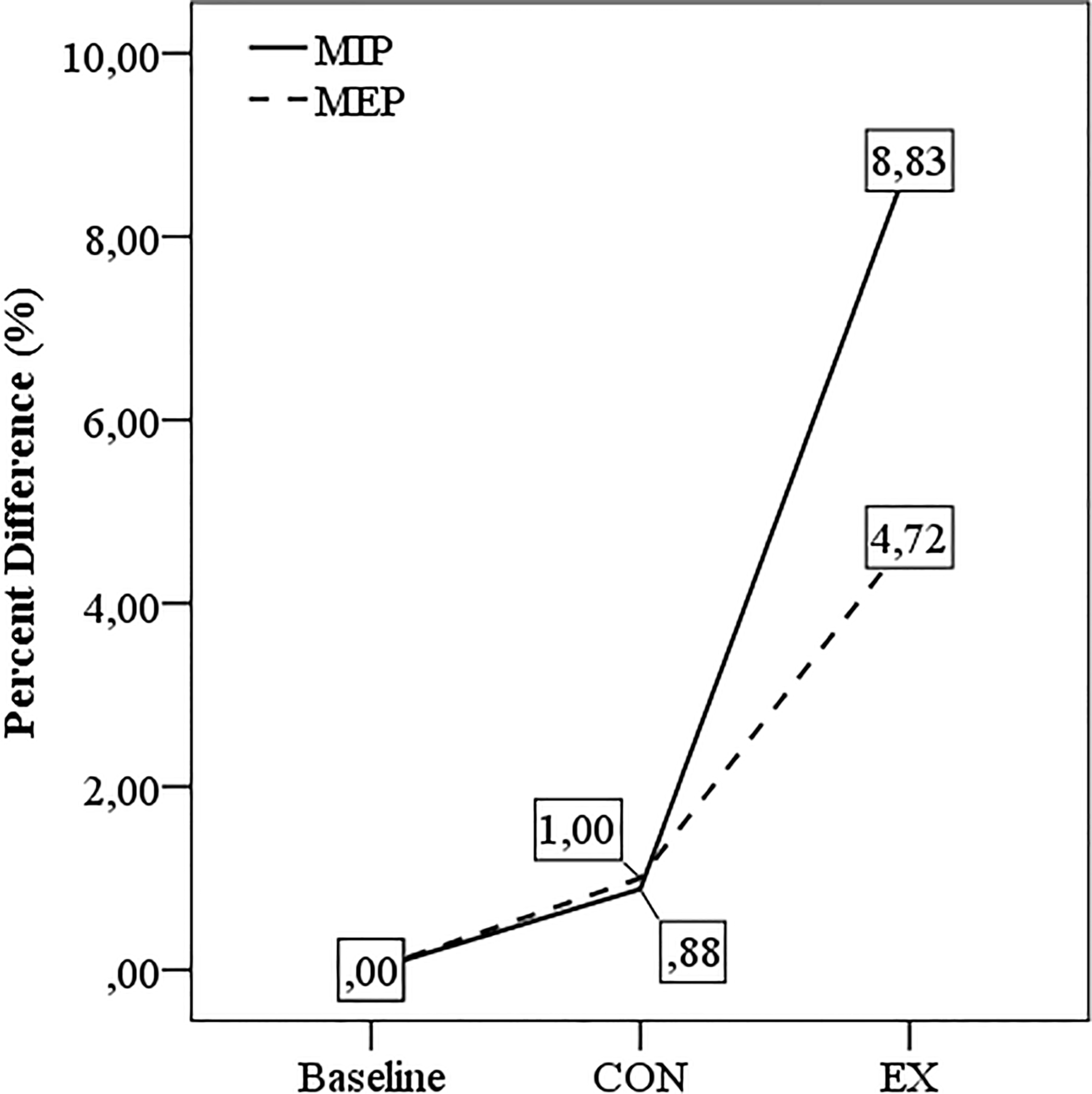
Table 3 outlines the results of the aerobic performance parameters obtained between the EX and CON conditions. Significant changes in all aerobic performance parameters were observed including VO
Percent difference in the aerobic performance parameters between the CON and EX trials. CON-control trial, EX-experimental trial, VO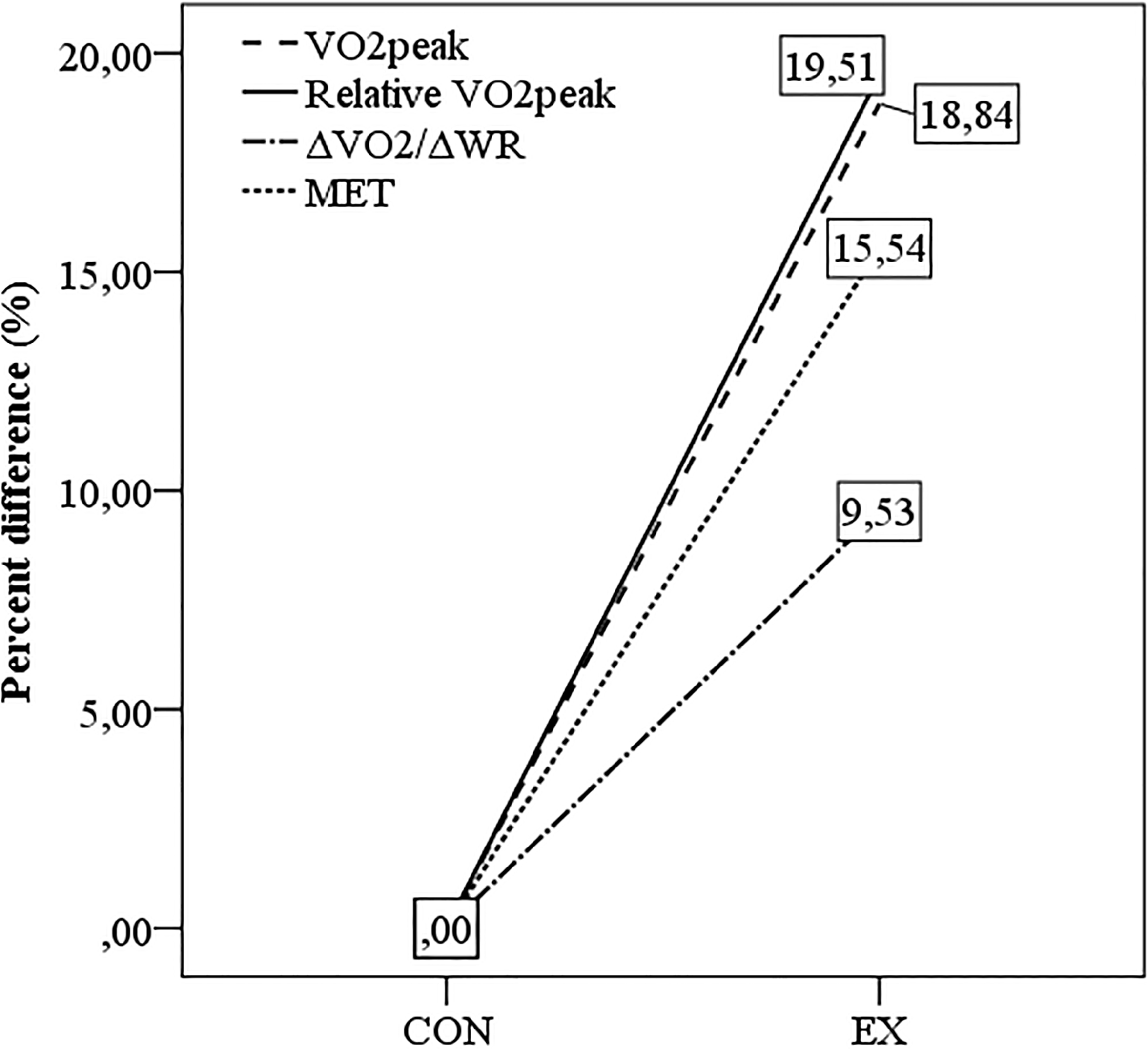
Percent difference in the respiratory and circulatory parameters that support the change in aerobic performance parameters between the CON and EX trials. CON-control trial, EX-experimental trial, HR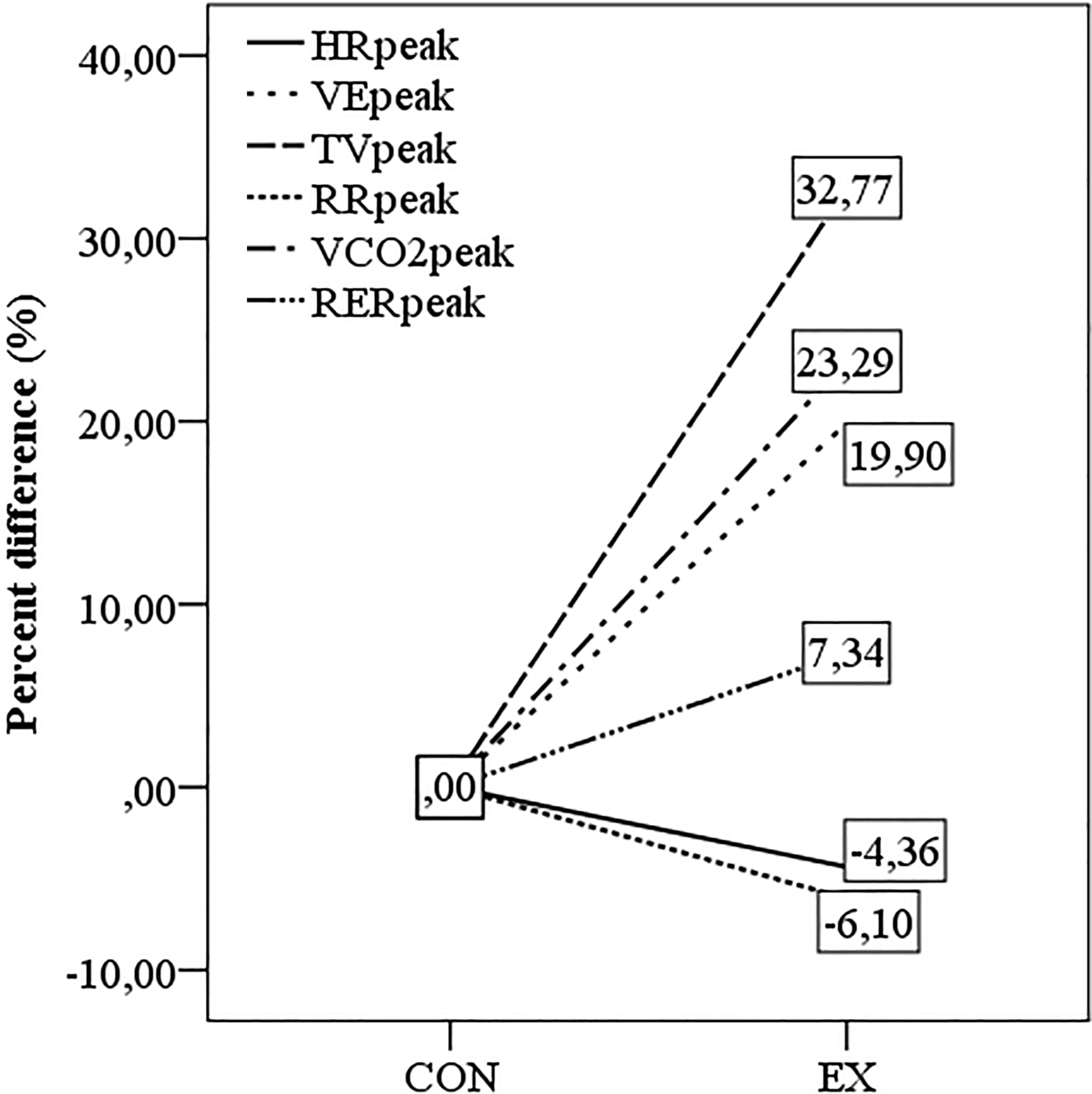
The aim of the present study was to investigate the effects of inspiratory warm-up on aerobic performance. Two major findings were obtained: [1] After inspiratory warm up, the relative and absolute VO
The effect of warm-up on aerobic capacity could be attributed to increases in initial VO
Recent studies on the effects of respiratory muscle warm-up have shown significant increments in long-term performance [2, 3, 4, 7, 16, 29]. In contrast to these studies, however, some studies have indicated decrements in long-term exercise performance [5, 18]. Such decrements have been attributed to the performance of paraplegic subjects [5] and the high intensity of long-term exercise [18].
Respiratory muscle warm-up does not raise the O
The observed increase in aerobic performance in the present study can be explained by improvements in thoracic geometry [31], the contributions of the upper thorax and neck muscles to the respiratory muscles [31, 32, 33] and improvements in neural pathways [34] accompanying increases in respiratory muscle strength. A previous study claimed that prior contractions, similar to inspiratory muscle warm-up, probably might explain the presence of increased levels of reactive O
As for a possible limitation of this study, it should be mentioned that it was designed as a randomised, controlled, crossover study. Placebo-controlled design could be an alternative and may be used in another endeavour.
In conclusion, inspiratory muscle warm-up significantly improve aerobic performance compared with baseline levels. The mechanisms responsible for these improvements are probably associated with improvements in inspiratory-expiratory muscle strength, increases in levels of reactive O
Footnotes
Conflict of interest
This project was not supported by any grants or other financial assistance and the authors declare no conflict of interest. The present study is a part of doctoral dissertation of Dr. Mustafa Özdal.