




Abstract
This paper took the course recommendation as an example to prove that the personalized intelligent detection and recommendation algorithm system provides a convenient means for this problem. In view of the problems such as low recommendation accuracy, lack of personalization and long running time of the current personalized course recommendation system, this paper studied the personalized intelligent detection and recommendation algorithm system with the help of big data technology, hoping to solve the existing problems. The general search results of the traditional recommendation system have been unable to meet the needs of users. In order to improve the course recommendation system, this paper used big data technology to build a scientific framework, and made an in-depth analysis of various problems existing in the traditional system and strove to solve them. The results showed that using big data intelligent systems to search for ten sets of intelligent courses had a search accuracy of between 96% and 98%, indicating that big data can achieve more accurate and efficient results in the construction of intelligent course recommendation systems, and can construct a new course recommendation system to meet user needs.
Keywords
,Chongqing,China.E-mail:.
Introduction
The popularity of the Internet has brought a large number of quality courses into the public eye, allowing people to watch the courses they are interested in through the Internet. No matter in a remote village or in a prosperous city, people can rely on the Internet and enjoy the same educational resources, no longer limited by space. The course website developed in recent years is non-profit and open, which can meet the learning needs of different groups of people. However, it is precisely because of the large number and wide range of courses that users have difficulty in choosing. In a dizzying array of courses, the search for required courses often takes extra time and effort. The number of websites has increased, and the number of courses matching keywords has also increased. The filtered information remains unchanged and cannot meet user needs. Big data technology can make up for the deficiencies of traditional recommendation systems and fully mine the keywords provided by users, so as to have the characteristics of high-speed operation and rapid response.
With the continuous development of digitalization, distance education is favored by people, and the research on personalized and intelligent recommendation systems for courses is also developing in depth. Ma X built a highly reliable sustainable economic learning course recommendation model, and also tested the performance of the system from the perspectives of course recommendation satisfaction and system retrieval accuracy. The constructed model performed well in recommending sustainable economic learning courses [1]. Wang Y discussed how to make accurate and personalized recommendations for MOOC users, and proposed a multi-attribute weighting algorithm based on collaborative filtering to select a set of recommended courses for target users. The results showed that the recall rate of the algorithm was higher than that of the traditional uncertain neighbor collaborative filtering recommendation algorithm. The higher the recall rate, the more accurate the recommendation result [2]. Based on mobile learning, Radhakrishnan M provided learners with a new experience, which enabled them to learn anything anytime and anywhere using portable or mobile devices. Mobile devices could support a large amount of educational content and different media formats. With this advancement, the proposed mobile learning system could help learners to access different courses at different levels and different specialties [3]. Gong J focused on the recommendation of knowledge concepts in online courses, and recommended relevant topics to users to facilitate users to learn online. Existing methods only considered the user’s historical behavior and ignored various auxiliary information, and they only considered the user’s immediate reaction to the recommended item. Aiming at these problems, a new enhanced concept recommendation model based on heterogeneous information network was proposed [4]. Praserttitipong D examined the appropriate and insufficient justifications for applying routine measures in the field of course recommendation. Supplemented by the new proposed quality measure, several techniques were used to build a model to estimate elective course grades. Experiments showed that classifiers using course information gave the best results, and the model was able to provide personalized recommendations for individual students based on their abilities [5]. These scholars’ research results provide feasible ideas for building a personalized intelligent course recommendation system. However, due to the continuous development of information technology, the number of courses has exploded. It is necessary to adjust and update the existing course recommendation system to adapt to the development of the times. The recommendation system based on big data technology can effectively solve these problems.
Big data is an inevitable product of the development of the times. It can process massive data at high speed, analyze existing problems in time, and find effective solutions. Xu C believed that an ideal recommender system should have both accurate and diverse performance, so he proposed a recommendation method based on the MapReduce framework. In the MapReduce framework, big data technology was used to shorten the operation time. The improved collaborative filtering model was improved by a novel similarity calculation process that took into account many factors. By transforming the process of generating personalized recommendation results into a multi-objective optimization problem, the multiple conflicts between accuracy and diversity could be well handled [6]. Yin C focused on the big data hybrid recommendation algorithm based on the combination of sociological similarity and trust. With the popularity of big data cloud services, personal recommendation technology was becoming a useful and popular solution to the problem of information overload. The experimental results showed that the recommendation algorithm considering the trust model had higher accuracy than the traditional recommendation algorithm, and both Mean Absolute Deviation (MAD) and Root Mean Square Error (RMSE) were increased by 2% [7]. Elia G used scientific research methods to analyze the contribution of individual students in online learning activities and to assess their satisfaction with the course. He also introduced a software artifact that leverages learning analytics in a big data environment with the goal of delivering valuable insights in real-time. People and systems could use these insights to properly intervene in procedures [8]. Su F proposed a model design method for students’ most preferred courses based on big data analysis and cloud computing technology. Through the use of modern information technology, the credit system course selection was combined with the information network and an online course selection system adapted to the credit system management mode was developed for students. This improved the optimal allocation performance of students’ course selection and enhanced the utilization efficiency of course selection [9]. According to these research results, big data technology has achieved good results in various aspects. Therefore, in order to promote the construction of a personalized intelligent recommendation system, this paper used big data technology to deeply analyze the characteristics of courses, user conditions, etc., and recommend online courses that are more in line with users’ interests and needs.
This paper used big data technology to intelligently transform the traditional course recommendation system, and analyzed the specific data of each online education platform. The course collection, user satisfaction and keyword search accuracy of the traditional system were analyzed. Big data technology was used to construct a scientific course recommendation framework. After the simulation calculation, the accuracy of the big data technology for various situations recommended by the course was higher than 96%, and the highest could reach 98%, which showed that the big data technology could achieve good results in the improvement of the course recommendation system.
Introduction to related methods
Big data technology
The term “big data” describes a set of data that is larger than what can be acquired, stored, managed, and analyzed by traditional database methods. A collection of methods and resources for handling, archiving, and evaluating massive data collections is known as big data technology. Due to the rapid development of information technology, a large amount of data can now be created and collected, including structured, semi structured, and unstructured data. Extraction of useful information from these massive datasets for decision support, business insight discovery, and process improvement is the main objective of big data technologies.
Recommender system
One useful tool for addressing information overload is the recommendation system. It is an analysis-based method for particular user categories. User behavior is used to determine each user’s unique demands and recommend certain long-tail products to the appropriate users in order to assist them in finding the things they need but are having trouble finding. The recommendation system’s primary function is to quickly assist users with the abundance of information. Relevant content is quickly and accurately accessed to enhance user experience and increase user reliance on product usage, while preventing duplicate or insignificant negative consequences, providing personalized information, and improving the accuracy of information recommendations.
Hybrid algorithm
One of the most popular conventional recommendation techniques is hybrid recommendation. Because every recommendation algorithm has flaws of its own, mixed recommendations combine many recommendation algorithms to produce recommendations with higher quality. Three principles underpin hybrid proposals. Three-pronged strategy: pre-, middle-, and post-fusion. Pre-fusion operates by combining various recommendation algorithms into a single recommendation model, which is subsequently trained on a variety of sample types. As a framework, middle-fusion uses a recommendation algorithm and incorporates another algorithm into it. Using a voting mechanism, linear combination, or confidence, post-fusion builds two or more recommendation systems. The final recommended findings are obtained by combining the results.
Construction of personalized intelligent course recommendation algorithm system
Construction of intelligent recommendation algorithm system
Intelligent recommendation concept
There are active and passive recommendation technologies. Passive recommendation technology includes classification search and keyword search. Classification browsing uses a tree structure to describe the category of goods or information. When the classification of goods or information is not unique or it is difficult to classify accurately, users use this method to query information, which takes a long time and is inefficient in recommendation. Keyword query refers to the user providing the keywords to search and searching the matching keywords in the whole system [10]. If the keywords are not selected correctly, a large amount of information or products are recommended, so the accuracy of the keywords is higher. Due to the low level of automation of passive recommendation, it is difficult to mine different needs from users. Weak pertinence requires users to master relevant technologies. Active recommendation, also known as intelligent recommendation, is essentially to screen out a large amount of information and utilize the principle of data mining to record user behavior and analyze user preferences, bringing convenience to users and information providers [11, 12].
Intelligent recommendation concept
The intelligent recommendation system includes three modules: information storage, information processing and intelligent recommendation [13, 14]. (1) Information storage: It is used to store login information, browsing content, operation information, and other information related to logging into a website. (2) Information processing: Data is preprocessed, including data cleaning, filtering, selection, integration, etc. The cleaned data is archived and whether to import the data into the database is selected according to actual needs. (3) Intelligent recommendation: Based on the recommendation algorithm, the processed data is recommended and the recommendation results are fed back to the user. Intelligent recommendation algorithm is the key of the whole system, which directly affects the effect of recommendation.
Development status of course recommendation system
The rapid development of the Internet has given the foundation for the development of online education platforms, and people are exposed to more and more information [15, 16]. Courses not only have a blowout growth in quantity, but also have combined online and offline innovation in form, and the content is also richer. These changes provide people with a variety of featured courses but also leave obedient users in the dilemma of choice. The course recommendation system can help the users to better choose the courses, and points out the aspects of the course selection, which is very important for the users [17, 18].
The following table shows the number of users of online courses and their growth rate in recent years.
The number of users and the growth trend of online education platforms in 2017–2021
The number of users and the growth trend of online education platforms in 2017–2021
Table 1 shows the growth in the number of online course users between 2017 and 2021. In 2021, the user base has exceeded 400 million, indicating a promising development prospect for online education. However, the growth rate of users is slowing down. The growth rate has decreased from 45.2% in 2017 to 28.7% in 2021, and the attractiveness of online education to new users continues to decline. It is necessary to utilize new methods and fields to attract new and old customers. The following figure shows the detailed information of the top five online education platforms in the 2020 market.
Type of online education platforms and their market share.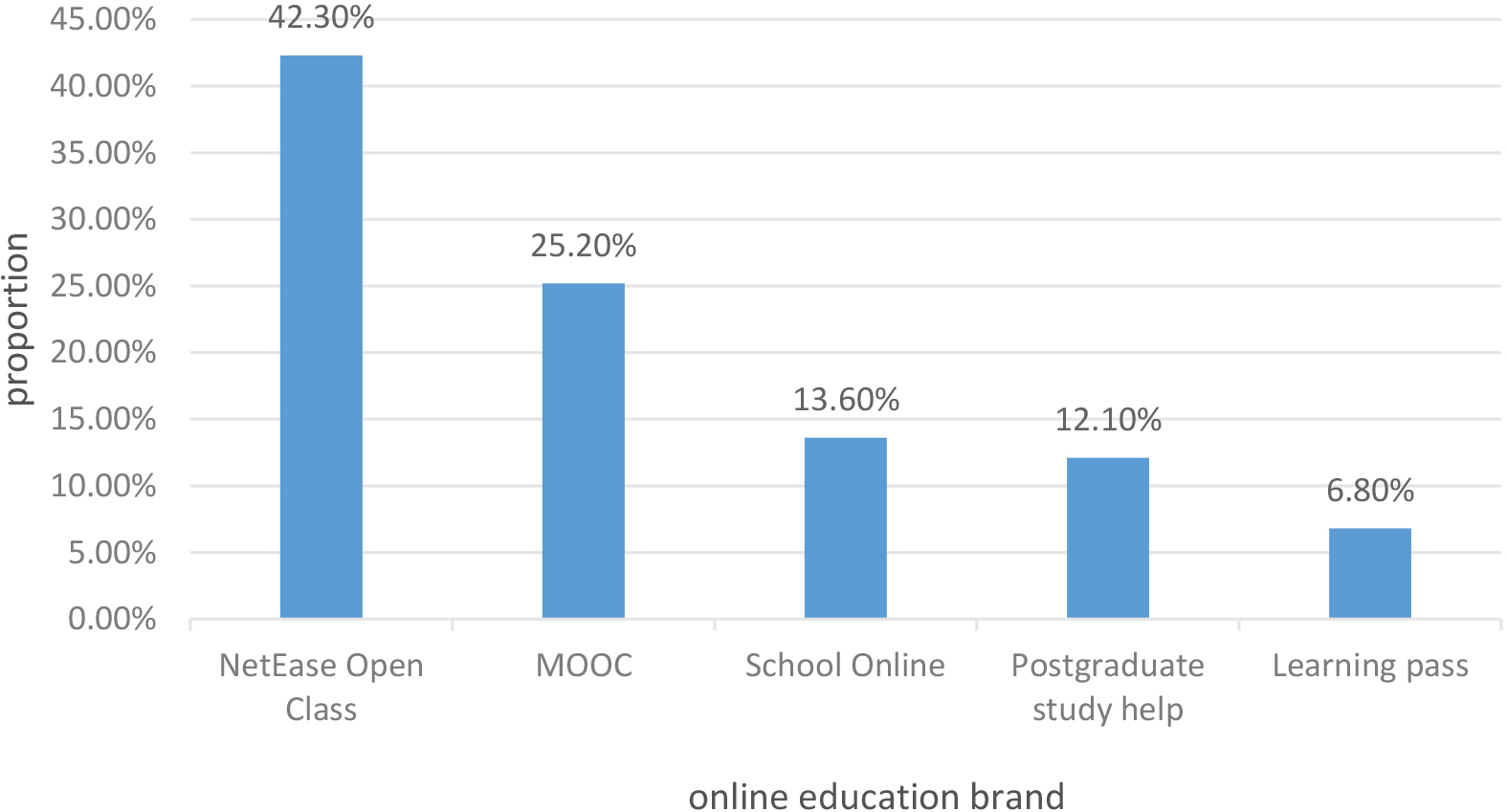
Figure 1 shows that NetEase open class is in a dominant position in the current market, with a market share of more than 40%, much higher than other brands. The popularity of NetEase open classes is closely related to its product positioning. The original purpose of these online education platforms is to allow every user to learn free courses through the platform. It covers the famous teacher courses of the top universities in the world, which is similar to the positioning of other brands. The most important thing is that NetEase open class can recommend personalized content to each user based on their learning behavior and search records, and use topics that users are interested in as recommended keywords or set up exciting series of topics for users to choose from. It realizes intelligent course recommendation and is favored by users [19].
According to the classification of online education software on the platform, the personalized intelligent recommendation system mainly includes the following aspects [20].
First, the evaluation and recommendation of old users: on each educational website or software download center, users who have used the system would give ratings and evaluations. In addition, it is also possible to describe the user’s experience of using the system. For example, well-organized, humorous and lively lectures by famous teachers are recommended, or boring and low-quality courses with lack of knowledge points are marked to prevent others from wasting time. Every week, high-quality courses are pushed according to the popularity of users under the software search box, and those who need to learn related courses can download and watch.
Second, search records are recommended. The keywords entered in the search box by users who have used the software would be recorded in the background, and the system would actively recommend courses based on the keywords entered by the user when logging in to search later. In accordance with the principle of precedence and succession, the links between the courses are found. If the user has completed one stage of the course, he can enter the next stage of learning. For advanced mathematics courses, the first thing to do is to learn calculus. If the viewing course is over, advanced courses would be recommended to ensure the continuity of user learning.
Third, it is recommended according to the course rules. When users register for a course account, they need to fill in their major or occupation information, so as to recommend professional courses according to the user’s field. For example, accounting students are recommended courses such as elementary accounting, tax planning, cost accounting, etc.; teachers are recommended courses such as student psychology, tips for communicating with parents, and class management methods; office workers are recommended courses on stress relief, work-life balance, and how to deal with co-workers. Major or occupation is an important factor that the search box would take into account when making recommendations.
Fourth, users are recommended according to their interests. Many users receive online education not only to improve their professional quality, but more for their own interests. Everyone has different hobbies. The user’s interest information is obtained through various technologies for recommendation, such as the duration of browsing the course introduction, the number of clicks on the visited page, the viewing time of the course, etc., and the user’s interest characteristics are extracted from it.
Fifth, it is recommended according to the course content. The system would establish an interest relationship model based on user information to classify and manage users. On the one hand, by analyzing the user’s nickname, sports, entertainment, video and other information, their preferences are described. The number of visits recorded in the browsing interface provides the basis for recommendation; on the other hand, item categories are subject to feature extraction. For example, the common feature of football, basketball and badminton is sports. The common feature is sports. Item features are concatenated to recommend related items based on similarity [21].
There are more and more types of online education and more and more types of online courses. The previous course recommendation system is difficult to provide accurate information screening, and users are easily lost in the information-based digital courses. Therefore, it is very necessary to reform and innovate the traditional course recommendation system.
Big data is a data collection capable of specialized processing of complex information and real-time interactive capabilities. Big data computing frameworks can be divided into GraphLab computing framework, Spark computing framework, Mapreduce computing framework and Dryad computing framework [22, 23]. Next, the Spark computing framework is focused on analysis.
The task processing flow of the Spark computing framework is shown in the following figure.
The task processing flow of the Spark computing framework.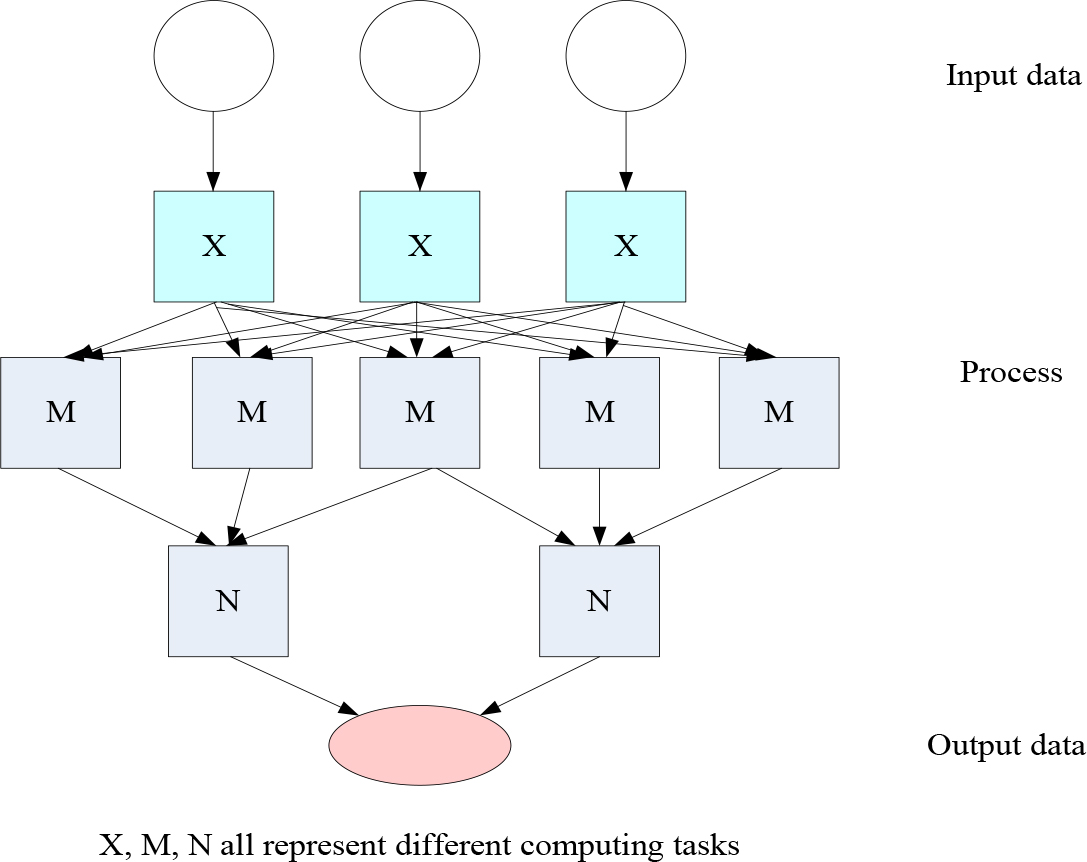
The flowchart in Fig. 2 visually shows the task processing flow of the Spark computing framework. First, data is entered, and the multiple tasks are run in a rich programming interface. The complex application of the task is realized in the series calculation, and the target information is finally output.
The big data analysis process is mainly affected by the quantity, clarity and dynamic characteristics of the data, and the obtained targets would generate different signals [24]. The big data model uses Spark technology to obtain the information base function such as Eq. (1). In the formula, d
The target data is decomposed into 4 children. Among them, Eq. (2) is the low-frequency component sub-band, and Eqs (3), (4), and (5) are high-frequency component sub-bands. The average pixel difference is that the difference value is related to the amount of target data and changes rapidly;
Equation (6) is the low-frequency offspring G to be processed. In order to obtain high-quality information, it is necessary to filter G to find its intrinsic characteristics;
Equation (7) is the process of filtering.
Equation (7) randomly divides the input data into regions of different sizes according to the threshold size to obtain the release formula of the number of pixel region points of
Equation (9) is the database value of
The Eq. (10) is the detailed calculation process of the Eq. (9), and the corresponding map is used to classify the pixels to obtain the number of target samples;
Equation (11) is the process of calculating sample weights. The target sample size is screened to get a lower error rate to be classified. Among them,
The immutable course recommendation system cannot adapt to the rapid development of the Internet age. Different kinds of courses in different fields are constantly emerging. Traditional recommendation methods are inadequate in terms of identifying keywords, user interests, and reasonable push. Big data technology can obviously solve these problems, process various information, and bring better experience to users [25].
The architecture diagram of Fig. 3 is divided into three modules. The first part inputs the data and stores the data, that is, the historical keywords input by the user are remembered; the second part is the computing layer, which mainly analyzes and calculates data generated by users and the system, and processes the user’s operation behavior; the third part consists of the results after the system runs and saves the results so that users can respond quickly when they log in later [26]. This paper makes an in-depth investigation of the development of online courses in recent years. The specific data are as follows:
Online education funding investment
Online education funding investment
Architecture of course recommendation system based on big data.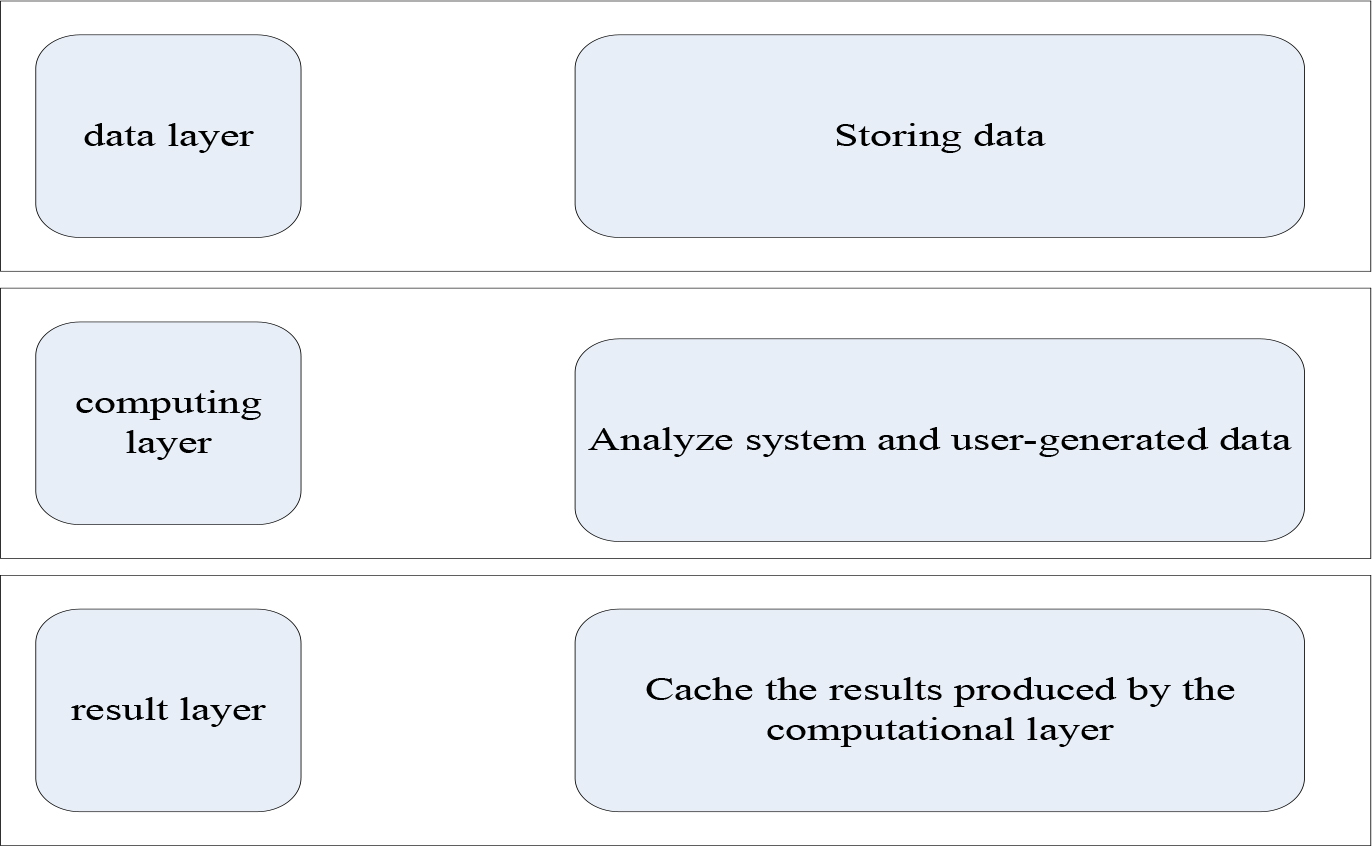
Table 2 shows the investment in online education. It can be seen that the society has always attached great importance to the development of education, and the education expenditure has maintained steady growth every year. It has increased from 4,255 billion yuan in 2017 to 5,808 billion yuan in 2021, which is a huge amount. This also shows the broad development prospects of online courses. Taking the NetEase open class with the highest user click rate as an example, the following Table 3 shows the top ten most popular courses of the software and their proportions:
The number and proportion of users in the top ten popular NetEase open class
Table 3 shows the large number of learners of NetEase’s open classes. The proportion of people who control courses during their free time is the highest, exceeding 1 million people, accounting for 20.9% of the total number of people. This reflects the great importance that people attach to time control in the Internet era, and also demonstrates the importance of establishing an intelligent course recommendation system.
Scale of active users of education platform software
Table 4 shows the active user scale of the five major education platforms in May 2020, with the average monthly active users exceeding one million. The parent time-space software with the fewest users also reaches 1.28 million. There are deficiencies in teacher-student interaction in online education. This leads to a lack of face-to-face interaction and social experience with peers and teachers during teaching, which may affect learning effectiveness and motivation. At the same time, students are severely restricted by technical equipment and network. In some cases of poor areas or family conditions, there may be problems of insufficient equipment, unstable network or insufficient bandwidth, which limit students’ learning experience and participation. As a result, the year-on-year growth rate of its active users has decreased significantly, which is enough to show that online education is less attractive to users and its popularity has faded. In order to allow more people to enjoy online courses and learn more interesting knowledge, it is necessary to change the form and content of online courses to meet the user’s usage habits, and quickly search for the courses that users need. The course recommendation system must be updated and made more intelligent [27].
In-depth analysis of the reasons why the traditional course recommendation system is not effective. It is found that the system has major problems in three aspects: new course collection, user information association and keyword search [28].
First, the newly added courses are incomplete. The previous courses were mainly focused on the school teaching level, and the content of the courses was mainly Chinese, English, mathematics, and science. Most of the audience is students or teachers with teaching and research tasks, and the user field is relatively narrow. Different from the previous teaching mode, today’s users with online learning needs come from various occupations and people of all ages. Some people pay attention to courses such as the explanation of the Civil Code, the introduction of cartoon characters, and precautions during pregnancy. If users search on the platform but find that courses of interest are lacking, it would naturally reduce the use of software.
Second, user information association is not performed. New users need to fill in a lot of information when registering, such as age, major, occupation, etc. The fact that users can fill in patiently is because the system would push more accurate courses in the future. However, after the actual experience, the user finds that filling in the information does not work, and the courses pushed by the system are not related to their own situation. The experience does not match the expected usage and wastes extra time, which makes the user experience poor.
Finally, keyword search accuracy is not high. Most users do not know the specific name of the course when they search for the course, and they just have a general understanding of the fields involved in the content of their interest. When searching, the input of keywords is just for the system to recommend course content that matches the user’s search. However, most of the output courses are not highly relevant to keywords. For example, the keyword entered is entrepreneurship, but the recommended courses are business strategy, payment process, etc., and even many advertisements would pop up.
In order to solve the problems existing in the traditional course recommendation system, this paper establishes a brand-new personalized intelligent course recommendation system based on big data technology, which mainly solves the association problem that the traditional system ignores user information. Figure 4 is the basic framework of a personalized recommendation system.
Personalized course recommendation system framework.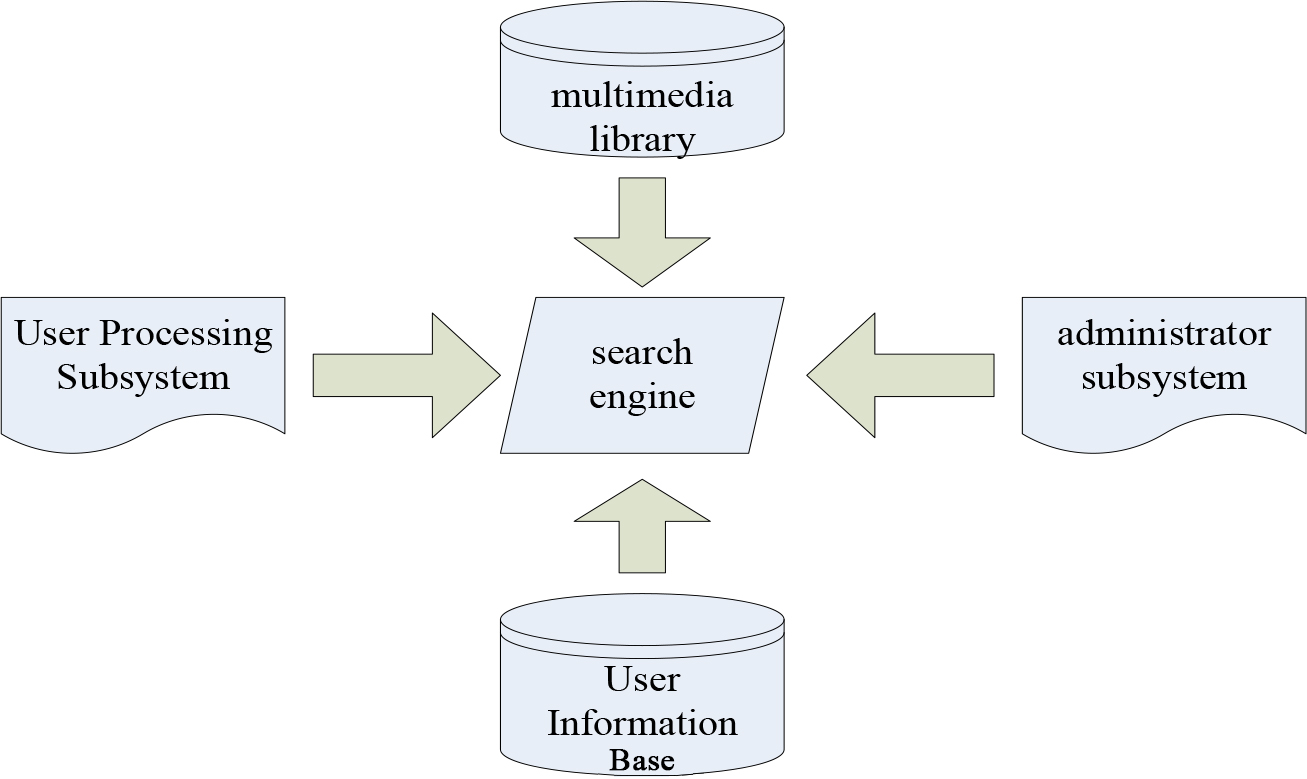
The framework of Fig. 4 can achieve the goal of recommending courses according to user interests and updating user information in time. The implementation process is to input user information into the subsystem, and the subsystem interface would send the request to the search engine. According to the user’s personalized information and input keywords, the whole network course is analyzed and the running result is returned to the user interface. Users can preview the course items recommended by the system. After making a decision, the system would pop up a complete course that meets the needs.
The basic principle of the recommendation system constructed by using big data technology is to make the best selection of courses by synthesizing various conditions. Taking the Spark computing framework as an example, first, when a user logs in to the online course software, the system would analyze the user information to determine whether it is the first use. If the user enters the system for the first time, the intelligent search information function would be automatically enabled and associated with the user information, and the associated information would be classified and sorted out to screen the available information for course recommendation; if no related information is found or the user does not fill in the relevant information, the system would directly recommend the top ten popular courses with the highest click-through rate to the user.
Second, when it is determined that the user is not logging in for the first time, the system would actively recommend the same type of courses based on the user’s viewing history. If the user enters a keyword search, the system would combine the keyword with the viewing history and user information, recommend courses according to the degree of relevance of the courses, and give a detailed introduction to the main content of the courses.
Regarding the question of how the search engine finds relevant types of courses, all courses explained by the course teachers on the entire network are found first. If the course of this teacher is missing in a single area of interest, courses of similar teachers are recommended according to the type and order of the courses; if the type of courses taught by a specific teacher is relatively wide, qualified courses are screened according to user information, and the courses with the highest matching degree are recommended to users [29].
When a user logs in, the system determines whether they are a new user and uses the registration function to register information. After logging in to the system, the user is taken to the movie list page. List pages come in two varieties. Following that, users can browse, score, and perform other actions by clicking on individual courses. Additionally, users can enter the search results display list and use the search box to look up the selected course. For offline calculations, the system logs user behavior data and basic user information. The procedure produces many similarity matrices, which are saved in the system for further use. In order to produce a list of the best recommended outcomes, the recommendation model is continuously modified in accordance with the computation results. The similarity matrix produced by the offline computation and the list of recommendation results produced by the recommendation model are the sources of the information about related courses that are displayed on the course homepage and the personalized recommendation course list displayed on the user homepage.
For the topic to be solved in this paper, the users with high scores are recommended first. The newly logged in user regards the interaction of the old user as a vote. The total number of old members is
Voting score:
Average number of votes per old member:
Figure 5 is a comparison of various situations between the traditional course recommendation system and the intelligent system constructed by big data technology.
The comparison of the two systems in the course admissions.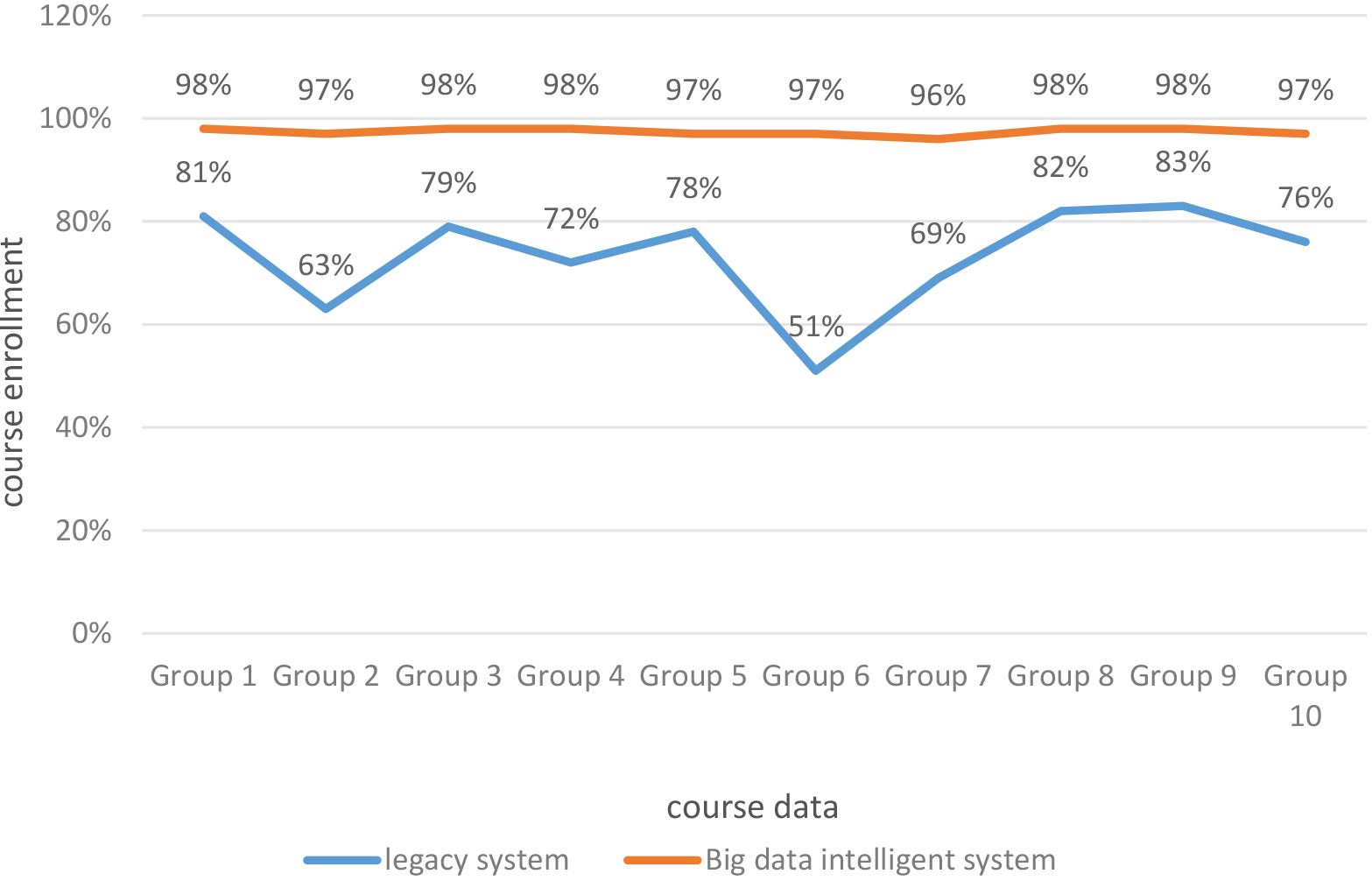
Figure 5 is a comparison of the two systems in the collection of online courses. 10 sets of data were randomly collected on the software as samples, and the comparison showed that there was a big gap between the traditional course recommendation system and the big data system in the course collection. The number of courses that can be included in the traditional system was uneven and fluctuated greatly, which fluctuated between 51%–83%. Therefore, many users cannot search for the courses they need on the software; the types and quantities of courses included in the big data intelligent system are relatively complete. The lowest inclusion rate was 96%, and the highest inclusion ratio of 98% can meet the search and viewing needs of most users.
Comparison of the two systems in terms of user satisfaction.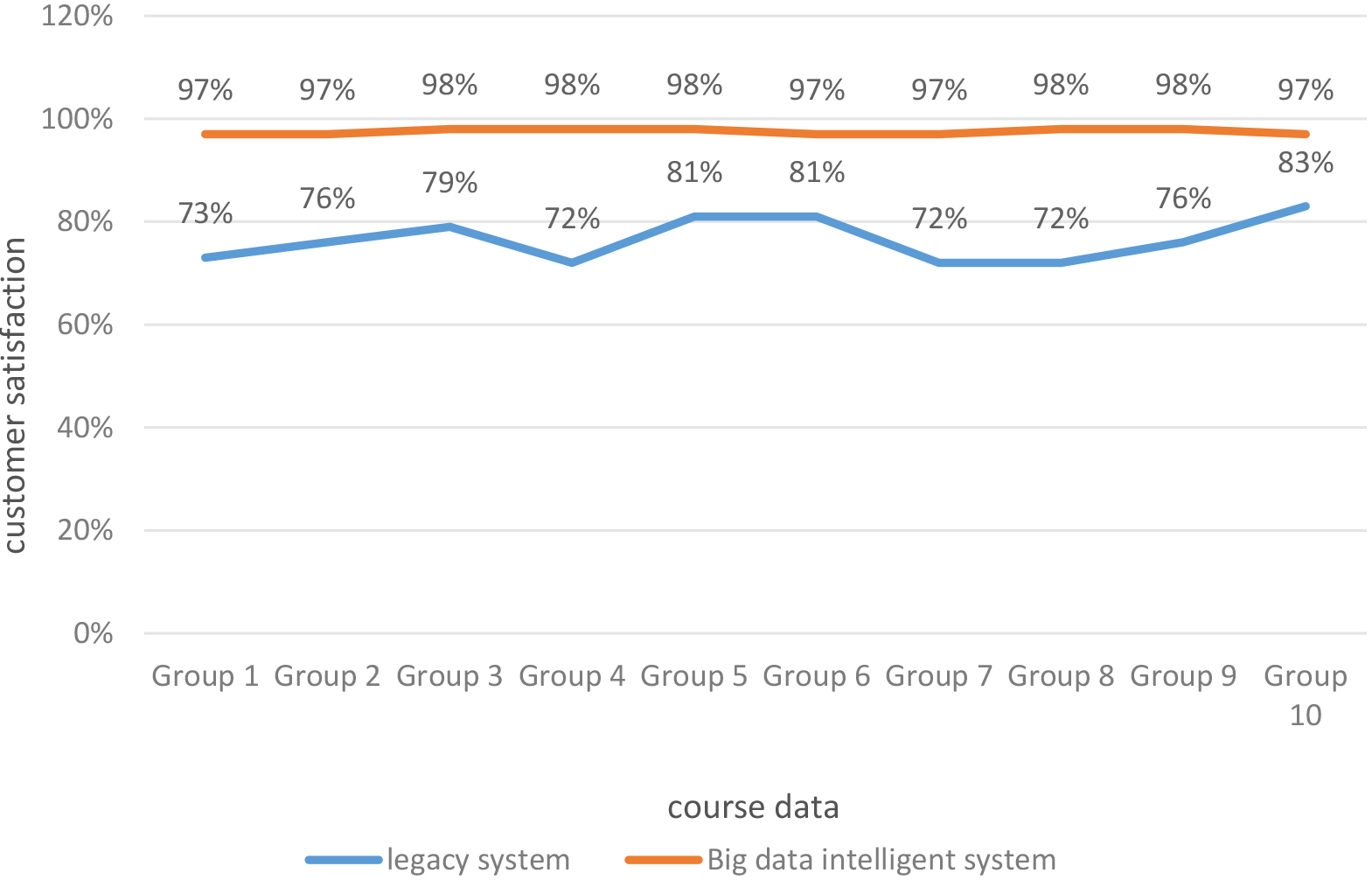
Figure 6 is the sample data of 10 groups of user satisfaction surveys. The data showed that the user satisfaction achieved by the big data intelligent course recommendation system was higher than 97%, and the user evaluation was high. It shows that big data technology can well meet the needs of users to search for courses; in contrast, the highest satisfaction of traditional systems can only reach 83%, which is still a big gap with big data systems.
Comparison of the two systems in terms of precise keyword search.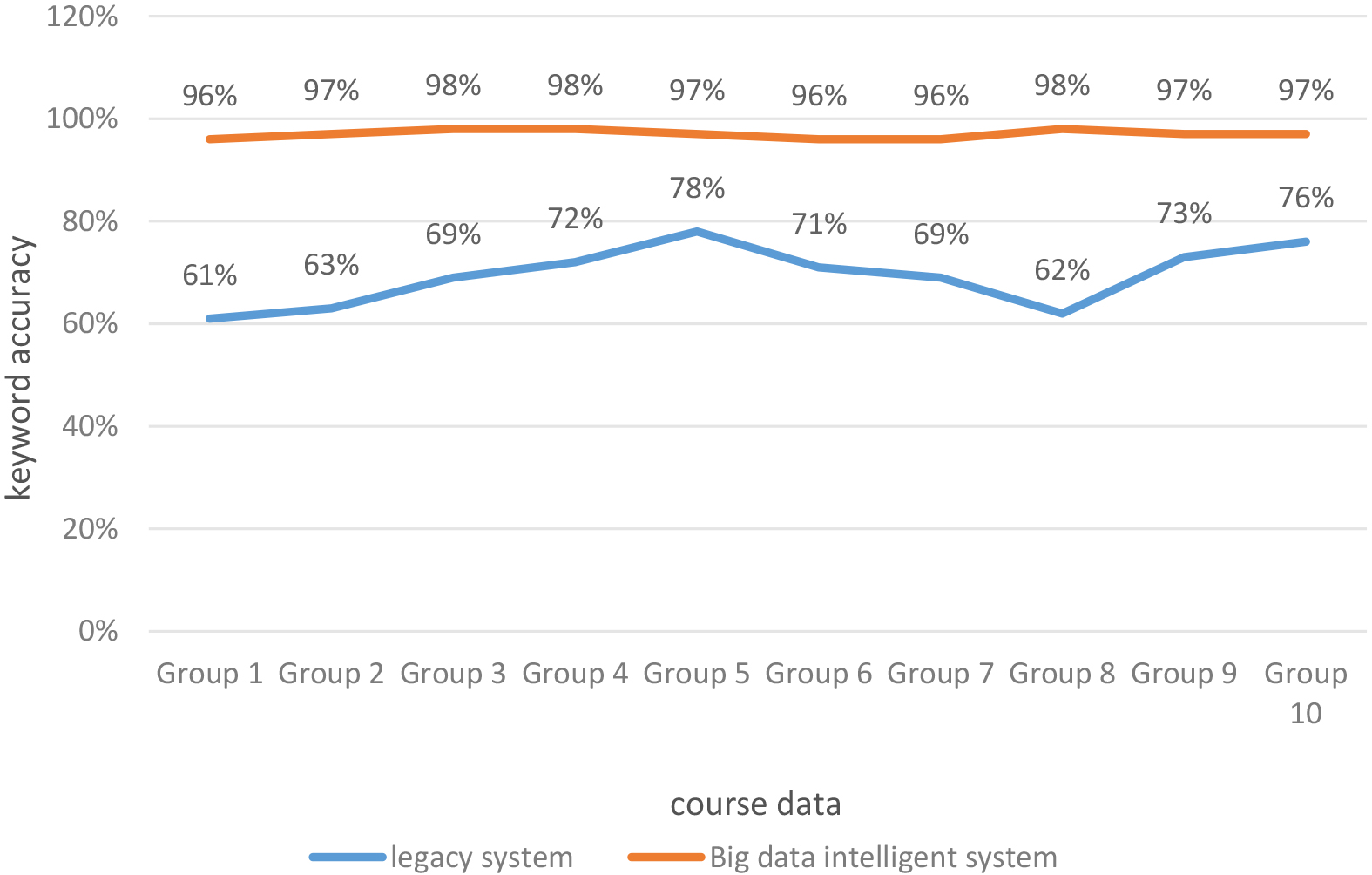
Figure 7 reflects the comparison of the keyword search accuracy of the two systems. The comparison of these 10 sets of data shows that the keyword search accuracy of the traditional system is not high and the situation is unstable. When the accuracy was high, it can reach 78%. It was only 61% when it was low, which cannot meet the needs of users; the search accuracy of the big data intelligent system was relatively high. The accuracy was fixed between 96%–98%, which can bring users a better experience.
To sum up, it can be seen that the intelligent course recommendation system based on big data technology can well solve the problems existing in the traditional system. The current era development is pressing the accelerator key. If the outdated system is used for a long time, it would not only be tantamount to software updates producing more high-quality courses, but also make users disappointed with the system and turn to other systems. Affected by the epidemic, online education on various platforms has flourished, and the course recommendation system has gained development opportunities. It is necessary to seize the opportunity in time to continuously innovate the system and create a system that is more in line with people’s needs. This paper shows the important role of big data technology in personalized course recommendation, and it can be predicted that the course recommendation system can play a more effective role after applying big data technology [30].
The personalized intelligent detection and recommendation algorithm system based on big data can provide users with more accurate and personalized services and recommendations. Personalized intelligent detection and recommendation systems can analyze user behavior, interests, and preferences. By combining massive data, hidden patterns and associations can be discovered, achieving precise intelligent detection and recommendation.
It is necessary to actively respond to the formulation of legal and regulatory frameworks, and improve the standards of cultural services. By using legal means to provide cultural background support while improving technical level, the goal of improving service quality is achieved. In order to increase efficiency and finish the output of high-quality cultural services, intelligent recommendation services are used based on user information behavior analysis of online courses. These services provide accurate recommendations.
In terms of intelligent recommendation, the system can recommend the most relevant content for users based on their personalized needs. By analyzing the user’s interests, preferences, geographical location and other information, the system can automatically screen and match the most suitable for the user.
Conclusions
At present, the intelligent course recommendation system has been widely used. Initially, it was favored by users due to its personalized and intelligent course processing efficiency. However, with the increasing number and types of courses, the system has not developed synchronously. As a result, there are problems of incomplete collection of courses and low accuracy of keywords, which cannot meet the increasingly personalized and differentiated needs of users. User satisfaction has fallen, and active users on the software are declining. This paper used big data technology to analyze and sort out the problems existing in the traditional course recommendation system, and obtained a scientific framework for building a personalized intelligent course recommendation system, which could effectively meet the needs of users and improve the efficiency of course search and recommendation. With the use of big data technology, the types and numbers of courses included were more uniform, and the user satisfaction was higher. Keyword search was more accurate, which kept up with the speed of the development of the Internet age and could adjust and update in real time to truly meet user needs. However, big data technology required high hardware and it was difficult to integrate legacy systems, and data errors would increase processing time and costs. In future research, it is necessary to strictly control the data and combine other excellent algorithms to reduce risks, so as to provide a more scientific and feasible solution for building a more intelligent and efficient course recommendation system.
In actual applications, the big data-driven personalized intelligent detection and recommendation algorithm system has several drawbacks, such as the following:
Data privacy concerns: User privacy and personal data may be involved in the collection, processing, and analysis of big data. Users’ privacy may be in jeopardy if this data is not handled appropriately due to the possibility of abuse and leakage. Excessive personalisation and user curing: Big data-driven personalization algorithms frequently suggest things to users based on their past choices and actions, which can quickly lead to a user’s “information cocoon room” or comfort zone. This might reduce users’ exposure to novel events, impair their capacity to generalize knowledge, and have an impact on their innovative thinking and variety of encounters. Interpretability and transparency of algorithms: Big data algorithms are frequently more complicated, and the model and recommendation process lack these qualities, making it challenging for users to comprehend the rationale and foundation of the algorithm’s recommendations. Users may become suspicious of the suggested outcomes as a result of this.
Data availability statement
The data of this paper can be obtained through the email to the authors.
Funding
This work was supported by Research and development of personalized intelligent course recommendation system based on big data project of science and technology research program of Chongqing Education Commission of China(No KJQN202203915) and Research on learning fatigue state detection method based on feature fusion and convolution neural network(No KJQN202203905), Yongchuan District Natural Science Foundation Project(Design and implementation of a real-time e-commerce analysis system based on Flink(No 2023yc-jckx20077).
Footnotes
Conflict of interest
The authors declare that there is no conflict of interest regarding the publication of this work.