




Abstract
BACKGROUND
It’s not uncommon for the work-from-home (WFH) trend to persist after the peak of the COVID-19 pandemic. Various factors contribute to this continuation, including technological advancements and the benefits of it. The results of this study suggest suitable leadership styles for WFH.
OBJECTIVE
This research investigates transformational and transactional leadership on organizational performance through work-from-home outcomes during the COVID-19 crisis in Thailand.
METHODS
The data was collected by questionnaire from 444 employees who work for companies registered on the Stock Exchange of Thailand and the Market for Alternative Investment. These employees may work full-time or part-time from home or in a hybrid work arrangement. Data analysis employed the Partial Least Squares Structural Equation Modeling (PLS-SEM) method.
RESULTS
The main findings of this study indicate that during the COVID-19 crisis, transformational leadership did not directly influence employees’ work-for-home outcomes and had no direct or indirect effect on organizational performance. Conversely, transactional leadership is positively direct on organizational performance and indirectly through work-from-home outcomes.
CONCLUSIONS
The appropriate leadership style for the WFH environment during the COVID-19 pandemic is transactional leadership. This type of leader rewards employees for meeting expectations and imposes punishments for work that falls below the predetermined standard.
Keywords


1. Introduction
The global outbreak of the coronavirus, commonly known as COVID-19, has led governments worldwide to implement policies that encourage or mandate cooperation, prompting various organizations to adapt their work patterns. This shift involves transitioning from traditional office-based work to remote work or work-from-home arrangements to reduce the spread of the coronavirus. Remote work can be either full-time or in a hybrid format, with employees working at the office on some days and from home on others, depending on the type of business, position, and responsibilities of the employees.
Certainly, work-from-home (WFH) has both advantages and disadvantages. Among the advantages are reduced conflicts between work and family [1], an improved work-life balance, and increased independence. On the other hand, disadvantages include the absence of face-to-face meetings with colleagues and increased household chores and childcare responsibilities [2–4].
While WFH has both positive and negative aspects, it played a crucial role during the COVID-19 pandemic and is expected to continue as a significant part of the “Next Normal” after the pandemic is under control. Though playing a significant role during the COVID-19 pandemic due to concerns and the potential as a future work method, WFH is associated with key performance indicators [5]. However, research on the impact of WFH or its outcomes on organizational performance remains relatively limited [6–8] and has not been firmly summarized [9–11]. Supervisor support plays a crucial role in shaping these work patterns [12], but such support often diminishes when employees work from home [8]. Additionally, managerial control tends to decrease under WFH conditions [7]. Considering past research, crises often bring attention to leadership styles, including transformational leadership [13, 14] and transactional leadership [14]. Transformational leaders provide a clear vision for the future [15]. This vision guides employees to stay focused on overarching goals amid crises. In addition, transformational leaders have the ability to inspire and motivate their employees to help individuals see beyond immediate difficulties and help them focus on long-term goals. Moreover, transformational leaders stimulate workers to explore new ideas to overcome crisis challenges. Transactional leaders focus on exchanging rewards and punishment to achieve the desired performance from followers [15]. In a crisis like COVID-19, urgent tasks often require immediate action, making a transactional leadership style beneficial. Transactional leaders use incentives, rewards, and recognition to motivate team members. Recognizing and rewarding individuals or teams for their contributions and achievements during a crisis can boost morale and maintain motivation despite challenges.
While transformational leadership focuses on inspiring, stimulating, and motivating followers to achieve long-term vision and goals through challenging and uncertain times such as COVID-19, transactional leadership provides performance monitoring to navigate immediate challenges and ensure operational continuity during crises like COVID-19. Nevertheless, the appropriate leadership style for the COVID-19 crisis has not been definitively determined.
This study attempts to fill the literature gaps where the impact of WFH outcomes on organizational performance has not been firmly summarized, and the appropriate leadership style for the COVID-19 crisis has not been conclusively designated. This is achieved by addressing the following research questions: (1) Do transformational and transactional leadership directly affect WFH outcomes during COVID-19? (2) Is there a direct effect of transformational leadership and transactional leadership on organizational performance during COVID-19? (3) Do WFH outcomes directly affect organizational performance during COVID-19? and (4) Do WFH outcomes mediate the relationship between transformational and transactional leadership styles and organizational performance during COVID-19?
Therefore, the first objective of this research is to examine the direct influence of two leadership styles, namely, transformational leadership and transactional leadership, on the outcomes of WFH during COVID-19. The second objective is to study the direct impact of these leadership styles on organizational performance under the COVID-19 situation. Third, the aim is to investigate the direct influence of WFH outcomes on organizational performance under the COVID-19 situation. Finally, this study aims to explore the indirect influence of these leadership styles on organizational performance under the COVID-19 situation through the mediator of WFH outcomes.
Given the increasing globalization, this study’s results can benefit organizations in countries with national cultures similar to Thailand in designing the appropriate strategies regarding leadership style. The relationship between leadership styles, WFH outcomes, and organizational performance is context-dependent and may vary across different national cultures. There is much research about national culture and leadership. Hofstede [16] established that national culture influences a wide range of organizational aspects, including leadership. Analysis of leadership in different national cultures shows that leadership behaviors vary from one national culture to another. For example, the leadership study of Khan et al. [17] evidenced that cultural differences between Western and Eastern countries affect leadership styles. Crede et al. [18] confirmed that national culture affects leadership and subordinates’ relationships. Erez and Earley [19] suggested that employees process the information concerning leadership in light of their cultural values. Based on their study, leadership is expected to be similar in countries with similar value orientations and different in countries with divergent value orientations. This idea is also supported by Gibson [20], who investigated leadership behaviors and styles across four countries, which were characterized by two cultural dyads (Norway-Sweden and Australia-U.S.). The results show that certain leadership behavior and style dimensions vary across national cultures. Additionally, the results of this study can serve as a leadership model for future potential disease outbreaks, as history has shown that our world has faced severe pandemics multiple times, including the Cholera outbreak, Spanish flu, Ebola, and the H1N1 influenza. Therefore, these findings can be valuable in preparing for leadership style to manage potential crises that may occur in the future.
2. Literature review, hypotheses development, and conceptual framework
2.1. Leadership during COVID-19 crisis
During the COVID-19 crisis, leaders face new and unpredictable challenges, such as adapting to the demands of a new work environment. Conversely, during this crisis, leaders also have an opportunity to demonstrate their leadership in response to these challenges. Leaders during these challenging times should be responsive to difficulties by planning, fostering collaboration, empowering others, communicating clearly and regularly through appropriate channels, and ensuring safety in life. Haslam et al. [21] suggested that effective leaders during COVID-19 must provide a clear perspective on what is happening and respond to it by being prepared, resilient, representative, aware, and supportive. Fernandez and Shaw [22] outlined three practical guidelines for leaders during a COVID-19 crisis as follows: 1) empowerment, participation, and collaboration; 2) delegating responsibility to the team; and 3) clear and frequent communication with all stakeholders. Dirani et al. [23] emphasized the need for psychological empowerment, positive reinforcement, work appreciation, and communication in a leader during COVID-19, while Bartsch et al. [24] found that task-oriented and relationship-oriented leadership behaviors help maintain employee performance in a crisis environment like COVID-19.
The suitable leadership style for the COVID-19 crisis is yet to be conclusively determined. Conversely, in other crises such as wars, violence, and disasters, leadership styles like transformational leadership, essential for leading collaborative work [14] and inspiring employees through the organization’s vision [13], have proven crucial. Meanwhile, transactional leadership often gets greater expectations from members at normal times [14].
2.2. Work-from-home before and during the COVID-19 crisis
WFH did not emerge solely during the COVID-19 pandemic. The concept of WFH or remote work gained traction even before the COVID-19 pandemic, with a substantial number of employees working outside traditional office settings [25]. This trend was particularly notable in developed countries [1]. In European countries, employees who work from home are entitled to the same benefits as office-based employees [26]. Before the pandemic, WFH was often considered an option for specific roles. Employees might have had the flexibility to WFH occasionally, but it was not the norm for many industries. Additionally, remote work did not necessarily mean working exclusively from home; other locations, such as coffee shops or co-working spaces, were also viable options.
The COVID-19 crisis, however, brought about a global health emergency that prompted various countries to implement consistent measures, such as social distancing, mask mandates, hand hygiene promotion, lockdowns, curfews, hospital bed increases, field hospital construction, vaccine acceleration, and research for treatment. These measures aimed to reduce population movement and encouraged collaboration between public and private sectors to transition from office-based work to working from home or alternative living spaces [1, 27].
The shift to WFH has highlighted both the advantages and disadvantages of this work arrangement. On the positive side, employees experienced reduced commuting time, increased flexibility in managing their schedules, and improved work-life integration [28]. However, challenges such as blurred boundaries between work and personal life and the need for effective communication and collaboration in a virtual environment also became apparent.
As the world gradually moves towards a post-pandemic era, the experience of WFH has left a lasting impact on the way businesses approach remote work. Many organizations are considering hybrid models that combine office-based and remote work to provide flexibility while maintaining a sense of collaboration and corporate culture. The landscape of WFH has evolved significantly, from being a growing trend before the pandemic to becoming a widespread and integral part of the modern work environment during and after the COVID-19 crisis [29].
2.3. Outcomes of working from home amid the COVID-19 crisis
The outcomes of WFH refer to the productivity of individuals working from locations other than the traditional office through information and communication technology. Matli [30] states that the national-level infrastructure in information and communication technology plays a significant role in influencing the outcomes of WFH. This type of work provides employees with greater flexibility in terms of time and increased independence in their tasks, leading to higher job satisfaction and, consequently, higher productivity [12].
However, enhancing productivity remains a critical challenge for organizations considering the adoption of WFH [8], especially during the COVID-19 pandemic, where WFH has become a new experience for many employees [31] and managers [1]. The limitations on leaving home and the sudden shift to remote work without much planning have posed challenges, including adapting to unfamiliar digital platforms [27].
The outcomes of WFH or remote work encompass employees’ overall job satisfaction and self-reported productivity, as Nakrošienė et al. [8] studied. These outcomes can be both positive and negative. Conley and Woosley [32] highlight negative aspects, such as dissatisfaction with work and life, low self-esteem, feelings of depression, fatigue, stress, and anxiety. Adverse outcomes may result from factors such as a lack of a supervisor visible monitor when working remotely from the office. Consequently, increased monitoring measures, such as assigning additional tasks, requesting work reports, or scheduling daily online meetings, become more prevalent [2]. This aligns with previous research findings that during the COVID-19 pandemic, employees’ anxiety about remote work negatively impacted work efficiency and job satisfaction [31]. However, work efficiency and job satisfaction in remote work are influenced by various factors beyond anxiety, as found in prior research [33]. Leadership, for instance, has been identified as a significant factor affecting work efficiency and job satisfaction in remote work scenarios [34–36].
2.4. Organizational performance during the COVID-19 crisis
The operational performance of organizations during the COVID-19 crisis differs significantly from normal circumstances, as the pandemic has brought about substantial changes in the way work is conducted [37]. However, the organizational performance results are still based on demonstrating the level at which companies can achieve their business objectives [38]. Furthermore, the performance of an organization is a cumulative output of all activities undertaken within the organization [39]. Organizational performance is studied at the organizational level, distinguishing it from the individual level of WFH outcomes.
Measuring organizational performance involves various indicators [40], such as the organization’s effectiveness and efficiency, financial growth, customer and employee satisfaction, product/service innovation, and quality. These dimensions provide a comprehensive assessment of how well an organization is performing.
2.5. The leadership and outcomes of work-from-home during the COVID-19 crisis
Building and sustaining a business requires an understanding of the leadership’s role in influencing employee outcomes [41]. Leadership plays a significant role in employee outcomes [42] and the effective management of the organization [43].
During the COVID-19 crisis, working from home (WFH) has become imperative for numerous organizations worldwide, ensuring business continuity while prioritizing employee health and safety. Leadership in a WFH setting must adjust their roles, showing less directive or controlling behaviors and emphasizing delegation of responsibilities to their teams. Conversely, heightened anxiety stemming from uncertainty and risks can lead to more cautious and rigid leadership behaviors. This increased rigidity, observed during the COVID-19 crisis, may result in managers exhibiting more directive and controlling tendencies, along with reduced delegation of responsibilities to their teams [1].
In normal situations, previous research has found that transformational leadership is positively related to employees’ work outcomes [41, 44] and organizational performance [43]. Similarly, transactional leadership is also positively associated with work outcomes [43]. Chan and Chan [45] examined the components of transformational leadership, including idealized attributes, inspirational motivation, intellectual stimulation, and individualized consideration, which are all positively correlated with employees’ work outcomes. Furthermore, the components of transactional leadership, which are contingent reward and contingent punishment, are positively related to employees’ work outcomes. Transformational leadership promotes followers’ awareness of achieving results, providing strategies to achieve those results, and responding to followers’ needs. Transactional leadership responds to followers’ needs when they meet the specified results.
Therefore, it is believed that both transformational and transactional leadership styles will positively impact work-from-home outcomes during the COVID-19 crisis, similar to regular circumstances. Thus, the research hypotheses 1 and 2 are established.
Hypothesis 1: Transformational leadership positively influences work-from-home outcomes during the COVID-19 crisis.
Hypothesis 2: Transactional leadership positively influences work-from-home outcomes during the COVID-19 crisis.
2.6. Work-from-home outcomes and organizational performance during the COVID-19 crisis
The results of the employees’ work outcomes on organizational performance have not yet been conclusively summarized [9–11]. For example, Mathew et al. [9] found that increasing employees’ productivity positively impacts organizational profits and growth. Conversely, they found that employees’ job satisfaction does not affect organizational profits and growth. Meanwhile, Zhang and Morris [46] found that employee outcomes positively influence organizational performance.
Undoubtedly, WFH outcomes are considered a new concept developed from the outcomes of traditional office work. There is no clear conclusion on whether the employee outcomes of WFH have an impact on organizational performance, especially under the circumstances of the COVID-19 pandemic. It is challenging to find reliable research supporting the impact on organizational performance. Therefore, research hypothesis 3 has been established.
Hypothesis 3: Work-from-home outcomes have a positive impact on organizational performance under the circumstances of the COVID-19 pandemic.
2.7. Leadership and organizational performance during COVID-19 crisis
The performance of an organization is defined as the cumulative output of all activities conducted within the organization [39]. Previous research has found a positive relationship between transformational leadership and organizational performance [39, 51]. Transformational leaders can inspire and motivate employees to innovate and achieve challenging goals effectively [47, 50]. Furthermore, transactional leadership is also positively related to organizational performance [39]. Transactional leaders provide rewards or penalties based on whether employee performance meets the predetermined goals of the organization. Therefore, it is believed that both transformational and transactional leadership styles will have a positive impact on organizational performance under the circumstances of the COVID-19 pandemic, similar to normal situations. Hence, research hypotheses 4 and 5 include:
Hypothesis 4: Transformational leadership has a direct positive influence on organizational performance under the circumstances of the COVID-19 pandemic.
Hypothesis 5: Transactional leadership has a direct positive influence on organizational performance under the circumstances of the COVID-19 pandemic.
2.8. Leadership, work-from-home outcomes, and organizational performance during the COVID-19 pandemic
Previous research has found that transformational leadership has both direct and indirect positive effects on organizational performance. The indirect effects have been observed through mediator variables such as employee capabilities [47], organizational learning, organizational innovation, organizational culture [49, 52], job satisfaction [48], and knowledge management [50, 51]. Transactional leadership has also been found to have positive indirect effects on organizational performance through a mediator variable, namely job satisfaction [53].
During the COVID-19 pandemic in Thailand and globally, various organizations, both public and private, have allowed employees to WFH to reduce the spread of COVID-19 and minimize the risk of infection from working closely in office settings. Therefore, one relevant mediator variable during the pandemic is the outcomes of WFH, which is expected to play a significant role in transformational and transactional leadership styles and organizational performance. Thus, it is believed that both transformational and transactional leadership styles will positively impact organizational performance under the circumstances of the COVID-19 pandemic through the outcomes of WFH. Hence, research hypotheses 6 and 7 include:
Hypothesis 6: Transformational leadership has an indirect positive influence on organizational performance under the circumstances of the COVID-19 pandemic, with the outcomes of WFH as a mediator variable.
Hypothesis 7: Transactional leadership has an indirect positive influence on organizational performance under the circumstances of the COVID-19 pandemic, with the outcomes of WFH as a mediator variable.
This research has developed a framework aligned with the literature review illustrated in Fig. 1. It includes transformational leadership, transactional leadership, outcomes of WFH, and organizational performance under the circumstances of the COVID-19 pandemic
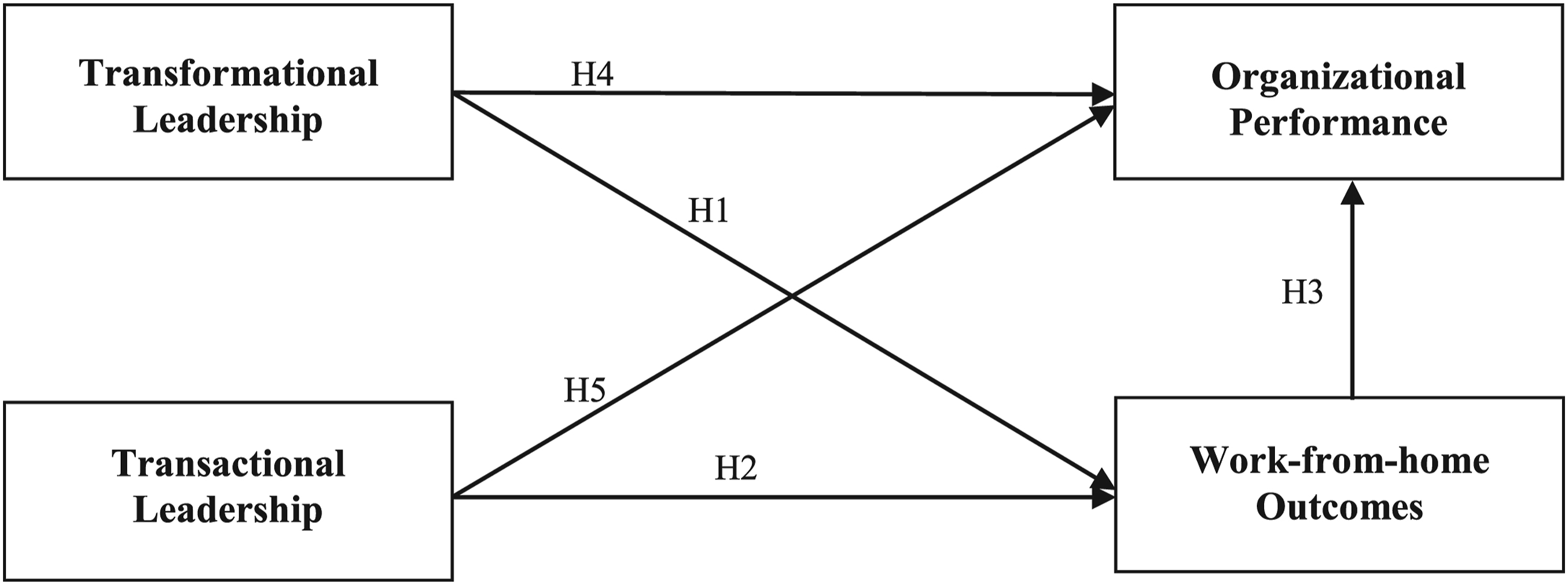
Conceptual framework.
3. Methods
3.1. Data collection
This study used electronic mail and online questionnaires for data collection. The population of this study is employees of companies registered in the securities market of Thailand, including the main Stock Exchange of Thailand (SET) and the Market for Alternative Investment (MAI), who must have experience working from home or remote work, either full-time or part-time, due to the impact of the COVID-19 pandemic. The data were collected using a convenience sampling approach, which is considered a reliable technique for research in social science as used from past related studies, e.g., [54]. The data collection method involves sending an email with an attached questionnaire link to the human resources department of companies registered in Thailand’s securities market, which have publicly disclosed email addresses. Upon receiving the email, the human resources department will forward the questionnaire link to the employees if it agrees to allow employees to participate in the research. While the human resources department may not object to employees answering questionnaires, the willingness of each employee to respond to the questionnaire depends on their discretion.
The online questionnaire was designed with a cover page, including a confidentiality statement. The respondent was assured that no information was associated with the respondent and no individual could be identified. The respondents’ answers to this study’s questionnaire were completely confidential. In total, emails were sent to 809 companies. A total of 444 respondents were finally utilized for further analytical procedure after removing incompletely filled questionnaires.
This research employs Structural Equation Modeling (SEM) to test hypotheses. One concern in SEM is the appropriate sample size. Kline [55] stated that the sample size for SEM in many studies is around 200. Iacobucci [56] suggested that the sample size should be larger than 200, while Barrett [57] mentioned that the sample size for SEM should not be less than 200 samples. Meanwhile, Westland [58] specified that a minimum sample size for SEM is ten samples per item in the questionnaire. For this study, the questionnaire comprises a total of 34 items. Following Westland’s criterion, the minimum sample size for this study is 340 samples. With 444 usable samples, the sample size of this study meets the requirements of SEM.
The questionnaire was tested for validity and reliability. Validity testing was performed by checking for content relevance. Three experts verified content validity, including theoretical relevance and language usage. After receiving the evaluation results from experts, revisions of items in the questionnaire are made. In addition, the Index of Item-Objective Congruence (IOC) for each question was evaluated with a threshold of 0.67 [59, 60]. The result of the IOC showed that none of the questions’ IOC values were less than 0.67. Reliability testing was managed by distributing the revised version of the questionnaire to 30 graduate students in the Master of Business Administration program at Kasetsart University in Bangkok, Thailand. The Cronbach’s Alpha Coefficient is used to evaluate the reliability of the questionnaire. The coefficient for each variable should not be less than 0.7 [61, 62]. After receiving the completed questionnaires, Cronbach’s Alpha Coefficients were calculated. The results showed that all variables’ coefficients exceeded 0.7.
3.2. Measurement scale
Transformational leadership comprises six dimensions as classified by Podsakoff et al. [63], including 1) articulating a vision, 2) providing an appropriate model, 3) fostering the acceptance of group goals, 4) high performance expectations, 5) providing individualized support, and 6) intellectual stimulating The items of these six dimensions were adapted from Laohavichien [64]. A total of 18 items across the six dimensions (3 items per dimension) were included in the scale to measure transformational leadership. As categorized by MacKenzie et al. [65], transactional leadership consists of two dimensions, including 1) contingent reward and 2) contingent punishment. Six items adapted from Laohavichien [64] were used to measure the two dimensions of transactional leadership (3 items per dimension). Work-from-home outcomes consist of five items adapted from Nakrošienė et al. [8]. For this research, the outcomes of WFH were measured by employee’s overall satisfaction, perceived benefits, career opportunities, and self-reported productivity. The organizational performance consists of five items adapted from Jyothibabu et al. [66] and Lee and Choi [67], which measured how well the company could achieve its goals, profit, growth, and response to customer needs.
3.3. Data analysis
This study conducted data analysis as follows: 1) presenting demographic data using percentages; 2) screening data, including 2.1) checking for outliers using the Mahalanobis Distance method, 2.2) checking the normal distribution of data using skewness and kurtosis values, 2.3) ensuring reliability by examining the Cronbach’s alpha coefficient, 2.4) confirming construct validity by assessing factor loadings of items within each construct using exploratory factor analysis; and 3) testing hypotheses using Partial Least Squares Structural Equation Modeling (PLS-SEM) technique with SmartPLS 4 software [68].
4. Results
4.1. Demographic data
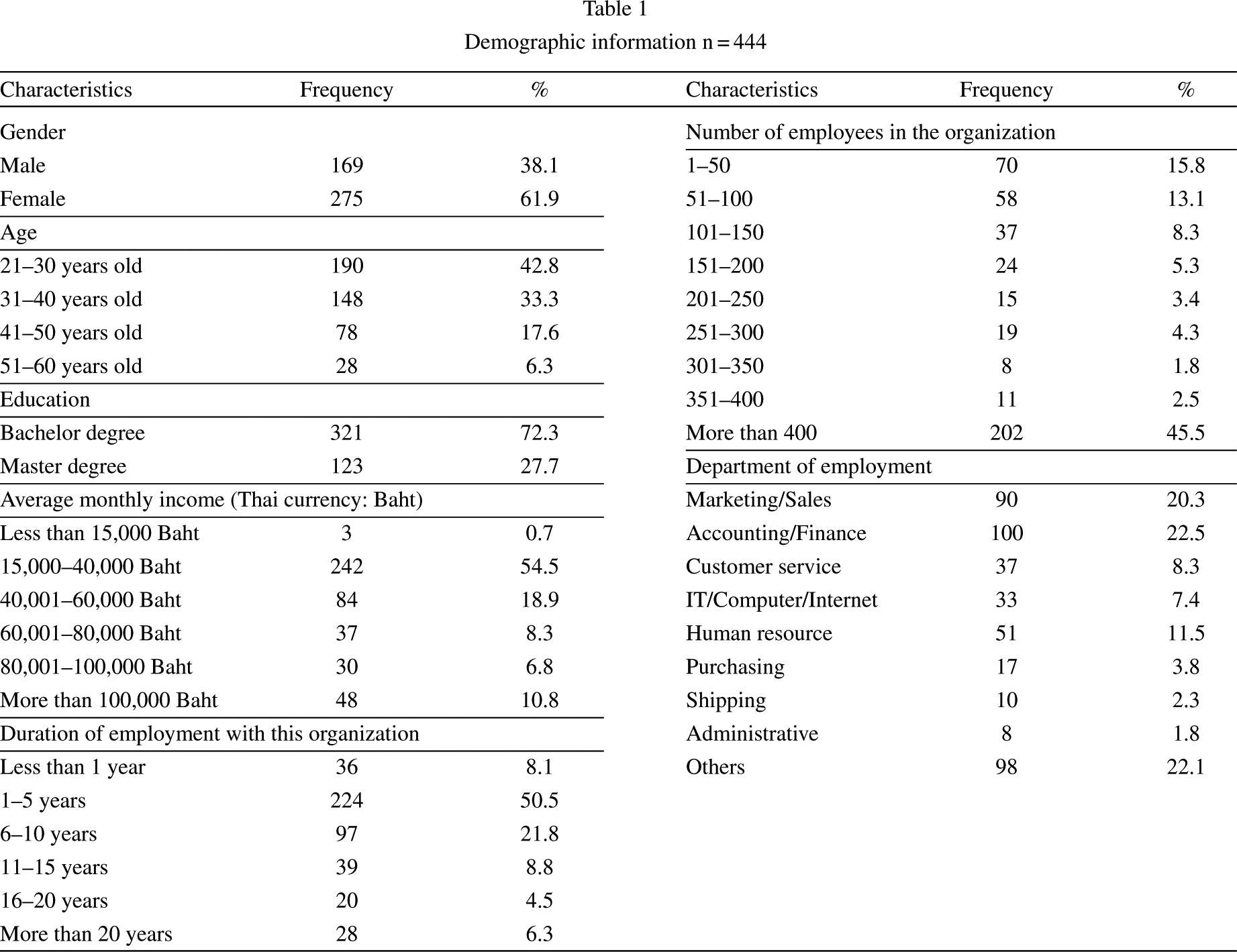
The demographic data was analyzed from a total of 444 respondents. It was found that 169 respondents, or 38.1% , are male, while 275 respondents, or 61.9% , are female. The majority fall within the age range of 21–30 years, totaling 190 persons, or 42.8% . Regarding educational background, a majority hold a bachelor’s degree, with 321 people, or 72.3% . The majority also reported a monthly income in the range of 15,000 to 40,000 baht (Thai currency), totaling 242 persons, or 54.5% . Furthermore, a significant portion of respondents has been working with the organization for 1–5 years, amounting to 224 people, or 50.5% . Most respondents are affiliated with organizations having more than 400 employees, totaling 202 individuals, or 45.5% , and predominantly work in the accounting/finance department, with 100 individuals, or 22.5% (as shown in Table 1).
Demographic information n = 444
4.2. Data screening
The collected data exhibited normal distribution, considering skewness and kurtosis values. The skewness index (SI) was less than 2, and the kurtosis index (KI) was less than 7 [69]. No abnormality was observed in the data, as indicated by a p-value greater than 0.001, ensuring that the analysis in the subsequent steps retained the original sample size of 444 [70, 71]. All variables demonstrated reliability, with Cronbach’s alpha coefficient not less than 0.70 [61, 62]. Each item in the questionnaire showed structural validity, with factor loadings exceeding 0.40, ensuring that the analysis in the next steps retained the original set of 34 questions.
4.3. Measurement model evaluation
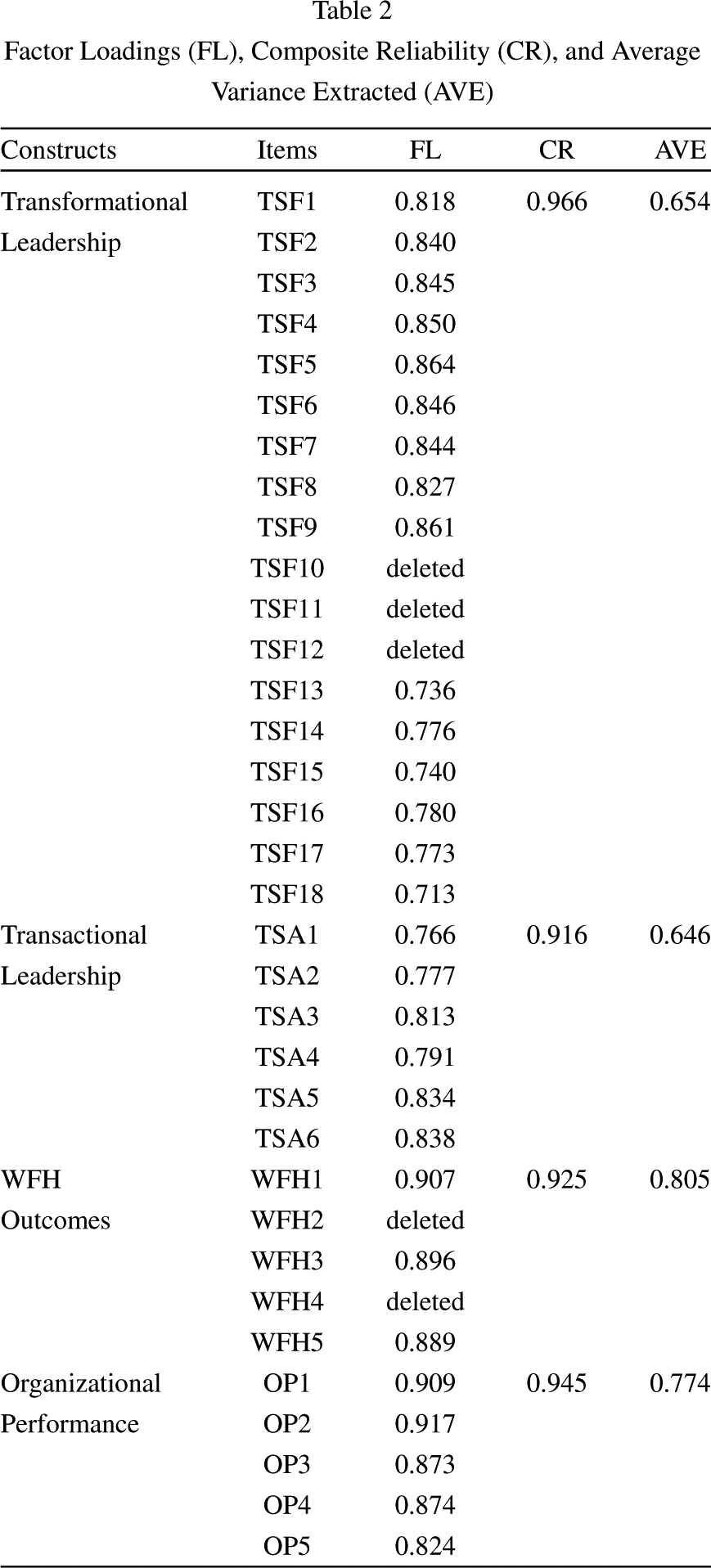
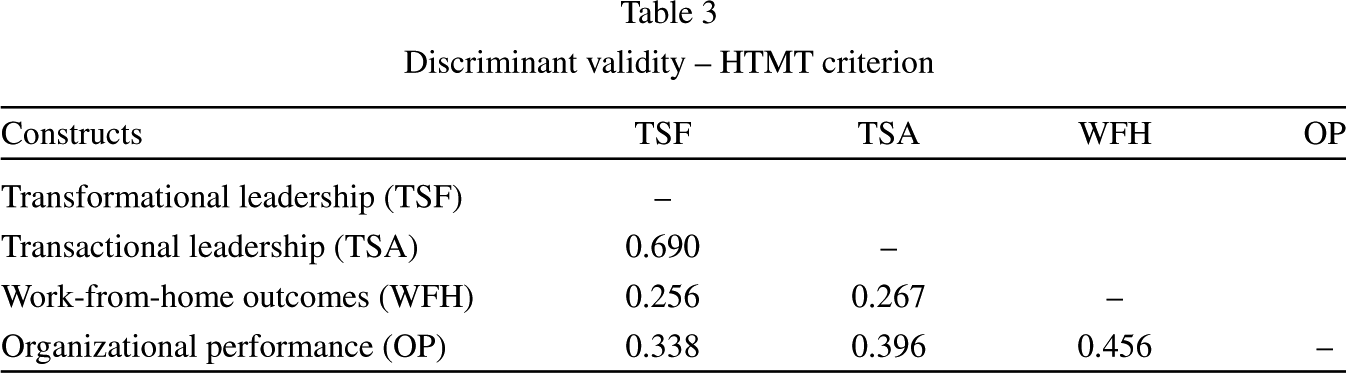
The evaluation of the measurement model proceeds as follows: 1) checking the indicator loadings for each item, aiming for values higher than 0.708 [72]. It was observed that loadings exceeded 0.708, except for items TSF10, TSF11, TSF12, WFH2, and WFH4. Consequently, these items were removed; 2) assessment of internal consistency reliability for each construct, based on composite reliability values equal to or greater than 0.70 [72, 73]. The findings indicated that all constructs show composite reliability exceeded 0.70, indicating satisfactory internal consistency reliability; 3) verification of convergent validity for each construct, considering Average Variance Extracted (AVE) values equal to or greater than 0.50 [72]. The results showed that all constructs surpassed 0.50, confirming convergent validity as illustrated in Tables 2, 4) examination of constructs’ discriminant validity through Heterotrait-monotrait (HTMT) values, aiming for HTMT values below 0.90 [72]. It was found that all constructs’ HTMT values were below 0.90, confirming discriminant validity for all constructs, as shown in Table 3.
Factor Loadings (FL), Composite Reliability (CR), and Average Variance Extracted (AVE)
Discriminant validity – HTMT criterion
4.4. Structural model evaluation
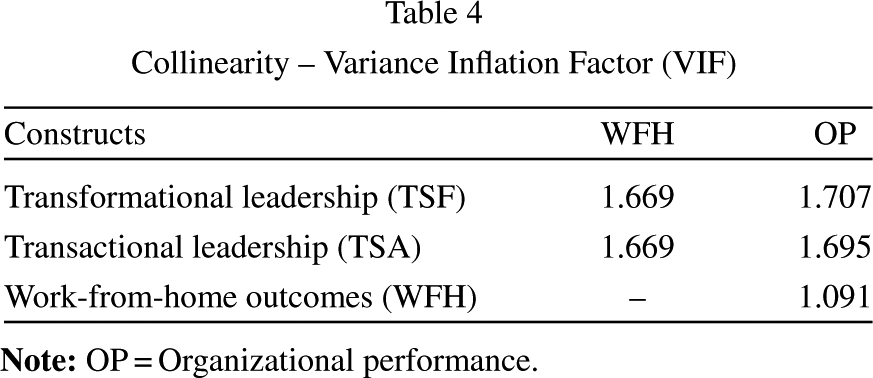
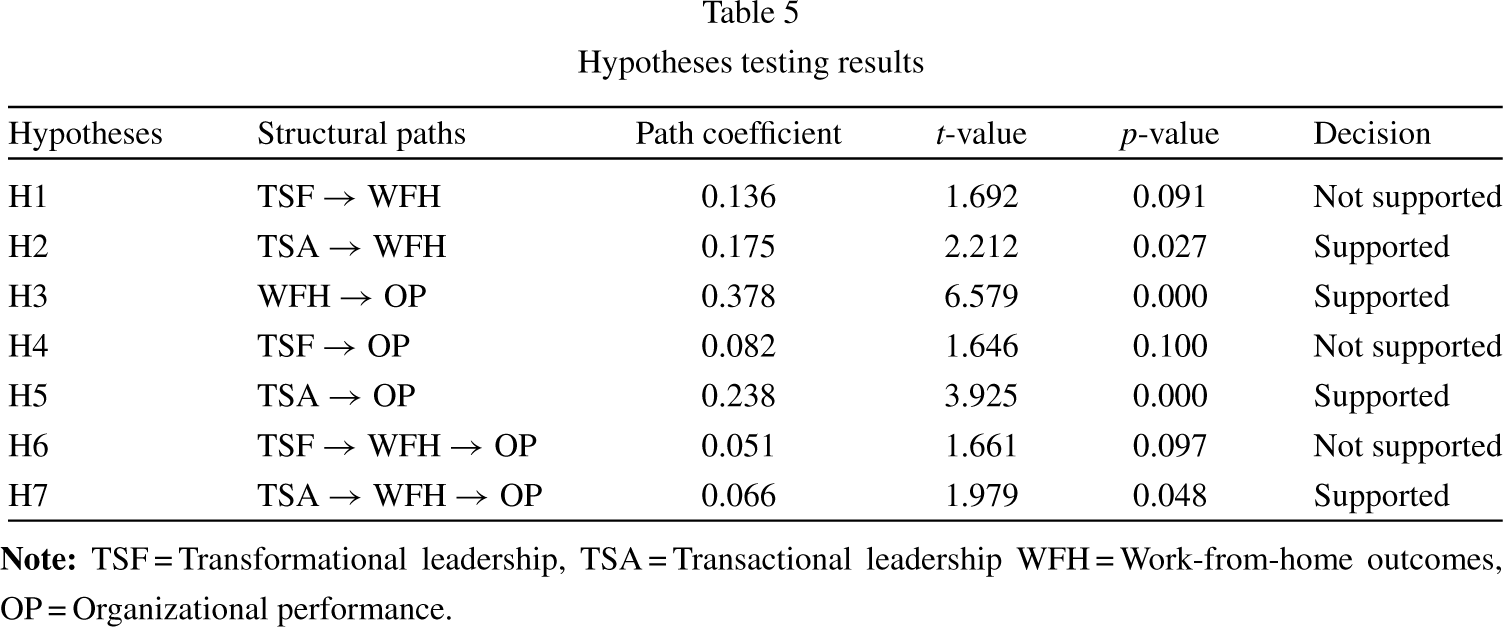
The assessment of the structural model is used to test hypotheses. Before testing the hypotheses, it is essential to examine the collinearity issue by assessing the Variance Inflation Factor (VIF), which should be below 3 [72]. The findings revealed that all constructs had VIF values below 3, indicating no concerns regarding collinearity, as shown in Table 4. The next step in the structural model assessment is to test the research hypotheses using the Bootstrapping method [74]. Table 5 and Fig. 2 show the results of the hypotheses testing.
Collinearity – Variance Inflation Factor (VIF)
Hypotheses testing results
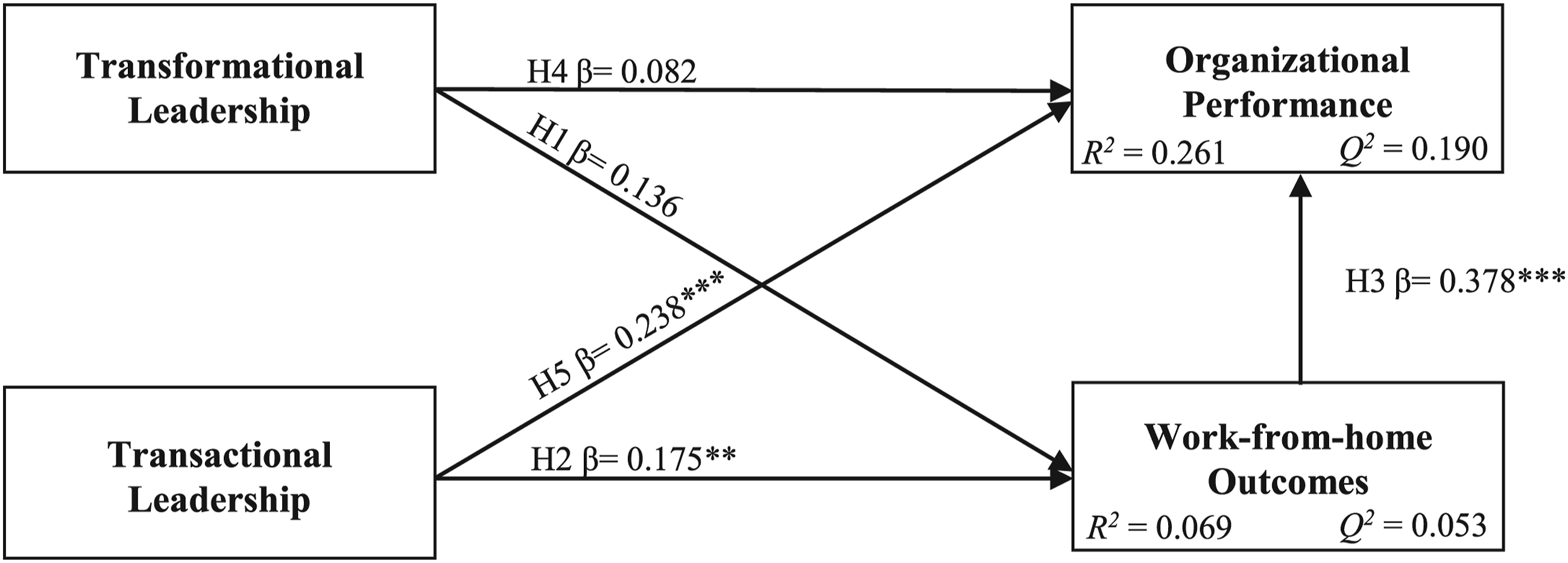
Structural equation modeling results.
The structural model needs to be assessed for the explanatory power by the coefficient of determination (R2), where R2 values of 0.75, 0.50, or 0.25 indicate high, moderate, or low explanatory power, respectively [72 p. 15]. In this context, the R2 for the WFH outcomes during the COVID-19 crisis is 0.069 or 6.90% , suggesting a very low level of explanatory power. It can be concluded that the WFH outcomes during the COVID-19 crisis are influenced by transactional leadership to the extent of 6.90% . Meanwhile, the R2 for the organizational performance during the COVID-19 crisis is 0.261 or 26.10% , indicating a relatively low level of explanatory power. This suggests that organizational performance during the COVID-19 crisis is influenced by transactional leadership and WFH to the extent of 26.10% , as shown in Table 6.
Coefficient of Determination (R2) and Predictive Relevance (Q2)
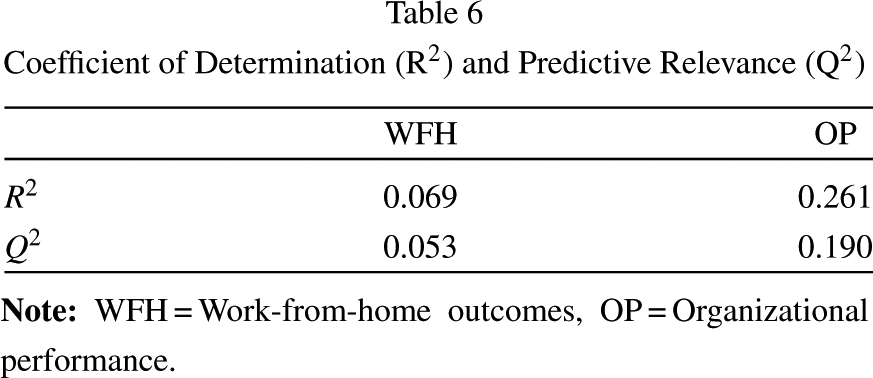
Furthermore, the assessment of the structural model also requires checking the Stone-Geisser’s predictive relevance (Q2). Using the blindfolding procedure, Q2 shows how well collected data can be reconstructed empirically using the model. Q2 values greater than 0 indicate the model’s ability to predict future outcomes [74, 75]. In this regard, the Q2 for the WFH outcomes and the organizational performance during the COVID-19 crisis are 0.053 and 0.190, respectively, indicating acceptable predictive relevance, as shown in Table 6.
5. Conclusion
5.1. Summary of findings
This research examines the effect of transformational and transactional leadership on organizational performance during COVID-19 through the outcomes of WFH. The hypotheses were tested using the Partial Least Squares Structural Equation Modeling (PLS-SEM) method. The results revealed that transformational leadership does not have a direct positive influence on the outcomes of WFH and organization performance during the COVID-19 crisis. In addition, transformational leadership does not indirectly affect organizational performance through the mediating effect of WFH outcome. On the other hand, transactional leadership has a direct positive influence on the outcomes of WFH and organizational performance during the COVID-19 crisis. Moreover, transactional leadership has an indirect positive influence on organizational performance during the COVID-19 crisis, with the outcomes of WFH being a mediator. Finally, the outcomes of WFH have a direct positive influence on organizational performance during the COVID-19 crisis.
5.2. Implications
The result that transformational leadership does not have a direct positive influence on the outcomes of WFH and organizational performance during the COVID-19 crisis is contrary to the findings of Krishnan [41], Gemeda and Lee [43], and de Poel et al. [44], which established a positive correlation between transformational leadership and work outcomes. In addition, Alrowwad et al. [39], Atan and Mahmood [47], Muterera et al. [48], Birasnav [50], and Noruzy et al. [51] found that transformational leadership positively influences organizational performance. It is suggested that in the context of the COVID-19 crisis, the urgent need for WFH may not fully align with the capabilities of transformational leaders, who might excel in an office setting. This may be due to the challenges of being an effective role model and providing individual support remotely, which might be less impactful and efficient than in-person interactions. The challenges of being an effective role model and providing individualized support online or remotely may also diminish the impact of transformational leadership on organizational performance through the mediation effect of WFH.
The results reveal that transactional leadership positively influences WFH outcomes during the COVID-19 crisis, which aligns with Gemeda and Lee’s findings [43]. Their study shows a positive correlation between transactional leadership and work outcomes. Transactional leaders may be more adaptable to remote work situations, as they place importance on work results, irrespective of the work environment. The transactional leadership style might be less dependent on the physical presence of employees in an office setting. In this study, transactional leaders positively impact organizational performance, supported by Alrowwad et al. [39], emphasizing a positive correlation between transactional leadership and organizational performance. It is confirmed that transactional leaders’ focus on achieving results makes them effective in driving organizational performance.
The findings of this research indicate that the outcomes of WFH positively influenced organizational performance during the COVID-19 crisis and acted as a partial mediating variable of the relationship between transactional leadership and organizational performance. This result is consistent with Mathew et al. [9] and Zhang and Morris [46], who found that employee outcomes contribute positively to organizational performance. The COVID-19 pandemic has led to a shift in the way employees work, with many having to WFH. Consequently, unavoidable circumstances have arisen, and the majority of an organization’s key performance indicators are now derived from the outcomes of employees working remotely from their homes. The results of this study show that transactional leadership positively impacts organizational performance more than employee WFH outcomes. It demonstrates that even though employees work from home, they still need to fulfill the organization’s objectives, and organizational leaders must focus on the overall picture of the organization rather than emphasizing individual persons.
5.3. Limitations and future research
This research has certain limitations and suggestions for future research. First, the current study tested hypotheses using data from a specific time frame due to its cross-sectional nature. Examining the long-term effects of leadership styles on the outcomes of WFH and organizational performance can provide valuable insights. As circumstances and preferences change over time, organizations may need to adapt their leadership styles and policies accordingly. Second, this research focused on only two leadership styles: transformational and transactional. However, there are various leadership styles with different characteristics. For future research, exploring other leadership styles, such as servant leadership, humble leadership, toxic leadership, paternalistic leadership, strategic leadership, electronic leadership (E-leadership), and digital leadership, could enhance our understanding of the influence of leadership styles on the outcomes of WFH and organizational performance. This broader investigation can offer a more comprehensive view of the leadership style in the context of WFH. Thirdly, a comparative study on the impact of leadership styles in the context of WFH outcomes and organizational performance across different national cultures can provide valuable insights for international businesses aiming for global success.
5.4. Practical recommendations
The results of this study can be applied to organizations that operate in a WFH setup. Although COVID-19 may not be as severe as in the past, many organizations have become aware, based on the COVID-19 situation, that in certain job types and positions, employees can effectively WFH. Therefore, there has been a shift in the working model towards WFH or a hybrid model. Moreover, in Thailand, where periodic air pollution, notably from PM 2.5 particles, is a concern, the government has implemented policies to encourage organizations to collaborate in adopting WFH practices to resolve the air pollution issues associated with PM 2.5 particles. As a result, it can be inferred that WFH arrangements are likely to persist in Thailand even after the resolution of the COVID-19 pandemic. Based on this study’s findings, the recommendation is that when employees cannot work at the office daily, transactional leadership is an appropriate leadership style to promote employee outcomes. Organizational leaders or business managers should adopt a transactional leadership style. This leadership style entails rewarding followers or subordinates when these individuals achieve their goals while working remotely. Examples include notifying employees when they perform well, publicly acknowledging achievements, praising employees when they exceed expectations, and providing additional benefits such as extra days off or vacation days beyond the norm for those who work remotely. Additionally, leaders should consider offering special incentives such as salary increases, bonuses, and/or promotions. Conversely, leaders should implement punishment for followers or subordinates when these individuals fail to meet the predetermined goals for the outcomes of WFH, such as informing employees when their performance falls below the established standards or does not meet the specified criteria. Punishment may involve withholding salary increases, bonuses, and/or promotions.
It’s important to note that the effectiveness of leadership styles can vary across different national cultures [20] and organizational contexts. The relationship between leadership styles, outcomes of WFH, and organizational performances can be complex and multifaceted. It seems that in the Thai organizational setting, the influence of transactional leadership is more pronounced when it comes to overall organizational performance compared to the specific outcomes associated with an individual’s remote work. Even if the spread of COVID-19 discontinues, maintaining or adopting transactional leadership practices could still contribute positively to organizational performance, which remains the policy of working from home.
Funding
This research was funded by the Faculty of Business Administration, Kasetsart University, Bangkok, Thailand.
Author contributions
CONCEPTION: Tipparat Laohavichien.
METHODOLOGY: Tipparat Laohavichien, Chitawanphat Weerasai.
DATA COLLECTION: Chitawanphat Weerasai.
INTERPRETATION OR ANALYSIS OF DATA: Tipparat Laohavichien, Chitawanphat Weerasai.
PREPARATION OF THE MANUSCRIPT: Tipparat Laohavichien, Chitawanphat Weerasai.
REVISION FOR IMPORTANT INTELLECTUAL CONTENT: Tipparat Laohavichien, Chitawanphat Weerasai.
SUPERVISION: Tipparat Laohavichien.