




Abstract
BACKGROUND:
To encourage students’ behavioural intentions (BI) to use Learning Management System (LMS) in Saudi Arabia, policymakers, particularly the ministry of higher education, should persuade potential users that LMS is useful, simple to use, and that others have high expectations for its use in the near future.
OBJECTIVE:
This study aims to identify factors influencing students’ BI towards accepting the LMS in Saudi Arabia.
METHODS:
An online questionnaire was used to collect 212 student responses from Saudi Arabia’s University of Hail. The integrated model was tested using Structural Equation Modeling (SEM).
RESULTS:
The results of analysis using Structural Equation Modeling (SEM) revealed that factors influencing students’ attitudes towards accepting the LMS and, thus, their BI towards the use of the LMS in Saudi Arabia, were their perceived behavioural control (PBC) and perceived usefulness (PUS). On the contrary, attitudes toward behaviour (ATB), subjective norms (SN), and perceived ease of use (PEU) have no influence on students’ BI.
CONCLUSIONS:
The findings of this study contribute to our understanding of the predictor variables Technology Acceptance Modell (TAM) and Theory of Plan Behaviour (TPB) on students’ BI to use LMS in Saudi Arabian universities.
Keywords








Introduction
A learning management system, often known as an LMS, is a piece of software that helps to streamline the process of delivering educational courses, training programmes, or learning and development programmes, in addition to managing those programs. LMS also refers to software tools that are used to provide, track, and administer educational experiences that are developed within the framework of a knowledge management system and professional development and learning [1–3]. The concept of providing education through digital platforms directly led to the development of LMS. There was a dramatic shift toward the use of remote learning during the COVID-19 epidemic, which resulted in a significant increase in the number of individuals using LMS [4].
However, higher education institutions typically fail to take into account the elements that either stimulate or restrict the usage of technology by their students [5]. Therefore, the common functions of LMS remain stable; however, technological advancement and rapid development of educational institutions in an effort to deliver effective teaching and learning make customized LMS tools, such as Blackboard, an oxygen for the educational sector’s future survival. The incorporation of LMS into the educational process has resulted in numerous improvements to the teaching and learning processes [6]. Teachers now have more tools at their disposal to make the learning process more engaging and interactive. They can provide a variety of assignments and modes of communication regardless of geographical location or time zone difference and learning, and this advancement has assisted students in becoming acquainted with the latest learning technologies [7] have identified LMS as a fundamental area for future education, and they have already begun to dominate the majority of applications in higher education institutions worldwide. The LMS, which stands out as a more significant method since it enables students to access instructional activities at any time and from any location, is something that is not achievable in conventional classroom settings.
Today, Blackboard innovation is widely used in Saudi Arabia’s e-learning practices [8–11] and has resulted in a notable increase in the efficiency with which LMSs may be accessed online in order to assist teaching and learning activities in Saudi Arabian universities. The primary goal of using LMS is to achieve the intended teaching outcomes while also increasing student and lecturer engagement with e-learning. The term “e-learning” refers to a formalised teaching system that makes use of online resources, such as computers and the Internet, to aid teaching, which can take place in or out of the classroom. E-learning provides innovative and straightforward techniques of teaching and learning that may be adapted to meet a wide range of educational requirements in a variety of contexts. Even though many universities around the world have implemented LMS, their success is dependent on a thorough understanding of the users’ acceptance. Developing and implementing e-learning environment, according to [12, 13], is students’ perception of LMS. According to [14], participation and learning are inextricably linked, and the participation experience must be satisfactory for learners to fully benefit.
Shakerian et al. [15] reported that, incorporating LMS tools into the teaching and learning processes must be effective on the eyes of the stakeholders, such as students, teachers and the policy makers. Based on adequate measurements, the impact of LMS has captured the attention of all the stakeholders in recent years. For example, the Saudi Arabian government, through the ministry of higher education has strongly supported the implementation LMS in all the higher institutions schools at all levels of education [16–19]. Hence, the ministry for higher education in Saudi Arabia encourage all stake holders to acquire electronic gadgets such as laptop computers, tablet computers, mobile phones and flash drives for students and teachers in all Saudi higher education institutions with favorable conditions and secure broadband connections.
According to [20–22], to actually accomplish the Saudi Arabian Ministry of Higher Education’s strategic agenda for e-learning across all higher education institutions, each university in the kingdom must meet the targets of the assigned Key Performance Indicator. This is necessary in order for the ministry of higher education to achieve the national agenda for e-learning across all of the higher institutions (KPI). In a similar vein, the Saudi Ministry of Higher Education advised that at least 50% of each public institution’s course offerings be made available online in order for each university to have an e-learning platform [23].
With this goal in mind, the Universities at Saudi universities has been offering blended courses for more than two decades and is eager to fully utilise the LMS in all academic programmes within the institution. Despite the fact that LMS is known by many different names or labels, such as Content Management System, Portal, Platform, and so on, the current Blackboard is the software that is used by the majority of universities across the Kingdom of Saudi Arabia.
Despite significant growth in such systems in recent years, Saudi Arabian universities continue to face a number of e-learning challenges [24]. The implementation and acceptability of e-learning programmes in particular are two of the continuous challenges that a good number of universities in Saudi Arabia must contend with [25]. According to [26], a sizeable proportion of students are dissatisfied with the current e-learning technologies. Additionally, a lackadaisical attitude on the part of faculty members and staff in implementing LMS is noted as a key hurdle by the researchers.
It’s possible to find more than one author [27–29], who have recognised that in order to effectively adapt to the use of technology, the attitudes, beliefs, behaviours, perspectives, and routines that teachers and students alike ought to have should be subjected to rigours consideration and modification. Some authors [30] have also suggested that perceived behavioural control (PBC) and subjective norms (SN) are the three critical dimensions that influence users’ with the purpose to make use of an efficient online learning platform. Similarly, [30–32] emphasize self-efficacy (SE), subjective norms (SN), and attitude toward the behavior (ATB) as the three critical considerations for students’ intentions to adapt to e-learning were aided by Effort Expectancy (EE) and the Facilitating Condition (FC). The results of this analysis guide the researcher to the assumption that understanding students’ perceptions of their behavioural intention to use LMSs is essential to the development of promising systems. When it comes to the country’s various official organisations in Saudi Arabia, figuring out the most important factors that affect students’ plans to adapt and use LMS is likely to remain a major challenge in this area of research.
Behavioral intention to use LMS
Despite the fact that there are emerging frameworks for effective LMS, studies on accepting technology in teaching and learning have drawn from established frameworks. However, one such basic framework is the Technology Acceptance Model (TAM), which is commonly utilised. Both in its basic form and in its enhanced model, as a foundational framework, the TAM has been applied to a wide range of research that goes across disciplinary boundaries. This has been the case both in its original form and in its enhanced model.
However, it has become a valuable paradigm for describing users’ intentions to use technology as a way of educational delivery, despite the fact that TAM had low predictive power for early course management systems [33]. Student intentions to use a LMS were found to be mediated by perceived usefulness (PU) and perceived ease of use (PEU), while perceptions of system flow and playfulness were found to be significantly predictive of students LMS intentions at the University of Auckland, New Zealand [34]. In a study that was quite similar to this one, the researchers found that the PU and PEU of LMS increased at an exponential rate from the very first virtual learning encounter to the very last one.
Despite the fact that researchers investigated the possibility of a link between TAM and learning and found no significant results [35], the TAM was used in this study as an effective predictor of students’ Behavioural Intention (BI) to utilise LMS. Therefore, the focus of this research is to explore the BI of students attending about the use of Blackboard. This study does not include other crucial elements that may have contributed to the failure of blackboard use at Saudi Universities; those factors will be the subject of further research, which will report on those factors.
Specifically, this study examines the following postulated hypotheses, which are based on TAM and TPB models: H1: There is a significant relationship between attitude towards the behaviour (ATB) and perceive usefulness (PU). H2: There is a significant relationship between attitude towards the behaviour (ATB) and perceive ease of use (PEU). H3: There is a significant relationship between subjective norms (SN) and perceive usefulness (PU). H4: There is a significant relationship between subjective norms (SN) and perceive ease of use (PEU). H5: There is a significant relationship between perceive behavioural control (PBC) and perceive usefulness (PU) H6: There is a significant relationship between perceive behavioural control (PBC) and perceive ease of use (PEU). H7: There is a significant relationship between perceive usefulness (PU) and attitude towards LMS. H8: There is a significant relationship between perceive ease of use (PEU) and attitude towards LMS. H9: There is a significant relationship between attitude towards LMS and behavioural intention to use LMS.
Theoretical framework
Theory of Planned Behavior (TPB)
TPB is an extended version of the Theory of Reasoned Action (TRA) that’s been required due to TRA model’s failure to deal with specific behaviors on which users possess inadequate discretion [36]. TPB has been used in a series of studies in the context of information systems, and as well as this same foundation over several information system studies [37]. Take, for instance [38] survey suggested that an individual’s personal intension to perform a particular behaviour helps determine whether or not such a type of behaviour is performed.
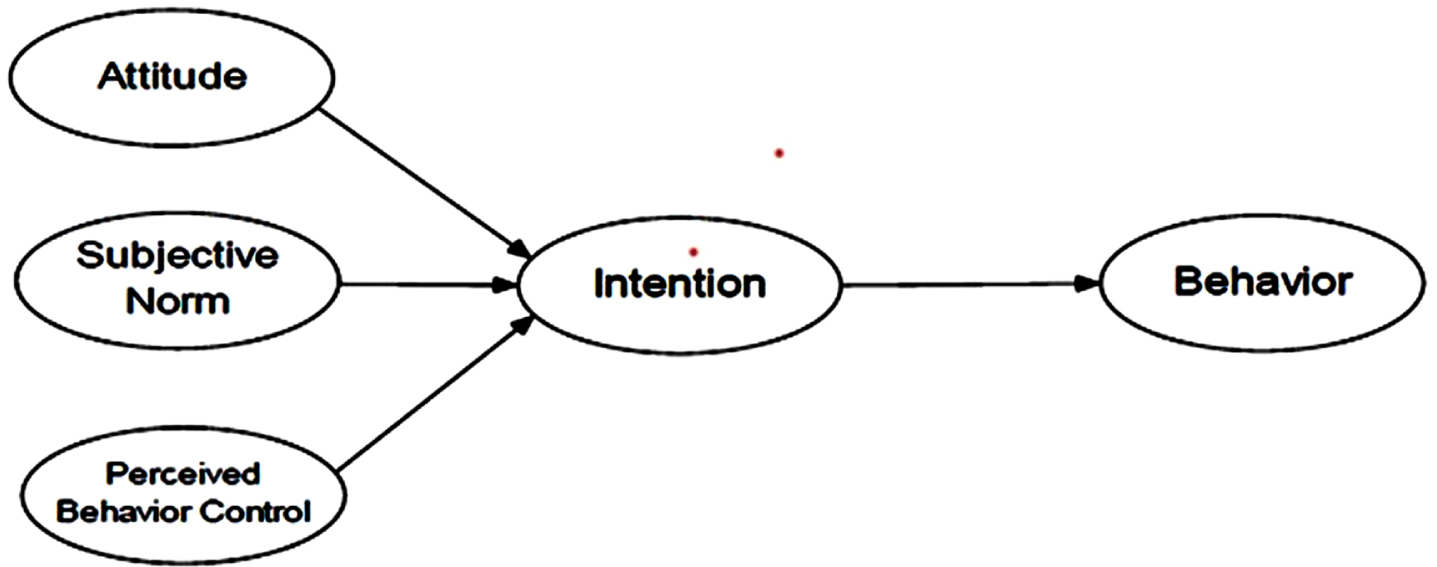
Theory of planned behavior.
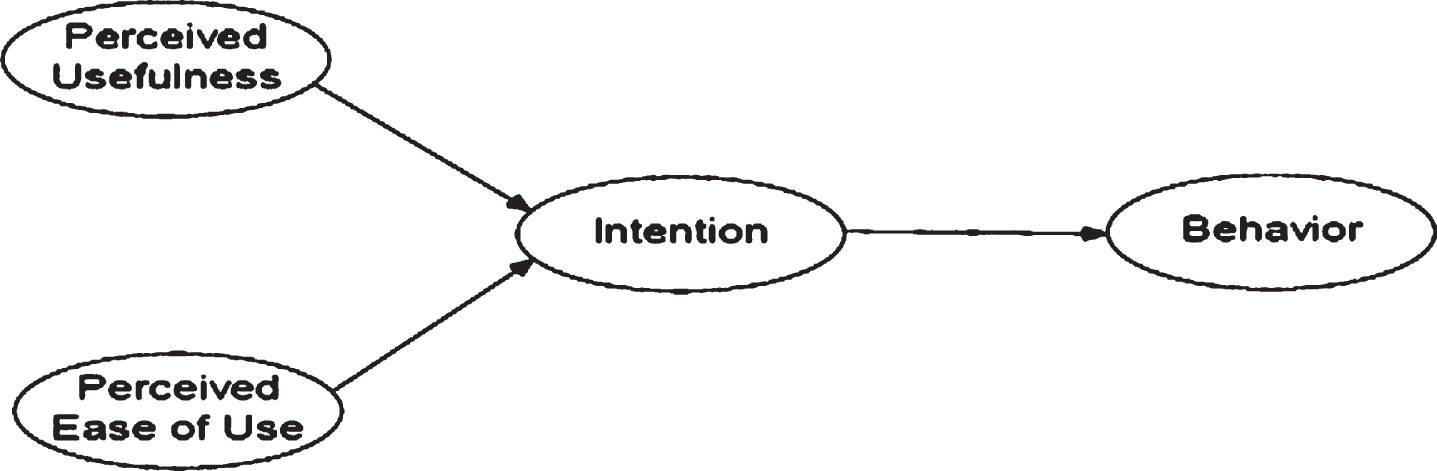
Technology acceptance model.
According to the research that has been done in the past, Attitude Towards the Target Behavior (ATB), Subjective Norms (SN), and Perceived Behavioral Control (PBC) all seem to have a substantial influence on the users’ desires to use and modify information systems [35]. As a consequence of this, a behavioural intention is considered to be either a positive or negative appraisal of the success of the behaviour in question. Because the TPB is a general theory, it does not precisely identify the beliefs that are connected with any one particular behaviour. As a result, it is up to the researcher to determine what those beliefs are.
TPB, on the other hand, offers a good theoretical basis for testing such a presumption and also a basis for defining whether perceptions are indeed linked to having the intention of engaging in a specific behaviour that should be associated with actual behaviour [35, 38].
The rationale for using an LMS in many universities around the world is to manage online learning and teaching [37]. This is also consistent with [39], who postulated that TAM elaborates on the determinants that affect technology acceptance with the objective of determining and describing the circumstances under which users come into contact with a technology and voluntarily adopt it for use. TAM, which is an essential and influential upgraded version of the original TRA from 1975, includes two independent variables that represent why people accept and employ technology. These variables are PU and PEU. The term “PEU,” refers to the degree to which a person believes that making use of a specific technology will entail very little effort on their behalf. On the other hand, “PU,” describes the extent to which a person believes that utilising a specific system will increase his or her work performance.
That is to say that the usability and easiness use of technology affect users’ motives in using a particular system, whilst the overall system use is the reason why users use the technology. Therefore, behavioral intention (BI) affects users’ choices in using of technology. The user’s attitude (AT), or overall perception of the technology, influences the user’s BI [40].
In addition to this, this has been investigated in investigations carried out by [40], who envision that when users are introduced to a new technology, such as a blackboard, a number of factors influence users’ intention on how and when to use the technology. An exhaustive investigation into the TAM contemporary literature revealed that external variables such as ATB, Self-Efficacy (SE), SN and PBC play a significant part in the narrative in determining students’ willingness and ability to use LMS at Saudi universities.
Therefore, incorporating these variables, students’ intentions and general perceptions of using LMS may well differ significantly depending on the age, gender orientation, or personal differences.
The conceptual model
This study integrates two infamous behavior theories, the TAM and TPB, which were both criticized for their limitations [40, 41]. TAM, on the other hand, has several constraints, like user behavior variables, which was assessed through subjective means such as behavioral intention (BI) and interpersonal influence [42].
Similarly, the TPB disregards other influences on behavioural intention and motivation, such as worry, potential danger, emotions, or previous perceptions [43, 44]. While normative influences are considered, environmental or the potential influence of a person’s financial situation on their willingness to participate in an activity is not taken into account. As such, the theory ignores the time lag between “intent” and “behavioral action.” As a result, the theory fails to account for long-term changes.
The reason for integrating both models is that previous studies have examined predictors of users behavioural intention to utilise a LMS in the Kingdom of Saudi Arabia using these theories separately [45, 46], mostly in other Saudi Arabian states and typically descriptive in nature [45, 46]. Because of this, the goal of this study, which uses the integrated model (TPB and TAM) and will be done in Saudi Arabia, is to look at the factors that affect students’ intentions to use LMS in their behavior. This integrated model, which makes use of the method of analysis known as structural equation modelling (SEM), carries the opportunity to enhance new information to the existing body of knowledge about this subject area. After that, each of the two hypotheses is looked at from a theoretical point of view.
Figure 3 illustrates the theoretical model, which indicate students’ readiness to utilise LMS as a stronger predictor of end users’ level of technology adoption as a whole. This conceptual framework is shown in the context of the different ways that end users can accept technology. Over the last two decades, TAM has proven to be a good predictive cogency for the intention use of LMS [47, 48], and it is also considered to be the most commonly cited and used model [49], due to its success to easy understand and simplicity.
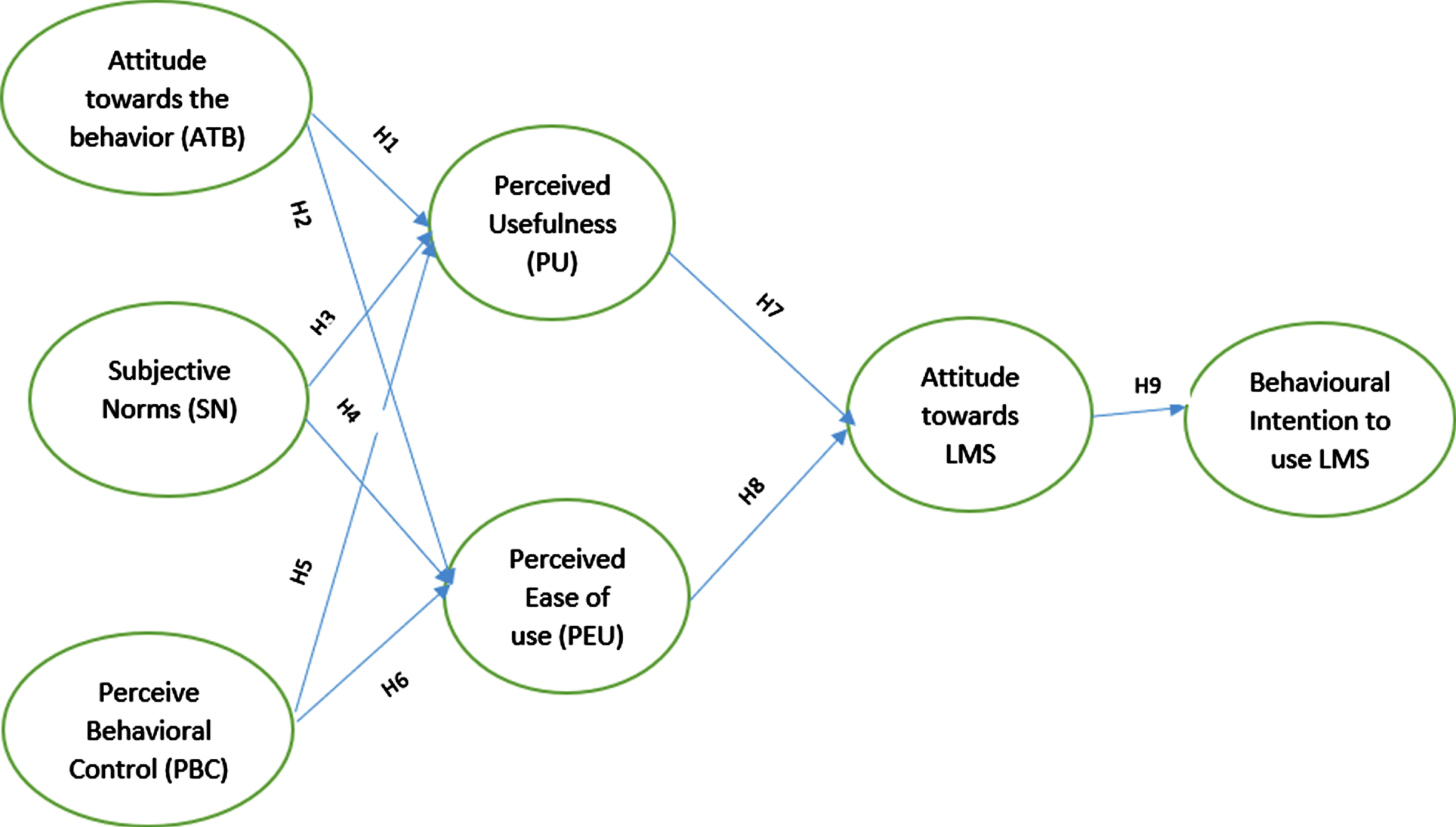
Conceptual framework.
Over the course of two major phases, this study relied heavily on quantitative data collection. The first phase was spent locating relevant literature reviews for the study. Simultaneously, the hypotheses were refined to ensure that the study was completed successfully. Items in the questionnaire were also created and redesigned to reflect respondents’ understanding of the LMS at Saudi Universities.
The second phase concentrated on technical aspects of data collection, such as sample population. Following data collection, Version 23 and AMOS-SEM were used in order to perform the analysis of the data that was collected. With a Likert scale ranging from one to five points, each questionnaire item was assessed in order to analyse each of the seven components that make up the research model. The survey was done by students at university if Hail, a foremost Saudi Arabian university that uses Blackboard to provide online education to both undergraduate and postgraduate students.
Convenient sampling was used in selecting participants, as well as an online survey was also integrated into the study’s course. In this study, the survey questions (35 items) were emailed to 300 registered student email addresses. The research consists of the collected data of 212 male and female students from the University of Hail’s College of Business Administration and College of Arts. An overall response rate of 70.6% was obtained from the 212 completed questionnaires. For the Statistical Package for the Social Sciences (SPSS) and the SEM, the Krejcie and Morgan Table [50–52] says that at least 169 responses are needed for this study to be considered valid. Hence, this number (212) has been determined to be suitable. Also, the university’s administrative and teaching staff are not counted in the population because they are not students.
Results
Demographic profiles
Table 1 depicts the gender distribution of respondents. 142 (67%) of the 212 respondents were female, while 70 (70%) were male (33 percent were male). This indicates that female students make up the vast majority of University’s student. This also shows that the findings can be used to set up women’s empowerment programmes within the boundaries of the Kingdom of Saudi Arabia (KSA), which will help the Kingdom reach its goal of empowering women by 2030 [53].
Gender category
Gender category
Table 2 depicts the Level of Study of the respondents, which includes the five Level groups used in the survey. Despite the fact that respondents’ study groups vary, the majority of respondents are final year students, accounting for 50.5 percent of the total.
Furthermore, only about 2% of those polled are in their first year of college. This finding indicates that the overwhelming number of those who filled out the survey are currently either in their junior or senior year of high school. As a consequence of this, they have maintained their enrolment at Saudi Universities for a sufficient amount of time to evaluate the degree to which LSM is accepted there.
Level of study
Table 3 shows the distribution of respondent colleges, which consists of 5 colleges. The distribution represents the current level of colleges of study of the respondents. Because it had been decided in advance that the research sample would consist of five colleges. Thus, it is not unexpected that the majority of respondents (66 percent from the College of Business Administration and 34 percent from the College of Arts) are from the College of Business Administration.
Colleges distribution
The respondents’ Cumulative Grade Point Average (CGPA) was divided into four categories. Table 4 displayed the four categories of respondents with a CGPA of less than 1, less than 2 and more than 1, less than 3 and more than 2, and more than 3. Students with a CGPA of more than 3 and a cumulative CGPA of 88.2 percent are among those with the highest CGPA.
Cumulative Grade Point Average (CGPA)
Table 4 showed that respondents to the study had well-informed attitudes about implementing Blackboard. Meaning that most respondents had excellent CGPAs, indicating a degree of intellectual maturity suitable for providing a fair judgement of their views.
Cronbach’s Alpha was used to figure out how reliable an individual measure was by looking at its internal consistency. In addition to this, it was used to determine the degree of the internal consistency of the multiple-item scale that was used in the survey questions [54]. Using SPSS version 23.0, all of the construct’s dimensions and elements were found to be highly reliable Pallant [55] say that a value of more than 0.8 means that each variable is consistent with itself.
Table 5 demonstrates the accuracy of the research measures that were utilised in this investigation. In the context of public universities in Saudi Arabia, the table below shows the Cronbach’s Alpha for the many factors that affect whether or not a student plans to use a LMS.
Construct reliability
Construct reliability
Structural Equation Modeling techniques using Amos (Version 23) were used for data analysis to evaluate the measurement model, such as composite liability, factor loading, and AVE values, among others (see Table 6).
Hypothesis findings
The conceptual framework managed to meet all the criteria for typical model acceptance, as shown in Fig. 4. The predetermined cutoff values for the standardised regression weights, squared multiple regression, and goodness of fit indexes were all successfully attained. An incremental model re-specification process was used to develop the final structural model, which illustrates the correlation between the endogenous construct of Behavioural Intention (BI) to use LMS and the exogenous constructs of Attitude Towards Behavior (ATB), Subjective Norms (SN), Perceived Behavioral Control (PBC), Perceived Usefulness (PU), and Perceived Ease of Use (PEU), as well as Attitude Towards Behaviour.
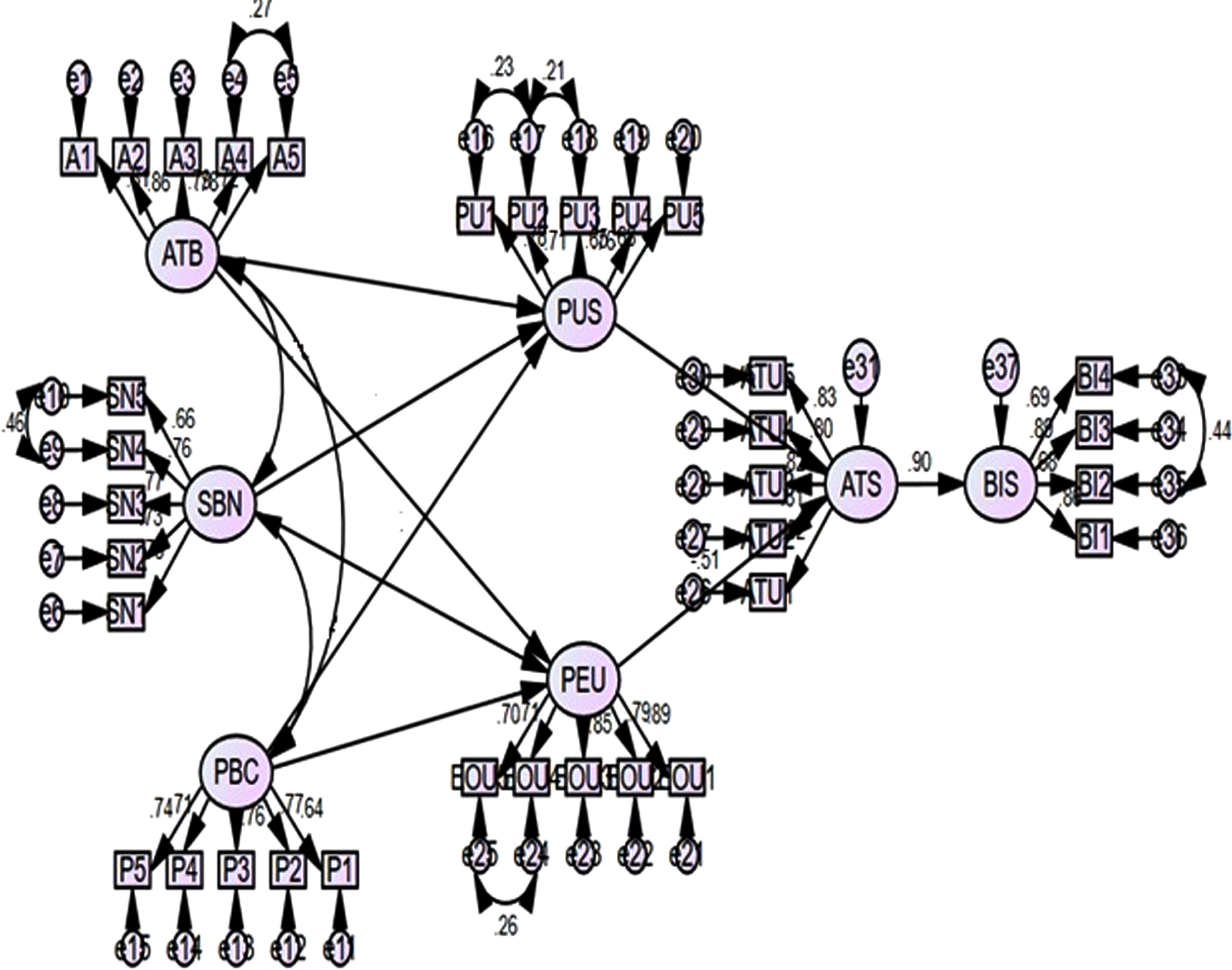
Final structural model of the research constructs.
The model needs to be respecified because the remaining three fit indexes do not match the expected criteria, with the exception of the parsimonious fit, absolute fit index, and RMSEA. As a direct consequence of this, the fundamental conceptual framework went through a process of iterative re-specification up until the point where all of the fitness indices fell within acceptable limits. After making the necessary adjustments, the final structural model shown in Fig. 2 was created. All of the fitness indexes achieved the minimum threshold levels suggested by [56, 57–62].
H1: “There is a significant relationship between attitude towards the behaviour (ATB) and perceive usefulness (PU)”.
The effect of students’ ATBPU to use Blackboard was found to be insignificant, with a (=0.74, P = 0.184). This means that there is no positive effect of students’ ATB on the usage of Blackboard in the Saudi Universities. As a result, H1 was rejected.
H2: “There is a significant relationship between attitude towards the behaviour (ATB) and perceive ease of use (PEU”).
Students’ ATB on Blackboard’s PEU likewise does not constitute a statistically significant finding (=1.115, P = 0.583). This is because ATB measures students’ perceptions of how easy it is to use Blackboard. As a direct consequence of this, H2 was also rejected.
H3: “There is a significant relationship between subjective norms (SN) and perceive usefulness (PU”).
In a similar vein, the results of our research show that students’ Subjective Norm (SN) does not influence their PU when it comes to using Blackboard (=0.118, P = 0.017). H3 was also rejected.
H4: “There is a significant relationship between subjective norms (SN) and perceive ease of use (PEU)”.
Thus, SN of students on PEU did not appear to have a significant influence on students’ use of Blackboard in Saudi Arabia (=0.169, P = 0.561). Hence, H5, was also rejected.
H5: “There is a significant relationship between perceive behavioural control (PBC) and perceive usefulness (PU)”.
H5 is also accepted, as per our research results. This means that (=0.097, P = 0.00) correctly predicted PBC. As a matter of fact, the expectations of students will naturally change their post-usage experience, and post-expectation behaviour and attitude would then positively influence their Behavioural Intention.
H6: “There is a significant relationship between perceive behavioural control (PBC) and perceive ease of use (PEU)”.
In a similar vein, the findings indicate that students’ PBC has a good and considerable impact on the PEU of the blackboard among college students (=0.137, P = 0.00). As a consequence of this, H6 is accepted.
H7: “There is a significant relationship between perceive usefulness (PU) and attitude towards LMS”.
Our findings confirmed H7 as a positive and significant predictor of students’ PU on Attitude Towards the Use of Blackboard (=0.320, P = 0.00). As a result, H7 is accepted.
H8: “There is a significant relationship between perceive ease of use (PEU) and attitude towards LMS”.
Because our findings reveal that students’ opinions of Blackboard at the Saudi Universities are not greatly influenced by their perceptions of its PEU (=0.271, P = 0.48), Hypothesis H8 was rejected.
H9: “There is a significant relationship between attitude towards LMS and behavioural intention to use LMS”.
Students’ attitudes toward Blackboard and behavioral intentions to use Blackboard are both positive and significant, according to the findings. The finding further revealed that students’ intentions to continue using Blackboard are predicted by their attitude toward Blackboard (=0.068, P = 0.00), confirming H9. Thus, H9 was accepted.
Discussion and implications of the study
Perceived ease of usage, as determined by the findings of this study, doesn’t seem to change how students at Saudi Universities feel about LMS. Hence, H1, H2, H3, H4, and H9 were all rejected. Remarkably, the outcomes of the research refute the critical impact on student intention in determining LMS behavioural intention. When compared to previous e-learning studies, the impact of students’ BI did not correlate with the findings of [63] but was consistent with the findings of [64].
H6, H7, H8, and H9 were also accepted. Confirmation, perceived usefulness, and perceived ease of use forecast the behavioural intention (BI) of students to utilise the LMS. This means that expectations will naturally change students’ post-usage experiences, and their post-expectation behaviour will then positively influence their behavioural intention.
The findings revealed that perceived usefulness predicts students’ long-term intention to use LMS; thus, H9 was accepted. Perceived usefulness (PU) influences continuation intent, and this is in line with earlier studies. This finding clearly demonstrates that perceived usefulness (PU) is indeed a substantial predictor of students’ attitudes towards LMS and students’ BI in Saudi Arabia.
Perceived usefulness (PU) was determined to have a greater impact on students’ BI than any other factor in using Blackboard in Saudi Arabia. It is even more essential than how perceived ease of use is considered, which was previously thought to be the most crucial criteria in this regard.
The fact that students’ perceptions of Blackboard’s ease of use concentrate solely on just one aspect, which may or may not result in usefulness, clearly illustrates Blackboard’s value in general. Nonetheless, it is acceptable to presume that the term “usefulness” spans a broad variety of things and that, in order to achieve an appropriate level of usefulness, every aspect of it must be balanced. Students’ perceptions of the usefulness of LMS in Saudi Arabia may be distorted if there is an inconsistency in each aspect.
Theoretical implications
The findings of this research make a substantial contribution to the existing body of knowledge concerning LMSs. The TAM-TPB model used in this study showed significant Squared Multiple Correlation (SMC), which indicates how well the factors used represent behavioural intention. In terms of students’ intention to use LMS, the total R2 value for both TAM and TPB is 11%.
If the remaining elements beyond the integrated model are investigated, other behavioral frameworks could be used to gain a better understanding of the LMS. Another theoretical implication emerges from the data from Saudi Arabia. With H1, H2, H3, and H4 all rejected, the integrated model was practically the only option, revealing a significant positive correlation for each path. Future research should consider the technical element of student attitudes toward blackboard as well as student subjective norms in order to analyze the integrated model more thoroughly.
Practical implications
The researchers discovered that students’ perceived behavioural control (PBC) has the highest positive correlation to perceived ease of use (PEU), with a p-value of 0.00 and an estimate value of 1.37, using SEM, its statistical methods, and the integrated model. demonstrating that Saudi Arabian students can complete a given task on a blackboard without direct supervision or instruction. This is not strange considering that the research results were also coherent with those of a previous study done in Saudi Arabia by [65].
As a result, these findings may present an excellent opportunity for Saudi Arabia’s Ministry of Higher Education to develop additional degree programs, particularly postgraduate pragmas. LMS will provide such platforms and opportunities for students because postgraduate programs require little or no supervision.
Another high positive correlation value is seen in the paths. Demonstrating that in Saudi Arabia, having a favorable attitude toward LMS is heavily influenced by how students perceive its usefulness, and perceived usefulness is also influenced by PBC. As a result, students in Saudi Arabia are ready to use LMS because they already have a positive attitude toward it. The Saudi Ministry of Higher Education should regard LMS as an important concept that should be used more strategically in Saudi Universities.
The existence of a positive and significant correlation exists between ATS and BIS demonstrates that students in Saudi Arabia understand the importance of LMS for successful learning and as a means of competing with students everywhere in the globe. The Ministry of Higher Education in Saudi Arabia should respond appropriately by preparing all necessary resources for the establishment of a functional LMS in Saudi Arabian universities, Colleges, Training Providers and other higher education institutions.
Limitations
The findings of this investigation are limited in some ways. To begin, the most significant disadvantage is that the results of the study cannot be generalised in any way. This is due to the fact that the research is the product of an investigation and study of a single public university in Saudi Arabia.
Therefore, in order to ensure that the findings of the study are applicable to a wider range of contexts, it would be desirable to conduct similar investigations in various geographical locations at Saudi universities or in countries that have the same geographical position. However, it is very necessary to incorporate a greater number of public and private universities. This leads to a larger sample size, which may lead to various conclusions being drawn.
In addition, the majority of the students in the student sample are enrolled at the Bachelor of Arts programme in the College of Business Administration. There is a possibility that the outcomes will change if additional students from other colleges are included.
Conclusion
The study investigated the antecedents of two well-known intention/behavior models, TPB and TAM, and both models are used as measurement tools in this study. The proposed integrated model of TPB and TAM does not achieve model fit. In all cases except PBC, the model fails to assert the effect of ATB and SBN on the TAM model. Several direct paths, on the other hand, are found to be significantly related to either intention or behavior. As a result, when compared to TPB or TAM alone, the revised model is the best model for explaining students’ behavior intentions.
A sample of cases from one of Saudi Arabia’s most prestigious universities is used in measurement analysis. Findings on the assessment of students’ behavioral intention in using LMS are revealed, and several managerial implications for improvement are strongly suggested, such as developing a more LMS and providing an enabling environment for students to thrive.
We can conclude that future research will be able to look into additional factors which influence students’ attitudes toward LMS.
Footnotes
Acknowledgments
This research has been funded by Scientific Research Deanship at University of Ha’il - Saudi Arabia through project number RG-21 010.
Author contributions
CONCEPTION: Aliyu Alhaji Abubakar and Yaser Hasan Al-Mamary.
METHODOLOGY: Aliyu Alhaji Abubakar and Mohammed Abdulrab.
DATA COLLECTION: Fawaz Jazim, Yaser Hasan Al-Mamary, Shirien Gaffar Abdalraheem, Malika Anwar Siddiqui, Redhwan Qasem Rashed and Abdulsalam Alquhaif.
INTERPRETATION OR ANALYSIS OF DATA: Aliyu Alhaji Abubakar and Mohammed Abdulrab.
PREPARATION OF THE MANUSCRIPT: Aliyu Alhaji Abubakar, Fawaz Jazim, Yaser Hasan Al-Mamary, Mohammed Abdulrab, Shirien Gaffar Abdalraheem, Malika Anwar Siddiqui, Redhwan Qasem Rashed and Abdulsalam Alquhaif.
SUPERVISION: Yaser Hasan Al-Mamary, Aliyu Alhaji Abubakar and Fawaz Jazim.