




Abstract
In this mixed methods and multi-phased study, through a multi-round feedback and confirmation process, we established a meaningful approach to developing, revising, and finalizing a competency framework for InterProfessional Informationists (IPI). As an emerging profession, IPI has not yet been established as a formal educational program with a guiding framework. It is important both to the field of practice and to educational programming to develop a competency framework, specifically targeted to IPI, and has been informed/verified through current practice. Our process started with using the initial competency framework developed by Tang and Martin (2019) as the basis, and involved gathering comments from numerous stakeholders, including IPI students and working professionals from relevant communities ranging from health science librarians to library directors, informationists, and LIS scholars and educators. The finalized IPI framework features four levels, six competency areas, and 67 elements, with separate beginner and advanced levels for subject expertise and work practice/culture. By including a variety of voices, this comprehensive framework not only outlines relevant foundational knowledge, skills, and attitudes (KSAs), but also accentuates timely cutting-edge skills and forward-looking elements required of InterProfessional Informationists.
Keywords
Introduction
In this paper, we report our research efforts in developing a competency framework for InterProfessional Informationists (IPI). The term “informationist” was coined in 2000 by Davidoff and Florance, who suggest informationists will “ultimately become a part of almost every clinical staff and service” (p. 997). The National Institutes of Health defines informationists as “embedded librarians with subject-matter expertise who work in a clinical, basic science, biomedical research, or public health specialty” (NIH, n.d., Informationist Program). Bracke (2017) claims that “an informationist is a professional with information expertise and experience with a specific academic discipline, providing in-depth services within the work context of that discipline rather than a library” (p. 451). Bracke (2017) further outlines three primary attributes of an informationist: (1) “an understanding of both information science principles and the academic discipline,” (2) “strong searching and information synthesis skills,” and (3) “being embedded within a clinical setting or inclusion as part of research team” (p. 452). Meanwhile, the term “interprofessional” is defined by Dictionary.com as “involving trained workers with expertise in different fields” and has been primarily used in the context of healthcare fields as their workforce struggles to “manage unmet health needs” and “increasingly complex health issues,” and where they are tasked with moving through the system and collaborating with experts from multiple professions to “enable effective collaboration and improve health outcomes” (WHO, 2010, p. 13). In this paper, InterProfessional Informationists are defined as library and information professionals who work on interprofessional research or clinical teams as conduits for collaboration and team success.
Between 2003 and 2008, the National Library of Medicine (NLM) sponsored an “Individual Fellowship for Informationist for Training,” and “during the life of the Informationist fellowship program, which ended in 2008, nine people received support for coursework and internships to prepare them for new career directions” (Florance, 2013, p. 4). In 2010, the National Institutes of Health (NIH) issued NLM Administrative Supplements for Informationist Services, funding NIH-funded scientists who embedded an informationist into their research teams. Even though there were efforts through NLM to provide partially funded job opportunities for embedded librarians, there has been no formal training for these librarians prior to becoming an informationist. Giuse, Sathe, and Jerome (2006) stated that “NLM’s current informationist fellowships, … are highly individualized and likely will not foster national models for training and education that are generalizable across institutions and practice domain” (p. viii). In 2008, NLM’s funding ended. To date, there are very few formally certified educational programs in LIS schools for informationists.
Funded by the Institute of Museum and Library Services (IMLS) in 2019, a post-master’s certificate program for IPI in health science and medical libraries was established at an LIS school in the Northeast region of the United States. Students were admitted to the IPI program through a competitive process, started their study in Spring 2020, and graduated in May 2021. The funded project (IMLS Grant RE-17-19-0032-19) was entitled “Retooling the Librarian Workforce: Innovative Post-Master’s Certificate Program for Developing Inter-Professional Informationists (IPI).” The IPI cohort included eight practicing librarians from academic health science libraries across the United States. One key outcome of the program, in addition to producing the IPI cohort, was to develop, solidify, validate, and finalize the IPI competency framework. Because the IPI as a profession has yet to be formally introduced and installed into the LIS educational infrastructure, and because at the time, informationists occurred only in a limited number of specialized areas such as biomedical and health science library services, and in a limited number of funded professional development training programs, the research team believed that establishing a competency framework was much needed both conceptually and professionally for the education and practice of the LIS field. As a stated deliverable for the grant as well as the goal of our research study, we set out this innovative investigative journey to derive a comprehensive and timely framework for IPI.
The initial competency framework (Tang & Martin, 2019) was established based on the core skills and knowledge identified by Giuse et al. (2006), and later expanded by Rankin et al. (2008), Robison et al. (2009), and Bracke (2017), among others. The framework contained areas of knowledge competencies, functional competencies, and personal competencies, with each area including multiple elements as illustrated in Fig. 1.
Initial IPI competency framework (source: Tang & Martin, 2019).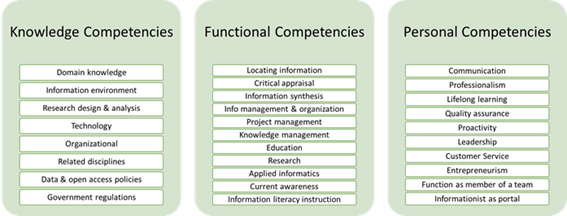
Even though the initial framework was derived based on existing literature, it has not necessarily been verified or tested by the informationist community. While the categorization of the three competency areas is rather ordinary, both the grouping and the elements require updating to reflect the complex nature of informationists’ work practice and outward-facing mindset, including social responsibilities.
As an emerging profession, IPI has not yet been established as a formal educational program with a guiding framework. It is important both to the field of practice and to educational programming to develop a competency framework, specifically targeted to IPI, and has been informed/verified through current practice. The key research problem that we address in this study is to what extent a competency framework derived from existing literature aligns with practicing informationists’ views on the essential knowledge and skill sets required of them in their interprofessional practices, and whether the framework is comprehensive, relevant, and timely enough to reflect the evolving nature of the IPI practice. With input from working informationists, aided by the analysis of their position descriptions, one of the primary purposes of this study is to develop and solidify a framework aggregating many common and idiosyncratic elements, while adopting multiple rounds of revisions to reflect up-to-date and comprehensive competency areas that are core to IPI current practice and future advancement.
Our research objectives are threefold as specified below. Associated with these objectives, the research questions (RQs) of the study are articulated in the “Method” section.
To identify knowledge, skills, and attitudes (KSAs) that are essential to the IPI practice; To organize and structure the components of the IPI KSAs into a framework that is conceptually meaningful and practically implementable for both teaching/learning and practice; To learn and articulate the procedure for developing, validating, and solidifying a competency framework for the LIS profession.
The journey that we went through before arriving at a finalized framework involved several rounds of data collection, coding, and analysis. Such a journey, unlike a conventionally administered empirical research project, followed a different path: Firstly, we heavily engaged the IPI students in both the conceptualization and validation process of the competence framework. In utilizing the “student as partners” approach as conceptualized by multiple scholars (e.g., Cook-Sather, 2014, Healey et al., 2014; Healey et al., 2016) and practiced by many higher education institutions (Elon University, Center for Engaged Learning, 2017), we immersed the IPI students in their own learning and research, and tied the finalized framework seamlessly with the pedagogical delivery of the program. Secondly, in our investigative pursuit, we not only performed the regular research activities such as interviews, content analysis, and coding, but we also employed non-traditional methods such as the “nominal group technique” in order to brainstorm and converse amongst ourselves and with key stakeholders on IPI elements and categories, and to encourage creativity in visualizing perceptions. According to Manera et al. (2019), the nominal group technique (NGT) “uses structured small group discussion to achieve consensus among participants” (p. 737). ASQ (n.d.) also explains NGT as “a structured method for group brainstorming that encourages contributions from everyone and facilitates quick agreement on the relative importance of issues, problems, or solutions.” Furthermore, we used card sorting to gather feedback on skill set grouping. The variety of techniques/methods used at different stages of the study was crucial to achieving the final product.
By embracing both the interprofessional cross-disciplinary nature of work and the embedded contextualized service characteristics, we believe IPI represents the future of the information and library profession. As such, the significance of establishing an accurate, comprehensive, and up-to-date IPI competency framework is twofold. Firstly, by reflecting on competencies required to meet the current needs and changing nature of the field, the IPI competency framework provides an example of how the LIS profession should position itself proactively in order to remain relevant and indispensable to its community, society, and beyond. Secondly, a finalized IPI competency framework with meaningful structure will help to advance LIS education and curriculum development to effectively nurture and grow graduates to become competent members of the IPI workforce, contributing successfully to the field and the information profession.
In this section, we review relevant definitions, then provide an analysis of competency frameworks relevant to the IPI practice.
Definitions
Competency
Competency has been defined as “achieved by a process, where knowledge and skills are combined with attitudes and values required in a particular context … to perform to a prescribed standard” (Meretoja et al., 2004, p. 330). In the field of healthcare, “the definitions [of competence] are varied and to an extent context-specific” (Tracey & Tracey, 2010). Begun and Malcolm (2014) refer to “competencies” in public health leadership as “broader actions that require multiple skills, knowledge, and particular attitudes or values in order to be proficient in them in particular contexts.” (p. 39). In LIS, professional competencies “comprise the knowledge, skills, and abilities which are teachable, measurable, and objective and which define and contribute to performance in librarianship” (LLAMA, n.d.).
Competency framework
Definitions of “competency framework” are limited in the current literature. Ääri et al. (2008) indicate that “The conceptual framework of competence in general included professional and cognitive competence, interpersonal skills and patterns of interaction” (p. 82). For public health leadership, a competency framework (Begun & Malcolm, 2014) includes components of “values and traits,” “knowledge,” and “skills,” along with the five competency sets, including a set “relatively specific to public health” – preparing for surprise in public health work, with attributes such as “Promote resilience in individuals and communities” (p. 40). In this study, we define “IPI competency” as a cluster of attributes including knowledge, skills, attitudes, and values that are required to achieve mastery in order to successfully perform the job responsibilities of an InterProfessional Informationist. Existing work demonstrates that a competency framework should be rooted in and contextualized by a specific professional practice, with a shared forward-looking vision and pertinent core knowledge and skills accentuated (Ääri et al., 2008; Begun & Malcolm, 2014).
Existing competency frameworks
For this study, 18 competency frameworks were examined, four of which specifically address informationists (see Appendix A). The criteria for competency framework inclusion were (1) relevant to the practice of informationists, (2) established by well-known LIS associations headquartered primarily in the US, (3) concerning biomedical and health science services practice, and (4) created by interprofessional education (IPE) organizations. Because the IPI cohort were practicing health science librarians, frameworks in areas (2) and (3) were included to help contextualize the IPI practice in the biomedical/health science services context. Area (4) enables placing the IPI in a broader scope of interprofessional education. The interprofessional collaboration of the IPI is anchored in providing informationist services in the biomedical/health sciences context. It was our goal to expand our framework in future years to other disciplines in STEM, the social sciences, and the humanities.
Among our collected frameworks for examination, there are frameworks for informationists, such as “A Core Competency Model for Clinical Informationists” (Hashemian et al., 2021). There are also LIS competency frameworks, such as the American Library Association (ALA)’s Core Competencies of Librarianship and the Association of College and Research Libraries (ACRL)’s Information Literacy Standards for Science and Engineering/Technology. Biomedical and health-related competency frameworks, including the Medical Library Association (MLA)’s Competencies for Lifelong Learning and Professional Success for Health Librarians, Digital Health Canada (COACH)’s Health Informatics Professional Core Competency Framework, and the Multi-Regional Clinical Trials (MRCT) Core Competency Framework for the Clinical Research Professional, were also part of our review. Moreover, we included IPE competency frameworks such as the Canadian Interprofessional Health Collaborative (CHIC)’s (2010) “A National Interprofessional Competency Framework.”
Among the 18 frameworks, several common competency areas/items emerged, ranging from soft skills such as collaboration; Diversity, Equity, and Inclusion (DEI); leadership; and communication to hard skills such as technology and data skills, and information literacy instruction.
Collaboration
A large number of healthcare competency frameworks (AMIA, MRCT, MLA, Tiger) specify the necessity of ongoing collaboration and communication among colleagues, staff, and faculty required within the healthcare profession. AMIA (2017) has a dedicated competency domain of “Interprofessional Collaborative Practice” that “refers to the shared, coordinated work among peers from different professions in order to achieve a common goal or mission” (p. 13). Collaboration is heavily emphasized in IPE competency frameworks. In their “National Interprofessional Competency Framework,” CIHC (2010) outlines six competency domains “required for effective interprofessional collaboration,” which are “the knowledge, skills, attitudes and values that shape the judgments essential for interprofessional collaborative practice” (p. 9). One competency area, “team functioning,” is defined by descriptors such as “participate and be respectful of all members’ participation in collaborative decision-making.” In its explanation of this competency area, CIHC (2010) indicates that “Collaboration requires trust, mutual respect, availability, open communication and attentive listening” (p. 14). As a parallel, in their 2016 update of “Core Competencies for Interprofessional Collaborative Practice,” Interprofessional Education Collaborative (IPEC) lists Competency 4 as “Interprofessional teamwork and team-based practice.” They further describe Competency 4 as the ability to “Apply relationship-building values and the principles of team dynamics to perform effectively in different team roles to plan, deliver, and evaluate patient/population centered care and population health programs and policies that are safe, timely, efficient, effective, and equitable” (p. 10).
Several LIS professional associations place “collaboration” in the categories of leadership, administration, and management (ALA, CARL), interpersonal skills (CARL), and professionalism (MLA). CARL (2010) asserts that “All CARL librarians should have the following skills … Collaboration – working with diverse groups, in and out of the library, in pursuit of shared goals and with an appreciation of diverse perspectives; taking the library’s story into the community” (p. 7).
Communication
Communication is defined by the Chartered Institution of Library and Information Professionals (CILIP) (2016) as “oral, writing and presentation skills, networking and relationship building and working effectively with individuals and groups” (p. 43). ALA (2021) places effective communication in the context of “gateway knowledge” and “management and administration” competency areas (pp. 4–6).
In healthcare, communication is considered as the “golden key” (Hashemian et al., 2021) relevant to leadership, group work, critical thinking, and professionalism. Both Sonstein et al. (2014) and MRCT (2020) indicate that communication-related competencies include both the ability to communicate effectively with various sponsors and stakeholders and the skills to communicate research findings “to colleagues, advocacy groups and the non-scientist community” (MRCT, 2020). AMIA (2017) expects a graduate of a Master’s program in Health Informatics to “Apply relationship building skills and the principles of interprofessional communication in a responsive and responsible manner that supports a team approach to solve complex health and health information problems” (p. 13).
Leadership
Leadership often appears as a top-level competency area. Associations such as ALA, CARL, CIHC, and MLA articulate leadership competency in their frameworks. “Collaborative leadership” is a top-level competency area in CIHC’s (2010) framework that requires that “learners/practitioners understand and can apply leadership principles that support a collaborative practice model” (p. 15). CIHC (2010) explains that “Within collaborative or shared leadership … Learners/practitioners assume shared accountability for the processes chosen to achieve outcomes” (p. 15).
According to ALA (2021), a graduate of an ALA-accredited MLIS program should understand “principled, transformational, and change management leadership,” and should be able to “effectively plan, manage, implement, and close projects using the concepts of leadership methods” (p. 6). Meanwhile, CARL (2010) indicates that “As leaders, academic librarians are expected to influence, motivate and challenge their colleagues and their community to advance library and institutional goals and objectives” (p. 4).
Healthcare leadership competency is perceived as an interactive team process for a shared vision and direction (CILIP). AMIA (2017) claims that leadership is “the interactive process for which the output is vision, guidance, and direction. Essentials of leadership include vision, communication skills, stewardship, acting as a change agent, and the developing and renewing of followers and future leaders” (p. 14).
Diversity, equity, inclusion and social justice (DEISJ)
EDI/DEI and social justice are emergent competencies. A competency area of “Social Justice” was added to ALA’s (2021) draft of Core Competences of Librarianship: “Social justice, equity, diversity, inclusion, and anti-racism competences require library professionals to work to repair past and current inequities within libraries, and to address issues of oppression, privilege, and power within our libraries and between the library and its community” (p. 8).
In their Competency 1 – “Values/Ethics for Interprofessional Practice,” IPEC (2016) specifies a sub-competency “VE3” as “Embrace the cultural diversity and individual differences that characterize patients, populations, and the health team” (p. 11). Multicultural awareness and appreciating diversity and equality is also a competency item in the MLA (2017) Competency Framework. At the basic level, this item requires health science librarians to be able to describe their own cultural background and recognize biases, value the culture and experiences of others, as well as expressions of diverse viewpoints. The Society of American Archivists (SAA) (2020) also presents a “Statement on Diversity, Equity, and Inclusion” and provides definitions of DEI terms.
Outside the US, CILIP (2016) states that librarians should display “concern for the public good in all professional matters, including respect for diversity within society, and the promoting of equal opportunities and human rights” (p. 8). The Australian Library and Information Association (ALIA) (2020) specifies that “A graduate library and information professional has current knowledge and understanding of … people management and development, including equity, multicultural, diversity and cultural issues workplace health and safety,” and knowledge and understanding of “Indigenous Australian cultures, histories and contemporary realities and awareness of Indigenous protocols, combined with the proficiency to engage and work effectively in Indigenous contexts” (p. 5).
Overall, there are very few frameworks that included DEISJ as a separate area of competency. Nevertheless, there seems to be an increased recognition of the importance of DEISJ in LIS or healthcare profession’s competency frameworks.
Lifelong learning
Lifelong learning appears in multiple competency frameworks including ALA, ACRL, MLA, CARL, and AMIA. ALA (2021) specifies that “continuing education, professional growth, and a commitment to lifelong learning are key components of a well-informed library professional” (p. 5). Linked with “information literacy,” ACRL states that “information literacy is an ongoing process and an important component of lifelong learning.”
According to MLA, a health science information professional is expected to “participate in and foster a culture of lifelong learning.” AMIA states that a health informatics professional should have an “awareness of the value of information literacy and lifelong learning, maintenance of skills, and professional excellence” (p. 12).
Technology and data skills
Frameworks by ALA, CARL, MLA, AMIA, MRCT, and Digital Health Canada explicitly outline technology and data skills in their competency areas, whereas frameworks by COACH, Tiger, and AHIEC embed these skills within their competency statements.
CARL (2010) indicates that CARL librarians “are expected to be technologically-savvy … to be actively engaged in the exploration and implementation of new technologies on their campuses” (p. 5). ALA’s (2021) technological skills involve both the ability to “identify appropriate technologies and uses that support access to and delivery of library services and resources,” and the ethical application and effective evaluation of existing and emerging technologies.
Updated in May 2017, MLA’s competency framework lists technology skills as ranging from providing “access to resources using appropriate technologies” and using “innovative instructional and communication methods and technologies,” to identifying “emerging technologies and advocates for their use.” MLA also emphasizes data skills: A medical librarian “describes the data life cycle; identifies and describes data resources, tools, and repositories; explains data plan requirements of funding agencies.” Further, medical librarians have the ability to “interpret data and present statistical and data analyses,” and interpret “visual displays of data and bibliometric analyses.”
Concerning data skills, in recent years, research data management (RDM) has become increasingly important for librarians to take on as a part of their services. Miller et al. (2018) define RDM as “a broad concept that includes processes undertaken to create organized, documented, accessible, and reusable quality research data. The role of the librarian is to support researchers through the research data lifecycle” (para. 1). Specific data skills were also mentioned in multiple competency frameworks. CARL (2010) notes that librarians should “focus their attention on creating robust infrastructure for long-term data archiving, clean workflow tools and policies for describing, managing, sharing, and providing access to the data” (p. 5). AMIA’s (2017) framework mentions data skills as an informatics skill, whereas COACH includes data related competencies such as securing transmission of healthcare data, data analysis, and data warehouse. MRCT’s “Data management and informatics” domain focuses on the expertise of acquiring and managing data through the clinical study cycle.
Information literacy and instruction skills
Frameworks by CARL, ACRL, MLA, Tiger, IMIA, ALA, AMIA, and MRCT emphasize the competency in information literacy. In 2015, ACRL updated its IL standards to a social-practice oriented IL framework, which “moves us closer to a situated information literacy, one that values information based on its meaning within a specific context and community” (Foasberg, 2015, p. 703). The MLA (2017) framework asserts that health information professionals “select information, search databases and other online sources, organize and deliver information, and stay current with on-going developments.” A CARL librarian should “have a strong understanding of and commitment to principles of information literacy in the academic environment, including numerical and data literacy” (CARL, 2010, p. 9).
Multiple frameworks (MLA, ALA, CARL, Tiger) articulate an ability in information literacy instruction. MLA (2017) claims that health information professionals should be able to “develop curricula using contemporary instructional design principles; use learner-centred instructional approaches; use innovative instructional and communication methods and technologies.” Similarly, CARL (2010) declares that librarians should “have knowledge of learning models and strategies as well as relevant teaching pedagogy and models for the academic environment” (p. 8).
In addition, there have been a number of empirical studies that applied various competency frameworks in their research (e.g., Yorke et al., 2022; Shreder et al., 2022). Since we focused on competency frameworks themselves, the empirical studies employing the frameworks are beyond the scope of our literature review. Nevertheless, these studies provide great insights into educational or workforce practice and their connections with competency frameworks. For example, Yorke et al. (2022) investigated U-M faculty members integration of IPE competencies into their teaching before, during, and after the COVID-19 pandemic. Authors included the IPEC competency framework elements of “Values/Ethics,” “Roles/Responsibilities,” “Interprofessional Communication,” and “Teams/Teamwork.”
In summary, existing competency frameworks present multiple common competency areas. While prior research presented skill sets essential for informationists, few specifically addressed informationists working in interprofessional and cross-disciplinary team settings. The present study aims to better understand and articulate the multi-dimensional competencies needed for practicing InterProfessional Informationists in the health science information service context.
Method
Research questions
Connected with the research objectives as outlined in the “Introduction” section, the research questions (RQs) of our study are as follows:
RQ1: What are essential IPI knowledge, skills, and attitudes (KSAs) based on the job description and interview responses? RQ2: What would an optimal IPI Competency Framework consist of in terms of its components, levels, and structure? RQ3: What is an effective process model outlining steps for developing, validating, and solidifying a competency framework in the LIS profession?
Research methods
With the initial IPI Competency Framework already in place (Tang & Martin, 2019), the further development and solidification of the Framework went through two years and multiple rounds of updating and revisions. Data was collected in a variety of ways, including the following:
Performing a narrative literature review for establishing the initial IPI Competency Framework. Holding discussions with 21 key stakeholders to incorporate more elements into the initial framework. Conducting reviews of IPI students’ interview and position announcement reports, and their proposed revision of the framework. As a course requirement, eight IPI students conducted interviews with working informationists and reviewed the job description, which subsequently produced IPI students’ proposed revisions to the initial framework. Involving 12 IPI stakeholders in a hybrid card sorting exercise for new elements and grouping of updated IPI competency framework, the results of which subsequently enabled a revised IPI competency framework. Conducting content analysis to extract evidence from IPI students’ Capstone reports to validate, solidify and finalize the IPI competency framework elements and grouping.
Appendix B illustrates the specific steps and timeline for the various rounds of data collection we performed. As it reveals, our study participants ranged from practicing health librarians and health/medical library directors to IPI students, LIS school program faculty members, and directors of academic programs. During multiple rounds of conversations with stakeholders and through brainstorming and card sorting activities, the research team employed an informal nominal group technique to derive priorities in competency elements and to reach consensus for categorization.
Here we report the results by outlining the progression of the IPI framework through various stages, along with various sets of data/evidence emerging from these stages.
Discussions with key stakeholders
The original IPI Competency Framework (Fig. 1) contained areas of Knowledge, Functional, and Personal, with each area containing 8–11 elements. A series of meetings between July 24 and October 29, 2019 gathered feedback about the initial framework from the IPI project partners (
Revised and personalized IPI frameworks by IPI students
Individual student frameworks
In Spring 2020, eight IPI students were introduced to the initial IPI framework with the expanded personal competency elements in their IPI Foundations course. Their term project involved a revision/update of the framework by interviewing a practicing informationist and reviewing their position announcement. Eight informationists were interviewed, including librarians working in Research 1 (R1) Universities in the US and a staff member from National Institutes of Health (NIH). As a result of their interviews and discussions, students revised or updated the initial IPI competency framework (see Fig. 2). Their revised frameworks were included in their written reports as well as in the final presentation of the class session.
IPI competency frameworks developed by IPI students.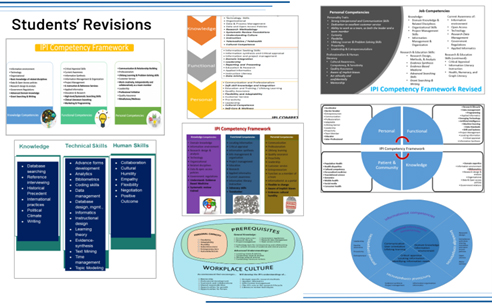
Among the eight competency frameworks, all but one (
Student framework aggregation and analysis
Authors of this paper performed cross examination, aggregated analysis, and inspections of students’ proposed frameworks for their overlapping and unique elements. Based on students’ written reports, the first three authors worked together to code interview responses and job description content (which students included as appendix material in their reports). During the coding, the research team focused on competency elements or skill types that existed both in our initial framework (e.g., “communication”) and outside the framework (e.g., comfortable with failing). The first round of coding was carried out by the first three authors individually on Google Sheets, then the team reconvened to check the accuracy of one another’s coding, to discuss discrepancies, and to reach a consensus for the second round of coding. We created separate tabs listing those skills that overlapped with the initial framework, and those unique KSAs outside the framework for both interview responses and job descriptions. The interview responses (
Competency areas mentioned in job descriptions and interviews (two mentions from job descriptions or above).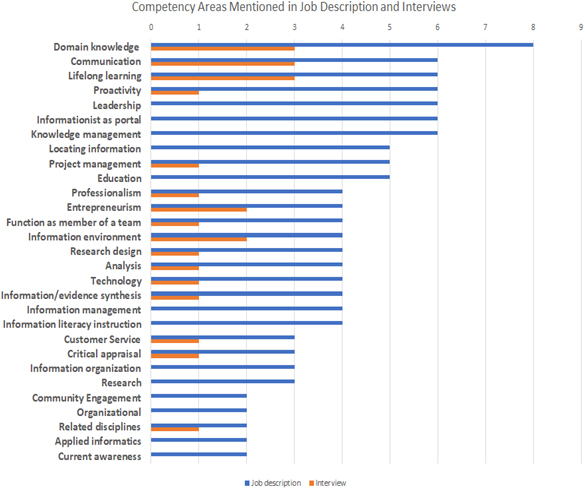
As an example, “domain knowledge” was reflected in a job description as “[the] successful candidate will gain domain knowledge in biomedical sciences,” whereas during the interview, one interviewee commented that it is crucial to “know your medical terminology … take an online medical terminology course; know the vocabulary that your teams use.” As a part of personal competency, one informationist underscored the importance of teamwork and adaptability – “Being a ‘chameleon’ – figure out how you can best fit in with that group. Get them invested in the work that you are doing, and figure out the best thing that you can do to help them.” Several interviewees indicated the value of “interpersonal skills,” but as one informationist pointed out, “I can teach a librarian any of the other necessary skills, but interpersonal skills, those are the hard ones!” Meanwhile, multiple interviewees emphasized the skill of relationship building as well as the ability to “sell yourself.” In job descriptions, relationship management is shown as “evidence of skills needed to foster new connections and build relationships to advance the goals of a team.” During the interviews, participants specified that informationists ought to be “super creative in how they contact people,” and that “you have to establish bonds and trust so that you can integrate into teams.” Moreover, one informationist stressed that “being comfortable with failing is a key part of learning and growing as an informationist.”
When discussing future trends, interviewees mentioned the increased role of informationists in assisting scholarly communication and bibliometrics, providing RDM services and best practices, being flexible, and recognizing that their work is constantly evolving. They further stated the importance of exploring future service models to support and sustain informationsts’ work in clinical and research settings. P08 indicated that libraries need to be flexible in their service models, allowing librarians to more frequently be embedded outside the libraries. P08 further suggested that libraries collaborate with multiple labs and other departments on hiring and sustaining the position of an informationist.
Informed by students’ revised frameworks, and through examining job descriptions and interview comments, we updated the IPI Competency Framework. The updated framework featured an onion-shaped visualization with five layers of competencies. The innermost layer was personal competency, while both the second (work practice; subject expertise) and third (workplace culture) layers were work-related. The fourth layer was current awareness & professional development, and the fifth outermost layer was community, society & global connection. Each layer contained multiple elements. For instance, the third layer included “change agent,” “leadership,” and “relationship building” etc., whereas the fifth layer consisted of “advocacy,” “diversity, equity, and inclusion,” and more. Figure 4 shows the framework displaying the first layer elements.
Updated IPI competency framework.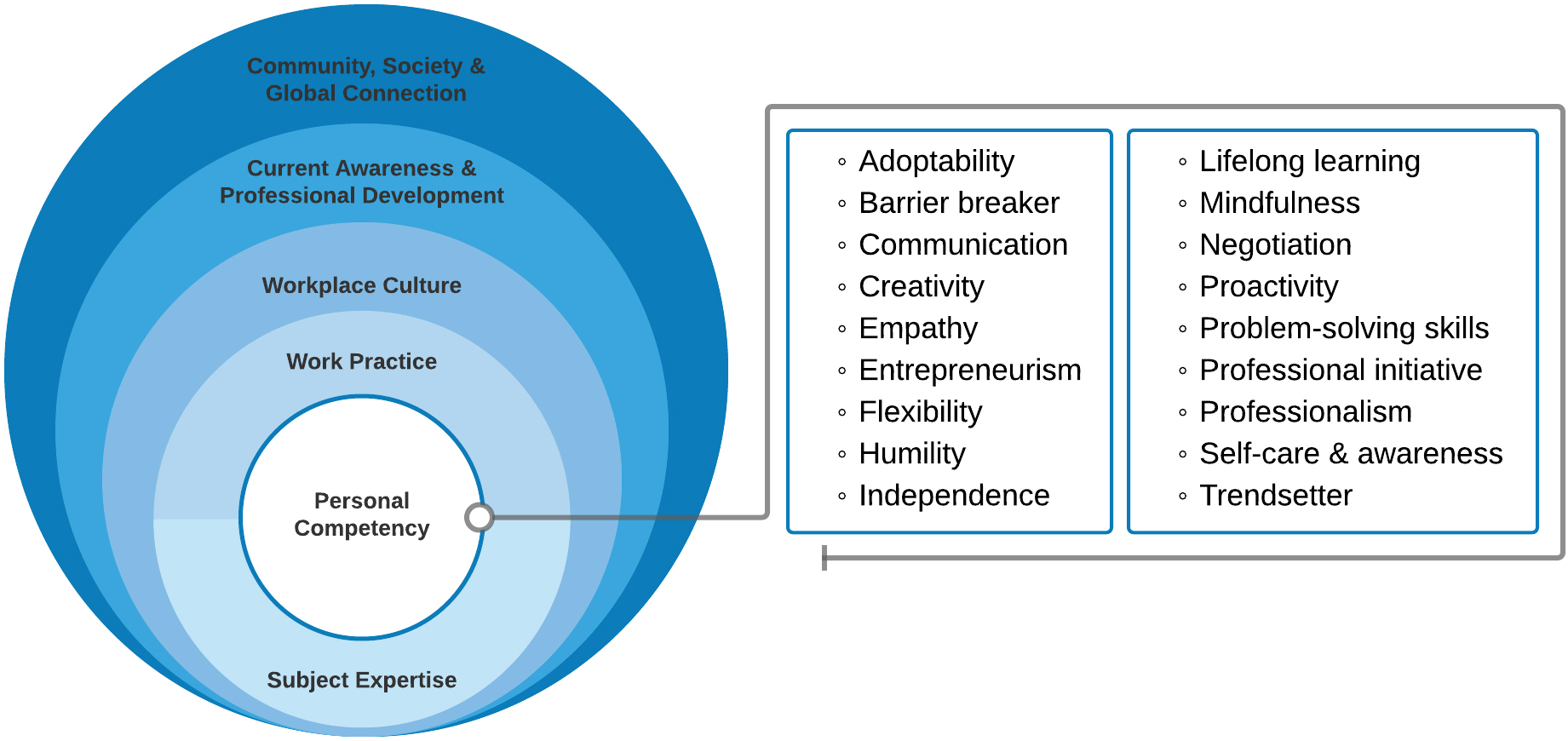
The updated framework was presented to the IPI key stakeholders (
Card sorting exercise
A hybrid card sorting exercise using the usabiliTEST web tool was run from September 15–29, 2020. Participants (
Proposed new categories and subcategories for card sorting exercise
Proposed new categories and subcategories for card sorting exercise
*Newly added item.
Based on card sorting agreement ratios, individual cards were grouped into categories. As an example, the card “Community Engagement” was placed in the “Community, Society & Global Connection” category by 58% of the participants, in the “Work Practice – Beginner” category by 25% of the participants, and in the “Work Practice – Advanced” category by 17% of the participants. We thus placed it in its most popular category, “Community, Society & Global Connection.” The area of Personal Competency (
Card sorting exercise results for the “Community, Society & Global Connection” area.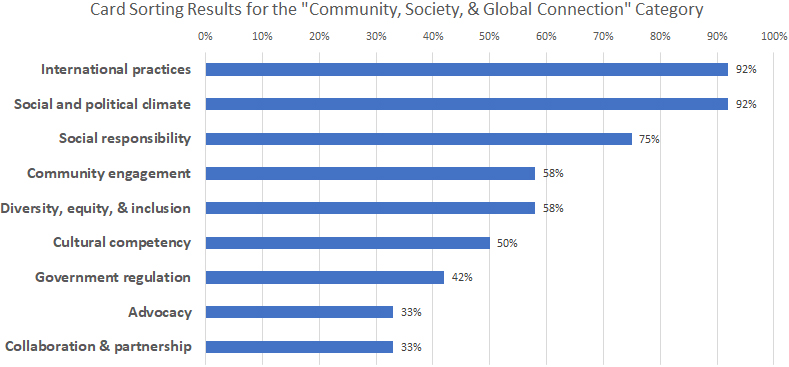
Revised IPI competency framework – showing personal competency.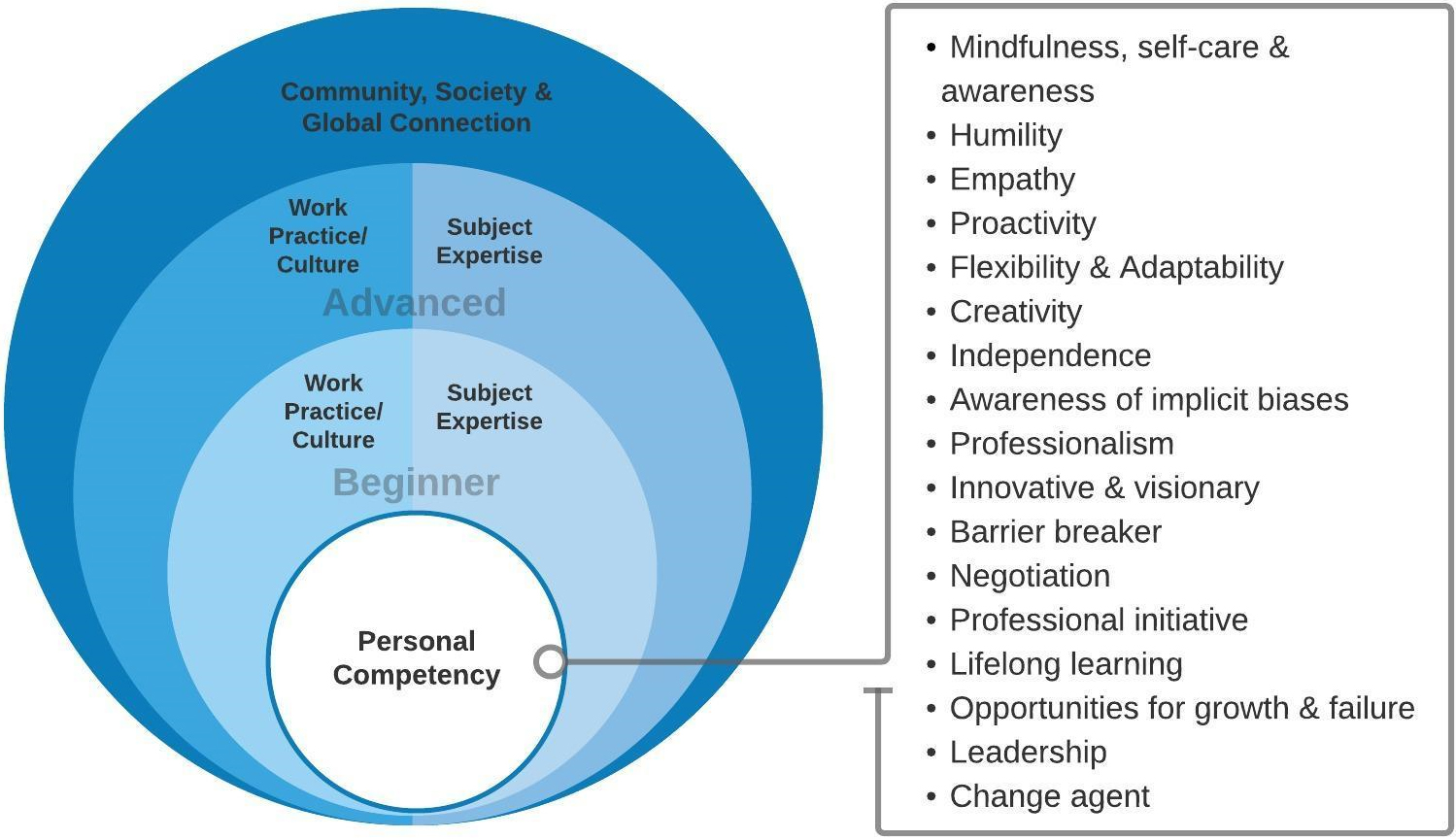
The card sorting results prompted another revision of the IPI framework (see Fig. 6). The new framework has four layers, with Personal Competency as the inner core, moving outwards to the Beginner layer and then to the Advanced layer of “Subject Expertise” and “Work Practice/Culture,” and finally expanding to the outermost layer of “Community, Society & Global Connections.”
In Spring 2021, IPI students carried out their capstone projects by embedding themselves as informationists at seven institutions. Their projects ranged from conducting systematic reviews, carrying out research projects, assisting in teaching workshops, performing bibliometrics analysis, and creating a publication dashboard to producing data search best practice documentation. For their final reports, students reflected on areas of competencies that were applied when performing their capstone tasks and stated which of the previously listed competencies they used the most. S2 indicated that “While embedded on the research team, I can say that I utilized every single one of the IPI competencies.” S5 echoed, “I used all of the skills significantly.” Specifically, students confirmed competencies in “Project Management” (
Among the competency items that students applied, 26 were listed in the revised IPI framework (Fig. 6). Table 2 displays the most frequently validated items (
Competency items validated in students’ capstone experience
Competency items validated in students’ capstone experience
In May 2021, we finalized the IPI competency framework. It contains 67 competency elements in six categories with a four-layer structure. The inner layer of “Personal Competencies” contains 17 elements, ranging from “Mindfulness & Self-Care” to “Awareness of Implicit Bias” and “Change Agent.” The second layer consists of beginner competencies in subareas of Work Practice/Culture (
Categories and items for finalized IPI competency framework
Categories and items for finalized IPI competency framework
*Newly added item.
Finalized IPI competency framework – beginner level “work practice/culture” and “subject expertise”.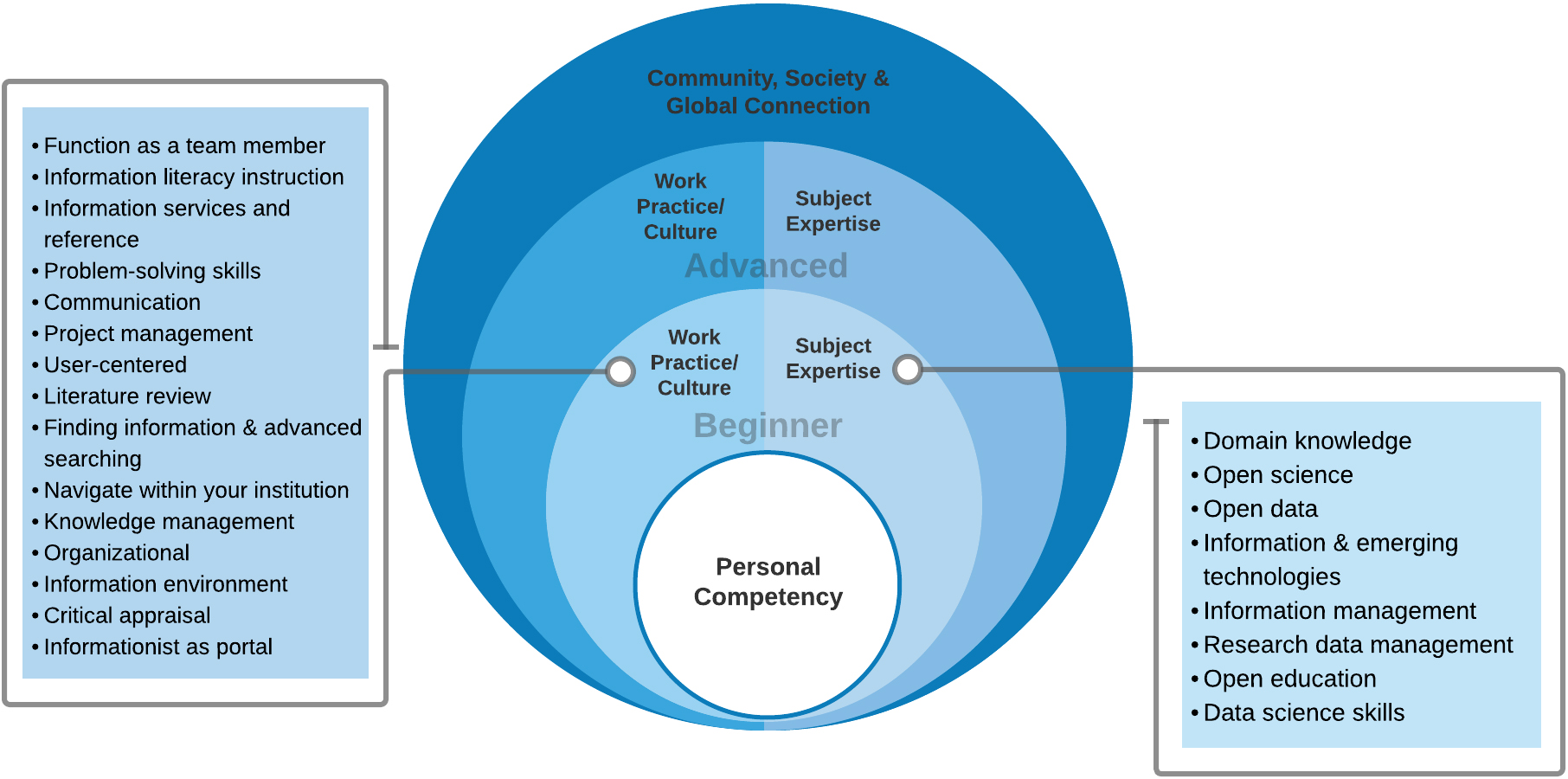
Through a multi-round process of obtaining feedback and verifying, we pursued a meaningful approach to developing, revising, and finalizing the IPI competency framework. This process involved key stakeholders, including students and working professionals from relevant sectors, including health science librarians, library directors, informationists, and LIS scholars and educators in the field. The finalized framework features four levels, six competency areas and 67 elements, with separate beginner and advanced levels for subject expertise and work practice/culture.
The layered structure enables different competency areas to extend from the personal, which is closest to the individual inner core, to externally facing layers, then to the most external area. With personal competency as the most fundamental base, through different layers, IPI professionals develop their work practice/culture and subject expertise from the beginner to advanced levels, showing growth through on-the-job learning and professional development. The outermost layer of community and global trend-related competencies are essential to IPI professionals’ long-term vision and worldview, and have broader impacts.
When matching the final framework with the initial framework (Fig. 1 versus Fig. 7), the overlap is the “Personal Competencies” area. Categories of “Subject Expertise (Beginner & Advanced),” “Work Practice/Culture (Beginner & Advanced)” and “Community, Society & Global Connection” are brand new categories with elements originating in part from the initial framework areas.
Of the 29 elements featured in the initial framework, four take on different labels in the final framework, and the remaining 25 (86.21%) are in the final framework. The final framework’s “Information Services & Reference” element is similar to the “Customer Service” element in the initial framework. In place of a general “Education” element, the final framework features “Open Education.” The initial “Current Awareness” element is now manifested as the final “Disciplinary Trends & Scholarly Advancement” element.
The final framework has 40 (60.61%) new elements, including 13 in “Personal Competencies” and 8 in “Community, Society & Global Connection.” Other categories have 3–6 new elements. Examples of new elements are “Empathy,” “Grant Searching & Writing,” “Research Data Management,” “Translational Science,” and “Cultural Competency.”
The most frequent overlapping elements among interview responses, job descriptions and the initial framework were “Domain Knowledge,” “Communication,” and “Lifelong Learning.” The interview responses yielded 37 elements, and job descriptions contained 42 elements not listed in the initial framework, ranging from “Collaboration and Partnership” and “Marketing Library Services” to “Reference Interview,” “Provide Training,” and “Evidence-based Practice.” These new elements are reflected in the final framework as “Marketing & Outreach,” “Information Services & Reference,” and “Evidence-Based Practice.” Moreover, interviewees mentioned RDM services, being flexible, engaging in bibliometrics and scholarly communication activities, and developing future service models where informationists provide relevant and disciplinary-based services. These elements, missing from the original framework, are included in the final framework through “Research Data Management,” “Flexibility & Adaptability,” “Analytics & Bibliometrics,” “Related Disciplines,” and “Domain Knowledge.”
Through a multi-year process involving multi-stage, multi-methods, and multi-points of data collection, analysis, aggregation, and synthesis, we discovered, incorporated, and validated specific IPI competency areas and elements. This procedure of engaging multiple groups to outline, test, and solidify the framework has transferable implications to developing a competency framework in any discipline. This process mirrors several previous practices such as the one from COACH (7 rounds with three versions) and MLA Data Service Competency (multi-step development). Moreover, by involving all stakeholder groups, and through concentrated research, teaching and professional effort, we carved out and sustained an effective path leading to the successful development and validation of the IPI competency framework.
Conclusion
Through a mixed method multi-phased study, we developed a competency framework for InterProfessional Informationists. This process enabled us to include a variety of voices in the framework and thus, to our knowledge, is the most comprehensive IPI competency framework to date. The framework not only includes relevant foundational knowledge, skills, and attitudes (KSAs) but also incorporates timely, cutting-edge skills and forward-looking elements. We believe that this framework may be employed to guide both the education and practice of IPI, since it has been informed, enhanced, and verified through current practice and in a teaching/learning environment.
Rooted in the context of health science and biomedical information services, further testing, verification, and subsequent adjustment of the framework to be used in STEM fields, social sciences, or humanities would be a logical next step. Note that since an overwhelming majority of the elements in the finalized IPI framework are generic without much disciplinary specialization attached, the framework may be applied to other disciplines or subject matter quite easily. Currently only the elements of “open science,” “translational science,” and “meta-science” (in the “Subject Expertise” area) signal to some extent the orientation to STEM, rather than to social science or humanities. However, these elements can be substituted with more widely applicable terms such as “open scholarship,” “cross-discipline,” or “meta-discipline” for them to be workable in a field that is non-STEM. Additionally, involving a larger sample for card sorting or performing follow-up interviews with stakeholders would enhance the accuracy of the grouping and individual competency labeling. Future research to validate the IPI competency framework may also apply the Delphi method to engage IPI experts from around the world to review and evaluate the IPI competency framework. Through multiple rounds of panel reviews, the framework can be enriched and subsequently instantiated to be useful within individual disciplines and beyond.
Footnotes
Appendix A
Appendix A Summary of the Competency Frameworks Reviewed.
Appendix B
Appendix B IPI Competency Framework Development Steps.
Appendix C
Appendix C IPI Competency Framework: Updated, Revised, and Finalized.