

Non-small cell lung cancer (NSCLC) is the most commonly diagnosed solid tumor. Natural killer (NK) cell-based immunotherapy is a promising anti-tumor strategy in various cancers including NSCLC.
OBJECTIVE:
We aimed to investigate the specific mechanisms that regulate the killing effect of NK cells to NSCLC cells.
METHODS:
Reverse transcription-quantitative PCR (RT-qPCR) assay was applied to measure the levels of hsa-microRNA (miR)-301a-3p and Runt-related transcription factor 3 (RUNX3). Enzyme-linked immunosorbent assay (ELISA) was used to measure the levels of IFN- and TNF-. Lactate dehydrogenase assay was applied to detect the killing effect of NK cells. Dualluciferase reporter assay and RNA immunoprecipitation (RIP) assay were carried out to confirm the regulatory relationship between hsa-miR-301a-3p and RUNX3.
RESULTS:
A low expression of hsa-miR-301a-3p was observed in NK cells stimulated by IL-2. The levels of IFN- and TNF- were increased in NK cells of the IL-2 group. Overexpression of hsa-miR-301a-3p reduced the levels of IFN- and TNF- as well as the killing effect of NK cells. Furthermore, RUNX3 was identified to be a target of hsamiR-301a-3p. hsa-miR-301a-3p suppressed the cytotoxicity of NK cells to NSCLC cells by inhibiting the expression of RUNX3. We found hsa-miR-301a-3p promoted tumor growth by suppressing the killing effect of NK cells against NSCLC cells in vivo.
CONCLUSIONS:
Hsa-miR-301a-3p suppressed the killing effect of NK cells on NSCLC cells by targeting RUNX3, which may provide promising strategies for NK cell-based antitumor therapies.
Lung cancer (LC) is the leading cause of cancer-related death worldwide. Among them, non-small cell lung cancer (NSCLC) is the most common type of LC. Although effective advances in therapeutic outcomes have been achieved, the prognosis for patients with NSCLC is still poor [1]. The pathogenesis of NSCLC is extremely complex, and various signaling cascades including Akt and mTOR are also involved in regulating the progression of NSCLC [2]. Targeted therapy is widely used in LC with the advent of directed therapy toward certain driver genetic alterations [3]. Recently, clinical trials have also demonstrated the effectiveness of immunotherapy in NSCLC, and this evidence supports the critical role of enhancing host immunity in fighting NSCLC [4]. For example, the KEYNOTE-024 trial compared the 5-year outcome of pembrolizumab with chemotherapy as first-line treatment in advanced NSCLC patients with 50% PD-L1 expression, demonstrated 5-year overall survival (OS) of 32% with pembrolizumab [5]. Randomized trials comparing nivolumab and docetaxel in second-line treatment of advanced NSCLC also found long-term meaningful survival benefits for patients using immune checkpoint inhibitor (ICI) [6]. While ICIs can enhance antitumor effects, it also presents many challenges. First of all, most NSCLC patients do not benefit from immunotherapy for a long time [7]. Second, more immune checkpoints and immunotherapeutic targets need to be discovered. Consequently, it is of great value to study the regulatory effect of immune cells on cancer cells and its molecular mechanism for identifying new immunotherapy methods.
As a type of innate immune cell, natural killer (NK) cells can swiftly kill multiple adjacent cells if these show surface markers associated with oncogenic transformation [8]. This property, which is unique among immune cells, and their capacity to enhance antibody and T cell responses support a role for NK cells as anticancer agents [9]. NK cells play critical roles in antitumor immunity in cancers, including pancreatic carcinoma and breast cancer [10, 11]. In the last years, NK cell-based immunotherapy has emerged as a promising therapeutic approach for solid tumors and hematological malignancies [9, 12]. NK cell-based immunotherapies mainly include combined cytokine, complement-dependent cytotoxicity (CDC) and antibody-dependent cell-mediated cytotoxicity (ADCC), NK-92, killer cell immunoglobulin-like receptor (KIR) mismatch and chimeric antigen receptor (CAR) approaches [13]. Among them, the concept of treating cancer with cytokine stimulated NK cells is long-established. NK cell activation involves a variety of signals such as interleukin-2 (IL-2). IL-2 activates NK cells to induce the secretion of cytokines and chemokines [14]. IL-2 stimulates the proliferative and cytotoxic activity of NK cells in pre-clinical models, NK cell-based therapies have been revealed to prevent the development of lung metastases [15]. Some researchers also found that patients who received an infusion of NK-92 cells could produce some encouraging responses including patients with advanced LC [16]. However, the therapeutic efficacy of NK cells is clinically limited due to the poor infiltration in NSCLC and the biological mechanism of NK cells in NSCLC remains controversial. Therefore, understanding of these mechanisms can contribute to approaches that enhance NK cell-mediated tumor cell clearance.
As small non-coding RNAs, microRNAs (miRNAs) act as oncogenes or tumor suppressors [17]. They are essential regulators of various cellular processes by targeting messenger RNA (mRNA) resulting in mRNA degradation and protein translation inhibition [18]. Aberrant expression of miRNA is associated with the progression of various cancers. For example, hsa-miR-301a-3p plays an oncogenic role in triple-negative breast cancer by regulating MEOX2 expression [19]. Further, the upregulation of hsa-miR-301a-3p can facilitate the growth and metastasis of colorectal cancer cells [20]. More importantly, hsa-miR-301a-3p can promote growth and aerobic glycolysis of NSCLC cells [21, 22]. Therefore, elucidating the mechanism of hsa-miR-301a-3p in NSCLC is urgently needed.
Runt-related transcription factor 3 (RUNX3), a DNA-binding transcription factor, is involved in many diseases and cell physiological processes [23]. Su et al. observed that RUNX3 was reduced in NSCLC tissues and cells [24]. Moreover, Fang et al. reported that RUNX3 could regulate the killing ability of NK cells [25]. Combining this evidence, we speculate that RUNX3 may affect the cytotoxicity of NK cells in NSCLC. Using bioinformatics, we found the targeted binding sites between hsa-miR-301a-3p and RUNX3. Therefore, hsa-miR-301a-3p may influence the cytotoxicity of NK cells in NSCLC cells by RUNX3.
This study found that hsa-miR-301a-3p was downregulated in activated NK cells and could inhibit the cytotoxicity of NK cells by RUNX3 in NSCLC. The findings provide promising targets for antitumor therapies based on NK cells.
Materials and methods
Cell treatment
NSCLC (A549 and H1299), 293T and NK (NK-92; ATCC Number: CRL-2407, Lot Number: 70047954) cell lines were obtained from the Shanghai Cell Bank of the Chinese Academy of Sciences and American Type Culture Collection (ATCC, Manassas, VA, USA), respectively. The NK-92 cell line was authenticated at 100% with an ATCC profile using the short tandem repeat DNA profile method. NSCLC cells were cultured in high-glucose DMEM and RPMI-1640 medium (Gibco, NY, USA) with 10% fetal bovine serum (FBS; Thermo Fisher Scientific, Waltham, MA, USA) and 1% penicillin-streptomycin at 37C [26]. NK-92 cells were maintained according to previously described [25]. NK-92 cells were incubated in -minimum essential medium (MEM; Gibco) with 12.5% horse serum (Gibco), 12.5% FBS (Gibco), 2 mM l-glutamine (Sinopharm Chemical Reagent, Shanghai, China) and 1.5 g/l sodium bicarbonate (Sinopharm Chemical Reagent) at 37C. IL-2 (20 ng/ml; Gibco) was used for 24 h for activating NK-92 cells.
Cell transfection
pcDNA-RUNX3 was synthesized in GenePharma (Shanghai, China) by inserting the full-length sequences of RUNX3 into pcDNA.3.1 vector. Hsa-miR-301a-3p mimic and NC mimic were purchased from GenePharma. In vitro experiment, cell transfection was conducted with Lipofectamine 2000 (Invitrogen, Thermo Fisher Scientific, Waltham, MA, USA) in term of manufacturer’s procedures [27]. About 48 h post-transfection, cells were collected for the following studies. In vivo experiment, lentiviral expression vector was constructed by ViraPower II Lentiviral Gateway Expression System (Invitrogen) [28]. Briefly, lentiviral expression vectors were produced from 293T cells by co-transfecting target plasmids with lentiviral-packaging plasmids ViraPower Packaging Mix4 using Lipofectamine 2000 (Invitrogen). For cell infection, cells were incubated with lentiviral expression vectors overnight at 37C. The stable cell lines were used for subsequent experiments 72 h later at least. The sequences were: hsa-miR301a-3p mimic (5GCUCUGACUUUAUUGCACUACU-3), NC mimic (5-UCACAACCUCCUAGAAAGAGUA GA-3).
RT-qPCR assay
The total RNA of the tissues and cells was extracted using TRIzol (cat. no. 15596026; Thermo Fisher Scientific) according to the manufacturer’s instructions [29]. In brief added 1 ml of TRIzol reagent per 100 mg of tissue to the sample. Added 1 ml of TRIzol reagent per 1 10 cells directly to the culture dish to lyse the cells. Added 0.5 ml of isopropanol to the aqueous phase, per 1 ml of TRIzol reagent used for lysis. Incubated for 10 minutes at 4C. Centrifuged for 10 minutes at 12,000 g at 4C. Total RNA precipitated forms a white gel-like pellet at the bottom of the tube. Discarded the supernatant with a micropipettor. Resuspended the pellet in 75% ethanol. Vortexed the sample briefly, then centrifuged for 5 minutes at 7500 g at 4C. Discarded the supernatant with a micropipettor. Vacuumed or air dry the RNA pellet for 5–10 minutes. Resuspended the pellet in 20–50 l of RNase-free water. The purity of RNA was determined by UV A260/A280 spectrophotometry (Nanodrop ND2000; Thermo Fisher Scientific). miRNA first strand cDNA synthesis kit (cat. no. B532453-0010; Sangon Biotech, Shanghai, China) and PrimeScript™ RT reagent Kit (cat. no. RR037Q; TaKaRa, Shiga, Japan) were used for reverse transcription according to the manufacturer’s instruction [30, 31]. cDNA was then obtained by reverse transcription from 0.5 g RNA and stored at 20C. The relative expression of miRNA and mRNA was detected with real-time PCR with the TB green kit (cat. no. RR420Q; TaKaRa) and was calculated with the 2 method [32]. The reaction system consisted of 10 l Green Premix, 0.4 l forward primer and reverse primer, 0.4 l ROX reference Dye, 2l cDNA and 6.8 l double distilled water. The reaction protocol was as follows: Initial denaturation at 95C for 5 minutes, and 40 cycles at 95C for 1 minute and 60C for 30 s. U6 and -actin were used as housekeeping genes. The primer sequences were: hsa-miR301a-3p sense, 5-GCGAGCAGTGCAATAGTATTGT-3, hsa-miR-301a-3p antisense, 5-AACTGGTGTCGTGGAGTCGGC-3 [33]; U6 sense, 5-CTCGCTTCGGCAGCACA-3, U6 antisense, 5-AACGCTTCACGAATTTGCGT-3 [19]; -actin sense, 5-GACCTGACTGACTACCTC ATGAAGAT-3, -actin antisense, 5-GTCACACTT CATGATGGAGTTGAAGG-3 [19]; RUNX3 sense, 5-CATGGCATCGAACAGCATCTTC-3, RUNX3 antisense, 5-GGAGGTGTGAAGCGGCGGCTGG-3. Relative expression levels were quantified using the 2 method.
Western blot
Total proteins were extracted from tissues and cells using RIPA lysis buffer (Beyotime Institute of Biotechnology) containing protease inhibitor [34]. In brief added 1 ml of cold RIPA lysis buffer per 1 10 cells. Added 1 ml of cold RIPA lysis buffer per 100 mg of tissue to the sample. Pipetted the mixture up and down to suspend the pellet. Shaked mixture gently for 15 minutes on ice. Centrifuged mixture at 14,000 g for 15 minutes to pellet the cell debris. Transferred supernatant to a new tube. The concentration of total proteins was determined using a Bicinchoninic Acid Assay (BCA) kit (cat. No. C503021-0500; Sangon Biotech) [35, 36]. The protein (20 g) was isolated with 10% SDS-PAGE and transferred to a poly (vinylidene fluoride) (PVDF) membrane (Millipore, Bedford, MA, USA). The PVDF membrane was then sealed with 5% skimmed milk at room temperature for 60 minutes. Then, primary antibodies were as follows: RUNX3 (cat. No. 13089; 1:1000; Cell Signaling Technology, Danvers, MA, USA) and -actin (cat. No. ab5694; 1:1000; Abcam, Cambridge, UK) was incubated on the membrane, followed by an HRP-conjugated secondary antibody (cat. No. ab6789; 1:5000; Abcam). The results were measured with an enhanced chemiluminescence reagent (cat. No. 1705060; Bio-Rad, Hercules, USA). The intensities of protein bands were analyzed with the Image J software. The relative expression of the target protein was expressed as the ratio of -actin. -actin was used as a control for normalization in western blotting.
Enzymelinked immunosorbent assay (ELISA)
After centrifugation, the supernatants of the NK-92 cells were obtained for IFN- and TNF- levels using an ELISA kit (cat. No. of IFN- KHC4021; cat. No. of TNF- BMS223-4; Invitrogen) [37]. A microplate reader (Bio-Rad) was used for the results at 450 nm.
Cytotoxicity assay
For co-cultured experiments of NK cells and cancer cells, some methods in other reports were referred to by us. Wei et al transfected NK cells were co-incubated with MGC-803 at effector cell/target cell (E:T) ratios of 5:1 for 6 h [38]. The report of Fang and his partners demonstrated that IL-2 activated NK92 cells with different transfection were co-cultured with cancer cells for 4 h at 37C [25]. Yang et al. reported that cancer cells were plated On the next day NK cells were added. After 4 h of co-culture, an aliquot of 50 l media was used in lactate dehydrogenase (LDH) cytotoxic assay using the LDH cytotoxic assay kit [4]. According to the above report, NK-92 cells were co-cultured with NSCLC cells (cell ratio: 5:1) for 4 h in the present study. Then, the supernatants were obtained for cytotoxicity of NK-92 using an LDH cytotoxicity assay kit (cat. No. C20300; Invitrogen) [39]. The plate was incubated at dark for 30 minutes at room temperature before adding 50 l of Stop Solution to each well. Absorbance at 490 nm was recorded within 1 h. Percent cytotoxicity 100 Experimental LDH Release (OD490)/Maximum LDH Release (OD490).
Dualluciferase reporter assay
The target reaction between hsa-miR-301a-3p and RUNX3 was predicted using TargetScan (http://www. targetscan.org/vert_72/). The luciferase reporter vector pGL3 was inserted with 3-untranslated regions (UTR) of RUNX3 mRNA with the hsa-miR-301a-3p binding site. The synthesized transcript sequence of RUNX3 3-UTR containing the predicted hsa-miR-301a-3p binding site was: 5-AGAGGATGGAGCTGGGTGGAAACTG CTTTGCACTATCGTTTGCTTGGTGTTTGTTTTT-3. The gene ID in National Center for Biotechnology information (NCBI) was 864. The ensembl gene ID was ENST00000308873.11. The localization of the synthesized transcript sequence of RUNX3 was from 4103 to 4160 in NCBI reference sequence (NM_004350.3). The predicted binding region was mutated for constructing the pGL3-RUNX3-UTR-Mut vector (RUNX3-MUT). Wild and mutanttype luciferase vectors (RUNX3-WT and RUNX3-MUT) were constructed and co-transfected with hsa-miR-301a-3p mimic or NC-mimic into NK92 cells. The reporter construction or hsa-miR-301a-3p mimic transfection was treated with Lipofectamine 2000 (Invitrogen). The results were obtained using a Dual-Luciferase Reporter Assay System (Promega Corp., Madison, WI, USA) [37].
RNA immunoprecipitation (RIP)
The lysate of the transfected NK-92 cells was cultured with protein A/G magnetic beads and Argonaute2 antibody (Ago2; Abcam). IgG (Abcam) was used as a control. Then, RNA in the immunoprecipitated complex was purified with RNase-free Dnase I (Thermo Fisher Scientific) and proteinase K (Solarbio, Beijing, China). The mRNA levels of RUNX3 in different group cells were measured with RT-qPCR. The expression of RUNX3 in Ago and IgG group was compared with the input group.
Xenograft model of NSCLC
The experiment was approved by the Institutional Animal Care and Use Committee of Zhongshan City People’s Hospital (Approval No. ZSCPH-IACUC-2022-B0801). For the model construction, A549 cells (6 10 cells) were introduced subcutaneously into 1 SPF BALB/c nude mice (male, 6-week-old, Laboratory Animal Resources, Chinese Academy of Sciences, China). The average weight of the mice was 20 g. All nude mice were kept at 20–26C and 50%–80% humidity for in a 12 h day/night cycle room with free access to food and water The same sites were injected with NK-92 cells (3 10 cells) treated with IL-2 lentivirus-mediated hsa-miR-301a-3p mimic (lenti hsa-miR-301a-3p mimic) or lentivirus negative control (lenti NC mimic). Tumor volume was calculated every three days using slide calipers (0.5 length width width). During the 18-day, the humane endpoint of mice was defined as the following symptoms: hunched posture, pale extremities, inactivity and dyspnea. The maximum tumor volume in the study was 2000 mm and the maximum tumor diameter in the study was 2 cm. After 18 days, the mice were euthanized for tumor collection, taking pictures and weighting of tumor specimens. At the end of experiment, the mice were euthanized with CO rodent euthanasia chamber. Hsa-miR-301a-3p and RUNX3 levels were also measured.
Statistical analysis
All experiments, except for in vivo procedures, were performed in triplicate. Data were processed using the GraphPad Prism software (version 8.0) and presented as mean standard deviation (SD). Student’s t test or Tukey’s multiple comparisons test was used for comparisons between two groups, and one-way ANOVA was used for multiple group comparisons followed by a post hoc Tukey’s test [40]. 0.05 were considered statistically significant.
Results
Hsa-miR-301a-3p signal was decreased in NK-92 cells activated by IL-2
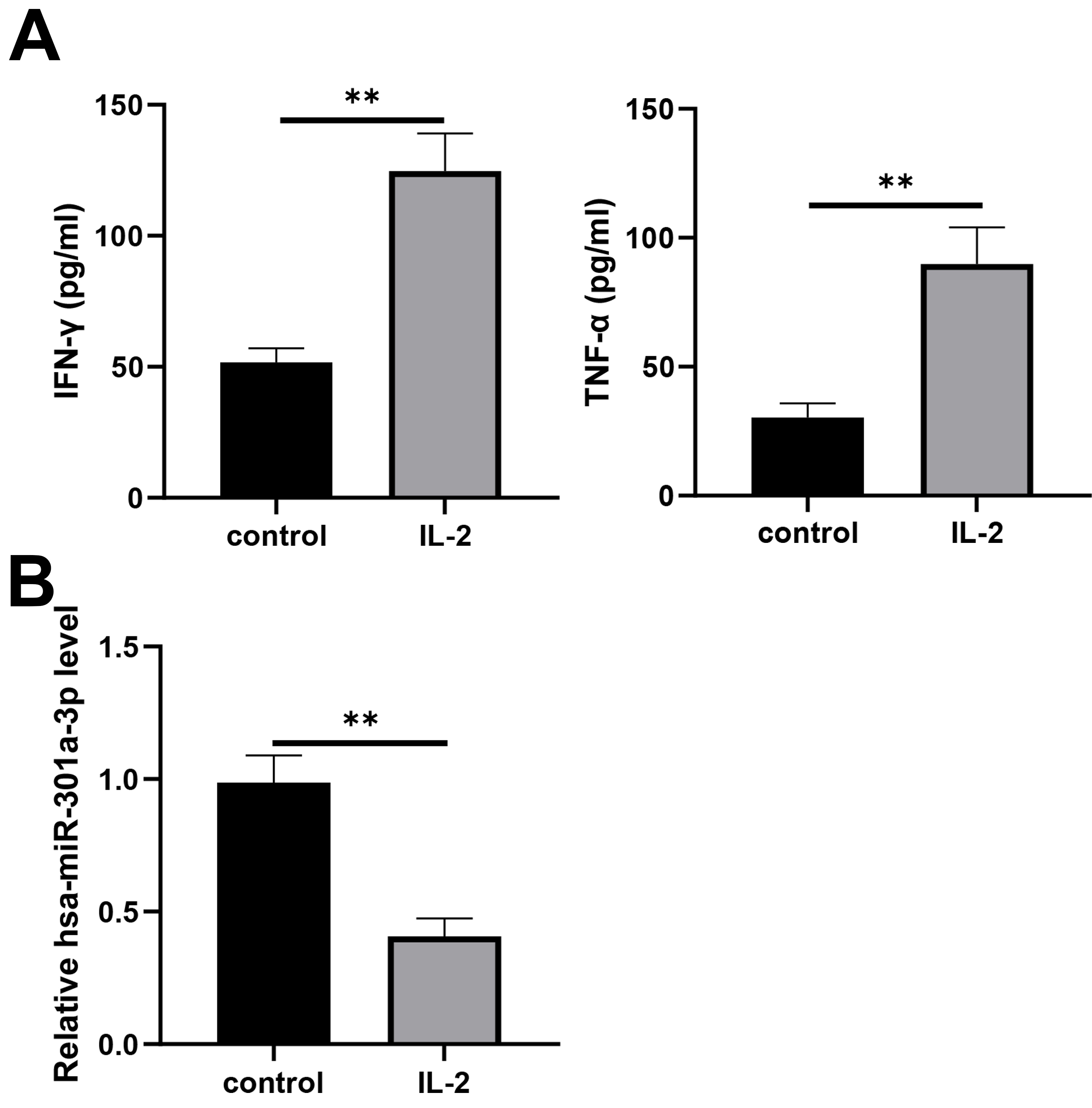
To study the effect of hsa-miR-301a-3p in NK-92 cells on NSCLC cells, we activated NK-92 cells with IL-2. Significantly elevated levels of IFN- and TNF- were revealed in the IL-2 group (Fig. 1A). As displayed in Fig. 1B, hsa-miR-301a-3p was downregulated in NK-92 cells activated by IL-2 compared to the control (Fig. 1B). These findings indicated that hsa-miR-301a-3p was involved in NK-92 cell function.
Decreased hsa-miR-301a-3p expression in NK-92 cells activated by IL-2. NK-92 cells were treated with IL-2 (20 ng/ml) for 24 h. (A) The secretions of IFN- and TNF- were determined with an enzyme-linked immunosorbent assay (ELISA). (B) hsa-miR-301a-3p expression was investigated with RT-qPCR. 0.01.
Hsa-miR-301a-3p inhibited the cytotoxicity of NK-92 cells against NSCLC cells
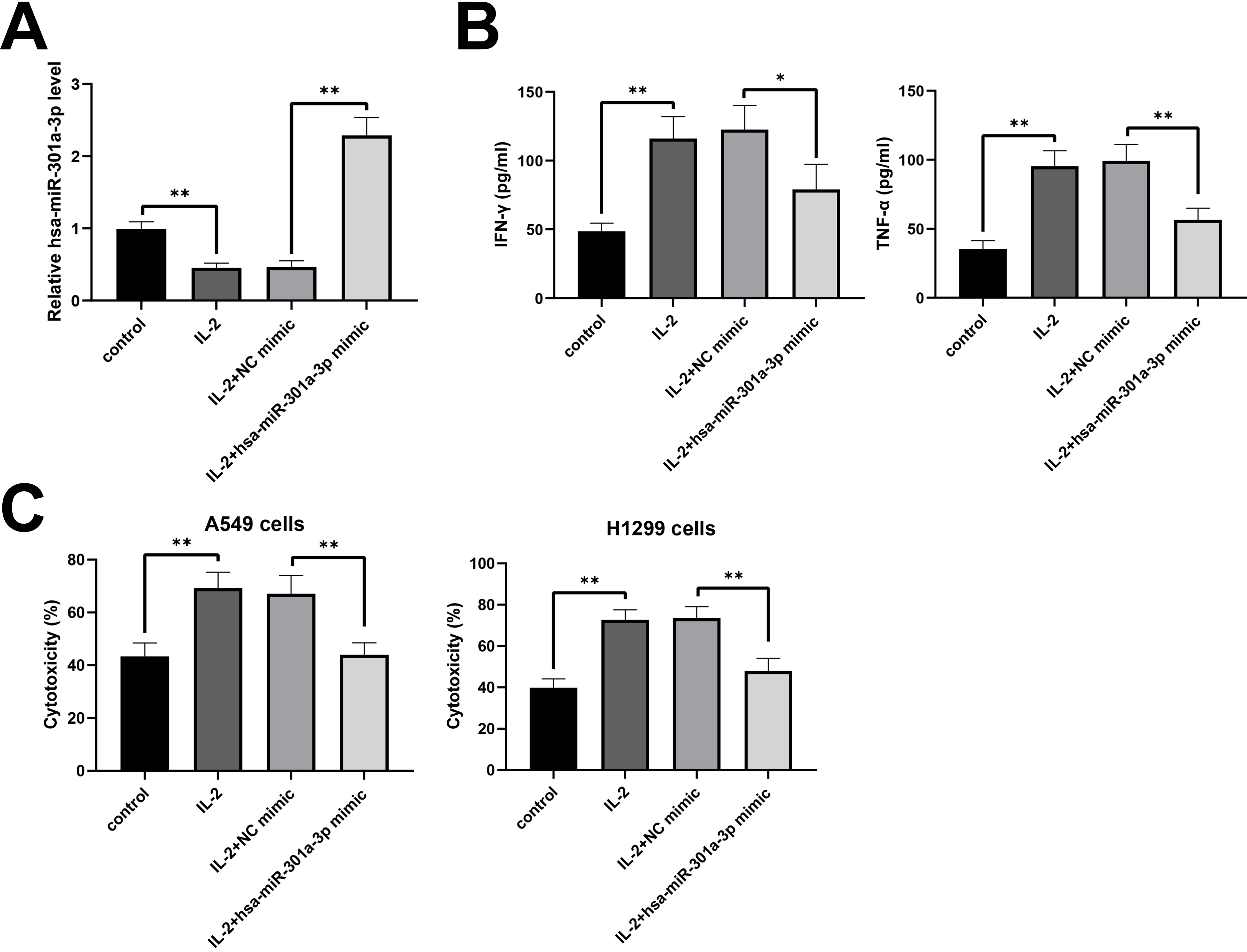
Due to the downregulation of hsa-miR-301a-3p on NK-92 cells activated by IL-2, we speculated that hsa-miR-301a-3p played a role in the cytotoxicity of NK-92 cells against NSCLC cells. After the activation with IL-2, NK-92 cells were treated with hsa-miR-301a-3p mimic for the increase in hsa-miR-301a-3p expression (Fig. 2A) and a decrease in IFN- and TNF- secretion (Fig. 2B). After co-cultured with NSCLC cells, the killing effect of NK-92 cells on NSCLC cells was attenuated by hsa-miR-301a-3p (Fig. 2C). Altogether, these results depicted that hsa-miR-301a-3p inhibited the cytotoxicity of NK-92 cells.
Hsa-miR-301a-3p inhibited the cytotoxicity of NK-92 cells against NSCLC cells. NK-92 cells were treated with IL-2 (20 ng/ml), followed by transfection of a hsa-miR-301a-3p mimic. (A) Hsa-miR-301a-3p expression was investigated with RT-qPCR. (B) The secretions of IFN- and TNF- were determined with ELISA. (C) The killing effect of NK-92 cells on A549 cells or H1299 cells was analyzed using a lactate dehydrogenase (LDH) cytotoxicity assay kit. 0.05, 0.01.
RUNX3 was a direct target gene of hsa-miR-301a-3p
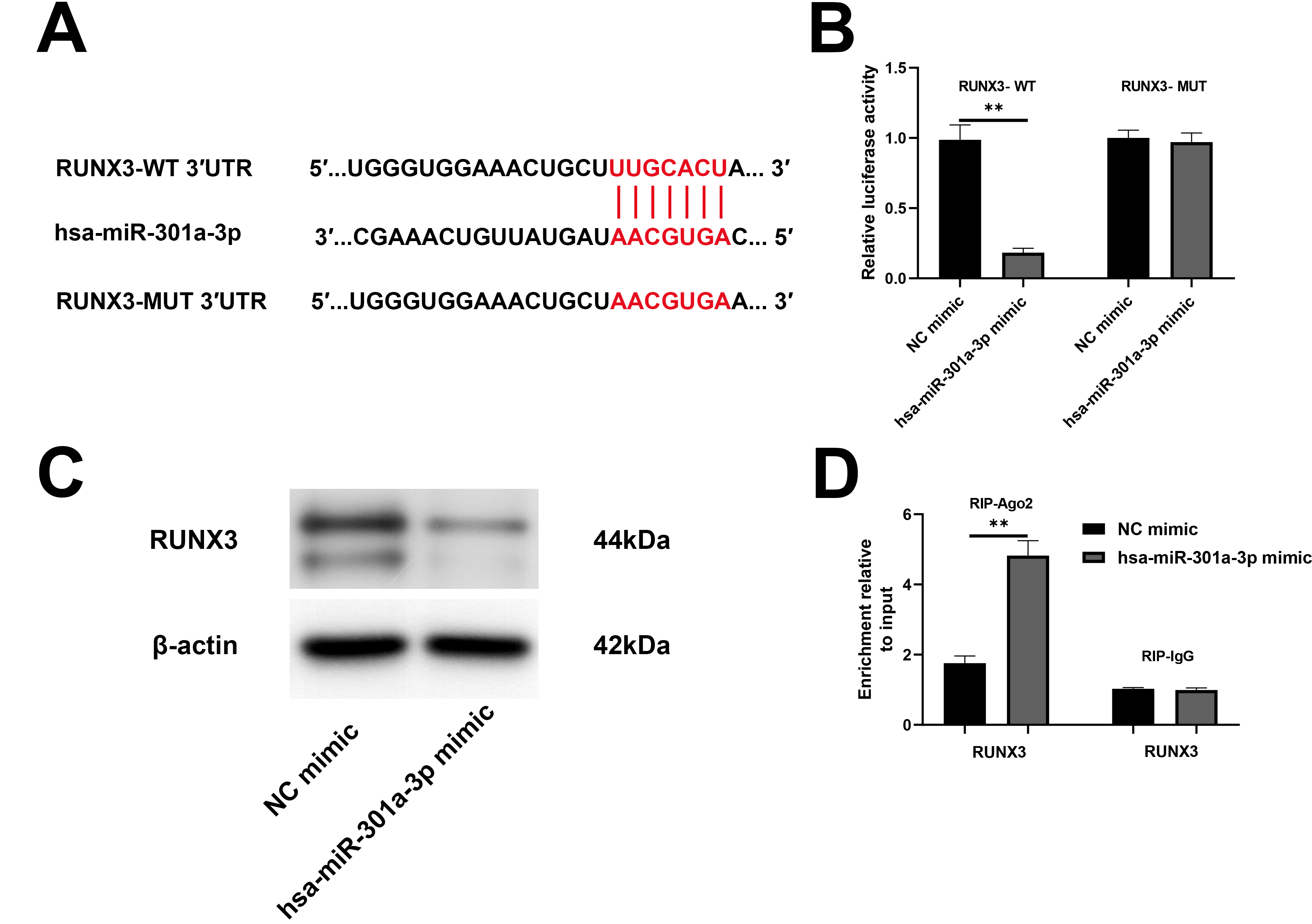
To further explore the specific molecular mechanism, the miRNA target prediction of hsa-miR-301a-3p was evaluated using TargetScan. There were highly conserved combination sites between the 3UTR of hsa-miR-301a-3p and RUNX3 (Fig. 3A). The interaction between hsa-miR-301a-3p and RUNX3 was further proved. The luciferase activity in hsa-miR-301a-3p mimic and the RUNX3-WT-3-UTR group was significantly lower than that of RUNX3-MUT-3-UTR (Fig. 3B). Furthermore, the RUNX3 expression in the hsa-miR-301a-3p mimic group was downregulated in NK-92 cells (Fig. 3C), which suggested that hsa-miR-301a-3p negatively regulated the expression of RUNX3. The RIP assay results further illustrated the above findings (Fig. 3D) indicating that RUNX3 was targeted by hsa-miR-301a-3p.
RUNX3 as a direct target gene of hsa-miR-301a-3p. (A) TargetScan was used to predict the binding between hsa-miR-301a-3p and RUNX3. (B) The verification of the interaction between hsa-miR-301a-3p and RUNX3 by dual-luciferase reporter assay. (C) RUNX3 protein expression in NK cells transfected with hsa-miR-301a-3p mimic and relevant control was detected by western blot. (D) The enrichment of RUNX3 in NK-92 cells with the hsa-miR-301a-3p mimic was detected with the RNA immunoprecipitation (RIP) assay. 0.01.
Hsa-miR-301a-3p inhibited the cytotoxicity of NK-92 cells through RUNX3
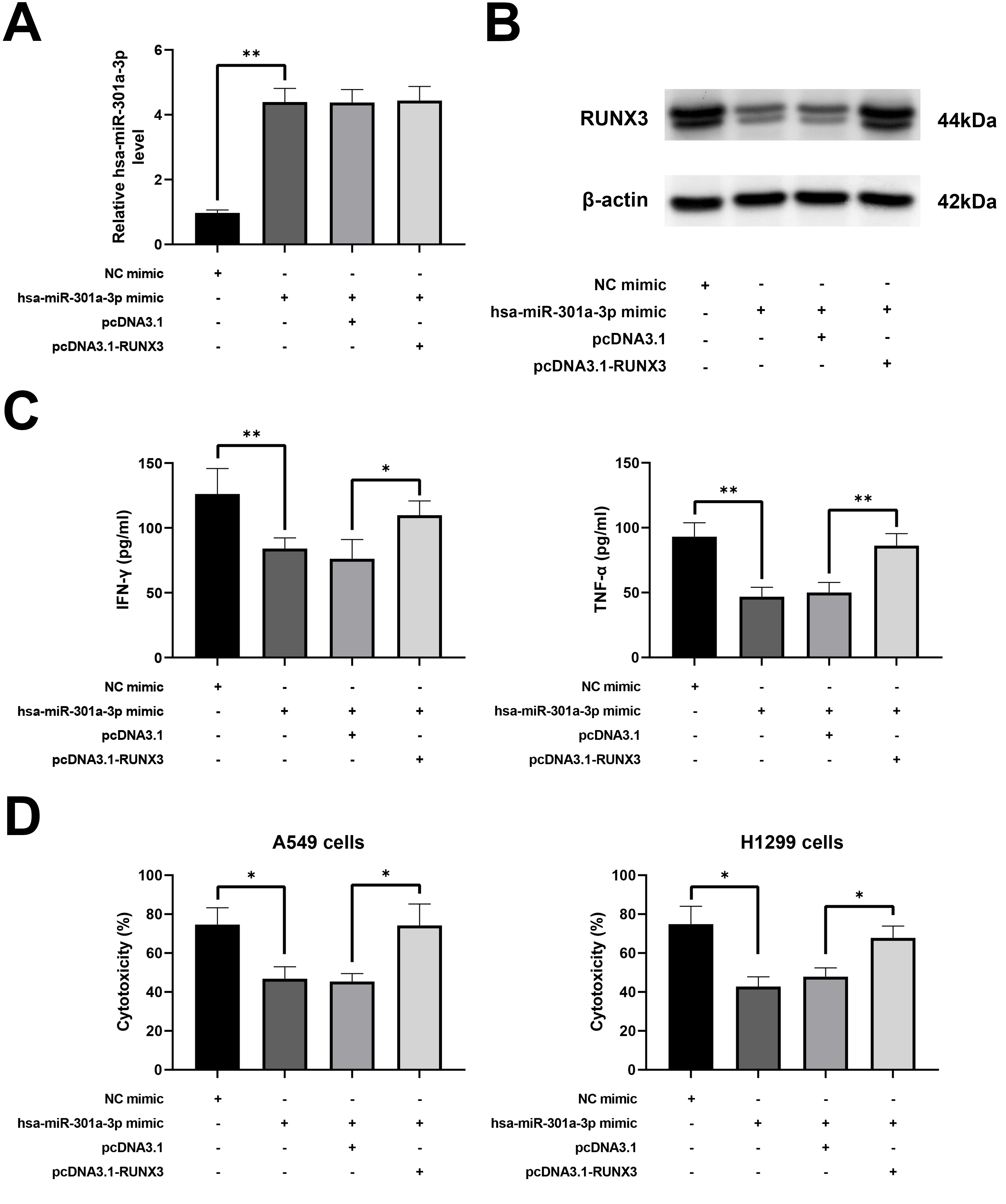
To demonstrate whether hsa-miR-301a-3p suppressed the cytotoxicity of NK-92 cells by RUNX3, activated NK-92 cells were treated with hsa-miR-301a-3p mimic and/or pcDNA3.1-RUNX3. As illustrated in Fig. 4A, hsa-miR-301a-3p was upregulated in the hsa-miR-301a-3p mimic group and not affected by pcDNA3.1-RUNX3. RUNX3 was downregulated in the hsa-miR-301a-3p mimic group, and pcDNA3.1-RUNX3 reversed the inhibitory of the hsa-miR-301a-3p mimic (Fig. 4B). IFN- and TNF- secretion in the supernatant was decreased in the hsa-miR-301a-3p mimic group. Overexpression of RUNX3 could inhibit the influence of hsa-miR-301a-3p on IFN- and TNF-expression (Fig. 4C). Next, the cytotoxicity assay results demonstrated that RUNX3 overturned the cytotoxicity of the NK cells on NSCLC cells (Fig. 4D).
Hsa-miR-301a-3p inhibited the cytotoxicity of NK-92 cells through RUNX3. NK-92 cells were treated with IL-2 (20 ng/ml) and hsa-miR-301a-3p mimic and/or pcDNA3.1-RUNX3. (A) Hsa-miR-301a-3p expression was investigated using RT-qPCR. (B) RUNX3 expression was detected by western blotting. (C) The secretions of IFN- and TNF- were determined with ELISA. (D) The killing effect of NK-92 cells on A549 cells or H1299 cells was analyzed with a LDH cytotoxicity assay kit. 0.05, 0.01.
Hsa-miR-301a-3p inhibited NK-92 cell-mediated killing of NSCLC cells in vivo
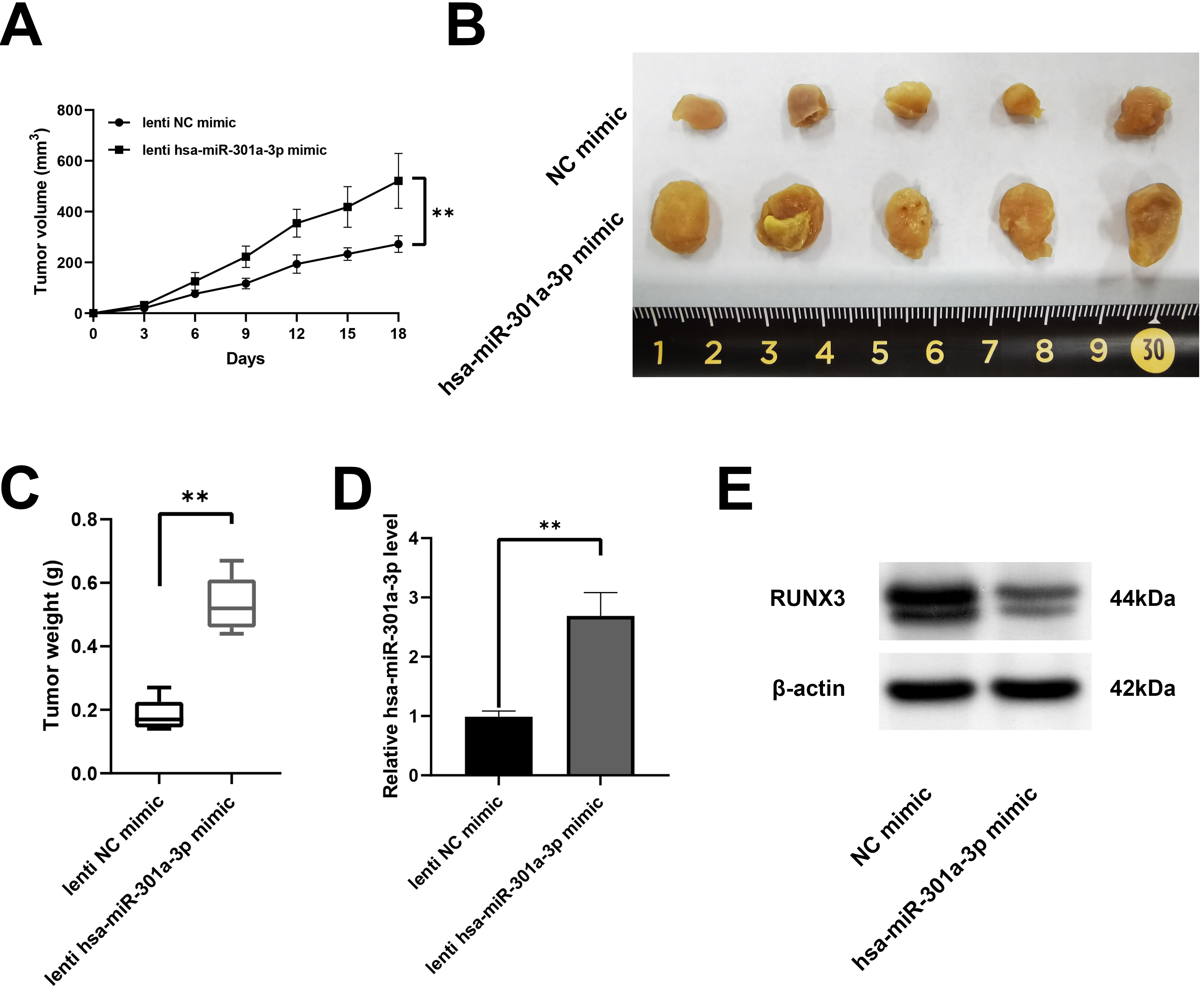
The effect of hsa-miR-301a-3p was verified in vivo Activated NK-92 cells treated with hsa-miR-301a-3p were introduced into the BALB/c nude with A549 cell subcutaneous xenograft tumors. Treatment with the lenti hsa-miR-301a-3p mimic increased the tumor volume (Fig. 5A). The tumors in mice treated with the lenti hsa-miR-301a-3p mimic were larger and heavier than those treated with the NC mimic (Fig. 5B and C). Moreover, hsa-miR-301a-3p expression was increased and RUNX3 expression was decreased in lenti hsa-miR-301a-3p mimic group (Fig. 5D and E). Collectively, these results provided evidence that hsa-miR-301a-3p promoted tumor growth by suppressing the killing effect of NK cells against NSCLC cells.
Hsa-miR-301a-3p inhibited NK-92 cell-mediated killing of NSCLC cells in vivo. (A-C) Tumor volume was examined every 3 days with slide calipers (0.5 length width width). After sacrifice, tumors were excised, photographed, and weighed. (D) Hsa-miR-301a-3p expression was investigated with RT-qPCR. (E) RUNX3 expression was detected by western blotting. 0.01.
Discussion
In our study, hsa-miR-301a-3p was remarkably decreased, and IFN- and TNF- were observably elevated in IL-2 activated NK cells. Overexpression of hsa-miR-301a-3p inhibited IFN- and TNF- levels and the cytotoxicity of NK cells. RUNX3 was also confirmed to be targeted by hsa-miR-301a-3p. In addition, hsa-miR-301a-3p/RUNX3 inhibited the cytotoxicity of NK cells against NSCLC cells. Finally, overexpression of hsa-miR-301a-3p promoted tumor growth by suppressing the killing effect of NK cells against NSCLC cells.
As one of the vital immune cells, NK cells are crucial for eliminating tumor cells [41]. Although its cytolytic potential for NSCLC is limited, enhancing the function of NK cells may enhance its tumor regression effect [42]. Moreover, increased NK cell infiltration suppressed the development of NSCLC [43]. Activated NK cells induced cytolysis of tumor cells by regulating the levels of proinflammatory cytokines [44]. Therefore, the activated NK cells observed in this study could inhibit the development of NSCLC.
RUNX3 is a member of the RUNX family, which plays a significant role in cell growth and differentiation [45]. Abnormal expression of RUNX3 has been found in malignant tumors, and it played an inhibitory part in the carcinogenesis of different cancer types through various signaling pathways [46]. RUNX3 is associated with the progression of NSCLC [24, 47, 48]. In addition, RUNX3 expression was found in NK cells, while long non-coding RNA (LncRNA) GAS5/ hsa-miR-544/RUNX3 enhanced the elimination of NK cells in liver cancer [25]. This study confirmed that RUNX3 could enhance the cytotoxicity of activated NK cells on NSCLC cells.
As a member of the hsa-miR-301 family, hsa-miR-301a-3p is related to various tumors [49, 50, 51]. The expression of hsa-miR-301a-3p was abnormally high in NSCLC tissues [21, 22]. In addition, some researchers have found that RUNX3 was targeted by hsa-miR-301a-3p in some types of cancers [20]RUNX3 was verified to be a direct target gene of hsa-miR-301a-3p in colorectal cancer cell [20]. In prostate cancer, some researchers revealed that RUNX3 was a target of hsa-miR-301a-3p, which was confirmed by dual-luciferase reporter assay [52]. Combined with the above reports and the results of our study, we assumed that hsa-miR-301a-3p regulated RUNX3 to suppress the cytotoxicity of NK cells on NSCLC and promoted the development of NSCLC. At the same time, Li and his partners found that down-regulated expression of hsa-miR-301a enhanced infiltration of CD8 T cells and IFN- production in LC tissues. Further studies have depicted that hsa-miR-301a in the tumor microenvironment could recruit CD8 T cells by regulating RUNX3 transcription [53]. Our results and the above reports suggest that both hsa-miR-301a-3p and RUNX3 can regulate various immune cells in NSCLC tumor microenvironment.
However, there are some limitations in this research. First, the regulation of hsa-miR-301a-3p/RUNX3 axis on the tumor microenvironment of NSCLC is multifaceted, while this study only proved its regulatory effect on NK cells. The mouse model in the present study also could not reflect the real tumor microenvironment. A stable mouse model with immune reconstitution needs to be established in the future. In addition, future studies can focus on the role of hsa-miR-301a-3p/RUNX3 in various immune cells to find new therapeutic strategies for NSCLC.
Conclusion
In summary, hsa-miR-301a-3p was underexpressed in activated NK cells and restrained RUNX3. Moreover, the elimination of NK cells to NSCLC was suppressed by hsa-miR-301a-3p/RUNX3. Hsa-miR-301a-3p may be as a potential immune therapeutic target of LC.
Author contributions
Conception: Zhihua Ye. Interpretation or analysis of data: Junkai Zhang and Zhihua Ye Preparation of the manuscript: Yingyu Yang, Ying Wei, Lamei Li and Xinyi Wang. Revision for important intellectual content: Junkai Zhang and Zhihua Ye. Supervision: Zhihua Ye.
Availability of data and materials
The datasets used and/or analyzed during the current study are available from the corresponding author on reasonable request.
Ethics approval and consent to participate
The experiments were approved by the Institutional Animal Care and Use Committee of Zhongshan City People’s Hospital (Approval No. ZSCPH-IACUC-2022-B0801).
Consent for publication
Not applicable.
Competing interests
The authors declare no conflict of interest.
Footnotes
Acknowledgments
The present study was supported by a grant (no. 81903029) from the National Natural Science Foundation of China Youth Project.
References
1.
ZhangJ.ZhangZ.SongW. and LiuJ., EPHA5 mutation impairs natural killer cell-mediated cytotoxicity against non-small lung cancer cells and promotes cancer cell migration and invasion, Mol Cell Probes52 (2020), 101566.
2.
BordoloiD.BanikK.PadmavathiG.VikkurthiR.HarshaC.RoyN.K.SinghA.K.MonishaJ.WangH.KumarA.P. and KunnumakkaraA.B., TIPE2 Induced the Proliferation, Survival, and Migration of Lung Cancer Cells Through Modulation of Akt/mTOR/NF-κB Signaling Cascade, Biomolecules9 (2019).
3.
JonnaS. and SubramaniamD.S., Molecular diagnostics and targeted therapies in non-small cell lung cancer (NSCLC): an update, Discov Med27 (2019), 167–170.
4.
YangL.ShenM.XuL.J.YangX.TsaiY.KengP.C.ChenY. and LeeS.O., Enhancing NK cell-mediated cytotoxicity to cisplatin-resistant lung cancer cells via MEK/Erk signaling inhibition, Sci Rep7 (2017), 7958.
5.
ReckM.Rodriguez-AbreuD.RobinsonA.G.HuiR.CsosziT.FulopA.GottfriedM.PeledN.TafreshiA.CuffeS.O’BrienM.RaoS.HottaK.LealT.A.RiessJ.W.JensenE.ZhaoB.PietanzaM.C. and BrahmerJ.R., Five-Year Outcomes With Pembrolizumab Versus Chemotherapy for Metastatic Non-Small-Cell Lung Cancer With PD-L1 Tumor Proportion Score ⩾ 50, J Clin Oncol39 (2021), 2339–2349.
6.
BorghaeiH.GettingerS.VokesE.E.ChowL.Q.M.BurgioM.A., de Castro CarpenoPluzanskiA.ArrietaO.FronteraO.A.ChiariR.ButtsC.Wojcik-TomaszewskaJ.CoudertB.GarassinoM.C.ReadyN.FelipE.GarciaM.A.WaterhouseD.DomineM.BarlesiF.AntoniaS.WohlleberM.GerberD.E.CzyzewiczG.SpigelD.R.CrinoL.EberhardtW.E.E.LiA.MarimuthuS. and BrahmerJ., Five-Year Outcomes From the Randomized, Phase III Trials CheckMate 017 and 057: Nivolumab Versus Docetaxel in Previously Treated Non-Small-Cell Lung Cancer, J Clin Oncol39 (2021), 723–733.
7.
FaresC.M.Van AllenE.M.DrakeC.G.AllisonJ.P. and Hu-LieskovanS., Mechanisms of Resistance to Immune Checkpoint Blockade: Why Does Checkpoint Inhibitor Immunotherapy Not Work for All Patients?, Am Soc Clin Oncol Educ Book39 (2019), 147–164.
8.
LinM.LiangS.WangX.LiangY.ZhangM.ChenJ.NiuL. and XuK., Cryoablation combined with allogenic natural killer cell immunotherapy improves the curative effect in patients with advanced hepatocellular cancer, Oncotarget8 (2017), 81967–81977.
9.
ShimasakiN.JainA. and CampanaD., NK cells for cancer immunotherapy, Nat Rev Drug Discov19 (2020), 200–218.
10.
KimR.KawaiA.WakisakaM.FunaokaY.YasudaN.HidakaM.MoritaY.OhtaniS.ItoM. and ArihiroK., A potential role for peripheral natural killer cell activity induced by preoperative chemotherapy in breast cancer patients, Cancer Immunol Immunother68 (2019), 577–585.
11.
RotondoJ.C.MazziottaC.LanzillottiC.TognonM. and MartiniF., Epigenetic Dysregulations in Merkel Cell Polyomavirus-Driven Merkel Cell Carcinoma, Int J Mol Sci22 (2021).
12.
WuS.Y.FuT.JiangY.Z. and ShaoZ.M., Natural killer cells in cancer biology and therapy, Mol Cancer19 (2020), 120.
13.
PockleyA.G.VaupelP. and MulthoffG., NK cell-based therapeutics for lung cancer, Expert Opin Biol Ther20 (2020), 23–33.
14.
YangC.ChengH.ZhangY.FanK.LuoG.FanZ.HuangQ.LuY.JinK.WangZ.YuX. and LiuC., Anergic natural killer cells educated by tumor cells are associated with a poor prognosis in patients with advanced pancreatic ductal adenocarcinoma, Cancer Immunol Immunother67 (2018), 1815–1823.
15.
WuY.TianZ. and WeiH., Developmental and Functional Control of Natural Killer Cells by Cytokines, Front Immunol8 (2017), 930.
16.
TonnT.SchwabeD.KlingemannH.G.BeckerS.EsserR.KoehlU.SuttorpM.SeifriedE.OttmannO.G. and BugG., Treatment of patients with advanced cancer with the natural killer cell line NK-92, Cytotherapy15 (2013), 1563–70.
17.
ZhangN.ZhangH.LiuY.SuP.ZhangJ.WangX.SunM.ChenB.ZhaoW.WangL.WangH.MoranM.S.HafftyB.G. and YangQ., SREBP1, targeted by miR-18a-5p, modulates epithelial-mesenchymal transition in breast cancer via forming a co-repressor complex with Snail and HDAC1/2, Cell Death Differ26 (2019), 843–859.
18.
GaoY.WangB.LuoH.ZhangQ. and XuM., miR-217 represses TGF-β1-induced airway smooth muscle cell proliferation and migration through targeting ZEB1, Biomed Pharmacother108 (2018), 27–35.
19.
LiuH. and WangG., MicroRNA-301a-3p promotes triple-negative breast cancer progression through downregulating MEOX2, Exp Ther Med22 (2021), 945.
20.
ZhangL.ZhangY.ZhuH.SunX.WangX.WuP. and XuX., Overexpression of miR-301a-3p promotes colorectal cancer cell proliferation and metastasis by targeting deleted in liver cancer-1 and runt-related transcription factor 3, J Cell Biochem120 (2019), 6078–6089.
21.
LiL.ZhaoD.ChengG.LiQ.ChuY.ChuH.DingY. and LiC., β-elemene suppresses Warburg effect in NCI-H1650 non-small-cell lung cancer cells by regulating the miR-301a-3p/AMPKα axis, Biosci Rep40 (2020).
22.
AbuduwailiK.ZhuX.ShenY.LuS. and LiuC., circ_0008797 attenuates non-small cell lung cancer proliferation, metastasis, and aerobic glycolysis by sponging miR-301a-3p/SOCS2, Environ Toxicol37 (2022), 1697–1710.
23.
WangM.HuanY.LiX.LiJ. and LvG., RUNX3 derived hsa_circ_0005752 accelerates the osteogenic differentiation of adipose-derived stem cells via the miR-496/MDM2-p53 pathway, Regen Ther18 (2021), 430–440.
24.
SuH.FanG.HuangJ. and QiuX., YBX1 regulated by Runx3-miR-148a-3p axis facilitates non-small-cell lung cancer progression, Cell Signal85 (2021), 110049.
25.
FangP.XiangL.ChenW.LiS.HuangS.LiJ.ZhugeL.JinL.FengW.ChenY. and PanC., LncRNA GAS5 enhanced the killing effect of NK cell on liver cancer through regulating miR-544/RUNX3, Innate Immun25 (2019), 99–109.
26.
ZhangZ.Y.GaoX.H.MaM.Y.ZhaoC.L.ZhangY.L. and GuoS.S., CircRNA_101237 promotes NSCLC progression via the miRNA-490-3p/MAPK1 axis, Sci Rep10 (2020), 9024.
27.
ShiB.XueM.WangY.WangY.LiD.ZhaoX. and LiX., An improved method for increasing the efficiency of gene transfection and transduction, Int J Physiol Pathophysiol Pharmacol10 (2018), 95–104.
28.
ZhaJ.ChenX.LiC.ZhuM.DingG. and HeW., One-step construction of lentiviral reporter using Red-mediated recombination, Mol Biotechnol49 (2011), 278–82.
29.
Cecilia ValadaresA.GorkiH.LieboldA. and HoenickaM., Extraction of Total RNA from Calcified Human Heart Valves for Gene Expression Analysis, J Heart Valve Dis26 (2017), 185–192.
30.
JacobsenN.AndreasenD. and MouritzenP., Profiling microRNAs by real-time PCR, Methods Mol Biol732 (2011), 39–54.
31.
LinY.ChenH.HuZ.MaoY.XuX.ZhuY.XuX.WuJ.LiS.MaoQ.ZhengX. and XieL., miR-26a inhibits proliferation and motility in bladder cancer by targeting HMGA1, FEBS Lett587 (2013), 2467–73.
32.
LivakK.J. and SchmittgenT.D., Analysis of relative gene expression data using real-time quantitative PCR and the 2(-Delta Delta C(T)) Method, Methods25 (2001), 402–8.
33.
ZhangN. and LiuJ.F., MicroRNA (MiR)-301a-3p regulates the proliferation of esophageal squamous cells via targeting PTEN, Bioengineered11 (2020), 972–983.
34.
PeachM.MarshN. and MacpheeD.J., Protein solubilization: attend to the choice of lysis buffer, Methods Mol Biol869 (2012), 37–47.
35.
HuangT.LongM. and HuoB., Competitive Binding to Cuprous Ions of Protein and BCA in the Bicinchoninic Acid Protein Assay, Open Biomed Eng J4 (2010), 271–8.
36.
ChenL.LiL.SongY. and LvT., Blocking SphK1/S1P/ S1PR1 Signaling Pathway Alleviates Lung Injury Caused by Sepsis in Acute Ethanol Intoxication Mice, Inflammation44 (2021), 2170–2179.
37.
ZhangP.F.GaoC.HuangX.Y.LuJ.C.GuoX.J.ShiG.M.CaiJ.B. and KeA.W., Cancer cell-derived exosomal circUHRF1 induces natural killer cell exhaustion and may cause resistance to anti-PD1 therapy in hepatocellular carcinoma, Mol Cancer19 (2020), 110.
38.
WeiM.F.GuZ.S.ZhengL.L.ZhaoM.X. and WangX.J., Long non-coding RNA GAS5 promotes natural killer cell cytotoxicity against gastric cancer by regulating miR-18a, Neoplasma67 (2020), 1085–1093.
39.
NingK. and GaoR., Icariin protects cerebral neural cells from ischemia-reperfusion injury in an in vitro model by lowering ROS production and intracellular calcium concentration, Exp Ther Med25 (2023), 151.
40.
WangY.ZhaoH.ZhaoP. and WangX., Targeting PKM2 promotes chemosensitivity of breast cancer cells in vitro and in vivo, Cancer Biomark32 (2021), 221–230.
41.
DendleC.GanP.Y.PolkinghorneK.R.NguiJ.StuartR.L.KanellisJ.ThurskyK.MulleyW.R. and HoldsworthS., Natural killer cell function predicts severe infection in kidney transplant recipients, Am J Transplant19 (2019), 166–177.
42.
Akta? ÖztürkA.B.ErmanB.ErusS.TanjuS.and ? Dilege, Role of natural killer cells in lung cancer, J Cancer Res Clin Oncol144 (2018), 997–1003.
43.
YanX.YaoC.FangC.HanM.GongC.HuD.ShenW.WangL.LiS. and ZhuS., Rocaglamide promotes the infiltration and antitumor immunity of NK cells by activating cGAS-STING signaling in non-small cell lung cancer, Int J Biol Sci18 (2022), 585–598.
44.
WangR.JawJ.J.StutzmanN.C.ZouZ. and SunP.D., Natural killer cell-produced IFN-γ and TNF-α induce target cell cytolysis through up-regulation of ICAM-1, J Leukoc Biol91 (2012), 299–309.
45.
MevelR.DraperJ.E.LieA.L.M.KouskoffV. and LacaudG., RUNX transcription factors: orchestrators of development, Development146 (2019).
46.
KrygierA.SzmajdaD.çbrowskaM.JeleÅA. and BalcerczakE., Expression levels of the runt-related transcription factor 1 and 3 genes in the development of acute myeloid leukemia, Oncol Lett15 (2018), 6733–6738.
47.
QinX.WangX.Y.FeiJ.W.LiF.H.HanJ. and WangH.X., MiR-20a promotes lung tumorigenesis by targeting RUNX3 via TGF-β signaling pathway, J Biol Regul Homeost Agents34 (2020).
48.
ChenX.DengY.HuangC.ShiY.LuJ.WengG.ZhuW.ZhuK.ChenJ. and LiJ., RUNX3/H3K27me3 Co-Expression Defines a Better Prognosis in Surgically Resected Stage I and Postoperative Chemotherapy-Naive Non-Small-Cell Lung Cancer, J Oncol2022 (2022), 5752263.
49.
WangX.LuoG.ZhangK.CaoJ.HuangC.JiangT.LiuB.SuL. and QiuZ., Hypoxic Tumor-Derived Exosomal miR-301a Mediates M2 Macrophage Polarization via PTEN/PI3Kγ to Promote Pancreatic Cancer Metastasis, Cancer Res78 (2018), 4586–4598.
50.
XuK.ZhangP.ZhangJ.QuanH.WangJ. and LiangY., Identification of potential micro-messenger RNAs (miRNA-mRNA) interaction network of osteosarcoma, Bioengineered12 (2021), 3275–3293.
51.
MahmoudM.M.SanadE.F.ElshimyR.A.A. and HamdyN.M., Competitive Endogenous Role of the LINC00511/ miR-185-3p Axis and miR-301a-3p From Liquid Biopsy as Molecular Markers for Breast Cancer Diagnosis, Front Oncol11 (2021), 749753.
52.
FanL.WangY.HuoW. and WangW.H., MicroRNA-301a-3p overexpression promotes cell invasion and proliferation by targeting runt-related transcription factor 3 in prostate cancer, Mol Med Rep20 (2019), 3755–3763.
53.
LiX.ZhongM.WangJ.WangL.LinZ.CaoZ.HuangZ.ZhangF.LiY.LiuM. and MaX., miR-301a promotes lung tumorigenesis by suppressing Runx3, Mol Cancer18 (2019), 99.