The long non-coding RNA (lncRNA) GAS8-AS1 is the second-most frequently altered gene, following the BRAF gene, in papillary thyroid carcinoma (PTC). We aimed to study the specificity and significance of genetic alterations in GAS8-AS1 in PTC. In this study, we reported the prevalence of genetic alterations of GAS8-AS1 in tissues of 48 nodular goiter, 573 papillary thyroid cancer, 95 colorectal cancer, 101 non-small cell lung cancer, 92 glioma, and 69 gastrointestinal stromal tumor patients, and in peripheral white blood cells of 286 healthy volunteers. We observed that the genomic sequence of GAS8-AS1 had a high frequency of genetic alterations in addition to the previously reported c.713AG/714TC substitution. Substitution of c.713AG was completely linked with four other loci at c.714TC, c.728AG, c.737GA, and c.752GA. Two novel substitutions at c.749GA and c.826AG were also found. Interestingly, evidence from different samples indicated that these variations were not unique variants for PTC; they were also found in other malignant tissues and white blood cells of healthy volunteers. The c.713AG substitution was associated with the T stage of PTC, while c.749GA was more likely to occur in younger patients with PTC. PTC patients carrying heterozygous variants at the c.749 and c.826 loci had a higher risk of developing multiple lesions. These associations were also observed in patients with PTC and concomitant benign thyroid disease. Notably, the rare homozygous GG at the c.826 site conferred a higher risk of developing T2 PTC without benign thyroid disease, and a lower risk of developing T2 PTC with benign thyroid disease. Alterations of c.749GA and c.826AG had higher levels of serum TSH (thyroid stimulating hormone) in PTC subjects. Our study provides evidence that the detection of GAS8-AS1 genetic alterations would be useful in diagnostic screening and prognostic assessment of PTC.
Papillary thyroid carcinoma (PTC) is the most common endocrine carcinoma with an increasing global incidence [1]. The most frequently affected hot spot in PTC is the BRAF V600E (p.Val600Glu) mutation [2]. Recently, another driver gene, long non-coding RNA GAS8 antisense RNA 1 (lncRNA GAS8-AS1), has been documented as the second-most frequently altered gene, following the BRAF gene in PTC [3]. GAS8-AS1 is located on chromosome 16 and is the RNA transcript of intron 2 of GAS8, which is a tumor suppressor gene [4]. Reported decrease in expression of GAS8-AS1 in PTC tissue [3] and plasma [5] has been associated with lymph node metastasis [5].
Two nucleotide substitutions, c.713AG and c.714T C of GAS8-AS1 that are in very strong linkage disequilibrium, have been reported to be associated with the progression of PTC and reduced RNA expression [3]. Both the wild-type (713A/714T) and variant-type alleles (713G/714C) play a role in tumor suppression, but variant-type alleles exert a weaker inhibitory effect [3]. Therefore, these two variations have been suggested as potential diagnostic biomarkers for PTC and novel prognosis predictors.
In this study, we investigated whether germline alterations, including c.713AG/c.714TC and their nearby loci, such as c.826GA and c.749GA, are specific variants in PTC. In addition to the PTC tissue, we explored the frequencies of these variations in different tumor tissues and blood white cells of healthy controls. We also focused on the association of the BRAF V600E mutation and concomitant benign thyroid disease with GAS-AS1 alterations in thyroid cancer. Moreover, we explored whether these loci affected thyroid function in patients with PTC.
Materials and methods
Participants and tumor samples
The protocols were approved by the Ethics Committee of the Sun Yat-Sen University Cancer Center (No. GZV01S-168), Guangdong, China. Written informed consent was obtained from all patients at their first visit. All subjects were unrelated individuals of Han Chinese descent enrolled between August 2017 and September 2018. The pathological diagnosis of the enrolled subjects was independently confirmed by two pathologists. Genetic variations were examined in tissues of 48 nodular goiter, 573 papillary thyroid cancer, 95 colorectal cancer, 101 non-small cell lung cancer, 92 glioma, and 69 gastrointestinal stromal tumor patients. In addition, genetic variations were detected in the peripheral white blood cells of 286 healthy volunteers.
Data collection
Medical records and surgical pathology reports were reviewed to obtain demographic parameters and pathological characteristics of the tumors for the enrolled patients. A questionnaire of basic demographic information was collected from each healthy volunteer. The pathological slides were independently reviewed by two pathologists to confirm the diagnosis. Concomitant diseases in PTC patients, such as nodular goiter and Hashimoto’s thyroiditis, were also reported. Information on primary tumor size, TNM (tumor-node-metastasis) stage, extrathyroid extension, and metastasis was assessed based on the latest version of the National Comprehensive Cancer Network on thyroid cancer recommendations (https://www.nccn.org/). The evaluation of thyroid function was performed at the Clinical Laboratory of Sun Yat-Sen University Cancer Center. Serum fT3 (free triiodothyronine 3), fT4 (free triiodothyronine 4), TSH (thyroid stimulating hormone), ATPO (anti-thyroid peroxidase antibody), PTH (parathyroid Hormone), TG (thyroglobulin), and anti-TG levels were measured before surgery.
Detection of genetic variations in GAS8-AS1, BRAF, and TERT
The genetic variations of GAS8-AS1 (c.713AG/ c.714TC, c.826GA, and c.749GA) and TERT (C228T and C250T) were detected using polymerase chain reaction (PCR) followed by Sanger sequencing according to the following conditions: for GAS8-AS1, 94C for 5 min, followed by 95C for 30 s, 64C for 30 s, and 72C for 30 s for 30 cycles, and finally, 72C for 10 min; and for TERT, 94C for 5 min, followed by 98C for 10 s, 56C for 15 s, and 68C for 1 min 30 s for 35 cycles, and finally, 72C for 10 min. The sequences of primers were as follows: for GAS8-AS1, forward primer: 5’-CCTGCCTGGACCCTGAAGA-3’; reverse primer: 5’-GCTGCTGGATGGAGAATGGA-3’; and for TERT, forward primer: 5’-GGCCGATTCGACCTC TCT-3’; reverse primer: 5’-AGCACCTCGCGGTAGTG G-3’. BRAF V600E was detected using ARMS-PCR (SINOMED, Beijing, China, #SMD-02-026) according to the manufacturer’s protocol. Amplification and analysis were performed on an ABI 7500 Real Time PCR System (Applied Biosystems, CA, USA).
Association between GAS-AS1 genetic alterations and the risk of goiter and thyroid carcinoma
Gene variations
Healthy control
Goiter
PTC
c.713AG
0.226
0.289
AA
198
(69.2%)
29
(60.4%)
376
(64.9%)
AG
88
(30.8%)
19
(39.6%)
197
(34.0%)
c.749GA
0.249
0.035
GG
126
(63.6%)
17
(58.6%)
327
(70.8%)
GA
65
(32.8%)
9
(31.0%)
109
(23.6%)
AA
7
(3.5%)
3
(10.3%)
26
(5.6%)
c.826GA
0.034
0.394
AA
111
(56.1%)
12
(41.4%)
204
(35.2%)
GA
66
(33.3%)
9
(31.0%)
117
(20.2%)
GG
21
(10.6%)
8
(27.6%)
55
(9.5%)
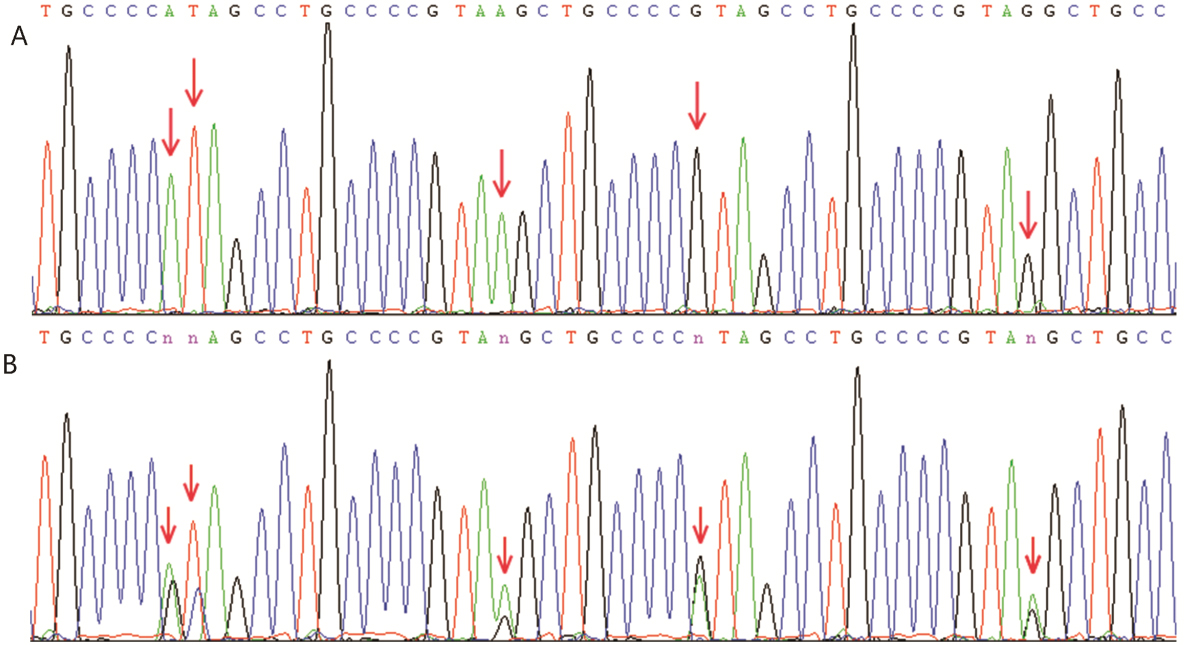
Substitution of c.713AG in complete linkage disequilibrium with c.714TC, c.728AG, c.737GA and c.752GA of GAS8-AS1. (A) homozygotes of c.713AA-714TT-728AA-737GG-752GG (B) heterozygotes of c.713AG-714TC-728AG-737GA-752GA.
Statistical analysis
All statistical analyses were performed using the SPSS 16.0 software (SPSS, Chicago, IL, USA). The distribution of qualitative variables was detected using a test. The distribution of quantitative variables between two groups was examined using Student’s -test. The corresponding variables are shown as means. Multifactorial logistic regression analysis using likelihood-ratio test was performed to assess the association strength between genotype and clinicopathological factors of PTC, adjusting for demographic parameters. A two-sided value of less than 0.05 was considered statistically significant.
The authenticity of this article has been validated by uploading the key raw data onto the Research Data Deposit public platform (www.researchdata.org.cn), with the approval RDD number RDDA2020001499.
Results
Specificities of GAS8-AS1 alterations in different samples
We analyzed the prevalence rates of GAS8-AS1 from different sample sources. We observed that substitution of c.713AG was in complete linkage disequilibrium with four other loci at c.714TC, c.728AG, c.737GA, and c.752GA (Fig. 1). We also found two other genetic variations, c.749GA and c.826GA at nearby loci (Fig. 2). The variations mentioned above were found in tissues of different tumors, as well as in peripheral white blood cells of healthy subjects, suggesting that these genetic variations were common germline variations (Supplementary Table 1). The genotype frequency distributions of these genetic variations did not show statistical differences among different tumor tissues. When compared with healthy subjects, the genotype frequencies of c.826GA and c.749GA were statistically different. The prevalence rates of GAS8-AS1 genetic variations are summarized in Table 1.
Association between GAS-AS1 genetic alterations and geographical factors in thyroid cancer patients
Variable
A713G
A826G
G749A
AA
AG
AA
GA GG
GG
GA AA
Sex
0.447
0.996
0.664
Male
118
(31.4%)
68
(34.5%)
140
(68.6%)
118
(68.6%)
216
(66.1%)
92
(68.1%)
Female
258
(68.6%)
129
(65.5%)
64
(31.4%)
54
(31.4%)
111
(33.9%)
43
(31.9%)
Age (yrs)
0.821
0.276
0.035
55
23
(6.1%)
13
(6.6%)
15
(7.4%)
8
(4.7%)
31
(9.5%)
5
(3.7%)
55
353
(93.9%)
184
(93.4%)
189
(92.6%)
164
(95.3%)
296
(90.5%)
130
(96.3%)
Family history of tumor
0.083
0.590
0.739
No
321
(85.4%)
157
(79.7%)
176
(86.3%)
145
(84.3%)
272
(83.2%)
114
(84.4%)
Yes
55
(14.6%)
40
(20.3%)
28
(13.7%)
27
(15.7%)
55
(16.8%)
21
(15.6%)
Smoking
0.795
0.179
0.336
Never
349
(92.8%)
184
(93.4%)
186
(91.2%)
163
(94.8%)
299
(91.4%)
127
(94.1%)
Ever
27
(7.2%)
13
(6.6%)
18
(8.8%)
9
(5.2%)
28
(8.6%)
8
(5.9%)
Alcohol consumption
0.957
0.402
0.649
No
372
(98.9%)
195
(99.0%)
201
(98.5%)
171
(99.4%)
323
(98.8%)
134
(99.3%)
Yes
4
(1.1%)
2
(1.0%)
3
(1.5%)
1
(0.6%)
4
(1.2%)
1
(0.7%)
Genotypes of c.749GA and c.826GA of GAS8-AS1. Genotypes of c.749 (A) GG, (B) GA, and (C) AA; and genotypes of c.826 (D) GG, (E) GA, and (F) AA.
Association between GAS-AS1 genetic alterations and clinicopatholoigic characteristics in thyroid cancer patients
Variants
Genotype
T stage
OR (95% CI)
N stage
OR (95% CI)
No. of lesions
OR (95% CI)
T1
T2–4
N0
N1
Single
Multiple
For A713G
Total PTC subjects
AA
283 (63.3%)
77 (75.5%)
1 (ref)
148 (68.5%)
212 (63.7%)
1 (ref)
203 (68.1%)
157 (62.5%)
1 (ref)
AG
164 (36.7%)
25 (24.5%)
0.54 (0.33–0.88)
0.014
68 (31.5%)
121 (36.3%)
1.17 (0.81–1.70)
0.411
95 (31.9%)
94 (37.5%)
1.30 (0.91–1.85)
0.152
BRAF-wild type PTC
AA
71 (58.2%)
24 (82.8%)
1 (ref)
42 (65.6%)
53 (60.9%)
1 (ref)
59 (64.1%)
36 (61.0%)
1 (ref)
AG
51 (41.8%)
5 (17.2%)
0.25 (0.09–0.72)
0.010
22 (34.4%)
34 (39.1%)
1.14 (0.56–2.33)
0.722
33 (35.9%)
23 (39.0%)
1.14 (0.57–2.26)
0.718
BRAF-mutant PTC
AA
202 (65.4%)
49 (71.0%0
1 (ref)
99 (69.7%)
152 (64.4%)
1 (ref)
138 (70.8%)
113 (61.7%)
1 (ref)
AG
107 (34.6%)
20 (29.0%)
0.77 (0.43–1.37)
0.370
43 (30.3%)
84 (35.6%)
1.19 (0.76–1.88)
0.451
57 (29.2%)
70 (38.3%)
1.53 (0.99–2.36)
0.054
Without thyroid benign disease
AA
64 (64.6%)
11 (61.1%)
1 (ref)
24 (63.2%)
51 (64.6%)
1 (ref)
49 (68.1%)
26 (57.8%)
1 (ref)
AG
35 (35.4%)
7 (38.9%)
1.17 (0.41–3.33)
0.773
14 (36.8%)
28 (35.4%)
0.92 (0.40–2.12)
0.853
23 (31.9%)
19 (42.2%)
1.68 (0.76–3.74)
0.202
With thyroid benign disease
AA
219 (62.9%)
66 (78.6%)
1 (ref)
124 (69.7%)
161 (63.4%)
1 (ref)
154 (68.1%)
131 (63.6%)
1 (ref)
AG
129 (37.1%)
18 (21.4%)
0.44 (0.25–0.78)
0.005
54 (30.3%)
93 (36.6%)
1.24 (0.82–1.89)
0.313
72 (31.9%)
75 (36.4%)
1.25 (0.84–1.87)
0.277
For G749A
Total PTC subjects
GG
251 (70.1%)
65 (73.9%)
1 (ref)
1 (ref)
1 (ref)
GA
86 (24.0%)
19 (21.6%)
0.86 (0.48–1.52)
0.596
132 (73.7%)
184 (68.9%)
1.17 (0.73–1.86)
0.518
194 (74.6%)
122 (65.6%)
1.64 (1.05–2.56)
0.031
AA
21 (5.9%)
4 (4.5%)
0.75 (0.25–2.26)
0.604
40 (22.3%)
65 (24.3%)
1.85 (0.73–4.72)
0.197
52 (20.0%)
53 (28.5%)
1.27 (0.56–2.88)
0.575
BRAF-wild type PTC
GG
71 (73.2%)
19 (70.4%)
1 (ref)
1 (ref)
62 (76.5%)
28 (65.1%)
1 (ref)
GA
18 (18.6%)
7 (25.9%)
1.32 (0.46–3.81)
0.609
41 (75.9%)
49 (70.0%)
0.94 (0.36–2.47)
0.895
13 (16.0%)
12 (27.9%)
2.00 (0.78–5.10)
0.147
AA
8 (8.2%)
1 (3.7%)
0.42 (0.04–4.10)
0.458
11 (20.4%)
14 (20.0%)
3.10 (0.57–6.99)
0.192
6 (7.4%)
3 (7.0%)
1.31 (0.30–5.78)
0.726
BRAF-mutant PTC
GG
169 (68.4%)
42 (73.7%)
1 (ref)
83 (71.6%)
128 (68.1%)
1 (ref)
123 (72.8%)
88 (65.2%)
1 (ref)
GA
65 (26.3%)
12 (21.1%)
0.76 (0.37–1.54)
0.439
28 (24.1%)
49 (26.1%0
1.15 (0.66–1.99)
0.617
38 (22.5%)
39 (28.9%)
1.44 (0.86–2.44)
0.170
AA
13 (5.3%)
3 (5.3%)
0.92 (0.25–3.40)
0.904
5 (4.3%)
11 (5.9%)
1.47 (0.48–4.53)
0.506
8 (4.7%)
8 (5.9%)
1.40 (0.50–3.86)
0.522
Without thyroid benign disease
GG
68 (76.4%)
12 (75.0%)
1 (ref)
30 (85.7%)
50 (71.4%)
1 (ref)
50 (76.9%)
30 (75.0%)
1 (ref)
GA
17 (19.1%)
3 (18.8%)
1.03 (0.26–4.16)
0.965
5 (14.3%)
15 (21.4%)
2.06 (0.64–6.61)
0.225
11 (16.9%)
9 (22.5%)
1.43 (0.51–3.99)
0.496
AA
4 (4.5%)
1 (6.2%)
1.27 (0.13–12.72)
0.840
0 (0.0%)
5 (7.1%)
/
/
4 (6.2%)
1 (2.5%)
0.34 (0.03–3.32)
0.350
With thyroid benign disease
GG
183 (68.0%)
53 (73.6%)
1 (ref)
102 (70.8%)
134 (68.0%)
1 (ref)
144 (73.8%)
92 (63.0%)
1 (ref)
GA
69 (25.7%)
16 (22.2%)
0.90 (0.42–1.50)
0.481
35 (24.3%)
50 (25.4%)
1.06 (0.63–1.78)
0.819
41 (21.0%)
44 (30.1%)
1.71 (1.03–2.82)
0.037
AA
17 (6.3%)
3 (4.2%)
0.64 (0.18–2.28)
0.491
7 (4.9%)
13 (6.6%)
1.40 (0.52–3.78)
0.502
10 (5.1%)
10 (6.8%)
1.60 (0.64–4.01)
0.315
For A826G
Total PTC subjects
AA
147 (51.9%)
47 (61.0%)
1 (ref)
81 (54.7%)
116 (53.7%)
1 (ref)
121 (59.0%)
75 (47.8%)
1 (ref)
AG
91 (32.2%)
22 (28.6%)
0.71 (0.40–1.28)
0.257
44 (29.7%)
70 (32.4%)
1.03 (0.63–1.68)
0.896
55 (26.8%)
58 (36.9%)
1.80 (1.12–2.89)
0.016
GG
45 (15.9%)
8 (10.4%)
0.56 (0.24–1.28)
0.170
23 (15.5%)
30 (13.9%)
0.85 (0.45–1.61)
0.614
29 (14.1%)
24 (15.3%)
1.41 (0.80–2.62)
0.277
BRAF-wild type PTC
AA
42 (59.2%)
14 (58.3%)
1 (ref)
27 (64.3%)
30 (54.5%)
1 (ref)
36 (61.0%)
20 (55.6%)
1 (ref)
AG
18 (25.4%)
8 (33.3%)
0.58 (0.09–3.55)
0.553
11 (26.2%)
16 (29.1%)
1.17 (0.43–3.18)
0.757
14 (23.7%)
12 (33.3%)
1.69 (0.60–4.71)
0.319
GG
11 (15.5%)
2 (8.3%)
1.18 (0.39–3.54)
0.767
4 (9.5%)
9 (16.4%)
2.29 (0.59–8.94)
0.233
9 (15.3%)
4 (11.1%)
1.20 (0.30–4.77)
0.798
BRAF-mutant PTC
AA
101 (50.0%)
30 (61.2%)
1 (ref)
51 (51.5%)
82 (53.2%)
1 (ref)
81 (57.9%)
52 (46.0%)
1 (ref)
AG
70 (34.7%)
13 (26.5%)
0.67 (0.25–1.77)
0.418
32 (32.3%)
51 (33.1%)
0.92 (0.51–1.64)
0.766
40 (28.6%)
43 (38.1%)
1.73 (0.99–3.02)
0.055
GG
31 (15.3%)
6 (12.2%)
0.60 (0.29–1.25)
0.603
16 (16.2%)
21 (13.6%)
0.72 (0.34–1.56)
0.410
19 (13.6%)
18 (15.9%)
1.49 (0.72–3.12)
0.286
Without thyroid benign disease
AA
38 (59.4%)
4 (36.4%)
1 (ref)
16 (66.7%)
27 (51.9%)
1 (ref)
31 (62.0%)
12 (46.2%)
1 (ref)
AG
19 (29.7%)
3 (27.3%)
1.61 (0.31–8.41)
0.547
6 (25.0%)
16 (30.8%)
1.72 (0.54–5.45)
0.361
12 (24.0%)
10 (38.5%)
2.16 (0.71–6.53)
0.174
GG
7 (10.9%)
4 (36.4%)
5.59 (1.09–8.65)
0.039
2 (8.3%)
9 (17.3%)
2.79 (0.50–5.48)
0.242
7 (14.0%)
4 (15.4%)
1.46 (0.35–6.05)
0.604
With thyroid benign disease
AA
109 (49.8%)
43 (65.2%)
1 (ref)
65 (52.4%)
88 (54.3%)
1 (ref)
90 (58.1%)
63 (48.1%)
1 (ref)
AG
72 (32.9%)
19 (28.8%)
0.61 (0.33–1.16)
0.132
38 (30.6%)
53 (32.7%)
0.90 (0.52–1.56)
0.713
43 (27.7%)
48 (36.6%)
1.72 (1.01–2.93)
0.047
GG
38 (17.4%)
4 (6.1%)
0.27 (0.09–0.81)
0.020
21 (16.9%)
21 (13.0%)
0.65 (0.31–1.33)
0.234
22 (14.2%)
20 (15.3%)
1.38 (0.69–2.76)
0.369
Association between GAS-AS1 genetic alterations and pre-operative thyroid function
Variants
Genotype
N
fT3
fT4
TSH
ATPO
Anti-TG
TG
PTH
Mean
Mean
Mean
Mean
Mean
Mean
Mean
For A713G
Total PTC subjects
AA
331
4.94
17.19
2.54
63.19
245.78
161.27
36.10
AG
180
5.60
0.244
17.66
0.314
2.92
0.172
62.82
0.974
228.34
0.777
92.5
0.363
59.47
0.325
T1 stage
AA
262
4.90
17.07
2.53
66.01
224.69
147.08
36.33
AG
158
5.57
0.178
17.49
0.296
3.04
0.105
62.5
0.784
227.32
0.967
62.82
0.334
62.60
0.331
T2 stage
AA
69
5.08
17.69
2.56
52.5
315.88
215.14
35.23
AG
22
5.80
0.357
18.86
0.533
2.03
0.180
65.11
0.650
254.5
0.763
304.36
0.489
36.92
0.606
Sinlge lesion
AA
188
4.92
17.62
2.64
65.35
234.93
149.81
37.03
AG
89
5.23
0.055
17.01
0.402
2.92
0.403
54.3
0.475
286.87
0.545
75.22
0.504
85.65
0.312
Multiple lesions
AA
143
4.96
17.43
2.40
60.35
260.05
176.33
34.86
AG
91
5.96
0.254
17.70
0.621
2.92
0.217
71.15
0.534
171.09
0.319
109.6
0.510
33.85
0.541
For G749A
Total PTC subjects
GG
288
5.01
17.29
2.46
61.85
269.18
135.62
51.62
GA
98
4.88
0.346
16.93
0.385
2.36
0.680
59.32
0.859
174.9
0.167
205.16
0.513
36.28
0.546
AA
23
4.91
0.707
16.99
0.721
4.49
0.040
96.81
0.361
288.24
0.905
44.17
0.610
37.03
0.781
T1 stage
GG
232
4.92
17.02
2.44
63.59
254.85
120.35
55.04
GA
80
4.83
0.33
16.88
0.719
2.39
0.875
62.83
0.962
161.46
0.135
169.59
0.699
36.75
0.559
AA
19
4.92
0.995
17.00
0.982
5.14
0.021
112.7
0.285
346.81
0.588
19.94
0.638
37.90
0.790
T2 stage
GG
56
5.36
18.40
2.55
54.64
328.59
198.6
37.47
GA
18
5.12
0.673
17.16
0.371
2.19
0.507
43.75
0.704
234.64
0.695
363.28
0.225
34.19
0.399
AA
4
4.85
0.663
16.96
0.614
1.43
0.294
21.32
0.517
10.01
0.467
159.26
0.868
32.86
0.523
Sinlge lesion
GG
178
5.01
17.08
2.64
68.07
275.88
296.82
60.89
GA
48
4.94
0.744
16.89
0.757
2.64
0.994
45.98
0.274
92.27
0.004
108.14
0.392
40.39
0.657
AA
13
5.06
0.896
16.85
0.839
4.09
0.257
91.88
0.544
349.3
0.723
27.84
0.707
37.48
0.792
Multiple lesions
GG
110
5.01
17.62
2.17
51.78
258.35
180.48
36.63
GA
50
4.83
0.205
16.96
0.24
2.09
0.740
72.13
0.310
254.22
0.974
117.17
0.657
32.32
0.041
AA
10
4.72
0.291
17.18
0.708
5.02
0.088
103.2
0.172
208.86
0.845
65.39
0.714
36.44
0.967
For A826G
Total PTC subjects
AA
174
4.97
17.36
2.37
61.26
256.65
180.53
35.91
AG
106
4.92
0.584
17.12
0.522
2.32
0.846
63.01
0.909
194.96
0.453
191.96
0.933
36.49
0.760
GG
51
4.85
0.341
16.79
0.277
3.57
0.017
70.16
0.673
314.33
0.620
32.78
0.332
35.91
0.999
T1 stage
AA
134
4.95
17.20
2.27
64.08
232.11
179.56
36.05
AG
85
4.86
0.404
17.01
0.666
2.35
0.777
62.23
0.916
181.06
0.531
159.97
0.904
37.19
0.606
GG
43
4.84
0.434
16.75
0.452
3.69
0.015
79.49
0.537
303.86
0.543
20.42
0.392
35.49
0.828
T2 stage
AA
40
5.05
17.90
2.67
51.84
338.87
183.78
35.46
AG
21
5.17
0.579
17.54
0.645
2.22
0.390
66.14
0.645
251.25
0.720
319.03
0.293
33.67
0.613
GG
8
4.95
0.676
17.00
0.416
2.93
0.763
20
0.334
370.58
0.930
99.23
0.585
38.16
0.579
Sinlge lesion
AA
109
4.92
17.13
2.44
68.93
274.04
122.11
35.70
AG
51
4.98
0.58
16.96
0.703
2.62
0.630
62.69
0.780
108.58
0.035
279.01
0.411
40.58
0.085
GG
28
4.85
0.666
16.66
0.437
3.46
0.137
56.27
0.660
312.81
0.795
22.33
0.583
35.79
0.976
Multiple lesions
AA
65
5.07
17.75
2.24
48.41
227.49
278.49
36.27
AG
55
4.86
0.216
17.26
0.462
2.05
0.486
63.3
0.464
275.06
0.723
110.31
0.338
32.70
0.143
GG
23
4.86
0.339
16.95
0.400
3.71
0.054
87.06
0.318
316.18
0.640
45.51
0.384
36.05
0.948
Associations between GAS8-AS1 alterations and geographical features in thyroid cancer patients
As shown in Table 2, the c.749GA variation of GAS8-AS1 showed an association with the diagnostic age of PTC occurrence. The variant A allele was more likely to occur in younger people. A borderline association was found between c.713AG and family history of the tumor ( 0.083). Subjects with the c.713G variant may be more likely to develop PTC. No association was observed between GAS8-AS1 c.713AG/749GA and gender, smoking, alcohol drinking, BRAF, or TERT mutations.
Associations between GAS8-AS1 alterations and pathological features in thyroid cancer patients
The c.713AG variation is closely related to the T stage of PTC patients. Subjects carrying the G allele had a reduced risk of developing advanced T stage PTC (OR 0.54, 95% CI: 0.33–0.88, 0.014). We also focused on the association of the BRAF V600E mutation and concomitant benign thyroid disease with GAS-AS1 alterations in thyroid cancer. This risk of T stage PTC markedly reduced in PTC subpopulations without BRAF V600E mutations (OR 0.25, 95% CI: 0.09–0.72, 0.010). This association was also observed in the subgroup of PTC patients with concomitant benign thyroid diseases.
As for c.749GA, subjects with the AG genotype carried an increased risk of developing multiple lesions of PTC (for AG vs. GG: OR 1.64, 95% CI: 1.05–2.56, 0.031). Consistent associations were also found in the PTC subgroup with concomitant benign thyroid diseases.
As for c.826GA, subjects with the GG genotype also showed an increased risk of PTC with multiple lesions (for AG vs. GG, OR 1.80, 95% CI: 1.12–2.89, 0.016). The GG genotype was associated with an increased risk of developing advanced T stage PTC without benign thyroid disease (for GG vs. AA: OR 5.59, 95% CI: 1.09–8.65, 0.039). In contrast, this variant reduced the risk of PTC development at a higher T stage and with benign thyroid disease (GG vs. AA: OR 0.27, 95% CI: 0.09–0.81, 0.020). These results are summarized in Table 3. No association was found between genetic alterations and capsular invasion or calcium (Supplementary Table 2).
Influence of GAS8-AS1 alterations on thyroid function in patients with thyroid cancer
We explored the effect of GAS8-AS1 genetic alterations on thyroid function (Table 4). Preoperative serum levels of fT3, fT4, TSH, ATPO, PTH, TG, and anti-TG from PTC patients were compared with the rare variant and common genotypes. No correlation was found between the c.713AG variation and the seven parameters of thyroid function. The variant AA genotype at the c.749GA site was correlated with higher levels of TSH in patients with PTC and in patients with T1 PTC. Similarly, the variant AA genotype at the c.826GA site was closely correlated with higher levels of TSH in patients with PTC and in subpopulations with T1 PTC or multiple lesions. Moreover, variants at the c.749GA and c.826GA loci showed lower levels of anti-TG in patients with single lesions. Variants at c.749GA showed a trend toward lower levels of PTH in patients with multiple lesions.
Discussion
An increasing number of studies have demonstrated the vital role of GAS8-AS1 in PTC, as well as in other malignancies, including colorectal cancer and hepatocellular carcinoma [4, 6, 7]. This gene encodes a lncRNA that may function as a tumor suppressor. In PTC cells, GAS8-AS1 inhibited cell growth through regulation of the miR-135b-5p/CCND2 axis [8]. A whole exome sequencing study in 2016 reported an association of c.713AG/714TC GAS8-AS1 dinucleotide substitution with advanced PTC disease [3]. In contrast to this study, we observed a reduced risk of developing T2 PTC than developing T1 PTC in subjects carrying the c.713G variant allele. To explain this discrepancy, one likely reason is that PTC patient populations of the present and previous study had different T stages. In this study, early stage PTC patients were enrolled, which merely involved the T1 and T2 stages. Although our study enrolment criteria did not exclude patients at the T3 or T4 stage, we did not encounter eligible participants with T3 or T4 PTC who underwent thyroidectomy within our study period, from August 2017 to September 2018. The previous study included a large portion of T3 and T4-stage patients. Therefore, the grouping of T stage is different between the two studies. The T stage was divided into T1 and T2 subgroups in this study, and T1–2 and T3–4 in the previous study. Differences in the grouping of patients might partly account for the discrepancy in the association between the c.713AG and T stages. However, since no PTC patients at the T3 or T4 stage were included in our study, it precluded us from further exploring the link between GAS8-AS1 alterations and clinicopathological parameters in advanced PTC.
Our results highlight the prevalent involvement of genetic variations in GAS8-AS1 in PTC. The sequence of GAS8-AS1 had a high frequency of genetic alterations in addition to c.713AG/714TC, as previously reported [3]. Substitution of c.A713G was completely linked with four other loci at c.714TC, c.728AG, c.737GA, and c.752GA. Additionally, two novel alterations located at c.749 and c.826 were found in this study, which have not been reported. c.749 GA was associated with a greater risk of developing multiple lesions and was more likely to occur in younger PTC patients. PTC patients carrying the heterozygous variant at c.749 and c.826 sites had a higher risk of multiple lesions. These associations were also observed in patients with PTC and concomitant benign thyroid disease. Notably, the c.826GG variant conferred a higher risk for developing T2 PTC without benign thyroid disease, whereas the risk for developing T2 PTC with benign thyroid disease was lower when T1 PTC was set as a reference. However, there is no related functional report concerning GAS8-AS1 c.749 and c.826 sites. GAS8-AS1 may function as part of a surveillance mechanism that maintains the activation of the GAS8 promoter and transcription, preventing carcinogenesis [4]. GAS8 is a candidate tumor suppressor that can inhibit malignant activity, including proliferation, invasion, and metastasis, in hepatocellular carcinoma [4]. The genomic region of GAS8-AS1 was highly variable. These variations may have a potential effect on the secondary structure or the expression level of GAS8-AS1, which may further influence the regulation of target gene expression, such as GAS8, through certain epigenetic modulation mechanisms. The plasma level of GAS8-AS1 was found to be lower in patients with PTC than in those with nodular goiters, which was correlated with the lymph node metastasis of PTC [5]. However, the mechanism through which GAS8-AS1 c.749 and c.826 loci regulate tumor cell function remains unclear. Further studies on the molecular mechanisms underlying these variants in the development and progression of PTC are still urgently needed.
We explored whether genetic alterations in GAS8-AS1 affected thyroid function in PTC patients before surgery. The present study is the first to correlate GAS8-AS1 genetic variations with TSH levels in thyroid cancer patients. Alterations of c.749GA and c.826AG led to higher levels of TSH in all PTC subjects and in the T1 PTC subpopulation. c.826AG was also associated with higher TSH levels in PTC subpopulations with multiple lesions. Previous studies also showed an association between genetic variations and TSH expression, including somatic mutation and germline common variation [9, 10, 11, 12]. TSH normally acts as a specific ligand of the TSH receptor (TSHR) in the thyroid gland. TSH is the most extensively studied thyroid hormone in PTC and higher serum TSH concentrations have been associated with PTC progression. Increased TSH may trigger increased TSH/TSHR signaling, which in turn increases the expression of downstream enzymes, such as manganese superoxide dismutase and dual-specific phosphatase 6, eventually resulting in the production of oncogenic proteins, such as c-Myc [13]. A simultaneous increase in serum TSH levels in response to oncogenes, such as c-Myc, would lead to progression into malignancy, thus showing the importance of TSH signaling in the development of PTC [13, 14, 15]. These findings may help explain the increased risk of occurrence of multiple lesions in thyroid cancer patients with alterations at GAS8-AS1 c.749 and c.826 loci.
Conclusion
In addition to the frequently studied c.713/c.714 loci, two novel variations at the c.749 and c.826 loci in GAS8-AS1 were found to be associated with multiple lesions in PTC patients. Moreover, they had an effect on the increase in serum TSH levels. Detection of GAS8-AS1 genetic alterations would be useful in the screening and assessment of PTC.
Footnotes
Acknowledgments
This work was funded by the National Natural Science Foundation of China [grant number 81602426 and 81802950]; and the Natural Science Foundation of Guangdong Province, China [grant number 2016A030310198].
Conflict of interest
The authors declare that there is no conflict of interest.
Supplementary data
Association between GAS-AS1 genetic alterations and other malignancies
Association between GAS-AS1 genetic alterations and clinicopatholoigic characteristics in thyroid cancer patients (did not reach significance)
Variants
Capsular invasion
OR (95% CI)
P
Calcium
OR (95% CI)
P
No
Yes
No
Yes
For A713G
Total PTC subjects
74 (62.7%)
286 (66.4%)
1 (ref)
288 (65.3%)
72 (66.7%)
1 (ref)
44 (37.3%)
145 (33.6%)
0.85 (0.55–1.29)
0.441
153 (34.7%)
36 (33.3%)
0.95 (0.61–1.48)
0.820
BRAF-wild type PTC
26 (57.8%)
69 (65.1%)
1 (ref)
79 (64.8%)
16 (55.2%)
1 (ref)
19 (42.2%)
37 (34.9%)
0.74 (0.36–1.52)
0.414
43 (35.2%)
13 (44.8%)
1.54 (0.67–3.52)
0.311
BRAF-mutant PTC
45 (66.2%)
206 (66.5%)
1 (ref)
199 (65.5%)
52 (70.3%)
1 (ref)
23 (33.8%)
104 (33.5%)
0.98 (0.56–1.72)
0.954
105 (34.5%)
22 (29.7%)
0.80 (0.46–1.39)
0.427
Without thyroid benign disease
18 (58.1%)
57 (66.3%)
1 (ref)
68 (64.8%)
7 (58.3%)
1 (ref)
13 (41.9%)
29 (33.7%)
0.71 (0.30–1.66)
0.427
37 (35.2%)
5 (41.7%)
1.32 (0.39–4.45)
0.659
With thyroid benign disease
56 (64.4%)
229 (66.4%)
1 (ref)
220 (65.5%)
65 (67.7%)
1 (ref)
31 (35.6%)
116 (33.6%)
0.92 (0.56–1.51)
0.742
116 (34.5%)
31 (32.3%)
0.91 (0.56–1.48)
0.706
For G749A
Total PTC subjects
1 (ref)
261 (71.5%)
55 (67.9%)
1 (ref)
P
71 (70.3%)
245 (71.0%)
0.98 (0.58–1.65)
0.930
84 (23.0%)
21 (25.9%)
1.19 (0.68–2.08)
0.544
24 (23.8%)
81 (23.5%)
0.89 (0.34–2.33)
0.817
20 (5.5%)
5 (6.2%)
1.22 (0.44–3.40)
0.708
BRAF-wild type PTC
27 (71.1%)
63 (73.3%)
1 (ref)
77 (73.3%)
13 (68.4%)
1 (ref)
10 (26.3%)
15 (17.4%)
0.66 (0.26–1.69)
0.390
21 (20.0%)
4 (21.1%)
1.13 (0.33–3.86)
0.841
1 (2.6%)
8 (9.3%)
3.04 (0.36–25.87)
0.309
7 (6.7%)
2 (10.5%)
1.65 (0.30–8.94)
0.565
BRAF-mutant PTC
40 (69.0%)
171 (69.5%)
1 (ref)
172 (69.6%)
39 (68.4%)
1 (ref)
13 (22.4%)
64 (26.0%)
1.16 (0.58–2.32)
0.671
62 (25.1%)
15 (26.3%)
1.07 (0.55–2.08)
0.839
5 (8.6%)
11 (4.5%)
0.51 (0.17–1.56)
0.241
13 (5.3%)
3 (5.3%)
1.01 (0.27–3.750
0.984
Without thyroid benign disease
21 (75.0%)
59 (76.6%)
1 (ref)
75 (77.3%)
5 (62.5%)
1 (ref)
4 (14.3%)
16 (20.8%)
1.53 (0.44–5.27)
0.503
17 (17.5%)
3 (37.5%)
2.84 (0.60–13.37)
0.186
3 (10.7%)
2 (2.6%)
0.20 (0.03–1.35)
0.098
5 (5.2%)
0 (0.0%)
/
/
With thyroid benign disease
50 (68.5%)
186 (69.4%)
1 (ref)
186 (69.4%)
50 (68.5%)
1 (ref)
20 (27.4%)
65 (24.3%)
0.87 (0.48–1.58)
0.655
67 (25.0%)
18 (24.7%)
1.01 (0.55–1.85)
0.982
3 (4.1%)
17 (6.3%)
1.46 (0.41–5.19)
0.563
15 (5.6%)
5 (6.8%)
1.32 (0.45–3.83)
0.615
For A826G
Total PTC subjects
41 (53.9%)
155 (54.2%)
1 (ref)
157 (54.1%)
39 (53.4%)
1 (ref)
26 (34.2%)
87 (30.4%)
0.90 (0.52–1.58)
0.715
89 (30.7%)
25 (34.2%)
1.13 (0.64–2.00)
0.665
9 (11.8%)
44 (15.4%)
1.27 (0.57–2.83)
0.565
44 (15.2%)
9 (12.3%)
0.85 (0.38–1.90)
0.692
BRAF-wild type PTC
15 (57.7%)
41 (59.4%)
1 (ref)
46 (58.2%)
10 (58.8%)
1 (ref)
10 (38.5%)
16 (23.2%)
0.61 (0.22–1.69)
0.342
22 (27.8%)
5 (29.4%)
1.11 (0.33–3.74)
0.865
1 (3.8%)
12 (17.4%)
3.78 (0.42–33.72)
0.234
11 (13.9%)
2 (11.8%)
0.92 (0.17–5.10)
0.922
BRAF-mutant PTC
25 (53.2%)
108 (52.4%)
1 (ref)
106 (52.7%)
27 (51.9%)
1 (ref)
15 (31.9%)
68 (33.0%)
1.08 (0.53–2.19)
0.842
65 (32.3%)
18 (34.6%)
1.06 (0.54–2.09)
0.858
7 (14.9%)
30 (14.6%)
1.00 (0.39–2.55)
0.999
30 (14.9%)
7 (13.5%)
0.94 (0.37–2.39)
0.901
Without thyroid benign disease
10 (52.6%)
33 (57.9%)
1 (ref)
39 (56.5%)
4 (57.1%)
1 (ref)
5 (26.3%)
17 (29.8%)
1.15 (0.32–4.14)
0.831
19 (27.5%)
3 (42.9%)
1.72 (0.33–8.99)
0.519
4 (21.1%)
7 (12.3%)
0.52 (0.12–2.27)
0.386
11 (15.9%)
0 (0.0%)
/
/
With thyroid benign disease
31 (54.4%)
122 (53.3%)
1 (ref)
118 (53.4%)
35 (53.8%)
1 (ref)
21 (36.8%)
70 (30.6%)
0.90 (0.48–1.69)
0.741
70 (31.7%)
21 (32.3%)
1.02 (0.55–1.90)
0.955
5 (8.8%)
37 (16.2%)
1.92 (0.69–5.37)
0.212
33 (14.9%)
9 (13.8%)
1.02 (0.44–2.36)
0.973
References
1.
KitaharaC.M. and SosaJ.A., The changing incidence of thyroid cancer, Nat Rev Endocrinol12(11) (2016), 646–653.
2.
NikiforovY.E. and NikiforovaM.N., Molecular genetics and diagnosis of thyroid cancer, Nat Rev Endocrinol7(10) (2011), 569–580.
3.
PanW. et al., Whole exome sequencing identifies lncRNA GAS8-AS1 and LPAR4 as novel papillary thyroid carcinoma driver alternations, Human Molecular Genetics25(9) (2016), 1875–1884.
4.
PanW. et al., The long noncoding RNA GAS8-AS1 suppresses hepatocarcinogenesis by epigenetically activating the tumor suppressor GAS8, The Journal of Biological Chemistry293(44) (2018), 17154–17165.
5.
ZhangD. et al., Plasma lncRNA GAS8-AS1 as a potential biomarker of papillary thyroid carcinoma in chinese patients, International Journal of Endocrinology2017 (2017), 2645904.
6.
ZhaoY. et al., LncRNA GAS8-AS inhibits colorectal cancer (CRC) cell proliferation by downregulating lncRNA AFAP1-AS1, Gene710 (2019), 140–144.
7.
QinY. et al., LncRNA GAS8-AS1 inhibits cell proliferation through ATG5-mediated autophagy in papillary thyroid cancer, Endocrine59(3) (2018), 555–564.
8.
ChenN. et al., LncRNA GAS8-AS1 suppresses papillary thyroid carcinoma cell growth through the miR-135b-5p/CCND2 axis, Bioscience Reports39(1) (2019), BSR20181440.
9.
KhanM.S. et al., RET/PTC gene rearrangements in thyroid carcinogenesis: Assessment and clinico-pathological correlations, Pathology Oncology Research26(1) (2020), 507–513.
10.
SuX. et al., RET/PTC rearrangements are associated with elevated postoperative TSH levels and multifocal lesions in papillary thyroid cancer without concomitant thyroid benign disease, PloS One11(11) (2016), e0165596.
11.
FengS. et al., Association between rs12045440 polymorphism in the CAPZB intron and serum TSH concentrations in Chinese thyroid tumor patients, International Journal of Endocrinology2015 (2015), 250542.
12.
KhanM.S. et al., Significant association of TP53 Arg72Pro polymorphism in susceptibility to differentiated thyroid cancer, Cancer Biomarkers: Section A of Disease Markers15(4) (2015), 459–465.
13.
MoulanaF.I. et al., BRAF-oncogene-induced senescence and the role of thyroid-stimulating hormone signaling in the progression of papillary thyroid carcinoma, Hormones & Cancer9(1) (2018), 1–11.
14.
BoelaertK. et al., Serum thyrotropin concentration as a novel predictor of malignancy in thyroid nodules investigated by fine-needle aspiration, The Journal of Clinical Endocrinology and Metabolism91(11) (2006), 4295–4301.
15.
HaymartM.R. et al., Higher serum thyroid stimulating hormone level in thyroid nodule patients is associated with greater risks of differentiated thyroid cancer and advanced tumor stage, The Journal of Clinical Endocrinology and Metabolism93(3) (2008), 809–814.